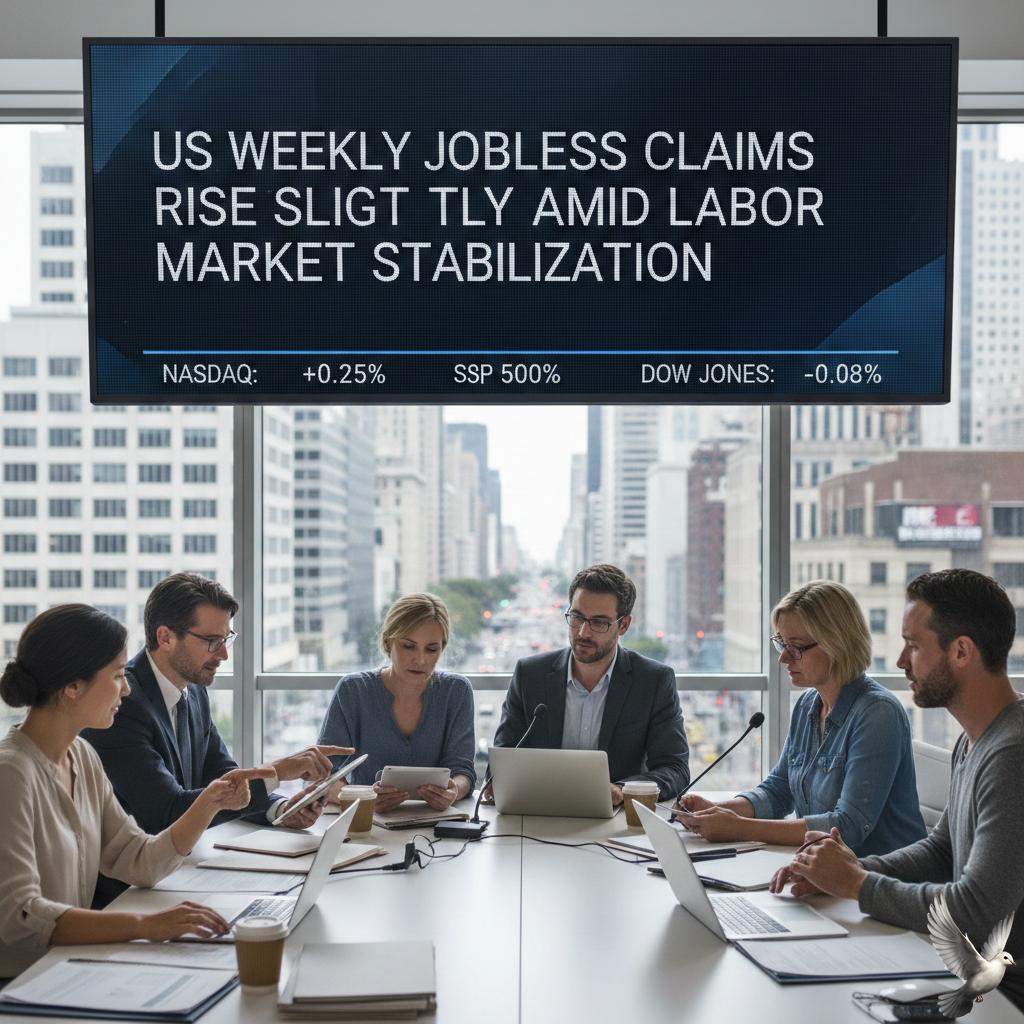
US Weekly Jobless Claims Rise Slightly Amid Labor Market Stabilization
The U.S. labor market is currently operating in a "low-hire, low-fire" state, characterized by historical stability and minimal fluctuations in both layoffs and new employment.
Recent Department of Labor data for the week ending February 21, 2026, shows that initial jobless claims rose by **4,000** to a seasonally adjusted **212,000**. This figure arrived slightly below the consensus forecast of **215,000** to **217,000**, confirming that large-scale layoffs remain absent from the current economic landscape.
The four-week moving average for new claims, which smoothes out weekly volatility often caused by holidays like Presidents' Day, stands at **220,250**. This represents a marginal increase of **750** from the previous week's revised average.
Continuing claims, which track the number of people already receiving unemployment benefits, decreased by **31,000** to **1.83 million**. This level is among the lowest recorded in the last 10 months, suggesting that while hiring is cautious, those currently in the workforce are largely maintaining their positions.
The national unemployment rate for February 2026 is expected to hold steady at **4.3%**, following a similar reading in January when it fell from **4.4%**.
Market indicators show a significant rebalancing in the leverage between employers and job seekers. The ratio of job openings per unemployed person has declined to **0.9**, a post-pandemic low that shifts the advantage toward employers.
Business sentiment remains cautious as firms navigate a complex environment of global tariffs and the rapid integration of artificial intelligence. These factors have contributed to a "frozen" labor market where voluntary quits have returned to 2018 levels.
While the economy added a robust **130,000** jobs in January—well above forecasts—the broader trend shows a clear deceleration. Average monthly gains for the past year sit at approximately **30,000** jobs, a sharp decline from the **103,000** monthly average seen in early 2025.
Consumer confidence ticked higher this month to **91.2**, up from **89.0** in January. Despite this, households report that jobs are becoming "harder to get," with the median duration of unemployment hovering near four-year highs.
Federal Reserve policymakers are monitoring these stable yet subdued figures closely. The current equilibrium of low firing and slow hiring supports expectations that interest rates will remain unchanged through at least the second quarter of 2026.