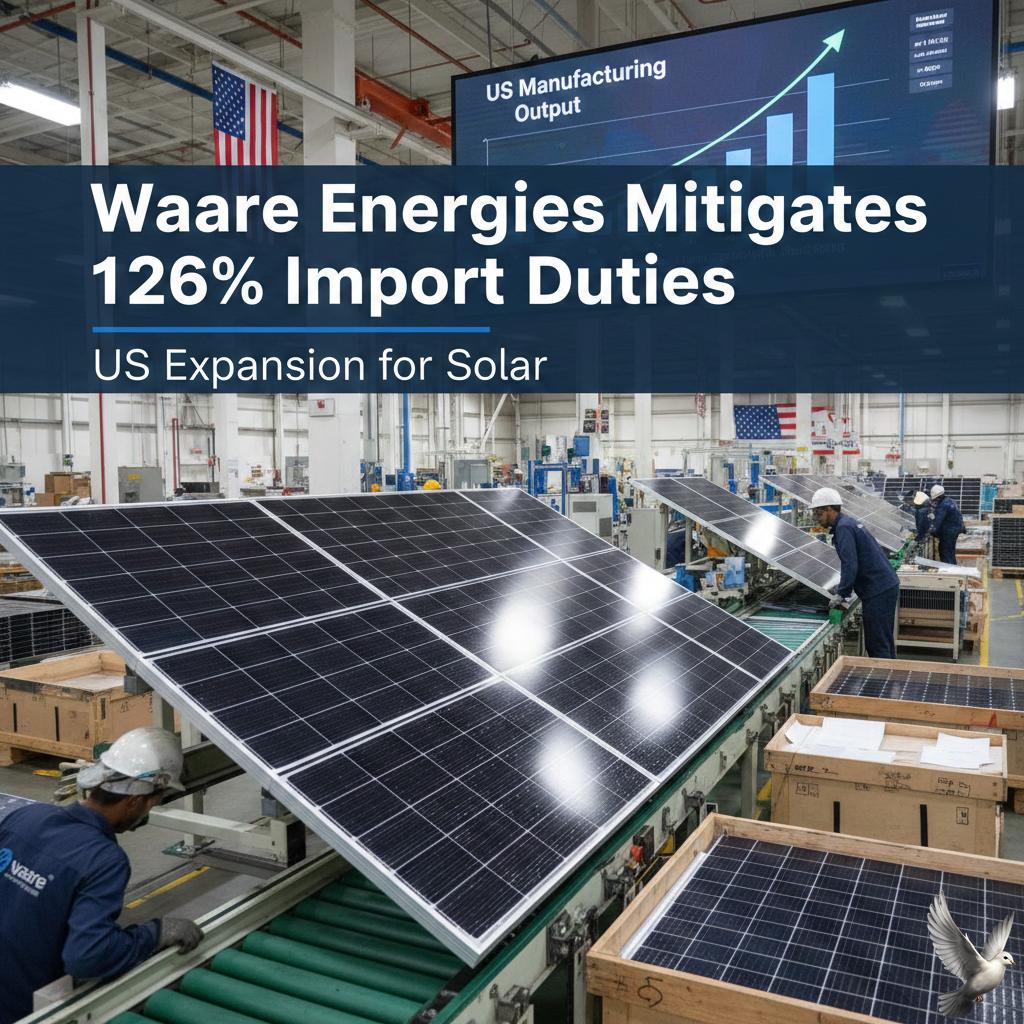
Waaree Energies Aims to Mitigate 126% Solar Import Duties via US Manufacturing Expansion
The United States has moved to impose aggressive preliminary countervailing duties on solar imports from India, Indonesia, and Laos. Announced by the Department of Commerce on February 24, 2026, the decision targets manufacturers accused of receiving unfair government subsidies that allow them to undercut American-made products.
India faces a staggering general subsidy rate of 125.87%. Specific companies have been hit even harder; individual rates for Indonesian exporters range from 86% up to 143.3%, while products from Laos carry a duty of 80.67%. These levies are separate from the 10% baseline global tariffs recently introduced by the administration.
The trade implications are massive. In 2024, solar imports from India alone reached 792.6 million USD, a nine-fold increase from 2022. Together, India, Indonesia, and Laos accounted for approximately 4.5 billion USD in solar shipments last year, representing nearly two-thirds of all U.S. solar imports in 2025.
Industry giant Waaree Energies has seen immediate market volatility following the news, with shares dropping as much as 14.6%. The company is now pivoting toward local production to bypass these trade barriers. Waaree currently operates 2.6 GW of manufacturing capacity in the U.S. and is exploring further expansion to leverage incentives from the Inflation Reduction Act.
Market analysts suggest these duties could make the U.S. market virtually inaccessible for many Asian exporters in the short term. While the move aims to protect domestic giants like First Solar and Qcells, it risks driving up installation costs for U.S. developers who rely on high-volume, low-cost imported panels.
A final determination on these subsidy rates is expected by July 6, 2026. Simultaneously, the Department of Commerce is conducting an anti-dumping investigation into whether these same nations are selling solar cells below their cost of production. This dual-track legal pressure signals a permanent shift toward "America First" energy manufacturing.