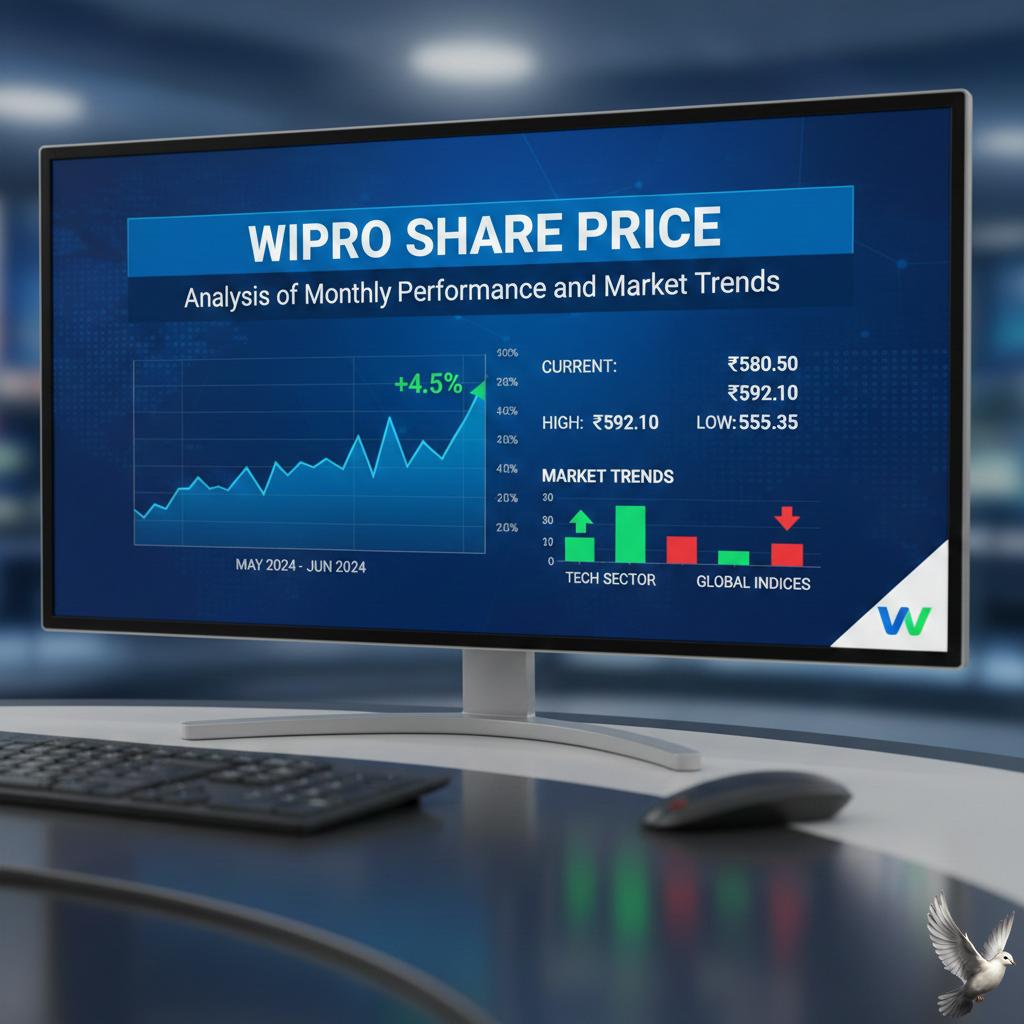
Wipro share price: Analysis of monthly performance and market trends
Market Brief: Global Economic Outlook February 2026
Geopolitical friction and shifting trade policies have emerged as the primary drivers of market volatility this week. Risk-off sentiment is intensifying as investors track indirect nuclear negotiations in Geneva and naval exercises near critical shipping corridors. These developments are directly impacting energy transit routes and weighing on broader market confidence.
Equity Market Performance
Major indices started the week under pressure. In the Indian market, the **SENSEX** opened lower at **83,197** following a previous close of **83,277**, while the **Nifty 50** hovered around the **25,637** level. This cautious positioning follows a period where foreign institutional investors remained net sellers, offloading approximately **₹972 crore** in a single session, while domestic institutions provided a buffer by purchasing **₹1,666 crore**.
Global performance remains uneven. While the **Dow Jones** showed a marginal gain of **0.10%**, the **Nikkei** dropped **1.14%** and the **Shanghai Composite** fell **1.26%**. Analysts note that market participants are transitioning from an easing cycle to a period of sustained high interest rates, with many central banks expected to hold rates steady through the first half of 2026.
Commodities and Currencies
The energy sector is reflecting heightened risk premiums. **Brent crude** prices have climbed to **$68.65** per barrel, a rise of over **1.3%** as supply disruption fears grow. In contrast, precious metals are seeing a correction. **Spot gold** has dropped below the psychological **$5,000** mark, trading near **$4,989** per ounce, while **silver** fell significantly to **$74** per ounce.
The **US Dollar Index (DXY)** remains firm at **97.10**, exerting pressure on emerging market currencies. The **Indian Rupee (INR)** is currently trading at **90.65** against the dollar. This currency weakness, combined with a **45%** contraction in specific export sectors like gems and jewelry, suggests a challenging environment for trade balances.
Macroeconomic Indicators
Global growth for 2026 is currently projected at **3.3%**, showing resilience despite trade frictions. India continues to lead major economies with a projected **7.4%** GDP growth for the fiscal year. This is supported by strong industrial output, which reached a two-year high of **7.8%** recently, and a robust services sector growing at **9.1%**.
Inflation remains a mixed story. While India’s headline **CPI** stood at a modest **1.3%** in recent readings, global "sticky" inflation persists around **3%**. Markets are now awaiting the Federal Reserve's latest meeting minutes and upcoming **GDP** data to determine if the current restrictive monetary conditions will endure through the summer.
Trade and Sector Trends
New trade frameworks are redrawing the competitive map. US tariff shifts have made certain imports, such as South African wine, **17%** more expensive, while others have become cheaper. In the industrial space, sectors like electronics and telecom are showing high growth, with electronics exports expanding at an annual rate of **38.8%**. Large-scale infrastructure projects also remain active, evidenced by recent defense and railway contracts totaling over **₹5,200 crore**.