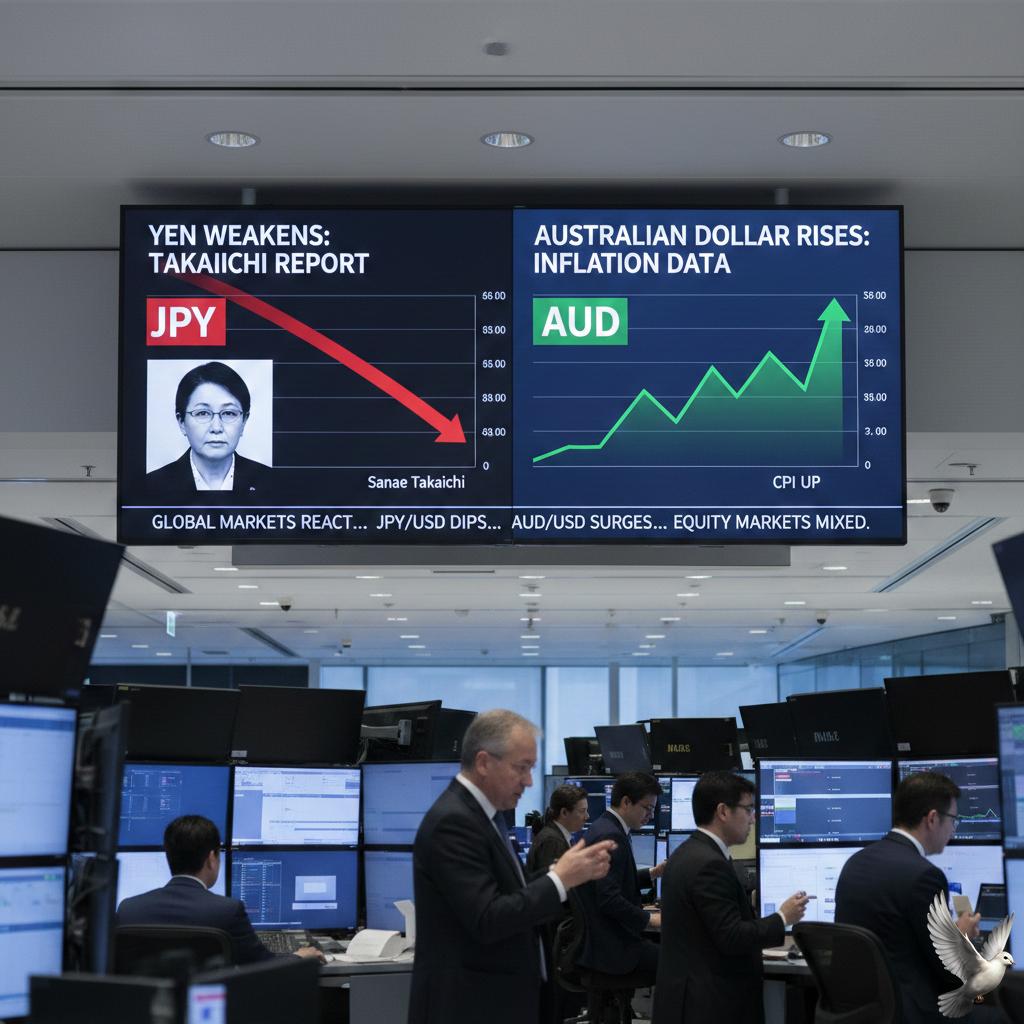
**Yen Weakens Following Takaichi Report While Australian Dollar Rises on Inflation Data**
MARKET BRIEF: CURRENCY & GLOBAL TRENDS
The Japanese yen has faced renewed selling pressure, sliding toward a two-week low against the U.S. dollar. This movement follows reports that Prime Minister Sanae Takaichi expressed significant reservations regarding further interest rate hikes during a private meeting with Bank of Japan Governor Kazuo Ueda.
**Yen Under Pressure**
The USD/JPY pair surged by nearly **1.0%** in recent sessions, testing a key resistance level at **155.88**. Markets have reacted sharply to the potential political friction, with the probability of a March rate hike plummeting to less than **10%**.
While the Bank of Japan maintains its official policy rate at **0.75%**, the Prime Minister’s dovish stance contrasts with previous signals from Governor Ueda about gradual normalization. Adding to the yen's woes, recent data showed headline inflation slowing to **1.5%**, providing the central bank with more room to delay tightening.
**China and the Yuan**
The Chinese yuan has shown resilience, trading near **6.88** against the dollar. The currency is benefiting from a complex trade environment after the U.S. Supreme Court struck down a series of broad tariffs.
Although the Trump administration quickly responded by implementing a new **15%** global tariff under different legal authority, the net impact on Chinese goods is currently estimated to be **5 to 8 percentage points** lower than previous peaks. This relative relief has underpinned yuan strength and pressured the dollar's dominance in the region.
**Australian Dollar Gains**
The Australian dollar continues its robust performance, marking five consecutive weeks of gains to trade around **0.7080**. Domestic factors are the primary drivers, as the unemployment rate remains at a 12-month low of **4.1%**.
Traders are now focused on upcoming inflation data, with expectations set for a "sticky" year-on-year print of **3.7%**. This persistent price pressure reinforces the case for a potential Reserve Bank of Australia rate hike, providing a solid yield floor for the currency.
**U.S. Political Landscape**
Global markets remain in a state of high alert following President Trump’s State of the Union address. While the speech leaned heavily on "America First" priorities and celebrated the country's economic strength, the immediate market reaction was characterized by caution rather than panic.
Investors are closely monitoring the shift from judicial setbacks on trade policy to the administration’s new **150-day** temporary tariff window. The U.S. 10-year Treasury yield has softened slightly to **4.03%**, reflecting a market that is still weighing the long-term impact of these renewed trade tensions and the possibility of a "coin flip" Federal Reserve decision in March.