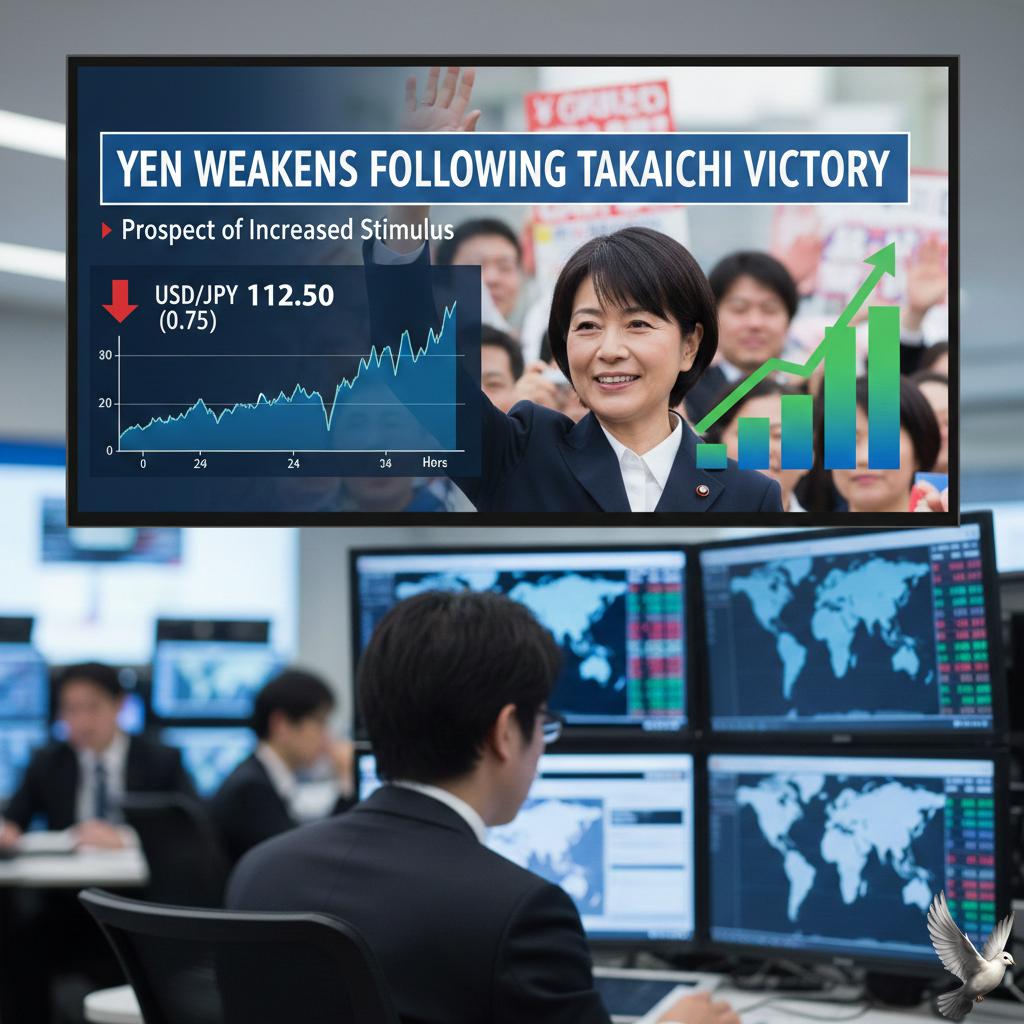
Yen Weakens Following Takaichi Victory and Prospect of Increased Stimulus
In a historic political shift, the Japanese Yen has faced renewed downward pressure against the US Dollar following a landslide victory for Prime Minister Sanae Takaichi’s Liberal Democratic Party (LDP).
The LDP, alongside its coalition partner, has secured a decisive two-thirds supermajority in the lower house, capturing approximately 300 of the 465 available seats. This victory grants the administration an unprecedented mandate to execute its "responsible and proactive" fiscal agenda without the need for significant legislative compromise.
The currency market responded immediately to the news. The Japanese Yen fell by 0.3% in early Asian trading on February 9, reaching 157.72 against the dollar. This marks the seventh consecutive day of decline for the currency, which is currently hovering near its weakest levels in two weeks.
While the yen softened, the Japanese equity market surged on expectations of continued fiscal support. The Nikkei 225 stock average made history by breaking the 55,000 mark for the first time, eventually climbing past 57,000 in early trading. This represents a rally of over 5% in a single session, as investors bet on the administration's commitment to aggressive stimulus and semiconductor infrastructure investment.
The Takaichi administration has already signaled its fiscal intentions through a record 122.3 trillion yen budget proposal for the 2026 fiscal year. This plan includes a massive 10 trillion yen framework for AI and semiconductor support, aimed at sparking 50 trillion yen in private-sector investment.
Despite the heavy spending, the government projects a basic fiscal surplus of 1.34 trillion yen for the coming fiscal year—the first such surplus since 1998. This projection relies on a record tax haul of 83.7 trillion yen, driven by high corporate earnings and persistent inflation.
The Bank of Japan remains a focal point for market stability. While fiscal policy is expansionary, central bank officials have indicated that normalization of interest rates will continue. Traders currently see a 74% probability of a rate hike by April 2026, with the benchmark rate expected to reach 1.00% later this year.
Long-term borrowing costs are already reacting to this shift. The 10-year Japanese Government Bond (JGB) yield has exceeded 2%, reflecting market concerns over the sheer volume of outstanding debt, which is estimated to reach 1.15 quadrillion yen by the end of fiscal 2026.
Global observers are closely watching the yen's trajectory. There is growing speculation that Japanese authorities may coordinate with international partners to stabilize the currency if the current slide persists. However, with a supermajority now in hand, the Takaichi government holds a clear path to prioritize domestic economic growth and infrastructure resilience over short-term currency strength.