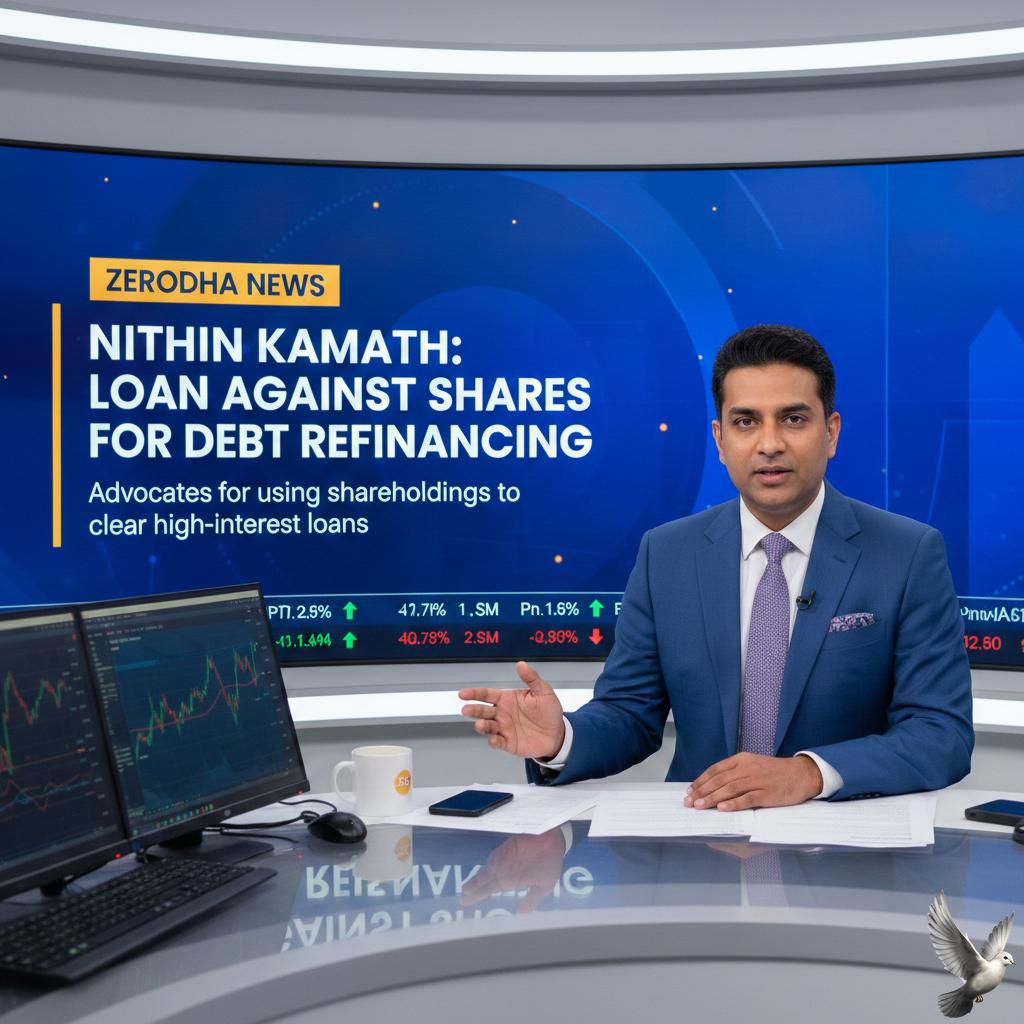
Zerodha’s Nithin Kamath Advocates for Loan Against Shares to Refinance High-Interest Debt
Zerodha Capital has scaled its Loan Against Shares (LAS) business to cross the **Rs 500 crore** mark. CEO Nithin Kamath describes this segment as a strategic tool for investors to settle high-interest liabilities, such as credit card debt or personal loans, without liquidating their long-term portfolios.
The lending unit offers structured interest rates starting at **10.00%** per annum for loan amounts above **Rs 5 crore**. For smaller requirements between **Rs 25,000** and **Rs 50 lakh**, the rate is set at **11.00%**. These rates remain significantly lower than traditional unsecured credit options.
Investors can borrow up to **Rs 10 crore** against a wide list of approved stocks and mutual funds. The process is fully digital, typically seeing funds credited within **one working day**. The model uses a standard Loan-to-Value (LTV) ratio of **50%**, requiring a collateral buffer to manage market volatility.
Kamath has recently highlighted the importance of transparency regarding hidden costs in the broader brokerage industry. He specifically pointed to Depository Participant (DP) charges, which are often overlooked by retail participants because they do not appear on standard contract notes.
At Zerodha, DP charges are fixed at **Rs 15.34** (inclusive of GST) per scrip, per day for male account holders. Female primary holders receive a slight discount, with the total coming to **Rs 15.05**. These fees apply only on the sell side for delivery-based trades and are debited directly from the ledger.
The market environment is shifting due to new regulatory mandates effective **April 1, 2026**. These rules will standardize collateral requirements for market intermediaries. While these changes may increase costs for many brokers, Zerodha expects no impact on its client fee structure as the firm operates as a self-clearing member with zero external financing.
Regulatory changes have also targeted speculative trading. Following the Union Budget 2026, the Securities Transaction Tax (STT) on futures has risen to **0.05%**, while options have seen an increase to **0.15%**. These adjustments make secured lending products like LAS a more stable alternative for maintaining liquidity compared to high-frequency speculative trading.