Bearish News
Collection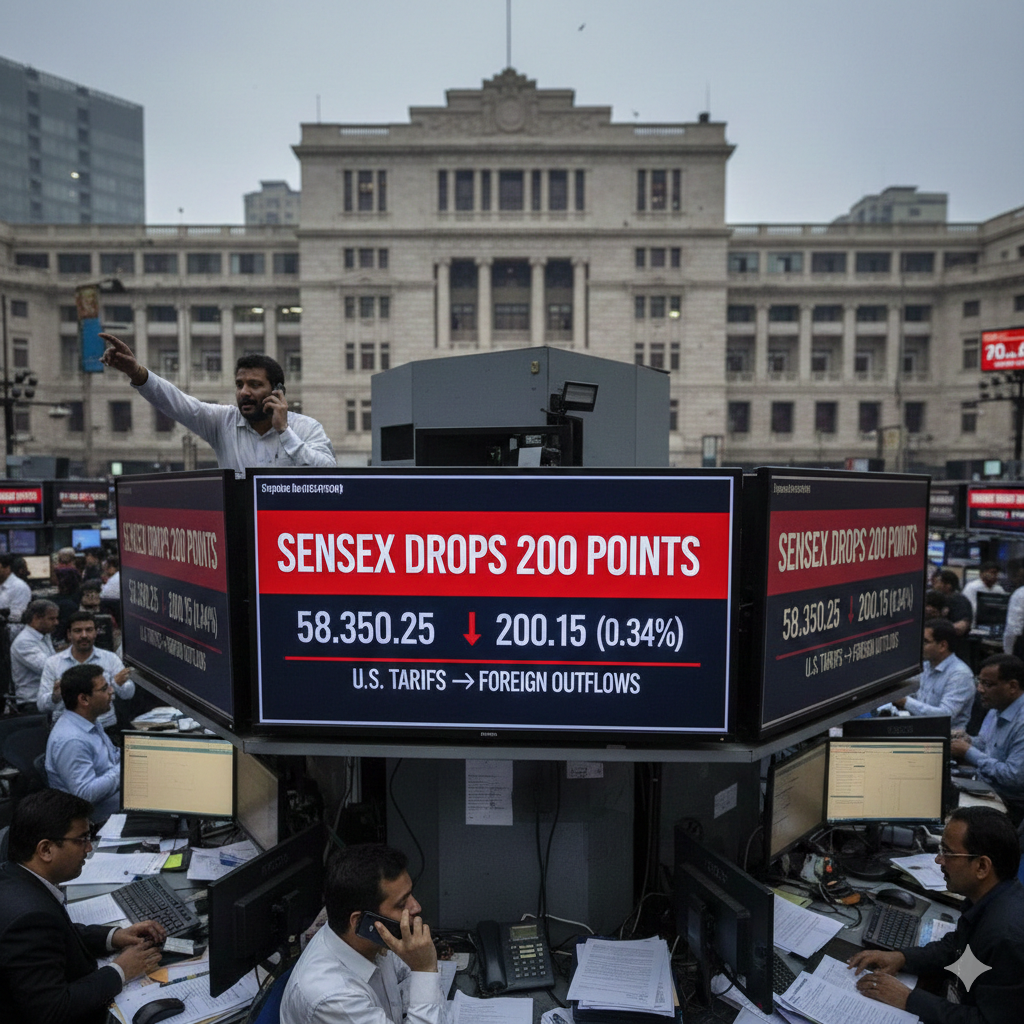
Sensex drops 200 points as U.S. tariff concerns trigger foreign outflows
📉 Benchmarks Decline for Seventh Time in Eight Sessions The benchmark **BSE Sensex** ended the session lower, declining 245 points, or 0.29%, to close at **83,382.71**. The **NSE Nifty 50** also fell, losing 66.7 points, or 0.26%, to settle at **25,665.60**. This marks the seventh decline in eight sessions for both major indexes. The ongoing weakness reflects persistent fragile investor sentiment, notwithstanding isolated strength in certain sectors.

Budget Impact on Defence, Railway, and Infrastructure Capex Stocks: Key Investor Outlook
📊 Union Budget and Capital Expenditure The upcoming Union Budget on February 1 is expected to be a critical test for the capital expenditure (capex) trade, which has experienced a slowdown over the past year. Fiscal discipline is likely to remain a priority for the government. Consequently, any incremental spending on capital formation is projected to be highly selective rather than a broad-based capex push. Focus areas for additional spending are anticipated to include **defence, railways, and other infrastructure-linked segments.** This points towards a strategic, targeted approach to capital expenditure.
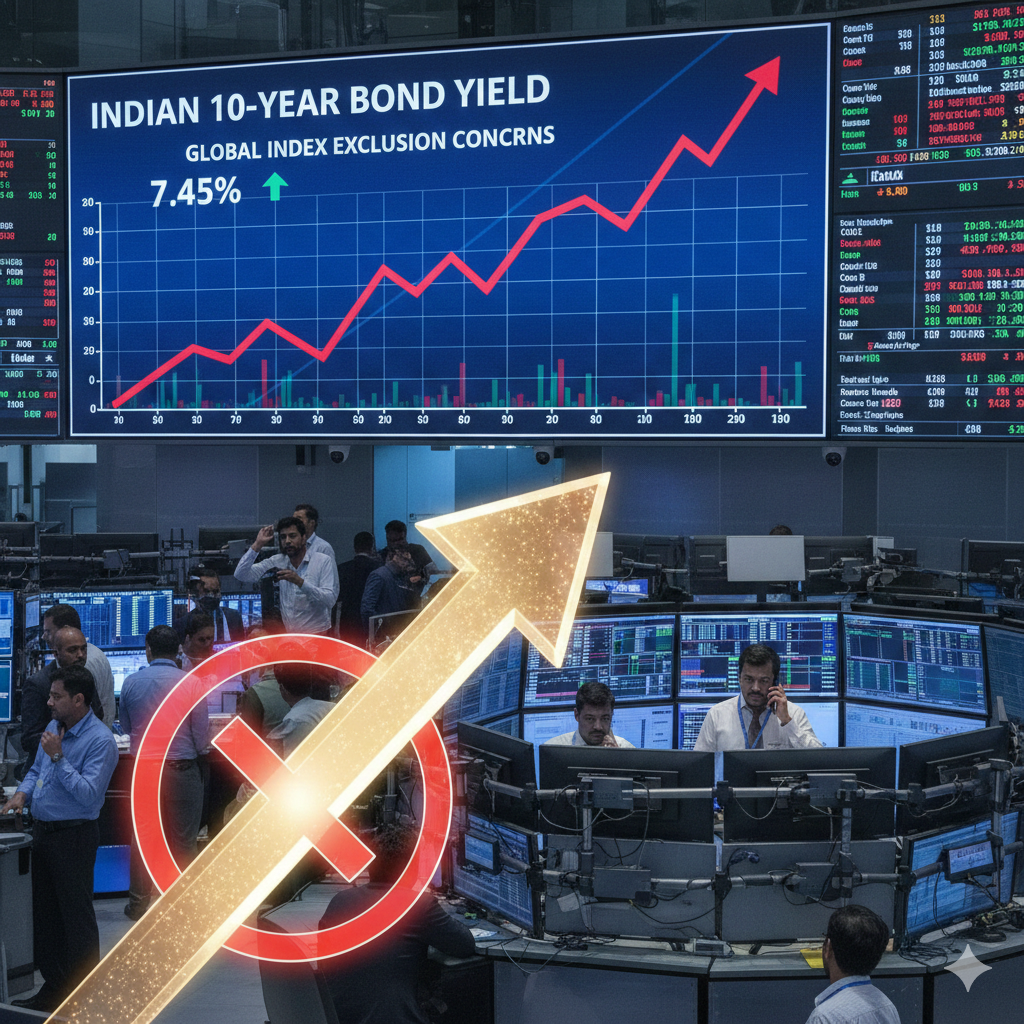
Indian Bond Yields Rise on Persistent Global Index Exclusion Concerns
Indian government bonds extended their decline for a second consecutive session following the unexpected decision to exclude domestic debt from a global index. This development has prompted a cautious outlook among market participants as they reassess capital inflow projections. Selling pressure is further exacerbated by rising crude oil prices, driven by escalating geopolitical tensions in the Middle East. Higher energy costs continue to weigh on fiscal sentiment, fueling concerns regarding inflationary pressures and interest rate trajectories. To mitigate volatility, the Reserve Bank of India is anticipated to intervene and provide liquidity support for bond prices. Despite the broader sell-off, certain investor segments have increased their positions, absorbing a portion of the market supply at current yields.

FII stake in Eternal drops for seventh consecutive quarter amid price correction.
Foreign institutional investor (FII) equity in Eternal has recorded a sustained decline over seven consecutive quarters, retrenching from a 54% peak to the current level of 36.2%. This downward trend is driven by a regulatory mandate imposing a 49.5% cap on foreign ownership. The restriction is a strategic requirement to preserve the company’s Indian ownership status, which is essential for the operation of Blinkit’s inventory-led business model under prevailing foreign direct investment (FDI) guidelines.

Copper reaches new high as supply risks offset stronger dollar.
Copper and tin prices reached record highs on Wednesday, propelled by a convergence of tightening supply and intensified speculative activity. Despite the headwinds of a strengthening U.S. dollar, market sentiment remained bullish as investors reacted to escalating geopolitical tensions and the prospect of new U.S. trade tariffs. The rally in copper is primarily attributed to ongoing mine-level disruptions, which have severely constrained global output. These supply-side pressures have been exacerbated by a buying spree from speculative traders, positioning for further volatility in the industrial metals sector. Tin mirrored this upward trajectory, recording significant price gains alongside broader increases across the base metals complex. The simultaneous rise across multiple commodities suggests a systemic shift in market risk appetite, driven by long-term concerns over resource availability and shifting trade policies.
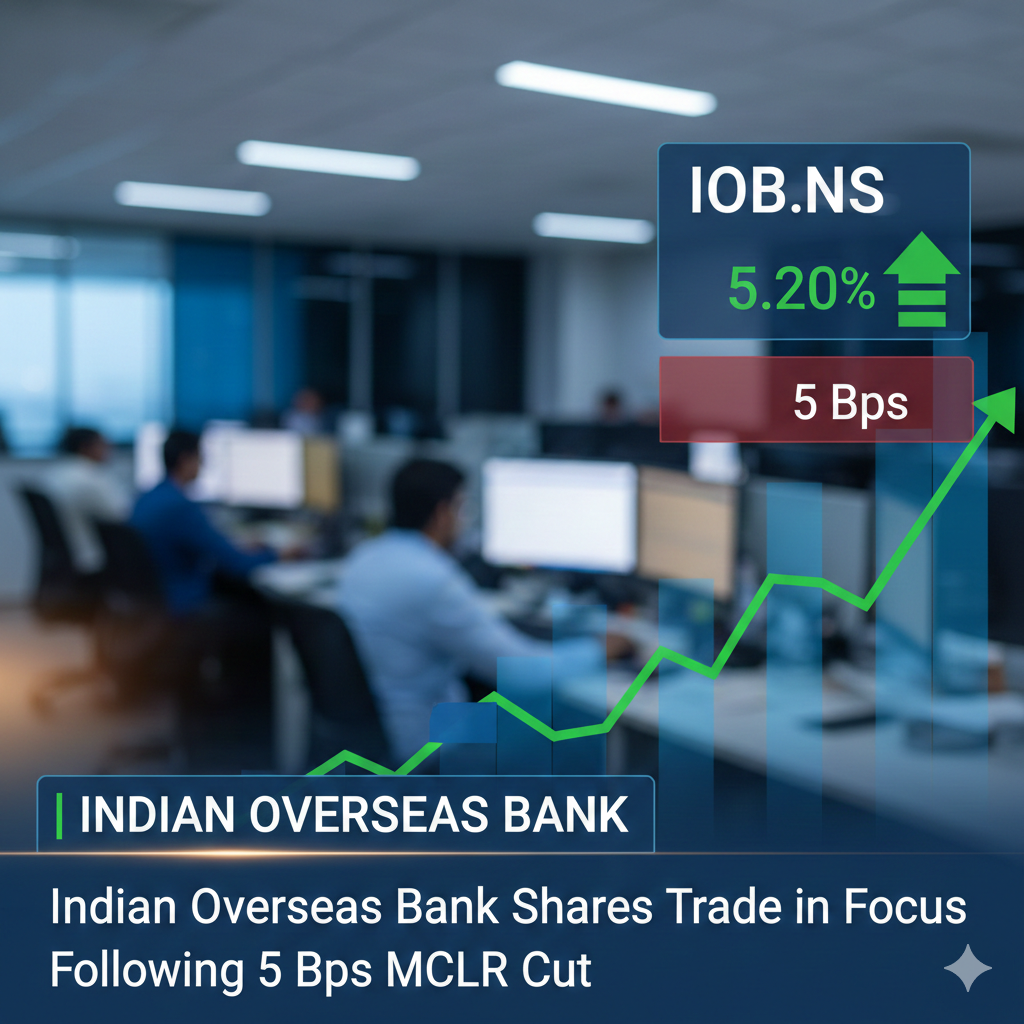
Indian Overseas Bank Shares Trade in Focus Following 5 Bps MCLR Cut
Indian Overseas Bank (IOB) has announced a **5-basis point reduction** in its overnight Marginal Cost of Funds-based Lending Rate (MCLR), effective January 15. While this adjustment signals a shift in the lender's pricing strategy, the immediate impact on the broader loan portfolio is expected to be limited, as the cut is restricted to the overnight tenor. Investor sentiment remains centered on the **government’s ongoing Offer For Sale (OFS)**. Market participants are balancing the marginal rate adjustment against the broader implications of the equity dilution and the bank's long-term interest margin outlook. The lender continues to face scrutiny regarding its cost of funds and asset-liability management. Despite the specific rate cut, existing borrowers on longer-term benchmarks will see no immediate change in their repayment obligations, keeping the primary focus on the bank's capital-raising activities and institutional demand.

Oil Prices Stabilize as Venezuela Resumes Shipments Amid Ongoing Iran Supply Concerns
Global Oil Dynamics **Global crude prices** retreated slightly in the latest session, snapping a four-day rally as market participants weighed diverging supply signals. The downward pressure was primarily driven by the resumption of Venezuelan oil exports, which has provided a measure of relief to global supply concerns. **Geopolitical tensions in Iran** remain a significant upside risk. Ongoing domestic protests have triggered concerns over potential infrastructure disruptions within the OPEC member nation. Market analysts indicate that any sustained interference with Iranian output could significantly tighten global oil balances and support higher price floors. **Inventory data** from the United States further complicated the market outlook. An unexpected rise in domestic crude stockpiles suggested a cooling of immediate demand, offering a counterpoint to the geopolitical risk premiums currently embedded in energy futures. ---

Major Indian Stocks in Focus Including Infosys, Groww, and HDFC AMC
Market Update: Indian Indices Face Resistance on Weekly Expiry Indian equity benchmarks concluded the weekly expiry session with marginal losses, reflecting a period of consolidation amid mixed global and domestic signals. Market sentiment remains cautious as indices struggle to maintain upward momentum, leading to increased volatility across key sectors. Technical analysts are recommending a defensive strategy, advocating for a "sell on rise" approach in the near term. The Nifty 50 faces significant psychological and technical resistance at the **26,000** mark; experts suggest that a sustained recovery is unlikely until this level is decisively reclaimed. On the downside, the **100-day Exponential Moving Average (EMA)**, currently situated near **25,600**, serves as a critical support level. A breach below this threshold could accelerate selling pressure and lead to further technical breakdowns in the broader market. The corporate earnings calendar remains a primary focus for investors. High-profile entities, including **Infosys** and **HDFC AMC**, are scheduled to report their third-quarter financial results today, which is expected to drive stock-specific action and influence overall market direction.
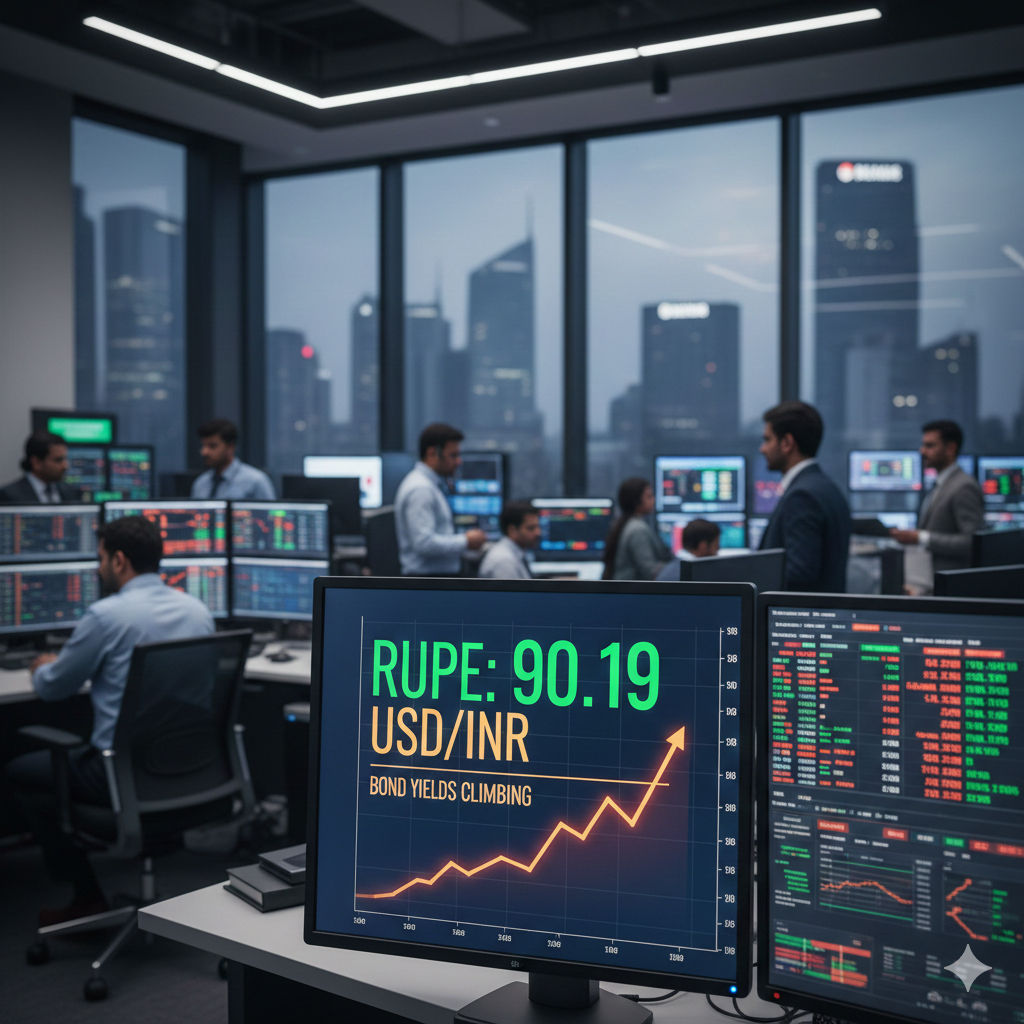
Rupee settles at 90.19 against dollar; bond yields climb
Indian Rupee Performance The Indian rupee declined marginally on Tuesday, settling at **90.19** against the US dollar. This downward pressure primarily stemmed from the exclusion of Indian sovereign bonds from a major global bond index, dampening anticipated capital inflows. The Reserve Bank of India (RBI) reportedly intervened in the foreign exchange market to dampen volatility and prevent a more significant depreciation of the currency. These central bank actions provided a floor for the rupee amidst broader market shifts. External factors further weighed on the currency's valuation. New US tariffs targeting nations engaged in trade with Iran, alongside specific currency swap arrangements, contributed to the rupee’s weakened position.
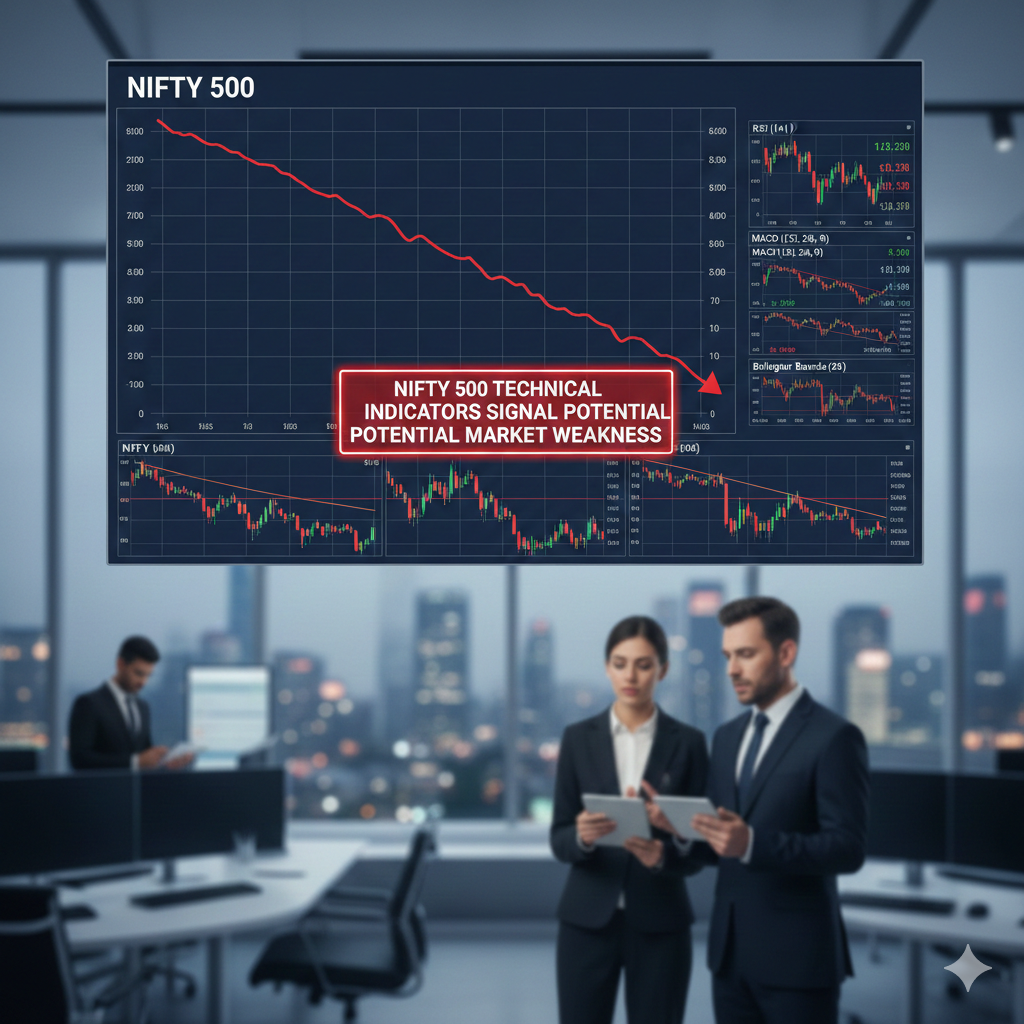
Nifty 500 Technical Indicators Signal Potential Market Weakness
🇮🇳 India Technical Weakness Persists Technical indicators point to a **weakening undertone** across the **top 500 Indian shares**. A majority of these stocks are currently trading **below key moving averages**, signaling broad-based technical weakness. The market sentiment is dominated by sellers, a trend exacerbated by persistent **trade deal uncertainties** and wider **global concerns**. This selling pressure is evident **across sectors**. While the current **oversold conditions** may create potential **buying opportunities** for high-quality stocks, analysts caution that a **decisive, sustained upward trend is not yet anticipated**. The prevailing technical structure suggests bears remain in control.

Ten Factors Influencing Stock Market Performance This Wednesday
🇮🇳 Indian Equities Market Brief Indian equities closed the session lower following a sharp intraday reversal. Initial gains were erased due to a combination of negative global and domestic factors. A major headwind was the mounting concern over **global trade issues**, which dampened overall market sentiment. This was compounded by rising **crude oil prices** and a weaker **Indian Rupee**. Persistent **outflows by Foreign Institutional Investors (FIIs)** placed additional selling pressure on the market. Furthermore, a cautious **earnings outlook** contributed to the late-session decline. These negative triggers overshadowed early support derived from favorable **domestic inflation data** and the notable **resilience shown by the small-cap segment**, which managed to outperform the benchmark indices.
India Bonds Decline Following Bloomberg Index Entry Disappointment
🇮🇳 Indian Bond Market Briefing Indian government bonds declined on Tuesday following the announcement by Bloomberg Index Services to defer the inclusion of Indian debt in its flagship global index. The decision surprised traders, who had largely priced in the expected inclusion, prompting a market correction. Bloomberg Index Services stated that the review for inclusion remains open and ongoing, citing the need for further evaluation of operational and market-infrastructure considerations. The index provider expects to issue an update on the review by mid-2026. The benchmark 10-year yield rose to $6.6277\%$ from $6.6050\%$ on Monday, reflecting the drop in bond prices. The deferral disappointed investors who had anticipated passive foreign inflows estimated to be between $\$10$ billion and $\$25$ billion over the coming months. ---
Indian Rupee slips; likely central bank intervention cushions pressure from weak stocks
Indian Rupee Performance The Indian rupee closed modestly lower on Tuesday, January 13, 2026, pressured by a downturn in domestic equity markets and broad-based weakness across regional Asian currencies. The BSE Sensex fell approximately 0.33% to close at 83,604, while the Nifty 50 also trended lower, reflecting cautious investor sentiment amid geopolitical developments. Losses for the local unit were mitigated by suspected intervention from the Reserve Bank of India. Traders noted the central bank likely engaged in dollar-selling activity to curb volatility and prevent a more pronounced slide toward the 90.30 level. Ongoing foreign institutional investor (FII) outflows from Indian stocks continue to serve as a primary headwind for the currency. Despite these pressures, the central bank’s active management and a scheduled $10 billion USD/INR buy/sell swap are expected to provide short-term stability to the exchange rate.