Bullish News
Collection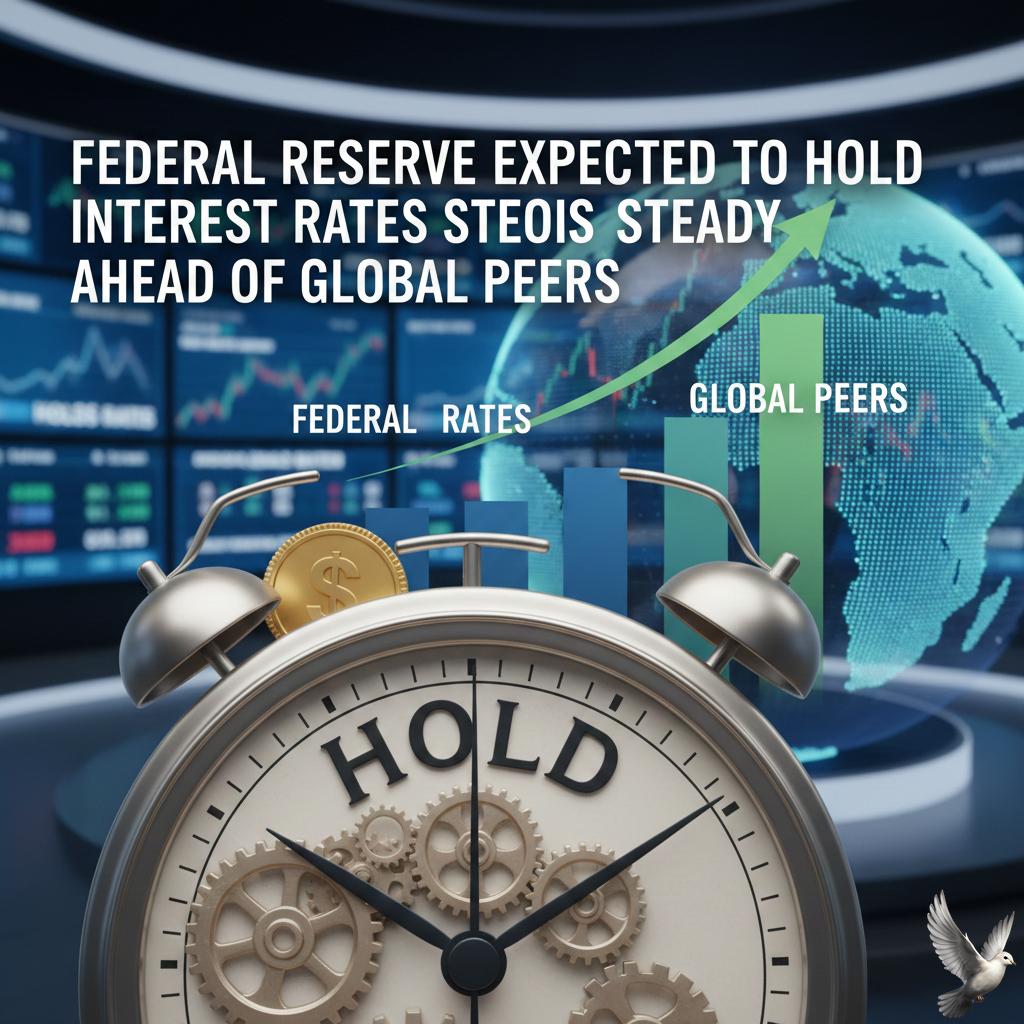
Federal Reserve Expected to Hold Interest Rates Steady Ahead of Global Peers
Global Central Bank Watch: Independence Under Pressure **January 26, 2026** Major central banks are poised to hold interest rates steady this week, defying political pressure in a unified show of policy independence. **Federal Reserve Stance** The Federal Reserve is widely expected to keep the federal funds rate unchanged at **3.5% to 3.75%** following its two-day meeting concluding Wednesday. Despite three consecutive rate cuts in late 2025, officials are signaling a pause to assess economic data. Inflation remains sticky at **2.7%**, well above the **2%** target, while unemployment has settled at **4.4%**. Chairman Jerome Powell faces intensified scrutiny, with reports of legal challenges and subpoenas from the administration, yet the committee remains focused on data over politics. **Global Peers Hold the Line** The synchronized pause extends beyond the US, reflecting a cautious global consensus: * **Bank of Canada:** Expected to maintain its overnight rate at **2.25%** on January 28. Policymakers are navigating trade tensions with the US while managing a cooling domestic economy. * **European Central Bank:** Keeping the deposit facility rate at **2.00%**, with inflation stabilizing near target but growth remaining subdued. * **Riksbank (Sweden):** Anticipated to hold its key rate at **1.75%**, despite falling inflation, as officials seek to ensure price stability is fully entrenched. * **Brazil:** The Central Bank of Brazil is projected to hold the Selic rate at **15%**, resisting calls for premature easing until inflation trends are undeniably favorable. **Market Implications** Investors have priced in this "higher-for-longer" pause, shifting focus to mid-2026 for the next potential easing cycle. The divergence between political demands for cheap money and central bank caution is creating near-term volatility, particularly in bond markets. **Key Takeaway** Central banks are prioritizing long-term credibility over short-term political appeasement. The unified front among officials in Washington, Ottawa, Stockholm, and Brasília signals that monetary policy will remain restrictive until inflation goals are securely met.

Greenko Energy Secures Rs 4,800 Crore Funding from NaBFID
Greenko Energy Holdings has secured a significant financing package from the National Bank for Financing Infrastructure and Development (**NaBFID**), marking a major step in the company's debt management strategy. The transaction involves **₹4,800 crore** (approximately **$578 million**) raised through a long-term project finance facility. *** **Strategic Debt Refinancing** This new funding is critical for refinancing Greenko's maturing dollar-denominated debt. Specifically, the proceeds will be used to redeem **$940 million** in green bonds that are scheduled to mature this year. The bonds were originally issued by Greenko Dutch B.V. in March **2021**. The move is strategically designed to replace shorter-term, foreign currency obligations with a lengthy rupee-denominated structure. This action immediately helps mitigate foreign exchange risk and extends the debt maturity profile of the company. The loan is structured through **38** special purpose vehicles (**SPVs**) which together operate about **1 GW** of renewable capacity, spanning solar, wind, and hydro assets. The project finance facility carries a tenure exceeding **25 years** and an interest rate range of **8.0% to 8.50%**. Bond redemption is expected to be finalized as early as this week. *** **Credit Outlook and Shareholder Support** Despite the successful financing, Greenko's credit profile faces recent headwinds. Ratings agency **Fitch** recently downgraded the company’s long-term foreign-currency issuer rating to **'BB-' from 'BB'**. This revision primarily stems from delays in two key infrastructure projects: the restoration of the **Teesta III** hydro project and the operational commencement of the **480 MW** capacity of its first pumped hydro storage (PSP) project. These delays indicate execution challenges in Greenko’s ambitious pipeline. However, the company maintains strong strategic oversight and financial backing. Majority owner **GIC** holds a substantial **58%** stake, with committed equity support to fund **25%** of the capital expenditure for under-construction PSPs. This powerful shareholder support provides a financial cushion against project execution risks. *** **Capacity and Next-Generation Projects** Greenko is one of India's leading renewable energy players, currently operating a net installed capacity of **11 GW** across more than **20** states in India. The company is undergoing a major technological shift, pivoting towards intelligent, round-the-clock power solutions. This is driven by large-scale Integrated Renewable Energy Storage Projects (**IRESPs**) in development across Andhra Pradesh, Madhya Pradesh, and Karnataka. The total capacity of these next-generation storage platforms under development stands at a significant **15.82 GW**. Furthermore, Greenko is positioning itself at the forefront of the **Zero-Carbon Molecules** market, particularly in **Green Hydrogen** and **Green Ammonia**. The company is moving forward with plans for a **1 MTPA** (Million Tonnes Per Annum) Green Ammonia production plant on the East Coast of India, and is collaborating on similar ventures, underscoring its commitment to decarbonizing hard-to-abate industrial sectors. This emphasis on storage and molecules aligns with India’s national objective to achieve **500 GW** of non-fossil fuel capacity by **2030**, building on the **226 GW** installed capacity achieved by mid-2025. Greenko’s strategy is vital to ensuring grid stability and reliable renewable power supply in the country's rapidly evolving energy market.

Nifty Outlook: Relief Rally Potential Amid Tariff Hopes, FII Activity Watched
**Market Brief: Week of January 27, 2026** **Shortened Trading Week Ahead** Indian equity markets remain closed on Monday, January 26, for Republic Day. Trading resumes Tuesday, January 27, kicking off a volatile four-day week dominated by global geopolitical cues, Q3 earnings, and pre-Budget positioning ahead of the Union Budget on February 1. **Key Drivers & Sentiment** * **Tariff Relief Hopes:** Sentiment may see an early boost following US Treasury Secretary Scott Bessent's hint at potentially removing the **25%** penal tariff on India. This comes after a sharp reduction in Indian imports of Russian oil, signaling a possible thaw in trade tensions. * **Institutional Flows:** Foreign Institutional Investors (FIIs) remain net sellers, offloading approximately **₹2,550 crore** in the last session, continuing a trend of outflows. Domestic Institutional Investors (DIIs) continue to cushion the fall, purchasing **₹4,223 crore** worth of equities. A sustained market rebound hinges critically on a reversal or pause in this foreign selling spree. * **Pre-Budget Caution:** Historical data indicates volatility often rises in the week preceding the Union Budget. Traders are expected to remain cautious, with profit-booking likely at higher levels until fiscal policy direction becomes clear. **Market Performance Snapshot (Friday Close)** * **Nifty 50:** Closed at **25,048.65** (Down **0.95%**) * **Sensex:** Closed at **81,537.70** (Down **0.94%**) * **Bank Nifty:** Closed at **58,473.10** (Down **1.23%**) * **Sectoral Lag:** Realty, Banking, and Financial Services faced the brunt of the selling pressure, while selective buying was seen in Pharma and FMCG. **Technical Outlook & Key Levels** The Nifty 50 has slipped below key short-term averages, with the RSI approaching oversold territory (near 30). This suggests a potential for a relief rally, though the broader trend remains weak unless resistance bands are reclaimed. * **Nifty 50 Support:** **24,710** / **24,500** * **Nifty 50 Resistance:** **25,400** / **25,610** * **Bank Nifty Support:** **57,995** / **57,700** * **Bank Nifty Resistance:** **58,950** / **59,250** **Strategy Focus** Market participants should watch for a "buy-on-dips" approach near the **24,700** support zone, keeping strict stop-losses. Upside momentum requires a decisive close above **25,400** to negate the current bearish grip. Volatility is expected to remain high; defensive sectors like FMCG and Pharma may offer relative safety amidst the pre-budget turbulence.
BSE, NSE Closed Today for Republic Day
**Indian Market Brief — Monday, January 26, 2026** **Market Status: Holiday Closure** Indian equity markets (NSE and BSE) are closed today in observance of Republic Day. There will be no trading in the equity, derivative, or currency segments. Commodity markets will remain closed for the morning session but will open for the evening session at **5:00 PM IST**. Trading across all equity segments resumes tomorrow, **Tuesday, January 27, 2026**. **Previous Session Recap (Friday, Jan 23)** Markets ended the week on a bearish note, witnessing a sharp sell-off due to weak Q3 earnings and sustained foreign outflows. * **Sensex:** Closed at **81,537.70**, down **769.67 points** (**-0.94%**). * **Nifty 50:** Settled at **25,048.65**, falling **241.25 points** (**-0.95%**). * **Bank Nifty:** Ended lower at **58,473.10**. Broader markets underperformed significantly, with the BSE Smallcap index plunging **2.19%** and the Midcap index sliding **1.56%**. **Key Drivers & Sector Action** * **Sector Lagards:** Selling pressure was widespread. Realty, PSU Banks, and Metals dragged the indices lower. * **Stock Movers:** **Tech Mahindra**, **Hindustan Unilever**, and **Infosys** were among the few gainers, providing slight support. Conversely, **Adani Ports**, **Axis Bank**, and **Bajaj Finserv** were major draggers. * **Earnings Impact:** **IndiGo** shares remained volatile after reporting a **78%** drop in Q3 profit, while **Home First Finance** surged over **6%** on strong results. **Institutional Activity** Foreign investors continued their selling spree, while domestic funds offered support. * **FIIs (Foreign Institutional Investors):** Net sellers of **₹2,549.80 crore**. * **DIIs (Domestic Institutional Investors):** Net buyers of **₹4,222.98 crore**. **Global Cues** Global sentiment remains mixed as Indian markets take a pause. * **US Markets:** Wall Street closed higher on Friday. The **S&P 500** gained **0.6%** and the tech-heavy **Nasdaq** rose **0.9%**, despite **Intel** crashing **17%** on weak guidance. * **Asian Markets:** Trading is active in major Asian hubs today, with trends largely following the positive handover from the US session. **Outlook for Tuesday** When trading resumes on **January 27**, market participants will react to global cues accumulated over the long weekend. Key focus areas remain the ongoing **Q3 earnings season** and positioning ahead of the **Union Budget** in February. Volatility is expected to remain high with the Nifty testing critical support near the **25,000** mark.

ICICI Prudential AMC Leverages Hybrid Long-Short Strategies for Return Stability
**Market Brief: iSIF Hybrid Long–Short Fund** **Date:** January 25, 2026 **Fund Category:** Interval Hybrid (Equity & Debt) **Benchmark:** CRISIL Hybrid 50+50 Moderate Index **Executive Summary** The **iSIF Hybrid Long–Short Fund** (managed by ICICI Prudential AMC) is currently positioned as a strategic interval solution designed for the complex market environment of early **2026**. With the Nifty 50 hovering near **26,146** and the India VIX recently spiking over **8%**, the fund's mandate to blend equity and debt with limited short exposure offers a tactical hedge against heightened volatility. **Strategy & Structure** The fund employs a differentiated "long-short" approach using derivatives to manage net exposure dynamically. * **Equity Leg:** Managed by Rajat Chandak and Ayush Shah, the equity portion utilizes derivatives not just for hedging but to generate income through special situations, aiming to decouple returns from pure directional market beta. * **Debt Leg:** Managed by Manish Banthia and Akhil Kakkar, the debt component focuses on accrual and stability, providing a floor to the portfolio during equity drawdowns. **Market Context: January 2026** * **Equity Landscape:** Markets are currently range-bound with a cautiously optimistic undertone. While domestic institutional investors (DIIs) have been net buyers (adding over **₹4,500 crore** recently), foreign flows remain weak. This divergence creates the "range-bound with spikes" volatility that long-short strategies are specifically built to exploit. * **Fixed Income:** With the rate-cutting cycle widely viewed as nearing its end, bond yields are stable. The fund’s ability to adjust exposure allows it to navigate this flat yield curve effectively compared to traditional duration strategies. **Key Features** * **Risk Management:** The strategy targets lower volatility than pure equity funds by actively adjusting net exposure based on valuations. * **Liquidity:** As an interval scheme, it offers limited liquidity windows, aligning investor capital with the longer-term horizon required for special situation trades to mature. * **Suitability:** Ideal for investors seeking risk-adjusted returns who are comfortable with lock-in periods in exchange for lower correlation to the broad market indices. **Current Status** The fund was recently open for subscription in **January 2026** with an NFO price of **₹10.00**. It aims to capitalize on the current valuation dispersion between large-cap stability and mid-cap volatility. **Actionable Next Step** Review the fund's specific interval windows and taxation structure (debt vs. equity classification) to align with your FY26 portfolio rebalancing needs.
Union Budget 2026: Measures to Restore Retail Investor Confidence
**Market Brief: Retail Resilience Meets Policy Friction** **Retail Investors: The New Market Backbone** Indian retail investors have demonstrated remarkable resilience through the volatility of late 2025. Despite foreign outflows and global headwinds, domestic liquidity remains the market's primary stabilizer. * **Record Inflows:** Monthly SIP contributions hit an all-time high of **₹31,002 crore** in December 2025. * **Annual Surge:** Total SIP inflows for calendar year 2025 surged to **₹3.34 lakh crore**, significantly outpacing previous years. * **Active Base:** The market now sees participation from over **9 crore** active SIP accounts, signaling a structural shift from saving to investing. **Taxation: The Competitiveness Challenge** While domestic capital formation is robust, tax layers are creating visible friction. The increase in Securities Transaction Tax (STT) and the hike in capital gains tax rates (LTCG to **12.5%** and STCG to **20%** effective mid-2024) have raised the cost of capital. Compared to global peers like the US or Singapore—where foreign investors often face **0%** capital gains tax on listed equities—India’s tax regime appears expensive. The combination of STT, higher capital gains levies, and complex surcharges for foreign investors is dampening India's appeal relative to other emerging markets. **Budget Expectations & Policy Outlook** Investors are looking toward the upcoming Union Budget for rationalization. The market consensus suggests that a predictable, stable tax framework is critical to sustain the current momentum. Any move to streamline STT or simplify capital gains structures would be viewed as a major positive for long-term competitiveness. **Strategic Capex: Defence and Infrastructure** Government spending remains the engine for long-term growth, particularly in strategic sectors: * **Defence Push:** The 2025-26 allocation of **₹6.81 lakh crore** highlights a continued focus on modernization and indigenization. * **Capital Outlay:** Significant portions of this budget are earmarked for capital expenditure, essential for upgrading military hardware and reducing import dependence. * **Infrastructure:** sustained capex in infrastructure is expected to continue acting as a multiplier for economic activity, supporting the "India Growth Story" that retail investors are betting on. **Summary** The Indian market is currently defined by a tug-of-war between robust domestic liquidity and high frictional costs. While retail investors have held the fort with record **₹31,000+ crore** monthly inflows, sustaining this confidence requires a tax policy that balances revenue generation with global competitiveness.
NSE and BSE to Remain Closed on January 26 for Republic Day
**Market Brief: Republic Day Closure & Weekly Outlook** **Trading Holiday Update** Indian equity benchmarks **NSE Nifty 50** and **BSE Sensex** will remain closed on **Monday, January 26, 2026**, in observance of Republic Day. The closure extends to the currency and debt segments. Multi Commodity Exchange (MCX) will remain closed for the morning session but will resume trading in the evening session from 5:00 PM. Regular trading activity across all segments resumes on **Tuesday, January 27, 2026**. --- **Market Recap: Bears Tighten Grip** Markets enter the holiday break on a weak note following a sharp sell-off in the previous session (Friday, January 23). * **Sensex:** Closed at **81,537**, down **770 points** (-0.94%). * **Nifty 50:** Settled at **25,048**, losing **241 points** (-0.95%). * **Broader Market:** Selling pressure was acute in mid and small-cap stocks, with the Nifty Smallcap 100 plunging over **2%**. * **Wealth Erosion:** Investors lost approximately **₹6 lakh crore** in a single session. **Key Drivers** * **FII Outflows:** Relentless selling by Foreign Institutional Investors continues to weigh on sentiment. * **Currency Pressure:** The Indian Rupee weakened to record lows, hovering near **92** against the US Dollar. * **Pre-Budget Nerves:** Caution is elevated ahead of the Union Budget 2026, scheduled for presentation on **February 1**. --- **Week Ahead: Budget in Focus** Upon resumption on Tuesday, volatility is expected to remain high. Traders are positioning for the Union Budget, which will be presented on a Sunday this year. Exchanges have announced a **special trading session on Sunday, February 1, 2026**, to align with the budget speech. **2026 Holiday Calendar** Republic Day marks the second trading holiday of the year. Markets will remain shut for **14 additional sessions** in 2026, including major observances such as Holi, Ram Navami, Diwali, and Christmas.
STT and Dividend Double Taxation Review Needed: WhiteOak's Aashish Somaiyaa
**Market Brief: Budget 2026 & Structural Reforms** **Taxation Framework Under Scrutiny** As the Union Budget 2026 approaches, market discourse has shifted toward addressing structural frictions rather than expecting populist headline reforms. WhiteOak CEO Aashish Somaiyaa identifies the current taxation regime—specifically the coexistence of Securities Transaction Tax (STT) and Long-Term Capital Gains (LTCG)—as a significant efficiency barrier. Original intent for STT was to replace capital gains tax; however, the simultaneous application of both is now viewed by institutional leaders as double taxation. Similarly, the dividend taxation framework faces criticism. With companies paying taxes on profits and shareholders taxed again on distributed dividends, the structure potentially disincentivizes payouts and weakens corporate governance appeal. **Market Flows & Volatility** Current market data reflects this cautious sentiment. As of late January 2026, the Nifty 50 hovers around the **25,150** mark, navigating heightened volatility. Foreign Institutional Investors (FIIs) remain net sellers, with recent sessions recording outflows exceeding **₹4,100 crore** in the cash segment. Conversely, Domestic Institutional Investors (DIIs) continue to provide support, purchasing over **₹4,100 crore** in corresponding sessions. Somaiyaa characterizes these FII outflows as cyclical rather than structural. The consensus among fund managers is that foreign confidence will hinge on India's macro stability and fiscal prudence rather than short-term incentives. **Policy Continuity: Atmanirbhar Bharat** The *Atmanirbhar Bharat* initiative is now viewed as a continuity-led execution strategy rather than a new policy pivot. Recent developments, such as the Indian Army’s partnership with IISc for indigenous AI systems and the expansion of the "One District One Cuisine" scheme, signal a shift from intent to ground-level implementation. Investors expect Budget 2026 to reinforce this manufacturing and self-reliance narrative without disrupting fiscal consolidation paths. The focus remains on reducing transaction friction to enhance India’s competitiveness as a global investment destination. *** ... [Aashish P. Somaiyaa Exclusive: Market Outlook 2026](https://www.youtube.com/watch?v=evttT6NqPYI) ... This video features a discussion involving Aashish Somaiyaa, providing direct insight into his market perspectives and the broader investment climate for 2026. http://googleusercontent.com/youtube_content/0

Call for Review of STT and Dividend Double Taxation Framework
**Market Brief: Budget 2026 & Structural Frictions** **Current Market Landscape (Jan 25, 2026)** The Indian markets are trading with a cautious undertone ahead of the Union Budget. The **Sensex** is hovering around **82,300**, while the **Nifty50** has slipped below the **25,100** mark. Volatility is elevated, driven by significant foreign outflows; Foreign Institutional Investors (FIIs) have pulled out approximately **$2.1 billion** in the first half of January 2026 alone, exerting pressure on the rupee and broader indices. **The Friction Point: Taxation Review** WhiteOak CEO Aashish Somaiyaa emphasizes that the immediate priority for Budget 2026 should be addressing "structural market frictions" rather than announcing new headline reforms. * **Double Taxation Concern:** The current framework levies **Securities Transaction Tax (STT)** (currently **0.1%** on delivery) alongside Capital Gains Tax. * **Dividend Tax Burden:** Dividends are distributed from corporate post-tax profits and subsequently taxed again at the shareholder's slab rate. Somaiyaa argues this layering creates a "double taxation" effect that penalizes capital formation and needs urgent review to restore market efficiency. **Structural Continuity: Atmanirbhar Bharat** Despite short-term volatility, the structural story remains intact. * **Policy Continuity:** Somaiyaa views *Atmanirbhar Bharat* not as a one-off scheme but as a continuity-led strategy. * **Sectoral Impact:** This is evidenced by the **9.5%** increase in defence budget allocation (reaching **₹6.81 lakh crore** for 2025-26) and sustained Production Linked Incentive (PLI) schemes driving manufacturing in electronics and defence. **Outlook: Macro Stability is Key** Addressing the cyclical nature of FII flows, Somaiyaa stresses that foreign capital chases macro stability rather than short-term incentives. With FIIs currently in a selling mode due to global geopolitical cues and valuation concerns, maintaining fiscal prudence and a stable tax environment in Budget 2026 will be critical to reviving foreign investor confidence. *** [WhiteOak CEO on Market Reforms](https://www.youtube.com/shorts/AxMZcoQIR0g) This video is relevant because it features Aashish Somaiyaa discussing WhiteOak's investment framework and multi-asset strategy, providing direct insight into the thinking behind the market views summarized above. http://googleusercontent.com/youtube_content/0

Nine of Top 10 Firms Lose Rs 2.51 Lakh Crore in Market Cap; RIL Leads Decline
The Indian equity market concluded the recent week under significant pressure, witnessing a sharp correction that wiped out substantial investor wealth across the largest listed companies. The combined market valuation of nine out of the nation’s top ten most valued firms plummeted by a staggering **Rs 2,51,711.6 crore** (approximately **$30.3 billion**), driven by a broad sell-off fueled by macroeconomic factors and specific corporate headwinds. The benchmark S&P BSE Sensex, a key indicator of market sentiment, registered a steep decline of **2,032.65 points**, translating to a **2.43%** drop for the week. This decisive move confirmed the bears were firmly in control, reflecting sustained pressure from foreign institutional investor (FII) outflows, weak global economic cues, and cautious sentiment ahead of major domestic events. The NSE Nifty 50 tracked a similar trajectory, settling near the **25,000** psychological mark. *** Sectoral Impacts and Corporate Headwinds The massive erosion in market capitalization was highly concentrated among blue-chip heavyweights, led prominently by India's most valuable company, Reliance Industries (RIL). **Reliance Industries** suffered the sharpest blow, with its market value shrinking by **Rs 96,960.17 crore**. The company's current market cap stands near **Rs 18,75,533 crore**. This severe contraction came immediately following its third-quarter financial results. Although core Oil-to-Chemicals (O2C) and Digital Services segments showed resilience, the Retail business underperformed analyst expectations, largely due to increased competition, accelerated investments in Quick Commerce, and a sequential softening of growth. The financial sector was the next major contributor to the downturn. **ICICI Bank** saw the second-largest loss, with its valuation eroding by **Rs 48,644.99 crore**. This decline signals investor nervousness within the banking space, potentially linked to broader caution regarding lending growth and asset quality moving forward. Other dominant financial players also witnessed substantial corrections. **HDFC Bank**, despite holding the second position in overall market capitalization, faced selling pressure, as did several non-banking finance leaders. The weakness indicated a flight from domestic cyclicals amid economic uncertainty. *** Broader Trends and Outlook The market rout was not confined to a single sector but pointed to an overarching re-rating across high-cap stocks. Heavyweights in telecommunications, fast-moving consumer goods (FMCG), and infrastructure also faced significant erosion. This broad weakness contrasts sharply with the narrow, concentrated rallies seen previously, suggesting a shift in investor focus toward defensive sectors or stocks demonstrating clear, unambiguous earnings beats. The persistent outflow of foreign capital remains a critical dampener for the market. FIIs have been net sellers in recent sessions, unwinding positions and contributing directly to the downward pressure on index heavyweights. Domestic investors and mutual funds have provided some counter-balancing stability, but their buying activity was insufficient to absorb the full extent of the sell-off. Current index levels, with the Sensex closing near **81,538** and the Nifty around **25,049**, reflect the deep-seated caution. Market observers suggest that stability will depend on two key factors: a positive surprise in upcoming global economic data, and a decisive end to the subdued corporate earnings season. Until these catalysts materialize, the market is expected to remain range-bound, sensitive to every global cue and subject to continued stock-specific price volatility, particularly among the top-tier corporations.
Mukul Agrawal Q3 Portfolio Changes
**Mukul Agrawal’s Portfolio: Strategic Shifts Amid Q3 Volatility** **Briefing Date:** January 25, 2026 **Portfolio Value:** ~₹6,500 – ₹6,600 Cr **Theme:** Contrarian Bets & Profit Booking --- **### 📉 Tactical Repositioning** Ace investor **Mukul Mahavir Agrawal** executed significant reshuffles in his equity portfolio for the quarter ending December 2024. Amid a broader smallcap selloff—where the index dipped nearly **6%** in 2025—Agrawal’s strategy pivots toward value picking in beaten-down sectors while locking in gains from high-flyers. **### 🆕 Fresh Entries: Contrarian Plays** Agrawal entered stocks that have seen deep corrections, signaling a belief in their structural turnaround. * **Hindustan Construction Company (HCC):** Acquired a **1.68%** stake (4.40 crore shares). Despite the stock correcting **30%** over the past year, Agrawal sees value in the infrastructure major, recently bolstered by a debt-reduction drive and rights issue. * **Allcargo Logistics:** Picked up a significant **2.9%** stake. This entry is particularly bold as the stock has corrected approximately **80%** over the last year, indicating a strong reversion-to-mean bet in the logistics sector. * **Sudeep Pharma:** A new addition with a **1.33%** stake, diversifying his exposure into the pharmaceutical ingredients space. **### 🔼 Stake Increases: Building Conviction** * **Vasa Denticity:** Raised holding by **0.4%**, taking the total stake to **2.4%** in this B2B dental e-commerce player. * **Vikran Engineering:** Increased exposure by **0.2%**, despite the stock trading **10%** below its IPO price, suggesting long-term confidence in the EPC player. * **N R Agrawal Industries:** Marginally hiked stake by **0.1%** in the paper and packaging firm. **### 🔽 Trims & Exits: Risk Management** Agrawal trimmed positions in outperformers and underperforming names alike to optimize capital allocation. * **Stanley Lifestyles:** Likely a **complete exit** (or stake reduced below 1%). The stock had struggled, falling nearly **50%** over the last year. * **Monolithisch (Monolithic) India:** Reduced stake by **0.2%** to **2.76%**. The stock has cooled off by **~20%** from its November 2025 highs. * **Pearl Global:** Trimmed **0.2%**. The apparel manufacturer has had a rough start to 2026, dropping nearly **15%** in January alone. * **Profit Booking:** Reduced exposure in multibaggers like **ASM Technologies** (-0.4%), **Autoriders** (-0.7%), and **Zota Health Care** (-0.8%) to protect capital after stellar runs. **### 📊 Market Context** These moves reflect a classic "buy fear, sell greed" approach. While the street remains cautious on smallcaps following the 2025 correction, Agrawal is aggressively accumulating deep-value infrastructure and logistics plays, anticipating a cycle rotation in 2026.

Mukul Agrawal Q3 Portfolio Update: Holdings and Adjustments
Ace investor **Mukul Mahavir Agrawal’s** equity portfolio has delivered exceptional recent performance, with his total valuation climbing to an estimated **Rs 7,250 crore** as of the latest January 2026 market disclosures. This represents a significant capital appreciation from the **Rs 6,500 crore** figure reported just one quarter prior. The investor’s strategy hinges on tactical repositioning executed during periods of volatility. His original Q3 moves, including large entries into infrastructure and logistics, were a direct counter to the sharp small-cap selloff witnessed in **September 2025**. That market correction proved to be an excellent buying opportunity. Following the dip, the small-cap segment staged a powerful recovery. The **Nifty Smallcap 100 index** surged by a robust **18.5%** through the fourth quarter of 2025. This decisive rebound validated his high-conviction buying during the period of market fear. Agrawal's conviction remains strongest in companies driving India’s domestic infrastructure and consumption story. His significant new entry, **Hindustan Construction Company (HCC)**, has been a key driver of the recent gains. HCC stock has been a phenomenal performer, registering gains of over **110%** in the past twelve months. This rally is supported by substantial new contract awards in the critical nuclear and hydro power sectors. The stock is currently trading near **Rs 48.50**. The focus on capital goods extends to logistics. The investor increased his exposure to **Allcargo Logistics**, a bet on corporate restructuring to unlock shareholder value. The stock is trading around **Rs 78.00**, following announcements of strategic demergers designed to separate its business units and boost independent valuations. Another high-growth acquisition, **Vasa Denticity**, has maintained its strong momentum. This company, operating in the specialized dental care supply chain, has seen its stock price accelerate by over **40%** in the past three months. This growth reflects successful market penetration in a highly niche and rapidly expanding segment. The tactical repositioning also involved capital rotation. The investor fully exited his position in **Pearl Global** during the late Q4 2025 period, completing a trimming process initiated in Q3. This confirms a clear divestment from textile-linked holdings to fund higher growth opportunities. Similarly, positions in companies like **Monolithisch** and **Stanley Lifestyles** were either fully exited or significantly reduced. This reflects a strategic preference to consolidate holdings into high-conviction picks such as **Vikran Engineering** and other essential infrastructure firms that benefit directly from the nation’s accelerated project pipeline. The overall portfolio structure suggests a clear expectation of continued strong tailwinds for sectors linked to public capital expenditure, domestic economic growth, and structural reforms throughout the current fiscal year.
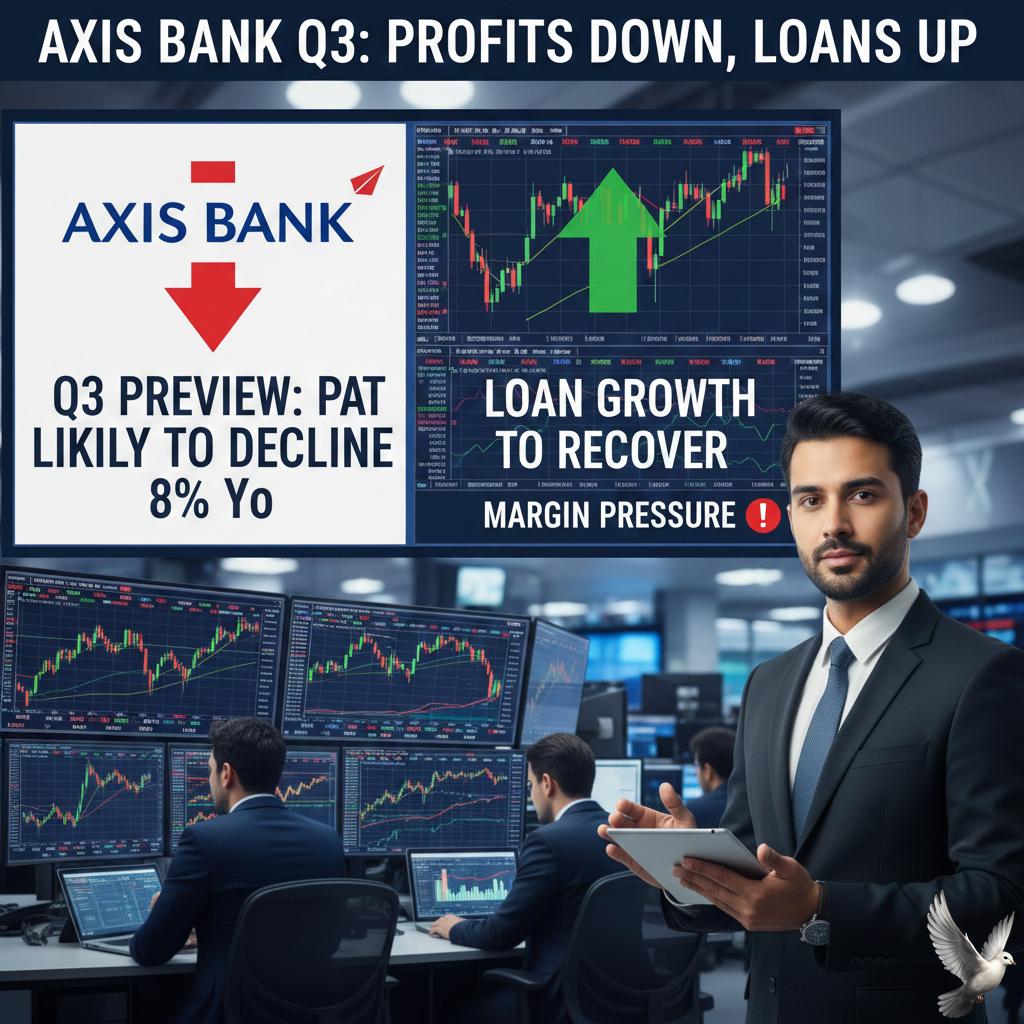
Axis Bank Q3 Preview: PAT Likely to Decline 8% YoY on Margin Pressure; Loan Growth to Recover
**Axis Bank Q3 Preview: Volumes vs. Margins** **Overview** Axis Bank is poised for a mixed third-quarter performance. While the lender demonstrates robust balance sheet expansion driven by healthy volumes, profitability faces significant headwinds from continued margin compression. **Financial Outlook** Net Interest Income (NII) is projected to increase by approximately **4%** year-on-year. However, the pressure on margins is expected to impact the bottom line, with Profit After Tax (PAT) likely declining by around **8%**. **Operational Growth** Credit demand remains resilient for the private lender. Loan growth is anticipated to rebound to nearly **14%** year-on-year. Simultaneously, deposit accretion is outpacing the broader industry average, supporting overall liquidity and funding stability.
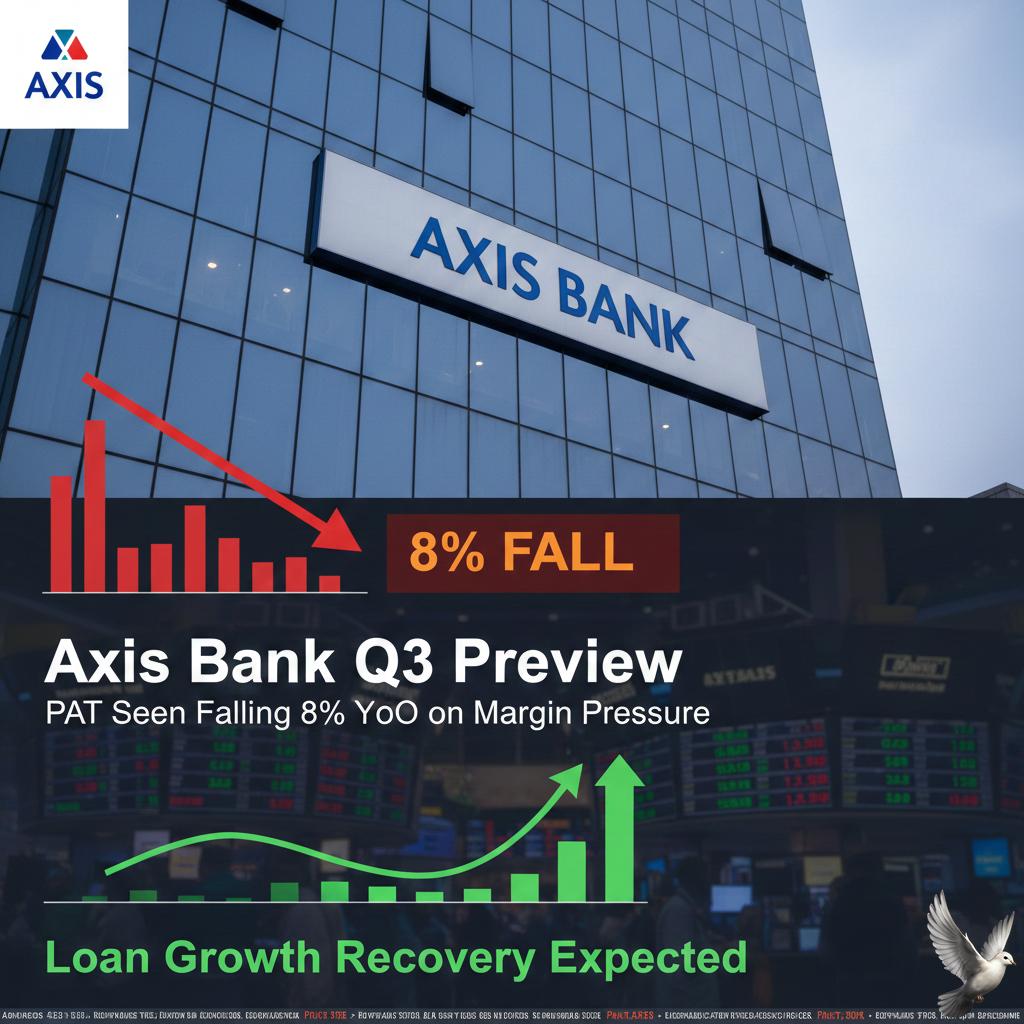
Axis Bank Q3 Preview: PAT Seen Falling 8% YoY on Margin Pressure; Loan Growth Recovery Expected
**Market Update: Axis Bank Q3 FY25 Performance Brief** **Headline Results: Mixed Numbers, Stock Under Pressure** Axis Bank delivered a muted Q3 FY25 report card, largely missing street estimates. While profitability showed modest growth, the lender grappled with slower balance sheet expansion and margin compression, triggering a sharp correction in its stock price. **Key Financial Metrics** * **Net Profit:** Reported at **₹6,304 crore**, up **4%** year-on-year (YoY). This fell short of broader analyst expectations for stronger bottom-line growth. * **Net Interest Income (NII):** Rose **9%** YoY to **₹13,606 crore**, supported by loan assets but weighed down by higher funding costs. * **Net Interest Margin (NIM):** Compressed to **3.93%**, down **6 basis points** sequentially. The squeeze reflects the ongoing industry-wide challenge of rising deposit costs outpacing yield improvements. **Business Growth vs. Expectations** * **Loan Growth:** Advances grew **9%** YoY to **₹10.14 lakh crore**, significantly lagging the earlier projected **14%** rebound. Retail and SME segments drove the bulk of this growth, while corporate lending remained sluggish. * **Deposit Growth:** Deposits increased **9%** YoY, barely keeping pace with loan growth. This effectively dashed hopes of the bank outboundarying the industry average significantly this quarter. **Asset Quality & Provisions** * **Gross NPA:** Improved to **1.46%** (down **12 bps** YoY). * **Net NPA:** Stable at **0.35%**. * **Provisioning Spike:** Provisions for bad loans jumped **110%** to **₹2,155 crore**, a key factor dragging down net profit growth despite healthy operating numbers. **Market Reaction** Investors reacted negatively to the sluggish credit growth and margin pressure. The stock dropped approximately **3.5% to 5%** following the announcement, touching new 52-week lows as brokerages adjusted their outlooks downward. --- **Watch: Axis Bank Q3 Earnings Breakdown** [Axis Bank Q3 Results 2025: PAT Grows 3.8% YoY](https://www.youtube.com/watch?v=kTv6P6RIpsM) This video provides a concise visual summary of the earnings report, highlighting the specific areas where the bank missed analyst estimates. http://googleusercontent.com/youtube_content/0
Axis Bank Q3 Preview: Net Profit Likely to Fall 8% YoY on Margin Pressure; Loan Growth Expected to Recover
**Axis Bank Market Brief: Q3 Performance Analysis** Axis Bank enters its third-quarter earnings cycle demonstrating clear operational strength, yet profitability remains under notable pressure due to elevated funding costs. The bank has successfully leveraged balance sheet expansion, confirming its position among the fastest-growing major private sector lenders. The key market narrative for the quarter ending December is defined by a strong rebound in credit uptake coupled with sustained deposit mobilization. *** **Robust Balance Sheet Momentum** The bank's latest business update confirms healthy double-digit growth across its lending book. Gross advances reached ₹11.71 lakh crore, marking a year-on-year increase of **14.1%**. This performance meets prior expectations of a strong loan growth rebound, reflecting robust traction in both retail and corporate segments. On the liabilities side, deposit accretion continued to outpace the industry average. Total deposits swelled by **15%** year-on-year, crossing the ₹12.6 lakh crore mark. This strong growth is a testament to effective liability strategy in a competitive environment. The composition of funding saw term deposits grow significantly faster, showing a **15.8%** year-on-year increase. Current Account, Savings Account (CASA) deposits also showed solid expansion, rising by **13.9%** year-on-year, helping the bank maintain one of the industry's best CASA ratios at around **39%** of average deposits. *** **Profitability Headwinds and Margin Compression** Despite the operational strength, market consensus indicates muted bottom-line growth driven primarily by a strained interest rate environment. The cost of funds has risen as term deposits replace lower-cost CASA funds, leading to a sequential contraction in Net Interest Margin (NIM). Analysts currently project Net Interest Income (NII) to climb around **4%** year-on-year. This modest NII growth, when coupled with higher operational costs, is expected to weigh significantly on the final profit figures. Consequently, Profit After Tax (PAT) is broadly anticipated to decline, with some brokerage forecasts predicting a drop of approximately **8%** year-on-year. This expected profit deceleration contrasts sharply with the strong growth seen in the asset and liability books, highlighting the structural pressure on margins facing the entire banking sector. *** **Asset Quality and Market Positioning** Underpinning the core operations is a sustained improvement in asset quality. The bank has worked to maintain healthy ratios, reporting a Gross Non-Performing Asset (GNPA) ratio of **1.46%** and a Net NPA ratio of just **0.35%** in the preceding quarter. This asset health provides a vital buffer, allowing management to focus on high-yield, targeted growth segments like mid-corporate and Small Business Banking. The bank’s stock performance has shown resilience, reacting positively to the strong business update by rising to a recent 18-month high of ₹1,304.60 in early January. As the Q3 earnings report approaches, investor focus will pivot to management commentary on future NIM trajectory and strategies for mitigating rising funding costs. The market remains watchful, recognizing Axis Bank’s superior growth trajectory but factoring in temporary margin compression. *** For further context on recent developments in the public sector banking space, you may wish to view the [Bank of India Q3 Analyst Meet](https://www.youtube.com/watch?v=6_CsB3QaV1Q). http://googleusercontent.com/youtube_content/0
Axis Bank Q3 Preview: Projected 8% YoY PAT Decline and Margin Pressure Amid Loan Growth Recovery
**Axis Bank: Q3 Performance Overview** The latest market assessment for **Axis Bank** reveals a mixed operational outlook for the third quarter of the fiscal year. Core **business volume growth** remains exceptionally robust, validating the bank’s market strategy, but this strength is significantly overshadowed by substantial pressure on **net profitability**. *** **Profitability Hit by Provisioning** The bank’s headline Profit After Tax (PAT) is poised for a sharp decline, likely contracting by approximately **26%** year-on-year, settling around **₹5,090 crore** for the quarter. This severe fall is not rooted in operational failure but stems from a major, one-time standard asset provision of **₹1,231 crore**. This measure was proactively taken in Q3 against specific, discontinued crop loan products, following an advisory from the central bank. *** **Core Business Momentum** Beneath the provision-related shock, the underlying health of the balance sheet is affirmed by strong expansion. Gross advances (loan book) maintained high momentum, growing **14.1%** year-on-year to **₹11.71 lakh crore**. This lending pace is crucial for sustaining future revenue streams. Deposit mobilization was even stronger, with total deposits surging **15%** year-on-year to reach **₹12.61 lakh crore**. This far surpasses general industry deposit growth trends. The liability mix saw Term Deposits expand by **15.8%**, while CASA (Current Account Savings Account) deposits also grew a healthy **13.9%**. This demonstrates the bank’s effective drive to attract customer funds in a highly competitive funding market. *** **Margin and Income Pressure** The strong loan growth has failed to translate into proportional core earnings growth. Net Interest Income (NII)—the difference between interest earned and interest paid—is projected to rise by only about **1.9%** year-on-year. This figure falls short of earlier analyst estimates that placed NII growth closer to **4%**. This modest NII growth highlights persistent pressure on **Net Interest Margins (NIMs)**. The current rate environment and rising cost of funds are squeezing profitability, a key challenge across the banking sector. *** **Asset Quality and Market Trend** Asset quality remains stable, a testament to prudent credit underwriting. The Gross Non-Performing Assets (GNPA) ratio is holding at a manageable **1.46%**, and the Net NPA ratio is contained at **0.44%**. The bank continues to focus its strategy on expanding the **Retail** and **SME** (Small and Medium Enterprise) segments. Robust digital capabilities and market share leadership in areas like UPI and merchant acquiring are key operational strengths. The stock has delivered strong long-term performance, posting a one-year return exceeding **32%**. However, the upcoming earnings report has spurred short-term volatility. After touching an 18-month high near **₹1,304.60** earlier this month, the stock recently closed trading near **₹1,258.00** per share, reflecting a recent single-day decline of approximately **2.85%** as the market digests the severe, though non-recurring, profit contraction. The bank’s market capitalization stands around **₹3,90,619 crore**.
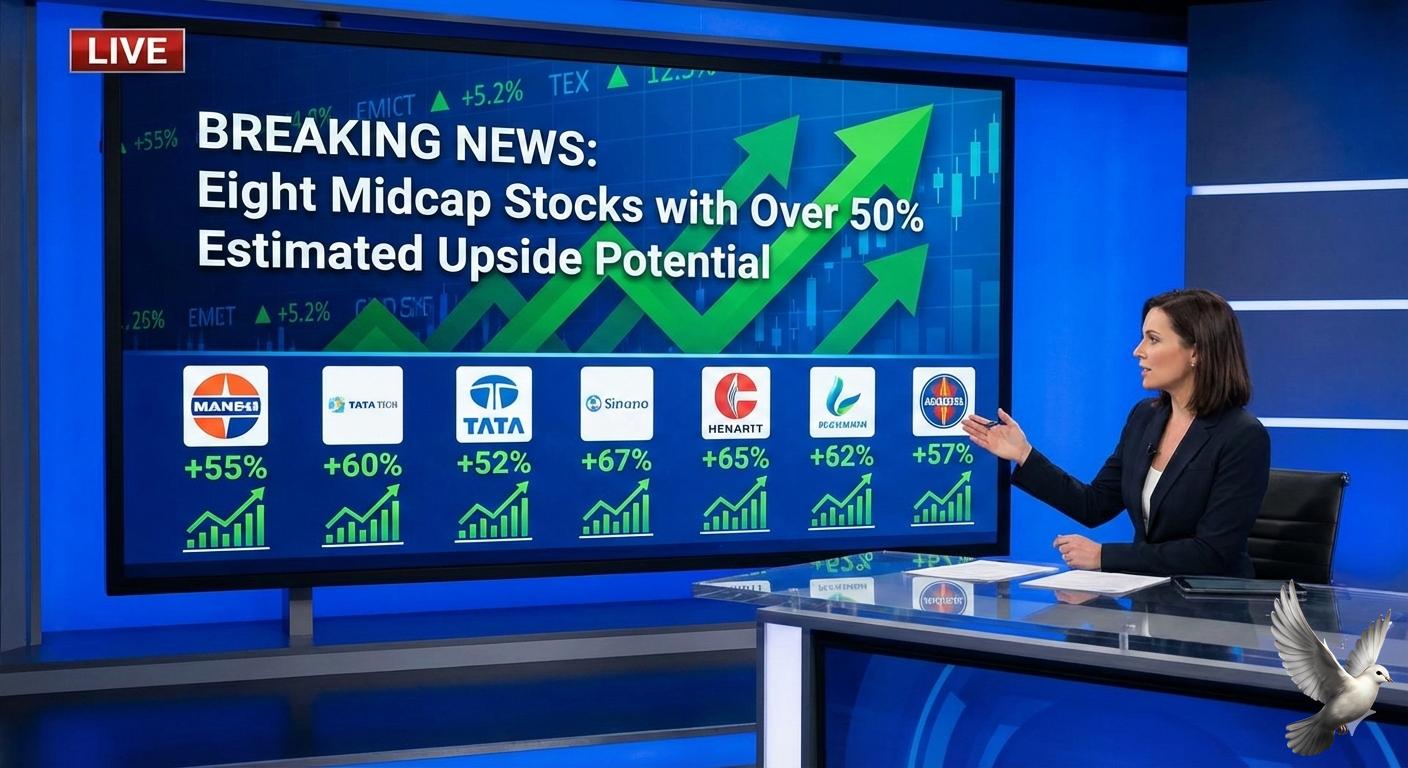
Eight Midcap Stocks with Over 50% Estimated Upside Potential
Midcap Growth Projections Market consensus identifies strong potential within the midcap sector. Current estimates suggest that a range of midcap stocks is well-positioned to deliver robust returns over the coming **12-month** period.
Fed Set to Hold Rates Steady as Officials Assert Independence
US Federal Reserve Outlook: Rates Expected to Hold The Federal Reserve is widely anticipated to keep interest rates unchanged during its meeting in the coming week. Policymakers are holding firm to guard the institution's independence, despite explicit pressure from President Donald Trump to slash levels. The central bank convenes **eight** times per year to evaluate interest rate policy. Economic analysis indicates that the immediate dilemma facing the Fed has eased, reinforcing the market consensus for a steady policy stance.

SurgoCap Partners AUM Reaches $6 Billion in Three Years
SurgoCap Partners, led by Mala Gaonkar, has achieved a rapid and historic rise since its launch in 2023. The firm **tripled its assets** within three years, reaching a total of **$6 billion**. This trajectory represents one of the fastest-growing debuts in hedge fund history. Gaonkar utilizes a data science-driven approach to investment across diverse sectors. She champions a small, collaborative team structure for generating ideas, echoing the efficiency principle known as Jeff Bezos's "two-pizza-box" concept.

Adani Group Clarifies No Allegations Against Company in US SEC Summons Report
MARKET BRIEF: Adani Group Clarification on US SEC Proceedings **Adani Group** companies have issued formal clarifications via stock exchange filings regarding recent legal developments in the United States. The conglomerate explicitly stated that its listed entities are **not parties** to any ongoing legal proceedings initiated by the **US Securities and Exchange Commission (SEC)**. This response addresses reports that the SEC has sought court approval to serve summons to **Gautam Adani** and **Sagar Adani** electronically via email. These reports emerged after Indian authorities reportedly denied previous requests for traditional service of process. Despite the procedural maneuvers regarding individual summons, the Group has reiterated a key distinction for investors: there are **zero** allegations currently levied against the company itself in these filings. The management maintains that the listed companies remain insulated from the specific legal actions targeting the individuals named in the SEC's request.