Bearish News
Collection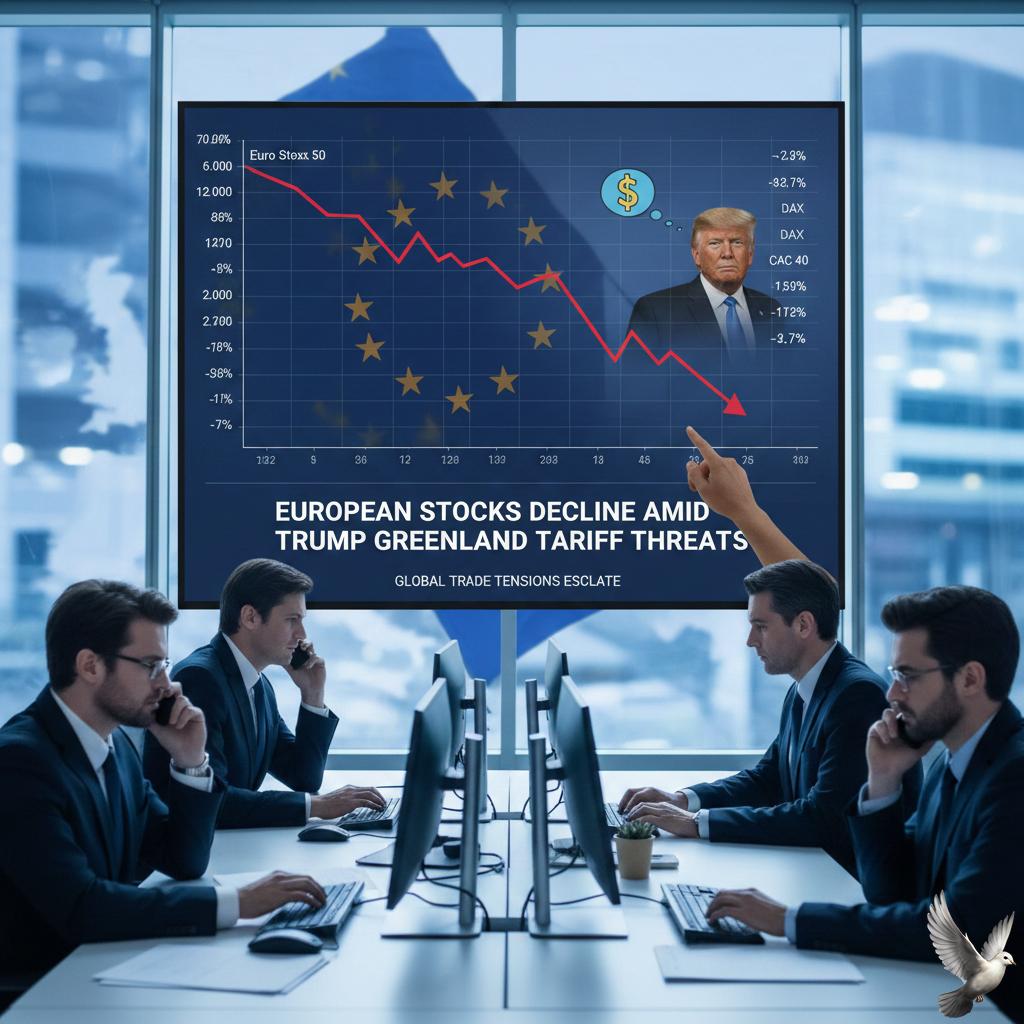
European Stocks Decline Amid Trump Greenland Tariff Threats
European equities posted sharp declines on Monday after U.S. President Donald Trump threatened to impose additional tariffs unless the United States is permitted to purchase Greenland. This ultimatum has reignited trade tensions and cast doubt on the durability of previously established agreements, weighing heavily on market sentiment.

Nikkei Falls as Yen Rallies, Machine Orders Drop, and Greenland Concerns Weigh
**Tokyo Market Briefing: Nikkei Closes Lower Amid Geopolitical and Economic Headwinds** The Japan Nikkei 225 share average registered a third consecutive day of decline on Monday, driven by a convergence of heightened geopolitical tension and disappointing domestic economic data. * **Geopolitical Impact:** Escalating geopolitical tensions surrounding Greenland triggered a significant safe-haven rally in the Japanese yen, pressuring the market's key exporting sector and contributing to the risk-off sentiment. * **Economic Data:** Market performance was further hindered by domestic economic data that unexpectedly fell short of forecasts, adding a layer of concern regarding the nation's economic outlook. The combination of a strengthening currency and weak fundamentals resulted in selling pressure across the Tokyo market.
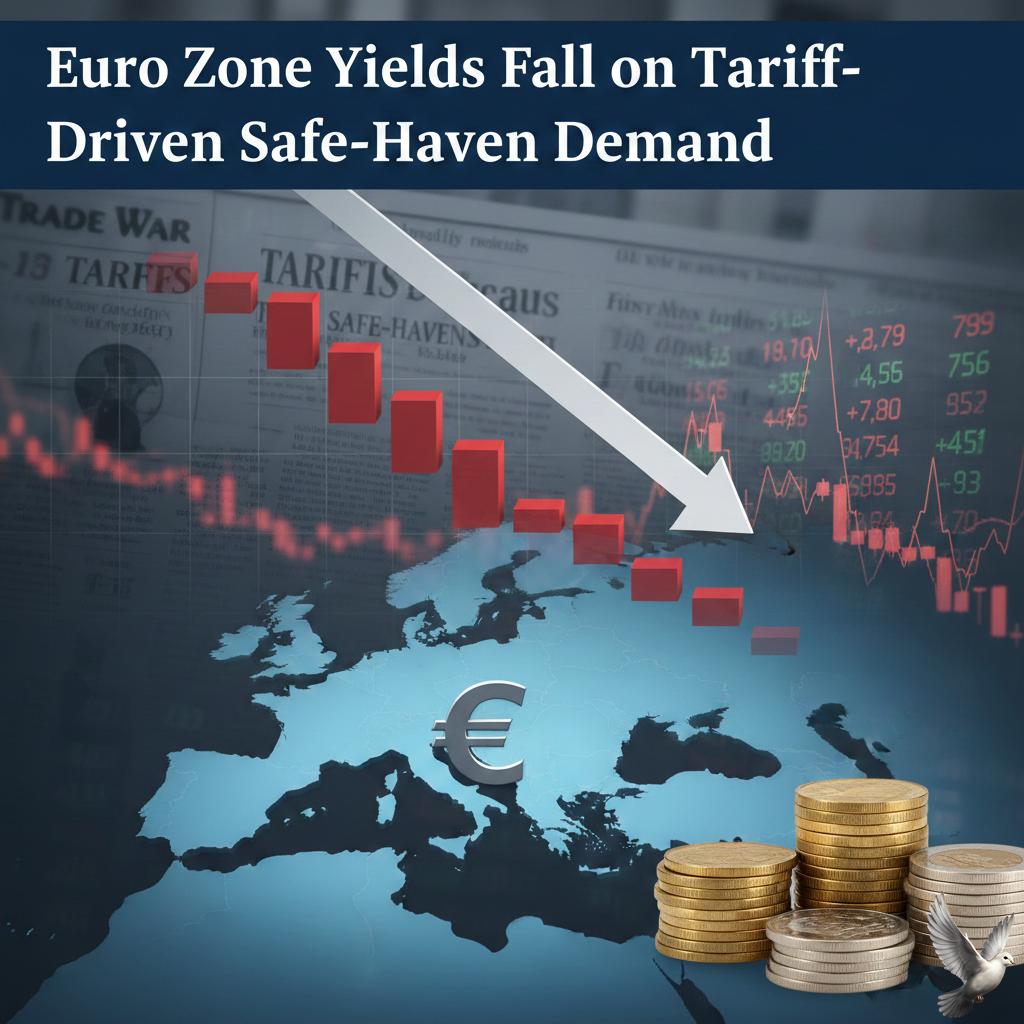
Euro Zone Yields Fall on Tariff-Driven Safe-Haven Demand
📉 Eurozone Government Bond Yields Market Brief **Date:** Monday, January 19, 2026 Eurozone government bond yields edged **lower** today, reflecting a market shift toward **safe-haven assets**. This movement follows an escalation of geopolitical uncertainty after U.S. President Donald Trump announced a threat to impose **additional tariffs** on eight European nations. The stated condition for the tariff removal is the U.S. being granted permission to purchase **Greenland**. This trade and geopolitical friction spurred investors to seek the relative safety of government debt, consequently driving yields down across the Eurozone.
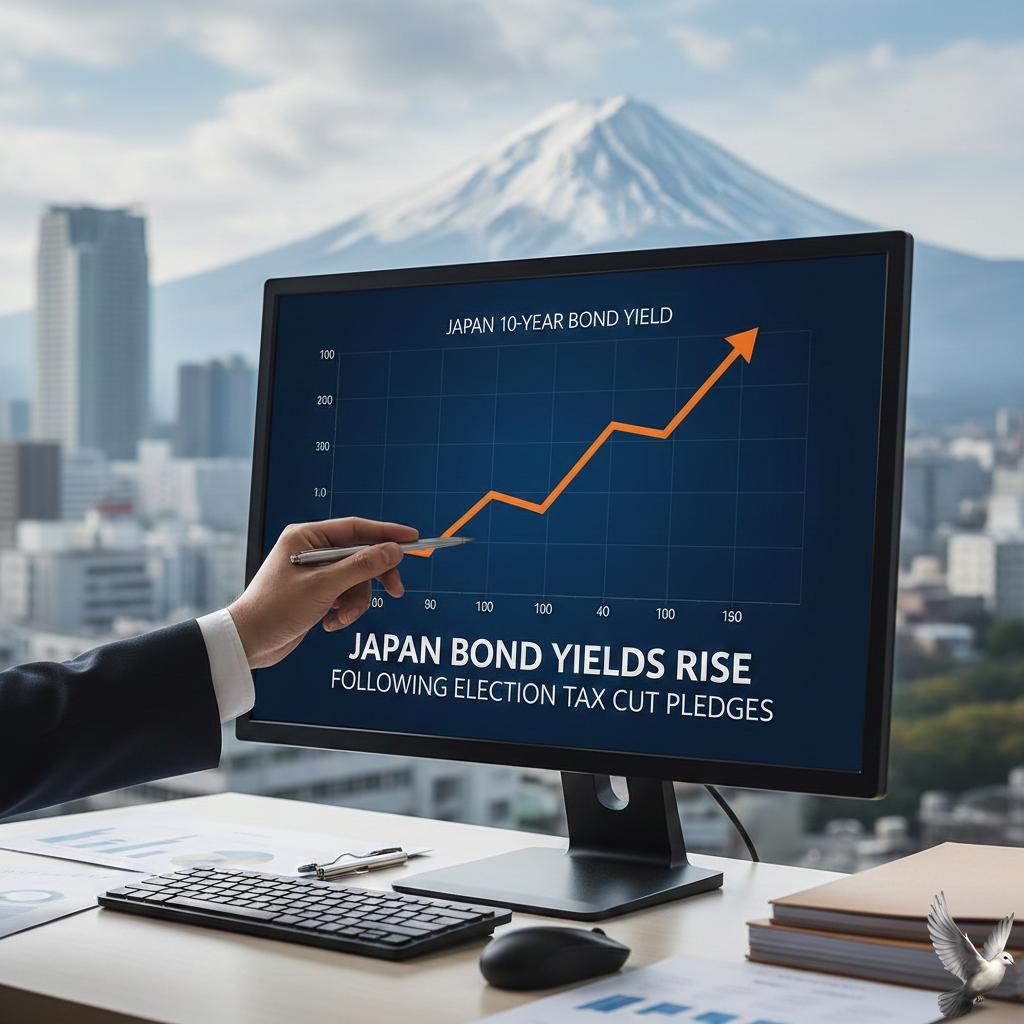
Japan Bond Yields Rise Following Election Tax Cut Pledges
📈 Japanese Government Bond Fiscal Concerns Drive Yields to Record Highs **Executive Summary:** Japanese Government Bond (JGB) yields across multiple maturities have surged to **unprecedented levels**, driven by heightened market anxiety over potential election-driven tax cuts that could severely undermine national fiscal health. This concern is also placing significant downward pressure on the Japanese Yen ($\text{JPY}$) and fueling speculation regarding a possible, yet currently unexpected, monetary policy shift by the Bank of Japan ($\text{BoJ}$). --- **Key Market Movements:** * **Record Yields:** The five-year, 20-year, 30-year, and 40-year JGB yields all registered **historic highs** during the reporting period, signaling a sharp repricing of sovereign risk. * **Fiscal Catalyst:** The primary driver is market fear that forthcoming electoral cycles will necessitate significant **tax cuts**, leading to a deterioration in the nation's already strained public finances and increasing the supply of government debt. --- **Macroeconomic Implications:** * **Currency Weakness (JPY):** Fiscal concerns are directly correlating with a **weakening of the Japanese Yen**, as foreign exchange markets factor in greater financial risk. * **Monetary Policy Speculation:** The sudden volatility and pronounced yield increase are generating **unsubstantiated speculation** concerning an imminent $\text{BoJ}$ interest rate hike. This speculation contradicts the prevailing consensus that the $\text{BoJ}$ will maintain its current policy stance. --- **Outlook:** Market focus remains on the intersection of fiscal policy rhetoric and the $\text{BoJ}$'s reaction function. Continued political discussion of large-scale tax cuts is likely to sustain upward pressure on JGB yields and the $\text{JPY}$ volatility until a definitive fiscal plan is established.

Oxfam Reports Billionaire Wealth Reaches Record High
Global Wealth Distribution & Socioeconomic Impact **Executive Summary** The previous fiscal year marked a historic peak in billionaire wealth, a trend that has significantly widened global economic and political disparities. This concentration of capital stands in stark contrast to worsening humanitarian metrics and highlights a growing consolidation of political influence among the ultra-wealthy. **Key Findings** * **Wealth Concentration:** Billionaire fortunes surged to record highs, exacerbating existing economic divides. * **Humanitarian Crisis:** Nearly 50% of the global population currently lives in poverty, with one in four people facing regular food insecurity. * **Political Influence:** Socioeconomic status significantly correlates with political power; billionaires are **4,000 times more likely** to hold public office than ordinary citizens.

Sensex Falls Over 600 Points, Nifty Slips Below 25,550: 5 Key Factors Behind Today's Sell-off
Indian Equities Face Sharp Correction **Overview** Indian stock markets registered a significant downturn on Monday, resulting in a substantial erosion of market capitalization for BSE-listed firms. The sell-off was driven by a convergence of negative global cues and domestic performance concerns. **Key Drivers** * **Global Trade Tensions:** Investor sentiment was dampened by the resurfacing of global trade war concerns following new tariff threats issued by U.S. President Donald Trump. * **Domestic Earnings:** Selling pressure was further exacerbated by disappointing quarterly earnings reports from market heavyweights, specifically Reliance Industries and ICICI Bank. **Outlook** Given the prevailing volatility, investors are advised to closely monitor geopolitical developments and upcoming corporate announcements.

**Investors Focus on Earnings Amid Policy Uncertainty**
** Earnings Focus Amidst Macro Headwinds** **Executive Summary** Investors are looking to a robust corporate earnings season to underpin the ongoing U.S. equity rally, countering pressure from geopolitical tensions and domestic policy uncertainty. While major indexes remain near record highs, recent sessions have evidenced a contraction in sentiment and heightened volatility. **Key Drivers & Watchlist** * **Earnings Criticality:** This week’s slate of key earnings reports will be scrutinized as a decisive factor in sustaining current market valuations. * **Policy & Fed Outlook:** Market participants are closely monitoring risks associated with Federal Reserve independence and the broader economic implications of potential policy shifts. * **Market Technicals:** Despite recent dips, the structural trend remains elevated, though increased volatility suggests a cautious near-term outlook.
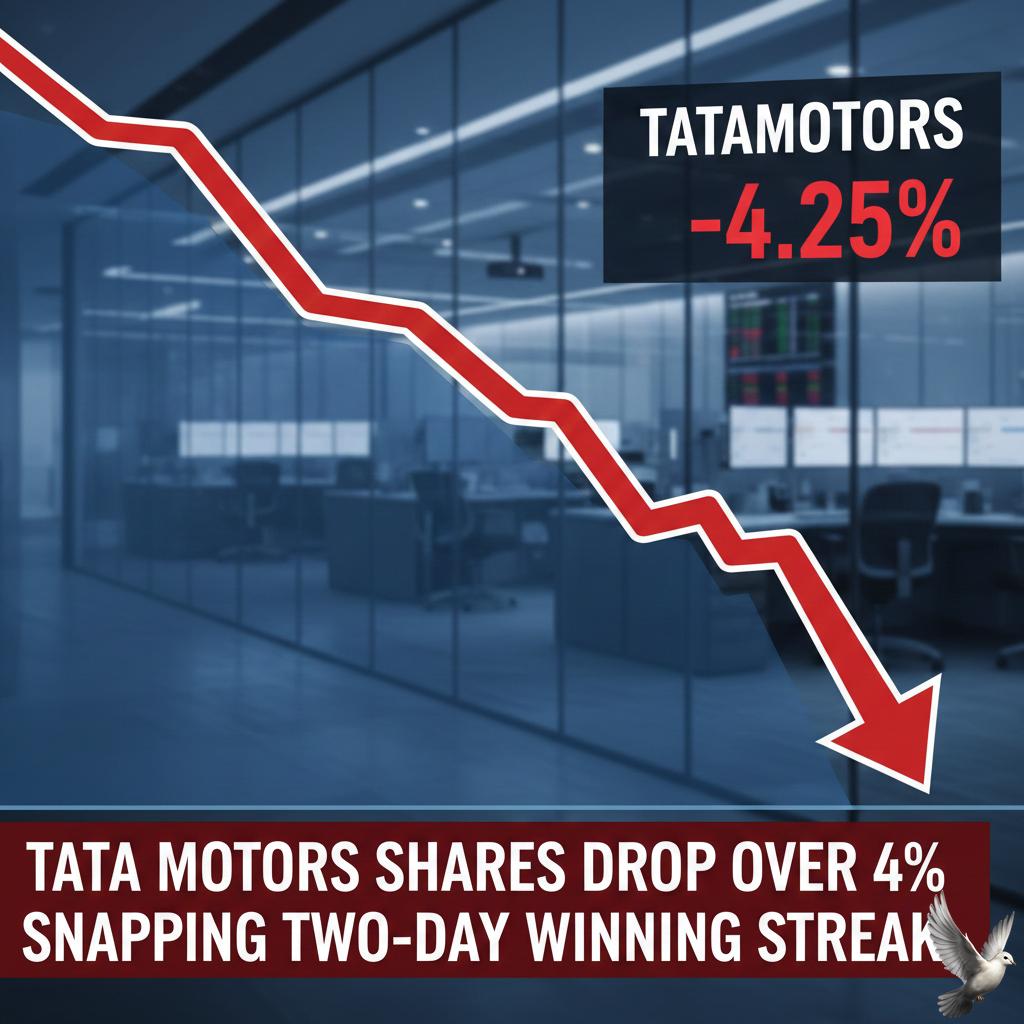
Tata Motors Shares Drop Over 4%, Snapping Two-Day Winning Streak
Tata Motors Limited **Executive Summary** Tata Motors shares experienced a sharp decline following recent geopolitical developments. The sell-off was triggered by President-elect Donald Trump’s threat to impose new tariffs on European nations, raising concerns over trade barriers that could significantly impact the company's luxury arm, **Jaguar Land Rover (JLR)**. **Key Drivers** * **Tariff Exposure:** JLR maintains substantial sales exposure to the United States market. Potential levies on European imports threaten to erode margins and dampen demand for the subsidiary's vehicles. * **Operational Headwinds:** The tariff threat compounds existing challenges stemming from a recent **cyberattack**, which has disrupted production schedules and strained supply chains. * **Resilient Product Mix:** Despite external and internal pressures, sales of **higher-margin models** remain robust, providing a crucial buffer against broader volatility. **Market Outlook** Investors remain cautious, closely monitoring the interplay between looming trade policy shifts and the company's recovery from operational disruptions. Attention is currently focused on JLR's ability to navigate potential tariff implementations while stabilizing production.
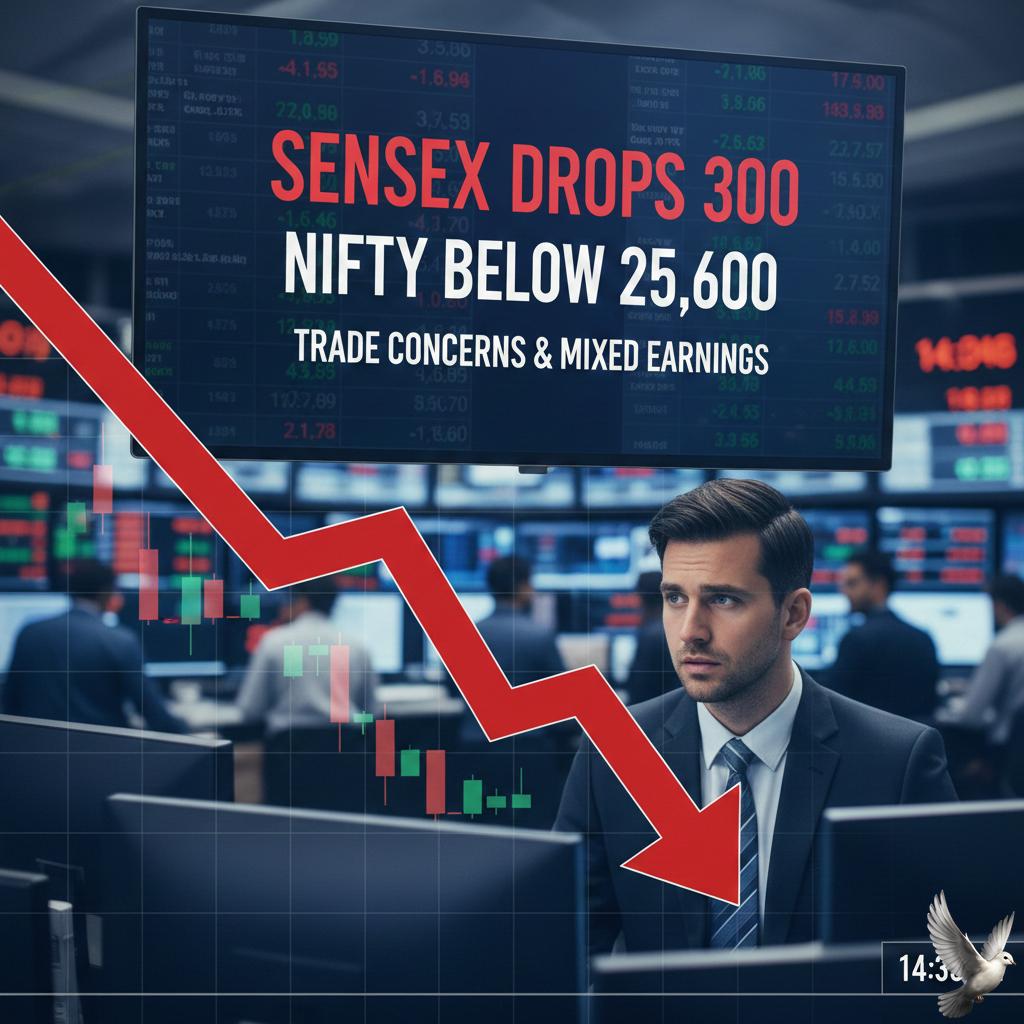
Sensex Drops 300 Points, Nifty Below 25,600 Amid Trade Concerns and Mixed Earnings
**Opening Bell: Indian Indices Slide on Global Cues and Earnings Volatility** Indian equity benchmarks, the Sensex and Nifty, opened lower on Monday as investor sentiment turned cautious. The negative opening was driven by two primary factors: * **Global Trade Headwinds:** Renewed concerns regarding escalating global trade tensions dampened risk appetite. * **Corporate Earnings:** Mixed financial results from major companies contributed to market uncertainty. Consequently, market participants adopted a defensive stance during the early trading session.

Maruti Suzuki to Invest Rs 35,000 Crore in New Gujarat Plant
Maruti Suzuki Production Expansion **Overview** Maruti Suzuki has announced a strategic capital investment of **₹35,000 crore** to establish a new greenfield manufacturing facility in Gujarat. This expansion is pivotal to the company's long-term strategy of scaling operations to meet surging domestic and international market demand. **Key Highlights** * **Capital Expenditure:** ₹35,000 Crore. * **New Facility Capacity:** 1 million (10 lakh) units per annum. * **Strategic Goal:** Increasing aggregate annual production capacity to **4 million units**. * **Primary Drivers:** Accommodating rising demand in domestic automotive sectors and expanding export volumes.
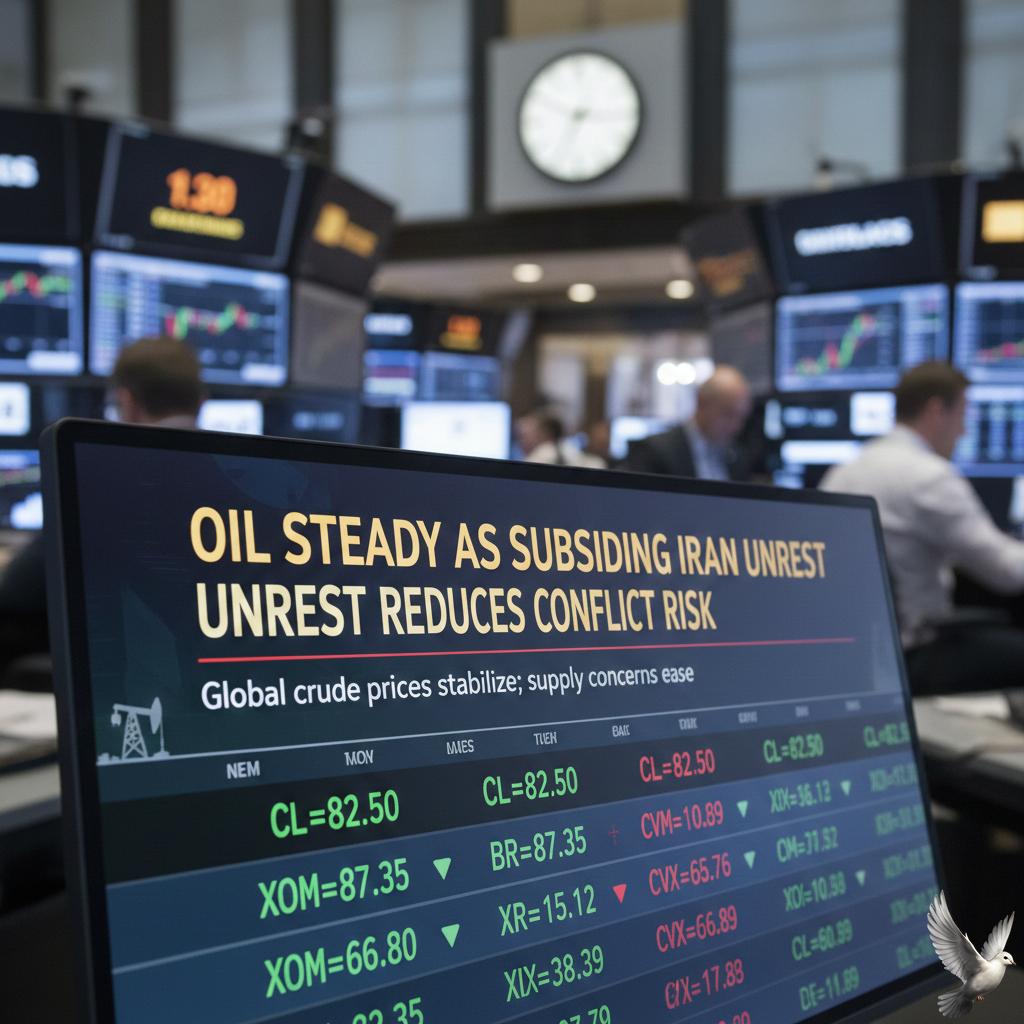
Oil Steady as Subsiding Iran Unrest Reduces Conflict Risk
🛢️ Global Oil Geopolitical Dynamics and Price Stability **Market Overview** Oil prices demonstrated minimal movement, with geopolitical factors providing an offsetting dynamic between easing supply disruption fears and sustained regional risk. Brent crude traded at **\$64.18** a barrel, while U.S. West Texas Intermediate (WTI) for February delivery recorded a slight uptick to **\$59.52**. **Geopolitical Drivers** * **Iran:** The recent easing of the internal crackdown on protests in Iran has diminished immediate market concern regarding a potential U.S. military strike that could disrupt a significant portion of Middle East crude supplies. This reduction in perceived near-term risk has helped temper upward price momentum. * **U.S. Activity:** However, ongoing U.S. military movements into the Gulf region continue to underscore persistent geopolitical uncertainty, maintaining a base level of risk premium in the market. * **Venezuela:** The anticipated ramp-up of Venezuelan oil production is forecast to be a multi-year process, suggesting that any substantial new supply from the nation will not impact global market balances in the immediate term.
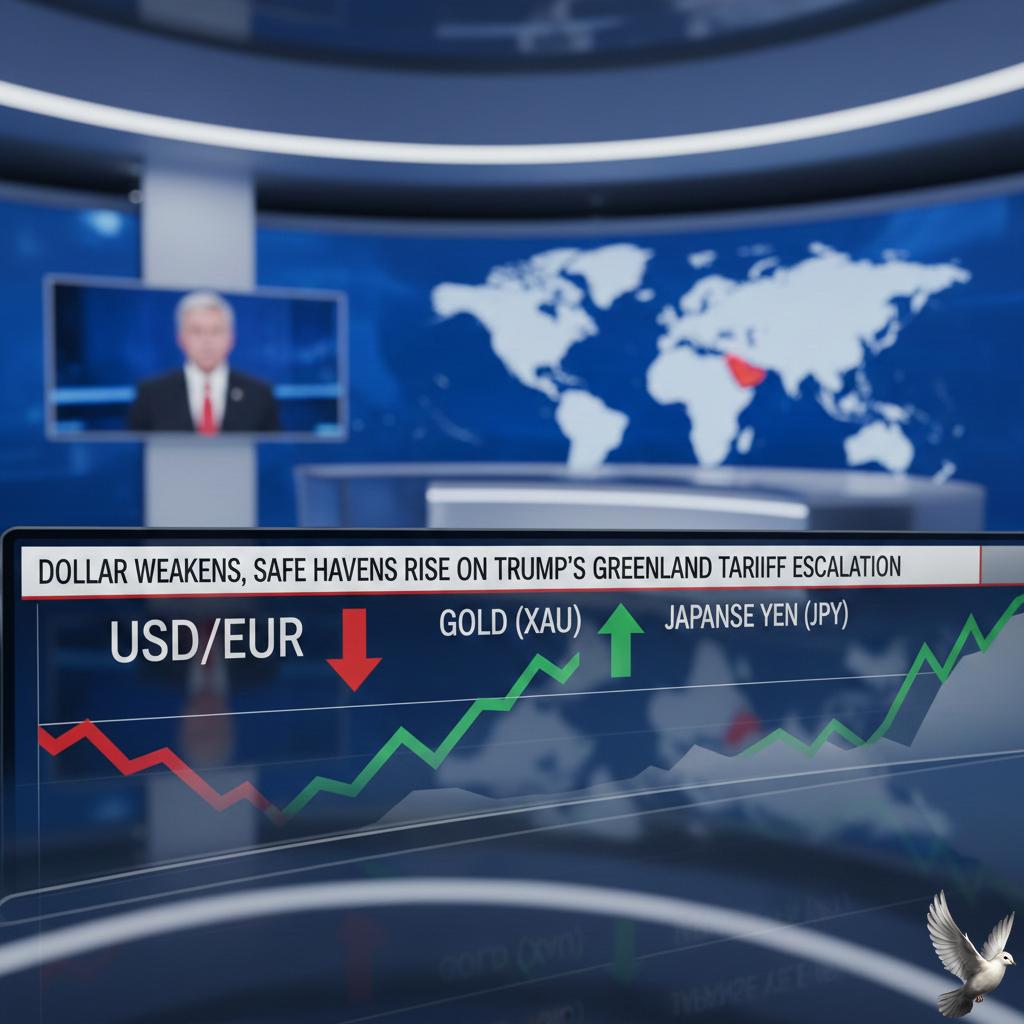
Dollar Weakens, Safe Havens Rise on Trump's Greenland Tariff Escalation
US Dollar Retreats on Geopolitical Tensions **Executive Summary** The U.S. dollar depreciated on Monday as escalating trade tensions between the United States and the European Union drove a "flight to safety" across global currency markets. **Key Drivers** * **Tariff Threats:** Sentiment soured following President Trump’s issuance of new tariff threats against European nations, linked to ongoing disputes regarding Greenland. * **EU Retaliation Risks:** Major EU member states issued strong condemnations of the proposed tariffs. Notably, France has proposed economic countermeasures, raising fears of a tit-for-tat trade war. * **Safe-Haven Inflows:** The heightened risk aversion prompted investors to unwind long dollar positions in favor of traditional safe-haven currencies, specifically the **Japanese yen (JPY)** and the **Swiss franc (CHF)**.
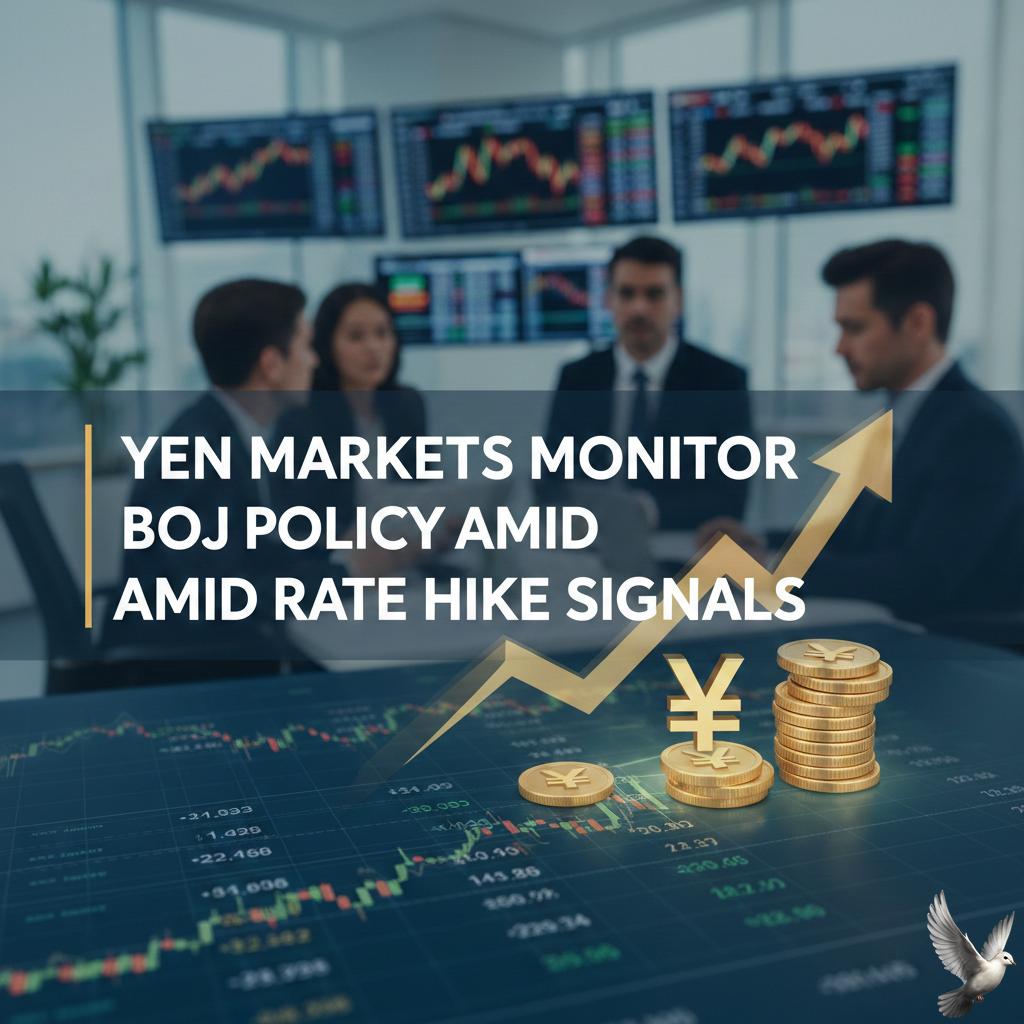
Yen Markets Monitor BOJ Policy Amid Rate Hike Signals
** Bank of Japan Policy & JPY Outlook** * **Volatility Risk:** The upcoming Bank of Japan (BoJ) monetary policy meeting is expected to trigger heightened volatility in the Japanese Yen (JPY). * **Strategic Focus:** Market sentiment is currently driven by speculation regarding the timing of the next interest rate hike, a projection now complicated by political uncertainty surrounding the impending election. * **Currency Performance:** Despite the recent policy rate adjustment to 0.75%, the yen continues to face sustained downward pressure.
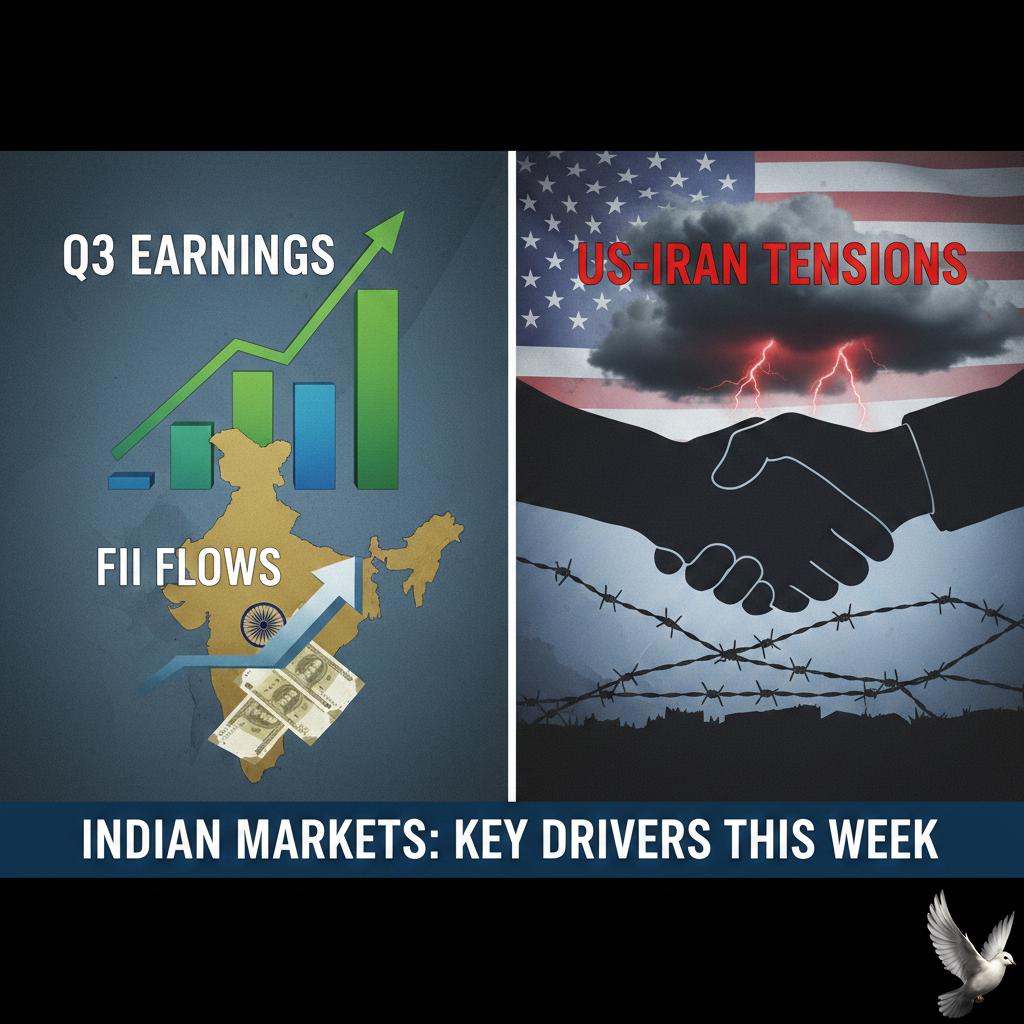
Q3 Earnings, US-Iran Tensions, and FII Flows Among Key Drivers for Indian Markets This Week
**Market Outlook: High Volatility Expected Amid Earnings and Geopolitical Risks** **Executive Summary** Global markets are entering a period of heightened volatility, driven by a convergence of corporate earnings releases, geopolitical instability, and sustained foreign capital outflows. Technical analysis points to a consolidation phase, with key support levels identified to guide risk management strategies. **Key Drivers** * **Corporate Earnings:** The Q3 earnings season is accelerating, with over 230 companies scheduled to report results this week. These announcements are expected to be the primary catalyst for stock-specific action and broader market swings. * **Geopolitical Instability:** Escalating tensions between the United States and Iran are likely to dampen global investor sentiment, potentially increasing demand for safe-haven assets and impacting equity valuations. * **Institutional Flows:** Foreign Institutional Investors (FIIs) continue to register net outflows, exerting persistent downward pressure on liquidity and market momentum. **Technical Outlook** Current indicators suggest a consolidative bias for the near term. * **Immediate Support:** The 25,550–25,600 zone serves as a critical support level. A breach below this range could signal further weakness. * **Strategy:** Investors are advised to monitor these levels closely as markets digest incoming earnings data and geopolitical developments.
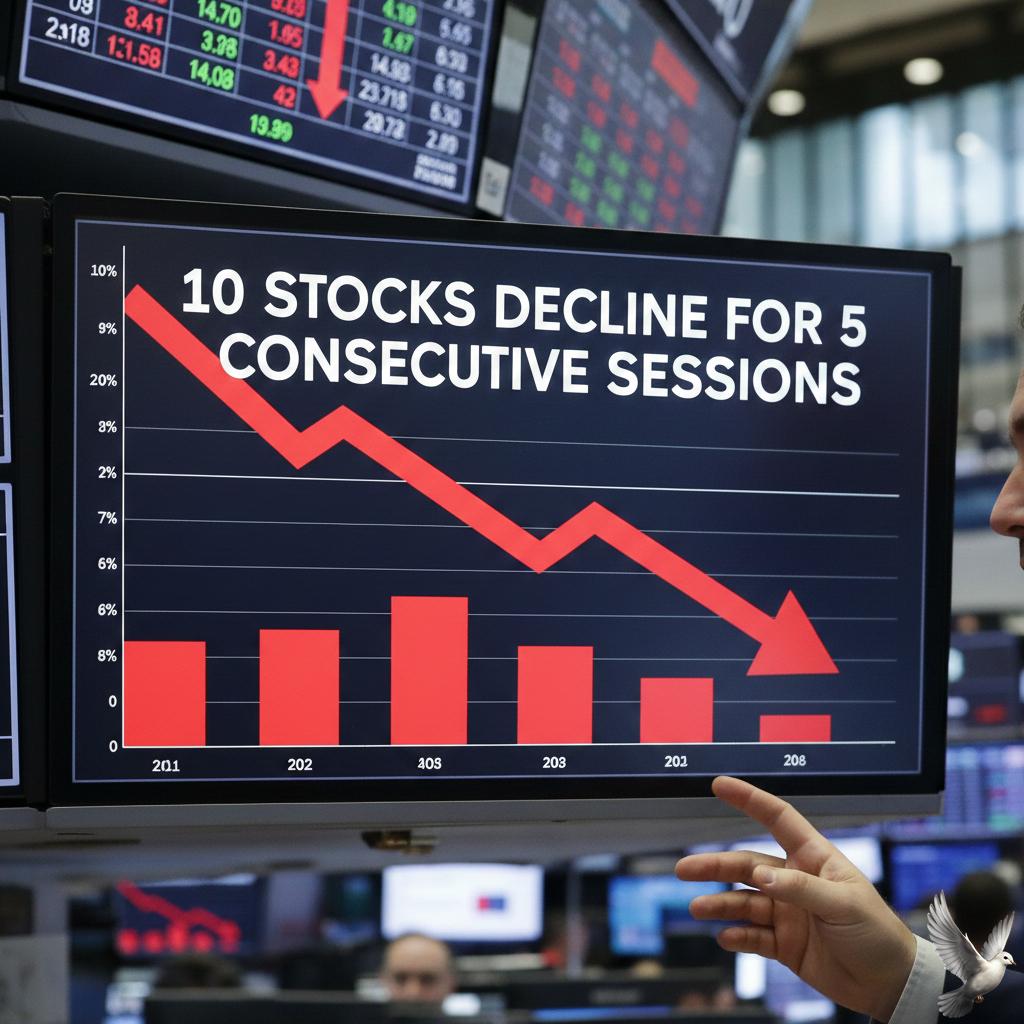
10 Stocks Decline for 5 Consecutive Sessions
Equity Performance Overview **Period:** Five sessions ending January 16 **Executive Summary** Indian equity markets exhibited persistent short-term weakness over the past week. While the headline index recorded a moderate correction, significant selling pressure was observed within specific broader market constituents. **Key Developments** * **Benchmark Correction:** The **Sensex** slipped by **0.73%** over the five-day period. * **Broader Market Breadth:** Bearish sentiment was pronounced across the **BSE 500**, where **47 stocks** recorded consecutive declines throughout the five sessions. * **Acute Underperformance:** Selling pressure was most severe in a subset of **10 stocks**, which posted cumulative losses ranging from **10% to 22%**. **Implication** The sustained slide in these constituents highlights underlying fragility and continued short-term bearishness in select pockets of the market, despite the relatively contained decline in the main index.
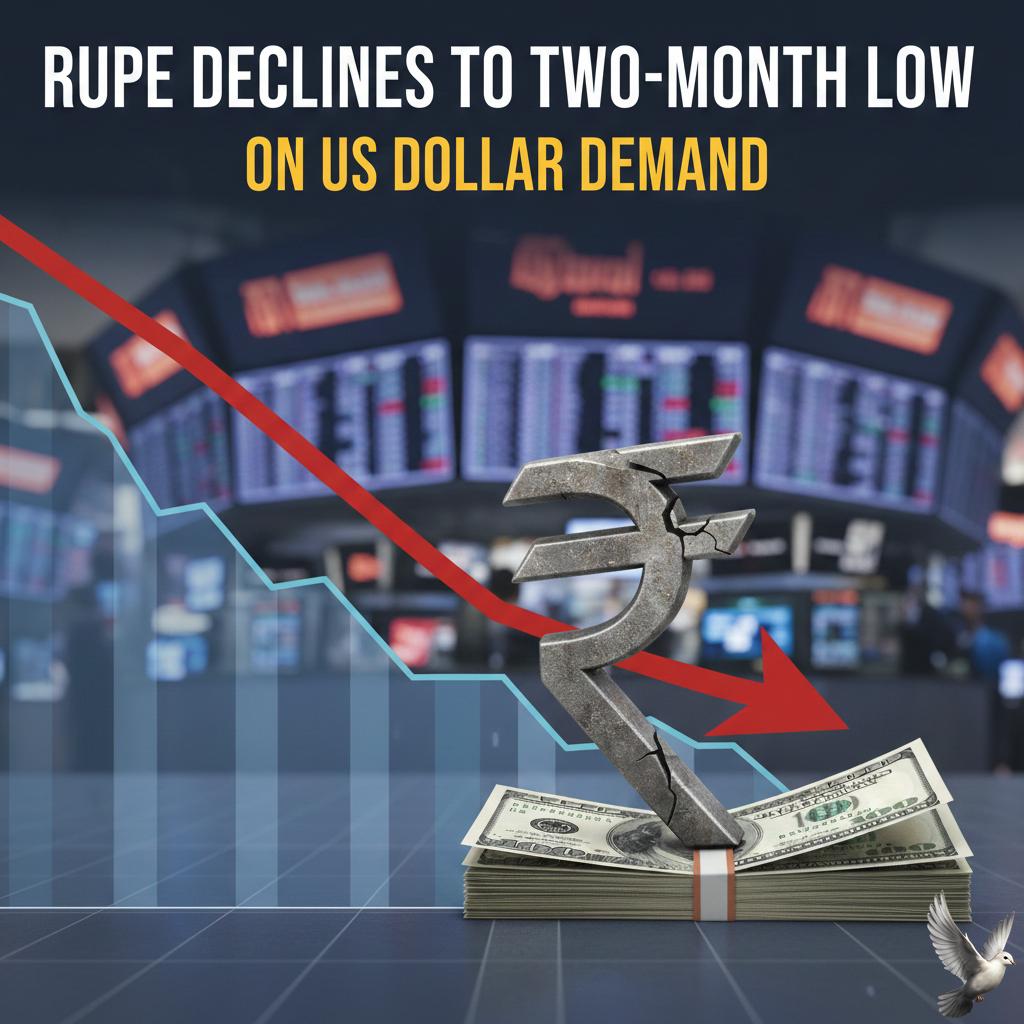
Rupee Declines to Two-Month Low on US Dollar Demand
Market Update: Rupee Correction and Yield Spike * **Currency Performance:** The Indian Rupee recorded its steepest decline in over two months, pressured by a surge in dollar demand linked to the maturity of off-market trades. * **Central Bank Action:** While the Reserve Bank of India (RBI) maintained a presence in the market, it strategically refrained from aggressively thwarting the currency's depreciation, allowing the rupee to adjust to prevailing flows. * **Fixed Income:** Concurrently, domestic bond yields hardened significantly, climbing to levels last observed ten months ago.

SAT Sets Aside Ban on Nusli Wadia, Sons, and Others
** SAT Overturns SEBI Ban on Bombay Dyeing** The Securities Appellate Tribunal (SAT) has set aside the regulatory ban imposed on Bombay Dyeing and its executives, concurrently nullifying all associated penalties and restrictions on directorship roles. The Tribunal cited the Securities and Exchange Board of India's (SEBI) excessive delay of nearly nine years in adjudicating allegations concerning fraudulent financial manipulation as the primary basis for the reversal.
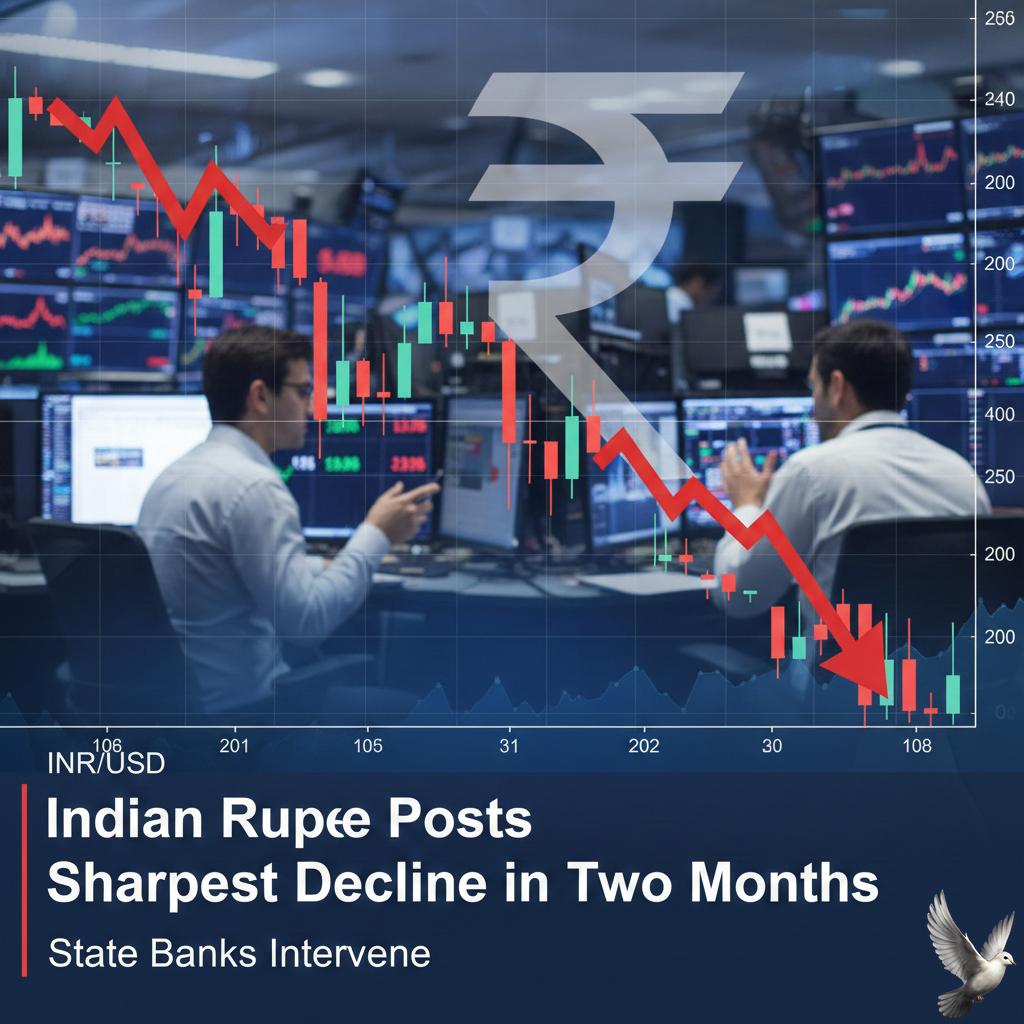
Indian Rupee Posts Sharpest Decline in Two Months as State Banks Intervene
INR Performance The Indian Rupee faced significant downward pressure today, closing at **90.8650** against the US Dollar. This marks a sharp **0.6%** decline in a single session, representing the currency's steepest daily drop since mid-November of last year. Selling momentum has pushed the Rupee within striking distance of its historical floor. The currency is now hovering just above the all-time low of **91.0750** recorded in December. On a weekly horizon, the Rupee concluded with a total loss of approximately **0.7%**. This sustained weakness reflects a tightening environment as the exchange rate nears critical psychological and technical support levels.
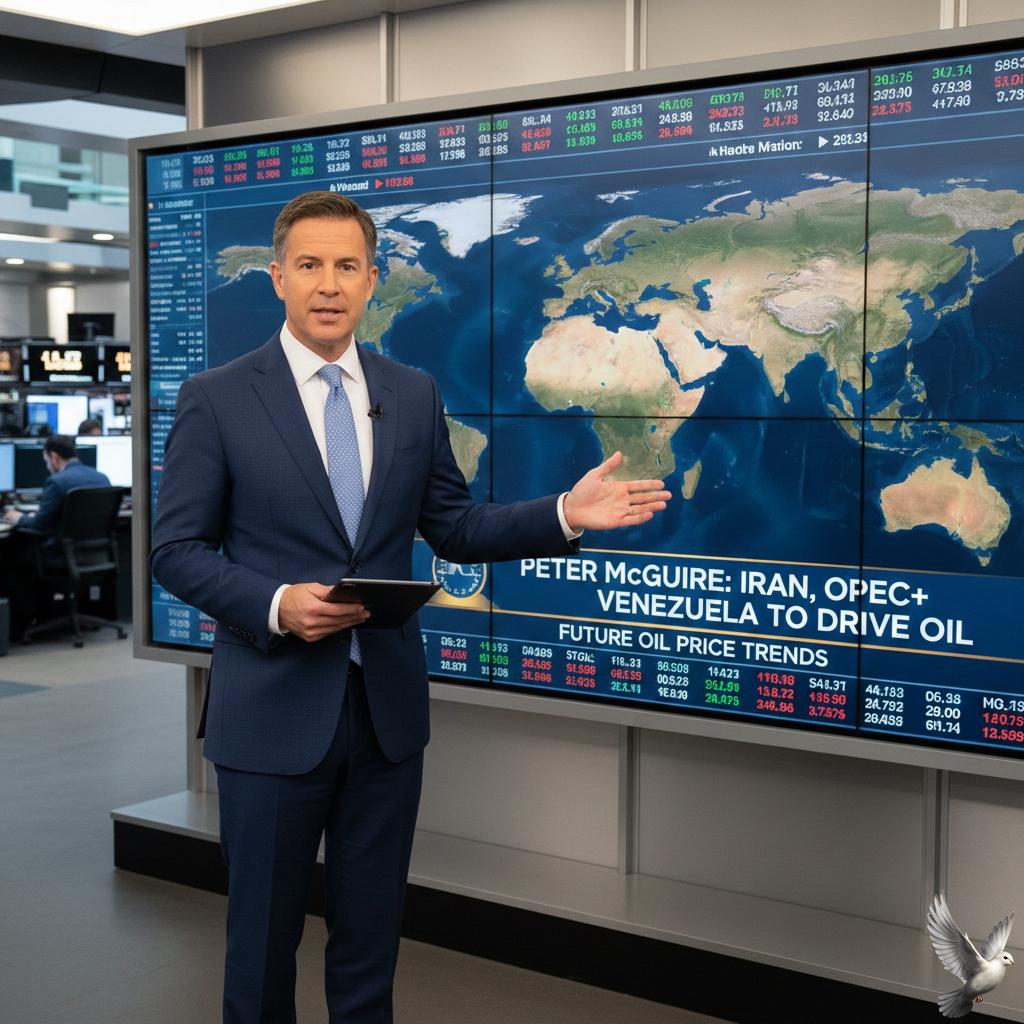
Peter McGuire: Iran, OPEC+, and Venezuela to Drive Future Oil Price Trends
Global Crude Outlook 2026 Crude oil prices have retreated from recent peaks as immediate concerns regarding a direct Iranian conflict subside. However, the market remains on high alert due to deep-seated geopolitical vulnerabilities that threaten current price stability. The **Strait of Hormuz** remains the primary focal point for energy security. Any disruption to this vital maritime corridor would significantly tighten global supply, overriding the recent cooling of war premiums. **OPEC+** policy continues to act as a secondary price floor. Market participants are closely monitoring the alliance for supply signals, as any extension of production cuts could offset the rising output potential from secondary producers like **Venezuela**. The 2026 outlook suggests a period of heightened volatility for both consumers and energy markets. While current prices have eased, the interplay between Middle Eastern stability and shifting production quotas ensures that crude remains sensitive to sudden shifts in the geopolitical landscape.

Jefferies' Chris Wood Favors Gold Over Bitcoin for 2026 Investment Strategy
🪙 Digital Assets & Gold Allocation Jefferies strategist **Christopher Wood** is reallocating portfolio exposure, shifting away from **Bitcoin** and increasing holdings in **physical gold**. This strategic move is driven by escalating concerns regarding **quantum computing risks** to Bitcoin's underlying cryptography. Accelerated quantum timelines are seen as fundamentally undermining the long-term store-of-value proposition of digital assets. Consequently, the portfolio is being realigned toward **gold** and **mining stocks**. This pivot prioritizes assets deemed more resilient globally against these emerging technological threats.