Bullish News
Collection
Gold Prices Increase 1% Amid Geopolitical and Economic Factors
**Market Brief: Precious Metals Surge on Geopolitics & Rate Cut Hopes** **Gold Reclaims $5,000 Amid Global Tensions** Gold prices staged a significant rally on Thursday, February 5, reclaiming the critical **$5,000 per ounce** psychological level. Spot gold traded near **$5,017–$5,076**, driven by renewed safe-haven demand as investors monitor escalating US-Iran tensions. Markets remain on edge despite reports of upcoming diplomatic talks in Oman. **Silver & Palladium Outperform** Silver witnessed explosive momentum, surging over **5%** to trade near **$89.70–$90.00 per ounce**, capitalizing on the broader metals rally and a softer dollar. Palladium also joined the upward trend, recovering to approximately **$1,764–$1,800 per ounce**, supported by supply concerns and technical buying. **Fed Policy & 2026 Rate Outlook** Investors continue to price in monetary easing following the Federal Reserve's decision to hold interest rates steady at **3.50%–3.75%** in late January. Despite the nomination of Kevin Warsh as Fed Chair introducing some policy uncertainty, consensus projections still indicate **two rate cuts** later in 2026. **Economic Drivers** Mixed US economic data provided further support for bullion. While the **ISM Services PMI** came in stronger than expected, signaling resilience, weaker **ADP private payroll** numbers highlighted potential cracks in the labor market, reinforcing the case for future rate reductions. **Key Levels to Watch** * **Gold:** Support at $4,825; Resistance at $5,100. * **Silver:** Testing the $90 threshold. * **Fed Strategy:** Market focus shifts to upcoming inflation data to confirm the timeline for the first 2026 cut. *** *Data as of February 5, 2026. Prices and trends subject to real-time market fluctuation.*
Dollar Rebounds Ahead of Central Bank Decisions
Global Market Brief: Central Banks and Currency Shifts Global financial markets are entering a high-stakes period as major central banks clarify their paths for 2026. The U.S. Dollar Index has recovered to approximately **96.67**, holding steady as investors pivot toward upcoming policy decisions in Europe and the United Kingdom. In the United States, the Federal Reserve recently opted to maintain interest rates in the range of **3.50% to 3.75%**. This pause follows three consecutive cuts in late 2025. Federal Reserve officials are currently prioritizing data stability over further easing, particularly as year-over-year inflation sits at **2.7%**, still above the **2.0%** long-term target. European Policy Outlook The European Central Bank is widely expected to keep its deposit facility rate at **2.00%** during its February 5 session. While headline inflation in the Eurozone has cooled, sticky service costs and wage growth have made policymakers hesitant to signal immediate future cuts. The Euro is currently trading near **$1.18**, reflecting a cautious market sentiment. Investors are focused on President Christine Lagarde’s upcoming guidance, searching for any timeline regarding a potential shift in policy later this spring. Bank of England and Sterling Stability The Bank of England is similarly projected to hold its key rate steady this week. The British Pound is maintaining a level around **$1.3650**, supported by a neutral stance from UK officials. Market volatility remains low for the sterling as the focus shifts toward domestic economic growth projections for the second half of the year. Equity Market Performance U.S. equity markets have shown recent divergence. The S&P 500 closed near **6,882**, experiencing a slight decline of **0.5%** in the latest session, while the tech-heavy Nasdaq fell **1.5%**. This downward pressure is largely attributed to a rotation out of technology stocks following aggressive capital expenditure reports and AI-related software volatility. In contrast, the Dow Jones Industrial Average rose by **0.5%**, led by gains in healthcare and pharmaceutical sectors. Market analysts note that while the S&P 500 gained **1.4%** in January, the current "risk-off" sentiment is being fueled by uncertainty regarding the pace of global rate normalization. Key Indicators and Trends * **U.S. Dollar Index:** Steady at **96.67** * **S&P 500:** Trading near **6,882** * **EUR/USD:** Holding at **1.18** * **U.S. Inflation:** Currently at **2.7%** * **Fed Funds Rate:** Paused at **3.50%–3.75%** Global liquidity remains a primary concern as central banks navigate the "last mile" of inflation control. The current stability in currency pairs suggests that markets have largely priced in a period of high, steady rates before any further easing cycles begin.

Wall Street Closes Lower as AI Concerns Weigh on Tech Sector
**MARKET BRIEF: Tech Tantrum Triggering Global Rotation** **US Markets: The Great Divergence** A historic disconnect has gripped Wall Street. As of **February 5, 2026**, the Dow Jones Industrial Average defied gravity, surging over **230 points** to hit a record high near **49,500**. This rally stands in stark contrast to the tech-heavy Nasdaq, which shed approximately **1.5%** (over **350 points**), dragging the index down to the **22,900** level. The catalyst? A sharp rotation out of inflated AI darlings into value stocks. Investors are fleeing the "AI trade" amid growing fears of disruption and overvaluation, sparked partly by new AI agent capabilities threatening traditional software business models. **Tech Sector Bleed: AMD & Palantir** The "AI culmination" anxiety has hit key players hard. * **Advanced Micro Devices (AMD):** The stock plummeted roughly **14%** to **16%** following a lackluster revenue forecast. despite beating earnings estimates, the company's warning that the data-center sales boom remains "months away" triggered a massive selloff. * **Palantir Technologies:** After a brief post-earnings pop earlier in the week, shares reversed course violently, dropping over **11%** in recent trading. The decline reflects broader skepticism about the sustainability of software valuations in an era of rapid AI commoditization. **Indian Markets: IT Stocks Feel the Heat** Indian indices mirrored the global anxiety, though with less volatility than their US counterparts. The BSE Sensex and Nifty 50 remained largely flat to marginally positive, with the Sensex hovering around **83,800** and Nifty near **25,770**. However, the pain was concentrated. Indian IT giants like **Infosys** and **TCS** faced selling pressure, tracking the Nasdaq's slump. The Nifty IT index underperformed as foreign institutional anxiety over tech valuations spilled into emerging markets. Conversely, "Old Economy" sectors like **Power** and **Metals** saw buying interest, cushioning the broader indices from a steeper fall. **The Safety Trade: Gold at $5,000** As capital flees volatile tech stocks, it is finding a home in safe havens. Gold prices have shattered historical ceilings, surging past the **$5,000 per ounce** mark. Silver also rallied, jumping nearly **7-8%**. This flight to safety underscores the market's fragility; investors are hedging against the bursting of the AI bubble by piling into tangible assets. **Summary Outlook** The market is currently undergoing a decisive regime change. The "growth at any cost" mantra driving the AI boom is being replaced by a scrutiny of immediate returns and valuations. While the broader industrial economy (Dow) remains robust, the tech sector is undergoing a painful, perhaps necessary, recalibration. ----- [Market selloff explained](https://www.google.com/search?q=https://www.youtube.com/watch%3Fv%3DF5MIZKY3VEV) The video provides a timely breakdown of the current tech-led selloff, explaining the specific rotation from AI growth stocks into value sectors and commodities like gold.

SEBI to Relax Fit and Proper Person Criteria
SEBI Proposes Major Relief for Market Intermediaries; Markets Stabilize Post-Budget **Regulatory Update: 'Fit and Proper' Overhaul** The Securities and Exchange Board of India (SEBI) has released a consultation paper proposing a significant overhaul of the **'fit and proper person'** criteria for market intermediaries. The move aims to strike a balance between easing compliance burdens and maintaining market integrity. **Key Proposals:** * **End to Automatic Disqualification:** SEBI proposes removing the rule where the mere filing of an FIR or charge sheet for economic offenses triggers automatic disqualification. * **Presumption of Innocence:** The regulator acknowledges that disqualification at the preliminary stage of criminal proceedings contradicts the principle of "innocent until proven guilty" and can cause irreparable reputational harm. * **Case-by-Case Assessment:** Instead of a blanket ban, SEBI advocates for a principle-based assessment focusing on integrity, honesty, ethical behavior, and investor risk. * **Right to Hearing:** The proposal explicitly codifies the right to a hearing before an entity is declared "not fit and proper," ensuring procedural fairness. * **Winding-Up Norms:** Disqualification based on insolvency proceedings will now trigger only after a **final winding-up order** is passed, rather than at the mere initiation of proceedings. * **Defined Debarment Periods:** The default **5-year** ineligibility period (when no timeframe is specified in an order) is set to be removed. Future orders must explicitly state the debarment duration. Public comments on these proposals are invited until **February 25, 2026**. **Market Pulse: February 5, 2026** Indian equity markets are showing signs of stabilization following high volatility earlier in the week triggered by the Union Budget 2026 announcements. **Current Market Levels:** * **Nifty 50:** Trading near **25,770**, showing resilience after the recent sell-off. * **Sensex:** Hovering around **83,800**, registering marginal gains as investors digest new fiscal policies. * **Sector Performance:** The IT sector remains under pressure, with the Nifty IT index facing headwinds due to global AI-related concerns. However, broader market sentiment is recovering. **Post-Budget Impact:** Markets initially reacted negatively to the Budget announcement of a hike in Securities Transaction Tax (STT) on derivative trades. * **Futures STT:** Increased to **0.05%** (from 0.02%). * **Options STT:** Premium tax raised to **0.15%** (from 0.1%). Despite the higher transaction costs for traders, the underlying cash market has shown recovery, supported by domestic institutional buying and clarity on US-India trade relations. **Implications for Intermediaries** The proposed regulatory changes represent a shift from "rule-based" to "principle-based" regulation. For stockbrokers, merchant bankers, and other intermediaries, this reduces the risk of immediate business suspension due to frivolous or preliminary legal complaints. **Strategic Takeaway:** * **Compliance Ease:** Intermediaries can expect a more predictable regulatory environment with reduced litigation risks related to registration eligibility. * **Operational Continuity:** Firms will no longer face immediate leadership vacuums or forced divestments solely based on initial police complaints or charge sheets. * **Strict Oversight Remains:** While automatic triggers are removed, SEBI retains the power to act in "egregious" cases to protect investor interests, ensuring that the relaxation does not compromise market safety. This development serves as a critical confidence booster for the brokerage industry, potentially reducing the compliance overhead that has historically weighed on small to mid-sized market participants.

Motilal Oswal Advises Balanced Portfolio Mix Amid India-US Trade Optimism
**Market Brief | February 5, 2026** **Market Snapshot** Indian equity markets are navigating a phase of distinct divergence. While the benchmark **Nifty 50** recently closed at **25,776** (up **0.19%**), volatility remains the dominant theme. Broader markets are outperforming, with the **Nifty Midcap 100** gaining **0.63%** and the **Nifty Smallcap 100** surging **1.27%** in recent sessions. This resilience in the broader market comes despite a sharp **6% plunge** in the **Nifty IT index**, driven by global concerns over AI competition and sector-specific headwinds. In contrast, sectors like **Consumer Durables, Oil & Gas, and Metals** are spearheading gains, supported by domestic policy tailwinds and the conclusion of key trade deals. **Strategic Allocation Overview** Motilal Oswal Private Wealth advocates a disciplined **50:40:10** allocation strategy to navigate this mixed landscape. The approach prioritizes stability while positioning for growth in specific pockets. **Core Portfolio (50% Allocation)** * **Focus:** Large-Cap Equities and Hybrid Funds. * **Action:** Immediate lump-sum deployment is recommended. * **Rationale:** Large caps currently offer a favorable risk-reward ratio compared to broader peers. With the Nifty holding above key support levels at **25,650**, valuations in this segment are viewed as reasonable. Hybrid funds are suggested to cushion against near-term volatility while participating in the upside. **Growth Portfolio (40% Allocation)** * **Focus:** Mid-Cap and Small-Cap Stocks. * **Action:** Staggered entry over the next **2–3 months**. * **Rationale:** While the mid and small-cap indices are showing strength, the "staggered" approach is critical to manage risk. The recent **1.27%** jump in small caps highlights the potential for quick gains, but the segment remains sensitive to liquidity shifts and earnings execution. Investors are advised to avoid chasing momentum and instead build positions gradually during dips. **Global Diversification (10% Allocation)** * **Focus:** International Equities. * **Action:** Maintain strategic exposure. * **Rationale:** Global markets are experiencing their own rotation, with US tech stocks facing pressure. A **10%** allocation ensures portfolio diversification against domestic systemic risks and currency fluctuations, capturing growth from different economic cycles. **Commodity Watch: Silver & Gold** The commodities market is witnessing severe turbulence. **Silver prices** on the MCX recently hit a lower circuit, trading near **₹2.8 lakh/kg**, a sharp correction from recent highs. * **Silver Strategy:** Partial profit-booking is strongly advised. The disconnect between futures (locked at lower circuits) and physical retail rates (approx. **₹320/gram**) signals a liquidity crunch and heightened volatility. * **Gold Stance:** Investors are advised to maintain a neutral stance on gold for stability, accumulating only on dips for moderate medium-term returns. **Investment Outlook** The market sentiment is cautiously constructive, underpinned by the finalization of the **India-US trade deal** and domestic policy continuity. However, with the **RBI rate decision** looming and global cues remaining weak, the clear preference is for "execution over narrative." The strategy for February 2026 is defined by balance: anchoring the portfolio in high-quality Large Caps/Hybrids immediately, while patiently accumulating high-growth Mid/Small caps and trimming exposure to volatile commodities like Silver.
**India Not Planning Immediate Equity Derivatives Regulation, Says Tuhin Kanta Pandey**
Market Brief: India Regulatory Outlook and Trade Dynamics The Securities and Exchange Board of India (SEBI) has confirmed a status quo for the equity derivatives segment. Chairperson Tuhin Kanta Pandey announced that no immediate additional regulations are planned, providing relief to market participants following recent fiscal changes. The current regulatory framework will continue without the introduction of new curbs on high-volume trading or changes to the weekly expiry cycle. This stability comes as the market adapts to the **2026 Budget** tax amendments, which saw the Securities Transaction Tax (STT) on futures rise to **0.05%** and the tax on options premiums increase to **0.15%**. Algorithmic Trading and Market Making SEBI has moved to refine the Order-to-Trade Ratio (OTR) framework to support liquidity. New modifications, effective **April 6, 2026**, exempt specific algorithmic orders from penalties to facilitate smoother market-making activities. * Orders placed within **±0.75%** of the Last Traded Price (LTP) are now exempt from OTR disincentives. * For equity options, the exemption applies to orders within **±40%** of the LTP or within **±20** rupees of the price, whichever is higher. These adjustments target a reduction in bid-ask spreads and aim to improve price discovery across the exchange. US-India Trade Agreement A landmark trade deal between India and the United States has reached a critical stage, with the US reducing reciprocal tariffs on Indian goods to **18%**. This is a sharp decline from previous levels that reached as high as **50%** in certain categories. The agreement is expected to remove significant regulatory overhang and trade frictions. Projections suggest this deal could accelerate capital formation, with Goldman Sachs upgrading India’s **2026 GDP growth** forecast to **6.9%**. The White House has highlighted commitments involving **$500 billion** in investments covering energy, transportation, and agriculture. Indian officials emphasize that the deal provides much-needed predictability for corporate capital expenditure and export competitiveness. Market Performance and Indicators The benchmark **Nifty 50** has recently demonstrated resilience, maintaining levels around the **25,800** mark. Despite volatility in the IT sector, buying interest in banking and heavyweights has balanced the indices. The corporate bond market is also a priority for the regulator. While awareness remains low at approximately **10%** among retail investors, new liquidity window facilities allow investors to sell bonds back to issuers upon maturity, strengthening the debt market as a viable alternative to bank borrowing.

Gift Nifty indicates positive opening; daily market outlook and trading setup
**Market Brief: Equities Hold Gains Amidst IT Sell-off & Trade Deal Optimism** **Date:** February 5, 2026 **Market Snapshot** Indian equities displayed resilience on Wednesday, consolidating recent gains despite a sharp divergence in sectoral performance. While the broader market sentiment remains buoyed by the newly announced India-US trade pact, heavy profit-booking in technology stocks capped the upside. * **Nifty 50:** Closed at **25,776.00** (+0.19%) * **Sensex:** Ended at **83,817.69** (+0.09%) * **India VIX:** Dropped to **12.30** (-4.6%), signaling a retreat in market volatility and stabilizing investor sentiment. **Key Drivers & Trends** **1. India-US Trade Deal Fueling Sentiment** The confirmation of the India-US trade agreement has acted as a primary tailwind. The reduction of US import tariffs to **18%** (down from 25%) and the removal of punitive duties linked to Russian oil purchases have injected fresh confidence into export-oriented sectors, particularly textiles, manufacturing, and pharmaceuticals. **2. IT Sector Under Pressure** In stark contrast to the broader rally, the Nifty IT index plunged approximately **6%**. Investors reacted negatively to news regarding advanced AI tools (specifically from Anthropic) potentially disrupting traditional software business models. Heavyweights like Infosys and TCS faced significant selling pressure, dragging down the benchmarks. **3. RBI Policy Expectation: Status Quo** All eyes are now on the Reserve Bank of India’s Monetary Policy Committee (MPC) decision scheduled for Friday. With the trade deal alleviating some immediate economic risks and growth remaining robust, the consensus expectation is for the central bank to maintain the repo rate at **5.25%**, pausing after the previous cycle of cuts to assess inflation trends. **4. Q3 Earnings & Budget Aftermath** The Q3 FY26 earnings season is presenting a mixed picture. Manufacturing and industrial stocks (e.g., Havells, CEAT) are outperforming due to improved margins and demand, while the IT sector struggles with growth concerns. Meanwhile, the market has largely absorbed the volatility from the recent Union Budget, shifting focus to the long-term capital expenditure push in infrastructure and semiconductors. **Sector Watch** * **Gainers:** Consumer Durables, Oil & Gas, MidCap, SmallCap. * **Laggards:** Information Technology (IT), Pharma (marginal dip). **Outlook** The market maintains a positive bias, supported by strong domestic flows and the strategic benefits of the trade deal. However, near-term movements will likely remain range-bound as traders await the final RBI commentary on liquidity and inflation.
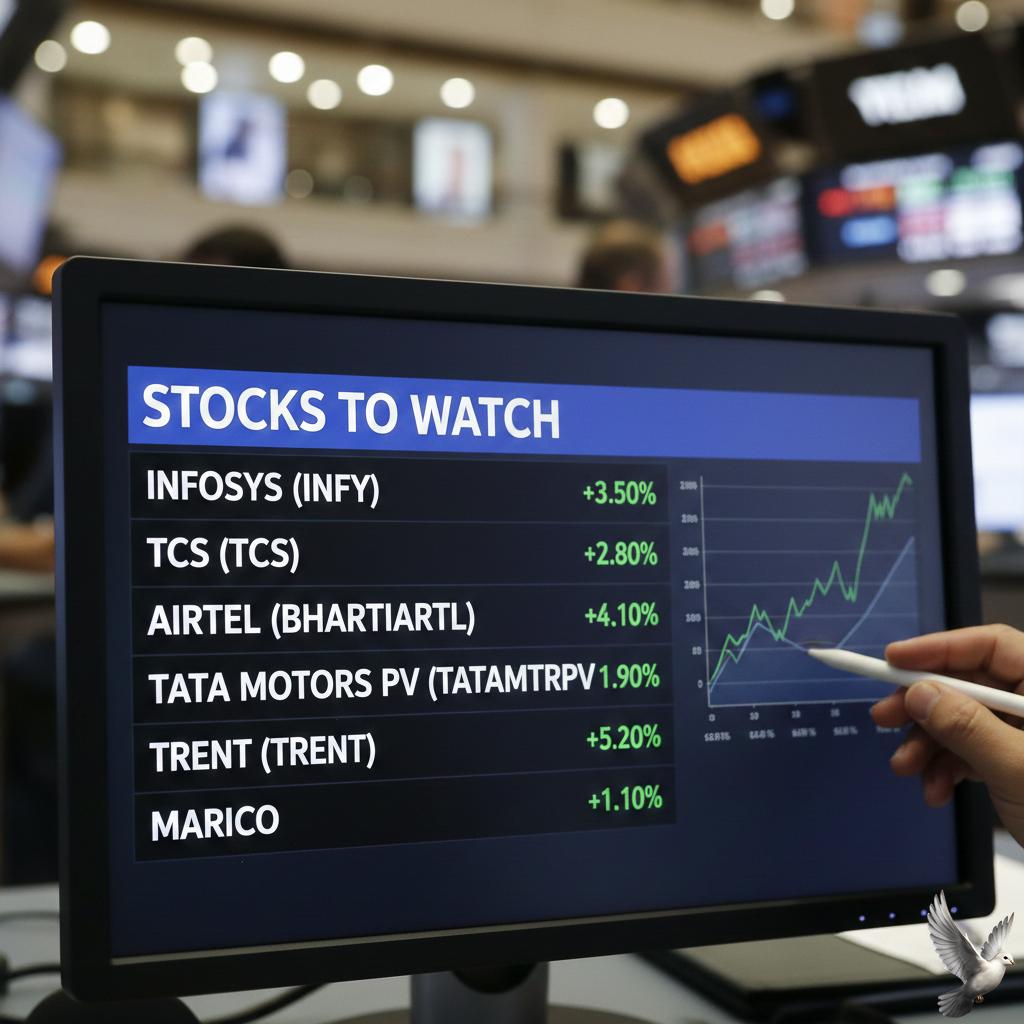
Stocks to Watch: Infosys, TCS, Airtel, Tata Motors PV, Trent, Marico
Indian equity benchmarks Sensex and Nifty50 closed flat on Wednesday, February 4, 2026, ending a two-day rally. The BSE Sensex edged up by 78 points to settle at 83,818, while the Nifty 50 gained 48 points to finish at 25,776. Despite the marginal gains, the session was marked by significant volatility and a localized "SaaSpocalypse" in the technology sector. The Nifty IT index suffered its worst single-day crash since the 2020 pandemic, plunging 7% and wiping out nearly 2 trillion INR in market value. This sell-off was triggered by mounting concerns that rapid advancements in Artificial Intelligence (AI) tools are beginning to cannibalize traditional software maintenance and application revenue. Top IT heavyweights experienced sharp declines. TCS saw its consolidated net profit fall 14% year-on-year to 10,657 crore INR, despite a 5% rise in revenue to 67,087 crore INR. The firm declared a total dividend of 57 INR per share, including a 46 INR special dividend. Infosys also remained under pressure as investors weighed its 4 billion USD in new deal wins against the long-term threat of AI-driven disruption. In the automotive sector, Mahindra & Mahindra announced a historic milestone. The company secured its largest-ever export order to supply 35,000 Scorpio Pik Up units to Indonesia throughout 2026. This single contract is expected to match M&M’s entire annual export volume for the previous fiscal year, signaling a major boost for its international operations. Consumer goods major Marico made a strategic move into the wellness space by acquiring a 60% stake in Bengaluru-based Cosmix Wellness. The deal, valued at 226 crore INR, prices the plant-based nutrition brand at an equity valuation of 375 crore INR. This follows Marico's recent 226.8 crore INR acquisition of the snacking brand 4700 BC. Broad economic indicators remain resilient. The Economic Survey 2025–26 projects India’s real GDP growth at 7.4% for the current fiscal year. Foreign exchange reserves have climbed to a robust 701.4 billion USD as of mid-January, providing a significant buffer against global trade volatility. The market sentiment is currently influenced by the Union Budget 2026, which introduced a hike in Securities Transaction Tax (STT). Rates for futures were raised to 0.05%, while options premium tax increased to 0.15%. These changes have led to a cautious environment for derivative traders and high-frequency participants. Investors are now shifting focus toward the India–AI Impact Summit scheduled for mid-February in New Delhi. The event is expected to clarify how the domestic tech industry will integrate indigenous AI solutions to counter the ongoing pressure on traditional service models.

Asian Equities Retreat Amid Tech Selloff as Gold Advances
**Market Brief: Tech Rout Hits Asia, Gold Surges** **Global Tech Sell-Off Deepens** Asian equity markets are trading lower today, February 5, mirroring a sharp sell-off on Wall Street. The negative sentiment is driven by deepening concerns over bloated tech valuations and skyrocketing artificial intelligence (AI) spending. * **US Context:** The Nasdaq Composite slid **1.5%** and the S&P 500 fell **0.5%** in the previous session. * **Sector Rotation:** Investors are fleeing high-growth tech stocks for defensive sectors, pushing the Dow Jones Industrial Average up **0.5%**. **Tech Giants Under Pressure** Despite beating revenue and earnings expectations, **Alphabet (Google)** shares dipped in after-hours trading. The market was rattled by the company's aggressive capital expenditure guidance—projecting **$175–$185 billion** in spending for 2026, largely for AI infrastructure. * **Chip Sector Hit:** Semiconductor sentiment soured after **AMD** plunged approximately **17%**, triggered by a quarterly forecast that missed elevated Wall Street expectations. * **Broad Impact:** This volatility has spread to major Asian tech constituents, weighing heavily on regional indices. **Regional Spotlight: South Korea** South Korea’s **Kospi** index is leading regional losses, trading down roughly **2%** at the 5,255 level. The decline follows a period of extreme volatility, snapping a recent rebound as foreign investors offload semiconductor and internet heavyweights. **Commodities: Gold Shines, Silver Stumbles** Precious metals are showing a sharp divergence in performance: * **Gold:** The yellow metal is rallying strongly as a safe-haven asset. In local markets like India, prices surged by over **₹5,500 per 10g**, driven by renewed global buying interest. * **Silver:** Conversely, silver is facing intense volatility. Futures on the MCX hit a lower circuit, trading at a significant discount to physical rates, highlighting a liquidity disconnect and fragile sentiment compared to gold. **Key Takeaway** The "AI trade" is facing its sternest test yet. While earnings remain strong, the market is punishing companies for massive spending plans without immediate returns, prompting a rotation into safer assets like value stocks and gold. *** **
Societe Generale Acquires Rs 41 Crore Stake in Gokaldas Exports via Bulk Deal
**Gokaldas Exports: Major Rally on US-India Trade Pact** **Market Action** Gokaldas Exports has witnessed a massive surge, climbing approximately **43%** over the last two trading sessions to reach a **52-week high** range of **₹832–₹835**. This rally is underpinned by a significant bulk deal executed by **Societe Generale**, which acquired **5.02 lakh shares** valued at **₹41 crore** (approx. **₹807 per share**). The heavy buying interest triggered the stock's upper circuit limit, reflecting aggressive institutional confidence. **Key Catalyst: US Tariff Slash** The primary driver for this re-rating is the newly announced **US-India trade deal**, which slashes import tariffs on Indian textile goods from **50% down to 18%**. * **Sector Impact:** This reduction positions Indian exporters competitively against rivals like Vietnam and Bangladesh (facing ~20% duties). * **Company Benefit:** With Gokaldas Exports deriving nearly **70% of its revenue** from the US market, the tariff cut is expected to significantly boost margins and order volumes. **Financial Performance & Valuation** * **Q3 FY26 Results:** The company reported a net profit of **₹15 crore**, an **81%** sequential increase, signaling early recovery despite a **71%** year-on-year dip due to previous tariff headwinds. * **Revenue:** Quarterly revenue remained stable at **₹998 crore**. * **Valuation:** The stock currently trades at a P/E ratio of roughly **51x**, prompting some analysts to advise caution despite the bullish momentum. **Trend Reversal** Contrary to earlier signals of negative returns, the recent **40%+ rally** has effectively erased year-to-date losses. The stock has flipped from a double-digit decline to a **positive year-to-date return**, breaking past critical moving averages (50-day and 100-day) and signaling a strong short-term uptrend.
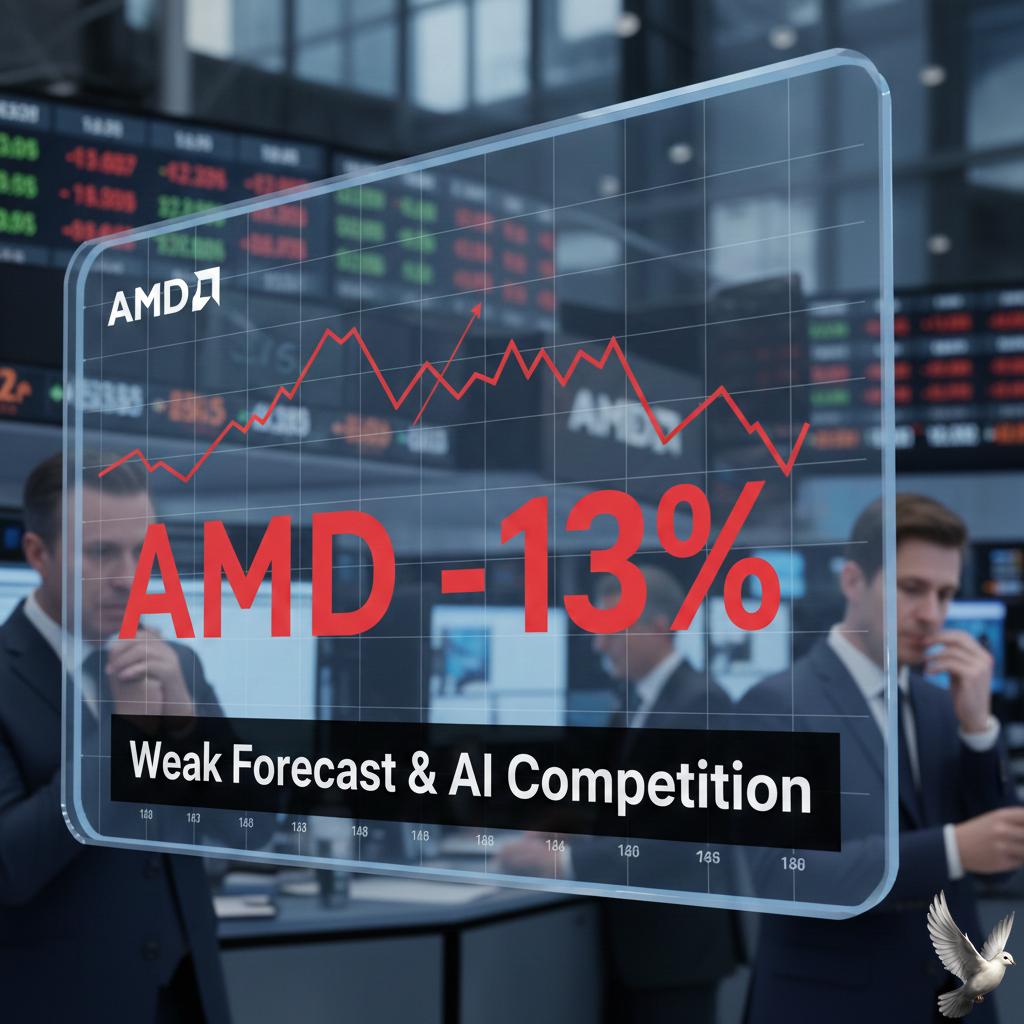
AMD Shares Drop 13% on Weak Forecast and AI Competition
**Market Brief: AMD Stumbles Despite Revenue Beat** **Stock Sell-Off** Advanced Micro Devices (AMD) shares plummeted approximately **13–16%** in early February 2026 following its fourth-quarter earnings report. The sharp decline marks one of the stock's worst daily performances in years, reflecting deep-seated investor anxiety about the company's execution in the high-stakes AI market. **The "Low-Quality" Beat** While AMD reported Q4 revenue of **$10.3 billion**—surpassing Wall Street estimates—the numbers were bolstered by a surprising **$390 million** windfall from China. This revenue came from sales of previously restricted MI308 chips, a one-off event that masked softer underlying performance. Without this unexpected boost, analysts noted the results would have merely met or missed expectations, leading to concerns about the "quality" of the earnings beat. **Guidance Disappoints** Looking ahead, AMD forecasted Q1 2026 revenue of approximately **$9.8 billion**, representing **32%** year-over-year growth but a sequential decline of about **5%**. Investors, accustomed to explosive growth figures from AI sector leaders, viewed this guidance as lackluster. High operating expenses, which jumped **42%** year-over-year, further pressured sentiment as the company spends heavily to chase market share. **The Nvidia Gap** The report deepened doubts about AMD's ability to genuinely threaten Nvidia's dominance. Although Data Center revenue grew **39%** to **$5.4 billion** driven by Instinct GPU shipments, the pace trails the blistering growth seen elsewhere in the sector. Analysts highlighted that while AMD is securing a "second-tier" position, it has yet to prove it can capture significant share from Nvidia’s entrenched ecosystem. **Key Levels to Watch** The stock is currently trading near the **$200** level, erasing a significant portion of its recent gains. Market participants are now focused on the rollout of the new "Helios" rack-scale platform later this year, viewing it as a critical test for AMD’s technical competitiveness.
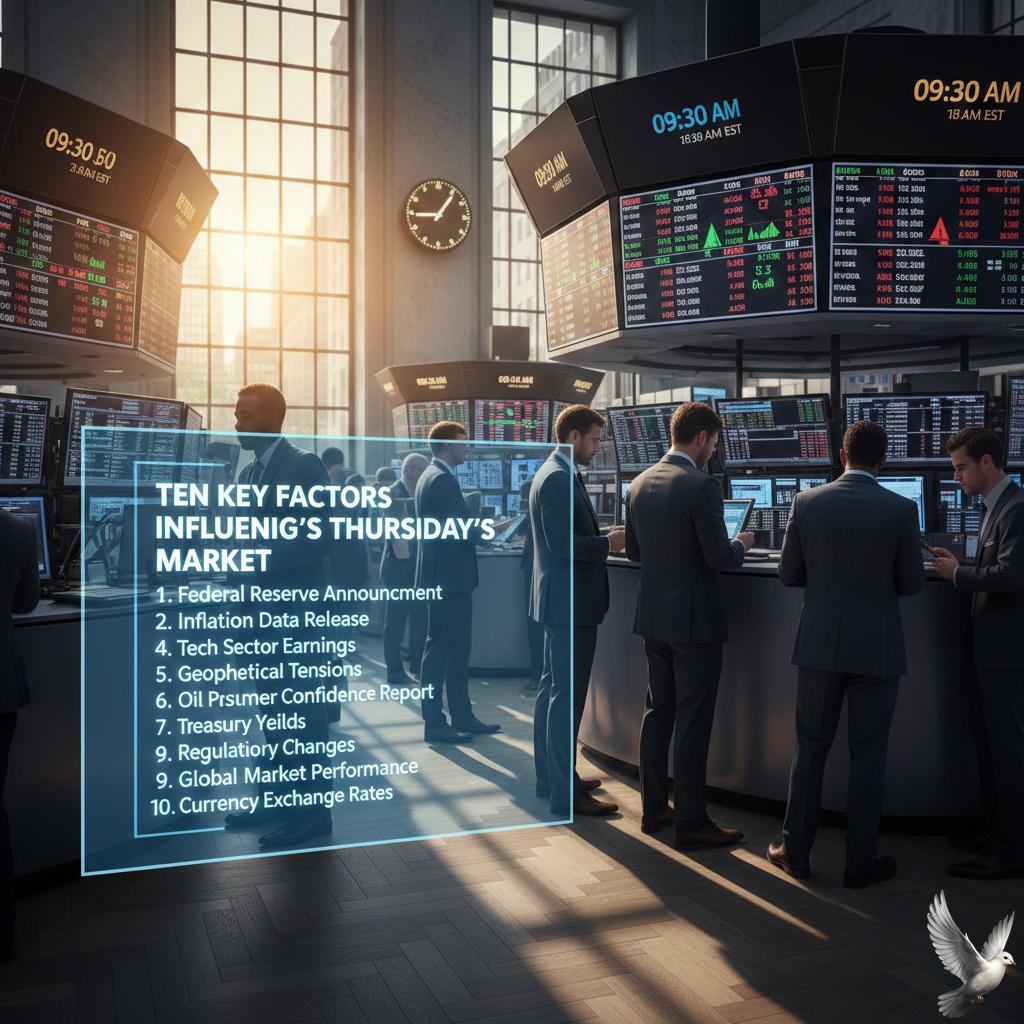
Ten Key Factors Influencing Thursday's Stock Market
**Market Brief: Indices Hold Gains Amid Trade Deal Optimism** **Market Overview** Indian benchmarks extended their winning streak for a second session, closing marginally higher on Wednesday, **February 4, 2026**. Optimism surrounding the newly agreed **India-US trade framework**—which reduces US tariffs on Indian goods to **18%**—bolstered sentiment, helping the market absorb significant selling pressure in the IT sector. **Key Closing Figures** * **Nifty 50:** **25,776** (+48 points / +0.19%) * **Sensex:** **83,817** (+78 points / +0.09%) * **Bank Nifty:** **60,238** (+197 points / +0.33%) * **Market Breadth:** Positive, with strength in broader markets. **Sector Watch** * **Top Gainers:** **Power, Realty, and Consumer Durables** led the rally. * **Trent** and **Zomato (Eternal)** surged **~5%** each. * **NTPC** and **Adani Ports** added **~2.4%**. * **Top Losers:** **IT** stocks faced a brutal sell-off triggered by AI disruption fears (following Anthropic’s new tool launch). * **Infosys** crashed **7.3%**; **TCS** plunged **7%**. * **HAL** tumbled **8%** after reports of its exclusion from the AMCA defense project. **Technical Outlook** * **Trend:** The Nifty formed a "Hanging Man" or bearish candle but managed to close above the **25,750** zone, indicating buyers are defending lower levels. * **Support:** Immediate support lies at **25,500**, followed by the crucial **25,200** base. * **Resistance:** The **26,000** psychological mark remains a tough ceiling for further upside. * **Analysis:** Experts suggest a "buy on dips" strategy as long as **25,500** holds, though volatility from global IT cues may persist. *** ... [Market Crash Context: Why ₹6 Lakh Crore Vanished Recently](https://www.youtube.com/watch?v=_5yQ5Xd9pps) ... This video provides context on the recent market volatility and crash that preceded the current recovery trend. http://googleusercontent.com/youtube_content/0
Blue Star, Kirloskar Oil Eyed for Potential 5% Short-Term Upside
The Nifty 50 extended its winning streak for a third consecutive session on Wednesday, February 4, 2026, closing at **25,776.00**, up **48.45 points** or **0.19%**. This steady climb followed a period of initial hesitation where the index opened sharply lower but witnessed a rapid recovery as buyers stepped in at lower levels. Market sentiment remains supported by a landmark trade agreement recently sealed between India and the US, alongside positive cues from the Union Budget 2026. Domestic institutional investors and foreign portfolio investors (FPIs) turned net buyers, with FPIs purchasing equities worth over **5,236 crore** in a single day. The IT sector faced a significant "SaaSpocalypse," with the Nifty IT index plunging nearly **7%**. This marked its worst single-day crash since March 2020, wiping out approximately **2 lakh crore** in market value. Major laggards included Infosys, down **7.3%**, and TCS, which fell by **7%**. Despite the tech selloff, other sectors gained momentum. The broader market outperformed, as the Nifty Midcap 100 rose **0.56%** and the Smallcap 100 climbed **1.22%**. Key gainers included Trent and Eternal, both surging over **5%**, while Power Grid and NTPC also added strength to the benchmarks. Technically, the Nifty continues to trade in a defined range. Immediate resistance is pegged at the **25,900–25,950** zone. On the downside, strong support is established between **25,600 and 25,650**. Sustaining above the **25,750** mark is considered a positive signal for near-term momentum. Looking ahead, investors are closely watching the Reserve Bank of India’s (RBI) monetary policy decision scheduled for February 6, 2026. While the central bank is expected to maintain current interest rates, any change in stance or dovish commentary could provide the next major trigger for market direction. Corporate earnings also remain a focal point. Market participants are tracking Suzlon Energy, which is set to declare its Q3 results on February 5. Other sectoral highlights include the Nifty Pharma index, which has seen a boost from international trade developments, and the Auto sector, which continues to show resilient demand.

US Equity Markets Diverge as Corporate Earnings Offset Software Sector Volatility
**MARKET BRIEF — Thursday, February 5, 2026** **Headline: Tech & Pharma Rally on Earnings Beats, LLY Crosses $1 Trillion** **Market Overview** Following a mixed open on Wednesday, markets found direction through blockbuster earnings from key players, shaking off the previous session's tech selloff. Investors pivoted back into growth stories, with high-profile beats in the pharma and AI hardware sectors driving sentiment. **Key Movers & Data** * **Eli Lilly (LLY):** The pharma giant surged **~10%** on Wednesday, propelling its market cap past the **$1 trillion** milestone. * **Catalyst:** Q4 revenue hit **$19.3 billion** (+43% YoY), driven by soaring demand for Mounjaro ($7.4B) and Zepbound ($4.2B). * **Guidance:** The company stunned Wall Street with a bullish 2026 revenue forecast of **$80–$83 billion**, well above consensus estimates. * **Super Micro Computer (SMCI):** Shares jumped over **10%** as the AI infrastructure play signaled a return to accelerated growth. * **Performance:** Fiscal Q2 revenue reached a record **$12.7 billion**, a staggering **123% increase** year-over-year. * **Outlook:** Management raised fiscal 2026 guidance to at least **$40 billion**, citing robust demand for liquid-cooled AI server racks. **Sector Sentiment** The "bruising selloff" in software and cloud stocks earlier in the week stabilized as traders digested these results. The dual rally in **GLP-1 (weight loss)** and **AI infrastructure** confirms that capital continues to flow heavily into distinct secular growth themes, even as broader indices face volatility. **Watchlist for Today** Traders are now positioning for **Amazon’s (AMZN)** earnings report due later today, with a specific focus on AWS capacity and capital expenditure to gauge the durability of the AI spending cycle. **Next Step for You:**

NSE Board to Consider IPO Committee Formation on February 6
**NSE IPO Kickoff: Board Meets Tomorrow to Form Listing Panel** The National Stock Exchange (NSE) board convenes on **February 6, 2026**, to formally initiate its Initial Public Offering (IPO) process. This meeting marks a pivotal shift after a **10-year** regulatory delay, following the recent receipt of a **No-Objection Certificate (NOC)** from the Securities and Exchange Board of India (SEBI). **Key Agenda: Committee & Financials** A specialized **IPO committee** will be constituted to oversee the listing roadmap, including the appointment of merchant bankers and legal advisors for drafting the Red Herring Prospectus (DRHP). The board will also review and approve unaudited financial results for the quarter and nine months ending **December 31, 2025**. **Valuation & Market Data** Investor interest in the unlisted market has surged, with the exchange’s valuation exceeding **₹5 lakh crore**. Key figures include: * **Current Share Price:** Trading at approximately **₹2,100** in the grey market. * **Estimated Issue Size:** Expected to be around **₹23,000 crore** via an Offer for Sale (OFS). * **Financial Health:** The exchange reported robust FY25 revenue of **₹19,177 crore** with net income touching **₹12,188 crore**. **Timeline Expectations** With the "in-principle" approval now secured, the NSE aims to file its draft prospectus within **4 months**, targeting a potential market debut by late **2026**. This listing is projected to be one of the largest in India's capital market history.

Nasdaq Proposes Rule to Expedite Index Inclusion for Large New Listings
Nasdaq is moving to overhaul its inclusion rules with a new "Fast Entry" proposal designed to capture the massive scale of upcoming market debuts. This update addresses long-standing delays that forced significant new listings to wait months—or even until the annual December reconstitution—before joining the benchmark Nasdaq-100 Index. The proposed rule specifically targets "mega-listings" that carry immediate market weight. To qualify for Fast Entry, a newly listed company must rank among the top 40 current index constituents by total market capitalization. Current data suggests this threshold is roughly $100 billion. Speed is the primary focus of the reform. Under the new guidelines, eligible companies could be added to the index in just 15 trading days following their debut, provided the market receives at least five days of notice. This is a dramatic shift from the current minimum seasoning period, which often keeps major players on the sidelines for an entire quarter or longer. The timing of this proposal is strategic as 2026 prepares to host some of the largest private company exits in history. SpaceX, currently seeking a valuation exceeding $1.3 trillion, would likely be a prime candidate for immediate inclusion. Other highly anticipated listings for the 2026 pipeline include AI giants OpenAI and Anthropic, alongside fintech leaders like Plaid and Revolut. Market conditions as of February 2026 show a robust but volatile environment. The Nasdaq-100 is currently trading near 25,338, reflecting intense investor scrutiny of AI valuations and shifting interest rate expectations under new Federal Reserve leadership. Despite recent pullbacks, 2025 was a record-breaking year for IPO volume, with over $33 billion raised and multiple billion-dollar debuts. For investors, the Fast Entry rule ensures that major tracking products, such as the Invesco QQQ ETF—which manages over $412 billion in assets—can incorporate these market leaders almost immediately. This reduces the performance "disconnect" between the index and the actual market during massive listing events. If the proposal is finalized this month, the Fast Entry mechanism will become operational following the March 23, 2026, quarterly rebalance. This would effectively clear the path for a historic wave of technology and AI listings to enter the benchmark without traditional liquidity or seasoning delays.
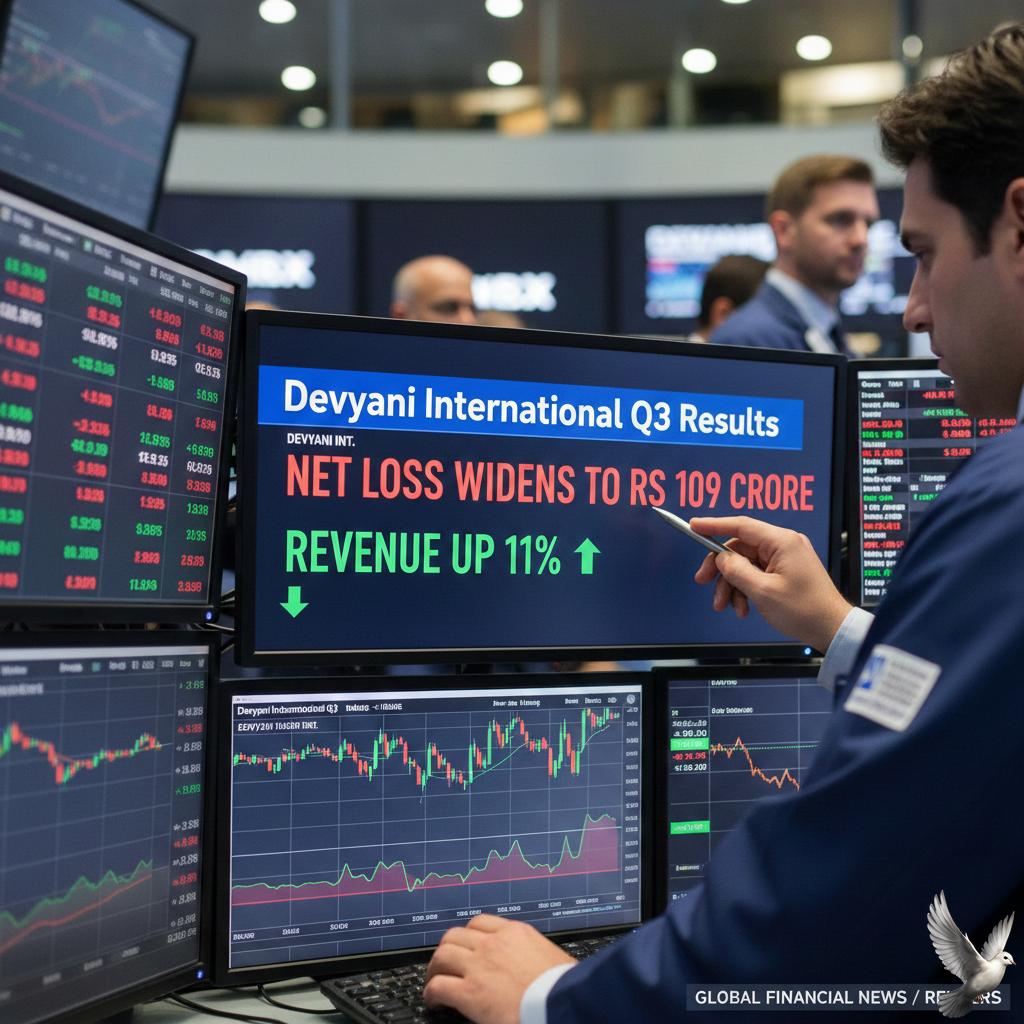
Devyani International Q3 Results: Net Loss Widens to Rs 109 Crore, Revenue Up 11%
**Devyani International: Q3 FY26 Market Brief** **Financial Performance** Devyani International Ltd (DIL) reported a widened consolidated **net loss of ₹109.78 crore** for the quarter ended December 2025 (Q3 FY26), compared to a loss of ₹76.46 crore a year ago. Despite the bottom-line pressure, top-line growth remained resilient. Revenue from operations climbed **11.31% YoY** to **₹1,440.9 crore**, driven by steady demand and footprint expansion. **Operational Highlights** The company’s diversification strategy is yielding results. A key positive was the **Biryani by Kilo** business achieving **breakeven**, marking a faster-than-anticipated turnaround for the acquired brand. DIL continued its aggressive expansion, adding **95 net new stores** in the quarter, taking its total store count to **2,279** across domestic and international markets. **Strategic Restructuring** Management has initiated a correction course for its Pizza Hut portfolio. The company is rationalizing loss-making stores to improve fleet efficiency, with new openings now strictly calibrated to replace underperforming assets. Additionally, a leadership transition is underway, with **Manish Dawar** set to take over as CEO starting April 1, 2026. **Market Reaction** Investors looked past the widening loss, focusing instead on the revenue growth and margin improvements. The stock surged **6.06%** to close at **₹123.30** on the BSE, reacting positively to the operational milestones and the recently announced merger roadmap with Sapphire Foods.
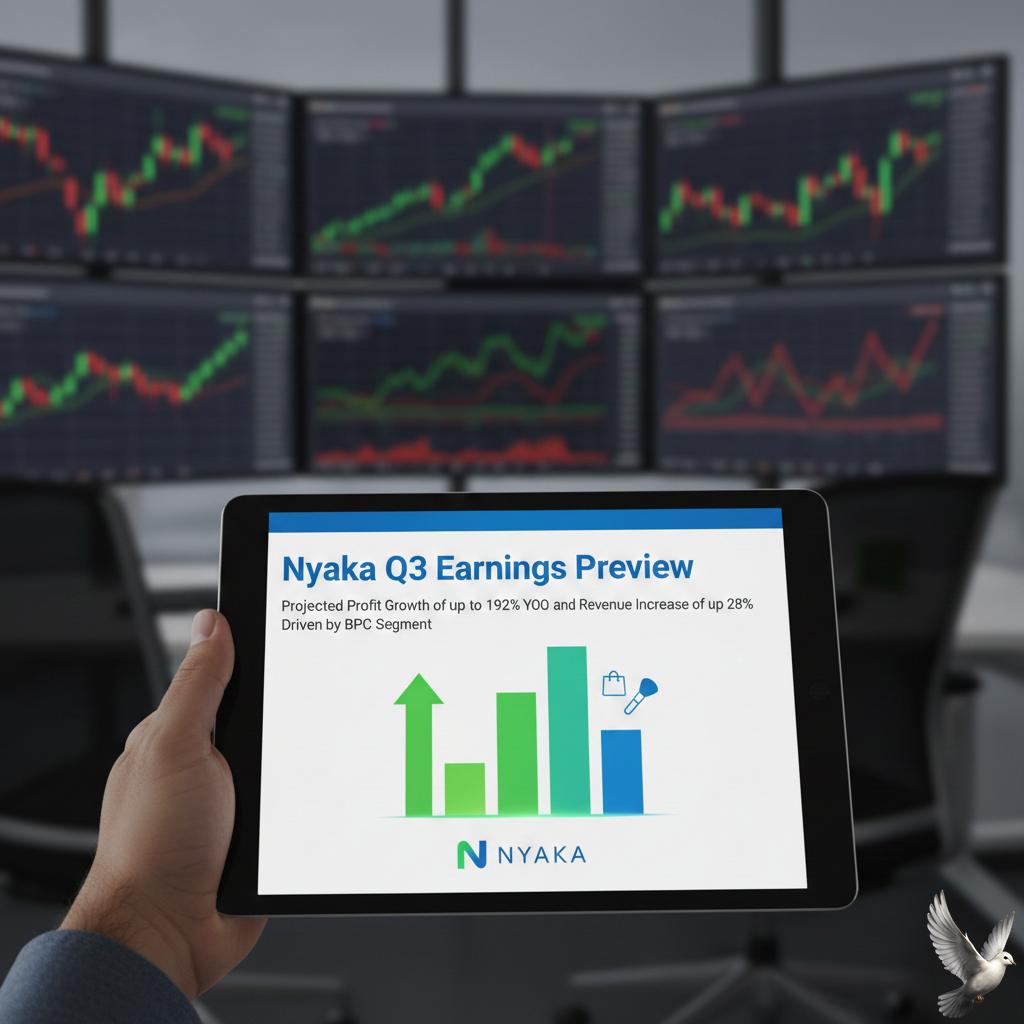
Nykaa Q3 Earnings Preview: Projected Profit Growth of up to 192% YoY and Revenue Increase of up to 28% Driven by BPC Segment
**Market Brief: Nykaa Q3 FY26 Earnings Outlook** **Overview** Nykaa (FSN E-Commerce Ventures) is positioned for a breakout quarter as it prepares to announce Q3 FY26 results today, **February 5**. Driven by robust festive demand and a dominant performance in the **Beauty and Personal Care (BPC)** segment, the company is expected to report significant profit expansion. **Key Financial Estimates** Analysts project a sharp acceleration in bottom-line growth compared to the previous year: * **Net Profit Surge:** Estimates suggest a jump of **130% to 190%** YoY, with profit after tax (PAT) expected between **₹60 crore and ₹78 crore**. * **Revenue Growth:** Consolidated revenue is forecasted to rise by **26–28%** YoY, reaching approximately **₹2,860 crore to ₹2,900 crore**. * **EBITDA:** Operating profit is likely to exceed **₹200 crore**, with margin expansion driven by operating leverage in the BPC business. **Segment Performance** * **Beauty (BPC):** Remains the primary engine, with Gross Merchandise Value (GMV) expected to grow in the **late 20s%** range, supported by strong "Pink Friday" sales and new customer acquisition. * **Fashion:** Showing signs of recovery with projected Net Sales Value (NSV) growth in the **mid-20s%**, though net revenue growth may be moderate (late teens) due to channel optimization. **Market Reaction** Investor sentiment is buoyant ahead of the release. Nykaa shares have trended upwards, trading **~2–3% higher** in intraday sessions as the market prices in the strong provisional updates and optimistic brokerage forecasts. [Nykaa Q3 Earnings Context](https://www.youtube.com/watch?v=mnrLuSnMcAI) This video provides historical context on Nykaa's quarterly financial trends, which serves as a useful baseline for understanding the projected surge in today's Q3 FY26 report. http://googleusercontent.com/youtube_content/0

Mukesh Ambani on Wealth Compounding Strategies for Indian Savers
**Market Brief: Ambani Calls for Asset Shift Amidst Record Valuations** **The Core Message** Reliance Industries Chairman Mukesh Ambani has labeled India’s massive gold and silver imports—totaling approximately **$75 billion** annually—as "unproductive." Speaking at a recent JioBlackRock event, Ambani argued that while precious metals are traditionally viewed as safe, they sit idle outside the formal financial system, failing to generate compounding wealth for the economy. **Current Market Context (As of February 5, 2026)** The call to shift savings into capital markets comes during a period of significant price divergence between asset classes: * **Gold:** Prices have remained volatile but high, trading around **₹1,49,245 per 10 grams** (24K). * **Silver:** Trading between **₹2.80 lakh and ₹3.20 lakh per kg** following recent fluctuations. * **Equities:** The Nifty 50 is hovering near **24,825**, while the Sensex trades around **80,722**. Both indices recently faced short-term pressure following the Union Budget 2026 announcements regarding higher Securities Transaction Tax (STT), yet the long-term compounding narrative remains central to the bullish case. **The "Unproductive" Argument** Ambani highlighted that India imported **$60 billion** in gold and **$10–15 billion** in silver last year alone. He stressed that these assets effectively lock capital away. In contrast, productive investments in the stock market not only offer superior long-term returns through compounding but also fund corporate growth and infrastructure development. **Evidence of a Structural Shift** Data suggests the transition Ambani advocates is already underway, though physical assets still dominate Indian portfolios (approx. 70%): * **SIP Surge:** Monthly Systematic Investment Plan (SIP) inflows crossed a record **₹31,000 crore** in December 2025. * **Rising Equity Culture:** The share of equity and mutual funds in household financial savings has jumped from **2%** in FY12 to over **15%** in FY25. * **JioBlackRock’s Role:** The joint venture aims to accelerate this "financialization of savings" by offering low-cost, transparent investment products to millions of first-time investors. **Summary** While gold remains a cultural staple and a hedge against uncertainty, the market consensus—backed by record mutual fund inflows—is pivoting toward financial assets. The vision outlined by JioBlackRock suggests that unlocking even a fraction of India’s bullion savings could unleash trillions of rupees into the capital markets, driving the next phase of economic expansion.

Indian Bonds Gain Ahead of RBI Debt Purchase and Policy Review
**Market Brief: Indian Government Bonds & FY27 Outlook** **Bond Yields Ease Amid Buying Support** Indian government bonds have extended gains for a second consecutive session, with the benchmark **10-year yield** cooling to **6.6972%**. Market sentiment is currently supported by expectations that the **Reserve Bank of India (RBI)** will continue its bond purchases to manage liquidity, offsetting concerns over the government's heavy borrowing calendar. **Record FY27 Borrowing Weighs on Sentiment** Traders remain cautious following the Union Budget announcement of a record **₹17.2 lakh crore** gross market borrowing plan for **FY27** (2026-27). This figure, representing a **~17% increase** over the previous year, has created a supply-demand imbalance, pushing yields higher earlier in the week before the recent cool-off. **RBI Policy & Liquidity in Focus** All eyes are now on the upcoming **RBI Monetary Policy** decision. The central bank is widely expected to maintain a **pause on rates**, keeping the repo rate steady while focusing on liquidity management. **Key Market Drivers** * **Supportive OMOs:** Investors are banking on continued **Open Market Operations (OMOs)** from the RBI to absorb the record debt supply. * **Yield Resistance:** The 10-year yield faces stiff resistance around the **6.78% - 6.80%** mark, a level tested immediately after the budget release. * **Fiscal Deficit:** The government aims for a fiscal deficit of **4.3% of GDP** for FY27, signaling a continued path of fiscal consolidation despite the elevated borrowing numbers. **Outlook** Short-term bond movements will be strictly dictated by the RBI’s commentary on **liquidity** and its willingness to support the market through the heavy supply months ahead. While no immediate rate cuts are priced in, the central bank’s "invisible hand" in the bond market remains the primary anchor for yields.