Bullish News
Collection
Carlsberg Shares Rise on Profit Beat and Potential Indian IPO
**Carlsberg Delivers Strong FY2025 Results, Eyes Strategic India IPO** **Financial Performance Beats Expectations** Danish brewing giant Carlsberg has reported a robust set of full-year results for 2025, defying a volatile global market. The company posted a **5%** increase in organic operating profit, reaching **13.99 billion DKK** ($2.22 billion). This figure surpassed analyst consensus estimates, which had pegged profit at **13.82 billion DKK**. Reported revenue saw a significant surge, climbing **18.8%** to **89.1 billion DKK**, largely driven by the successful integration of Britvic and solid execution across key markets. Shareholders reacted positively to the beat, sending shares up approximately **4%** following the announcement. **Dividends and Shareholder Returns** Reflecting confidence in its cash flow and operational resilience, the Supervisory Board has recommended a dividend increase of **7%**, bringing the payout to **DKK 29.0** per share. This aligns with the company's policy of returning value to shareholders even amidst heavy investment phases. **2026 Outlook: Cautious Optimism** Looking ahead, Carlsberg has issued guidance for 2026, projecting organic operating profit growth in the range of **2% to 6%**. While the forecast signals continued expansion, management remains prudent. CEO Jacob Aarup-Andersen highlighted that there are "no signs yet of a material change in consumer behaviour," citing persistent geopolitical uncertainties and a challenging consumer environment as key factors influencing the wider range. The company plans to maintain strict cost discipline to navigate these headwinds while continuing to invest in brand growth. **Strategic Shift: The India IPO** A central highlight of the update is the confirmation that Carlsberg is actively reviewing an Initial Public Offering (IPO) for its Indian business. This strategic move is seen as a key lever for value unlocking and balance sheet management. **Debt Reduction Focus** The primary rationale behind the potential listing is debt reduction. Analysts estimate that listing a **25%** stake in the Indian arm could raise approximately **5 billion DKK** ($791 million). Proceeds would likely be directed toward lowering the company's leverage ratio, with a target of bringing net interest-bearing debt below **2.5x** operating profit. Achieving this deleveraging target is a critical step that could pave the way for the resumption of share buybacks, further enhancing shareholder returns in the medium term. **The Britvic Factor: Diversification Paying Off** The acquisition of British soft drinks maker Britvic, completed in early 2025, has fundamentally reshaped Carlsberg’s portfolio. Soft drinks now account for **30%** of total volumes, reducing reliance on the traditional beer market which has seen sluggish global demand. Integration is proceeding ahead of schedule, with synergy realization outpacing initial plans. This diversification has provided a crucial buffer against volatility in the beer segment, allowing Carlsberg to outperform several of its brewing peers who face steeper volume declines. **Market Context and Resilience** Despite weather-related headwinds and soft consumer sentiment in Europe and Asia, the company’s "premiumisation" strategy continues to deliver. High-margin segments and alcohol-free brews are gaining traction, helping to offset volume pressures in the mainstream beer category. The combination of disciplined cost management, a successful pivot toward soft drinks, and the potential monetization of the high-growth Indian asset positions Carlsberg strongly for 2026. Investors will be closely watching for further announcements regarding the timeline and valuation of the India listing in the coming months.
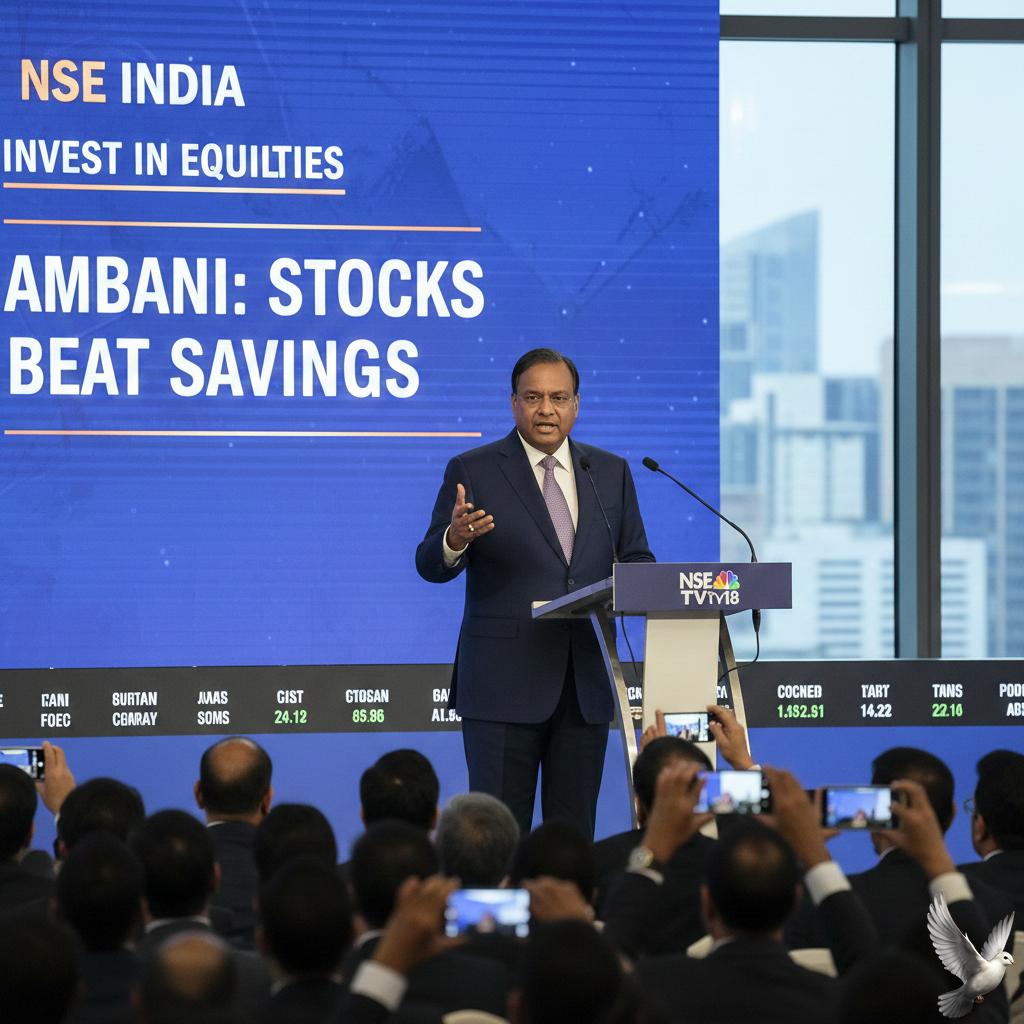
Mukesh Ambani Advocates Stock Market Investment Over Bank Savings
**Market Brief: The ‘Jio Moment’ for Indian Investments** **Reliance Industries Chairman Mukesh Ambani** has issued a strategic call for Indian households to pivot from traditional physical savings to capital markets. Speaking at a recent event alongside BlackRock CEO Larry Fink, Ambani outlined a vision to democratize finance, paralleling the digital revolution sparked by Jio. **1. The Great Capital Shift** Ambani termed India’s massive gold imports—approximately **$60–$75 billion** annually—as "unproductive" assets that fail to compound wealth. * **The Argument:** While gold offers security, it remains "idle." In contrast, equities allow savers to own a stake in India’s corporate growth. * **The Goal:** Redirect a portion of household savings into financial instruments to fuel national economic expansion and personal wealth creation. **2. Market Pulse (Feb 2026)** The call to action coincides with a robust market rally triggered by a landmark India-US trade deal. * **Indices:** The Nifty 50 recently breached the **25,700** mark, while the Sensex surged over **2,000 points** in a single session. * **Catalysts:** Reduced tariffs and clarity on energy imports have sparked a "buy-on-dips" sentiment, pushing indices near all-time highs despite global tech volatility. **3. Retail Participation & Data** Domestic investors are already driving a structural change, though physical assets still dominate. * **SIP Record:** Monthly SIP inflows hit a historic high of **₹29,361 crore** in late 2025, signaling maturing investor discipline. * **Asset Mix:** Currently, physical assets (real estate, gold) comprise roughly **70%** of household savings, leaving only **~29%** for financial assets. * **Growth Potential:** With Mutual Fund industry AUM crossing **₹72 lakh crore**, the scope for converting "savers into investors" remains vast. **4. Democratizing Access** Ambani emphasized that investment tools must be as simple and accessible as mobile data. * **The Strategy:** Leveraging technology to lower barriers (cost and complexity) for Tier-2 and Tier-3 cities. * **New Ventures:** The **JioBlackRock** joint venture aims to disrupt the asset management sector with a digital-first, low-cost model, targeting the millions of Indians yet to enter the formal financial system. *** **Relevance:** This video features Mukesh Ambani discussing large-scale investment commitments and his broader vision for India's economic growth, which aligns with his recent push for domestic capital formation. [Mukesh Ambani on Reliance's Investment Vision](https://www.youtube.com/watch?v=MC4H0c2Vt9M) http://googleusercontent.com/youtube_content/0
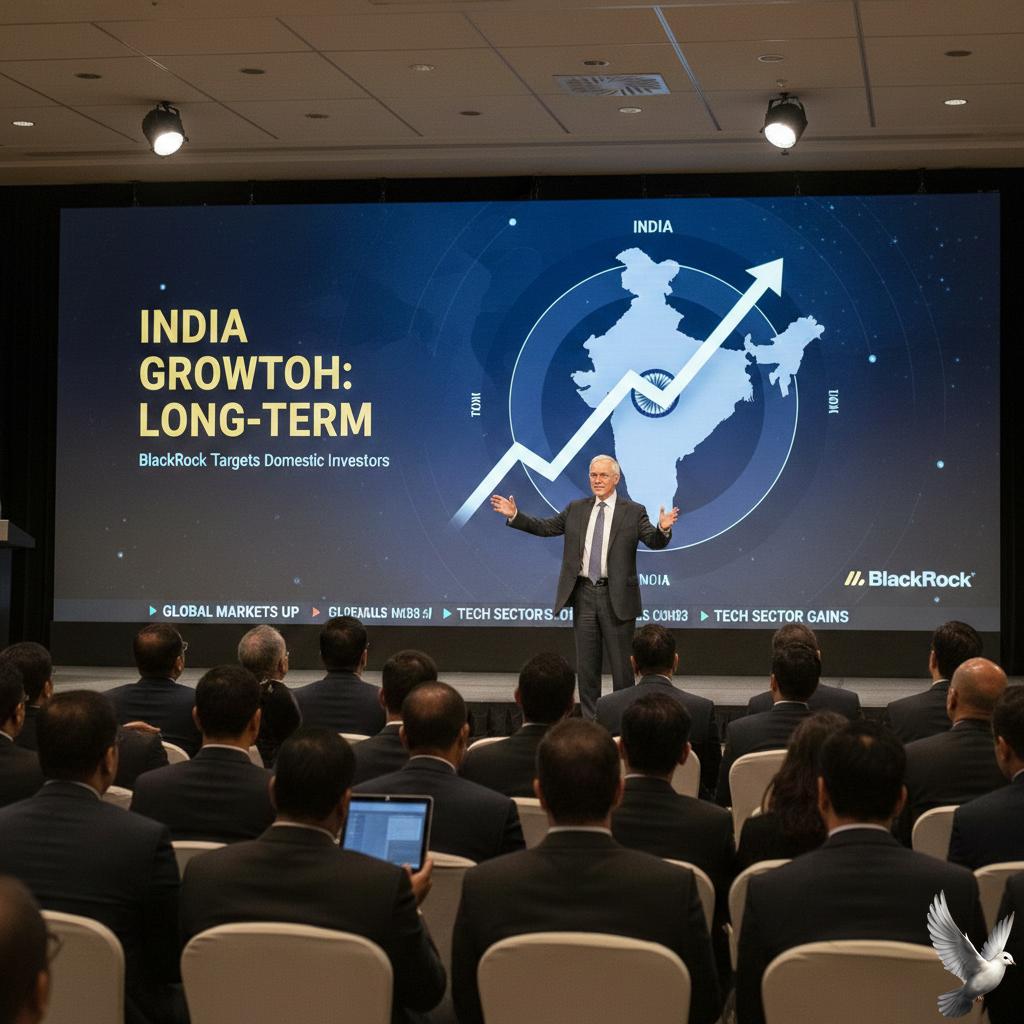
BlackRock CEO Forecasts Long-Term Growth for India and Targets Domestic Investors
**Market Brief: BlackRock & Reliance Bet Big on India’s “Era of Growth”** **Date:** February 5, 2026 **The “Era of India”** BlackRock CEO Larry Fink has officially termed the next **20–25 years** as the "era of India," signaling a massive shift in global capital allocation. Speaking alongside Reliance Industries Chairman Mukesh Ambani at a JioBlackRock event in Mumbai yesterday, Fink emphasized that India’s growth will be powered by domestic investors rather than foreign flows. He projects the Indian economy to grow at **8–10%** annually over the next decade. **Ambani’s $30 Trillion Vision** Mukesh Ambani outlined a bullish roadmap, predicting India will create **$30 trillion** in new value over the next 30 years. He stated the country is poised to birth "100 new Reliances" driven by tech startups and young entrepreneurs. Ambani also forecasted that India—currently the world’s third-largest oil consumer—will cease to import **80%** of its energy needs within the next decade, achieving self-sufficiency through renewable infrastructure. **Market Reaction & Key Data** Following these comments and positive global cues, Indian indices held firm near record highs: * **Sensex:** Trading at **83,818** (+0.09%) * **Nifty 50:** Hovering at **25,776** (+0.2%) * **BlackRock AUM:** Reached a record **$14.04 trillion** at the end of 2025. **Macro Outlook Upgraded** The International Monetary Fund (IMF) has raised India’s 2025 GDP growth forecast to **7.3%**, up from previous estimates. This optimism is fueled by robust corporate earnings, strong rural consumption, and a cooling inflation trajectory, positioning India as a standout performer among major economies. **JioBlackRock: Operational Update** The JioBlackRock joint venture is moving swiftly to capture this domestic growth. After receiving final regulatory approval in May 2025 and raising **₹17,800 crore** in its initial New Fund Offers (NFOs) in July 2025, the entity has now launched a **Personalised Investment Advice** platform. This digital-first service targets retail investors with entry thresholds as low as **₹10,000**, aiming to democratize access to institutional-grade portfolio management.
Infosys, Eternal, and Gokaldas Exports Among Wednesday's Key Market Movers
**Market Brief: February 4, 2026** **Closing Snapshot** Indian equity benchmarks ended a volatile session on a flat note, pausing after the previous day's massive rally. While optimism surrounding the recent **India-US trade deal** provided underlying support, a sharp sell-off in technology stocks capped gains. **Key Indices** * **Nifty 50:** Closed at **25,776**, up **48.45 points** (+0.19%). * **BSE Sensex:** Ended at **83,817.69**, rising **78.56 points** (+0.09%). * **Market Breadth:** Remained positive, with broader midcap and smallcap indices outperforming large-caps. **Sectoral Trends & Movers** The session witnessed a clear divergence between sectors: * **IT Meltdown:** The Nifty IT index plunged nearly **6%**, dragging the market. Heavyweights **Infosys**, **TCS**, and **Wipro** fell between **4% and 7%**. Sentiment soured after US-based AI startup Anthropic launched a new automated legal tool, sparking fears that advanced AI could disrupt traditional software services revenue. * **Gainers:** Energy and Infrastructure stocks cushioned the fall. **Trent**, **ONGC**, **NTPC**, and **Adani Ports** were among the top performers, gaining between **2% and 5%**. * **FMCG & Pharma:** Showed resilience, trading in the green as investors sought defensive bets amidst tech volatility. **Institutional Activity** Foreign and domestic flows moderated significantly compared to the previous session's aggressive buying: * **FIIs:** Net buyers of approximately **₹30 crore**. * **DIIs:** Net buyers of approximately **₹250 crore**. **Currency & Global Cues** * **Rupee:** Weakened by **11 paise** to close at **90.43** against the US Dollar, tracking losses in Asian currencies. * **Global Markets:** Asian indices were mixed, following a weak handover from Wall Street where tech stocks faced heavy profit-booking. **Outlook** The market remains in a consolidation zone. While the **India-US trade agreement** (reducing tariffs to 18%) continues to boost long-term sentiment for export-oriented sectors like textiles and manufacturing, near-term direction will likely be dictated by global tech valuations and the upcoming RBI policy stance.
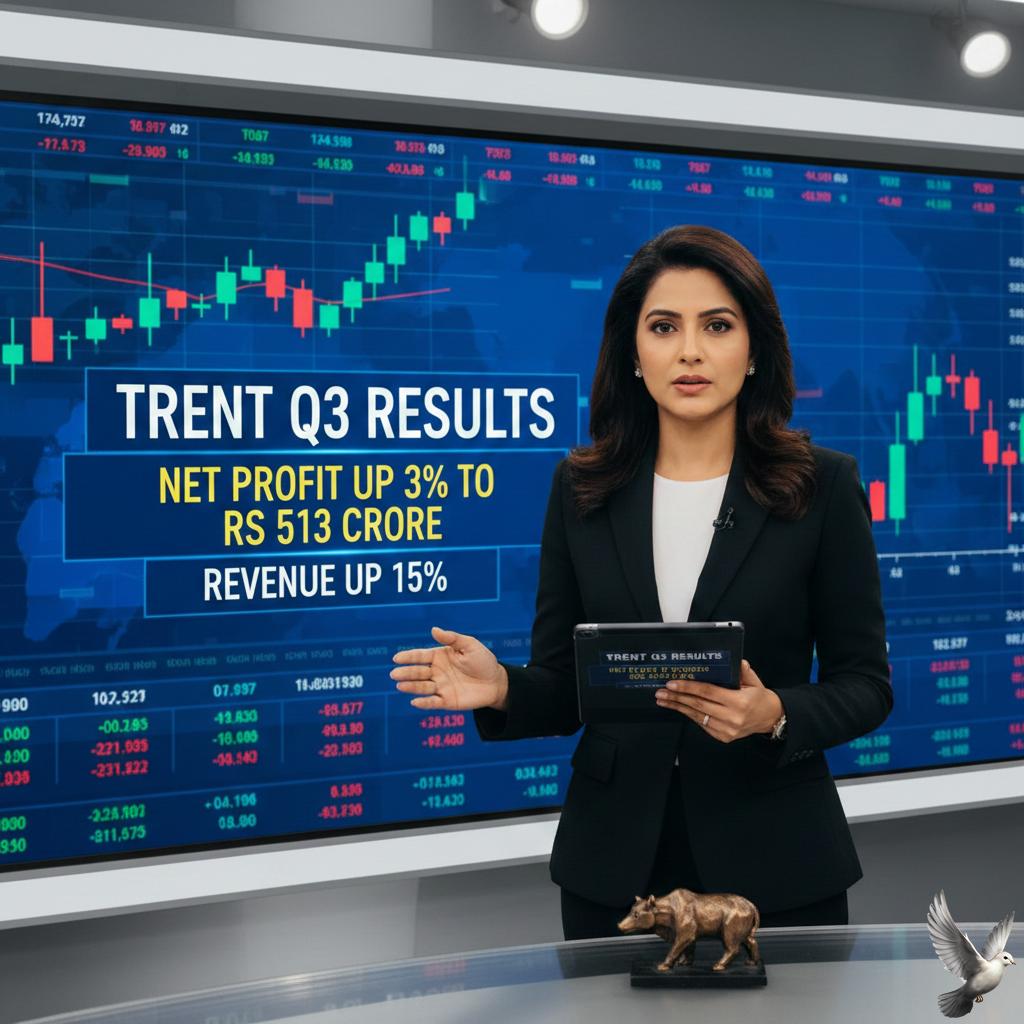
Trent Q3 Results: Net Profit Up 3% to Rs 513 Crore, Revenue Up 15%
**MARKET BRIEF: TRENT LTD Q3 FY26 EARNINGS & SECTOR UPDATE** **Headline Financials: Profit Misses Estimates Despite Revenue Surge** Trent Ltd has released its results for the third quarter of FY26, reporting a consolidated net profit of **₹513 crore**, a modest **3%** increase year-on-year. While the bottom line remained positive, it missed street estimates of **₹535 crore**, largely due to a one-time charge of **₹26 crore** related to new labor code adjustments. Revenue from operations climbed **15%** to **₹5,345 crore**, driven by continued footfall in its value-fashion segment. On a standalone basis, the company outperformed significantly, with Profit After Tax (PAT) surging **36%** to **₹640 crore**, reflecting the inherent strength of its core operating model excluding consolidated subsidiaries. **Market Reaction & Stock Performance** Following the announcement, Trent’s stock witnessed volatility, closing the session down by approximately **1.00%** at **₹3,692**. The muted reaction reflects investor caution regarding the profit miss and the stock's premium valuation, which currently trades at a Price-to-Earnings (P/E) ratio of roughly **87x**. Despite the immediate dip, the stock has been a long-term outperformer. However, recent sessions have seen it shed value from its 52-week highs, aligning with a broader correction in high-growth retail counters. Analysts maintain a watchful stance, citing high expectations baked into the price. **Operational Aggression: The Zudio Engine** The company’s growth narrative continues to be anchored by its aggressive expansion strategy. In Q3 alone, Trent opened **65 new stores**, comprising: * **48 Zudio** stores (the primary growth driver) * **17 Westside** stores This rapid rollout brings the total store portfolio to over **1,100 large-box fashion stores** across **274 cities**. The Zudio format, specifically, has crossed the **850-store** milestone, cementing its dominance in the value-fashion segment. The company also marked its international entry with new stores in the UAE, signaling an ambition to test global markets. **Management Commentary & Outlook** Chairman Noel Tata described the quarter’s performance as "category-leading" amidst a challenging demand environment. Management noted that customer sentiment is "gradually improving," with discretionary spending showing signs of stabilization. Key operational metrics highlighted: * **EBITDA Margins** expanded to **20.2%** (up from 18.2% YoY). * **Operating EBIT Margin** stood at **13.8%**. * **Gross Margins** for Westside and Zudio remain stable despite competitive pricing. **Sector Context: Retail Trends in 2026** The broader Indian retail sector is currently navigating a "K-shaped" recovery. While premium and luxury segments are seeing sustained demand, mass-market consumption has been softer. Trent’s dual-strategy—positioning Westside for aspirational buyers and Zudio for price-sensitive consumers—has allowed it to insulate itself better than peers. However, competition is intensifying. Rivals like Reliance Retail and Aditya Birla Fashion are aggressively scaling their own value formats to challenge Zudio’s market share. Additionally, the recent GST rate rationalization on apparel is expected to aid volume growth in the coming quarters, potentially offering a tailwind for Trent’s margin profile as it heads into FY27.

Rupee Edges Lower as Markets Evaluate Post-Trade Deal Outlook
**INR Brief: Rupee Pauses After Historic Rally** **Market Snapshot** The Indian Rupee (INR) retreated modestly on **Wednesday, February 4, 2026**, ending a volatile session at **90.43** against the US Dollar. This marks a depreciation of **11 paise** from the previous close. The currency fluctuated between an intraday high of **90.26** and a low of **90.54**, driven by renewed demand for dollars from local companies. **Hedging & Consolidation** Importers and corporates moved quickly to hedge their dollar exposures, capitalizing on the rupee’s sharp appreciation from the prior session. Traders also exercised caution, seeking more clarity on the specific framework of the newly announced India-U.S. trade agreement. Weaker-than-expected services PMI data further weighed on sentiment, capping the currency's momentum. **Context: The Tuesday Surge** Wednesday’s pullback follows a historic rally on Tuesday, where the rupee recorded its best single-day gain in over seven years. It surged approximately **1.3%** (122 paise) to settle around **90.27**, fuelled by the breakthrough trade deal with the United States. The agreement, which slashes reciprocal tariffs on Indian goods to **18%**, is expected to boost export competitiveness and attract foreign inflows. **External Factors** Broader market conditions remain mixed. The Dollar Index (DXY) softened to **97.57**, providing some underlying support. However, geopolitical tensions and fluctuating crude oil prices—with Brent trading near **$66.18** per barrel—continue to influence the currency’s near-term trajectory.
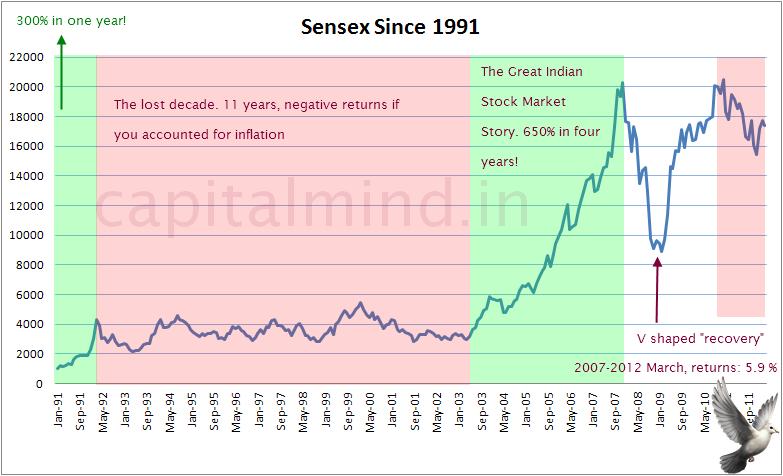
Sensex, Nifty Extend Gains for Third Session as IT Index Falls 6%
Benchmark indices maintained their upward trajectory for a third consecutive session on Wednesday, as the markets successfully shook off a sluggish start. Buying momentum intensified through the day, helping the Sensex and Nifty finish in positive territory despite significant pressure from the technology sector. The Sensex closed 78.56 points higher at 83,817.69, while the Nifty 50 added 48.45 points to settle at 25,776.00. The session was characterized by a sharp recovery from early lows, supported by strong performance in consumer durables and energy. A primary highlight was the dramatic slump in IT stocks, with the Nifty IT index plunging 6% in its steepest single-day decline in years. This "SaaSpocalypse" followed global software jitters after the launch of new high-efficiency AI tools, which triggered fears over the long-term demand for traditional IT services. Major losers included Infosys and TCS, which both tumbled over 7%. Offsetting the tech rout, companies like Eternal and Trent surged by 5% each. Strong gains were also recorded by NTPC, Power Grid, and Adani Ports. The broader market displayed resilience as the Nifty SmallCap index outpaced the benchmarks with a 1.27% gain. Domestic sentiment was further bolstered by the recent India-US trade agreement, which has significantly lowered reciprocal tariffs. Institutional participation remained healthy, with Foreign Institutional Investors (FIIs) pumping over 5,200 crore into equities in the previous session. Economic indicators continue to signal strength. India's services PMI climbed to a two-month high of 58.5 in January, and the GDP growth forecast for the current fiscal remains robust at 7.4%. While the rupee weakened slightly to 90.43 against the dollar, record-high foreign exchange reserves of 701 billion provide a substantial buffer against external shocks. Investors now shift their focus toward the Reserve Bank of India’s monetary policy announcement scheduled for Friday. With headline inflation hovering at historic lows, the market is closely watching for potential shifts in the central bank’s interest rate stance.
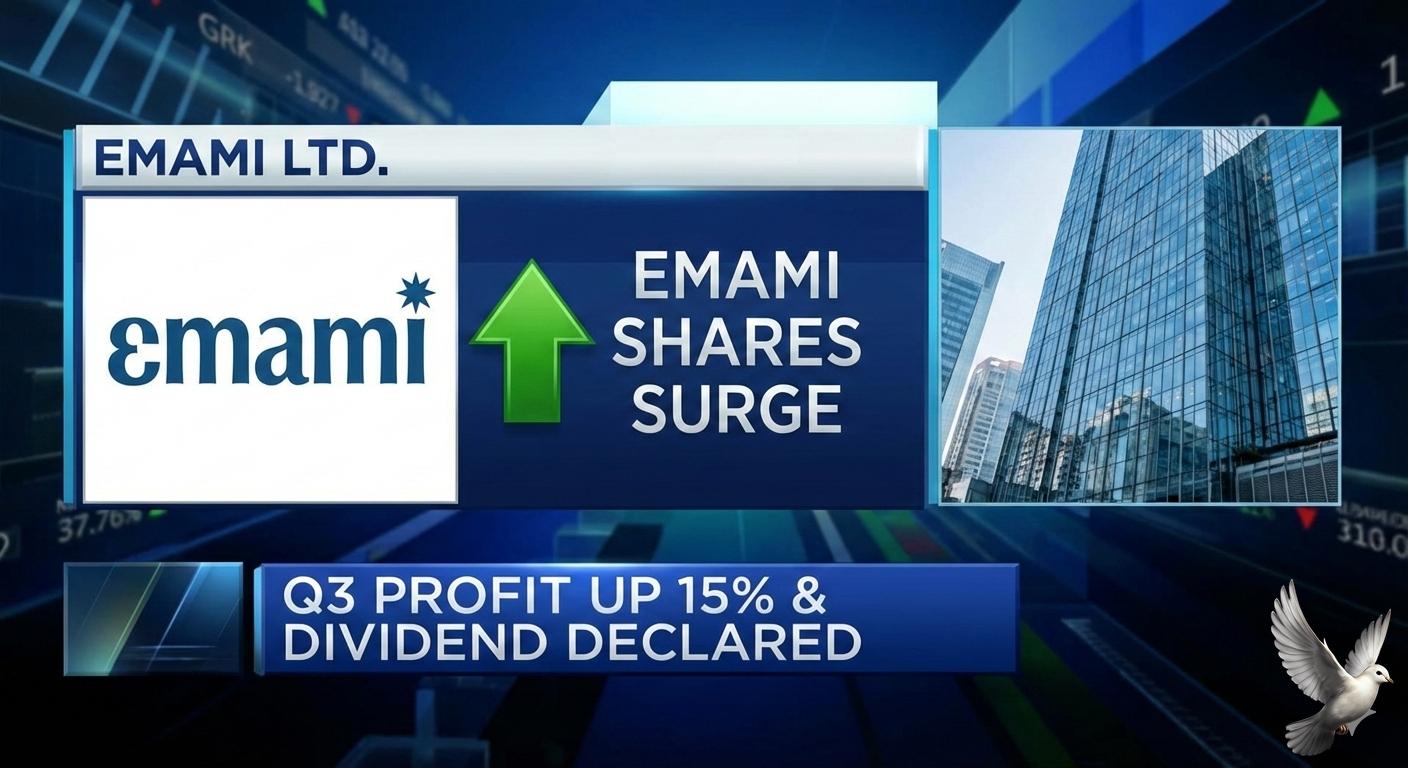
Emami Shares Rise as Q3 Profit Increases 15% and Dividend Is Declared
**Emami Q3 FY26 Market Brief** **Stock Performance & Market Reaction** Emami Ltd shares witnessed a sharp rally today, surging over **4%** to **9%** intraday (hitting a high of **Rs 528** on NSE) following the announcement of robust third-quarter earnings. The stock witnessed strong buying interest as the results exceeded street estimates, driven by volume recovery and margin expansion. **Key Financial Highlights (Q3 FY26)** * **Net Profit:** Rose **14.5% YoY** to **Rs 319 crore**, up from Rs 279 crore in the same period last year. * **Revenue:** grew **10% YoY** to **Rs 1,152 crore**, supported by a **9%** increase in domestic volumes. * **EBITDA:** Improved by **13%** to **Rs 384 crore**, with margins expanding **110 basis points** to **33.4%**. * **Gross Margins:** Strengthened to **70.6%**, aided by stabilized input costs and a better product mix. **Operational Drivers** * **Seasonal Tailwinds:** A favorable winter season significantly boosted the offtake of winter portfolio products (like BoroPlus) and health supplements. * **Rural & Urban Demand:** Rural markets demonstrated resilience with stable demand, while urban consumption showed gradual improvement. * **Quick Commerce Surge:** Sales via quick commerce platforms **doubled**, now contributing **20%** to the company's total e-commerce business. * **Recovery:** The quarter marked a strong sequential recovery, overcoming earlier disruptions related to GST 2.0 implementation. **Corporate Action: Dividend Announcement** The Board of Directors declared a second interim dividend of **Rs 6 per share** (600% of face value). * **Record Date:** Tuesday, **February 10, 2026**. * **Payout Date:** On or before **March 6, 2026**. **Analyst Sentiment** Market sentiment remains positive due to the company's "volume-led" growth and successfully navigating inflationary pressures. The management cited a strategic focus on premiumization and new product launches as key factors for sustained momentum going forward.

9 Stocks With Rising EPS Over Four Quarters
**Market Brief: Nifty500 Earnings Momentum (Q3 FY26)** **Executive Summary** A recent profitability scan of the Nifty500 universe identifies sustained operational efficiency, with nine companies delivering consistent quarter-on-quarter (QoQ) growth in earnings per share (EPS) through the December 2025 quarter. Key standouts include Solar Industries, Craftsman Automation, Shriram Finance, and IIFL Finance, all signaling robust financial health amid broader market shifts. **Sector & Stock Highlights** **Solar Industries India** The explosives manufacturer reported a strong Q3 FY26, with consolidated net profit climbing **42% YoY** to **₹467 crore**. Revenue from operations rose **29%** to **₹2,548 crore**, driven by a surging defence order book and higher domestic demand. EBITDA margins improved to **28.77%**, reflecting better cost absorption. **Craftsman Automation** Auto component maker Craftsman Automation posted a massive **723% YoY** jump in net profit to **₹107 crore** for the December quarter. On a sequential basis, profits grew **21%**, supported by a **23.5% QoQ** rise in operating profit. The company also announced a new manufacturing facility in Ludhiana to boost powertrain capacity. **Shriram Finance** Despite a YoY dip in headline profit, Shriram Finance demonstrated resilience with a **9.3% QoQ** increase in net profit to **₹2,530 crore**. Assets Under Management (AUM) grew **14.6% YoY** to **₹2.92 lakh crore**, with net interest income rising **16%** to **₹6,764 crore**. The lender maintains strong liquidity coverage above statutory requirements. **IIFL Finance** IIFL Finance delivered a turnaround performance, reporting a **1,041% YoY** surge in net profit to **₹464 crore**. The sharp recovery highlights improved asset quality and renewed lending momentum following regulatory adjustments in previous quarters. **Market Trend** The consistent EPS expansion across these diverse sectors—defence, auto ancillaries, and NBFCs—points to a broader theme of margin expansion and operational leverage. Investors are favoring companies capable of maintaining earnings visibility despite input cost volatility.

Fractal Analytics IPO: India’s First AI Listing and Grey Market Outlook
**MARKET BRIEF: FRACTAL ANALYTICS IPO** **Launch Details & Pricing** Fractal Analytics is set to open India’s first pure-play AI IPO for subscription on **February 9, 2026**, closing on **February 11**. The price band is fixed at **₹857–₹900** per share. Anchor investor bidding is scheduled for **February 6**. **Issue Size & Valuation** The total issue size has been reduced by approximately **42%** to **₹2,834 crore**, down from earlier estimates of nearly **₹4,900 crore**. At the upper price band, the company targets a valuation of roughly **₹15,500 crore** ($1.8 billion). The offer includes a fresh issue of **₹1,023.5 crore** and an Offer for Sale (OFS) of **₹1,810.4 crore**. **Grey Market Sentiment** Unlisted market activity remains robust. The Grey Market Premium (GMP) is currently hovering between **₹180–₹210**, indicating a potential listing gain of **20–23%** over the issue price. This premium reflects strong investor appetite for AI-driven assets despite a generally subdued primary market in early 2026. **Financial Performance** Fractal reported revenue from operations of **₹1,559 crore** for H1FY26, a **20%** increase year-on-year. However, net profit for the same period dipped slightly by **2.7%** to **₹70.9 crore**. FY25 revenue stood at **₹2,765 crore** with a net profit of **₹221 crore**, signaling a turnaround from previous losses. **Investor Profile** The IPO provides a partial exit for major private equity backers, including **TPG**, **Apax Partners**, and **Gaja Capital**. The company counts Fortune 500 clients like **Google**, **Microsoft**, and **Nvidia** among its customer base, reinforcing its position in the global enterprise AI sector.

Religare Recommends Buying Aluminium as Prices Drop 12% Below Key Moving Averages
**Market Brief: Aluminium (MCX/LME)** **Current Status** Aluminium prices on the MCX are trading firmly around **₹315.60 per kg**, showing resilience after recent corrections. On the global front, LME three-month contracts are hovering near **$3,065–$3,110 per tonne**, reflecting a complex mix of supply tightness and steady demand. **Key Drivers** Prices are supported by fresh gains in Asian markets, driven by China’s manufacturing PMI expanding to **50.3** in January 2026. While China’s annual output recently hit a record **45.02 million tons**, fears of a "hard cap" on capacity continue to limit long-term supply elasticity. Global availability faces further pressure from production disruptions in Iceland, Mozambique, and Australia. These supply-side bottlenecks are counteracting the profit-booking seen in other base metals, keeping the floor price elevated. **Market Outlook** Technically, the metal is consolidating after pulling back from recent highs of **₹361**. The primary trend remains bullish, with analysts identifying immediate support in the **₹305–₹310** zone. Buying interest persists at these lower levels. If prices sustain above **₹318**, momentum could drive a recovery toward the **₹335–₹340** range in the coming weeks, supported by robust demand from the EV and power grid sectors. **Actionable Insight** Traders should monitor the **₹310** level closely; a hold here signals continued strength, while a breach could invite deeper corrections toward **₹297**. **Next Step**
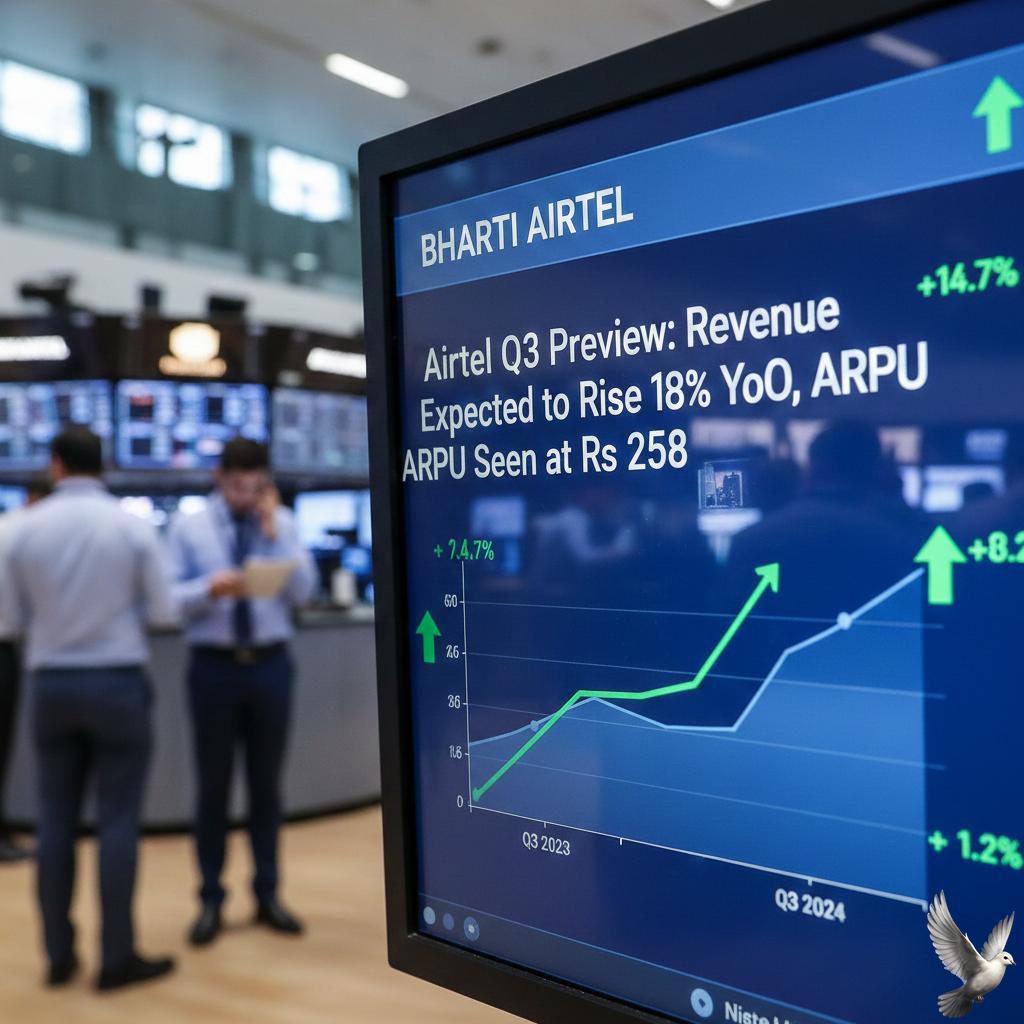
Airtel Q3 Preview: Revenue Expected to Rise 18% YoY, ARPU Seen at Rs 258
**Bharti Airtel: Pre-Earnings Market Brief** **Date:** February 4, 2026 **Subject:** Q3 FY26 Earnings Preview & Market Data **Market Action** Shares of Bharti Airtel are trading with positive momentum ahead of the quarterly results. * **Current Price:** **₹2,022.80** (+1.28% intraday). * **Recent High:** Touched a day high of **₹2,034.60**; 52-week high stands at **₹2,174.50**. * **Volume:** Strong activity with over **7.4 million** shares traded on NSE. * **Valuation:** Market cap sustains above **₹11.5 Lakh Crore**. **Q3 FY26 Earnings Forecast** The telecom major is scheduled to announce results on **February 5, 2026**. Analysts maintain a "Buy" rating with robust growth expectations: * **Revenue:** Projected to rise **14%–19% YoY**, with estimates pegging consolidated revenue near **₹53,600 crore**. * **Profitability:** Net profit estimates range between **₹7,300 crore and ₹8,500 crore**, driven by operational leverage. EBITDA margins are expected to expand to **~57.3%**. * **Consensus:** While earlier forecasts suggested a 35% profit jump, recent brokerage data indicates adjusted net profit could see steady sequential growth (up ~8% QoQ) and stable year-on-year gains. **Key Performance Drivers** * **ARPU Expansion:** Average Revenue Per User is expected to improve to **₹258–₹261** (up from ₹256 in Q2), aided by premiumization and subscriber upgrades. * **India Mobile:** 4G/5G net additions are forecast at **~6 million**, signaling strong data monetization. * **Africa & Homes:** Africa operations continue to deliver double-digit growth in constant currency, though forex remains a watchlist item. Home broadband momentum remains solid. **Upcoming Catalyst** * **Event:** Board Meeting to approve Q3 & 9M FY26 results. * **Date:** Thursday, **February 5, 2026**. * **Focus:** Management commentary on tariff outlook, capex intensity, and 5G monetization strategies.

Zoho Founder Sridhar Vembu Attributes SaaS Valuation Correction to AI Impact Amid Anthropic Developments
**MARKET BRIEF: SaaS Bubble Bursting & The Rise of Agentic AI** **Executive Summary** Zoho founder Sridhar Vembu has issued a stark warning that the "inflated" SaaS bubble is finally bursting. Following the release of advanced autonomous AI agents by Anthropic in early **February 2026**, the market is witnessing a "SaaSpocalypse," with investors fleeing traditional software stocks in favor of lean, AI-native efficiency. **The "Pin Popping the Balloon"** Vembu explicitly identifies Artificial Intelligence as the catalyst dismantling the traditional SaaS model. He argues the sector was already fragile, plagued by a "fundamentally flawed" structure that prioritized aggressive sales and marketing spend over core engineering and product development. * **The Trigger:** On **February 4, 2026**, Anthropic unveiled 11 new AI plugins capable of automating complex professional tasks (legal, sales, data analysis) without human oversight. * **Market Reaction:** The announcement triggered panic selling. The Nifty IT index plunged **8%** in a single session—its worst single-day crash since March 2020—wiping out nearly **₹2 lakh crore** in market value. * **The Warning:** Vembu notes that the stock market is turning deeply pessimistic about SaaS firms because AI is now automating the very coding and professional services these companies sell. **From Copilots to Autonomous Agents** The industry is undergoing a rapid architectural shift from AI "Copilots" (assistants waiting for prompts) to **"Agentic AI"** (systems that execute multi-step workflows autonomously). * **Seat-Based Pricing at Risk:** The traditional per-seat subscription model is collapsing as AI agents reduce the need for human headcount. * **New Economics:** Pricing is shifting toward **outcome-based** or **consumption-based** models. AI features are commanding **60–70% price premiums**, but overall contract volumes for legacy seats are threatened. * **Zoho’s Pivot:** Acknowledging the threat, Zoho launched its own "Zia Agents" platform in **February 2026**, with Vembu stating that survival now depends entirely on a company’s ability to adapt to this autonomous future. **Consolidation & The Efficiency Mandate** The "growth at all costs" era driven by easy Venture Capital money is officially dead. Investors have pivoted to demanding extreme efficiency. * **Metric Shift:** Market cap is now increasingly correlated with **revenue per employee** rather than top-line growth. Companies hiring linearly to grow revenue are being penalized. * **Consolidation Wave:** As predicted by Vembu, the sector is ripe for M&A. Smaller, feature-heavy SaaS firms unable to pivot to AI-native backends are expected to be acquired or dissolve. * **Market Outlook:** despite the turmoil, the global SaaS market is still projected to grow from **~$315 billion** in 2025 to **$375 billion** in 2026, but the gains will concentrate in fewer, AI-dominant platforms. **Bottom Line** The "SaaSpocalypse" is not just a market correction but a structural reset. The days of bloated sales teams and infinite VC runway are over. The new winners will be lean, agent-driven platforms that sell **outcomes**, not software licenses. *** **Next Step:**

Hero MotoCorp Q3 Preview: Net Profit Seen Rising 17% YoY on Festive Demand, Price Hikes
**Hero MotoCorp: Market Brief & Q3 Outlook** **Price Action & Sentiment** Hero MotoCorp shares are demonstrating resilience, currently trading in the **₹5,700–₹5,800** range. The stock has seen sustained interest, supported by a recovering two-wheeler sector and expectations of strong double-digit growth in quarterly earnings. Momentum remains positive with year-on-year returns exceeding **34%**. **Pricing Power & Realization** Pricing strategies and an improved product mix are providing critical incremental support. Market data indicates that discount levels remained flat sequentially, signalling a stable competitive environment. The company implemented a price hike of approximately **50 basis points** during the quarter to offset input costs. Consequently, Average Selling Prices (ASPs) are projected to rise by **2–2.5%** year-on-year. This growth is driven by a richer sales mix, specifically a higher contribution from exports and the scooter segment. **Strategic Drivers** * **EV Repricing:** A sharp **10%** price increase across the electric vehicle portfolio (Vida) initiated in early December is expected to further aid realizations, though volume sensitivity remains a watchpoint. * **Volume Growth:** Projections estimate robust volume growth in the **mid-teens (approx. 16%)** year-on-year, underpinned by festive demand and a gradual rural recovery. * **Margins:** Operational leverage from higher volumes is likely to keep EBITDA margins steady at around **15%**, balancing out marketing spends and commodity costs. **Sector Outlook** The broader two-wheeler industry is eyeing **6–9%** growth for FY26. While the domestic economy segment has seen some market share compression, the focus on the 125cc premium commuter space—marked by the upcoming Splendor 125cc launch—aims to recapture dominance. Exports continue to recover, providing a necessary hedge against domestic volatility.
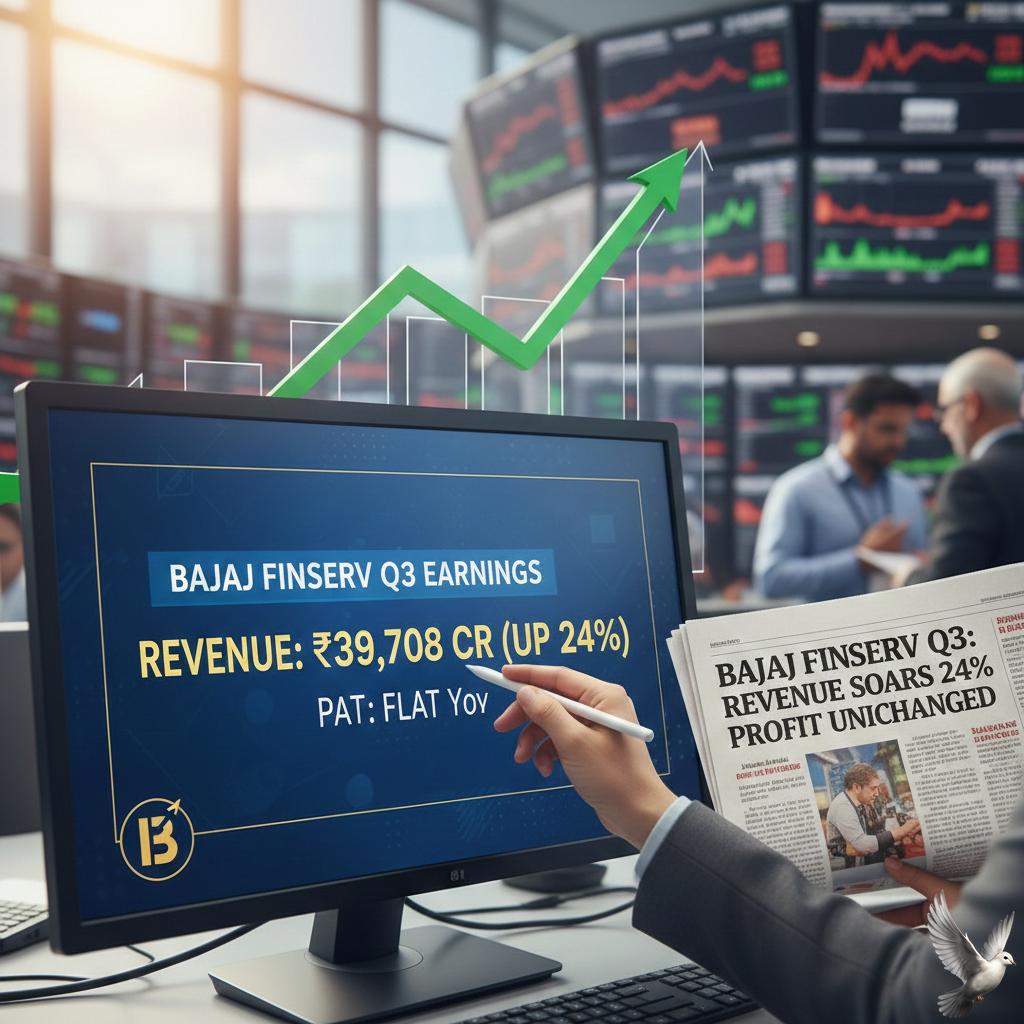
Bajaj Finserv Q3: Revenue rises 24% to Rs 39,708 crore, PAT flat YoY
**MARKET BRIEF: Bajaj Finserv Q3 FY26 Results** **Overview** Bajaj Finserv reported steady consolidated financials for Q3 FY26, characterised by strong top-line growth and resilient operational metrics. While headline profit remained flat due to one-time provisions, underlying momentum across lending and insurance arms drove market optimism. **Consolidated Financials** * **Revenue:** **₹39,708 crore**, up **24%** YoY. * **Net Profit:** **₹2,229 crore**, virtually flat compared to ₹2,231 crore in the previous year. * **Adjusted Profit:** **₹2,936 crore** (up **32%** YoY), if excluding the impact of accelerated ECL provisions (**₹1,406 crore**) and one-time labour code charges (**₹379 crore**). **Subsidiary Performance** **1. Bajaj Finance (Lending Arm)** * **Net Profit:** **₹3,978 crore**, down **~6%** YoY due to higher provisioning. * **Net Interest Income (NII):** Jumped **21%** to **₹11,317 crore**, signalling robust core income. * **AUM Growth:** Assets Under Management surged **22%** to **₹4.86 lakh crore**. * **New Loans:** Booked **13.9 million** new loans, a **15%** increase. * **Asset Quality:** Gross NPA at **1.21%**; Net NPA at **0.47%**. **2. Insurance Business** * **Bajaj Allianz General Insurance:** Gross Written Premium rose **12%** to **₹7,389 crore**. Profit stood stable at **₹399 crore** with a healthy combined ratio of **97.9%**. * **Bajaj Allianz Life Insurance:** Delivered strong value growth. New Business Premium climbed **27%** to **₹3,501 crore**, while Value of New Business (VNB) soared **59%** to **₹405 crore**. **Market Reaction** Investors reacted positively to the operational strength and "clearing of decks" regarding provisions. * **Bajaj Finance** shares rallied nearly **7%** to trade around **₹965**, driven by strong NII and AUM guidance. * **Bajaj Finserv** shares traded **0.7%** higher at **₹2,029**, outperforming the broader Nifty50 index.

Sebi Adopts Measured Approach to Equity Derivatives Rules
**SEBI Maintains Status Quo on Derivatives Amid Tax Hikes** **Market Brief – February 4, 2026** India's capital markets regulator has signaled a period of stability for the equity derivatives segment, ruling out immediate regulatory interventions following recent tax adjustments. Securities and Exchange Board of India (SEBI) Chairman Tuhin Kanta Pandey clarified on Wednesday that the regulator is adopting a "methodical approach" to oversight and is not currently contemplating new curbs on Futures and Options (F&O) trading. This statement comes as a relief to traders who feared further tightening measures after the Union Budget 2026 increased transaction costs. Speaking to stakeholders, the Chairman emphasized that the existing regulatory framework will remain active without immediate modification, quelling rumors about the potential discontinuation of weekly expiry contracts. Budget 2026 Impact and Market Reaction The backdrop to this regulatory stance is the significant hike in the Securities Transaction Tax (STT) announced earlier this week. To curb excessive speculative activity, the government raised the STT on futures from **0.02%** to **0.05%** and on options premiums from **0.1%** to **0.15%**. Market participants initially reacted with caution, pricing in higher trading costs that could dampen volumes in the high-frequency trading segment. However, the clarification that no additional structural barriers—such as changes to contract expiries or lot sizes—are forthcoming has helped stabilize sentiment. The regulator's focus remains on data-driven decision-making rather than reactive policy shifts. Current Market Snapshot Despite the steeper tax regime, the derivatives market showed resilience in Wednesday’s session. The Nifty 50 futures traded with a positive bias, hovering around the **25,875** mark. Options data indicates sustained interest, with significant open interest buildup at the **25,800** and **26,000** strikes, suggesting that traders are adjusting their strategies to the new cost structures rather than exiting the market. Institutional flows also reflect this adaptation. Foreign Portfolio Investors (FPIs) and domestic mutual funds continue to utilize the derivatives segment for hedging, although retail participation is being closely monitored. Recent data highlights that nearly **91%** of individual traders in this segment incur net losses, a statistic that continues to drive the regulator's long-term vigilance. A Data-Driven Regulatory Path SEBI’s "methodical" strategy implies that any future changes will rely heavily on market performance data post-budget. The regulator intends to observe how the increased STT influences trading behavior, liquidity, and retail risk exposure over the coming quarters before considering further action. For now, the message to the street is clear: the rules of engagement remain unchanged. Traders must navigate the higher tax implications, but the structural integrity and operational mechanics of the F&O market remain intact. The regulator’s priority is to balance market depth with investor protection, ensuring that the derivatives market serves its primary purpose of risk management rather than purely speculative leverage.

BofA Raises Near-Term Rupee Forecast by 2% to 88.60–89 Following US Trade Deal
**Market Brief: INR Rebounds on US-India Trade Pact** **Current Status** The Indian Rupee (INR) is trading near **90.43** against the US Dollar as of February 4, 2026, stabilizing after posting its single-best daily gain in seven years. The currency rallied sharply from a record low of **92.00** earlier this week, driven by a breakthrough trade agreement between Washington and New Delhi. **Key Drivers** * **Tariff Slash:** The US has cut tariffs on Indian goods to **18%** (down from 50%), significantly boosting export sentiment for textiles, machinery, and industrial goods. * **Strategic Shift:** The deal includes provisions for India to halt Russian oil purchases, reducing geopolitical friction and reopening doors for foreign institutional investors (FIIs). * **Equity Rally:** Domestic markets (Nifty/Sensex) surged over **2%** in response, with renewed capital inflows supporting the local unit. **Forecast & Outlook** Bank of America projects the Rupee to strengthen further to the **88.60–89.00** range by March-end 2026. Analysts at other major desks (ICICI, Finrex) see immediate support at **89.50**, provided global oil prices remain stable. **Central Bank Stance** Despite the influx of foreign capital, the Reserve Bank of India (RBI) is actively intervening to cap excessive appreciation. * **Buying Activity:** The central bank was observed buying dollars around the **90.05** level to rebuild forex reserves and maintain export competitiveness. * **Policy Watch:** The RBI is expected to keep the repo rate steady at **5.25%** in the upcoming policy review, viewing the trade deal as a stabilizer that reduces the need for immediate monetary support. **Trend Monitor** * **Immediate Resistance:** 90.75 * **Immediate Support:** 89.50 * **Foreign Flows:** FIIs have turned net buyers, reversing months of heavy outflows.
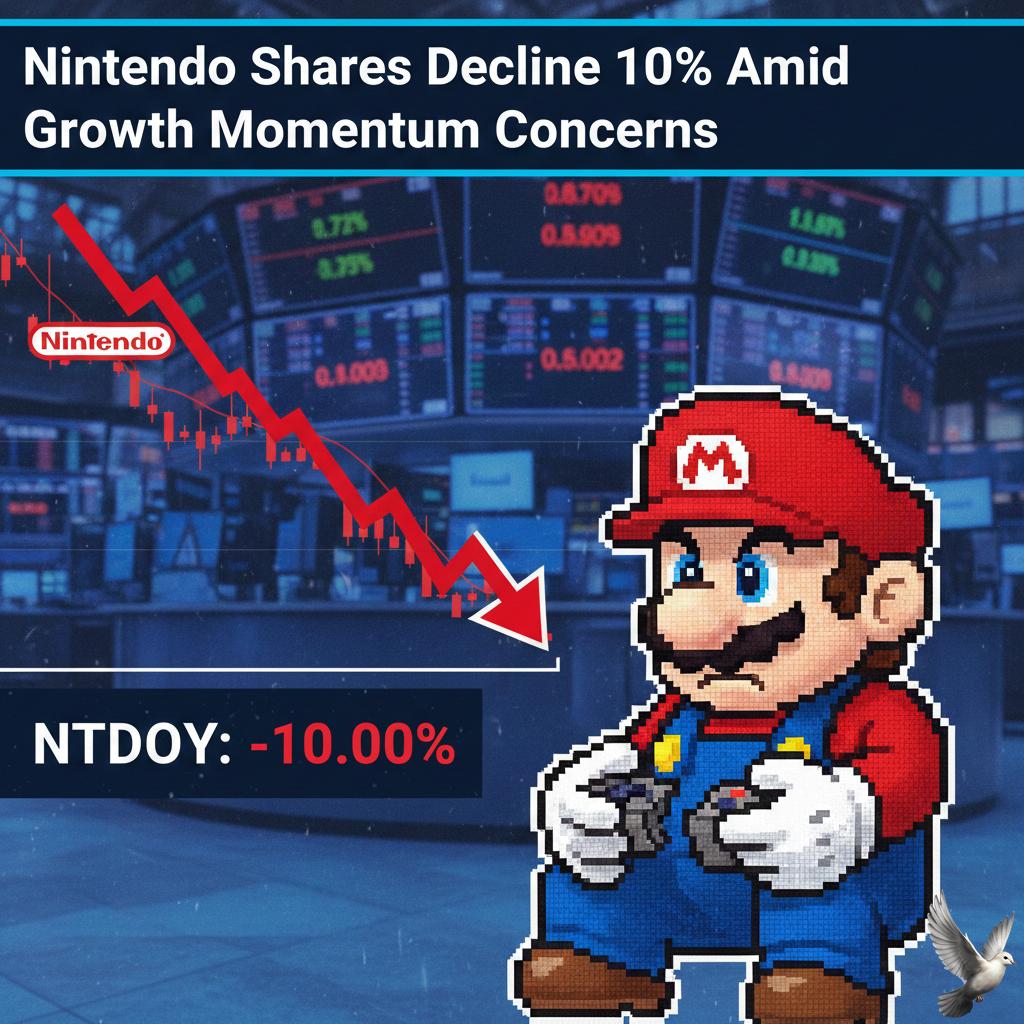
Nintendo Shares Decline 10% Amid Growth Momentum Concerns
**Market Brief: Nintendo Earnings & Switch 2 Performance** **Date:** February 4, 2026 **Subject:** Q3 FY2026 Financial Results & Hardware Strategy Nintendo Co., Ltd. (7974.T) released its nine-month financial results on Tuesday, reporting record-breaking revenue figures driven by the rapid adoption of its newest console, the **Switch 2**. **Hardware Sales Momentum** Despite lingering market skepticism regarding its software lineup, the Switch 2 delivered exceptional volume during the critical year-end shopping season. The system moved **7.01 million units** in the holiday quarter alone, bringing lifetime cumulative sales to **17.37 million units** since its June 2025 launch. Management has maintained its fiscal year forecast of **19 million units**, a target that now appears conservative given the current trajectory. The console has already outpaced the early adoption rates of its predecessor in key regions, though recent reports indicate sales outside Japan were slightly softer than domestic performance. **Financial Performance** The hardware surge fueled a massive top-line expansion. Net sales for the nine-month period nearly doubled year-over-year, reaching **¥1.9 trillion ($12.25 billion)**. Operating profit climbed **21.3%** to **¥300.3 billion**, demonstrating strong resilience against rising component costs, particularly in semiconductor memory. **Software Ecosystem & Market Sentiment** While hardware adoption is robust, the "attach rate" narrative remains mixed. The flagship launch title, *Mario Kart World*, has secured a dominant **14.03 million** copies sold—an attach rate of over **80%**. However, analysts note a steep drop-off after this primary title. Critics argue the platform currently lacks a broader breadth of "exclusive blockbusters" to sustain momentum beyond the launch window. The delay of key franchises like *Metroid Prime 4: Beyond* into later 2026 has left a temporary gap in the release schedule, intensifying the pressure on upcoming Q1/Q2 software announcements. **Stock Reaction** Markets reacted positively to the volume beat. Nintendo shares closed Tuesday at **¥10,080**, reflecting investor confidence in the hardware's installed base growth despite the software lineup concerns.

Motilal Oswal AMC's Agarwal Views Make in India as Primary Beneficiary of Trade Pacts
Market Brief: India Trade & Investment Update – February 2026 **Strategic Trade Breakthroughs** India has secured landmark agreements with major Western economies as of early 2026, fundamentally altering its export landscape. The long-awaited **India-EU Free Trade Agreement (FTA)**, concluded in **January 2026**, eliminates duties on over **90%** of traded goods. This "mother of all deals" opens a duty-free corridor for Indian textiles, leather, and gems to a market of **450 million** consumers, leveling the playing field against competitors like Bangladesh and Vietnam. Simultaneously, a new framework with the **US** (announced **February 3, 2026**) slashes reciprocal tariffs on Indian goods to **18%**, down from earlier punitive levels of nearly **50%**. This reduction offers Indian exporters a distinct pricing advantage over rivals facing higher levies (e.g., China at **37%**). **Investment & Currency Impact** These pacts have triggered an immediate positive reaction in financial markets. The Indian Rupee (INR) staged a record single-day rally, strengthening to **90.32** against the USD on favorable sentiment. * **FDI Inflows:** Foreign Direct Investment equity inflows surged **18%** in the first half of FY26, reaching approximately **$35.18 billion**. * **EFTA Commitment:** The Trade and Economic Partnership Agreement (TEPA), effective **October 2025**, legally binds EFTA nations (including Switzerland and Norway) to invest **$100 billion** in India over 15 years, targeting **1 million** new jobs. **'Make in India' Acceleration** The **Production Linked Incentive (PLI)** scheme is capitalizing on this improved market access. PLI-linked exports have already surpassed **₹8.20 lakh crore**, with significant traction in electronics and renewable energy. The manufacturing sector's Gross Value Added (GVA) growth accelerated to **9.13%** in Q2 FY26, signaling that the 'Make in India' initiative is shifting from capacity building to global export integration. Market outlook remains bullish as these structural shifts are expected to narrow the current account deficit by **0.25%** of GDP in CY26. *** [Landmark India-EU Trade Pact Explained](https://www.youtube.com/watch?v=ic7USRu9Y80) This video provides a detailed breakdown of the recently concluded India-EU Free Trade Agreement, analyzing its strategic depth and the specific benefits for key Indian export sectors. http://googleusercontent.com/youtube_content/0

Indian Bonds Edge Higher Ahead of RBI Buyback and Policy Decision
**Indian Bond Market Brief | Wednesday, February 4, 2026** **Market Overview** Indian government bonds extended gains for a second consecutive session on Wednesday, supported by positive sentiment ahead of key central bank operations. The market stabilized after recent volatility triggered by the Union Budget’s record borrowing announcement. **Key Yield Movements** * The benchmark **10-year bond yield (6.48% 2035)** eased to close at **6.6972%**, down from Tuesday’s close of **6.7245%**. * Yields have retreated from the one-year high of **6.78%** seen earlier in the week, reacting to the government's FY27 gross borrowing target of **₹17.2 trillion**. * Overnight Index Swap (OIS) rates edged lower, with the **1-year rate** hovering around **5.51%**. **Drivers of Momentum** Sentiment improved significantly following the announcement of a new **India-US trade agreement**, which reduced reciprocal tariffs on Indian goods to **18%**. This development helped offset concerns regarding the heavy supply of sovereign debt expected in the coming fiscal year. **Upcoming RBI Action** Market focus has now shifted to the Reserve Bank of India’s (RBI) scheduled interventions: 1. **Debt Purchase (Thursday):** The RBI is set to conduct an Open Market Operation (OMO) to buy back bonds worth **₹500 billion ($5.53 billion)**, including the liquid 6.33% 2035 paper. This move is widely seen as a signal of the central bank’s comfort with current yield levels. 2. **Monetary Policy (Friday):** The Monetary Policy Committee (MPC) will announce its interest rate decision on **February 6**. While the repo rate is expected to remain unchanged at **5.25%**, investors are awaiting guidance on liquidity management. **Currency Update** The Indian Rupee consolidated gains, trading at **90.54** against the US Dollar on Wednesday. This follows a sharp **1.3%** rally in the previous session—its strongest single-day gain in weeks—driven by the trade deal optimism and robust foreign inflows.