Bullish News
Collection
Jim Rogers Recommends Gold and Silver Ownership
**MARKET BRIEF: PRECIOUS METALS & STRATEGY UPDATE** **Rogers’ Core Thesis** Veteran investor Jim Rogers continues to champion precious metals as a fundamental component of a resilient long-term portfolio. Despite the aggressive volatility seen this week, Rogers maintains a disciplined stance: he is neither buying nor selling gold and silver at current valuations. His strategy prioritizes multi-year horizons over the chaotic short-term price swings currently gripping the market. **Market Snapshot: February 4, 2026** The precious metals market is witnessing extreme turbulence, characterized by a massive mid-week rebound following a sharp sell-off earlier in the session. **Gold (XAU/USD)** Spot gold has staged a dramatic recovery, reclaiming the **$5,000 per ounce** psychological level today. This marks a gain of approximately **6%** in intraday trading, bouncing back from a drop to **$4,403** earlier in the week. The metal is reacting violently to renewed safe-haven demand. **Silver (XAG/USD)** Silver is outperforming with high beta volatility, trading near **$87–$89 per ounce**. Futures contracts on major exchanges have seen gains exceeding **5%** today, pushing toward the **$90** resistance level. The gold-silver ratio remains a key metric for traders, with silver showing sharper reactive moves to the day's geopolitical headlines. **Key Drivers & volatility** Two conflicting forces are currently driving the price action: **1. Geopolitical Escalation (Bullish)** The primary catalyst for today’s **$600+** reversal in gold prices is a sudden flare-up in geopolitical tensions. Reports confirm that US forces engaged an Iranian drone near an aircraft carrier in the Arabian Sea. This kinetic event immediately triggered "flight-to-safety" capital flows, reversing the bearish sentiment that dominated the start of the week. **2. Federal Reserve Policy (Bearish)** Earlier selling pressure was driven by the nomination of Kevin Warsh as the next Federal Reserve Chair. Markets initially interpreted this as a hawkish signal for inflation policy, leading to a temporary spike in the US Dollar and a liquidation of metal positions. However, the geopolitical risk premium has momentarily overridden these monetary policy concerns. **Market Sentiment & Outlook** Trading volumes are elevated as investors digest conflicting signals between the "Warsh Dip" and the "Conflict Rally." The immediate focus has shifted to the upcoming US jobs report (NFP) due this Friday. Traders are looking for validation of the Federal Reserve's rate path in light of the new leadership nomination. Until then, implied volatility in gold and silver options is expected to remain near multi-year highs. For long-term holders aligning with the Rogers philosophy, the current environment validates the thesis of holding hard assets as insurance against geopolitical instability, even if daily price action remains unpredictable. ... [Jim Rogers: Out Of US Stocks, Not A Bubble Yet](https://www.youtube.com/watch?v=eGzeae4Oq18) ... This video provides context on Jim Rogers' broader investment philosophy and his specific views on holding precious metals during periods of market exuberance and debt concerns. http://googleusercontent.com/youtube_content/0
Gokaldas Exports Shares Gain 40% Following India-US Trade Deal
**MARKET BRIEF: Gokaldas Exports Surges on Trade Deal** **Price Action & Catalyst** Gokaldas Exports shares have delivered a massive **40% rally** over the last two trading sessions, hitting an intraday high of **₹832.85** on February 4, 2026. The stock locked at the **20% upper circuit** for the day, driven by the newly announced India-US trade agreement. This landmark deal slashes reciprocal tariffs on Indian goods to **18%**, a sharp reduction from the effective **50%** duty that had previously weighed on the sector. **Strategic Impact** The tariff cut is a game-changer for Gokaldas, which derives approximately **70-80% of its revenue** from the US market. The reduction eliminates a significant competitive disadvantage against peers in Vietnam and Bangladesh (often taxed at ~20%), directly boosting the company's margin outlook and export volume potential. Analysts note that this move effectively removes the "tariff overhang" that had suppressed the stock for months. **Financial Outlook** While the company's recent Q3 FY26 results showed flat revenue at **₹979 crore** and a dip in net profit to **₹15 crore** due to prior tariff headwinds, the forward-looking sentiment has shifted drastically. Brokerages like ICICI Direct have upgraded their outlook, assigning a **"Buy" rating** with a revised price target of **₹930**, citing a potential EBITDA margin expansion of 350bps over FY26-28E as the new tariff regime kicks in. **Technical & Sector Trends** The stock is displaying powerful bullish momentum, breaking past key resistance levels with high volume. The rally is sector-wide, with peers like KPR Mill and Kitex Garments also witnessing double-digit gains. Institutional interest is rising as the "China Plus One" sourcing shift gains renewed traction under the improved trade terms.
India to Wait Before Revealing US Trade Deal Details, Sitharaman Says
**MARKET BRIEF: INDIA-US TRADE AGREEMENT (FEB 2026)** **Executive Summary** Finance Minister Nirmala Sitharaman has robustly defended the newly finalized India-US trade framework, terming it a significant win for domestic manufacturers. The agreement, announced following high-level talks between Prime Minister Narendra Modi and US President Donald Trump, centers on a major reduction in US tariffs on Indian exports. **Key Tariff Adjustments** * **US Import Duties:** Tariffs on Indian goods entering the US have been slashed to **18%**, down from earlier punitive levels that reached as high as **50%** (inclusive of oil-related penalties). * **Indian Commitments:** In reciprocity, India is expected to lower barriers on US industrial goods, with reports indicating a purchase commitment of approximately **$500 billion** over five years across energy, defense, and technology sectors. **Sectoral Shields: Agriculture & Dairy** Government officials, including Commerce Minister Piyush Goyal, have explicitly confirmed that "sensitive sectors" remain ring-fenced. * **Agriculture:** No duty cuts on key farm produce. * **Dairy:** Fully excluded from the deal to protect domestic cooperatives and farmers. * **Zero-Duty Access:** Limited strictly to non-sensitive industrial and technological imports from the US. **Political & Transparency Outlook** The Opposition has criticized the deal's swift finalization, alleging a lack of transparency and voicing fears over "surrender" to US pressure. * **Parliamentary Disclosure:** FM Sitharaman assured that full details are not "closed files" and will be tabled in Parliament via a *suo moto* statement shortly. * **Disruptions:** Recent parliamentary sessions faced adjournments, delaying the immediate release of the official joint statement. **Strategic Impact** This agreement de-escalates a tense 12-month trade standoff characterized by tariff hikes and friction over Russian oil procurement. The reduction to an **18%** uniform tariff is projected to restore competitiveness for Indian exporters in textiles, leather, and engineering goods against regional rivals. **Next Steps** Monitor the upcoming Ministry of Commerce joint statement for the fine print on specific industrial goods gaining zero-duty entry into India.
Vietnam Government Bond Auction Raises $212 Million
**Vietnam Sovereign Debt Market Brief – February 4, 2026** **Auction Performance: Demand Softens Significantly** The State Treasury of Vietnam (STV) faced a challenging environment in its latest government bond auction on Wednesday, February 4, 2026. The treasury raised **5.5 trillion dong** ($212 million), a marked decline from the **$324 million** secured just one week prior. Investor appetite appears to be contracting sharply. The uptake rate dropped to **38%** of the total bonds on offer, down from **58%** in the previous session. This contraction signals growing caution among institutional investors, likely driven by shifting yield expectations and liquidity conditions in the banking sector. **Tenor Breakdown: Liquidity Concentrated in Mid-Term Maturities** Demand remains heavily skewed toward specific tenors, leaving other segments of the yield curve untouched. * **10-Year Bonds:** This maturity continues to anchor the market. The treasury successfully sold **5.5 trillion dong** out of the **12 trillion dong** offered. The winning coupon rate was fixed at **4.05%**, reflecting a slight upward adjustment as the government seeks to meet market expectations. * **Other Maturities:** In a stark sign of selective demand, the auction failed to offload any debt across the **5-year**, **15-year**, and **30-year** tenors. A combined offering of **2.5 trillion dong** across these maturities saw zero successful bids. This polarization suggests that while there is still a baseline demand for benchmark 10-year paper, investors are avoiding the duration risk associated with longer-term 30-year bonds and finding the yields on shorter 5-year notes unattractive relative to current market conditions. **Year-to-Date Progress and Q1 Targets** Following this auction, total government bond sales for 2026 have reached **30 trillion dong**. While substantial, this figure represents only a portion of the aggressive issuance targets set for the first quarter. The State Treasury has announced plans to issue **110 trillion dong** in government bonds across the first quarter of 2026. To meet this target, issuance volume and clearing yields may need to adjust dynamically in the coming weeks to rekindle investor interest, particularly for the underperforming tenors. **Broader Market Context: Yields and Credit Ratings** The softening demand comes amidst a backdrop of rising yields. The 10-year government bond yield has recently touched **33-month highs**, trading above **4.2%** in the secondary market. This upward pressure on yields is consistent with broader emerging market trends and domestic economic expansion targets. On a structural level, the market received a boost from international credit assessors. Fitch Ratings recently upgraded Vietnam’s senior secured long-term debt to **BBB-**, moving it into investment-grade territory. This upgrade is a pivotal development, potentially widening the pool of eligible foreign institutional investors over the medium term. **Fiscal Outlook** Proceeds from these auctions remain the primary funding mechanism for Vietnam’s public investment projects. With the government targeting GDP growth exceeding **10%** for the 2026–2030 period, maintaining a steady flow of capital into infrastructure development is critical. The immediate challenge for the State Treasury will be balancing these funding needs against a market currently demanding higher premiums for participation. Future auctions will likely serve as a bellwether for how quickly the gap between issuer targets and investor yield requirements can be bridged.
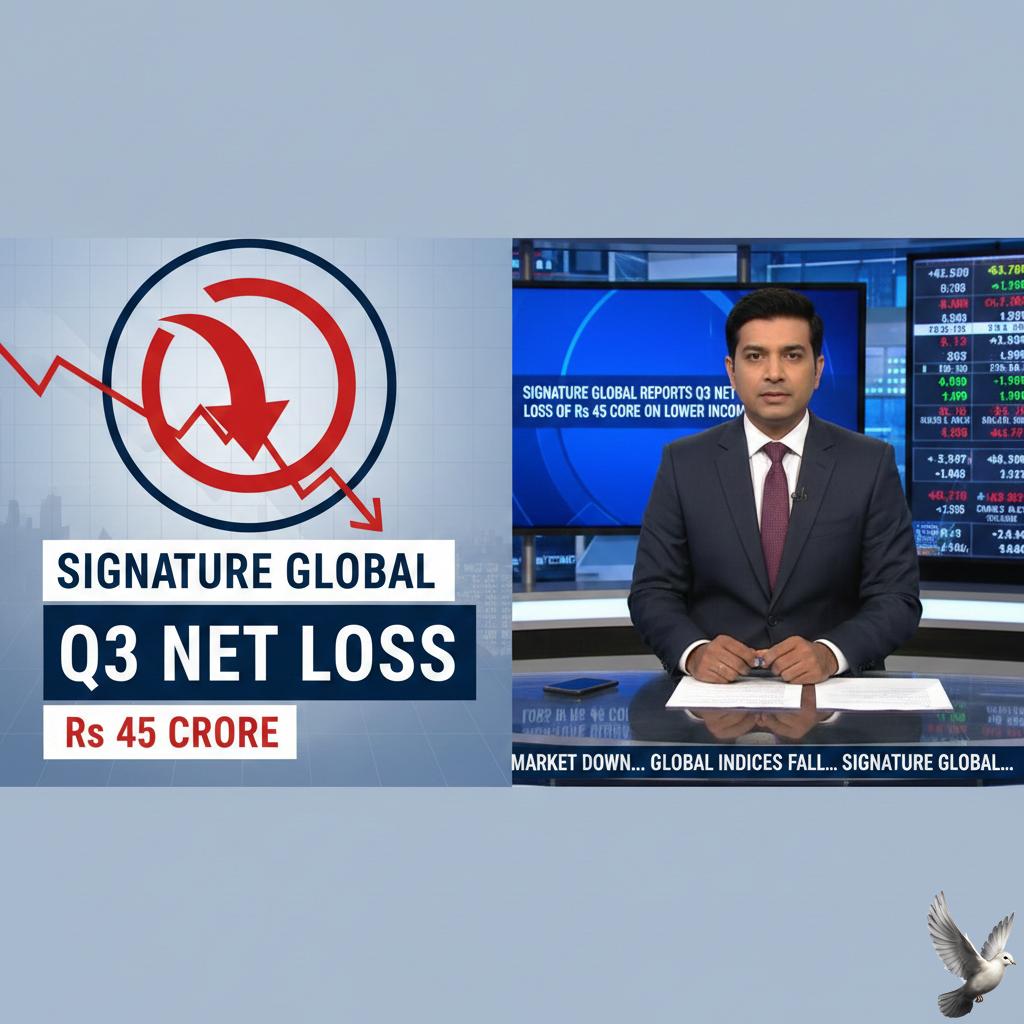
Signature Global Reports Q3 Net Loss of Rs 45 Crore on Lower Income
**MARKET BRIEF: Signature Global (India) Ltd** **Date:** February 4, 2026 **Topic:** Q3 FY26 Earnings & 9M Operational Update **Executive Summary** Pradeep Aggarwal, Founder and Chairman, characterizes the company's performance for the first nine months of FY26 as "steady," citing resilience despite broader market softness. However, the latest financial disclosures reveal significant headwinds in revenue and profitability, offset by strong price realizations in the premium segment. **Financial Performance (Q3 FY26)** The quarter ended December 31, 2025, reflects sharp year-on-year contractions driven by lower income recognition. * **Net Loss:** Reported a consolidated loss of **₹45.33 crore**, a steep reversal from a net profit of **₹29.13 crore** in the same period last year. * **Revenue:** Total income plummeted to **₹312.76 crore**, down significantly from **₹862.14 crore** in Q3 FY25. * **EBITDA:** Operating performance turned negative with a loss of **₹63.3 crore**. **Operational Metrics (9M FY26)** Despite the financial dip, the operational data highlights a strategic shift toward higher-value inventory. * **Pre-Sales:** Recorded **₹6,680 crore** (₹66.8 billion), a decline of **23%** compared to **₹8,670 crore** in 9M FY25. * **Realizations:** Average sales realization jumped **22%** to **₹15,182 per sq. ft.**, driven by demand for premium projects like the newly launched *Sarvam* at DXP Estate. * **Collections:** Remained robust at **₹3,090 crore**, dipping only marginally by **4%** YoY. * **Debt Profile:** Net debt stands at **₹1,020 crore**, up from Q2 levels but stable year-on-year. **Stock Market Reaction** Investor sentiment has been cautious following the earnings release and guidance updates. * **Current Price:** Trading at approximately **₹854.65** (as of Feb 4, 2026). * **Trend:** The stock is under pressure, down **~2.4%** intraday and trading near its **52-week low** of **₹775**. * **Valuation:** Market capitalization holds at approximately **₹12,277 crore**. **Outlook & Strategy** * **Guidance Update:** Management acknowledges the risk of missing the ambitious **₹12,500 crore** pre-sales target for FY26 due to demand sluggishness in Gurugram. * **Strategic Focus:** The company aims to match FY25's bookings of **₹10,290 crore** by leveraging its **17.1 million sq. ft.** project pipeline. * **Chairman’s View:** Aggarwal remains optimistic about the medium-to-long term, emphasizing that the current environment favors organized developers with strong execution records. **Next Steps** I can generate a comparative chart of Signature Global's pre-sales growth versus its peer group (DLF, Godrej Properties) to contextualize this quarterly dip.
Impact of India-US Trade Deal on FPI Outflows and Rupee Outlook
**Market Brief: Rupee Rallies on US-India Trade Deal** **Date:** February 4, 2026 **Overview** The Indian Rupee (INR) has staged a significant recovery against the US Dollar (USD), driven by a breakthrough trade agreement between New Delhi and Washington. After hitting a record low of **92.00** last week, the local unit surged approximately **1.3%** in the previous session—its best single-day performance since 2018—closing at **90.27**. As of Wednesday morning, the Rupee has witnessed a mild technical correction, trading near **90.54** as markets digest the deal's fine print and importers rush to hedge. **Key Drivers & Market Data** * **Tariff Slash:** Under the new pact, the US has agreed to slash reciprocal tariffs on Indian goods from **50%** down to **18%**. This move is expected to boost the competitiveness of Indian exports, particularly in textiles and manufacturing, directly addressing the trade imbalance. * **FII Comeback:** Foreign Institutional Investors (FIIs) have aggressively returned to Indian equities, snapping a months-long selling streak. Provisional data shows net FII purchases of **₹5,236 crore** on Tuesday—the highest inflow in over three months. * **Sentiment Shift:** The deal has removed a major geopolitical overhang, shifting market sentiment from extreme caution to cautious optimism. The removal of the "tariff war" risk is seen as a key trigger for capital repatriation. **Outlook & Forecasts** * **Price Targets:** Market analysts and currency desks are now forecasting the Rupee could test the **89.00–89.50** levels in the near term, provided global oil prices remain stable. * **Regulatory Stance:** While the "natural" market direction points to a stronger Rupee, the Reserve Bank of India (RBI) remains a key factor. Dealers report the central bank buying dollars near the **90.25** level to replenish foreign exchange reserves, which had depleted during the recent defense of the currency. This intervention may limit the pace of appreciation. * **Import Dynamics:** While exporters face a recalibration of competitiveness due to a stronger currency, the deal's tariff benefits are expected to outweigh forex losses. Conversely, importers benefit immediately from the pullback from 92.00, easing landed costs for crude and components. **Summary** The Rupee has broken its bearish trend, supported by the **18% tariff cap** and renewed foreign inflows. While the path to **89** is open, RBI intervention and importer demand at lower levels will likely keep volatility in check.
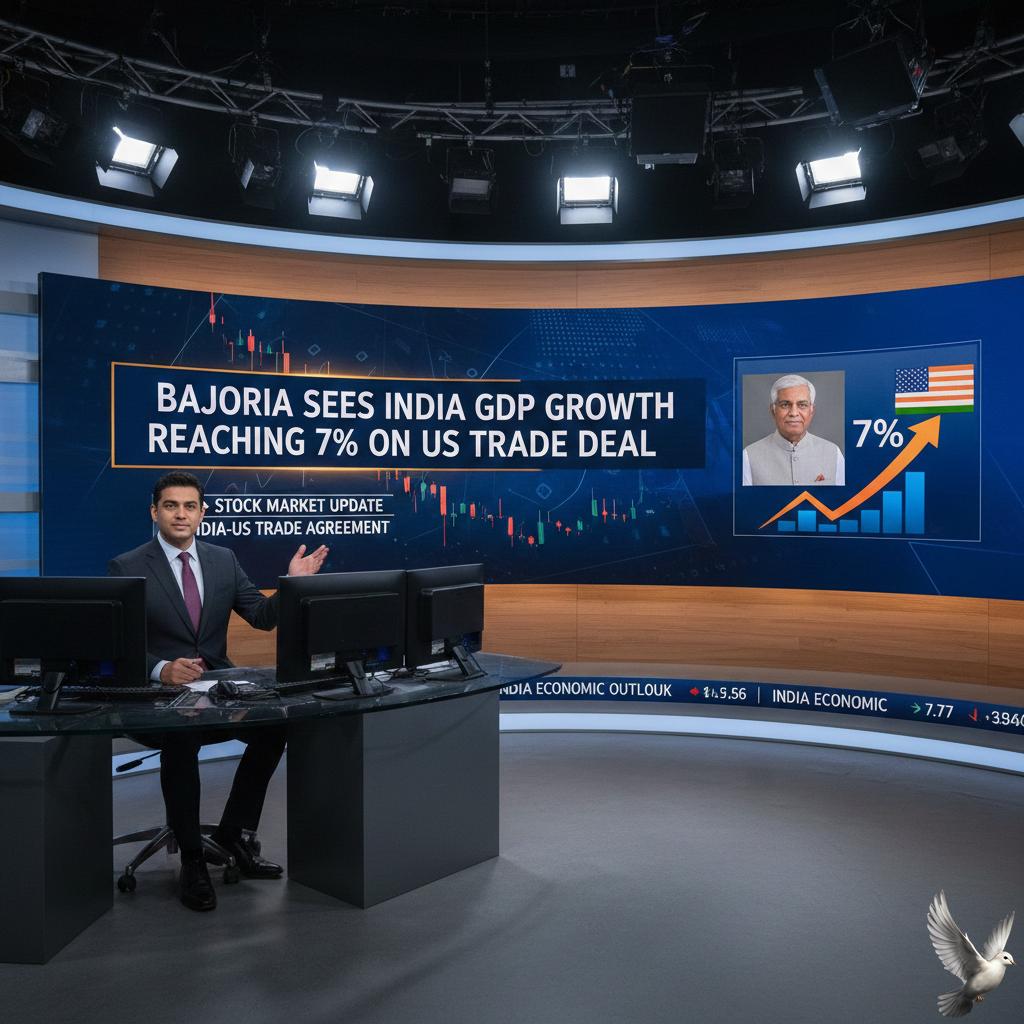
Bajoria Sees India GDP Growth Reaching 7% on US Trade Deal
**MARKET BRIEF: Historic India-US Trade Deal (February 2026)** **Headline: Tariffs Slashed to 18% – India Gains Strategic Edge** **The Deal** In a major economic breakthrough, India and the United States have finalized a new trade framework as of February 2026. The agreement officially lowers reciprocal tariffs on Indian exports to **18%**, a sharp reduction from the previous peak of **50%** (which included punitive duties). This move immediately de-escalates trade tensions and positions India as a preferred commercial partner over regional rivals. **Sector Impact: Textiles & Manufacturing** The tariff cut is a game-changer for labor-intensive sectors. Indian textiles and apparel now face an **18%** duty in the US, giving them a pricing advantage over competitors like Vietnam and Bangladesh (both at **20%**) and significantly undercutting China (**37%**). Leather, gems, and jewelry exporters also gain immediate relief, restoring margins that were previously eroded by high levies. **Economic Outlook & Currency** Market sentiment has responded positively. India’s real GDP growth is projected at **7.4%** for FY 2025-26, supported by this renewed export optimism. The Indian Rupee (INR) is expected to stabilize and strengthen as the deal removes the risk of a trade war, encouraging foreign direct investment (FDI) back into domestic manufacturing. **Supply Chain & Future Targets** The agreement accelerates India's integration into global supply chains, specifically for "friend-shoring" initiatives. Both nations have reaffirmed a bilateral trade target of **$500 billion** by 2030. The partnership now extends beyond traditional goods to include critical minerals and clean energy, with India committing to diversify its energy procurement in exchange for market access.
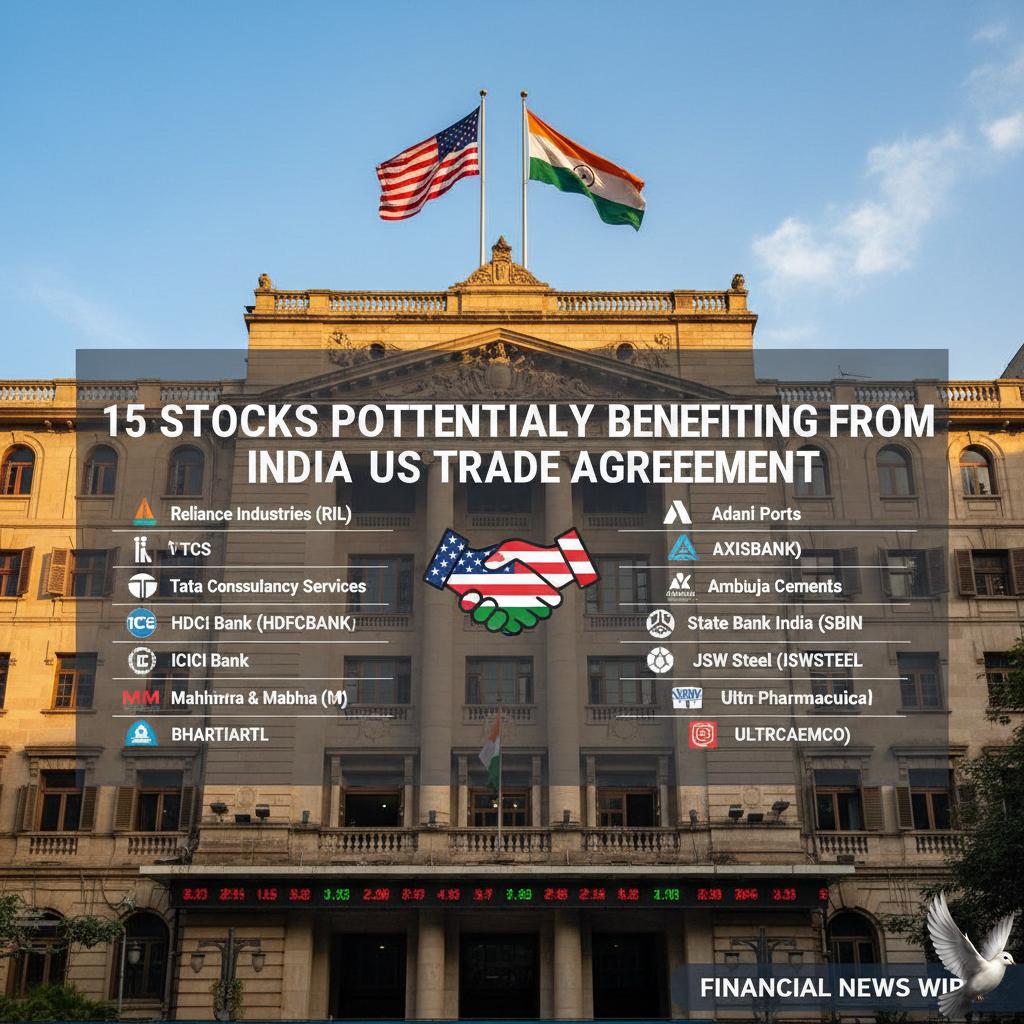
15 Stocks Potentially Benefiting from India-US Trade Agreement
**MARKET BRIEF: US-India Trade Pact & Sectoral Impact** **Deal Overview** The United States and India have cemented a historic trade agreement as of February 2026, officially slashing tariffs on Indian exports to the US from a peak of **50%** down to **18%**. This reduction removes the punitive duties previously linked to geopolitical friction, immediately restoring the competitive edge of Indian goods in their largest export market. The agreement marks a strategic reset. In exchange for the tariff cut, India has committed to a significant "Buy American" energy and technology policy, alongside a strategic pivot in its energy sourcing. **Market Reaction** Dalal Street responded explosively to the announcement. * **Sensex** surged over **2,000 points** in a single session. * **Nifty 50** reclaimed levels near **25,700**. * **Rupee** appreciated sharply against the dollar, driven by expectations of improved trade balances and renewed foreign inflows. * **Investor Wealth** swelled by approximately **₹12 lakh crore** in intraday trade. **Key Sectoral Impacts** **Textiles & Apparel** This sector is the primary beneficiary. Operating on thin margins, Indian textile exporters were severely handicapped by the previous **50%** tariff regime. The drop to **18%** positions them favorably against competitors like Vietnam and Bangladesh (facing ~20% rates). * **Stocks in Focus:** Welspun India, Trident, and KPR Mill saw immediate buying interest. * **Outlook:** Order books are expected to swell as US retailers renew contracts previously diverted to other nations. **Auto Ancillaries** Indian auto component manufacturers with high US exposure are set for a margin expansion. The tariff rollback creates a direct pathway for increased shipments of forged components, shafts, and precision parts. * **Stocks in Focus:** Bharat Forge, Sona BLW, and Motherson Sumi. * **Data Point:** Some major ancillary players derive **25-40%** of their revenue from North American markets; the duty cut directly aids their bottom line. **Marine & Seafood** A sector often overlooked, marine exports faced crippling duties that rendered Indian shrimp uncompetitive. The revised **18%** rate breathes new life into this export-heavy industry. * **Stocks in Focus:** Avanti Feeds and Apex Frozen Foods witnessed sharp rallies. **Electronics & Engineering** While some strategic tech sectors were already exempt, the broader removal of trade barriers boosts sentiment for engineering goods and electronics manufacturing services (EMS). The deal aligns with the "China Plus One" strategy, making Indian electronic exports more viable for US buyers. **Economic Implications** * **Export Competitiveness:** Indian exports, which faced a **50%** wall, now enter the US at **18%**, a rate lower than China’s **30-35%** tariffs. * **Currency Stability:** The pivot away from Russian oil towards US energy assets is expected to harmonize trade flows, reducing volatility in the INR/USD exchange rate. * **Capital Inflows:** The clarity on trade policy removes a major overhang for Foreign Institutional Investors (FIIs), signaling a potential return of sustained capital inflows into Indian equities. **Summary** The reduction of tariffs to **18%** is a definitive liquidity and sentiment booster. While the long-term execution of India's import commitments remains to be seen, the immediate impact is a substantial rerating of export-oriented sectors. Markets have priced in a "Goldilocks" scenario where Indian manufacturing regains its foothold in the US economy without the burden of prohibitive duties.
Rupee Weakens on Corporate Hedging and RBI FX Swap Demand
MARKET BRIEF: RUPEE DIPS AMID CORPORATE HEDGING & RBI SWAP FOCUS **Wednesday, February 4, 2026** **Overview** The Indian Rupee (INR) weakened on Wednesday, giving up some gains from the previous session's sharp rally. Month-end corporate hedging and caution ahead of the Reserve Bank of India's (RBI) major FX swap auction weighed on the local unit, despite lingering optimism from the recent India-U.S. trade deal. **Market Snapshot** * **Closing Rate:** **90.43** (Provisional) against the U.S. Dollar. * **Daily Movement:** Down by **11 paise** from Tuesday's close of **90.32**. * **Trading Range:** Opened at **90.35**, fluctuating between a high of **90.26** and a low of **90.54**. **Key Drivers** **1. Corporate Dollar Demand** Importers and corporates stepped up dollar purchases to hedge liabilities, limiting the rupee's upside. This demand for hard currency offset the positive sentiment generated by the recent slash in U.S. tariffs on Indian goods (down to **18%**). **2. RBI FX Swap Auction** Market attention is heavily fixed on the RBI's **$10 billion** sell/buy swap auction scheduled for today. Traders are monitoring the demand at this auction to gauge liquidity conditions and the central bank's management of forward premiums. The auction is a key tool for managing domestic liquidity and FX reserves. **3. Oil & Global Cues** Crude oil prices have surged, with Brent futures gaining **1.32%** to trade near **$69.30** per barrel. Higher oil prices typically pressure the rupee as India imports a significant portion of its energy needs. Additionally, weaker-than-expected U.S. Services PMI data has kept investors cautious. **Outlook** Volatility is expected to persist as the market digests the full details of the India-U.S. trade framework. Analysts predict the USD/INR pair to consolidate in the near term. * **Support:** **90.00** * **Resistance:** **90.60** The rupee remains the best-performing Asian currency this week following the trade deal announcement, but "buy-on-dips" behavior from importers continues to cap significant appreciation.

Silver Nears Rs 3 Lakh Following Rs 11,000 Gain; Gold Rises 3%
Precious Metals Snapshot: Geopolitics Sparks Recovery **Feb 4, 2026** Gold and silver futures have staged a powerful rebound, extending gains for a second consecutive session. The rally is primarily fueled by renewed geopolitical friction after US forces reportedly downed an Iranian drone, reigniting demand for safe-haven assets. Market Movements * **Silver Surge:** MCX Silver futures rallied aggressively, jumping over **5%** to trade near **₹2,91,500 per kg**. In global markets, spot silver reclaimed the **$87 per ounce** level. * **Gold Gains:** Yellow metal prices rose approximately **3-4%**, with MCX Gold approaching the **₹1,63,500 per 10g** mark. Spot gold has successfully climbed back above the psychological **$5,000 per ounce** threshold. Key Drivers * **Geopolitical Trigger:** The shooting down of an Iranian drone near an aircraft carrier in the Arabian Sea has injected fresh fear into the markets, reversing the sharp sell-off seen earlier in the week. * **Dollar Weakness:** The US Dollar Index (DXY) softened to trade around **97.3**, providing a tailwind for dollar-denominated commodities. * **Bargain Buying:** Investors seized the opportunity to buy the dip following the massive correction earlier this week, where prices had plummeted nearly **20%** from their late-January record highs. Analyst Outlook Market experts anticipate continued high volatility. While the current move is a strong relief rally, the broader market remains sensitive to US Federal Reserve policy shifts—specifically the recent nomination of Kevin Warsh as Fed Chair—and ongoing developments in the Middle East. Summary Bullion markets are back in the green as immediate war risks outweigh monetary policy concerns. Traders should remain alert to rapid price swings as headline risk dominates the narrative.

Vinay Rajani Maintains Bullish Market Stance, Recommends Two Stocks
Market Brief: India-US Trade Deal Fuels Historic Rally **Market Overview** Indian equity markets witnessed a massive surge earlier this week, driven by the landmark India-US trade agreement announced by President Donald Trump and Prime Minister Narendra Modi. The benchmark indices recorded their sharpest single-day gains in months on Tuesday, with the **BSE Sensex** jumping over **2,070 points** and the **Nifty 50** rising **639 points**. **Key Drivers** * **Tariff Reduction:** The United States agreed to slash reciprocal tariffs on Indian goods to **18%** (down from prior levels of up to 50%), removing a major overhang for export-heavy sectors. * **Strategic Shift:** India committed to lowering trade barriers and targeting **$500 billion** in bilateral trade, boosting sentiment for manufacturing and defense sectors. * **Currency Strength:** The Indian Rupee posted its best single-day gain in seven years, strengthening to **90.27** against the US dollar. **Sector Performance** * **Gainers:** Textiles, leather, and jewelry stocks saw massive buying interest, with some surging up to **20%** on improved export competitiveness. * **Laggards:** IT stocks faced selling pressure on Wednesday due to a global tech selloff, dragging the indices slightly lower after the initial euphoria. **Current Status (Feb 4, 2026)** Following the two-day rally, markets paused for breath on Wednesday. The **Nifty** hovered near **25,750**, consolidating its gains, while the **Sensex** traded around **83,700**. Despite the midweek pause, the technical outlook remains bullish, with analysts eyeing fresh all-time highs as foreign inflows are expected to resume. **Next Step** I can analyze the specific impact of the new 18% tariff regime on your portfolio's export-oriented stocks if you share your sector allocation.
Nazara Technologies Shares Drop 4% as Q3 Profit Falls 35% to Rs 9 Crore
**Market Brief: Nazara Technologies Q3 FY26 Results** **Overview** Nazara Technologies witnessed a mixed market reaction following its Q3 FY26 earnings announcement. While the deconsolidation of its esports arm, **Nodwin Gaming**, impacted topline revenue, the company demonstrated operational resilience with improved margins and strategic capital allocation. **Key Financial Highlights** * **Revenue:** Operating revenue declined **24.1% YoY** to **₹406 crore**, primarily due to the exclusion of Nodwin Gaming’s financials (which contributed significantly in the previous fiscal). Adjusted for this, underlying revenue showed stability. * **Profitability:** The company reported a consolidated net profit of **₹8.8 crore** (a **35% YoY** drop from ₹13.7 crore in Q3 FY25, though statistically flat sequentially). * **EBITDA Surge:** Despite lower revenue, operational efficiency improved significantly. EBITDA jumped **29% YoY** to **₹67.8 crore**, with margins expanding to **16.7%** (up from 9.8% YoY). **Market Reaction (February 4, 2026)** * **Stock Price:** Shares faced selling pressure, trading down approximately **4%** intraday to the **₹278–₹280** levels on the NSE/BSE. * **Sentiment:** Investors reacted to the headline revenue drop and muted net profit, although analysts noted the positive shift in operational margins and the resumed growth in the **Kiddopia** segment. **Strategic Developments** * **Investments:** The board approved a fresh capital infusion of up to **₹15 crore** in **Rusk Media** (increasing stake to ~7.18%) and an investment of **$500,000** in **nCore Games** (developers of FAU-G) to bolster its Indian gaming ecosystem. * **Segment Performance:** The **AdTech** vertical remained a strong performer with a **26%** jump in EBITDA, while the **Esports** segment (excluding Nodwin) contributed ₹34 crore to revenue. **Outlook** Management reiterated a focus on "profit-led growth," utilizing its healthy cash balance for further M&A activities and IP expansion. The subscriber revival in Kiddopia and disciplined cost management in AdTech are seen as pivotal for the coming quarters. **Next Step:** I can provide a comparative analysis of Nazara's valuation against global gaming peers or a technical chart summary for the stock's support levels.
HAL Shares Fall 8% After L&T, Bharat Forge Shortlisted for Fighter Jet Development
**Market Brief: Historic Shift in India’s Defence Sector** **HAL Drops 8% as Private Giants Seize Stealth Fighter Program** In a watershed moment for India's aerospace industry, **Hindustan Aeronautics Ltd (HAL)** shares plummeted **8.3%** to **₹4,100** levels during Wednesday's trading session. The sharp sell-off follows the state-run defence major's exclusion from the shortlist for the prestigious **Advanced Multirole Combat Aircraft (AMCA)** program. **Private Sector Breakthrough** The Ministry of Defence has shortlisted three private sector heavyweights to partner with the Aeronautical Development Agency (ADA) for this critical project: * **Tata Advanced Systems** * **Larsen & Toubro (L&T)** * **Bharat Forge** Markets reacted swiftly to the reshuffle. While HAL faced heavy selling pressure due to the loss of this potential monopoly, **Bharat Forge** gained **2.4%** and **L&T** rose **1.7%**, signalling investor confidence in the private sector’s expanding role in defence manufacturing. **Why HAL Was Excluded** Reports indicate a strategic shift in qualification criteria. The evaluation penalized companies with massive undelivered order books relative to turnover. With an order book nearly **8x** its annual revenue, HAL’s production capacity was deemed saturated. This marks the first time a frontline fighter program will proceed without HAL as the primary integrator, ending its decades-long monopoly on combat aircraft production. **Program Scope & Timeline** The AMCA project is India's most ambitious military R&D initiative, aiming to produce a fifth-generation stealth fighter to replace aging fleets. * **Prototype Budget:** **₹15,000 crore** allocated for the initial development phase. * **Volume:** Initial requirement of **120 jets** (six squadrons). * **Timeline:** Prototypes expected by **2029**, with operational induction slated for the **mid-2030s**. **Strategic Implications** The winner of this race will secure a pipeline worth hundreds of billions of dollars over the next two decades. For investors, the narrative has shifted: HAL remains a powerhouse with existing orders like the Tejas Mk1A, but the "monopoly premium" is eroding. The focus now turns to whether Tata, L&T, or Bharat Forge can successfully transition from component suppliers to lead system integrators for a complex fighter platform.

Outlook for Smallcap Stocks Following India-US Trade Deal
**Market Brief: Smallcap Resurgence & Trade Policy Pivot** **Strategic Turnaround** India’s smallcap segment has signaled a decisive reversal following a sharp correction, catalysed by the newly finalized India-US trade agreement. The pact has injected fresh optimism into the broader markets, effectively countering recent volatility driven by domestic budget anxieties and global tech sell-offs. **Market Snapshot** As of **February 4, 2026**, the Nifty Smallcap 100 index has staged a robust recovery, trading near **16,989**, marking a significant gain of approximately **2.8%** in recent sessions. This rebound outperforms the benchmark Nifty 50, which has remained largely flat around the **25,770** level. Market breadth has improved substantially, with the advance-decline ratio indicating renewed risk appetite for broader market constituents. **Trade Deal Impact** The centerpiece of this recovery is the United States’ commitment to slashing tariffs on Indian goods from **50%** to **18%**. This reduction provides immediate relief to Indian exporters, positioning them competitively against peers in the "China+1" supply chain narrative. Analysts project this move will help reverse recent Foreign Institutional Investor (FII) outflows, which had exceeded **₹41,000 crore** in January alone. **Sectoral Divergence** The trade deal has created clear winners and losers. Export-linked sectors are seeing aggressive buying interest: * **Textiles & Apparels:** Major beneficiaries of the tariff cuts, expecting improved margins and volume growth. * **Auto Components:** Companies integrated into global supply chains are witnessing renewed investor interest. * **Chemicals:** Specialty chemical players are rebounding on expectations of higher US demand. Conversely, the IT sector remains under pressure, dragging down broader indices. The Nifty IT index recently plunged over **3.7%** following global concerns regarding AI disruption and weaker guidance from US tech majors. **Investment Outlook** While the headline sentiment is positive, the recovery remains uneven. The Nifty Smallcap 100 is still navigating resistance levels near **17,300**. Institutional desks maintain that the "easy money" phase is over. The current environment demands a selective, bottom-up approach. Investors are shifting focus to companies with strong fundamentals—clean balance sheets, visible earnings growth, and reasonable valuations—rather than chasing broad momentum. **Key Watchlist** Volatility is expected to persist as the market digests the full implications of the tariff changes and upcoming corporate earnings. High-beta counters and companies with high debt loads remain vulnerable. The consensus strategy favors accumulating quality smallcaps in manufacturing and export themes while exercising caution in the currently volatile technology space.
India-US Trade Pact Details Temper Investor Optimism
**MARKET BRIEF: INDIA-US TRADE BREAKTHROUGH** **Major De-escalation in Trade Tensions** India and the United States have announced a significant trade agreement, effectively ending a period of escalating tariffs and geopolitical friction. Announced on February 2, 2026, the deal marks a pivotal shift from the threat of a trade war to renewed economic cooperation. Markets have reacted positively to the truce, though analysts emphasize that the framework relies heavily on high-level political commitments rather than a finalized legal text. **Key Deal Parameters** * **Tariff Slash:** The US has agreed to cut tariffs on Indian exports to **18%**, a substantial reduction from the peak effective rate of **50%** (which included punitive duties). * **Russian Oil Penalty Removed:** The additional **25% punitive tariff**, previously imposed by Washington in response to India’s purchase of Russian crude oil, has been scrapped. * **India’s Commitments:** New Delhi has reportedly pledged to reduce its own tariffs on US goods. While US officials claim a move toward "zero tariffs" in some areas, Indian negotiators maintain that sensitive sectors remain safeguarded. * **Energy Pivot:** A core component of the deal involves India shifting its energy procurement away from Russian oil. The agreement outlines a commitment to purchase increased volumes of energy from the United States and potentially Venezuela. * **$500 Billion Target:** Statements from the US side indicate a massive Indian commitment to purchase **$500 billion** worth of American products, covering energy, technology, coal, and defense equipment over the coming years. **Market Reaction: Immediate Relief** Investor sentiment improved sharply following the announcement. * **Equities:** Benchmark indices (Sensex and Nifty) rallied nearly **3%** intraday, driven by export-heavy sectors that had been battered by the high-tariff regime. * **Currency:** The Indian Rupee strengthened as the threat of continued trade hostility receded. * **Sector Focus:** Textiles, gems, and jewelry exporters are seen as immediate beneficiaries of the tariff cut to 18%, regaining competitiveness against regional rivals like Vietnam and Bangladesh. **The "Caution" in the Celebration** Despite the market euphoria, trade experts and policy analysts argue that the details warrant close scrutiny. * **Agriculture & Dairy Anxieties:** The US push for "zero tariff" access has raised alarms regarding India's politically sensitive agriculture and dairy sectors. While Indian officials assert these areas are protected, the lack of public text leaves the extent of market access unclear. * **Implementation Risks:** The deal currently rests on verbal declarations and social media announcements. The absence of a signed, comprehensive treaty means the durability of these terms—especially the $500 billion purchase commitment—remains to be tested. * **Energy Transition Costs:** Switching from discounted Russian oil to US energy sources could have inflationary implications for the Indian economy, potentially impacting the current account deficit. **Strategic Implications** This agreement is broader than simple economics. It serves as a geopolitical realignment, solidifying the India-US partnership against shared competitors like China. By integrating India more deeply into US energy and supply chains, the deal aims to reduce New Delhi’s historical defense and energy dependence on Russia. For now, the narrative has shifted from "trade war" to "strategic alliance," giving global investors a reason to re-evaluate their risk premiums for Indian assets. However, the true cost of the deal will only become visible as specific sectoral tariff lines are released.
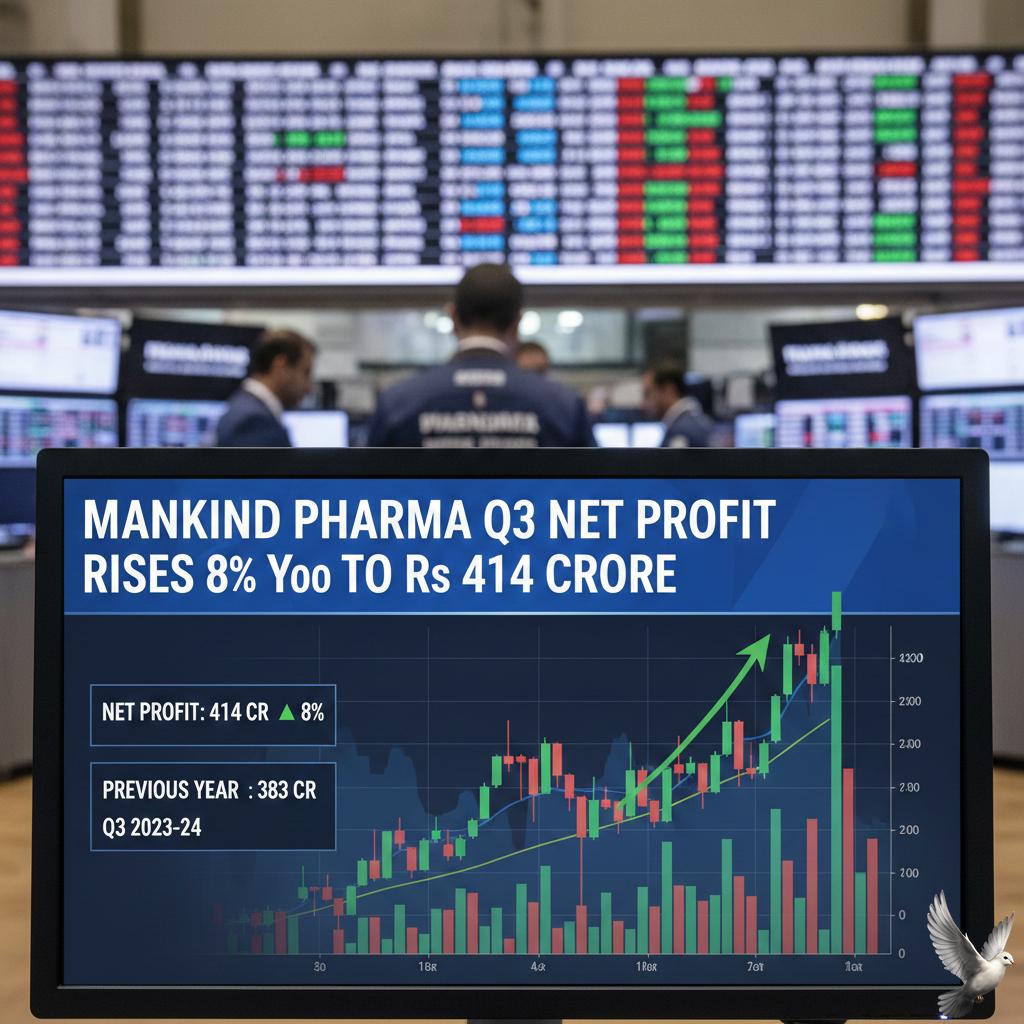
Mankind Pharma Q3 Net Profit Rises 8% YoY to Rs 414 Crore
**Mankind Pharma Q3 FY26: Steady Growth Amid Market Caution** **Mankind Pharma** has reported a resilient performance for the quarter ended December 31, 2025 (Q3 FY26). The company delivered double-digit revenue growth driven by its domestic stronghold and expanding export footprint, although market reaction remained tepid due to broader execution concerns. **Financial Highlights** * **Net Profit:** Rose **8% YoY** to **Rs 414 crore**, largely in line with street expectations. * **Revenue:** Grew **11.5% YoY** to **Rs 3,567 crore**, up from Rs 3,199 crore in the same period last year. * **EBITDA:** Reported at **Rs 816 crore** with a margin of **22.9%**. Adjusted EBITDA (factoring in one-offs) stood higher at **Rs 923 crore** (25.9% margin). * **EPS:** Diluted Earnings Per Share increased **6.7%** to **Rs 9.9**. **Operational Drivers** **Domestic Dominance** The India business continues to be the primary engine, generating **Rs 3,046 crore** (up **11.1% YoY**). Growth was spearheaded by chronic therapies, particularly in the cardiac and anti-diabetic segments, where the company outperformed the wider Indian Pharmaceutical Market (IPM). **Export & Consumer Health** * **Exports:** Witnessed a sharp **14.1%** surge to **Rs 521 crore**, supported by strong traction in the international Bharat Serums and Vaccines (BSV) business. * **Consumer Healthcare:** Recovered to post **5.2% growth**, a significant improvement from the decline seen in the previous quarter. Key brands like *Manforce* and *Gas-O-Fast* showed healthy secondary sales. **Market Reaction & Sentiment** Despite the headline growth, the stock faced selling pressure, slipping approximately **4%** to trade near the **Rs 2,080 – Rs 2,155** levels following the announcement. Investors appear cautious regarding: * **Sequential Weakness:** Revenue and profit remained muted on a quarter-on-quarter basis. * **Execution Risks:** Concerns linger over the pace of organic growth in acute therapies and the integration of recent acquisitions. **Strategic Outlook** Management remains focused on consolidating the BSV acquisition and expanding its share in the chronic therapy market, which now accounts for nearly **40%** of total domestic sales. The recovery in the consumer healthcare segment and increased contribution from modern trade channels (now **13.1%** of sales) signal a stabilizing portfolio mix heading into the final quarter of FY26.
BCCL Shares Drop 4% After Reporting Rs 23 Crore Q3 Loss
**Market Brief: Bharat Coking Coal (BCCL) Earnings & Stock Update** **Date:** February 4, 2026 **Overview** Shares of Bharat Coking Coal Limited (BCCL) remain in focus following the release of its first quarterly earnings report since its market debut. The Coal India subsidiary reported a standalone net loss for the third quarter ended December 31, 2025, driven by a sharp decline in revenue. Despite the weak quarterly numbers, the stock continues to trade significantly above its recent IPO issue price. **Key Financial Highlights** * **Net Loss:** Reported a consolidated net loss of **₹22.8 crore** for Q3 FY26, a stark contrast to the **₹425 crore** net profit recorded in the same period last year. * **Revenue Decline:** Operations revenue fell approximately **25%** year-on-year to **₹2,853 crore**, down from ₹3,757 crore in the previous year. * **Sequential Improvement:** Despite the year-on-year lag, performance improved slightly on a quarter-on-quarter basis. The loss narrowed from **₹53 crore** in the preceding September quarter, aided by an **8.3%** rise in sequential revenue and reduced operational expenses. **Stock Performance & Valuation** * **Current Trends:** The stock has faced selling pressure following the earnings announcement, trading lower by approximately **4-7%** in recent sessions to hover around the **₹37–₹38** levels. * **IPO Context:** BCCL listed on January 19, 2026, delivering a stellar **96% premium** over its issue price of **₹23**. * **Holding Gains:** Even with the recent post-earnings dip, the stock remains profitable for initial investors, trading nearly **60%** above the IPO allotment price. **Operational Insight** The downturn in financial performance is attributed largely to reduced top-line income, although cost-control measures in raw materials and employee benefits helped mitigate steeper losses sequentially. Market participants will be watching closely for recovery in production volumes and pricing power in upcoming quarters to justify the premium valuation maintained since listing.
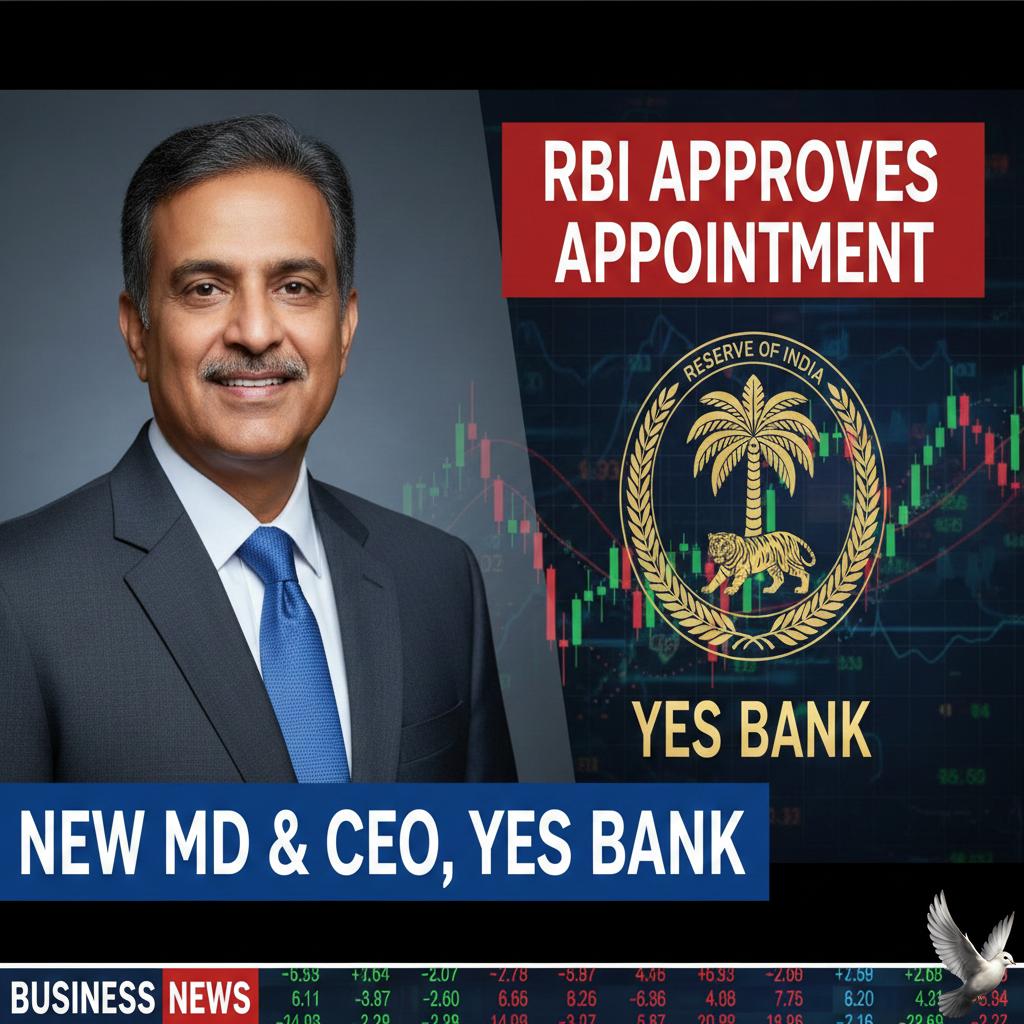
RBI Approves Appointment of New MD & CEO for Yes Bank
**Market Brief: Yes Bank Leadership Transition** **Appointment of Vinay Muralidhar Tonse** Yes Bank has received formal approval from the Reserve Bank of India (RBI) to appoint **Vinay Muralidhar Tonse** as its new Managing Director and Chief Executive Officer. The bank confirmed the development in an exchange filing on **Tuesday, February 3**, securing a **three-year term** for Tonse effective from his date of joining. **Strategic Succession** Tonse will succeed the current MD & CEO, **Prashant Kumar**, whose extended tenure is scheduled to conclude on **April 5, 2026**. This leadership reset follows a significant strategic overhaul at the lender, including the recent acquisition of a **24% stake** by Japan’s Sumitomo Mitsui Banking Corporation (SMBC) in late 2025. **Executive Profile** A veteran banker, Tonse brings extensive experience from the State Bank of India (SBI), where he served as Managing Director (Retail Business & Operations) until **November 30, 2025**. His background in retail lending and operational scaling is viewed by analysts as a critical asset for Yes Bank’s next growth phase. **Market Reaction & Stock Performance** Following the announcement, Yes Bank shares witnessed increased investor interest in Wednesday's trading session. * **Price Action:** The stock traded in positive territory, hovering around **₹21.53**, up approximately **1%** from the previous close. * **Volume:** Trading volume remained high, with over **90 million** shares changing hands on the NSE. * **Valuation:** The bank currently commands a market capitalization of approximately **₹67,500 crore**. **Financial Health Snapshot** The incoming CEO inherits a balance sheet that has shown consistent improvement. In its recently declared Q3 FY26 results: * **Net Profit:** Surged **55% YoY** to **₹952 crore**. * **Net Interest Income (NII):** Rose **11%** to **₹2,466 crore**. * **Asset Quality:** Gross NPAs improved to **1.5%**, indicating sustained recovery in credit fundamentals. **Next Steps** While the RBI has greenlit the appointment, the move remains subject to final approval from Yes Bank’s shareholders. The bank is expected to announce the specific date of Tonse’s assumption of office shortly.

IEX Shares in Focus After Record Power Volume in January
Market Brief: Indian Energy Exchange (IEX) **Date:** February 4, 2026 **Sector Focus:** Power Trading & Exchange **Market Action:** Indian Energy Exchange (IEX) shares are tracking actively today, trading near **₹127.70** (up ~1.1% intraday). The stock remains in focus following a record-breaking performance in January 2026, signaling robust demand and improved market liquidity. **Key Performance Metrics (January 2026):** * **Total Volume:** **13,050 MU** — The highest-ever monthly electricity traded volume. * **YoY Growth:** **19.6%** surge compared to January 2025. * **Real-Time Market (RTM):** Skyrocketed **52.8% YoY** to **4,638 MU**, driving the bulk of the volume expansion. * **Day-Ahead Market (DAM):** Steady growth of **2.8%** to **6,182 MU**. * **Green Market:** Rose **10.7%** to **832 MU**, reflecting sustained renewable adoption. **Price Trends & Drivers:** * **Price Correction:** Improved supply lowered average prices significantly. * DAM Price: **₹3.86/unit** (down 12.9% YoY). * RTM Price: **₹3.72/unit** (down 15.9% YoY). * **Supply Dynamics:** Enhanced generation from hydro, wind, and solar, combined with steady coal availability, boosted sell-side liquidity. * **National Context:** India’s overall power consumption climbed **3.8%** to **142.74 BU** in January, supporting exchange volumes as discoms leveraged lower prices to optimize procurement. **Analyst Take:** The sharp 19.6% volume jump amidst falling prices indicates a maturing market where buyers are aggressively utilizing the exchange to reduce procurement costs. The 50%+ spike in the Real-Time Market suggests grid managers are increasingly relying on IEX for last-mile load balancing. *** **Next Step:** I can provide a technical chart analysis for IEX or compare these volumes with the previous quarter's performance if you need a deeper trend review.
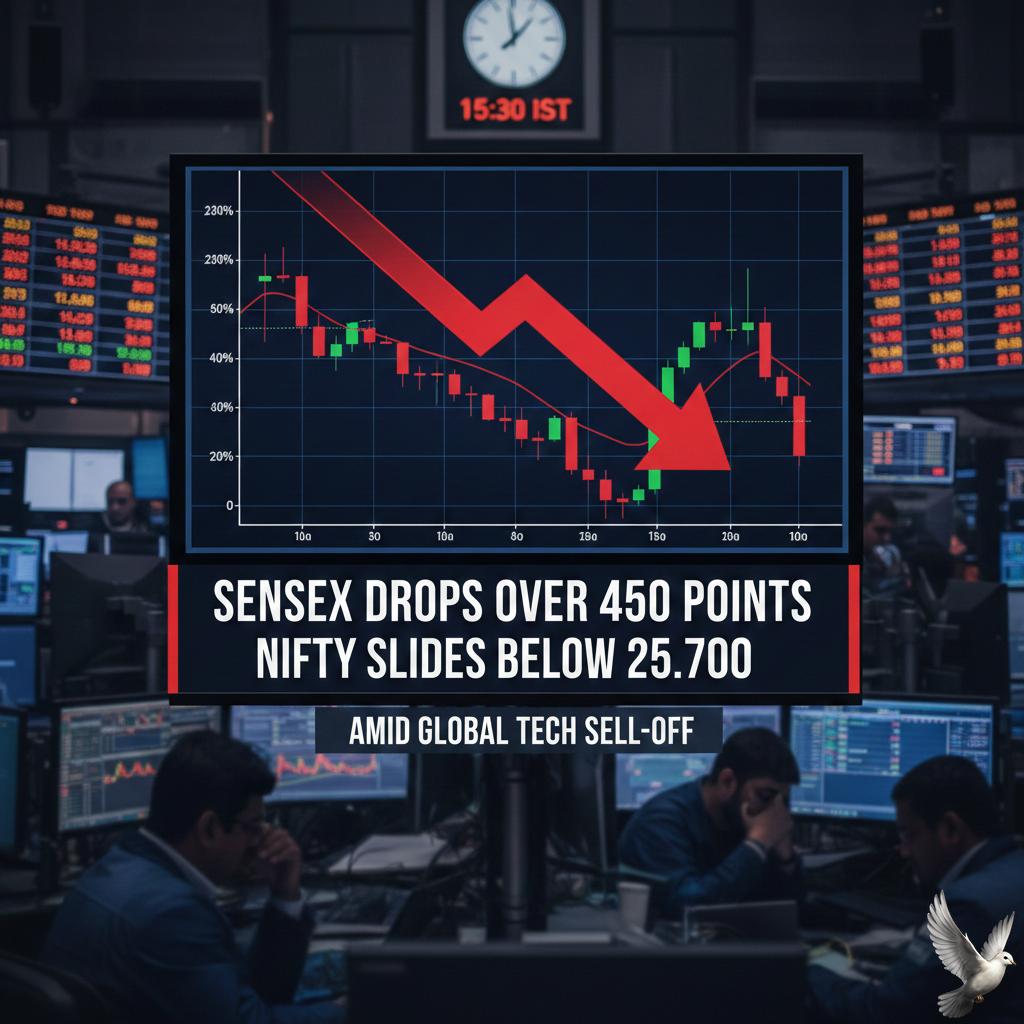
Sensex Drops Over 450 Points, Nifty Slides Below 25,700 Amid Global Tech Sell-Off
**Market Brief: Wednesday, February 4, 2026** **Closing Snapshot** Indian equity benchmarks staged a smart recovery today, erasing early losses to finish marginally higher. Despite a severe rout in the technology sector, optimistic sentiment surrounding the new **India-US trade framework** helped cushion the broader market. **Key Indices** * **Nifty 50:** Closed at **25,776** (+48 points / +0.19%) * **Sensex:** Ended at **83,818** (+79 points / +0.09%) * **Bank Nifty:** Settled at **60,238** (+75 points) **Sectoral Divergence: IT Crash vs. Trade Deal Rally** The session was defined by a stark contrast between the IT sector and the rest of the market. * **IT Meltdown:** The Nifty IT index plunged over **5.5%**, marking its worst single-day fall since early 2020. Heavyweights **Infosys** (-8%), **TCS** (-6.5%), and **Tech Mahindra** (-6.4%) faced intense selling pressure following a **2.2%** drop in the US Nasdaq yesterday. Investors remain spooked by fears that new AI automation tools (like Anthropic’s latest release) could disrupt traditional software business models. * **Broad Recovery:** In contrast, domestic-focused sectors cheered the reduced tariff structure (down to **18%**) under the newly announced India-US trade pact. Buying interest was strong in **Auto**, **Energy**, **Metals**, and **Consumer Durables**. Top gainers included **Trent**, **Eternal**, and **NTPC**, which offset the tech drag. **Global & Geopolitical Cues** Market breadth remained positive despite lingering geopolitical caution. * **US Markets:** Wall Street saw a sharp rotation yesterday, with the tech-heavy Nasdaq shedding nearly **400 points** while the Dow Jones rose, signaling a shift from growth to value stocks. * **Geopolitics:** Investors are keeping a close watch on rising US-Iran tensions, which have kept crude oil prices volatile, though the trade deal optimism largely overshadowed these concerns today. **Institutional Activity** Foreign Institutional Investors (FIIs) remained net buyers in the previous session (purchasing **₹5,236 crore**), providing a crucial liquidity backstop that supported today's lower-level recovery.