Bullish News
Collection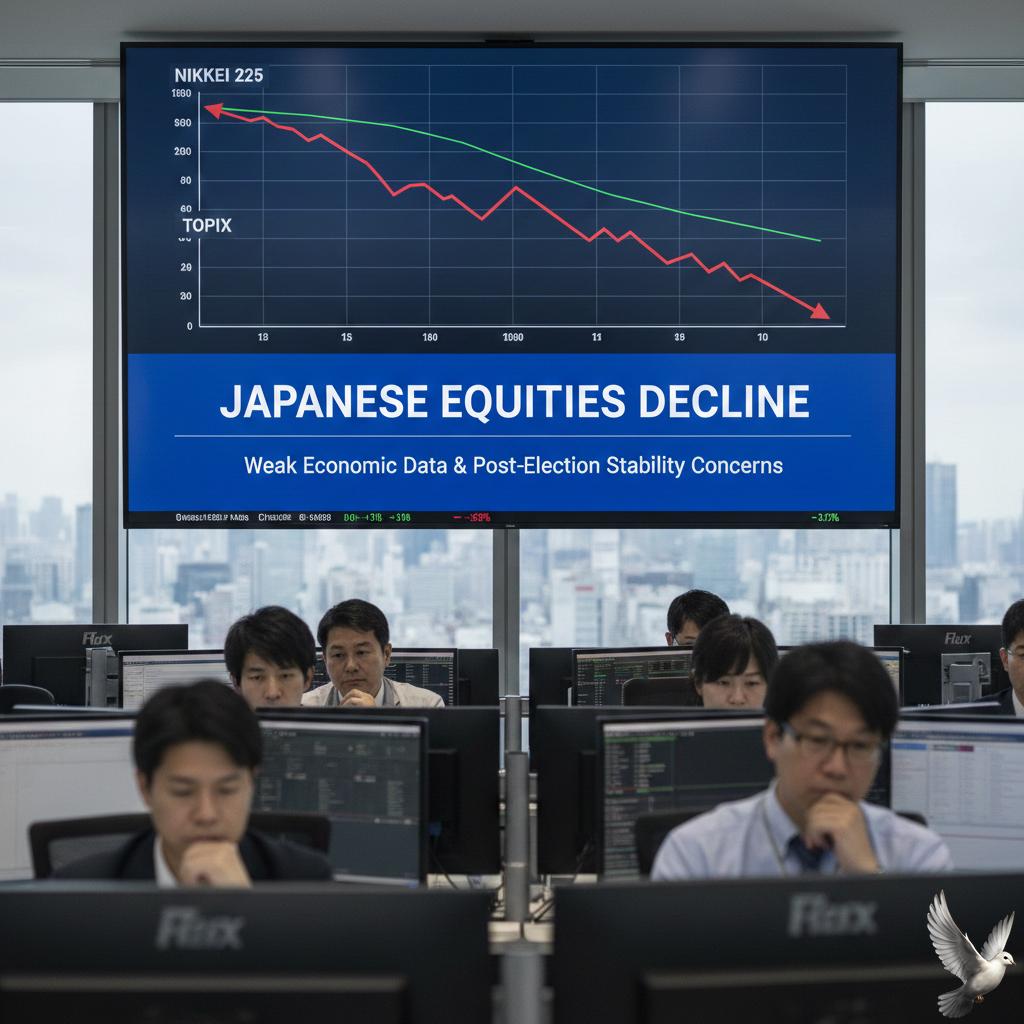
Japanese Equities Decline Amid Weak Economic Data and Post-Election Stability
Japanese equity markets closed with mixed results on Monday, February 16, 2026, as investors processed fresh economic data showing a fragile return to growth. The Nikkei 225 index ended the session at 56,948.05, eking out a marginal gain of 0.01% after a volatile day of trading. The broader Topix index faced heavier pressure, sliding 0.8% to 3,921.44. Market sentiment was primarily dampened by preliminary Gross Domestic Product (GDP) figures for the October–December quarter. Japan's economy grew at an annualized rate of 0.2%, successfully avoiding a technical recession following a revised 2.6% contraction in the previous period. However, this recovery fell significantly short of the 1.6% growth that many analysts had anticipated. On a quarter-on-quarter basis, the economy expanded by 0.1%. While private consumption showed slight resilience with a 0.1% increase, other critical drivers remained sluggish. Capital spending grew by only 0.2%, missing the 0.8% forecast, while exports dipped by 0.3% as global trade tensions and U.S. tariffs on automotive shipments continued to weigh on the manufacturing sector. The disappointing growth data has complicated the outlook for monetary policy. The Bank of Japan (BOJ) currently maintains a policy rate of 0.75% after hiking in late 2025. While central bank officials have signaled a desire to normalize rates further toward a neutral range of 1.0% to 2.5%, the current economic weakness provides ammunition for Prime Minister Sanae Takaichi’s administration to advocate for continued monetary easing. Recent surveys indicate that 60% of Japanese firms oppose further rate hikes this year, citing concerns over rising borrowing costs and lower profitability. Market participants are now closely watching the upcoming spring wage negotiations, as sustainable growth and future rate adjustments are seen as heavily dependent on real wages turning positive. In currency markets, the Japanese yen weakened by approximately 0.3%, trading near 153.25 against the U.S. dollar. This follows a period of strength where the yen had gained nearly 3% last week. The current softening of the currency is attributed to a combination of the weak GDP print and a slight rebound in the U.S. dollar, though thin liquidity due to market holidays in the United States and China limited the overall volume of trade. Despite the immediate headwinds, some institutional investors remain focused on the "Buy Japan" theme. Long-term confidence has been bolstered by the recent landslide election victory for the ruling Liberal Democratic Party, which removed significant fiscal uncertainty. Record share buybacks and ongoing corporate governance reforms continue to provide a structural floor for Japanese equities.

Fractal Analytics IPO Delay: Factors and Market Outlook
Fractal Analytics made its stock market debut on February 16, 2026, with a muted opening that reflected broader caution toward high-growth AI valuations. The stock listed at ₹876 on the NSE, marking a 2.7% discount to its issue price of ₹900. While the BSE saw a flat opening at ₹900, the share price quickly faced downward pressure, sliding nearly 5% to intraday lows of ₹855 during the first hours of trading. The IPO, which aimed to raise ₹2,834 crore, was subscribed 2.66 times overall. Demand was driven primarily by Qualified Institutional Buyers at 4.18 times, while retail and non-institutional participation remained tepid at just 1.03 times and 1.06 times, respectively. This sluggish retail interest was mirrored by a collapsing Grey Market Premium, which fell from a high of ₹180 to near-zero levels just before the listing. Valuation remains the primary hurdle for investor sentiment. At the ₹900 issue price, Fractal commands a market capitalization of approximately ₹15,474 crore. This values the company at over 100 times its FY25 earnings, a significant premium compared to traditional IT services peers who typically trade between 20x and 30x. Financial health shows a recent recovery, with FY25 revenue climbing 26% to ₹2,816 crore and a net profit of ₹220.6 crore, reversing a loss of ₹54.7 crore in FY24. However, H1 FY26 performance showed moderating margins, with a net profit of ₹70.9 crore on revenues of ₹1,594 crore. The company is heavily reliant on the US market, which accounts for roughly 65% of its total revenue. While its "Must Win Clients" list includes global giants like Google, Nvidia, and Microsoft, high client concentration is a noted risk; the top 10 clients generate over 54% of segment revenue. Future growth is tied to the successful deployment of the ₹1,024 crore in fresh capital. Key allocations include ₹355 crore for R&D and sales under the Fractal Alpha segment and ₹265 crore for debt repayment at its US subsidiary. The long-term outlook depends on Fractal's ability to transition from project-based services to platform-led recurring revenue. To justify its premium pricing, the company must maintain its high Net Revenue Retention of 121% and effectively convert its AI capabilities into scalable earnings amid a volatile global IT spending environment.
Indian Equity Market Anticipates $53 Billion in Potential Liquidity From 85 IPO Lock-in Expiries Over Next Quarter
Dalal Street is entering a high-stakes phase as a massive wave of IPO lock-in expiries approaches. Between February and May 2026, approximately 85 companies are scheduled to see their pre-listing shareholder restrictions lifted. This transition could potentially unlock shares worth an estimated 53 billion dollars. The sheer scale of this liquidity event is drawing intense focus from institutional and retail investors alike. According to recent data from Nuvama Alternative & Quantitative Research, these expiries represent a significant increase in the tradable supply of shares. While the total value reaches nearly 4.4 trillion rupees, market experts clarify that this figure reflects the total eligibility for trading rather than a guaranteed sell-off. Notable companies facing imminent unlocks include Amagi Media Labs, with 11 million shares becoming eligible on February 18, and Shadowfax Technologies, which sees 35 million shares unlocked on February 23. In the mid-February window, specific firms like JSW Cement and Bluestone Jewellery are also seeing substantial portions of their equity freed from six-month restrictions. For instance, Bluestone is set to unlock 58 million shares, representing 38% of its equity. The current market environment adds a layer of complexity to these expiries. The Indian benchmark indices, Nifty and Sensex, have recently faced downward pressure, with the Nifty falling toward the 25,400 support level. A persistent sell-off in the IT sector and cautious sentiment among foreign institutional investors have kept the broader market on edge. If these investors choose to offload stakes during this period, the incremental supply could intensify pressure on stock prices. Lock-in expiries are a routine part of the IPO lifecycle, designed to ensure stability during a company’s early months on the exchange. However, clustered events of this magnitude often trigger short-term volatility. Investors are closely monitoring whether early backers and promoters will choose to monetize their gains or hold their positions as a sign of long-term confidence. For many of these stocks, the impact will depend on current valuations. Some companies, like Tenneco Clean Air, are trading nearly 40% above their IPO price, which may tempt early investors to book profits. Conversely, stocks trading below their issue price might see less selling pressure as shareholders wait for a recovery. In summary, the next three months will test the market's ability to absorb a record 53 billion dollars in potential share supply. With 85 companies involved, the period through May 2026 stands as a critical window for price discovery and liquidity on Dalal Street.

Gautam Duggad on Midcap Market Opportunities Amid Volatility
Market Brief: India’s Earnings Momentum Indian corporate earnings are entering a high-growth phase as of mid-February 2026. The Nifty 50 is projected to deliver **12% to 13%** earnings growth for the upcoming fiscal year. This rebound is anchored by cooling inflation, which the RBI recently revised down to **2.0%** for FY26. Sector Performance Leaders The Metals and Oil & Gas sectors continue to dominate the growth narrative. Steel production has surged, with the industry targeting a massive capacity of **300 million tonnes** by 2030. Key players like Tata Steel and JSW Steel are benefiting from a **6.9%** rise in core sector steel output. In the energy space, refinery capacity is on track to exceed **310 million tonnes** annually. Major entities such as ONGC have reported year-on-year profit jumps of **22.5%**, supported by stable net interest income and rising energy demand. Financials and PSU "Golden Era" Public Sector Banks (PSUs) are witnessing a record-breaking streak. Average net profit growth for major state-owned banks reached between **13% and 26%** in the latest quarter. Asset quality has improved significantly, with Gross NPAs for leading lenders falling to around **2.1%**. Dividend yields in this space remain attractive, with some banks estimated to offer payouts between **3.2% and 4.4%**. Midcap and Smallcap Dynamics While the broader indices remain constructive, the midcap and smallcap segments are experiencing a period of digestion. On February 16, 2026, the BSE Smallcap index saw a slight correction of **0.63%**, reflecting a shift toward quality. Investors are moving away from speculative "story" stocks trading at **40x to 50x** multiples. The focus has pivoted toward companies with visible order books in capital goods and specialized manufacturing. Strategic Outlook Domestic demand remains the primary engine, with real GDP growth for FY26 projected at **7.4%**. Manufacturing GVA has accelerated to over **9%**, signaling a structural recovery. Market sentiment is cautiously optimistic. While volatility persists due to global trade variables, the underlying earnings delivery across Auto, NBFCs, and Infrastructure continues to support a positive bias for long-term participants.

Australian Share Market Rises Amid Corporate Earnings and Technology Sector Gains
ASX 200 Market Brief: February 16, 2026 The Australian share market opened the week on a firm footing, with the **S&P/ASX 200 index** rising **19.5 points** or **0.22%** to close at **8,937.1**. This recovery follows a sharp sell-off on Friday and reflects a resilient local sentiment even as global markets navigate mixed signals from Wall Street. Technology Sector Surge The Information Technology sector was the standout performer, soaring **5.65%** during the session. This dramatic rebound was fueled by bargain hunters moving into high-growth software stocks following recent price dips. Leading the charge, companies like Wisetech and NextDC saw renewed interest as investors pivoted back into tech. Gold and Healthcare Strength Gold miners enjoyed a robust session as the **All Ordinaries Gold Index** tracked a spike in bullion prices. Gold futures jumped to **US$5,063.8 per ounce**, driven by softer-than-expected inflation data. Nationally, 24k gold was quoted at **$241.90 per gram**. Major producers such as Newmont Corporation saw gains of **2.8%**. Healthcare stocks also provided a significant lift, with the sector index rising **1.07%**. Defensive buying and steady demand for large-cap medical providers like CSL, which climbed **1.36%** to **$152.05**, supported the broader index. Retail and Corporate Earnings Retail giant JB Hi-Fi surged **7.5%** to **$86.45** after reporting a **7%** increase in sales, while A2 Milk climbed **6.8%** following a strong half-year profit of **$112 million**. These results provided a much-needed boost to the consumer discretionary segment, which finished the day **1.64%** higher. Mining and Financials Lag In contrast, the Materials index fell **1.04%** as iron ore giants BHP and Rio Tinto faced downward pressure, with BHP sliding **1.7%** to **$50.26**. The Financials sector also struggled, ending the day down **0.05%**. While Commonwealth Bank managed a **0.78%** gain to **$177.58**, ANZ dropped **3.06%** and Bendigo & Adelaide Bank fell **2.8%** following their respective earnings updates. Economic Context The market is currently pricing in the Reserve Bank of Australia’s interest rate at **3.85%**, with investors closely watching for the RBA's meeting minutes due Tuesday. The Australian Dollar showed strength, trading around **US$0.7086**, as it benefited from a weakening US Dollar and stable commodity demand.

Inox Wind Shares Decline 8% Following Q3 Earnings Analysis
Market Brief: Inox Wind Sector Performance Inox Wind shares experienced significant volatility on **Monday, February 16, 2026**, plunging nearly **7%** to reach a new 52-week low. The stock touched an intraday bottom of **₹99.06**, marking its sharpest single-day decline in over seven months. This downward pressure follows the release of the **Q3 FY26** earnings report. While the company reported a **14%** rise in consolidated net profit to **₹127 crore**, the figures fell short of aggressive street estimates. The broader market reaction was triggered by concerns over execution speed and a shift in management strategy regarding future guidance. Key Financial Indicators The company’s total income for the December quarter rose **24%** year-on-year to **₹1,238 crore**. Operational efficiency showed improvement, with **EBITDA** climbing **39%** to **₹313 crore** and margins reaching a healthy **25.2%**. Despite these gains, analysts highlighted a significant increase in working capital days, which jumped to **161 days**. Furthermore, interest costs and "on-ground challenges" affecting customer offtake have created a cautious sentiment among institutional investors. Order Book and Execution Inox Wind successfully executed **252 MW** of projects during the quarter. The current net order book stands at **3.2 GW**, providing a revenue visibility window of **18 to 24 months**. Year-to-date order inflows for **FY26** have reached **600 MW**. New contracts have been secured from major players including **Aditya Birla**, **Gentari**, and **First Energy**. Management has also highlighted a massive joint development partnership for **2.5 GW** of wind projects, though timelines for these remain a focal point for skeptical brokerages. Brokerage Outlook and Guidance Major firms, including **Nomura** and **Motilal Oswal**, have revised their price targets downward. A primary catalyst for the downgrade was management’s decision to stop providing specific execution guidance, opting instead for broader revenue targets. The company is now targeting consolidated revenue of over **₹5,000 crore** for **FY26**. For **FY27**, they anticipate a **75%** top-line growth. While most analysts maintain a **BUY** rating based on long-term renewable energy tailwinds, they have trimmed near-term forecasts to account for persistent site-readiness delays. Sector Trends The Indian renewable energy sector is entering a period of consolidation. **Solar module prices** have risen **10–15%** since late 2025, and upcoming regulatory shifts like **ALMM-II** are expected to impact manufacturing costs by June 2026. Inox Wind is positioning its subsidiary, **Inox Green**, to become a leader in the O&M space with a portfolio already spanning **13.3 GWp**. This strategic pivot toward service-based revenue is intended to buffer against the inherent volatility of turbine manufacturing and project execution.

Bitcoin Trades Near $68,700 Amid Declining ETF Inflows and Rising Market Caution
Market Brief: Bitcoin Technical Resistance and Capital Flows The digital asset market is currently navigating a period of high-stakes consolidation. Bitcoin (BTC) recently reclaimed the **$70,000** psychological threshold following cooler-than-expected U.S. inflation data, which showed a year-over-year rise of **2.4%**. However, the asset continues to face intense selling pressure, with the price frequently retreating toward **$68,400**. Institutional Flow and ETF Dynamics Capital movement within spot Bitcoin ETFs has turned notably cautious. Recent data shows a weekly outflow totaling **$375.1 million**, marking a fourth consecutive week of net losses for these products. Total assets under management for these ETFs have shifted to approximately **$80 billion**, a significant correction from the **$170 billion** peak observed in late 2025. This de-risking phase reflects a broader tactical repositioning by institutional players amid a "higher-for-longer" interest rate narrative. Technical Support and Resistance Levels Market analysts are focused on several critical price zones that will likely determine the short-term trajectory. * **Resistance:** The immediate barrier sits at **$69,500**. A sustained break above this level is required to challenge the **$70,500** and **$72,000** ceilings. * **Support:** Immediate downside protection is found at **$68,000**. If this fails, the main support floor is identified at **$66,500**. Some analysts suggest a deeper "bear market bottom" could exist near **$55,000** to **$60,000** if the current consolidation breaks downward. Broader Market Performance The total cryptocurrency market capitalization currently fluctuates around **$2.4 trillion**, down from the **$3 trillion** mark seen at the start of the year. While Bitcoin has shown relative resilience, major altcoins are experiencing more pronounced volatility. Solana (SOL) has been among the most affected, trading down roughly **32.5%** year-to-date, while Ethereum (ETH) has maintained a neutral bias, stabilizing near **$2,700**. Sentiment and Macro Outlook Investor sentiment is characterized by "Extreme Fear" or high caution, often a precursor to a market reset. The correlation between Bitcoin and technology stocks remains positive, ranging between **+0.35 and +0.6**. This suggests that while crypto assets benefit from equity rallies, they remain highly sensitive to downside shocks in the Nasdaq. Long-term holders appear to be in a distribution phase, signaling that a definitive trend reversal may require a few more months of range-bound activity to fully absorb existing liquidity.

**Nischal Maheshwari Projects IT Sector Transformation and Favors Domestic Investment Themes**
Market volatility has intensified within India's technology sector as the Nifty IT index continues a sharp descent. Today, the index fell roughly 1% to 32,360, extending a brutal four-day losing streak. The sector has now declined nearly 15% since the start of 2026, with recent weekly losses hitting 9%. The primary catalyst for this downturn is a deepening concern over structural disruption caused by Artificial Intelligence. Investors are specifically reacting to the launch of advanced AI-enabled legal and workplace tools that could automate traditional application development, testing, and maintenance. These segments represent nearly one-third of the industry’s revenue, and current estimates suggest that 25% to 30% of this work could be impacted. Heavyweight stocks have felt the brunt of the sell-off. Infosys shares dropped more than 2% today to approximately 1,341 per share, marking a 20% decline over the last month. Tata Consultancy Services (TCS) recently hit its 52-week low of 2,776, while Wipro and HCL Technologies have also seen corrections between 5% and 8% in recent sessions. Industry experts urge a perspective of adaptation rather than panic. While the medium-term shift toward outcome-oriented, AI-native models is certain, the immediate sell-off is viewed by some as an overreaction to structural fears rather than actual earnings misses. Valuations are becoming more supportive, with top IT firms now offering attractive dividend yields near 5%. Capital is noticeably rotating into domestic-focused sectors that offer greater earnings clarity. The cement industry has become a focal point for resilience following the Union Budget 2026-27, which raised public capital expenditure by 9% to 12.2 trillion. Effective capex, including grants, is set at 17.1 trillion, providing a robust long-term tailwind for infrastructure. Cement demand is projected to grow between 6% and 7.5% in the 2026 fiscal year. Major players like UltraTech, Ambuja, and Dalmia Bharat are significantly expanding, with the industry expected to add 43 to 45 million tonnes of capacity this year alone. Operating profits in this sector are forecasted to rise by 12% to 18%, reaching up to 950 per tonne. The broader market remains cautious as the Sensex trades near 82,600 and the Nifty 50 hovers below the 25,450 mark. High inflation data and new regulatory norms from the RBI have further dampened sentiment, making domestic consumption and infrastructure the preferred hedges against global tech uncertainty.

Impact of RBI Collateral Norms on Market Intermediaries and Financial Stability
India's capital markets are undergoing a fundamental transformation as regulators pivot toward long-term stability over short-term speculation. This shift is headlined by the Reserve Bank of India’s updated credit facility directions, set to take full effect on April 1, 2026. The new framework introduces rigorous collateral standards for stockbrokers and financial intermediaries. Banks must now ensure all credit facilities are 100% secured by high-quality assets such as cash, government securities, or immovable property. The previous practice of using unsecured personal or corporate guarantees for bank guarantees has been entirely discontinued. Under these rules, bank guarantees issued for exchanges must maintain at least 50% collateral support. Within this, a strict 25% cash reserve is mandatory. Furthermore, any equity shares used as collateral will face a minimum 40% haircut, significantly reducing the leverage available to brokers. The regulator has also effectively banned banks from financing proprietary trading. While market-making and debt warehousing remain eligible for funding, the move aims to curb speculative volatility. Currently, proprietary trading accounts for nearly 50% of equity options turnover and 30% of cash market volumes, making this a critical structural change. Despite these tightening measures, the broader market continues to show resilience. As of mid-February 2026, the Nifty 50 is trading above the 25,400 mark, while the Sensex remains near 82,700. Recent data highlights a maturing investor base, with monthly mutual fund SIP inflows hitting a record 31,000 crore rupees in January 2026. Retail participation remains the backbone of this growth. Total demat accounts have surged past 21.6 crore, and unique mutual fund investors have reached 5.9 crore. Systematic Investment Plan assets now exceed 16.36 lakh crore rupees, representing more than 20% of the industry’s total assets. Looking ahead, the RBI’s direct capital market exposure limit for banks is capped at 20% of Tier 1 capital, with an aggregate ceiling of 40%. These boundaries, combined with the new Securities Markets Code of 2025, are designed to protect the banking system from market shocks while fostering a disciplined investment culture across the country.
US Stock Market Status on Presidents' Day
U.S. equity markets are paused today, February 16, 2026, in observance of Presidents’ Day. Trading on the New York Stock Exchange and Nasdaq is suspended, with normal operations set to resume on Tuesday. This federal holiday provides a brief breather for investors following a volatile week characterized by shifting inflation expectations and renewed anxiety over the impact of artificial intelligence on corporate earnings. The markets enter this break on the heels of a mixed session. On Friday, the S&P 500 closed at 6,836.17, edging up a marginal 0.05%. The Dow Jones Industrial Average added 0.10% to finish at 49,500.93, while the tech-heavy Nasdaq Composite slipped 0.22% to end at 22,546.67. Despite the Friday stabilization, all three major indices finished the week in negative territory, with the Nasdaq shedding 2.10% over the five-day period. Inflation remains the central focus for the Federal Reserve and Wall Street. Latest data shows the Consumer Price Index (CPI) moderated to 2.4% in January, a cooling trend from the 2.7% recorded in December. Core inflation, which excludes volatile food and energy costs, also retreated to 2.4%, marking its lowest level since early 2021. While these figures suggest price pressures are easing, the Labor Department’s recent jobs report showed a resilient workforce with 130,000 new positions added, complicating the timeline for potential interest rate cuts. Market participants have adjusted their expectations for monetary policy, with many now forecasting that the Federal Reserve will maintain current rates until July 2026. The 10-year Treasury yield is currently hovering around 4.09%, reflecting a cautious outlook. Additionally, the CBOE Volatility Index (VIX) spiked to 20.85 last week, indicating heightened sensitivity to economic shifts and the ongoing debates regarding tariff-induced price pressures. The upcoming shortened trading week is packed with high-impact catalysts. Investors are bracing for the second estimate of fourth-quarter GDP, which is projected to show an annualized growth rate of 3.0%. The Federal Reserve will also release minutes from its most recent policy meeting, offering deeper insight into the internal debate over the next phase of the rate cycle. On the corporate front, the retail sector will take center stage as Walmart prepares to report its quarterly results. Other major earnings expected this week include Booking Holdings, Palo Alto Networks, and Warner Bros Discovery. These reports will be scrutinized for clues on consumer health and how major firms are integrating AI technology into their operations. In alternative assets, Bitcoin is trading near $67,465, seeing a 3.00% gain on the latest session despite broader equity weakness. Global oil prices remain stable, with Brent crude trading near $67.78 and WTI crude at $63.01. Commodities and international markets will likely continue to react to the U.S. dollar's strength, with the DXY index currently holding at 97.03.

India Government Bond Yields Flat as U.S. Treasury Moves Offset Supply Concerns
Indian government bond yields continue to trade within a narrow corridor as of February 16, 2026, balancing a supportive global interest rate environment against significant domestic supply pressures. The 10-year benchmark bond yield is currently hovering near 6.67%, reflecting a period of relative stability following the volatility seen earlier in the month. Market sentiment is being buoyed by a notable decline in US Treasury yields. The US 10-year Treasury yield recently fell to 4.06% following softer-than-expected American inflation data, which showed consumer prices cooling to 2.4%. This shift has reinforced global expectations for a Federal Reserve rate cut as early as June 2026, providing a favorable backdrop for emerging market debt. Domestically, the Reserve Bank of India has maintained its repo rate at 5.25% with a neutral stance. While the central bank has already delivered 125 basis points in cumulative cuts during this cycle, it has signaled a pause to assess the impact of recent fiscal measures. Retail inflation remains comfortably within the 2% to 6% target range, with January's figure coming in at 2.75%. The primary factor capping further gains in the bond market is the heavy issuance calendar. For the week of February 16-20, the government is scheduled to auction securities worth 33,000 crore. This follows a record gross market borrowing proposal of 17.2 lakh crore for the next fiscal year, announced in the Union Budget. Additionally, near-term redemption pressures have been partially addressed through a recent debt switch. The government recently bought back 755 billion in bonds maturing in FY27, replacing them with longer-dated 2040 securities. This move has successfully reduced immediate liquidity demands, though it keeps the focus on the long-term supply pipeline. Liquidity conditions in the banking system remain in a surplus of approximately 70,000 crore per day. However, traders remain cautious as the market transitions from an active easing phase to a period of data-dependent stability. Experts anticipate the 10-year yield will continue to fluctuate between 6.60% and 6.75% in the near term. The underlying economic momentum remains robust, with India's GDP growth projected at 7.4% for the current fiscal year. While high yields may present mark-to-market challenges for public sector bank portfolios, analysts believe strong credit growth and improved margins will provide a sufficient buffer against treasury volatility throughout 2026. [Yield Curve Trends](https://www.youtube.com/watch?v=akn48UBqyDk) This video provides a professional breakdown of the macroeconomic factors, including the 2026 Union Budget and RBI policy, that are currently shaping the Indian debt and equity markets. http://googleusercontent.com/youtube_content/0

Global Market Outlook Amid Lunar New Year Closure in China
China’s financial markets have entered a scheduled pause for the Lunar New Year, welcoming the Year of the Horse. This period is traditionally defined by reduced liquidity as mainland exchanges remain closed for an extended nine-day holiday, the longest on record. While local trading is halted, the ripple effects are being closely monitored across global commodities and currency markets. Domestic equity markets entered the break on a high note. The Shanghai Composite Index recently surged to 4,083.67 points, marking its highest level in a decade. This rally followed a stellar 2025 performance where the index gained over 18%. The CSI 300 Index closed its final pre-holiday sessions near 4,660.41, reflecting a year-on-year increase of approximately 18.3%. In Hong Kong, the Hang Seng Index maintained momentum around the 26,710 mark before the seasonal slowdown. Economic indicators show a "two-speed" recovery. January inflation data revealed a cooling trend, with the Consumer Price Index (CPI) rising only 0.2% year-on-year. This softness was largely attributed to a 0.7% drop in food prices as the holiday timing shifted compared to the previous year. Conversely, the Producer Price Index (PPI) showed signs of recovery, narrowing its decline to -1.4% from -1.9% in December. This improvement was driven by a significant 16.1% spike in non-ferrous metal input prices. The property sector remains the primary structural drag. Analysts have downgraded 2026 property sale forecasts, now predicting a decline of 10% to 14%. National primary home prices are expected to drop by another 2% to 4% this year. To counter this, the government has front-loaded approximately 62.5 billion yuan in special treasury bonds to stimulate consumer trade-ins and support domestic demand. Monetary policy remains accommodative to navigate these headwinds. The People’s Bank of China (PBOC) has signaled a "moderately loose" stance for the remainder of 2026. Markets are pricing in a 50-basis point cut to the Reserve Requirement Ratio (RRR) and a 10-basis point reduction in interest rates during the first half of the year. The central bank is also focusing on liquidity management through government bond transactions to keep financing costs low. Consumption is the bright spot of the holiday period. Passenger travel traffic is expected to rise by more than 5% year-on-year. To capitalize on this, authorities distributed 2.05 billion yuan in "New Year gift packages" including consumption vouchers and subsidies. Macau’s gaming sector and major e-commerce platforms like Alibaba and JD.com are positioned as the primary beneficiaries of this travel and spending surge. Global investors are using this holiday lull to reassess portfolios. While Chinese A-shares trade at a valuation discount with a price-to-earnings ratio of 12.6x, the focus remains on whether the "Deepseek moment" in AI and semiconductor innovation can offset the ongoing property slump. External markets continue to watch the offshore Yuan, which recently hovered near a 32-month high at 7.01 per dollar, for signals of post-holiday sentiment.

RBI Tightens Lending Norms for Capital Market Intermediaries and Proprietary Trading Activities
Market Brief: RBI Tightens Capital Market Funding The Reserve Bank of India has introduced a comprehensive overhaul of lending norms for capital market intermediaries, effective **April 1, 2026**. This regulatory shift aims to fortify the banking system by mandating **100% secured funding** for stockbrokers, effectively ending the era of flexible, partially unsecured bank guarantees. Impact on Bourses and Intermediaries Market reaction was immediate following the **February 13** announcement. Shares of major exchanges and brokerages faced a sharp sell-off on **February 16, 2026**: * **BSE** shares plummeted **10%** to **Rs 2,726.30** * **MCX** dropped by **7%** * **Angel One** fell **6%** * **Groww** declined **4%** Analysts at Jefferies estimate that these norms could slash **BSE's** earnings by approximately **10%**, primarily due to an expected drop of **10–12%** in options turnover as trading costs surge. Stricter Collateral Requirements The new framework significantly increases the capital burden for market participants. Key changes to bank guarantees and margin funding include: * A minimum of **50% collateral** is now required for bank guarantees. * At least **25%** of that collateral must be maintained in **cash**. * Equity shares used as collateral will face a mandatory **40% haircut**. * Banks are now prohibited from funding **proprietary trading** activities. Shift in Market Liquidity Proprietary traders, who account for nearly **50%** of equity options premium turnover, are the most affected. Combined with the recent doubling of **Securities Transaction Tax (STT)** on derivatives, these participants face a high-cost environment that may lead to reduced volumes and wider bid-ask spreads. While retail-focused discount brokers like **Groww** are expected to see a limited direct impact due to self-funded margin books, they face a "second-order" risk. If proprietary desks scale back, the resulting drop in overall market liquidity could increase execution costs for all investors. Sector Outlook Brokers are now forced to pivot toward costlier funding avenues, such as **Commercial Paper** and **Non-Convertible Debentures**, as the bank channel becomes less viable for routine operations. Conversely, the RBI has slightly liberalized other areas, allowing banks to fund up to **75%** of corporate acquisitions for companies with a net worth exceeding **Rs 500 crore**, provided they maintain a debt-to-equity ratio within **3:1**. The transition period is tight, giving intermediaries only until the start of the new fiscal year to restructure their funding models. This move signals a clear regulatory preference for stability and systemic safety over high-leverage trading growth.

US Stocks Rise as Cooling Inflation Increases Rate Cut Likelihood
The latest economic data reveals a notable cooling in U.S. consumer prices. As of mid-February 2026, the annual inflation rate slowed to 2.4%, down from 2.7% in the previous two months. This marks the lowest level of inflation since May 2025 and fell below the market's consensus forecast of 2.5%. Monthly figures show the Consumer Price Index (CPI) increased by 0.2% on a seasonally adjusted basis. Core inflation, which strips out volatile food and energy costs, rose 0.3% for the month and stands at 2.5% on an annual basis. While some sectors remain sticky, the overall trend suggests that price pressures are moderating after a period of volatility. Shelter costs, a significant driver of inflation, increased by 0.2% in January. Food prices also rose 0.2%, with cereals and bakery products climbing 1.2% over the month. However, these gains were largely offset by a sharp 1.5% decline in the energy index, driven primarily by falling gasoline prices. Market reactions have been characterized by cautious optimism. Following the release, the S&P 500 inched up 0.05% to reach 6,836.17, while the Dow Jones Industrial Average added 0.10% to hit 49,500.93. The Nasdaq Composite saw a slight dip of 0.22% to 22,546.67, as investors balanced the positive inflation news against ongoing volatility in the technology sector. The decline in headline inflation has shifted expectations for Federal Reserve policy. The central bank's current target range for the federal funds rate is 3.50% to 3.75%. While recent labor market resilience—including an unexpected drop in the unemployment rate to 4.3%—had pushed rate cut projections toward July, the softer CPI print has reinforced the case for potential cuts as early as the March 17-18 FOMC meeting. Policymakers face a complex landscape. While the disinflation trend is clear, risks remain. These include the implementation of new tax cuts under the "One Big, Beautiful Bill Act" and the continued pass-through of previous trade tariffs. Furthermore, with Federal Reserve Chair Jerome Powell’s term ending in May 2026, leadership transition adds an extra layer of uncertainty to the future interest rate path. Treasury yields edged lower and the U.S. dollar weakened slightly following the data. Gold has benefited from the shift in rate expectations, trading near $5,100 as investors seek hedges against potential policy shifts. Markets now await the next set of labor data and central bank minutes to gauge if a March rate reduction is feasible or if a "wait-and-watch" approach will prevail through the second quarter.

BSE, MCX, and Leading Brokerage Shares Decline up to 10% Amid Market Shifts
Market dynamics shifted abruptly this Monday as shares of major bourses and stockbrokers plunged following the Reserve Bank of India’s (RBI) sweeping regulatory overhaul. The new "Credit Facilities Amendment Directions" target capital market intermediaries, demanding a transition to a strictly secured lending environment. Leading the decline, BSE shares plummeted 10% to 2,726.30, while Angel One tumbled 6%. Other key players like MCX and digital broker Groww saw drops of 7% and 4% respectively. Investor sentiment has been dampened by the realization that these rules will likely slash earnings for exchange platforms by an estimated 10%, primarily due to a predicted 12% drop in options turnover. The core of the RBI’s mandate, effective April 1, 2026, requires all bank credit to brokers to be 100% secured. This eliminates the previous flexibility where bank guarantees could be partially backed by unsecured instruments or simple promoter guarantees. Now, any guarantee issued to exchanges must carry at least 50% collateral, with a mandatory 25% in cash. Collateral standards have also been tightened. Equity shares pledged as security will now face a minimum haircut of 40%, significantly reducing the borrowing power of intermediaries. Furthermore, the RBI has explicitly barred banks from funding proprietary trading activities, though exceptions remain for market-making and debt warehousing. These measures follow a volatile month for the Indian equity market. In early February, markets were already absorbing the impact of Budget 2026, which raised the Securities Transaction Tax (STT) on futures to 0.05% and options to 0.15%. Combined with the RBI’s new credit norms, these costs are forcing firms to seek more expensive, non-bank funding alternatives. The Nifty and Sensex both reflected this cautious environment, with the Nifty hovering above 25,450 while showing consolidation patterns. Market participants are now bracing for increased capital blockage and higher operational costs as the industry prepares for the April 1 implementation. While the broader market structure remains constructive, the immediate focus is on how brokers will recalibrate their margin trading facilities. Firms may be forced to hike trading charges to offset the squeeze on profit margins, marking a definitive end to the era of cheap, unsecured capital in the brokerage sector.
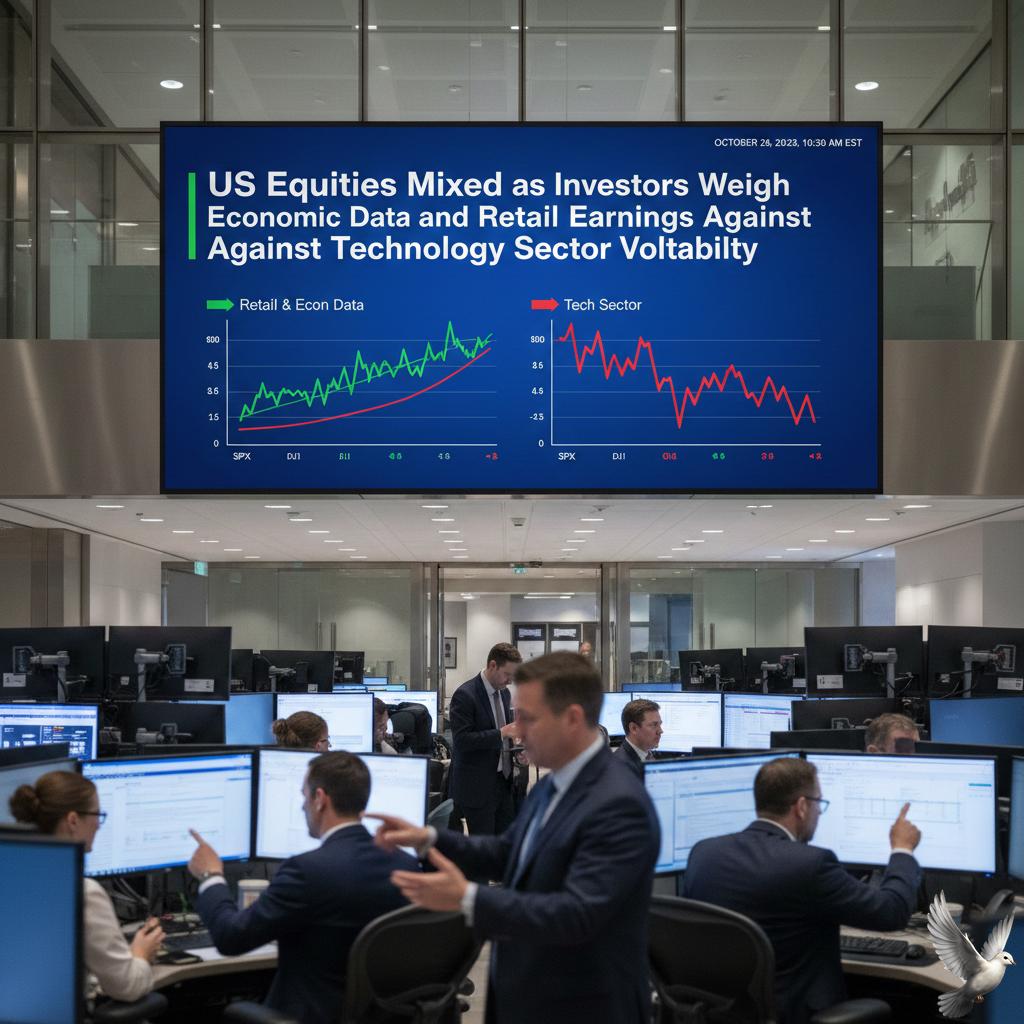
US Equities Mixed as Investors Weigh Economic Data and Retail Earnings Against Technology Sector Volatility
US markets are entering a pivotal phase as investors navigate a "Great Rotation" away from hyper-growth technology and into real-economy sectors. This shift is driven by intensifying concerns over the sustainability of massive AI expenditures and the immediate return on investment for mega-cap software firms. **Sector Performance & Rotation** Market leadership is broadening significantly beyond the dominant tech giants. While the technology sector has faced pressure, falling approximately 3% year-to-date, defensive and value-oriented sectors have emerged as primary beneficiaries. The Consumer Staples sector is leading this charge, rising nearly 13% in early 2026. Other sectors seeing increased capital inflows include Industrials and Financials, which are benefiting from a resilient U.S. macro environment and higher-for-longer interest rates. The Russell 1000 Value Index recently jumped 4.6%, sharply outperforming the Growth counterpart’s 1.5% decline. **The AI Disruption Narrative** A major catalyst for recent volatility is "AI capex fatigue." The five largest cloud and AI infrastructure providers are projected to spend between $660 billion and $690 billion in 2026—nearly double 2025 levels. Investors are now scrutinizing these figures, questioning whether traditional software models can survive "agentic AI" that automates coding and services. This transition has triggered sharp corrections in global IT service stocks, with some industry leaders seeing single-session declines of up to 7% as markets reprice the risk of "revenue deflation." **Economic Indicators & Retail Sentiment** The U.S. economy maintains a solid footing, with Q3 GDP growth recorded at a rapid 4.4%. Early estimates for Q4 suggest a healthy but moderating expansion of around 2.2%. Inflation remains a central focus as the Federal Reserve’s preferred PCE data recently showed a 2.8% annual rise. Treasury yields hovering around 4.22% continue to pressure high-valuation growth stocks while favoring sectors with traditional cash flows. In the retail space, Walmart remains a dominant indicator of consumer health. The retail giant reported Q4 revenue growth of 4.1% and a 16% surge in global e-commerce. Market data suggests a clear "flight to value," with shoppers increasingly favoring discount and staple retailers over specialty premium brands as they enter 2026. **Corporate Outlook** Earnings season remains supportive, with the S&P 500 on track for robust earnings growth of roughly 13%. Despite the tech sell-off, nearly 65% of S&P 500 components are now outperforming the broader index—the highest level of market breadth seen in years. This suggests that while individual sector volatility is high, the underlying market structure is becoming more balanced and less reliant on a narrow group of tech stocks.

Indian Rupee Opens Marginally Lower at 90.67 Per US Dollar
Rupee Market Update: February 16, 2026 The Indian Rupee recorded a marginal decline in early Monday trade, slipping by **1 paisa** to settle at **90.67** against the US Dollar. The local unit opened slightly higher at **90.63** before facing pressure from a combination of global and domestic factors. A primary driver of the weakness remains the consistent outflow of **Foreign Institutional Investors (FII)** from the equity markets. This trend is coupled with a resilient **US Dollar Index (DXY)**, which is currently holding in the **96.94** to **97.00** range. Global energy markets are also contributing to the cautious sentiment. **Brent crude** prices are trading near **$67.72** per barrel, marking a slight uptick from previous lows. While oil has steadied after recent weekly drops, the marginal rise adds to the demand for the dollar by domestic importers. External Buffers and Reserves India’s foreign exchange reserves saw a significant decline of **$6.71 billion**, bringing the total "forex kitty" to **$717.06 billion** as of the latest reporting week ending February 6. This drop was largely attributed to a sharp reduction in the value of **gold holdings**, which fell by **$14.21 billion** to **$123.48 billion**. Despite this dip, the Reserve Bank of India maintains that reserves remain adequate to cover over **11 months** of imports. Trade and Macro Sentiment The market is closely monitoring upcoming trade balance data. Recent figures for the second quarter of the 2025-26 fiscal year showed a trade deficit of **$31 billion** with Free Trade Agreement (FTA) partners. However, the outlook for Indo-US trade remains a point of interest, with projections suggesting the trade surplus with the US could cross **$90 billion** annually following recent tariff adjustments. Domestic equity indices, the **Sensex** and **Nifty**, have recently faced volatility, with the Sensex dropping over **1,000 points** in previous sessions. This broader market sell-off, particularly in the IT sector, continues to influence the rupee’s short-term trajectory.

Milan Parikh Advises 2026 Traders on Risk Management and Capital Preservation at IOC 7.0
Market Brief: 2026 Strategic Trading Outlook The Indian equity landscape is navigating a period of heightened volatility as February 2026 progresses. Global geopolitical tensions and shifting trade dynamics have introduced significant uncertainty, even as domestic fundamentals show resilience. On February 13, 2026, the **Nifty 50** closed at **25,471.10**, marking a decline of **336.10 points (1.30%)**. Simultaneously, the **S&P BSE Sensex** dropped over **1,000 points** to settle at **82,626.76**. This correction, largely led by the IT and metal sectors, resulted in a single-day erosion of **7.02 lakh crore** in investor wealth. Risk Management and Wealth Preservation Market veteran Milan Parikh, speaking at the **Indian Options Conclave (IOC 7.0)**, emphasizes a "capital-first" approach for the current year. The core directive for traders is to avoid risking a lifetime of accumulated wealth for speculative short-term gains. A critical benchmark suggested for 2026 is to strictly **cap losses at one year's profits**. This strategy is designed to ensure that even a significant market downturn does not jeopardize the core principal or long-term financial security. The Gen Z Influence and Digital Shift The trading ecosystem is undergoing a structural transformation driven by a massive influx of **377 million Gen Z** participants. This cohort is characterized by a preference for data-led insights over market sentiment. Recent data indicates that **48% of Gen Z** are already active in the stock markets, with **92%** favoring **Systematic Investment Plans (SIPs)** for wealth creation. Monthly SIP inflows have now crossed the **29,000 crore** mark, reflecting a deepening financialization of Indian household savings. Technology and Market Infrastructure Technology remains the primary catalyst for market accessibility. The rise of fractional shares, commission-free trading, and advanced algorithmic platforms has democratized the field. Professional clearing services and in-house developed trading applications are streamlining operations, allowing for faster execution and better risk monitoring. However, as technology lowers entry barriers, the "tuition fee" of the market—learning through practical experience—remains a constant for all participants. Economic Indicators and Sentiment The broader economic context provides a mixed backdrop. India's retail inflation rose to **2.75%** in January 2026 under the newly revised **2024 base series**. While this remains below the RBI's **4% target**, it suggests a benign but watchful inflationary environment. Institutional flows show a tug-of-war; while **Foreign Portfolio Investors (FPIs)** were net sellers of over **7,300 crore** in recent sessions, **Domestic Institutional Investors (DIIs)** provided a cushion with net purchases exceeding **5,500 crore**. Traders are advised to maintain a disciplined framework, prioritizing structured learning and verified data over social media trends. The focus for the remainder of Q1 2026 should be on margin preservation and process-driven execution rather than chasing high-volatility breakouts.

Silver and Gold Prices Decline as Market Volatility Prompts Investor Interest
Precious metals are witnessing a sharp correction today, February 16, 2026, as investors aggressively book profits following a significant rally in the previous session. On the Multi Commodity Exchange (MCX), gold futures for April 2026 delivery opened lower, dropping by approximately 1,000 to trade near 1,54,905 per 10 grams. This downward movement marks a notable shift in sentiment as the market enters a consolidation phase. Silver is facing even steeper selling pressure, crashing by 3.3% in early trade. MCX silver futures for March 2026 have plummeted by over 8,200, sliding below the 2,50,000 mark to trade around 2,36,100 per kg. This correction reflects a broader trend of "futures market capitulation" after the metal hit multi-month highs in recent weeks. In international markets, spot gold has slipped below the 5,030 per ounce level, currently struggling around 5,010. Spot silver is also down more than 3%, trading near 75.35 per ounce. These declines follow a strong Friday session where cooler-than-expected US inflation data initially fueled hopes for more aggressive interest rate cuts by the Federal Reserve. The primary driver for today’s pullback is a strengthening US Dollar Index, which has climbed toward 97.00. A firmer dollar typically makes bullion more expensive for holders of other currencies, dampening demand. Furthermore, market participants are now shifting their focus to upcoming catalysts, including the Federal Reserve’s meeting minutes and US GDP advance estimates due later this week. Despite the current volatility, structural support for precious metals remains in place. Central bank buying continues to be a major factor, alongside geopolitical tensions and a general flight from sovereign bonds. Analysts observe that while the immediate trend is bearish due to technical profit-taking, the long-term outlook is supported by global economic uncertainty and persistent trade frictions. In the physical market, 24K gold is retailing near 1,57,890 per 10 grams in major Indian cities like Mumbai and Delhi, while Chennai continues to see slightly higher rates at 1,59,119. Silver rates in the physical retail market are hovering around 2,74,900 per kg, though traditional premiums in southern hubs have largely eroded during this sell-off. Traders are now watching key support levels closely. For gold, the range of 1,53,150 to 1,54,400 is considered a critical floor, while silver is looking for support between 2,32,000 and 2,38,800. Any break below these levels could signal further downside in the near term.

Indian IT Majors Pivot Business Strategies Amid AI Evolution and Recent Market Volatility
The Indian IT sector is navigating a volatile phase in February 2026, characterized by a sharp divergence between stock market valuations and operational progress in Artificial Intelligence. The Nifty IT index recently witnessed a significant sell-off, plunging nearly 8% in a single week and approximately 15% over the last month. This correction was triggered by intensified fears of AI-driven disruption to traditional service models, coupled with weak global cues and a cautious outlook on discretionary spending. Despite the market turbulence, top-tier giants are reporting a structural pivot toward AI-native services. The December-quarter results for the 2025-26 fiscal year reveal that AI work is moving rapidly from experimental pilots to production-scale contracts. Total deal signings across the sector have surged, with major firms reporting single-quarter bookings ranging from $3 billion to over $9 billion. Advanced AI now contributes roughly 4% to 6% of total revenue for leaders like TCS and HCLTech, with AI-related revenues growing at a quarter-on-quarter rate of nearly 20%. Tata Consultancy Services has reported an annualized AI revenue run-rate of $1.8 billion, marking a significant milestone in monetizing the technology. Similarly, Infosys is currently engaged in over 4,600 active AI projects and has deployed more than 500 AI agents across its client base. These companies are shifting from "effort-based" billing to "outcome-led" models, embedding AI into large-scale cloud modernization and data engineering contracts to defend their market share. Profitability remains a key focus as firms manage the high costs of AI infrastructure and internal upskilling. While operating margins are under pressure due to wage inflation and investment requirements, they have largely stabilized between 21% and 22%. The hiring landscape has also transformed; the industry is moving away from mass recruitment toward specialized talent. While large-cap firms reported a net employee addition of 8,000 to 11,000 in recent periods, the focus has shifted heavily to Global Capability Centers, which are expected to employ up to 4 million professionals by 2030. The broader outlook for 2026 remains cautiously optimistic. India’s IT industry revenue is projected to reach $350 billion this year, contributing nearly 10% to the national GDP. While secondary market volatility persists, analysts suggest that the current sell-off has brought valuations to a "deep value" zone. The sector is now positioned as an essential orchestrator for global enterprises, helping them navigate the complex transition from legacy systems to AI-integrated platforms. [IT Sector Analysis](https://www.youtube.com/watch?v=yzQ_5pcVxsw) This video provides a detailed breakdown of the recent quarterly earnings and the specific impact of AI on the revenue growth of India's largest IT firms. http://googleusercontent.com/youtube_content/0