Bullish News
Collection
Marico subsidiary acquires Vietnamese skincare firm for Rs 262 crore
Marico is aggressively pivoting toward a premium, digital-first future, marked by two major acquisitions and a robust quarterly performance. The FMCG giant recently moved to acquire a 75% stake in the Vietnamese beauty firm Skinetiq for approximately 261.6 crore. This transaction, based on an equity valuation of 350 crore, allows Marico to dominate a high-growth market where digital channels now drive nearly 50% of beauty consumption. Skinetiq reported a revenue of 152 crore for the 2025 calendar year with healthy EBITDA margins in the mid-twenties. The deal includes the science-backed skincare brand Candid and exclusive distribution rights for the luxury clinical brand Murad in Vietnam. Marico retains the option to acquire the remaining 25% stake after the 2028 fiscal year. In the domestic market, Marico has solidified its wellness portfolio by acquiring a 60% stake in the plant-based nutrition brand Cosmix for 225.67 crore. Cosmix has scaled rapidly, achieving an annualized revenue run rate of approximately 100 crore by early 2026. This follows the 226 crore acquisition of gourmet popcorn brand 4700BC, reflecting a clear strategy to have food and premium personal care contribute 25% of India revenues by 2028. Financial performance remains strong, with the company reporting a 13.3% year-on-year increase in consolidated profit to 460 crore for the December quarter. Revenue from operations surged by 26.6% to reach 3,537 crore. This growth was fueled by an 8% underlying volume growth in the India business and a 21% constant currency growth in international markets. Despite these gains, operating margins faced some pressure. The EBITDA margin compressed to 16.7% due to higher material costs and a 15% increase in advertising and promotion spending. However, a 30% correction in copra prices from recent peaks has offered sequential relief to gross margins. The company's stock reflects this steady trajectory, trading near 755 with a market capitalization of approximately 98,000 crore. Marico's international business, which now accounts for about 25% of group revenue, saw broad-based double-digit growth across most territories, with Vietnam and South Africa showing particularly strong rebounds. Leadership remains focused on a long-term roadmap to double overall revenue to 20,000 crore by 2030. The current strategy prioritizes "building to last" by partnering with original founders of digital brands to scale high-growth nutrition and wellness platforms through Marico's extensive distribution and logistics network.

Ramco Cements Q3 Net Profit Rises 19% to Rs 387 Crore
**Ramco Cements: Strategic Asset Sales Drive Q3 Growth Amid Operational Headwinds** Ramco Cements has delivered a significant boost to its bottom line for the third quarter of FY26. The company reported a 19% year-on-year increase in net profit, reaching 387 crore. This growth was largely supported by exceptional gains of 479 crore from the sale of non-core assets, including land parcels valued at over 500 crore. Revenue for the quarter rose by 6.2% to 2,105 crore, compared to 1,988 crore in the same period last year. Despite this growth, core operational health faced pressure as EBITDA remained flat at 279 crore. Operating margins saw a slight contraction, moving from 14% to 13.3%, reflecting a challenging pricing environment and rising input costs. **Pricing and Market Dynamics** The cement sector experienced sharp volatility during the quarter. Average cement prices fell by 6% sequentially, with more pronounced declines of 8% in Southern India and 9% in Eastern markets. However, the industry is showing early signs of recovery in February 2026. Major players are implementing price hikes of 15 to 20 per bag in non-trade segments to offset cost escalations. **Cost Pressures and Green Energy** Operational expenses were impacted by a new limestone tax in Tamil Nadu, adding 160 per tonne to raw material costs. Additionally, power and fuel expenses rose by 59 per tonne on a sequential basis. To mitigate these pressures, Ramco has increased its green power usage to 47%, up from 39% last year, and continues to invest in Waste Heat Recovery Systems. **Balance Sheet and Debt Management** A key highlight of the quarter was the reduction in net debt, facilitated by aggressive asset monetization. The company has now realized cumulative proceeds of approximately 484 crore from non-core asset sales. Its debt-equity ratio has improved to 0.52 times, signaling a stronger financial position. **Capex and Future Capacity** Ramco Cements has revised its full-year capital expenditure estimate downward to 1,100 crore from the earlier 1,200 crore. Spending for the first nine months of the fiscal year stood at 823 crore. Capacity expansion remains on track. The company recently enhanced its Ariyalur plant capacity from 3.5 MTPA to 5.5 MTPA through de-bottlenecking. Total cement capacity is projected to reach 31.14 MTPA by March 2027, supported by brownfield expansions in Kolimigundla and new projects in Karnataka. **Market Performance** Investor sentiment remains resilient. Ramco Cements shares recently rallied to approximately 1,208, reflecting an 11% gain over the past month. The stock is currently trading near its 52-week high of 1,214.50, though analysts note its high Price-to-Earnings ratio of 74x-78x compared to the industry average. The outlook for the final quarter of FY26 is buoyed by a record 12.2 lakh crore infrastructure push in the latest Union Budget. This is expected to sustain high demand for cement across housing and mega-infrastructure projects through the remainder of the year.

Fractal Analytics IPO: Subscription Status and Market Sentiment Day 2
Fractal Analytics has entered the second day of its ₹2,834-crore initial public offering (IPO), marking a historic moment as India’s first pure-play enterprise AI company to debut on the national exchanges. As of February 10, 2026, the offering is navigating a cautious market environment with localized interest from individual investors. The company has set its price band between ₹857 and ₹900 per share. At the upper limit, the market capitalization is estimated at approximately ₹15,474 crore. The issue is a blend of a fresh capital raise of ₹1,023.5 crore and an offer for sale (OFS) of ₹1,810.4 crore from existing shareholders. Subscription data from the first day shows a total coverage of 9%, with the retail segment leading the momentum at 35% subscription. In contrast, non-institutional and qualified institutional buyers have remained on the sidelines during the initial hours, reflecting a "wait-and-watch" approach common for high-valuation tech entries. Grey market activity suggests a modest sentiment. The Grey Market Premium (GMP) currently stands at approximately ₹8 to ₹10 per share, representing a premium of around 1%. This is a slight dip from earlier estimates of 1.5%, signaling that while there is an expectation of positive listing gains, the market is pricing in the broader volatility seen in global technology stocks. Financially, Fractal Analytics reported a significant turnaround in the latest fiscal year. For FY25, revenue reached ₹2,816.2 crore, a 26% year-on-year increase. More importantly, the company swung to a profit of ₹220.6 crore, recovering from a loss of ₹54.7 crore in the previous period. This shift is supported by an improved EBITDA margin of 17.4%, up from 10.6%. The proceeds from the fresh issue are earmarked for global expansion, specifically for its U.S. subsidiary, and for scaling its "Fractal Alpha" division, which focuses on independent, product-led AI businesses. Market analysts view this IPO as a long-term play on the AI sector. While traditional IT services face pressure, pure-play AI firms are valued on their ability to integrate agentic AI into enterprise decision-making. Investors should note the high valuation of approximately 65.5x P/E (post-issue), which places the stock in a premium bracket compared to traditional tech providers. The bidding process concludes on February 11, 2026, with the final allotment expected by February 12. The official listing on the BSE and NSE is scheduled for February 16, 2026. This debut will serve as a critical benchmark for the appetite for high-growth AI ventures in the Indian primary market.
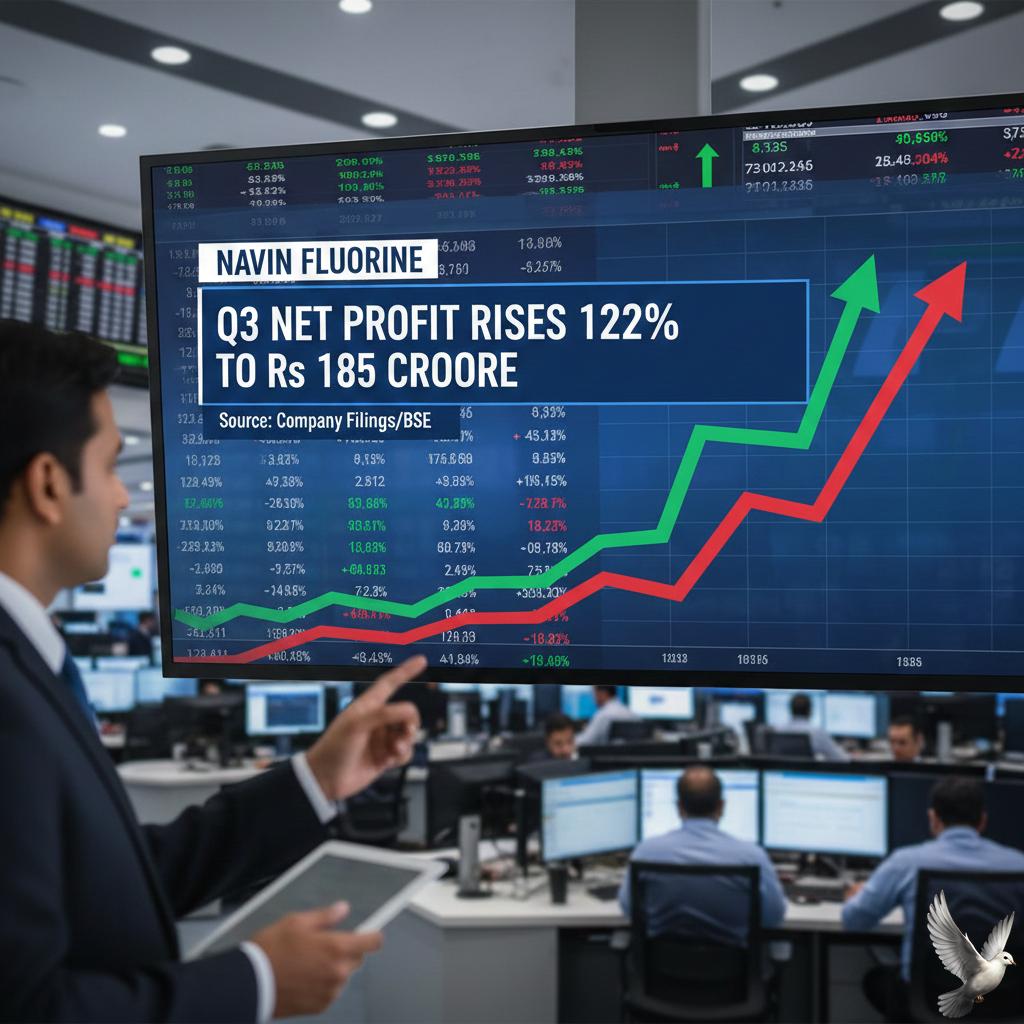
Navin Fluorine Q3 Net Profit Rises 122% to Rs 185 Crore
Navin Fluorine International (NFIL) delivered an exceptional performance in the third quarter of fiscal year 2026, marking a significant milestone in its growth trajectory. The company reported a consolidated net profit of 185.40 crore, representing a massive 122% surge compared to 83.60 crore in the same period last year. Revenue from operations grew by 47% to reach 892.37 crore, up from 606.20 crore. This robust top-line expansion was mirrored by an impressive jump in operating EBITDA, which rose 109% to 308 crore. Operational efficiency reached a new peak with EBITDA margins expanding by 1,017 basis points to hit 34.5%. The growth was balanced across all three primary business verticals. The High-Performance Products (HPP) segment saw revenue rise by 35% to 412 crore, fueled by higher volumes and a constructive pricing environment for HFCs. Specialty Chemicals recorded its highest-ever quarterly revenue of 354 crore, growing 60% year-on-year. The Contract Development and Manufacturing Organization (CDMO) business continues to be a high-growth engine, with revenues jumping 61% to 127 crore. This segment is supported by strong order visibility and the successful start of commercial supplies from the new cGMP4 facility. The market responded with high enthusiasm as NFIL shares hit a new 52-week high of 6,634.50 following the results. The stock has gained over 50% in the last year, reflecting investor confidence in the company's aggressive capacity expansion. Looking ahead, the board has approved significant capital expenditures to sustain this momentum. This includes 236.50 crore for additional HFC capacity at the Surat unit and 75 crore for debottlenecking the Multi-Purpose Plant at Dahej. These investments target the growing demand for low-GWP gases and novel agrochemical intermediates. Management has maintained a positive outlook for the remainder of the fiscal year, backed by a sanguine order book and a projected 10.9% production growth for the broader Indian chemical industry in 2026. The company also declared an interim dividend of 6.50 per share, rewarding shareholders amidst its rapid expansion.

BSE Shares Trade in Focus Following 174% Q3 Profit Increase and 62% Revenue Growth YoY
BSE Limited has captured significant market attention following a stellar financial performance for the third quarter of FY26. The exchange reported a consolidated net profit of 602 crore, marking a massive 174% increase compared to the 220 crore recorded in the same period last year. This surge was primarily driven by record-breaking activity in the equity derivatives segment and robust transaction charges. Revenue from operations climbed 62% to reach 1,244 crore. A key highlight was the 86% jump in transaction charges, which totaled 953 crore. This growth reflects a deepening of the Indian capital markets, with the exchange facilitating nearly 772 crore equity derivatives contracts during the quarter. Operating EBITDA more than tripled to 732 crore, with margins expanding significantly to 59% from 39% a year ago. The exchange continues to scale its ecosystem, recently reaching a milestone of 700 listings on its SME platform. Investor confidence is further bolstered by the BSE StAR MF platform, which maintains a dominant 87.4% market share in the mutual fund distribution space. During the quarter, the platform processed 21.7 crore transactions, representing a 21% year-on-year growth. As of February 10, 2026, the stock price reflects this operational strength, trading near 2,897 with a steady upward momentum over the past month. The market capitalization stands at approximately 1,21,583 crore. Institutional interest remains a critical support pillar, with Foreign Institutional Investors holding a 17.45% stake and Mutual Funds accounting for 11.66% of the ownership. Broader market sentiment remains supportive as the Sensex recently touched one-month highs near the 84,065 level. Analysts note that despite a recent hike in the Securities Transaction Tax on derivatives, trading volumes have remained resilient. The exchange’s strategic move to introduce a closing auction session in August 2026 is expected to further improve price discovery and transparency for derivatives settlement. With a debt-free balance sheet and a five-year profit CAGR of over 65%, the exchange is positioned as a primary beneficiary of India’s growing retail and institutional participation. Technical indicators remain bullish, supported by healthy cash market volumes averaging 7,645 crore and record daily premium turnover in index derivatives reaching 19,459 crore.

Ambuja Cements and Four Other Large-Cap Stocks Record Bullish RSI Indicators
Market performance across the NSE large-cap segment showed significant momentum on February 9, 2026, as benchmark indices settled higher. The Nifty 50 jumped 173.60 points to end at 25,867.30, while the BSE Sensex surged 485.35 points to close at 84,065.75. This recovery was fueled by positive trade deal cues and steady FII inflows. A group of five high-profile stocks, including Ambuja Cements and Muthoot Finance, emerged in the RSI Trending Up scan. This technical signal occurs when the Relative Strength Index crosses above the 50 mark from below, indicating a shift from neutral or bearish territory into a strengthening price uptrend. Ambuja Cements witnessed a notable price upswing, with its RSI moving from 47.55 to 52.91. The stock closed the session at approximately 542.45. This move suggests potential near-term upside as it breaks above its immediate pivot levels. The company recently reported a 20% year-on-year revenue growth in its Q3 results, although higher costs impacted net profit, which stood at 367 crore. Muthoot Finance also displayed a bullish RSI crossover, ending the session at 3,779.80. Its RSI climbed to 50.09 from a previous 46.83. This technical breakout comes just ahead of the company’s scheduled board meeting on February 12 to announce quarterly results. Investors are watching for further momentum as the stock attempts to reclaim ground above its 50-day moving average. The broader market list of momentum gainers included The Indian Hotels Company, which saw its RSI jump to 54.32 with a closing price of 695. Solar Industries India followed with an RSI of 53.93 and a market price of 13,389. Mazagon Dock Shipbuilders rounded out the top five, posting an RSI of 51.78 and a closing price of 2,472.50. Market focus for the February 10 session shifts to the final leg of the Q3 earnings season. Major players such as Titan, Eicher Motors, Grasim, and Apollo Hospitals are set to release their financial results. Trading activity remains high, with technical indicators suggesting that the current momentum in these large-cap stocks could lead to further accumulation if benchmark indices sustain their current levels. Key support for the Nifty remains at 25,500, while the immediate resistance is pegged at 26,000. Traders are monitoring these RSI breakouts as early entry signals for potential trend reversals in a volatile environment.
Analysts Identify Five Long-Term Stocks Including PFC and Emami with Projected Returns of 10-40%
Shree Cement Market Brief: Q1 2026 The Indian cement sector is entering a pivotal phase as it balances robust infrastructure demand against a highly competitive pricing environment. As of February 2026, industry leaders are prioritizing value over volume, a strategic shift aimed at protecting margins in a market defined by significant capacity expansion. Shree Cement’s current market performance reflects this "value-first" approach. The company recently reported a consolidated revenue of 4,801 crore for the December 2025 quarter, marking a 5% year-on-year increase. While sales volumes remained relatively flat with a modest 1% growth to 8.7 million metric tonnes, the company successfully bridged the pricing gap with market leaders. This resulted in a net profit of 268 crore, a substantial 38% increase compared to the previous year. Market analysts have adjusted their outlook to account for these shifting dynamics. Citi maintains a Buy rating on Shree Cement but has revised its target price to 31,650 from 33,000. This adjustment reflects a broader trend of cautious optimism, as investors weigh the company's strong operational efficiency against a projected 3% decline in annual volume. The domestic landscape for construction remains a primary driver for the industry. The Union Budget 2026 has earmarked 12.2 lakh crore for capital expenditure, a 10% increase that signals sustained momentum for roads, railways, and urban infrastructure. Demand is projected to grow between 6% and 7.5% through the 2026 fiscal year, supported further by a recovery in the housing sector and the development of tier-2 and tier-3 urban hubs. Cost pressures continue to be a critical factor for producers. While fuel costs have seen a marginal decline—with coal prices dropping roughly 12%—elevated freight and power expenses persist. Shree Cement is mitigating these pressures through a high green-power mix, currently maintained at 60%, and an ongoing expansion strategy. The company’s Karnataka facility is expected to become operational shortly, pushing total domestic capacity to 69 million metric tonnes. On the stock exchange, Shree Cement has seen intense trading activity. Recent sessions saw a sharp 18% surge in open interest, with the stock price hovering near the 27,145 level. While intraday volatility has been noted, the broader sector remains constructive due to expected price hikes in the first half of 2026 and disciplined pricing behavior among major players. The industry is now focused on the high-demand months of the first quarter, where seasonal peaks in construction typically allow for better cost pass-through. For Shree Cement, the ability to maintain its premium pricing strategy while commissioning new capacity will be the key determinant of its performance heading into the new fiscal year.

11 Stocks Cross Above 200-Day Moving Average
The Indian equity market demonstrated significant technical strength during the February 9, 2026, session. A total of 21 stocks within the Nifty 500 universe successfully crossed and closed above their 200-day moving average (DMA). This movement is widely regarded by market analysts as a primary indicator of a long-term bullish trend. Among these performers, 11 stocks surged by more than 3%, signaling a high-conviction breakout. Notable participants in this technical shift included Poonawalla Fincorp, which led with an 8% gain to reach 465.9, and State Bank of India (SBI), which surged 7.6% to hit 1,147.8. The rally in SBI was particularly impactful, as the bank's market capitalization reclaimed the 10 lakh crore mark following strong third-quarter earnings. Other key stocks clearing the 200-day DMA threshold included Uno Minda, rising 4% to 1,204, and Fortis Healthcare, which advanced 4.2% to 891.3. Heavyweights like Titan also showed momentum, gaining 3.1% to close at 4,267. This broad-based participation suggests improving investor sentiment across varied sectors. Benchmark indices reflected this optimism, with the NSE Nifty 50 rising 173.6 points to settle at 25,867.30 and the BSE Sensex climbing 485.35 points to finish at 84,065.75. The Nifty Midcap 100 and Smallcap 100 indices outperformed the frontliners, gaining 1.58% and 2.64% respectively, confirming a risk-on environment in the broader market. Macroeconomic drivers contributed to the favorable trading climate. The recent India-US trade deal, which reduced reciprocal tariffs to 18%, has injected fresh optimism into export-oriented sectors. Additionally, foreign institutional investors (FIIs) remained net buyers, injecting 1,950.77 crore in a single session, while global oil prices eased to approximately 67.52 per barrel. While the market shows technical strength, the India VIX rose slightly to 12.19, indicating a minor increase in volatility expectations. Traders are currently monitoring the 26,000–26,200 resistance zone for the Nifty 50, with immediate support identified at the 25,650 level. Focus now shifts to the remaining third-quarter earnings releases and global retail sales data. The ability of these 21 stocks to maintain their position above the 200-day DMA will be a critical factor in determining the sustainability of this long-term uptrend in the coming weeks.

GIFT Nifty and Asian Markets Signal Positive Start for Sensex and Nifty 50
Market Update: NVIDIA Strategic Intelligence **February 10, 2026** NVIDIA continues to anchor the global technology sector as it approaches a critical earnings milestone on **February 25**. The company has successfully transitioned from a hardware manufacturer into a full-stack "AI Factory" provider, maintaining a dominant market capitalization of approximately **$4.51 trillion**. Current price action shows the stock trading near **$185.41**, a significant recovery from 2025 lows. Wall Street sentiment remains overwhelmingly bullish, with **92%** of analysts maintaining a Buy rating. Consensus price targets now hover around **$253.62**, suggesting a potential upside of nearly **25%** as the market anticipates a breakthrough into the **$200** range following the next financial report. Infrastructure and Data Center Performance The Data Center segment remains the primary engine of growth, recently posting record quarterly revenue of **$51.2 billion**, a **66%** increase year-over-year. This surge is driven by the rapid adoption of the **Blackwell** platform, which management describes as having "off the charts" demand. Strategic shift toward networking has also paid off, with networking revenue hitting **$8.2 billion**. The integration of **Spectrum-X Ethernet** and **NVLink** architectures has made NVIDIA indispensable for hyperscalers like Meta, Microsoft, and Oracle as they construct gigawatt-scale AI factories. Product Innovation and Consumer Markets In the consumer space, rumors are intensifying around a new ultra-high-end **RTX 50-series** flagship. Reports suggest a "TITAN Blackwell" or **RTX 5090 Ti** could launch in **Q3 2026**. This potential release would likely feature the full **GB202** silicon, targeting the professional and enthusiast niche with a "Founders Edition" focus. While Gaming revenue grew **30%** year-over-year to **$4.3 billion**, the company is increasingly prioritizing industrial and automotive AI. The **NVIDIA DRIVE** platform is now in full production, and a landmark partnership with **Nokia** aims to integrate AI-native 5G and 6G stacks into global telecommunications infrastructure. Financial Outlook and Projections NVIDIA's guidance for the upcoming quarter projects revenue of **$65 billion**, supported by expanding non-GAAP gross margins targeted at **75%**. This reflects immense pricing power despite a more crowded competitive field. The broader AI chip market is forecasted to reach **$121.73 billion** globally by the end of 2026. NVIDIA's ability to maintain its **70%+** margin profile while navigating global memory shortages and export restrictions will be the defining theme for the remainder of the fiscal year. Volatility is expected to persist leading up to the **February 25** announcement, with investors focused on Blackwell shipment backlogs and the sustainability of capital expenditure from major cloud providers.

Precious Metals Decline Amid Rising Dollar
Precious metals are experiencing a period of intense volatility as global markets react to shifting U.S. monetary policy and a resurgent dollar. After reaching historic highs in late January, gold and silver have entered a phase of consolidation, characterized by sharp pullbacks and rapid recovery attempts. Gold is currently trading near the **$5,030** per ounce mark on the international market. This comes after the metal hit an all-time high of **$5,626** earlier in the year before retreating. In domestic retail markets, 24K gold is holding firm around **₹1,58,060** per 10 grams, reflecting a steady recovery from the deep correction seen in the first week of February. Silver has faced even more dramatic swings. After peaking at nearly **$122** per ounce, it experienced a significant flash crash but has recently stabilized. Currently, silver is trading at approximately **$82** per ounce. In the retail sector, prices have rebounded to **₹3,00,000** per kilogram, marking a sharp one-day jump of **5.3%** as industrial demand and value buying return. The primary driver of recent pressure is the U.S. Dollar Index, which has strengthened to roughly **108.42**. A robust dollar typically makes bullion more expensive for international investors, leading to the pullbacks observed early this week. Additionally, the nomination of Kevin Warsh as the next Federal Reserve Chair has led traders to scale back expectations for aggressive interest rate cuts. Investors are now pivoting toward critical economic releases scheduled for this week. All eyes are on the U.S. inflation data and upcoming jobs figures. These indicators will provide the necessary hints regarding the Federal Reserve's next move. If inflation remains sticky, the central bank may keep interest rates at their current **3.75%** level for longer, which could limit the upside for non-yielding assets like gold. Despite near-term fluctuations, the medium-term outlook remains supported by structural factors. Central banks, particularly in emerging markets, continue to diversify their reserves into gold. Recent data shows China extending its gold-buying streak for a 15th consecutive month, bringing its holdings to over **74 million** fine troy ounces. Market sentiment is currently a tug-of-war between technical corrections and safe-haven demand. While gold is expected to remain firm in the range of **$4,550 to $5,100**, silver's path is likely to be more erratic. Traders are advised to monitor the gold-to-silver ratio, which is currently being tested as silver attempts to outperform gold on a percentage basis during recovery rallies.

US Stocks Rise as Technology Sector Extends Recovery
Indian markets showed significant strength on Monday, as the BSE Sensex climbed 485 points to close at 84,065.75. This performance marks a one-month high for the index, driven by a combination of upbeat corporate earnings and renewed optimism surrounding India-US trade relations. The Nifty 50 followed a similar upward trajectory, gaining 173 points to end the session at 25,867.30. Financial and cyclical stocks led the rally, with State Bank of India surging 7.6% to record highs following a strong quarterly report and an upgraded credit growth forecast for 2026. The recovery comes as technology stocks stabilize after a period of intense pressure linked to artificial intelligence concerns. While some software exporters saw localized declines last week, broader market sentiment was bolstered by the return of foreign capital inflows, reversing some of the heavy selling seen earlier in the year. Global cues provided a supportive backdrop as Wall Street indices approached record levels. The S&P 500 rose 0.5% to 6,964, and the Nasdaq Composite climbed nearly 1% to 23,238. This rebound in tech-heavy indices was fueled by investors moving back into software and semiconductor names after what many analysts viewed as an oversold reaction to AI competition. Domestic monetary policy remains a critical focus. The Reserve Bank of India recently held the repo rate steady at 5.25% following a cumulative reduction of 125 basis points throughout 2025. With retail inflation currently around 1.33%—well within the target range—the central bank has shifted to a neutral stance while raising its GDP growth projection for the upcoming year to 7.4%. Currency markets remain sensitive to shifting trade policies. The Indian rupee recently touched a low of 87.95 against the US dollar amid concerns over potential metal tariffs, though it recovered slightly to close near 87.47. Investors are now closely monitoring upcoming US employment and inflation data, which will dictate the next steps for Federal Reserve interest rates. Commodity markets also reflect this volatility. Gold prices have broken above the $5,000 per ounce threshold, while Brent crude trades near $68.88. Traders are balancing these price surges against a cooling inflationary environment in the domestic market, providing a complex but generally positive outlook for Indian equities in the near term.

Syrma SGS Shares Rise on Volume-Backed Breakout and Positive Analyst Outlook
The Indian equity markets continue to exhibit a strong bullish undertone as of February 10, 2026. Domestic benchmarks have sustained gains following a historic rally triggered by the recent India-US trade deal. This optimism has effectively countered the volatility seen earlier in the month, pushing key indices toward new milestones. The Nifty 50 is currently trading near the **25,922** level, maintaining a firm trajectory toward the psychological mark of **26,000**. On the BSE, the Sensex has held onto gains around **84,314**. Investor confidence is bolstered by a significant shift in foreign institutional activity. After offloading roughly **₹35,962 crore** in January, foreign portfolio investors have turned net buyers, injecting **₹8,980 crore** over the last four sessions. Sectoral performance is largely dominated by banking and financial services. High-weightage stocks like State Bank of India have reached record highs following robust quarterly earnings. The private banking sector remains a primary driver of the rally, supported by steady credit growth and stable asset quality. The auto and manufacturing sectors are also seeing buying interest, fueled by optimism over lowered tariffs and reshaped energy ties under the new trade framework. On the macroeconomic front, India remains the fastest-growing major economy. Real GDP is projected to grow at **6.4%** for the 2026-27 fiscal year. Domestic consumption continues to be the primary engine of this growth, aided by the rationalization of GST and adjusted income tax thresholds. Inflation remains within a manageable range, allowing the Reserve Bank of India to maintain a supportive monetary stance. Global cues are providing a stable backdrop for domestic equities. The US 10-year Treasury yield is currently hovering around **4.20%**, reflecting a slight easing of concerns regarding long-term inflation. Meanwhile, commodity markets have seen some cooling. Brent crude oil prices are trading near **$68.98** per barrel, down from previous peaks as geopolitical premiums ease due to diplomatic progress in the Middle East. Liquidity in the domestic market remains robust. Consistent inflows from Systematic Investment Plans (SIPs) continue to act as a critical shock absorber against global fluctuations. Domestic institutional investors have remained steady buyers, providing a floor for the market during periods of consolidation. The primary focus for the week remains the remainder of the corporate earnings season. Mid-cap and small-cap stocks are outperforming the broader market, with the mid-cap index gaining **0.9%** and small-caps rising **1.3%** in recent sessions. Market participants are closely watching resistance levels at **26,050** for the Nifty, while downside support is firmly established at **25,750**.

Pre-Market Analysis and Trading Outlook for the Current Session
Market Brief: India-US Trade Deal Sparks Equity Surge Indian benchmark indices recorded a strong performance on Monday, February 9, 2026, as investor sentiment was bolstered by the formalization of an interim trade deal framework between India and the United States. The **BSE Sensex** surged **485.35 points**, closing at **84,065.75**, while the **NSE Nifty 50** appreciated by **173.60 points** to settle at **25,867.30**. The market rally was primarily driven by news that the U.S. has reduced reciprocal tariffs on Indian exports to **18%**, down from a previous effective rate of **50%**. This breakthrough has significantly eased concerns over trade barriers and is expected to benefit export-oriented sectors such as textiles, aerospace, and seafood. In exchange, India has committed to purchasing over **$500 billion** in U.S. energy, technology, and agricultural products over the next five years. Foreign Institutional Investors (FIIs) have shown a notable shift in behavior, turning into net buyers after a heavy selling streak in January. On the latest trading session, FIIs infused approximately **₹2,254.60 crore** into the cash market. This return of foreign capital, coupled with the **RBI** holding interest rates steady at **5.25%**, has provided a stable macroeconomic backdrop for the current consolidation phase. Sectoral performance remained largely positive, led by Public Sector Undertaking (PSU) banks. The **Nifty PSU Bank** index climbed **2.83%**, fueled by strong quarterly earnings from heavyweights like State Bank of India, which hit a record high. Other gaining sectors included Real Estate, which rose **2.64%**, and Consumer Durables, up **2.76%**. Technical indicators suggest a strengthening bullish trend. The **Relative Strength Index (RSI)** for the Nifty is currently positioned near **53**, reflecting neutral-to-positive momentum. Analysts identify immediate resistance for the Nifty at the **25,900** to **26,000** level. Support is firmly established at **25,500**, providing a floor for the market's gradual recovery. While global factors and currency fluctuations remain influential, the Indian Rupee has shown resilience, stabilizing near **90.70** against the U.S. Dollar. This currency stability, combined with the reduction in geopolitical trade uncertainty, has successfully shifted the market tone toward a "cautious risk-on" sentiment as midcap and smallcap indices continue to outperform the broader benchmarks.
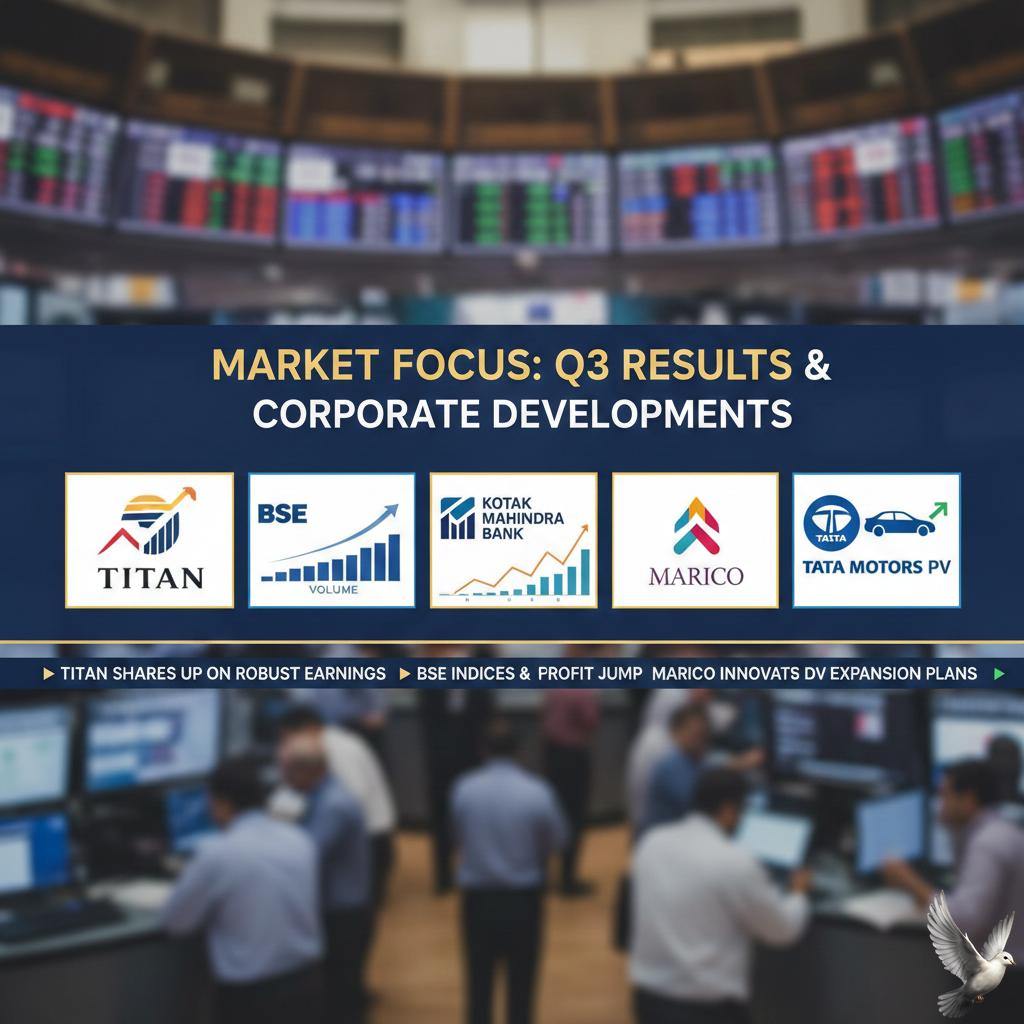
Market Focus: Titan, BSE, Kotak Mahindra Bank, Marico, and Tata Motors PV in Spotlight Following Q3 Results and Corporate Developments
Domestic equity benchmarks faced a volatile session on Monday as global trade tensions outweighed local optimism. The Nifty 50 retreated from its attempts to sustain higher levels, sliding 0.76% to settle at 23,381.60. Similarly, the BSE Sensex dropped 548 points to close at 77,311.80. This downturn followed a significant escalation in US trade policy, with President Donald Trump announcing a 25% tariff on steel and aluminum imports. Market sentiment remains sensitive to the emerging India-US trade landscape. Despite the immediate pressure, the two nations have officially reached a framework for an Interim Trade Agreement (ITA). This serves as a precursor to a comprehensive Bilateral Trade Agreement (BTA). Key highlights include India's commitment to reduce tariffs on US industrial and agricultural goods, while the US has notably rolled back the 25% additional tariffs previously linked to Indian purchases of Russian oil. Titan Company remains a focal point following its Q3 results. The firm reported a robust 26% increase in revenue, reaching 17,550 crore. However, consolidated net profit saw a slight dip of 0.6% to 1,047 crore. The bottom line was pressured by inventory-related losses following adjustments to gold customs duties, leading to a margin contraction of 177 basis points. Adani Energy Solutions has successfully secured long-term financing from a consortium of Japanese banks, including MUFG and SMBC. The funding is earmarked for a 950-kilometer high-voltage direct current (HVDC) transmission corridor connecting Rajasthan and Uttar Pradesh. This 6,000 MW project is a critical component of India’s green energy evacuation backbone and is slated for completion by 2029. In the consumer sector, Marico is aggressively expanding its international footprint. The company’s subsidiary entered definitive agreements to acquire a 75% stake in the Vietnamese skincare entity Skinetiq. The deal, valued at an equity valuation of approximately 350 crore, allows Marico to tap into Vietnam’s rapidly growing digital-first beauty market. Skinetiq recently reported revenues of 152 crore with a healthy mid-twenties EBITDA margin. Technical analysts suggest that while the Nifty has previously reclaimed the 26,000 level, it currently faces a "sell-on-rise" structure. Immediate resistance is pegged at the 25,900–26,000 zone, which has transitioned from a demand area to a significant supply pocket. On the downside, 23,300 and 23,000 are viewed as crucial support floors to prevent further slides amid persistent foreign institutional investor selling.

Asian Equities Reach Record Highs as Gold Prices Decline
Asian equity markets reached a historic milestone on Tuesday, with the MSCI Asia Pacific Index climbing to an all-time high. This surge was led by a significant 1% jump in Japan’s Nikkei 225, which continues to hit record levels following recent political shifts. The regional rally follows a strong rebound in US tech shares, effectively easing recent anxieties surrounding artificial intelligence spending. Investors are now turning their attention toward a high-stakes week for US economic data. Key reports on employment, consumer price inflation (CPI), and retail sales—many delayed by a recent partial government shutdown—are set for release. These figures are critical for the Federal Reserve as it weighs its next move, with current market expectations leaning toward holding interest rates steady at the 3.5% to 3.75% range in the near term. Alphabet Inc. has signaled aggressive confidence in the tech infrastructure race, successfully raising $20 billion through a massive US dollar bond offering. The deal saw overwhelming investor demand, with orders peaking above $100 billion. The capital is earmarked for the company’s ambitious 2026 expenditure plan, which is projected to reach between $175 billion and $185 billion as it expands global data center capacity. In the commodities and currency space, the US dollar has maintained a steady position while the Japanese yen showed signs of weakening. Gold and silver prices edged lower as some investors opted to lock in profits following a period of intense market volatility. Treasury yields have stabilized near 4.22% as the market waits for the upcoming inflation data to provide a clearer path for the remainder of the year. Broader market sentiment remains constructive, bolstered by a 48% growth in cloud segments and continued resilience in core search businesses. While long-term inflation expectations have fallen to their lowest level in six months, the focus remains on whether upcoming labor data will confirm a stable economic landing or necessitate further policy shifts later in 2026.

SEBI Proposes Lowering Minimum Investment Threshold for Special Situation Funds
The Securities and Exchange Board of India (SEBI) has released a significant consultation paper aiming to democratize social investing. The regulator proposes a drastic reduction in the minimum investment threshold for Social Impact Funds (SIF). Under the new proposal, the entry barrier for individual investors would drop from ₹2 lakh to just ₹1,000. This shift is designed to align SIFs with the existing norms of the Social Stock Exchange (SSE). Retail Participation and Inclusion The primary goal of this move is to open the doors for small-scale retail participation. By lowering the entry ticket to ₹1,000, SEBI intends to mirror the minimum application size of Zero Coupon Zero Principal (ZCZP) instruments. This alignment ensures that even micro-investors can contribute to social causes, shifting the landscape from high-net-worth exclusivity to a broad-based donor model. Ease of Doing Business for NPOs For Not-for-Profit Organizations (NPOs), the regulator has proposed several administrative relaxations to simplify the fundraising lifecycle: Registration periods for NPOs are suggested to be extended to three years, up from the current two-year limit. This allows organizations more time to plan their social projects without the immediate pressure of re-registration. Furthermore, SEBI suggests lowering the minimum subscription requirement for ZCZP issuances. Currently set at 75%, the new proposal allows certain projects to proceed with just 50% subscription. This applies specifically to projects where costs can be proportionately allocated on a "per unit" basis. Market Context and Growth As of February 2026, the Indian Social Stock Exchange has seen steady growth, with 111 NPOs now registered across major exchanges. To date, approximately 10 NPOs have successfully raised over ₹22 crore through the platform. The broader sustainable finance market in India reached a valuation of approximately $653.76 billion in 2025. With these new regulatory easements, the sector is positioned for an expected compound annual growth rate (CAGR) of over 14% through 2034. Performance and Stability These updates come at a time of high activity in the Indian capital markets. The Nifty remains near the 25,700 level, while institutional interest in ESG and social impact assets continues to rise. The proposed changes represent a transition toward a more resilient social finance ecosystem. By reducing the reliance on a few large donors and building a larger base of small contributors, SEBI aims to ensure the long-term sustainability of social enterprises. The public has been invited to provide feedback on these proposals, which are expected to finalize the "Social Impact Assessor" framework and further streamline annual impact reporting.

Fractal Analytics IPO: Investment Risk Analysis and Market Outlook
Fractal Analytics: Market Debut Analysis Fractal Analytics has officially launched its **₹2,834 crore** initial public offering, marking its entry as India’s first pure-play artificial intelligence company on the public markets. The subscription window remains open until **February 11, 2026**, with a price band established between **₹857 and ₹900** per share. The offering consists of two primary components: a fresh issue of shares valued at **₹1,023.50 crore** and an offer for sale (OFS) of **₹1,810.40 crore** by existing shareholders. This structure will result in a reduction of the promoter and existing investor stakes following the listing on **February 16, 2026**. Financial Performance and Growth The company has demonstrated a significant financial turnaround. In the fiscal year ending **March 2025**, Fractal reported a revenue of **₹2,816 crore**, representing a **26%** year-on-year growth. More notably, it achieved a profit after tax of **₹221 crore**, swinging from a **₹55 crore** loss in the previous year. Operating efficiency has also improved, with EBITDA margins climbing to approximately **14%**. The business model shows high stability, with **90%** of revenue coming from repeat clients and a net revenue retention rate exceeding **121%**. Use of Proceeds The capital raised from the fresh issue is earmarked for critical operational and strategic expansion: * **₹264.90 crore** for debt repayment within its US subsidiary. * **₹355.10 crore** for research, development, and marketing under the Fractal Alpha platform. * **₹121.10 crore** for establishing new office premises in India. * **₹57.10 crore** for technological infrastructure and hardware. Valuation and Market Context At the upper price band, Fractal is valued at a market capitalization of approximately **₹15,474 crore**. This places the company at a high price-to-earnings (P/E) multiple of roughly **79x** based on FY25 earnings. While this reflects a "scarcity premium" as a unique AI asset, it leaves little room for execution errors. The enterprise AI sector is shifting from experimental pilots to integrated, real-time decision intelligence. While Fractal benefits from this **$229 billion** global addressable market, it faces risks including high client concentration—where the top 10 clients account for over **54%** of revenue—and sensitivity to North American tech budgets, which provide **65%** of its total income. Investors should weigh the company's strong "Must Win Client" base against a modest grey market premium of approximately **1.5%**, indicating a cautious but positive initial sentiment. This IPO is positioned for those seeking long-term exposure to the evolving AI services landscape.

Jewellery Stocks Advance Following US-India Trade Agreement
Jewellery Sector Surges Amid Trade Optimism Listed jewellery stocks witnessed a powerful rally on Monday, February 9, 2026, as investor sentiment turned sharply bullish following a landmark trade agreement. The core of this momentum stems from a new India-US interim trade framework that has significantly reduced export hurdles for the gems and jewellery industry. Under the fresh agreement, uncertainty regarding US tariffs has been drastically curtailed. Duties on various Indian goods, which previously faced effective rates as high as **50%**, have been rolled back to **18%**. More importantly for the sector, several high-value categories including gems and diamonds are slated for zero-tariff access upon the full conclusion of the agreement. Key Stock Movements and Financial Highlights Market leaders responded with double-digit gains during the Monday session. **Kalyan Jewellers** emerged as a top performer, with its share price jumping over **11%** to reach **₹437.35**. The company also reported a substantial net profit of **₹400.81 crore** for the December 2025 quarter, marking a **52.88%** year-on-year increase. **P N Gadgil Jewellers** followed suit with a robust intraday surge of approximately **8.55%**, hitting a peak of **₹585.90**. The company’s recent financial disclosures showed a profit after tax of **₹79.31 crore**, supported by a revenue base of over **₹2,100 crore**. Other notable gainers included **Senco Gold**, which climbed nearly **7%**, and **Thangamayil Jewellery**, which advanced over **5%**. Market Trends and Consumption Outlook The sector's growth is further supported by the ongoing wedding season, which remains a primary driver for domestic gold demand. While the price of **24K gold** has reached a significant high of **₹157,450 per 10 grams**, retailers report that the demand for bridal and custom-made jewellery remains resilient. Organized retail players are gaining a larger market share, projected to reach **40-45%** by 2028. This shift is driven by increasing consumer preference for transparency and branded assurance. Additionally, the India-US deal is expected to unlock a **$30 trillion** market opportunity for Indian exporters, potentially doubling US-bound shipments over the next 18 months. Sector Resilience and Future Guidance The removal of the **25%** surcharge previously linked to geopolitical trade tensions has leveled the playing field for Indian artisans. Industry leaders anticipate that the reduction in tariffs will not only improve export volumes but also provide much-needed relief to operating margins, which had been pressured by high inventory costs. Looking ahead, the industry is pivoting toward more versatile designs and lightweight gold options to cater to a younger demographic. While volatile gold prices may impact short-term volume growth for mass-market products, the high-end bridal segment and the newly opened export corridors are expected to sustain the sector's positive trajectory through the next quarter.

SBI shares rise following Q3 financial results
State Bank of India (SBI) has solidified its position as the heavyweight of the Indian banking sector, following a blockbuster performance in the December 2025 quarter. The lender's stock price rocketed by over 7% on February 9, 2026, hitting a new all-time high of 1,150.00 INR. This surge represents one of the most significant single-day gains for the bank in nearly two years. The rally was ignited by a record-breaking standalone net profit of 21,028 crore INR, marking a 24.5% jump year-on-year. This figure comfortably surpassed market expectations, driven by high fee income and robust recoveries. Total business for the bank has now crossed the massive milestone of 103 lakh crore INR, with deposits exceeding 57 lakh crore INR. Loan growth remains a primary engine for the bank, expanding at 15.14% annually. Credit demand is surging across all segments, with Small and Medium Enterprise (SME) loans leading the charge at 21% growth. Agricultural and corporate lending followed closely with double-digit increases. Management has reacted to this momentum by raising its full-year credit growth guidance to a range of 13% to 15%. Asset quality has shown further strengthening, a key factor in investor confidence. The Gross Non-Performing Asset (NPA) ratio improved to 1.57%, down from 1.73% in the previous quarter. Net NPAs have reached a remarkably low 0.39%, reflecting high credit discipline. The bank’s Provision Coverage Ratio stands healthy at 75.54%, providing a solid buffer against potential risks. Net Interest Income (NII) grew to 45,190 crore INR, a 9% rise from the previous year. While the broader banking industry faces margin pressure due to higher funding costs, SBI maintained a stable domestic Net Interest Margin (NIM) of 3.12%. Management remains confident in sustaining NIM levels above 3% for the long term. Global and domestic brokerages have responded with aggressive price target upgrades. Analysts from Jefferies and Motilal Oswal have set targets as high as 1,300 INR, suggesting an additional 14% upside from current levels. The bullish sentiment is supported by SBI's dominant 22.5% market share in deposits and its superior return on equity, which currently stands at 16%. The broader economic environment further supports this trajectory. The Reserve Bank of India recently maintained the repo rate at 5.25% while upgrading the GDP growth forecast for the current fiscal year to 7.4%. With inflation projected at a manageable 2.1%, the macroeconomic backdrop remains highly conducive for India’s largest public sector lender to maintain its growth momentum.

Gold and Silver ETFs Rise Amid Buy-the-Dip Activity Following Price Decline
Market dynamics for precious metals shifted on Monday, February 10, 2025, as gold and silver ETFs staged a notable recovery following last week’s volatility. Prices moved higher in early trade, with spot gold gaining 0.49% to reach $2,874 per ounce. In the domestic market, gold prices reclaimed key territory. The rate for 24-carat gold stands at 8,706 INR per gram, while 22-carat gold is priced at 7,980 INR per gram. This represents a significant bounce back from recent lows, fueled by a renewed appetite for safe-haven assets. Silver displayed even stronger momentum, with futures for March delivery climbing above 2.6 lakh INR per kg. On the retail front, silver is holding steady near 99,500 INR per kg. This strength in the bullion market is reflected in ETF performance, where some funds have recorded gains of up to 11% in a single session. Consumption patterns in India remain resilient despite the price surge. Wedding-related demand is a major driver, with an estimated 4.6 million weddings expected this season. Consumers in smaller cities are notably active, accelerating their purchases to lock in current rates as a hedge against future price hikes. Investment demand is increasingly offsetting the impact of higher prices on jewelry volume. In the most recent quarterly data, investment buying surged 20% by volume. Long-term investors are shifting toward gold-backed ETFs and digital gold, treating the metal as a strategic asset rather than just an ornament. Global factors continue to underpin this rally. Economic uncertainty and trade war concerns have pushed the US dollar index to 108.42, while central banks—including the Reserve Bank of India—maintain consistent gold acquisitions. Projections for 2025 suggest total domestic demand will reach between 700 and 800 metric tons. Market participants are now closely monitoring upcoming US inflation and retail sales data. These indicators will likely dictate the next phase of price movement for both metals as the market enters a period of heightened volatility. [Gold Price Trends Analysis](https://www.youtube.com/watch?v=FRFRmdkzrp0) This video provides expert commentary on the massive surge in gold imports and the impact of the current wedding season on precious metal demand. http://googleusercontent.com/youtube_content/0