Bullish News
Collection
GIFT Nifty and Asian Markets Signal Positive Start for Sensex and Nifty 50
**MARKET BRIEF: FEBRUARY 25, 2026** Global financial markets are navigating a landscape of high-stakes technology deals and shifting central bank expectations. Today's sessions reflect a rebound in investor sentiment as fresh industrial developments offset recent volatility. **EQUITY PERFORMANCE** Wall Street has recovered a significant portion of its recent losses. The **S&P 500** climbed **52.32 points**, or **0.8%**, reaching **6,890.07**. This rally was spearheaded by a resurgence in the semiconductor sector. The **Dow Jones Industrial Average** added **370.44 points**, gaining **0.8%** to close at **49,174.50**. Meanwhile, the **Nasdaq Composite** outperformed with a **1%** jump, rising **236.41 points** to **22,863.68**. Optimism was largely fueled by a multi-year deal between Advanced Micro Devices and Meta Platforms. This partnership, focused on powering next-generation digital infrastructure, provided a clear catalyst for growth and helped stabilize markets that had been shaken by sector-specific sell-offs earlier in the week. **MONETARY POLICY & RATES** The Federal Reserve maintains the federal funds rate in the range of **3.50% to 3.75%**. Current data shows a cooling in price pressures, with January consumer inflation slowing to **2.4%** year-over-year, slightly below the anticipated **2.5%**. Market expectations for rate cuts are intensifying. The Fed Funds Futures Market now indicates a **43% chance** of three or more quarter-point reductions in **2026**, a sharp rise from the **25.6%** probability recorded just one month ago. Internal shifts are also on the horizon as Fed Chair Jerome Powell’s term concludes in **May 2026**. Investors are closely monitoring potential leadership changes that could redefine the central bank's strategy regarding its **$6.5 trillion** balance sheet and the timeline for further easing. **COMMODITIES & ENERGY** The commodities sector is experiencing a divergence between precious metals and energy. Gold remains a primary safe-haven asset, holding near **$5,020 per ounce**. Projections for the metal remain bullish, with some institutional forecasts targeting **$4,500 to $4,700** by mid-year. In contrast, the energy market is facing downward pressure. **WTI crude oil** is hovering around **$63 per barrel**, while **Brent crude** is projected to average approximately **$62.23** throughout the year. This bearish trend in oil is driven by a projected supply surplus in **2026** and weakening global demand growth. While industrial metals like copper and aluminum remain supported by long-term electrification trends, the immediate energy outlook is defined by ample global inventories and OPEC+ production dynamics. **GLOBAL ECONOMIC INDICATORS** The U.S. economy shows signs of moderating growth, with recent business activity reaching a ten-month low in February. However, consumer confidence has improved more than expected, providing a buffer against stagnation. In China, a "two-speed" economy is emerging. While industrial production remains strong, domestic retail sales saw a slight contraction of **0.12%** in January. Regional growth targets for the Chinese economy are being adjusted to the **4.5% to 5%** range. In Europe, business optimism is rising, particularly in Germany. Despite threats of new trade tariffs, early signs of stabilization are appearing in the automotive and capital goods sectors. Focus remains on upcoming fourth-quarter GDP data for Germany and France to confirm if lower interest rates are successfully boosting household spending.
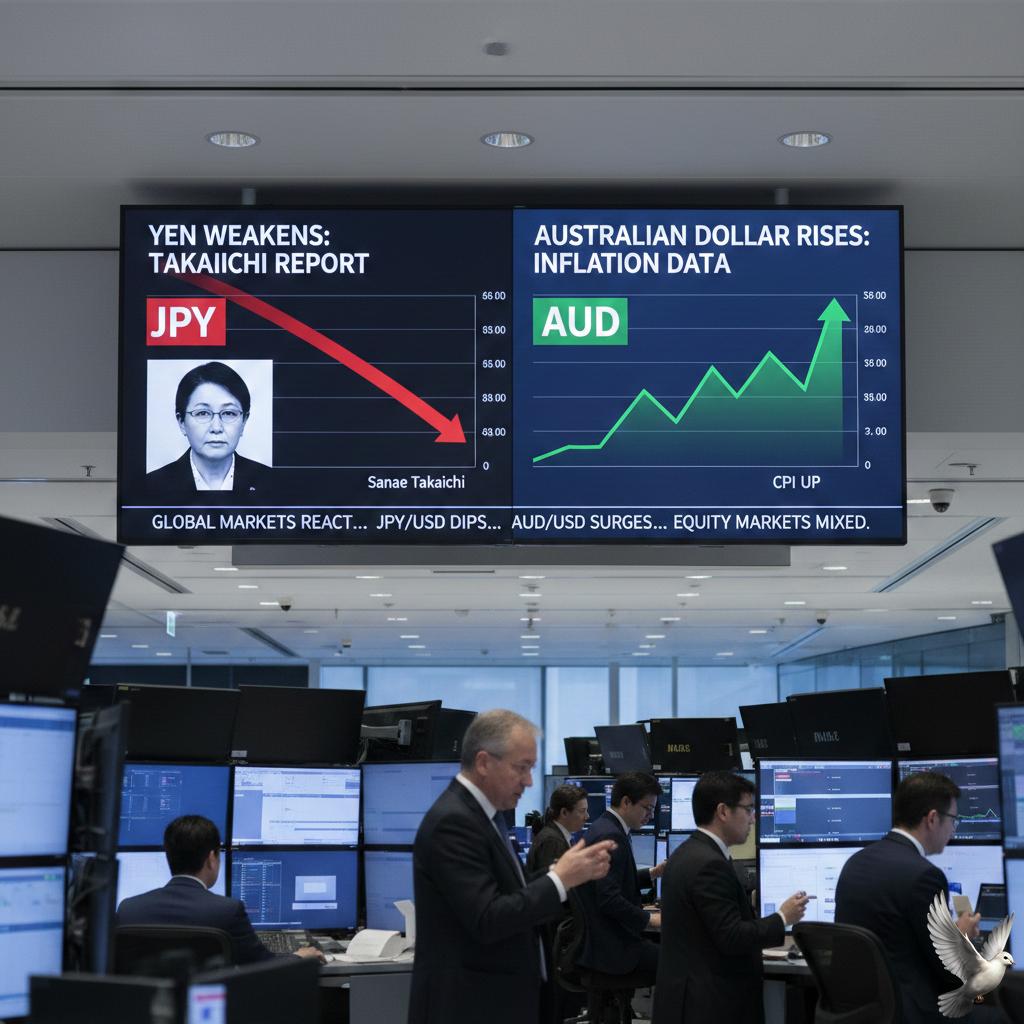
**Yen Weakens Following Takaichi Report While Australian Dollar Rises on Inflation Data**
MARKET BRIEF: CURRENCY & GLOBAL TRENDS The Japanese yen has faced renewed selling pressure, sliding toward a two-week low against the U.S. dollar. This movement follows reports that Prime Minister Sanae Takaichi expressed significant reservations regarding further interest rate hikes during a private meeting with Bank of Japan Governor Kazuo Ueda. **Yen Under Pressure** The USD/JPY pair surged by nearly **1.0%** in recent sessions, testing a key resistance level at **155.88**. Markets have reacted sharply to the potential political friction, with the probability of a March rate hike plummeting to less than **10%**. While the Bank of Japan maintains its official policy rate at **0.75%**, the Prime Minister’s dovish stance contrasts with previous signals from Governor Ueda about gradual normalization. Adding to the yen's woes, recent data showed headline inflation slowing to **1.5%**, providing the central bank with more room to delay tightening. **China and the Yuan** The Chinese yuan has shown resilience, trading near **6.88** against the dollar. The currency is benefiting from a complex trade environment after the U.S. Supreme Court struck down a series of broad tariffs. Although the Trump administration quickly responded by implementing a new **15%** global tariff under different legal authority, the net impact on Chinese goods is currently estimated to be **5 to 8 percentage points** lower than previous peaks. This relative relief has underpinned yuan strength and pressured the dollar's dominance in the region. **Australian Dollar Gains** The Australian dollar continues its robust performance, marking five consecutive weeks of gains to trade around **0.7080**. Domestic factors are the primary drivers, as the unemployment rate remains at a 12-month low of **4.1%**. Traders are now focused on upcoming inflation data, with expectations set for a "sticky" year-on-year print of **3.7%**. This persistent price pressure reinforces the case for a potential Reserve Bank of Australia rate hike, providing a solid yield floor for the currency. **U.S. Political Landscape** Global markets remain in a state of high alert following President Trump’s State of the Union address. While the speech leaned heavily on "America First" priorities and celebrated the country's economic strength, the immediate market reaction was characterized by caution rather than panic. Investors are closely monitoring the shift from judicial setbacks on trade policy to the administration’s new **150-day** temporary tariff window. The U.S. 10-year Treasury yield has softened slightly to **4.03%**, reflecting a market that is still weighing the long-term impact of these renewed trade tensions and the possibility of a "coin flip" Federal Reserve decision in March.

Gold Prices Stabilize Amid Stronger US Dollar
Precious metals are navigating a period of high volatility as gold prices face downward pressure after a historic rally. After touching record peaks earlier in the week, spot gold retracted by 1.02% to trade near $5,172 per ounce. This pullback follows a massive surge throughout February 2025, where the metal rose nearly 9% month-over-month. The primary driver behind the current cooling is a rotation into US Treasuries. Despite a 10% global tariff taking effect today, investors are momentarily prioritizing fixed income. The 10-year Treasury yield is hovering around 4.05%, creating a headwind for non-yielding bullion. Domestic markets show a different trend. In India, 24-carat gold rose slightly to ₹87,880 per 10 grams. This domestic strength is fueled by a weaker Rupee and persistent retail demand. Central banks also remain a solid floor for the market, with institutions like the RBI increasing gold's share in their forex reserves to over 11%. Silver is currently outperforming gold as an industrial hedge. While gold futures dipped, spot silver gained 1.41% to reach $87.79 per ounce. The gold-to-silver ratio has tightened to 58.9, reflecting silver's relative resilience amid shifting trade policies. In the PGM sector, palladium hit a three-week high, climbing over $1,700 per ounce. Supply concerns are mounting due to a preliminary 132% US antidumping duty on certain imports. Platinum saw minor gains, trading at $974.60, as industrial accounts maintain cautious positions. Geopolitical risks remain at the forefront of market sentiment. Global attention is fixed on Geneva, where US-Iran nuclear talks are set to resume this Thursday. The potential for an interim deal is being weighed against the risk of military escalation, keeping the "fear premium" embedded in metal prices. Equities are finding support through persistent AI enthusiasm. The "Magnificent Seven" continue to drive indices higher, even as traditional sectors react to trade frictions. However, rich valuations have sparked warnings of a potential pullback if AI growth does not meet enterprise-level profit expectations soon. Market participants are now looking toward upcoming economic data and central bank commentary. While a stronger dollar typically weighs on commodities, the emergence of a "stagflationary" setup—marked by stalled retail growth and accelerating inflation signals—is decoupling gold from standard interest rate expectations.

US Stocks End Higher as Technology Sector Rebounds
Market Brief: AI Volatility and Indian Tech Recovery Indian equity benchmarks experienced a pivotal session as the **Nifty 50** and **Sensex** navigated a landscape defined by sharp sector rotation. Following a period of intense pressure where the **Nifty IT Index** faced its steepest monthly decline in over two decades—dropping **21%** in February 2026—investors have begun pivoting toward a "buy on the dip" strategy. The recovery is being driven by a decoupling of sentiment. While traditional IT service giants like **TCS** and **Infosys** recently hit 52-week lows due to fears of AI-led disruption, specialized technology and semiconductor-adjacent firms are seeing a surge in demand. Semiconductor and AI Infrastructure Gains The global narrative around artificial intelligence has shifted focus toward hardware and testing infrastructure. **Advanced Micro Devices (AMD)** and **Keysight Technologies** have emerged as major beneficiaries. **Keysight Technologies** shares surged over **15%** to reach all-time highs following a standout Q1 report. The company reported a **23%** revenue increase, fueled by record orders from the AI, data center, and semiconductor sectors. Looking ahead, management has raised its Q2 guidance, forecasting revenue growth of **30%** and an earnings-per-share jump of **35%**. Similarly, **AMD** has maintained a resilient trajectory. Despite intraday volatility, the stock has effectively doubled from its **$110** levels in early 2025 to trade consistently in the **$200–$215** range this month. Domestic Market Dynamics In India, the broader market indices like the **Nifty 50** settled around the **25,424** mark, while the **Sensex** held near **82,225**. Despite the heavy sell-off in legacy IT, which saw the sectoral index plunge nearly **5%** in a single session, other pockets of the market are thriving. * **Nifty Metal Index:** Reached a fresh all-time high, gaining **14.30%** so far in 2026. * **AI-Focused Stocks:** Domestic players like **Persistent Systems** and **Saksoft** continue to attract interest, with Persistent holding a 5-year CAGR of **43.60%**. * **Institutional Shift:** Mutual funds have reduced IT exposure by over **₹70,000 crore**, redirecting capital toward sectors with clearer AI integration paths and stronger domestic cyclicals. Economic Sentiment and Outlook Market volatility remains elevated, with the **India VIX** rising **4.3%** to reach **14.79**. This reflects a cautious but proactive investor base reacting to global triggers, including shifting U.S. trade policies and the rapid deployment of AI coding agents like Claude Code. While the "labour-arbitrage" model of traditional Indian IT faces structural questions, the pivot toward AI infrastructure and high-end digital engineering suggests a selective but strong rebound for firms positioned within the new tech ecosystem.

Asian Markets Rise Following U.S. Technology Sector Gains
Market sentiment across Asia shifted toward a optimistic outlook today as technology shares ignited a regional rally. This upward momentum follows a strong performance on Wall Street, where a rebound in software and chipmaking stocks provided much-needed relief to investors previously concerned about the disruptive impact of artificial intelligence. In the United States, the Nasdaq 100 climbed **1.1%** and the S\&P 500 rose **0.8%**, supported by a notable improvement in consumer confidence. This positive energy spilled into Asian trading floors, where Japan's Nikkei 225 gained **0.87%** and South Korea's KOSPI surged over **2.1%** to reach fresh record highs. The tech-heavy TAIEX in Taiwan also outperformed with a **2.75%** jump. However, the gains were not universal, as Indian benchmark indices like the Sensex plummeted over **1,000 points**, or **1.28%**, due to heavy selling in domestic IT services. Investor attention is now laser-focused on Nvidia, which is set to release its fiscal results on Wednesday, February 25. As the world’s most valuable company on the S\&P 500, Nvidia’s report is viewed as a critical barometer for the entire AI sector. Traders are looking for evidence that the massive spending on AI infrastructure remains on track. While Nvidia shares saw a minor dip of **1.23%** ahead of the announcement, competitors like Advanced Micro Devices jumped roughly **9%** following news of expanded partnerships with Meta Platforms. Sentiment in the software sector was further bolstered by updates from Anthropic. The AI startup addressed recent market anxieties by clarifying that its Claude chatbot is designed to integrate with and assist existing businesses rather than displace them. This "help, not hurt" message triggered a healthy rebound in software stocks, easing fears that AI would render traditional business models obsolete overnight. Analysts note that while the "AI scare trade" caused volatility in recent weeks, the focus has returned to the potential for AI to drive productivity and expansion across new sectors. Broad market indicators remain steady as the global financial community awaits the next set of catalysts. The U.S. 10-year Treasury yield held near **4.03%**, while the dollar index showed slight strength at **97.80**. Gold and oil experienced minor retreats, with gold falling after a four-day gain and Brent crude trading lower for a third consecutive session. Market participants are now balancing the excitement of the tech rally with upcoming economic data, including the latest U.S. inflation prints and policy priorities expected from the State of the Union address. [Nvidia's high-stakes earnings preview](https://www.google.com/search?q=https://www.youtube.com/watch%3Fv%3D0k_2R7V92-I) This video provides a deep dive into the specific expectations and market risks surrounding the upcoming Nvidia earnings report mentioned in the brief.

Flexible Workspace Market Grows Amid Increasing Demand and Multi-City Transactions
Market Brief: India’s Flexible Workspace Surge The Indian flexible workspace sector has transitioned from a niche segment into a central pillar of the nation's commercial real estate strategy. As of early **2026**, the industry is witnessing an unprecedented scale of operations, driven by structural shifts in how global and domestic firms approach physical infrastructure. Market Valuation and Inventory The total stock of flexible office space in India is projected to cross the **100 million square feet** milestone within this year. This represents a significant leap from the **85 million square feet** recorded at the end of **2025**. The market valuation for the coworking and flexible segment is estimated at **$6.81 billion** for **2026**, reflecting a steady annual growth rate of approximately **13.5%**. Driving Forces: GCCs and Enterprises Global Capability Centres (GCCs) have emerged as the dominant demand driver, now accounting for nearly **37%** of all office leasing activity. These international entities, alongside large domestic enterprises, contributed to a record **83.3 million square feet** of gross office leasing in the previous year. Companies are increasingly favoring "Managed Office" solutions over traditional leases to convert capital expenditure into operational expenditure. Large-scale corporate clients now represent over **53%** of the total flexible workspace user base, a sharp increase from the startup-heavy demographics of previous years. Regional Performance and Tier-2 Expansion Bengaluru continues to lead the market with a **24.5%** share of the total flexible office stock. However, the growth story is rapidly diversifying into Tier-2 and Tier-3 cities. Cities such as Jaipur, Kochi, Indore, and Bhubaneswar are experiencing demand growth rates nearly **twice as fast** as traditional metros. This shift is fueled by a growing talent pool in these regions and the rise of "satellite offices" that allow employees to work closer to home. Pricing and Profitability Trends Rental rates in prime hubs like Mumbai’s BKC and Bengaluru have seen a year-on-year increase of **7% to 10%**. Despite rising operating costs, which have inflated by **30% to 50%** due to higher maintenance and energy expenses, operators are achieving better profitability through improved occupancy rates. Occupancy levels in Grade-A flexible centers have stabilized at high levels, often exceeding **80%** in mature micro-markets. This stability is attracting significant institutional investment, with several major operators now pursuing public listings to fund further expansion. Future Outlook The sector is moving toward "premiumization," where the focus is shifting from simple desk rental to providing high-tech, wellness-centric environments. Integrated features like AI-driven room bookings and sustainability-certified interiors are becoming standard requirements for enterprise clients. By **2027**, the flexible workspace inventory is expected to reach **125 million square feet**, cementing India’s position as the most mature and fastest-growing flexible office market in the Asia-Pacific region.

Omnitech IPO: Analysis of Long-Term Growth Potential
Omnitech Engineering is entering the public market with a ₹583 crore initial public offering, structured as a fresh issue of ₹418 crore and an offer for sale of ₹165 crore. The subscription window is open from February 25 to February 27, 2026, with a price band set between ₹216 and ₹227 per share. The company plans to utilize ₹233.5 crore of the fresh proceeds to establish two new manufacturing facilities in Rajkot, Gujarat. Additionally, ₹50 crore is earmarked for the repayment of outstanding borrowings, while ₹18.6 crore will support green energy initiatives through solar panel installations. Financial performance has shown significant momentum. Revenue surged by 92.5% to ₹342.9 crore in FY25, up from ₹178.2 crore the previous year. Profit after tax also saw a sharp increase of 132%, reaching ₹43.9 crore. As of September 2025, the firm reported an order book of ₹1,764.7 crore, providing strong revenue visibility equivalent to five times its FY25 product and services income. The business remains heavily export-oriented, with approximately 79% of H1FY26 revenue derived from international markets, including a 58% concentration in the United States. This global footprint is supported by a strategic warehouse in Houston and repeat business that accounts for over 85% of total orders. Despite growth, the company faces notable financial and operational risks. High customer concentration is a primary concern, as the top 10 clients generated over 56% of revenue in the first half of FY26. Furthermore, aggressive expansion and working capital needs led to negative operating cash flow in FY25, a trend that continues to demand careful liquidity management. The precision engineering sector in India is currently valued at approximately $8.3 billion and is projected to grow at a compound annual rate of 11.6% through 2029. Omnitech’s valuation at a price-to-earnings multiple of roughly 53.3x reflects this growth potential, positioning it as a high-growth but premium-priced entry in the engineering manufacturing space. Investors are monitoring the impact of global trade policies and potential tariffs on the export-heavy model. While the robust order book and diversified industry exposure—spanning energy, motion control, and automation—provide a solid foundation, the geographic concentration of all manufacturing units in Gujarat remains a factor for operational risk assessment.

Pre-Market Analysis and Trading Setup for Today’s Session
Indian benchmark indices faced a significant retreat on February 24, 2026, ending a brief two-session rally as the monthly F&O expiry triggered intense selling pressure. The market was dominated by a sharp downturn in the technology sector, compounded by global trade concerns and domestic derivative adjustments. The BSE Sensex plummeted **1,069 points**, or **1.28%**, to settle at **82,226**. Simultaneously, the NSE Nifty 50 dropped **288 points**, or **1.12%**, closing at **25,425**. This correction wiped out approximately **Rs 4.67 lakh crore** in investor wealth during the single session, reflecting a marked shift in risk appetite. Information Technology was the primary laggard, with the Nifty IT Index crashing nearly **5%** to hit a 30-month low. Major heavyweights led the decline: Tech Mahindra fell **6.60%**, HCL Tech dropped **6.10%**, and Infosys lost **3.91%**. The sell-off was fueled by fears of AI-driven disruption to the traditional labor-arbitrage model and broader uncertainty regarding U.S. trade policies. Global factors played a decisive role in the day's bearish sentiment. New tariff announcements from the United States, including a temporary **15%** tax on imports, rattled emerging markets. Additionally, escalating geopolitical tensions in the Middle East pushed Brent crude prices toward the **$72** per barrel mark, further weighing on the rupee, which hovered near the **91** level against the dollar. Despite the broad-based decline, the Metal index emerged as a notable outperformer, gaining **1.36%** to reach a fresh all-time high. Defensive buying was also seen in select FMCG and PSU bank stocks, though it was insufficient to offset the losses in the tech and financial heavyweights like HDFC Bank and ICICI Bank. Technical indicators suggest the Nifty is currently consolidating below its 100-day exponential moving average. Analysts expect continued volatility as the market awaits India's Q3 GDP data, scheduled for release on February 27. The formation of a bearish candle on daily charts indicates that the index may face further resistance at higher levels in the near term. Institutional activity showed a cautious trend leading into the expiry. While foreign institutional investors (FIIs) had previously injected approximately **Rs 16,912 crore** into the market earlier in the month, the latest session saw aggressive profit booking. Domestic institutional investors (DIIs) continue to act as a cushion, supported by steady SIP inflows of roughly **Rs 30,000 crore** per month.
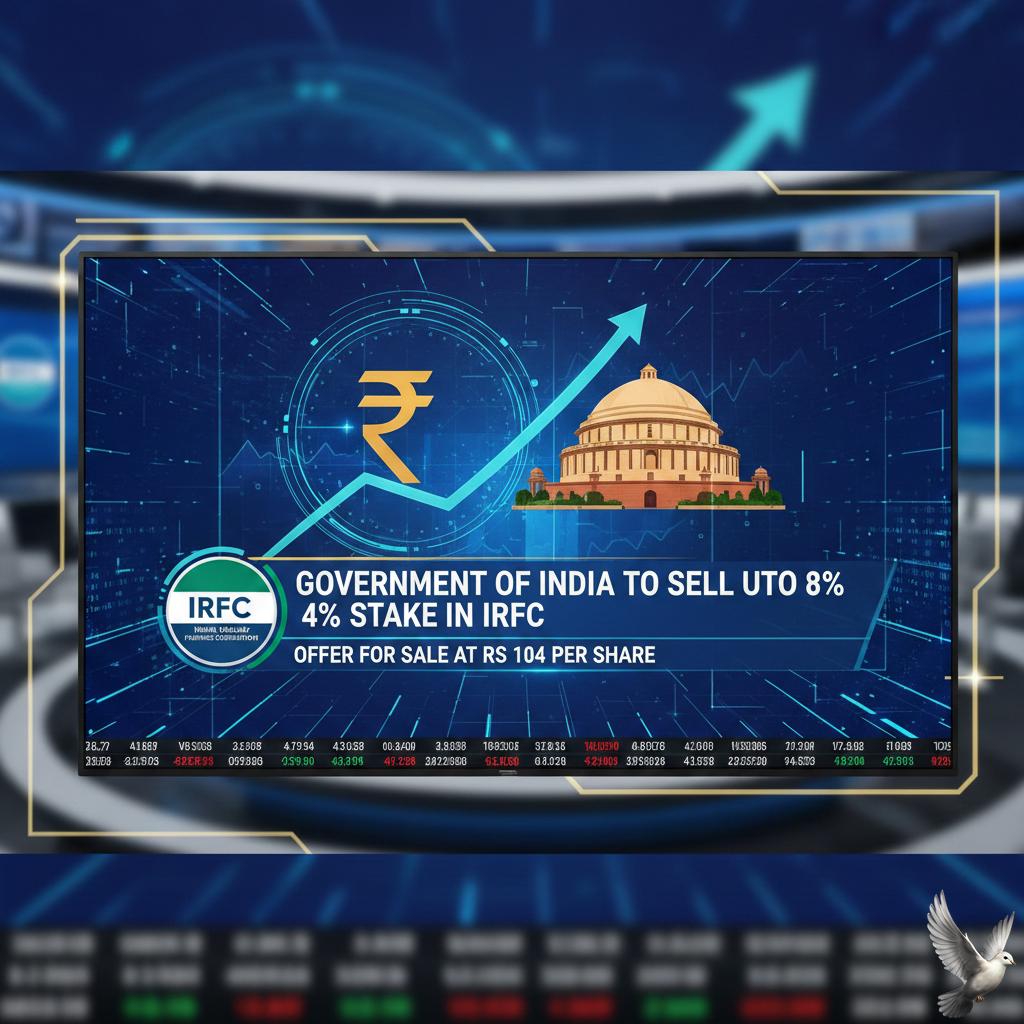
Government of India to Sell Up to 4% Stake in IRFC via Offer for Sale at Rs 104 per Share
The Indian government has officially launched its divestment program for the Indian Railway Finance Corporation (IRFC), aiming to offload a total stake of up to 4%. The offer for sale (OFS) process begins today, February 25, 2026, for non-retail institutional bidders, followed by retail participation tomorrow. This strategic move is expected to generate approximately 5,430 crore for the national exchequer. The offer is structured with a 2% base divestment, involving 26.14 crore shares, and includes a green shoe option for an additional 2% depending on market demand. **Offer Details and Pricing** The floor price for the transaction has been set at 104 per share. This represents a discount compared to the stock's recent market performance, where IRFC shares closed at 109.40 on the BSE just prior to the announcement. The current share price reflects a minor intraday dip of 2.19% as the market adjusts to the increased equity supply. Following a successful sale of the full 4% stake, the government’s holding in the railway financing arm will reduce from 86.36% to 82.36%. **Financial Strength and Performance** IRFC continues to demonstrate robust financial health, recently reporting record-breaking results for the third quarter of the 2025-26 fiscal year. - Net Profit: 1,802.19 crore (up 10.52% YoY) - Assets Under Management (AUM): 4.75 lakh crore - Net Worth: 56,625.41 crore - Dividend Payout: 1.05 per share interim dividend declared recently The company has successfully maintained a zero Non-Performing Asset (NPA) record, reinforcing its status as a high-quality credit institution. Its annual sanction guidance of 60,000 crore was remarkably achieved within the first nine months of the fiscal year. **Strategic Market Context** The divestment comes at a time of significant expansion for the Indian railway sector. The Union Budget 2026-27 recently allocated 2.93 lakh crore for railway capital expenditure, a 10.5% increase over previous estimates. IRFC is evolving its business model through its "IRFC 2.0" strategy. While it remains the primary funding arm for the Ministry of Railways, the corporation is actively diversifying into allied infrastructure. New sanctions worth over 45,000 crore have been directed toward power, renewable energy, and industrial connectivity projects. The market remains focused on IRFC’s role in financing the national high-speed rail corridors and the East-West Dedicated Freight Corridor, which are central to the government’s long-term infrastructure vision.

**Rupee Nears 91 per Dollar as RBI Intervenes to Stabilize Exchange Rate**
The Indian rupee faced notable volatility in recent sessions, settling at **90.95** against the U.S. dollar. The local unit remains under pressure due to a combination of maturing non-deliverable forwards and consistent selling in domestic equities by foreign investors. The Reserve Bank of India has maintained an active presence in the market. Traders report that the central bank intervened strategically to prevent the currency from sliding past the psychologically critical **91.00** mark. This defense is bolstered by India’s foreign exchange reserves, which recently hit a record high of **$725.73 billion**. External factors continue to weigh on the rupee's performance. The U.S. Dollar Index has shown renewed strength, recently trading near the **97.86** level. Simultaneously, Brent crude oil prices have remained elevated, hovering around **$71.68** per barrel. For a major oil importer like India, these higher energy costs increase the demand for dollars, further straining the local currency. Domestic equity markets have mirrored this caution. The Sensex recently saw a sharp decline of over **1,068 points**, closing at **82,225.92**, while the Nifty fell to **25,424.65**. Foreign Institutional Investors (FIIs) have shown mixed activity, with recent data indicating a net sale of approximately **₹102.5 crore** in the equity segment during specific sessions. Market participants are now closely monitoring several global and domestic triggers. These include ongoing trade negotiations and upcoming GDP data. In the bond market, the 10-year benchmark yield recently closed at **6.67%**, reflecting steady demand ahead of scheduled government auctions. The immediate outlook for the USD/INR pair suggests a consolidated range between **90.75** and **91.20**. While robust forex reserves provide a significant safety net, the interplay between global oil volatility and U.S. monetary policy will likely dictate the rupee's trajectory in the coming weeks. [Expert analysis on the Indian Rupee](https://www.youtube.com/watch?v=akn48UBqyDk) This video provides a deep dive into the macroeconomic factors, including debt and liquidity trends, that are currently shaping the Indian investment landscape and currency movements. http://googleusercontent.com/youtube_content/0

IDFC First Bank Remits ₹583 Crore to Haryana Government
IDFC First Bank has officially settled a high-profile financial discrepancy by transferring **₹583 crore** to the Haryana government. This payment covers 100% of the principal and interest claimed by the state after a fraud incident was uncovered at a Chandigarh branch. The bank took this proactive step on **February 24, 2026**, opting for an immediate resolution rather than waiting for the conclusion of ongoing forensic and police investigations. Haryana Chief Minister Nayab Singh Saini confirmed that approximately **₹556 crore** was credited back to government accounts within 24 hours of the resolution process. The incident involved unauthorized transactions totaling nearly **₹590 crore**. Preliminary findings point to a "traditional brand fraud" where a small group of branch employees allegedly colluded with external parties to manipulate government-linked accounts. The bank has already suspended four officials and appointed KPMG to conduct an independent forensic audit. Market reaction to the disclosure was sharp. The bank's stock faced significant pressure, dropping over **16%** in a single session earlier this week before stabilizing. On **February 24, 2026**, the share price closed at **₹70.97** on the BSE, reflecting a minor recovery of **1.33%** following the settlement news. Despite this one-time governance shock, the bank’s underlying financials remain robust. For the third quarter of FY26, IDFC First Bank reported a net profit of **₹503 crore**, a **48%** increase year-on-year. Total customer deposits grew **24%** to reach **₹2.82 lakh crore**, while the CASA ratio remains strong at **51.6%**. The bank maintains a healthy capital adequacy ratio of **16.22%**, providing a substantial buffer to absorb the financial impact of the settlement. While the fraud may hit short-term earnings, management expects a return to a strong profit trajectory from FY27 onwards. The Reserve Bank of India has clarified that the incident is localized and does not pose a systemic risk to the banking sector. The bank continues to work closely with law enforcement and other financial institutions to freeze suspicious beneficiary accounts and recover the diverted funds.

SME Mainboard Transitions Slow Amid Stricter Regulatory Compliance
SME Market Brief: The Mainboard Migration Slowdown India’s SME stock platforms, once a high-speed launchpad for small enterprises to reach the mainboard, are navigating a period of intense regulatory recalibration. Stricter listing norms and enhanced tenure requirements have effectively filtered the pipeline, leading to a sharp decline in successful transitions. As of February 2026, the migration data reveals a stark trend. The number of companies moving from SME platforms to the mainboard has plummeted from a peak of **65** in 2021 to just **3** in 2025. This downturn is largely attributed to new eligibility frameworks that prioritize quality and financial stability over quantity. Enhanced Barriers to Entry Exchanges have implemented a significant "quality check" on emerging firms. Under the revised norms effective since May 2025, a company must now demonstrate a minimum revenue of **₹100 crore** in the previous financial year to even apply for migration. Further raising the bar, the average market capitalization requirement has been hiked from **₹25 crore** to **₹100 crore**. Companies must also show a positive operating profit in at least two out of the three preceding financial years, replacing more lenient EBITDA mandates. Stricter Tenure and Governance The transition timeline has widened considerably. The mandatory listing period on the SME platform is now a minimum of **3 years**, compared to previous years when firms could migrate in under two. Additionally, promoters must maintain at least **20%** shareholding at the time of application, and their holdings cannot fall below **50%** of their initial stake upon listing. This ensures that the leadership remains committed to long-term growth during the transition. Current Market Reality The secondary market for SMEs is currently facing a reality check. In 2026 so far, average returns for SME IPOs have dipped to **-2.4%**, with approximately **60%** of recently listed companies trading below their issue price. While the primary market remains resilient—with **217** SME listings in the latest fiscal cycle mobilizing **₹9,635 crore**—the speculative "mad rush" has cooled. Out of the roughly **25** SME IPOs launched in early 2026, only about **40%** remain above their issue price as of late February. The ecosystem is shifting toward a "reset" phase. While around **350** companies have successfully migrated to the mainboard since the platforms' inception, the current environment demands much higher financial maturity and governance from any small enterprise looking to graduate.

Copper Prices Reach Multi-Session High as China Markets Reopen
Copper prices have surged to their highest levels in over a week, fueled by a resurgence in Chinese industrial activity and a massive wave of demand from the digital infrastructure sector. As of February 24, 2026, benchmark copper on the London Metal Exchange (LME) has reclaimed the **$13,000** per metric ton threshold, with some spot markets seeing prices as high as **$13,200**. The primary catalyst for this rally is the reopening of Chinese markets following the Lunar New Year holiday. Investors have returned with high expectations for manufacturing demand, bolstered by a significant **35%** year-over-year increase in power grid investment by China's State Grid. Total grid spending for 2026 is now projected to hit a record **574 billion** yuan, creating a massive floor for physical consumption. Beyond traditional industry, a new "AI metals frenzy" is reshaping the market. High-density data centers required for artificial intelligence are consuming copper at rates far exceeding traditional tech infrastructure. Analysts estimate that every **1GW** of new data center capacity requires nearly ten times the copper of a conventional facility. This structural shift has pushed prices up by more than **20%** over the last seven months. Supply-side constraints are further tightening the market. Global refined copper production growth is expected to slow to just **0.9%** in 2026, compared to **3%** last year. Major disruptions at key sites, such as the Grasberg mine in Indonesia, have removed roughly **500,000** tons from the global supply forecast. This has led to a projected market deficit of **330,000** tons for the current year. Market indicators show a complex picture. While LME warehouse stocks have ticked up to approximately **241,825** tons, total global inventories remain at critical levels relative to surging demand. Traders are also positioning ahead of potential U.S. tariff implementations, which could introduce a **15% to 25%** levy on refined copper by mid-year. Financial institutions have adjusted their outlooks to reflect this volatility. Citigroup and J.P. Morgan now project copper could reach **$12,500** to **$14,000** per ton in the coming months if supply deficits persist. While short-term corrections are expected, the long-term trend remains bullish as the transition to green energy and digital expansion makes copper one of the most strategic assets in the global economy.

Key Factors Influencing Wednesday's Stock Market Performance
Market Brief: Nifty Technical Outlook The Indian equity benchmarks faced significant downward pressure on **February 24, 2026**, with the **Nifty 50** closing at **25,424.65**, shedding **288 points** or **1.12%**. This sharp decline effectively erased gains from the previous two sessions, as the index slipped decisively below its **21-day Exponential Moving Average (EMA)**. Increased selling was primarily driven by massive long unwinding and a notable tech rout. The **Nifty IT index** plunged over **2%** to **30,849.05** following global concerns over automated tools disrupting legacy software systems. These fears, coupled with new tariff warnings from the U.S. administration, have intensified global risk aversion. Technical Support and Volatility Despite the intraday slide, the Nifty found temporary structural support near its **200-day Daily Moving Average (DMA)**, which currently sits at approximately **25,325**. Market participants are closely watching the **25,400** mark as a "line in the sand"; a sustained break below this level could trigger a deeper correction toward the **25,100–25,250** zone. Volatility has surged, with the **India VIX** hovering around the **14.17** level. While this reflects heightened nervousness, the index remains within a broader consolidation range of **25,300 to 25,750**. On the upside, **25,600** remains the immediate resistance, followed by a major supply wall at **25,800**. Sectoral Trends and Institutional Flows The broader market showed a clear divergence in performance. While IT and Realty faced intense pressure, selective buying was evident in domestic cyclicals. * **Nifty PSU Bank:** Gained **2.11%** * **Nifty Metal:** Rose **1.33%** * **Nifty FMCG:** Advanced **1.71%** Institutional activity remains mixed. While **FIIs** recorded net outflows of approximately **₹638 crore** during the week, **DIIs** have continued to provide a cushion, maintaining a net positive stance for the month. The Indian Rupee also experienced slight depreciation, settling at **90.95** against the U.S. Dollar. This currency fluctuation, combined with the monthly F&O expiry dynamics, is expected to keep the market in a highly reactive state in the coming sessions. Selective stock picking remains the preferred strategy as the index tests its long-term moving averages.

Anthropic Debuts New AI Tools Following Recent Market Volatility Linked to Legal Plug-in Case
Anthropic has launched 10 new business-focused integrations designed to embed its Claude AI directly into professional workflows. This expansion follows a period of high market volatility where traditional software stocks faced significant downward pressure from the rapid rise of agentic AI. The new "plugins" allow Claude to function as a specialist across multiple sectors. Key partnerships include major firms like Thomson Reuters, Salesforce, and FactSet. Following the announcement, FactSet shares rose 3.8%, while Thomson Reuters jumped 8.8%, signaling a shift in investor sentiment toward collaborative AI models. Market data shows that Anthropic’s reach is expanding rapidly. The company recently raised $30 billion in a Series G round, bringing its total valuation to $380 billion. Currently, 8 of the Fortune 10 companies are Claude customers. The number of high-value clients spending over $1 million annually has surged from just a dozen two years ago to over 500 today. The launch of the Model Context Protocol has been a primary driver of this growth. This open standard allows AI to connect seamlessly with external data sources and applications. Since its introduction, it has enabled the creation of tens of thousands of specialized servers, helping businesses move from simple chat interfaces to autonomous "agentic" systems. A major focus of the latest release is Claude Code, a tool for software developers that has seen explosive adoption. Its annualized revenue has grown to $2.5 billion, doubling since the start of 2026. Enterprise use now accounts for more than 50% of this total. Internal data suggests that 4% of all global GitHub commits are now authored by Claude Code. This technological shift is fundamentally altering the software industry. Traditional SaaS providers have seen their valuations hit 10-year lows as investors fear AI will replace human-centric software tasks. Notable declines include Intuit, which has dropped 39% year-to-date, and Salesforce, down 27%. In response, the industry is moving toward usage-based and results-oriented pricing. Projections suggest that the market for agentic AI in enterprise settings will grow from $45 billion in 2025 to $180 billion by 2030. Companies that successfully integrate these tools are seeing productivity gains of roughly 50% and a 33% reduction in human-led task oversight. Anthropic’s latest model, Opus 4.6, is now capable of managing entire categories of work, including generating professional documents and complex financial analysis. As AI becomes more deeply embedded in business infrastructure, the focus is shifting from experimental tools to enterprise-grade systems with strict security and governance standards.
Government to Divest 4% Stake in IRFC via Offer for Sale at Rs 104 Floor Price
Market Brief: IRFC Stake Sale and Sector Outlook The Government of India has initiated a significant divestment move, launching an **Offer for Sale (OFS)** to offload up to **4% stake** in the Indian Railway Finance Corporation (IRFC). The transaction is structured with a base offer of **2% (26.14 crore shares)** and an additional **2% oversubscription option**. This sale is part of a broader strategic plan to raise nearly **₹80,000 crore** via railway PSU stake sales by **FY30**, while also meeting SEBI's minimum public shareholding requirements. Offer Details and Pricing The government has set a floor price of **₹104.00 per share** for the OFS. This represents a discount to the current market price, which closed at **₹109.90** on February 24, 2026. The bidding window follows a tiered timeline: * **February 25, 2026:** Exclusive access for **Non-Retail Investors**. * **February 26, 2026:** Opening for **Retail Investors** and employees. Market Performance and Financials IRFC currently holds a market capitalization of approximately **₹1,43,650 crore**. Despite a recent year-on-year stock correction of about **11%**, the company’s underlying fundamentals remain stable. Key performance indicators for the current period include: * **Q3 FY26 Net Profit:** **₹1,802 crore**, reflecting a **10.5%** growth. * **Dividend Yield:** Maintaining a steady **1.46%**. * **Assets Under Management (AUM):** Approaching **₹5 lakh crore** as the company diversifies into non-railway infrastructure projects. Sector Context: Budget 2026 The timing of the stake sale coincides with a record-breaking **Union Budget 2026-27** allocation for the Ministry of Railways. The government has earmarked a total outlay of **₹2,78,030 crore**, alongside a massive capital expenditure plan of **₹2,93,030 crore**. Investment focus areas include the development of **7 high-speed rail corridors** and the rapid installation of the **Kavach** safety system. These large-scale projects provide a strong long-term financing pipeline for IRFC, supporting its transition from a single-client model to a broader infrastructure ecosystem financier.

HDFC Securities’ Technical Outlook for PNB, OFSS, and Market Strategy
Market Brief: Nifty 50 Faces Technical Pressure The Indian equity market experienced a significant downturn on **February 24, 2026**, as the Nifty 50 dropped **288.35 points** to settle at **25,424.65**. This **1.12%** decline reflects growing anxiety over global trade policies and sector-specific disruptions. The index has now fallen sharply below its **21-day Exponential Moving Average (EMA)**, signaling a shift in short-term momentum from bullish to cautious. The benchmark is currently drifting toward its **200-day Daily Moving Average (DMA)**, which is positioned near **25,324**. This level is viewed as a critical line of defense for long-term investors. A sustained breach below this support could potentially open the doors for a deeper correction toward the **24,918** mark. Technical analysts currently anticipate a period of consolidation within the **25,300 to 25,750** range as the market attempts to absorb recent shocks. Sector Performance and External Triggers The Information Technology sector bore the brunt of the sell-off, with the Nifty IT index crashing **4.74%** to end at **30,053.50**. This rout was triggered by news of advancements in automated coding tools capable of modernizing legacy systems, raising fears about the traditional business models of Indian IT majors. Heavyweights like **Infosys** and **HCL Technologies** saw cuts exceeding **3%** and **2%** respectively. Automotive and Banking sectors also contributed to the drag. The Nifty Auto index slipped **1.37%**, while the broader banking space remained volatile. External pressure intensified following renewed global tariff threats from the **United States**, which introduced a **15%** temporary global tariff. This geopolitical development, combined with a weakening Rupee—trading near **90.95** against the Dollar—has prompted foreign institutional investors to adopt a more defensive stance. Technical Stock Calls **Punjab National Bank (PNB)** Despite the broader market weakness, PNB has shown relative strength. The stock recently closed near **129.59**, marking a move of approximately **2.7%** in recent sessions. Analysts have observed a weekly stochastic crossover, which historically precedes price gains. The bank's loan book growth of **15.34%** year-on-year continues to support a "Buy" sentiment, with technical targets extending toward previous highs of **135**. **Oracle Financial Services Software (OFSS)** In contrast, OFSS has faced significant downward pressure, trading at **6,419.50**, a decline of **3.73%** in a single session. The stock has hit a **52-week low** of **6,399.50** as the IT sector rout deepened. Technical signals indicate a downward price momentum, leading analysts to recommend a "Sell" or cautious approach as the stock struggles to find immediate support. The market breadth remains tilted toward the bears, with over **60%** of the Nifty 500 stocks currently trading below their long-term averages. Immediate resistance for any recovery attempt is now firmly placed in the **25,650 to 25,780** zone.

US Equities Flat Following Anthropic AI Product Launch
Wall Street’s main indexes showed mixed performance this Tuesday as investors weighed a major release of professional-grade artificial intelligence tools against broader economic pressures. Markets are navigating a volatile environment characterized by high valuations and shifting sector sentiment. The Dow Jones Industrial Average fell 821.91 points, or 1.66%, to close at 48,878.61. The S&P 500 slipped 71.75 points, or 1.04%, ending at 6,843.68. Meanwhile, the Nasdaq Composite dropped 303.68 points, or 1.21%, to finish at 24,785.41. Sentiment was heavily influenced by Anthropic's unveiling of 10 new business plug-ins. These tools are designed to automate complex professional tasks, including investment banking deal reviews, private equity analysis, and portfolio management. The release follows recent market anxiety that advanced AI could disrupt traditional software and service-based business models. Despite the broader sell-off, Anthropic’s integration partners saw significant gains. Salesforce shares rose 4%, FactSet climbed 5%, and DocuSign gained nearly 6% following the announcement. These gains provided a moderate cushion for the software sector, which has been under pressure throughout February. In the tech space, major players faced continued headwinds. Microsoft shares fell 3.17% to 384.64, and Meta declined 2.81% to 637.25. Tesla also dropped 2.91%, closing at 399.83. Nvidia managed a slight gain of 0.94% to reach 191.61 as investors look toward its upcoming earnings report later this week. Traditional financial institutions saw notable declines. JPMorgan shares fell 4.20% to 297.75, while Goldman Sachs dropped 3.25% to 892.31. The downward movement in banking stocks reflects concerns over how automated AI tools might impact fee-based services and staffing requirements in high-finance roles. Broader economic factors are also impacting investor confidence. Markets are closely monitoring new tariff policies, which have recently been adjusted to 15% on global imports. This policy shift has contributed to a 10% decline in the S&P 500 from its recent peaks as traders assess the impact on corporate margins and consumer spending. Bond markets and commodities showed varied responses to the ongoing uncertainty. The 10-year Treasury yield held at 4.05%, while Gold fell 1.41% to 5,153.89. Crude oil remained relatively stable, rising 0.83% to 66.86 per barrel. Investors remain in a cautious "risk-off" stance. The CBOE Volatility Index, often referred to as the market's fear gauge, rose to 21.37, reflecting the heightened sensitivity to both technological disruption and macroeconomic policy shifts.

**Schaeffler India Declares Dividend of ₹35 Per Share**
Schaeffler India has reported a significant surge in its financial performance for the fourth quarter ended December 31, 2025. The company announced a 36% year-on-year increase in consolidated net profit, reaching 322 crore. This growth was complemented by a 28% rise in revenue from operations, which climbed to 2,724 crore compared to 2,136 crore in the same period last year. On a sequential basis, the company maintained its upward trajectory with an 11% increase in profit and a 12% rise in revenue over the preceding quarter. This operational strength led the Board of Directors to recommend a final dividend of 35 per share for the financial year 2025. This represents a payout ratio of 46%, up from the 28 per share dividend declared in the previous year. The market responded positively to these results during the February 24, 2026, trading session. Schaeffler India’s share price surged by over 11% to reach 4,084.80 on the National Stock Exchange. The stock hit an intraday high of 4,118, nearing its 52-week high of 4,392. The company's current market capitalization stands at approximately 63,857 crore. For the full year 2025, revenue increased by 16.3% to 9,395 crore, while net profit grew to 1,196 crore. Profit before tax margins improved to 17.2%, up from 16.3% in 2024. These gains were achieved despite a 0.8% margin impact caused by new labor code regulations. Management attributed the success to strong domestic demand and a robust intercompany exports business. The broader automotive sector in India is currently benefiting from a second-half recovery in the 2025-26 fiscal year. This recovery is driven by GST reforms, healthy rural demand, and increased financing availability. While wholesale volumes for passenger vehicles are expected to grow by 5-7% this fiscal, analysts project a normalization to 4-6% growth in the 2026-27 period. Within specific segments, the commercial vehicle market saw a 27% year-on-year jump in January 2026 volumes. The shift toward alternative powertrains, including electric vehicles and hybrids, continues to be a structural theme. Schaeffler remains well-positioned within this landscape, maintaining a nearly debt-free balance sheet and a strong Return on Capital Employed of 29.8%. Investors should note that the dividend payment is subject to shareholder approval at the Annual General Meeting scheduled for April 30, 2026. The stock currently offers a dividend yield of approximately 0.69% at current market prices. Final dividend disbursements are expected to be completed within 30 days of the approval.
SEC Updates Enforcement Procedures and Notice Requirements for Investigation Targets
The U.S. Securities and Exchange Commission (SEC) is undergoing a significant operational shift, modernizing its enforcement protocols to provide more transparency and time for those under investigation. Under the leadership of Chairman Paul Atkins, the agency has implemented a baseline response period of at least four weeks for individuals and firms receiving a Wells notice. This update is part of a broader "back-to-basics" approach that prioritizes due process and clarity. Beyond extended timelines, the SEC now shares more substantial portions of investigative files, including testimony transcripts and key documents, with targets before charges are finalized. This ensures that defendants have a clearer understanding of the evidentiary basis against them. The transition comes during a period of notable decline in overall enforcement activity. Standalone enforcement actions fell to 313 in fiscal year 2025, marking the lowest level in a decade and a 27% drop from the 431 cases filed in 2024. Financial impacts have followed a similar trend, with total monetary settlements decreasing 45% to $808 million—the lowest figure recorded since 2012. Leadership changes have also led to a sharper focus on traditional fraud, such as insider trading, accounting fraud, and market manipulation. Nearly one-third of all enforcement actions in 2025 involved offering fraud or insider trading, up from 26% the previous year. Meanwhile, several high-profile investigations into novel sectors, particularly in the cryptocurrency space, have been closed or dismissed as the agency aligns with new policy priorities. The agency's internal resources are also being reshaped. Staffing levels have seen a 15% reduction, with the total headcount falling to approximately 4,200 employees. The fiscal year 2026 budget request remains flat at $2.149 billion, but it reflects a strategic shift toward a smaller, more centralized enforcement workforce. For market participants, these procedural updates signify a move toward more predictable regulatory outcomes. The formal encouragement of "white paper" submissions—pre-Wells notice documents—allows firms to resolve factual or legal issues earlier in the process. By synchronizing settlement offers with the consideration of collateral waivers, the SEC aims to provide faster resolution and reduce the long-term uncertainty often associated with federal investigations.