Bullish News
Collection
Asian Paints Q3 Financial Results and Market Outlook
Asian Paints reported a consolidated net profit of 1,074 crore for the quarter ended December 31, 2025, marking a 4.8% decline year-on-year. This drop was largely attributed to exceptional items totaling 157.6 crore, which included gratuity-related charges and impairment losses on intangible assets. Despite the bottom-line pressure, revenue from operations grew 3.7% to reach 8,867 crore. Market performance as of February 18, 2026, shows the stock trading around 2,437. The stock has faced significant volatility, losing approximately 10% since the January earnings announcement. High-intensity competition from new entrants like Birla Opus and JSW Paints has weighed heavily on investor sentiment, causing the stock to trade well below its 52-week high of 2,986. Operating margins remained a highlight, expanding to 20.1% from 19.2% in the previous year. This improvement was driven by lower raw material costs, with average crude oil prices trending around 69 dollars per barrel. Sourcing efficiencies and cost-control measures have helped the company maintain profitability even as pricing power remains under pressure due to aggressive discounting in the sector. Domestic decorative volumes grew by 8%, a deceleration from the 11% growth seen in the preceding quarter. The slowdown is linked to an extended monsoon and a shorter festive window, which hampered repainting activity. Additionally, a shift in urban discretionary spending toward travel and hospitality has contributed to a more gradual demand recovery in the core paint business. The industrial segment showed resilience, with the AP-PPG joint venture growing 16.5% and the automotive segment rising 16.9%. International business also provided a cushion, reporting a 6.3% revenue increase led by strong performances in the UAE, Ethiopia, and Sri Lanka. The exit from loss-making operations in Indonesia is expected to further stabilize offshore margins. Looking ahead, management has retained its volume growth guidance of 8–10% for the full fiscal year. The company is betting on market share gains in the waterproofing and home decor segments over the next 12 to 18 months. While the kitchen and bath segments are nearing breakeven, the rise in premium and luxury housing continues to drive demand for high-end construction chemicals. Brokerages have responded by trimming earnings estimates by 1–3% for the 2026–2028 period. Current analyst consensus remains cautious, with target prices adjusted downward to reflect the competitive landscape. Success in the near term will depend on the company's ability to maintain its 18–20% margin corridor while defending its 50% share of the organized market against well-funded rivals.

Pre-Market Analysis: Market Outlook and Trading Setup for the Current Session
Market Brief: Nifty Recovery and Domestic Strength The Indian equity benchmarks demonstrated resilient recovery patterns as of **February 17, 2026**. The **Nifty 50** successfully reclaimed its footing, closing at **25,725.40**, marking a steady gain of **42.65 points** or **0.17%**. This follows a powerful intraday turnaround where the index surged nearly **200 points** from its session lows, effectively snapping a period of brief volatility. Volatility and Sentiment The **India VIX**, often referred to as the "fear gauge," witnessed a significant cool-off. The index dropped by approximately **4.93%** to settle at **12.67**. This decline below the **13** level suggests a substantial reduction in market anxiety and a shift toward calmer trading conditions. Traders are currently eyeing the **26,000** mark as a psychological resistance level, while **25,500** has emerged as a robust immediate support base. Institutional Flow Dynamics Market activity continues to be defined by a "tug of war" between institutional players. Foreign Institutional Investors (**FIIs**) remained net sellers in the cash market, offloading equities worth approximately **972 crore**. Conversely, Domestic Institutional Investors (**DIIs**) acted as a vital cushion, pumping in **1,667 crore**. This consistent domestic support has been instrumental in absorbing foreign outflows and stabilizing the broader indices. Currency and Sector Highlights The Indian Rupee showed strength against the US Dollar, closing at approximately **90.66**. The local currency benefited from a recovery in the secondary markets and a slight dip in global crude oil prices, with **Brent crude** trading near **$67.43** per barrel. * **Top Gainers:** Adani Enterprises (**+2.74%**), ITC (**+2.34%**), and Bharat Electronics (**+1.97%**). * **Sector Performance:** FMCG and Capital Goods led the upward momentum, while the Metal sector faced headwinds due to profit-booking in counters like Hindalco and Tata Steel. The broader market sentiment remains cautiously optimistic as the Nifty maintains its position above the **25,700** threshold. Analysts point to the formation of a bullish candle on the daily charts, suggesting that the momentum remains in favor of the bulls for the upcoming sessions.
Market Update: Maruti Suzuki, Dabur, Info Edge, GR Infraprojects, and Dilip Buildcon in Focus
Indian benchmark indices closed higher on Wednesday, February 18, 2026, as markets successfully navigated expiry day volatility. After an initial period of weakness, the BSE Sensex rose 174 points to settle at 83,450.96. The Nifty 50 followed a similar trajectory, gaining 43 points to end the session at 25,725.40. The recovery was largely driven by a rebound in the IT sector and strong performance in PSU banks. Investor wealth saw a notable increase, with the total market capitalization of BSE-listed firms rising to approximately 470 lakh crore. Corporate Highlights **Maruti Suzuki EV Launch** The automotive major has officially entered the electric vehicle space with the e VITARA. The electric SUV is priced at 10.99 lakh under a Battery-as-a-Service (BaaS) model. Under this structure, the battery cost is separated from the vehicle price. Owners pay a battery usage fee of 3.99 per kilometer. The vehicle offers two battery options, 49kWh and 61kWh, with a maximum claimed range of 543 km. **Dabur Leadership Shift** Dabur India has announced a strategic management restructuring effective April 15, 2026. Herjit S. Bhalla, formerly of The Hershey Company and Unilever, has been appointed as CEO of the India Business. In tandem, current CEO Mohit Malhotra has been elevated to the role of Global CEO. This move aims to blend Dabur's traditional heritage with global consumer-goods expertise. **Infrastructure Gains** GR Infraprojects continues its momentum in the infrastructure segment. The company recently secured a Letter of Acceptance from West Central Railway for a project valued at 1,897.51 crore. This contract involves the construction of a new railway line in Madhya Pradesh. Additionally, the company has set February 19, 2026, as the record date for its interim dividend for the current fiscal year. Sector and Market Trends * **IT Sector:** Major players like Infosys and HCL Tech led the recovery, gaining between 0.5% and 2%. * **PSU Dividends:** February 18 served as the record date for several high-profile dividends, including Coal India (5.50 per share) and HAL (35 per share). * **Foreign Inflows:** Market sentiment is being supported by a stabilization in FII flows and a cautiously optimistic outlook for GDP growth, projected near 7% for the upcoming cycle. The broader market outperformed the benchmarks, with the BSE SmallCap index rising 0.86%, indicating wide-based participation across sectors.

Banks Permitted to Hedge Gold Price Risk via Overseas Markets
The Reserve Bank of India has introduced a major regulatory shift aimed at modernizing how financial institutions handle gold and currency risks. These reforms, detailed in draft directions issued this week, grant banks significantly more freedom to manage price volatility in international markets. Under the new framework, banks participating in the Gold Monetization Scheme and those authorized to handle forward gold contracts can now hedge their price risk using both exchange-traded and over-the-counter (OTC) products in overseas markets. This move is designed to deepen market liquidity and provide domestic lenders with sophisticated tools to navigate global price swings. **Gold Market Performance** The regulatory update comes during a period of sharp correction in the domestic bullion market. After reaching a peak of **₹180,779 per 10 grams** in late January, gold prices have cooled significantly following the 2026-27 Union Budget and a stronger U.S. dollar. * **24K Gold:** Currently trading near **₹156,430 per 10 grams** in major metros like Delhi and Mumbai. * **22K Gold:** Retail rates have settled around **₹143,390 per 10 grams**. * **Silver:** Witnessing higher volatility, closing near **₹260,000 per kg**, down from earlier highs of **₹380,000**. Analysts note that while prices have dropped approximately **15%** from their record highs, the market remains in a consolidation phase. The RBI’s new hedging rules are expected to help banks offer more stable pricing to consumers by offsetting these sharp intraday movements. **Rupee Derivatives and Global Integration** A core pillar of the RBI proposal is the expansion of Rupee-based derivative contracts. Authorized Dealer Category-I banks will now be required to report all foreign exchange derivative transactions involving the Rupee undertaken by their related parties globally. This reporting mandate aims to eliminate "blind spots" in the offshore market, ensuring that price discovery remains transparent and consistent across onshore and offshore platforms. Furthermore, the RBI is moving toward a **24-hour trading** mindset. Banks may now execute trades across approved offshore electronic venues and international financial centers, allowing Indian participants to tap into global liquidity pools outside traditional domestic hours. **Operational Freedom and Risk Safeguards** The central bank is also easing the way banks use their idle foreign currency. New provisions allow lenders to: * Place surplus funds overnight or invest in short-dated overseas government paper. * Extend loans in both Rupee and foreign currency at home or abroad. * Engage in non-deliverable derivative contracts (NDDCs) with offshore counterparties. To maintain stability, the RBI has capped certain activities. For instance, when using option-based hedging products, banks must ensure there is **no net receipt of premium**. Additionally, new credit rules effective **April 1, 2026**, will mandate **100% collateral** for bank funding to market intermediaries, reducing systemic leverage. These combined measures represent a strategic push to integrate India’s financial markets with the global economy while strengthening the internal risk management frameworks of the banking sector.

Indian IT Market Outlook: Brokerage Growth Projections and Sector Forecast
The Indian IT sector is currently navigating a significant structural reset as the rapid rise of Artificial Intelligence (AI) challenges long-standing business models. Market sentiment has been volatile, reflected in a sharp correction of the Nifty IT index, which has declined approximately 15% over the past month and nearly 30% from its recent peak. This sell-off, often described as an "AI scare," resulted in a combined market value loss of 56 billion USD across the sector earlier this February. Brokerage firms Nomura and UBS suggest that while the transition is painful, the market may be overreacting to the immediate threats. Nomura characterizes the current downturn as a "front-loading of pain," where investors are pricing in the decline of legacy service models before the benefits of new AI-driven revenue streams are fully realized. The industry is seeing a fundamental shift in how services are priced and delivered. Traditional time-and-material billing is under pressure from automated efficiency, leading to a rise in outcome-based contracts and risk-sharing models. To defend their long-term value, companies are increasingly moving toward non-linear growth, focusing on proprietary platforms and AI-integrated intellectual property. Key market indicators as of mid-February 2026: The Nifty IT index recently hovered around the 32,738 level, showing signs of stabilization after a two-week rout. Tata Consultancy Services (TCS) saw its market capitalization dip below the 10 lakh crore INR mark, trading near 2,755 INR. Despite the pressure, TCS reported 17.3% quarterly growth in AI services, reaching an annualized revenue run rate of 1.8 billion USD. Infosys is trading at approximately 1,365 INR, with a forward revenue guidance of 0% to 3% for the fiscal year. The company is currently managing over 2,500 Generative AI projects. Wipro and HCL Technologies have faced similar pressures, with Wipro trading around 213 INR and HCL Tech near 1,461 INR. Valuations for these heavyweights are now reaching attractive levels, trading at a 12% to 39% discount compared to their five-year averages. High free cash flows and steady dividend yields, currently ranging between 4% and 5%, are expected to provide a firm floor for stock prices. Operational focus has shifted toward workforce transformation. Major players have already begun upskilling at scale; TCS alone has trained over 350,000 employees in AI capabilities. Analysts believe that firms successfully bridging the "AI adoption gap" for global clients will be the primary beneficiaries of the next growth cycle. While traditional application maintenance—which accounts for nearly one-third of industry revenue—faces a potential 10% to 12% dent over the next few years, the emergence of sovereign AI infrastructure and large-scale data center investments in India offers a new frontier. Government initiatives and partnerships, such as the recent collaboration between TCS and AMD on AI infrastructure, highlight a pivot toward high-capacity hardware and sovereign cloud solutions.
Leverage and Low Base Effect Drive Q3 Brokerage Recovery
Market Brief: Indian Financial Intermediaries Q3 FY26 Indian stockbroking and exchange operations reached a major inflection point in the third quarter of fiscal year **2026**. Record-breaking trading volumes and high-leverage participation across derivatives drove a massive surge in profitability. Exchange Performance Highlights **BSE Limited** reported a standout performance for the quarter ending December **2025**. Consolidated net profit skyrocketed by **174.7%** year-on-year, reaching **₹596.6 crore**. Total consolidated income for the exchange climbed to **₹1,334 crore**, up from **₹829.4 crore** in the previous year. This growth was fueled by a **86%** jump in transaction-led revenue, which hit **₹952.6 crore**. The **National Stock Exchange (NSE)** showed a strong recovery after a volatile start to the fiscal year. Net profit for the quarter rose **15%** sequentially to **₹2,408 crore**. While yearly comparisons remained under pressure, a **15%** growth in equity options volumes signaled a return of retail momentum. Broking and Participation Trends Retail participation remains a primary growth engine. Registered investors on the **BSE** have now reached **23.8 crore**. The average daily notional turnover in equity options on the exchange hit **₹210 lakh crore**, effectively doubling from the **₹105 lakh crore** recorded in the same period last year. Major broking houses are seeing mixed results as operational costs rise. **Angel One** reported a slight **4.5%** dip in net profit to **₹268.7 crore**, despite a **5.8%** rise in revenue. Broking firms are increasingly relying on interest income from margin funding and high-volume leveraged trades to offset rising client acquisition costs. Primary Market and Corporate Services The IPO sector maintained its historic pace. During the quarter, **99** new equity listings were completed across mainboard and SME platforms, collectively raising **₹97,657 crore**. Exchange revenue from services to corporates remained a stable pillar, contributing **₹156.4 crore** for **BSE**. This recurring income provides a crucial buffer against the cyclical volatility of the cash market. Key Financial Indicators * **BSE Net Profit Margin:** Expanded to **45%** from **26%** last year. * **NSE EBITDA Margin:** Recovered to **73%** in Q3. * **IPO Capital Raised (2025):** Reached a record **₹1.76 lakh crore**. * **Total PSB Profits:** Public sector banks saw an **18%** profit jump to **₹52,603 crore**, further supporting market liquidity. Market infrastructure institutions are currently benefiting from high operating leverage. As trading volumes pass critical thresholds, incremental revenue is converting into profit at an accelerated rate. Increased activity in currency derivatives and mutual fund processing platforms continues to diversify the income mix for the sector.

India Inc Projected to Raise $100 Billion Following RBI Relaxation of ECB Norms
In a significant move to bolster the investment landscape, the Reserve Bank of India has overhauled the External Commercial Borrowing (ECB) framework as of February 2026. This policy shift is designed to expand the capital pool for Indian corporations, potentially unlocking up to $100 billion in overseas funding for the 2026-27 period. The central bank has increased the individual borrowing limit to $1 billion or 300% of a company’s net worth, whichever is higher. This is a substantial rise from the previous annual cap of $750 million. The new regulations also simplify eligibility, allowing any non-individual entity incorporated under Central or State Acts to access global debt markets. Pricing restrictions have been largely dismantled. The RBI has removed the rigid all-in-cost ceiling, allowing interest rates on new borrowings to be determined by market conditions. For fixed-rate loans, the benchmark is now tied to the floating rate plus a corresponding swap spread. This change is expected to lower the cost of capital for high-rated issuers and provide better alignment with global credit cycles. End-use permissions have been dramatically expanded. For the first time, ECB proceeds can be utilized for land acquisition, township development, and commercial construction. Companies undergoing restructuring or insolvency resolution are also now eligible to raise funds via the ECB route, providing a critical lifeline for stressed assets. Maturity norms have been rationalized to support varying business cycles. While a minimum average maturity of 3 years remains the standard, manufacturing firms can now raise up to $150 million with shorter maturities of 1 to 3 years. This provides necessary flexibility for managing working capital and short-term operational needs. The broader macroeconomic environment supports this liberalization. India’s foreign exchange reserves stood at $717.6 billion as of early February 2026, providing a robust buffer against external volatility. With the domestic repo rate held at 5.25%, the removal of ECB cost caps allows Indian firms to arbitrage global liquidity more effectively. Operational compliance has been streamlined through the removal of the requirement for Authorised Dealer banks to maintain specific current accounts for ECB transactions. Reporting timelines have also been updated to reduce the administrative burden on corporate treasuries, making the process of raising offshore debt faster and more efficient for large-scale expansions and acquisitions.

Gold and silver prices decline amid subdued physical demand
Precious Metals Market Update: February 2026 Gold and silver markets have entered a sharp corrective phase this month, following record-breaking speculative surges in January. While prices remain high by historical standards, recent sessions have seen a significant retreat as global liquidity shifts. Gold Performance and Domestic Rates Gold prices in India have slipped nearly **16%** over the past fortnight. On the Multi Commodity Exchange (MCX), April futures settled near **₹1.55 lakh** per 10 grams, down from recent peaks of **₹1.80 lakh**. In local retail markets, 24-carat gold is currently trading at approximately **₹15,420** per gram. The 22-carat variant, commonly used for jewelry, has adjusted to roughly **₹14,135** per gram. This correction has been accelerated by a stronger US dollar and a decrease in safe-haven buying. Silver’s Volatility and Correction Silver has experienced a much more dramatic downturn, plunging **38%** from its January highs. After briefly touching an all-time record of **₹4.04 lakh** per kilogram on January 29, prices have now retreated to the **₹2.33 lakh** to **₹2.60 lakh** range. The white metal's sharp decline is attributed to the unwinding of heavy speculative positions and a "liquidity vacuum" caused by the Lunar New Year holidays in China—a major hub for silver demand. Internationally, spot silver is trading near **$74.50** per ounce. Consumer Sentiment and Wedding Demand Despite these double-digit percentage drops, retail buyers remain largely on the sidelines. Market reports indicate that store footfalls have increased, but actual transactions are predominantly limited to essential wedding purchases. Many consumers are adopting a wait-and-see approach, anticipating that prices may decline further before stabilizing. While lightweight jewelry is seeing some movement, high-end luxury purchases have slowed as the market searches for a definitive floor. Global Triggers and Short-Term Outlook Several macroeconomic factors are currently weighing on precious metals: * **Liquidity:** Major Asian markets, including China and South Korea, remain closed for holiday periods, reducing overall trading volume. * **Currency:** The US Dollar Index has strengthened to **104.50**, making dollar-denominated metals more expensive for international buyers. * **Geopolitics:** Preliminary reports of diplomatic discussions in Geneva have slightly eased the geopolitical risk premium that previously supported higher prices. Analysts expect volatility to persist through late February. Support levels for gold are currently eyed near **₹1.52 lakh**, while silver is expected to test the **₹2.28 lakh** mark if the current bearish momentum continues.
SEC Proposes Reduced Executive Compensation Disclosure Requirements
Major regulatory shifts are underway at the Securities and Exchange Commission as the agency moves to simplify the "Frankenstein patchwork" of executive pay disclosure rules. Under Chairman Paul Atkins, the regulator is pivoting toward a principles-based regime designed to reduce compliance costs and eliminate "information overload" for investors. The proposed reforms aim to scale back the volume of data public companies must provide about their top earners. Central to this initiative is a retrospective review of Item 402 of Regulation S-K. Officials have signaled a desire to move away from prescriptive, formula-driven tables in favor of narratives that focus on "material" financial information. Key changes currently under consideration include: **Streamlining Compensation Tables** The SEC is evaluating the consolidation of overlapping tables, specifically the Summary Compensation Table (SCT). One high-priority proposal would merge target pay opportunities with realized outcomes, giving investors a clearer view of whether pay actually aligns with performance. **Raising Disclosure Thresholds** Regulators are looking to increase the **$10,000** aggregate threshold for disclosing perquisites. This move would likely exclude specific executive security costs from mandatory reporting, reflecting a shift in how "business-oriented" security is classified versus personal benefits. **Reducing the "Named Executive" Pool** Pending reforms could clarify and potentially narrow the definitions of "executive officer" and "policy-making function." This would reduce the number of top-tier managers subject to full public disclosure, currently required for the CEO, CFO, and the three other highest-paid officers. **Dodd-Frank Rollbacks** Specific focus is being placed on the "CEO Pay Ratio" and "Pay-Versus-Performance" (PvP) rules. These mandates are viewed by the current commission as overly burdensome. The PvP rule alone requires complex Black-Scholes and Monte Carlo valuations that many argue provide limited utility to the average shareholder. **Small Business Relief** The SEC plans to expand "IPO onramps" and adjust public-float thresholds. These adjustments would allow more mid-sized and emerging companies to qualify for scaled disclosure, shielding them from the heavy reporting requirements typically reserved for large-cap corporations. While the exact timeline for formal rulemaking remains in development, the Commission has already conducted public roundtables to gather industry feedback. Analysts expect the most significant overhaul of compensation reporting since **2006** to materialize throughout **2026**. The broader market impact is expected to be a shift from "compliance-heavy" reporting to a more strategic communication model. Companies are encouraged to begin documenting business justifications for executive benefits now, as the regulator moves toward a framework that emphasizes "plain-English" clarity over technical density.
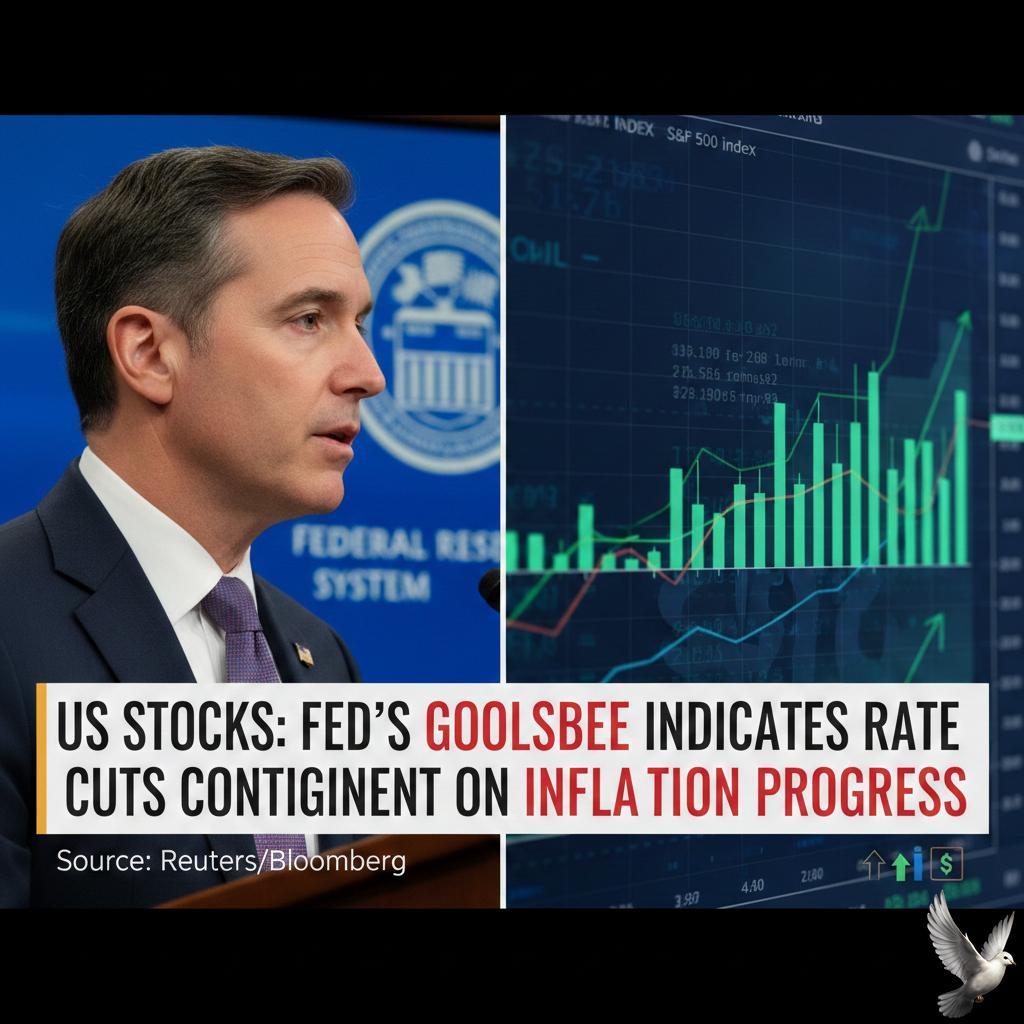
US Stocks: Fed's Goolsbee Indicates Potential Rate Cuts Contingent on Inflation Progress
CHICAGO FED SIGNALS POTENTIAL FOR MULTIPLE 2026 RATE CUTS Chicago Fed President Austan Goolsbee indicated on Tuesday that the Federal Reserve could implement several more interest rate reductions this year. This path depends on inflation resuming its steady decline toward the central bank’s 2.4% target. Recent data shows the annual inflation rate slowed to 2.4% in January 2026, down from 2.7% in previous months. While this marks the lowest level since May, policymakers remain cautious as services inflation is described as not yet tamed. The federal funds rate currently sits at a target range of 3.50% to 3.75% following a pause in January. Markets are pricing in a 90% probability that rates will remain steady at the next meeting on March 18, 2026. Price pressures have eased notably in the energy sector, with gasoline prices falling 7.5% in the latest report. However, food prices remain up 3.1% and natural gas has surged nearly 10%, keeping overall costs elevated for consumers. Goolsbee downplayed recent volatility in consumer price reports, noting that headline figures can be masked by strong service price increases. He emphasized that the Fed needs more evidence of a clear path to its target before moving forward. The labor market remains a key factor in these deliberations. The unemployment rate has stabilized around 4.4%, with January seeing a headline gain of 130,000 jobs. Fed officials view the current economic expansion as solid but are monitoring signs of softening in the tech and manufacturing sectors. A split remains within the central bank. Two governors dissented at the last meeting, favoring an immediate cut to support the labor market. This internal tension suggests that while a pause is the current stance, the door remains open for a pivot later in the year. Investors are now looking toward the March 17-18 meeting for updated economic projections. The "measured and gradual" approach signaled by leadership implies that further easing will likely be back-loaded toward the second half of 2026. [Goolsbee on Rate Cuts](https://www.youtube.com/watch?v=XDznxjCuQWY) This video provides the original interview where Chicago Fed President Austan Goolsbee details the conditions required for several interest rate cuts in 2026. http://googleusercontent.com/youtube_content/0

eToro Profit Surpasses Estimates Amid Strong Market Activity
eToro has surpassed profit expectations for the fourth quarter of 2025, signaling a period of robust growth and strategic evolution for the Nasdaq-listed platform. The company posted a record net profit of $69 million for the quarter, a sharp climb from previous years, and reported total annual revenue of $868 million for 2025. This 10% year-over-year revenue increase highlights the platform’s resilience despite fluctuating volatility in the digital asset sector. Market activity was a primary driver of these results, with net trading income from equities, commodities, and currencies jumping 43% to $115.6 million. This surge was fueled by a significant shift in investor behavior. CEO Yoni Assia noted a "convergence of investment strategies" as crypto-native users began diversifying into traditional commodities like gold and silver. This rotation occurred as investors sought higher volatility in commodities while the crypto market experienced a cooling period in late 2025. Assets under administration (AUA) reached $18.5 billion at the end of December 2025, marking an 11% increase compared to the fourth quarter of 2024. Although AUA dipped slightly from the $20.8 billion peak seen in September 2025, the number of funded accounts grew by 9% year-over-year to reach 3.81 million. This steady growth in user base and managed capital underscores the platform's expanding footprint across Europe and the UK, which remains its largest market. The platform's financial stability is further evidenced by its Adjusted EBITDA, which rose 11% to $87 million in the final quarter. This performance allowed the Board to approve a $100 million increase to its share repurchase program, bringing the total remaining authorization to $150 million. Such a move reflects confidence in the company's "financial super-app" strategy and its ability to maintain a healthy operating margin, which currently stands at 38%. Operational highlights from late 2025 include the successful rollout of extended 24/5 trading for all S&P 500 and Nasdaq 100 stocks. The company is now moving toward 24/7 access for popular assets, aiming to bridge the gap between traditional capital markets and the always-on nature of crypto. With over 12,000 tradable assets currently available, eToro plans to expand this offering to 100,000 assets by the end of 2026. As of early 2026, the company holds $1.3 billion in cash and cash equivalents with zero outstanding debt. This strong liquidity position, combined with a 68% year-over-year increase in money transfer volumes via eToro Money, suggests a growing "flywheel" effect where users engage with the platform for both active trading and long-term wealth management.
Market Outlook: 10 Key Factors for Wednesday's Trading Action
Market Brief: Indian Equities Extend Gains Indian benchmark indices concluded Tuesday, February 17, 2026, with a second consecutive session of growth. The **Nifty 50** settled at **25,725.40**, gaining **42.65 points**, while the **S&P BSE Sensex** rose by **173.81 points** to close at **83,450.96**. The trading day began with initial weakness as benchmarks dropped over **100 points** in early hours. However, a sharp mid-session recovery, supported by heavyweights like **ITC (up 2.34%)** and **Infosys (up 1.88%)**, turned the tide. Technical Resistance and Support The Nifty continues to face significant hurdles near its **50-day moving average (50DMA)**, currently positioned around **25,750 to 25,800**. While the index reached an intraday high of **25,764**, it struggled to maintain levels above this technical ceiling. Support for the Nifty has shifted higher to the **25,570 – 25,600** zone. Technical analysts suggest that as long as the index holds above **25,400**, the broader structure remains positive for a "buy-on-dips" strategy. Volatility and Institutional Flows Market sentiment was bolstered by a sharp decline in the **India VIX**, which dropped **4.93%** to settle at **12.67**. This easing of volatility indicates a reduction in near-term fear and supports rangebound upward movement. Institutional activity remains a tug-of-war. Domestic Institutional Investors (DIIs) acted as primary stabilizers with net purchases of **1,666.98 crore**, whereas Foreign Institutional Investors (FIIs) remained net sellers, offloading equities worth **972.13 crore**. Sectoral Performance and Macro Outlook The rally was primarily driven by the **PSU Bank**, **IT**, and **FMCG** sectors. Financial services also saw selective interest, though **Metal** and **Realty** indices faced selling pressure, slipping by **1%** and **0.3%** respectively. Economic data provided a stable backdrop. India’s retail inflation for January 2026 was recorded at **2.75%** under the new **2024 base year** series. This figure remains well within the Reserve Bank of India’s tolerance band, reinforcing expectations of a status quo on interest rates in the near term. Trade data for January showed exports reaching **$80.45 billion**, a **13.17%** year-on-year increase. However, imports rose faster at **18.76%**, totaling **$90.83 billion**, which widened the merchandise trade gap. Looking Ahead Market participants are focusing on the **25,800** level for the Nifty. A decisive breakout above this resistance could trigger short-covering, potentially pushing the index toward **26,000**. Conversely, failure to breach this level may lead to consolidation within the **25,500 – 25,800** range. Global factors, including the **$68.37** per barrel price for Brent crude and stable US bond yields, are expected to influence the opening of the next session.
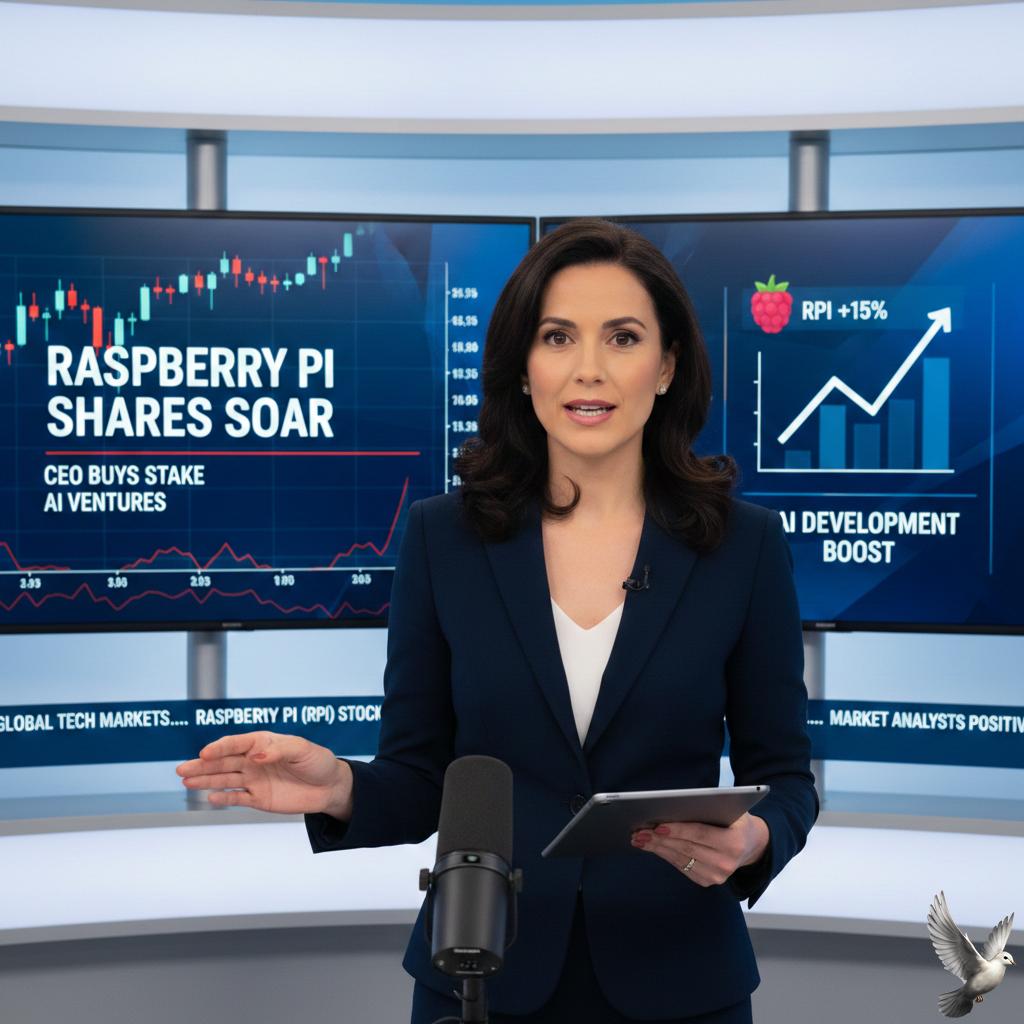
Raspberry Pi Shares Rise Following CEO Purchase and AI Developments
Raspberry Pi Holdings PLC (LSE: RPI) experienced a dramatic market reversal this week, with shares surging as much as **42%** during Tuesday's trading session. This movement represents a record two-day rally for the UK-based hardware firm, effectively halting a consistent downward trend that had characterized the stock's performance since late 2025. The primary catalyst for the recovery was a series of strategic stock acquisitions by CEO Eben Upton. Regulatory filings confirmed that Upton purchased approximately **13,224 GBP** worth of shares at a price near **282 pence** per share on Monday. This follows a broader pattern of insider buying, with Upton and other directors collectively increasing their stakes throughout January and February 2026 to signal confidence in the company’s valuation. The share price reached an intra-day peak of **436 pence** on Tuesday, closing at **411.60 pence**. Despite the recent surge, the stock remains approximately **50%** below its all-time high of **766 pence** achieved last year. Market capitalization currently sits at roughly **827 million GBP**. Investor sentiment is being bolstered by the company’s expanding role in the artificial intelligence sector. Public interest has spiked following the release of the Raspberry Pi AI HAT+ 2, priced at **$130**. This new hardware, powered by the Hailo 10H accelerator, is designed to run vision models and light Large Language Models (LLMs) like Llama 3.2. Analysts noted that social media buzz regarding "low-cost AI" has driven retail interest, as users look for alternatives to more expensive computing platforms. Financial fundamentals remain stable despite operational headwinds. Raspberry Pi reported an adjusted EBITDA of at least **$45 million** for the 2025 fiscal year, marking a **20%** increase over 2024. The company shipped **7.6 million** units in 2025, with **4 million** units delivered in the second half of the year alone. Net cash reserves were reported at **$28 million** at year-end. A significant challenge for 2026 remains the volatility of memory component pricing. The cost of LPDDR4 DRAM has risen sharply as global memory suppliers divert capacity toward AI data centers. While Raspberry Pi maintains inventory buffers and has qualified additional suppliers to mitigate these costs, the company indicated that visibility for the second half of 2026 remains limited. Industrial OEM relationships continue to be the backbone of the business, accounting for **70%** of total demand. For the first time, semiconductor unit volumes are expected to exceed board unit volumes in 2026, marking a shift in the company’s revenue mix toward its proprietary silicon.
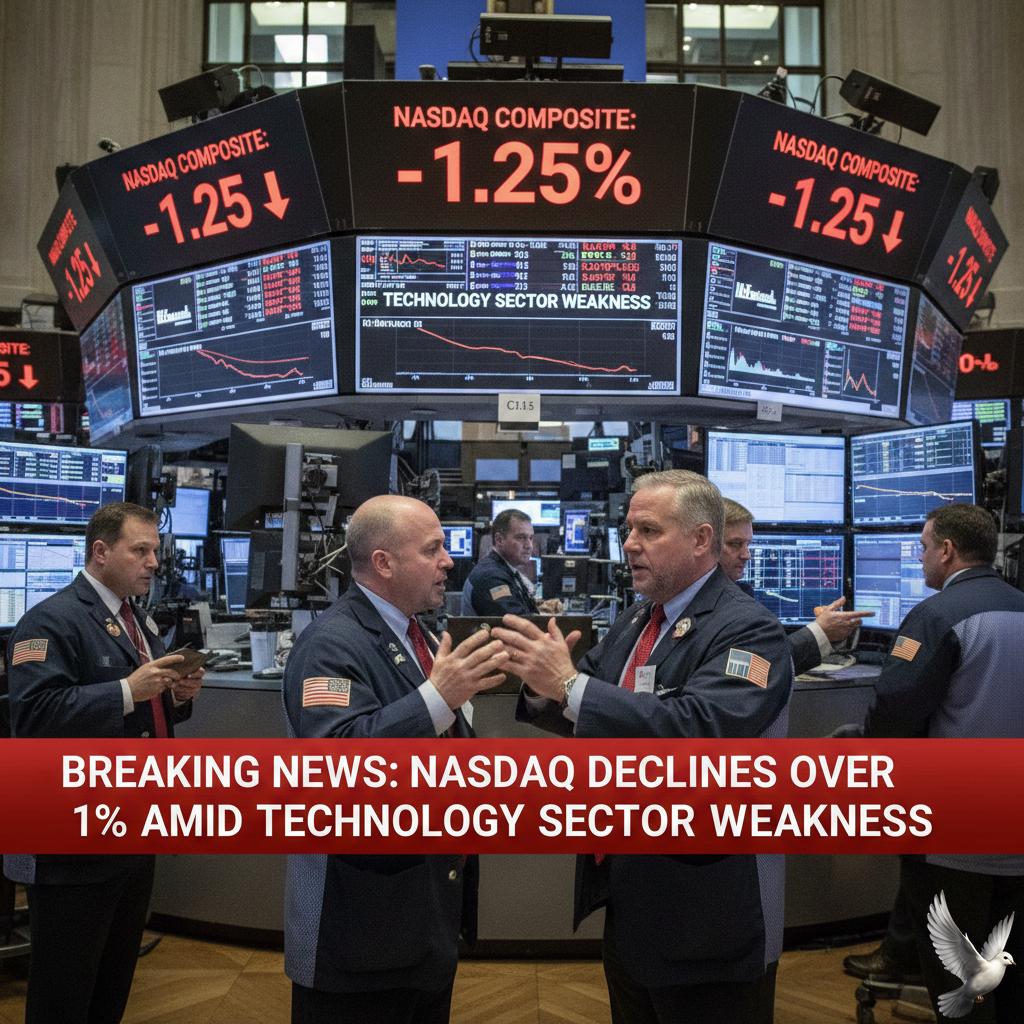
**Nasdaq Declines Over 1% Amid Technology Sector Weakness**
Indian equity benchmarks showed resilience on Tuesday, February 17, 2026, as domestic indices managed to edge higher despite persistent volatility in the global technology sector. The **Nifty 50** closed at **25,725.40**, gaining **0.17%**, while the **S&P BSE Sensex** rose by **174 points** to finish at **83,450.96**. This marked the second consecutive day of gains for the Indian market, adding over **₹1 lakh crore** to investor wealth in a single session. Global Tech and AI Pressure Sentiment remains fragile in international markets as investors reassess the capital-heavy transition to artificial intelligence. In recent trading, **Nvidia** saw its stock price slide by **1.6%** to **$182.81**, while **Microsoft** dipped **1.3%**. The sell-off is driven by a "wait-and-see" approach regarding AI ROI. While Big Tech capital expenditure is projected to exceed **$500 billion** globally in 2026, the immediate revenue gains have yet to match the scale of infrastructure spending. Chinese Competition and Market Shifts Uncertainty is further compounded by rapid advancements in Chinese AI infrastructure. Domestic firms in China have significantly increased their global footprint, with open-source models from the region now accounting for nearly **30%** of global AI usage. Recent technical benchmarks show Chinese models like **DeepSeek V3.2** outperforming established Western counterparts in specific metrics, fueling concerns over a shift in the global competitive landscape and potential hardware oversupply. Domestic Support and Financials The Indian market found stability through its banking and IT sectors. The **Nifty PSU Bank** index surged **2.23%**, leading the gainers as credit demand remains robust. The IT sector also staged a recovery, led by **Infosys**, which rose nearly **2%** following strategic collaborations in the enterprise AI space. Additionally, **Adani Enterprises** climbed **2.7%** after announcing a **$100 billion** commitment to building sovereign AI and renewable energy infrastructure in India. Inflation and Rate Outlook On the macroeconomic front, the Reserve Bank of India (RBI) recently held the repo rate steady at **5.25%**, maintaining a neutral stance. Latest data shows India's annualized inflation rate at **2.75%** for January 2026. While this remains comfortably within the RBI's **2–6%** tolerance band, the central bank is closely monitoring "base effects" that could cause a temporary uptick in the coming months. Markets are now pricing in a cautious wait for the next set of CPI data to determine if the interest rate cycle will shift toward easing later in the year.

LG Electronics and Bank of India Among Top 3 Stock Recommendations for Wednesday with Projected 9% Upside
Market Brief: Nifty Gains Amid AI-Driven Tech Rebound The Indian equity market maintained its recovery path on **February 17, 2026**, marking a second consecutive day of gains. The **Nifty 50** closed higher at **25,725.40**, up by **0.17%**, while the **Sensex** advanced to **83,450.96**. This resilience comes despite a cautious start triggered by a gap-down opening and selling pressure in the metals and realty sectors. The primary driver for the session was a sharp reversal in the **IT sector**, which climbed **1.74%**. This move was fueled by **Infosys**, which surged between **3% and 5%** following a strategic AI partnership announcement. This rebound is particularly notable as the IT index had previously plummeted over **8%** in a single week due to concerns regarding AI-driven revenue erosion. Technical Landscape and Resistance While the index showed strength, it faced immediate rejection near its **50-day Daily Moving Average (50DMA)**, currently placed around **25,750**. Analysts observe that the **Relative Strength Index (RSI)** has entered a bearish crossover, suggesting momentum may be flattening. Immediate support has shifted to the **25,600** zone, with a secondary floor at **25,500**. On the upside, a decisive break above **25,800** is required to trigger short-covering toward the **26,000** psychological level. Sectoral Performance and Institutional Flows **PSU Banks** emerged as the session's standout performers, with the sectoral index rising **2.11%**. Stability in this space, led by **Bank of India**, provided a necessary cushion against volatility in the energy and metal counters. Institutional activity remained mixed. **Domestic Institutional Investors (DIIs)** provided significant support with a net purchase of **₹1,667 crore**, effectively absorbing the **₹972 crore** sell-off by **Foreign Institutional Investors (FIIs)**. Market volatility, measured by the **India VIX**, cooled by nearly **5%** to slip below the **13** mark, indicating a reduction in immediate fear among traders. Short-Term Trading Focus Market experts have highlighted specific opportunities for short-term bullish trades based on technical breakouts: **LG Electronics India** The stock is indicating a trend reversal after breaking out of a falling channel. It is currently trading near **₹1,550**, with technical targets set at **₹1,648**. Momentum is supported by an **RSI** near **60** and steady accumulation volumes. **Bank of India** Trading at **₹171**, the stock hit a **52-week high** during the session. It maintains a strong uptrend characterized by higher highs and higher lows. Analysts set a short-term target of **₹182**, with a protective stop-loss at **₹164**. **MRPL** The stock has confirmed a breakout from a "Cup and Handle" pattern on the weekly charts. It closed near **₹193**, gaining nearly **3.7%** in the latest session. Having moved above its major moving averages, it is projected to reach **₹230** as an initial target, provided it stays above the **₹180** neckline. Broader market sentiment remains cautiously optimistic. While specific sectors like IT and Banking are leading the charge, the failure to clear the **50DMA** hurdle suggests that range-bound movement or minor pullbacks may occur in the coming sessions.

**Carlsberg Considering India Unit IPO to Unlock Shareholder Value**
Carlsberg Group has officially confirmed its intention to explore an **Initial Public Offering (IPO)** for its Indian operations. This move aims to tap into the high-growth potential of the Indian beverage market and unlock significant shareholder value. The Danish brewing giant is targeting a valuation of **₹30,000 to ₹35,000 crore** ($3.6 to $4.2 billion) for its Indian entity. Preliminary reports suggest a potential sale of a **25% stake**, which could raise approximately **$790 million**. Market Performance and Financials Carlsberg India currently holds a market share of **17% to 21%**, positioning it as the third-largest player in the country. It trails behind United Breweries (Heineken) and AB InBev. The business has shown remarkable resilience and growth: * **Net Profit:** Surged **61%** to reach **₹323 crore** in the latest fiscal cycle. * **Sales Revenue:** Grew **15%** to **₹8,045 crore**. * **Volume Growth:** Reported high-single-digit growth in **2025**, outperforming the broader market. Strategic Investment and Expansion The company has designated India as its primary global growth engine, even surpassing China in strategic priority. To support this, Carlsberg has committed **₹1,250 crore** in capital expenditure over the next three years. Key infrastructure projects include: * **₹500 crore** for a new greenfield brewery in Ahilyanagar, Maharashtra. * **₹400 crore** for brownfield expansion at the Hooghly facility in West Bengal. * **₹350 crore** for ongoing projects in Mysuru, including a new canning line with a capacity of **22,000 cans per hour**. Industry Trends and Outlook The Indian beer market was valued at approximately **$9.09 billion** in **2025**. It is projected to reach **$13.66 billion by 2032**, maintaining a compound annual growth rate (**CAGR**) of roughly **6%**. Premiumization is the dominant trend, as rising disposable incomes and urbanization shift consumer preferences toward higher-quality lagers. Lager currently accounts for **95%** of the market share. Regulatory changes are also impacting the landscape. Effective **April 2026**, new excise policies in major states like Uttar Pradesh will see retail prices rise by approximately **7.5%**. However, new licenses for low-alcohol beverage outlets in urban centers are expected to improve accessibility and volume sales for premium brands like **Carlsberg Elephant** and **Tuborg**.

Engineers India Board to Consider Dividend on February 26
Market Brief: Engineers India Limited (EIL) Performance Update Engineers India Limited has reported a standout financial performance for the third quarter of the 2025-26 fiscal year. The state-run engineering consultancy witnessed its consolidated net profit skyrocket to **₹347.17 crore**. This represents a more than threefold increase compared to the **₹108.73 crore** recorded in the same period last year. The surge in profitability was primarily fueled by a significant turnaround in the turnkey projects segment. Revenue from operations climbed **58.3%** year-on-year to reach **₹1,210.2 crore**. While consultancy earnings remained steady, the turnkey business benefited from a one-time contract price adjustment and provision reversals totaling approximately **₹226 crore** following the mechanical completion of a major project. Dividend and Shareholder Returns Following these robust results, the company’s board is scheduled to meet on **February 26, 2026**, to consider a second interim dividend for the current financial year. The record date to determine eligible shareholders has been fixed for **March 6, 2026**. This follows an earlier interim dividend of **₹1 per share** declared in late 2025. Order Book and Market Position EIL's order book has reached an all-time high of approximately **₹15,800 crore**. A key driver of this growth is the company's aggressive international expansion. Overseas contracts now account for roughly **40%** of the total order book and **65%** of fresh order inflows. A landmark **$360 million** contract from Nigeria's Dangote Group for refinery expansion remains a cornerstone of this global portfolio. Stock Market Dynamics Despite the record-breaking quarterly figures, the stock has experienced notable volatility. On February 17, 2026, EIL shares ended approximately **5% lower** at **₹215.25** on the BSE. This decline is attributed to profit booking after a sharp **19% rally** in the preceding trading sessions. The company maintains a strong financial profile with **zero debt** and an improved EBITDA margin, which expanded to **29.1%** this quarter from **12.8%** a year ago. Analysts note that while the recent margin spike was influenced by one-off accounting reversals, the growing international project mix provides strong revenue visibility for the medium term.
Crisil Upgrades Rating for Kissht’s NBFC Arm Ahead of IPO
Digital lending platform Kissht, operated by Onemi Technologies, has reached a significant operational milestone as its NBFC arm, Si Creva Capital Services, secured a credit rating upgrade from CRISIL Ratings. This development, announced on February 17, 2026, reflects the company's sustained business momentum and robust capital positioning. CRISIL has upgraded the company’s long-term rating to A-/Stable from its previous BBB+/Stable. Additionally, the short-term rating has been raised to A1 from A2+. These upgrades also extend to the company's non-convertible debentures, signalling increased confidence in its debt-servicing capabilities. The rating action is underpinned by a substantial expansion in the company's credit book. Assets under management (AUM) surged to **₹5,533 crore** as of September 30, 2025. This represents a significant jump from the **₹4,087 crore** reported at the end of the previous fiscal in March 2025. This growth has been primarily fueled by the strategic expansion of its unsecured personal loan portfolio. Beyond AUM growth, the upgrade highlights Kissht’s improving profitability and healthy capitalisation profile. The rating agency noted the effectiveness of the company’s digital-first lending model, which utilizes disciplined underwriting and automated risk management. These technological strengths provide a substantial capital cushion, which is essential for navigating the current digital finance landscape. This credit upgrade arrives at a critical juncture for Onemi Technologies, as the company recently received SEBI approval for its initial public offering (IPO). The proposed IPO is structured to raise upwards of **₹1,000 crore** through a fresh issue of shares, alongside an offer for sale (OFS) involving **88.79 lakh** equity shares from existing investors. Market data for FY25 shows that Kissht maintains a massive user base of **53.2 million** registered users, having served over **9 million** customers to date. Despite a broader industry slowdown in unsecured lending that saw net profits dip to **₹160.6 crore** in the last fiscal year, the company's pivot toward longer-tenured products and higher-quality borrowers has stabilized its financial trajectory. Proceeds from the upcoming IPO are earmarked to further strengthen the capital base of Si Creva Capital Services. This capital injection is expected to support future lending expansion and the continuous integration of technology-driven credit solutions across the Indian market.

S45 Launches AI Platform for IPO Execution
**India’s Capital Markets Enter AI Era: S45 Launches First Native Investment Banking Platform** India’s capital markets are undergoing a structural shift as S45 operationalizes the nation’s first AI-enabled investment banking platform. Backed by a $5 million raise from RTP Global, this launch addresses a critical infrastructure gap in the world’s most active IPO market. **Market Context & Infrastructure Void** While India led globally with **367 public listings** in 2025, the execution backend remains heavily reliant on fragmented legacy workflows—spreadsheets, email-based disclosures, and manual coordination. S45’s proprietary stack replaces these disjointed models with a unified intelligence layer, offering institutional-grade precision to issuers. **Operational Impact & Speed** The platform introduces "precision banking" by automating data-heavy administrative tasks. Key operational shifts include: * **Drastic Timeline Reduction:** Draft Red Herring Prospectus (DRHP) preparation time is compressed to approximately **7 days**, a process that traditionally takes months. * **Instant Readiness:** IPO readiness assessments are completed in **30 minutes** via AI-led scans. * **Real-Time Governance:** Features include version-controlled disclosure management, automated SEBI query lifecycle tracking, and valuation models linked to live sector comparables. **Performance Metrics: The Pilot Phase** Data from the platform’s pilot deployment highlights significant efficiency gains across **26 IPO mandates** in sectors like aerospace, healthcare, and technology: * **Capital Facilitated:** ₹1,120.8 crore raised. * **Investor Demand:** Cumulative bids totaled **₹3,64,719 crore**. * **Oversubscription:** Average subscription rates hit **168.4x**, with peak demand reaching **325x**. * **Listing Performance:** Issuers recorded an average listing gain of **43.1%** and a 12-month average listing pop of **47.1%**. **Strategic Outlook** This development marks a move from approximation to data-validated execution in Indian capital markets. By combining AI-driven governance with real-time demand analytics, the platform aims to standardize "institutional quality" for issuers, reducing regulatory friction and enhancing post-listing performance transparency. The integration of machine intelligence into the listing lifecycle signals a maturing ecosystem, where technology infrastructure is finally catching up with the scale of India’s public market activity. ... [S45 Introduces AI-Led Investment Banking](https://www.youtube.com/watch?v=xEwrtOxgKfI) This video provides an official introduction to the S45 platform, detailing how it replaces fragmented legacy workflows with a structured operating system for IPO execution. http://googleusercontent.com/youtube_content/0

SBI, L&T, and two others reach 52-week highs with monthly gains up to 16%
The Indian equity markets maintained their upward trajectory today, February 17, 2026, as the benchmark BSE Sensex climbed **173.81 points** or **0.21%** to close at **83,450.96**. This marks the second consecutive session of gains for the 30-share index, which fluctuated between an intraday high of **83,598** and a low of **82,987.43**. The broader market echoed this optimism. The NSE Nifty 50 advanced **42.65 points** to settle at **25,725.40**. Investor sentiment was bolstered by significant buying in the IT, FMCG, and Public Sector Banking sectors, while midcap and smallcap indices outperformed the frontliners with gains of **0.31%** and **0.86%** respectively. Banking heavyweight State Bank of India (SBI) emerged as a standout performer, surging to a new 52-week high of **Rs 1,225.30**. The bank's stock has delivered a remarkable **68% return** over the past year, supported by record quarterly profits and robust asset quality. SBI currently commands a market capitalization exceeding **Rs 11.14 lakh crore**. Larsen & Toubro (L&T) also hit a significant milestone, reaching an all-time high of **Rs 4,287**. The construction giant continues to outpace the benchmark index, recording a **30.49% appreciation** over the last twelve months. Technical indicators suggest strong upward momentum as the stock remains well above its key moving averages. In the telecom and pharmaceutical sectors, Indus Towers and Lupin showed continued strength. Indus Towers traded near **Rs 467**, maintaining a bullish stance amidst increased derivative activity. Lupin and other healthcare counters like Sun Pharma also contributed to the day's gains, reflecting a broader appetite for defensive and growth-oriented stocks. Market participation was supported by Domestic Institutional Investors (DIIs), who remained net buyers with purchases worth **Rs 1,666.98 crore**. This helped offset the selling pressure from Foreign Institutional Investors (FIIs), who offloaded equities worth **Rs 972.13 crore**. Despite a cautious global backdrop and the closure of U.S. markets for a public holiday, the Indian market breadth remained positive. A total of **2,447 shares** advanced compared to **1,756 declines** on the BSE. Volatility, as measured by the India VIX, dropped **4.93%** to settle at **12.67**, indicating a decrease in near-term market anxiety.