Bullish News
Collection
Seven Stocks Report Return to Profitability in Q3 2025
Market Brief: Large-Cap Turnaround Momentum The Indian equity landscape is witnessing a significant structural shift as several high-profile companies transitioned from net losses to profitability in the quarter ending **December 2025**. This "Turnaround Story" highlights a broader trend of operational efficiency and debt reduction across key sectors. Major Turnaround Highlights Seven notable companies from the **Nifty 500** index reported a decisive return to the black. These transitions are marked by substantial swings in their bottom-line figures compared to the same period in the previous year. **Paytm (One97 Communications)** The fintech leader reported a consolidated net profit of **₹225 crore** for the December quarter. This stands in sharp contrast to a net loss of **₹208 crore** recorded in December 2024. The recovery was fueled by a **20%** year-on-year growth in revenue, reaching **₹2,194 crore**, and a surge in merchant device subscriptions. **DLF Limited** India’s largest real estate developer posted a standalone net profit of **₹296 crore**, overturning a loss of **₹166 crore** from a year ago. A key driver was the generation of **₹3,876 crore** in surplus cash, allowing the firm to reach its strategic goal of **zero gross debt**. **CreditAccess Grameen** The microfinance major delivered a net profit of **₹252.09 crore**, a massive leap from the **₹99.52 crore** loss reported in the prior year's corresponding quarter. Key Financial Indicators The overall large-cap segment has shown resilience despite global volatility. As of **February 2026**, profit growth for large-cap firms averaged **8.7%**, while the broader market indices like **Nifty 50** maintained a steady **10.6%** return over the past year. * **Market Indices:** The Sensex is currently trading near **82,626**, while the Nifty 50 holds at approximately **25,471**. * **Volatility:** The India VIX, a gauge of market fear, recently rose to **13.53**, reflecting slight near-term caution among investors. * **Sector Performance:** While IT and Metals faced pressure in early **February 2026**, the Financial Services and Consumer Durables sectors have provided vital support to the benchmarks. Emerging Profitable Giants Beyond the primary turnaround list, new-age companies are hitting critical profitability milestones. **Lenskart** reported a net profit of **₹131 crore**, a massive jump supported by a **38%** rise in revenue. Similarly, **Zomato’s** quick commerce and Hyperpure segments turned EBITDA positive, contributing to a total profit after tax of **₹102 crore** for the quarter. The trend reflects a "structural reset" where firms are prioritizing cost management and sustainable margins over aggressive, loss-making expansion. This shift has reinforced investor confidence, with domestic institutional buying reaching a record high of over **₹7.8 trillion** in the recent cycle.

XED Files RHP for First GIFT City IPO to Raise $12 Million
GIFT City’s financial ecosystem is reaching a major milestone with the launch of its first-ever Initial Public Offering. XED Executive Development, a global leader in executive education, has filed its Red Herring Prospectus (RHP) to raise $12 million through a pioneering dollar-denominated listing. The offering is scheduled to open for subscription in the first week of March 2026. This landmark transaction will see equity shares listed on both the NSE International Exchange (NSE IX) and India International Exchange (India INX). As of mid-February 2026, the broader Indian markets show Nifty levels hovering around 25,600 with the GIFT Nifty indicating early volatility. Meanwhile, the USD/INR exchange rate remains a critical factor for offshore investors, currently trading near the 90.70 mark. XED’s IPO is specifically designed to attract global capital. Under the International Financial Services Centres Authority (IFSCA) framework, the issue is open to Non-Resident Indians (NRIs), foreign portfolio investors, and institutional participants. By using a dollar-denominated structure, the company eliminates rupee volatility for overseas investors, facilitating seamless entry and exit in foreign currency. The capital raised will fund a robust expansion strategy. XED currently serves senior professionals across more than 25 countries, maintaining an operational presence in North America, the Middle East, Southeast Asia, and India. The $12 million proceeds are earmarked to: - Accelerate global program expansion - Deepen academic partnerships with Ivy League and top-tier global universities - Enhance delivery infrastructure across key international markets XED has already built an impressive portfolio, training over 15,000 executives and collaborating with 17 prestigious institutions, including Cornell, Oxford, and INSEAD. Unlike many high-burn edtech firms, XED has maintained a governance-led growth model and reports profitability at both EBITDA and net profit levels. This listing is a litmus test for GIFT City’s ambition to become a global fundraising hub. While the IFSC has successfully hosted debt and derivative products, this first equity IPO from an operating company signals a maturing capital market. The anchor investor portion is expected to close by the end of February, setting the stage for a historic debut in early March.

Fractal Analytics Shares Rise 4% Following Positive Brokerage Initiation
Fractal Analytics Market Update **Current Performance and Valuation** Fractal Analytics shares have demonstrated significant volatility following their market debut on **February 16, 2026**. After listing at a **3% discount** to the issue price of **₹900**, the stock staged a sharp recovery during the following session. Intraday trading on **February 17, 2026**, saw the stock surge over **9%**, reaching a high of **₹921** on the NSE. The company currently commands a market capitalization of approximately **₹17,196 crore**. **Institutional Outlook** The recent price rebound was catalyzed by Prabhudas Lilladher initiating coverage with a **BUY** rating. The brokerage set a target price of **₹1,260**, representing a potential upside of approximately **40%**. Analysts highlight the company's shift from a traditional service provider to a high-growth enterprise AI platform. This transition is supported by a premium valuation, with the stock trading at a price-to-earnings (P/E) multiple of approximately **65x** to **71x** on a trailing basis. **Financial Momentum** Fractal reported total income of **₹2,816.2 crore** for FY25, marking a compound annual growth rate (CAGR) of **18%**. Revenue momentum has continued into the first half of FY26, reaching **₹1,594.3 crore**, a **20.5%** increase year-over-year. Profitability remains a core focus. While the company reported a net profit of **₹220.6 crore** in FY25, margins have moderated slightly in recent months. Adjusted EBITDA margins improved to **17.4%** in the last fiscal year, up from **10.6%** previously. **Key Growth Drivers** The company maintains a high level of revenue predictability with a **98%** client retention rate. Existing accounts contribute nearly **80%** of total revenue. Net revenue retention (NRR) stands at an impressive **121.3%**, signaling deep engagement with global brands. Strategic growth is being driven by the **Fractal Alpha** segment, which focuses on standalone AI businesses. Additionally, the **Cogentiq** agentic AI platform is central to the firm’s long-term product-led strategy. **Strategic Utilization of Funds** From the **₹2,834 crore** raised through the IPO, the company has earmarked **₹355.1 crore** specifically for research, development, and marketing within the Fractal Alpha division. A further **₹264.9 crore** is allocated to debt repayment for its US subsidiary. The firm continues to lean heavily on the North American market, which accounts for roughly **65%** of its total revenue.
Fractal Analytics, Infosys Among Six Stocks in Focus on Tuesday
Indian benchmarks recorded a second consecutive session of gains on February 17, 2026, as the market rebounded from an initial cautious opening. Despite early jitters fueled by geopolitical tensions in the Middle East, strong buying in IT, financial, and consumer goods sectors pushed the indices into positive territory. The BSE Sensex climbed 173.81 points, or 0.21%, to finish the day at 83,450.96. The Nifty 50 followed a similar trajectory, gaining 42.65 points, or 0.17%, to settle at 25,725.40. Both indices have now advanced approximately 1% over the last two trading days, reflecting a steady recovery after recent volatility. The Information Technology sector was a primary driver of the day's momentum. The Nifty IT index surged nearly 2% in response to significant corporate developments. Leading the charge was Infosys, which saw its share price rise 2.79% to 1,403.70. This rally was sparked by the company's announcement of a strategic partnership with the AI safety firm Anthropic to develop industry-specific solutions for regulated sectors. Financial and consumer stocks also provided essential support to the frontline indices. Heavyweight ITC rose 2.34%, while Larsen & Toubro added 1.77%. In the broader market, Fractal Analytics saw significant action following its recent listing. After a weak debut, the stock rebounded sharply by 6% to reach an intraday high of 897.10, bolstered by positive analyst coverage and a long-term growth forecast for the AI-driven analytics provider. Market sentiment remains influenced by a mix of domestic resilience and global headwinds. While domestic institutional investors provided a cushion with net purchases of 1,667 crore, foreign institutional investors remained cautious, offloading equities worth 972 crore. Economic indicators continue to play a critical role in shaping investor outlook. India's headline inflation for January was reported at 2.75%, while WPI inflation stood at 1.81%. Investors are also weighing a widening trade deficit, with January imports rising to 90.83 billion against exports of 80.45 billion. Technical indicators suggest the short-term trend for the Nifty remains bullish as long as it stays above the 25,450 support level. Market volatility, as measured by the India VIX, dropped 4.93% to 12.67, indicating a temporary easing of near-term concerns as the market focuses on corporate earnings and emerging technology partnerships.
India Government Bond Yields Decline Following Strong State Debt Auction Demand
**Market Brief: India Government Bonds & Economy** **Bond Market: Consolidation Amid Supply Pressure** Indian government bonds paused their recent rally on Tuesday, February 17, 2026, trading largely flat as the market absorbed a massive wave of state debt supply. After a bullish streak that saw yields soften by approximately 10 basis points over the last five sessions, the benchmark 10-year bond yield held steady, hovering around **6.67%**. Market participants remained cautious ahead of the results for the state development loan auction, where states aimed to raise an aggregated **₹379 billion ($4.18 billion)**. This marks the fourth consecutive week of state borrowing exceeding ₹375 billion, keeping investor sentiment in check despite favorable global cues. **Global Cues & Economic Indicators** Global tailwinds provided some support, preventing a sell-off. U.S. Treasury yields remained benign, with the 10-year note trading near **4.04%**, following softer-than-expected inflation data that bolstered expectations for Federal Reserve rate cuts. Domestically, the macroeconomic backdrop remains stable. January CPI inflation printed at **2.75%**, comfortably within the Reserve Bank of India’s tolerance band. The central bank has maintained the repo rate at **5.25%**, signaling a neutral stance that continues to anchor short-term expectations. **Currency & Equity Markets** * **Rupee:** The Indian currency showed resilience, trading in a narrow range to close near **90.73** against the U.S. dollar, supported by falling crude oil prices but capped by foreign outflows. * **Equities:** Broader markets extended gains, with the Sensex rising **174 points** to close at **83,450**, and the Nifty 50 settling above **25,725**, driven by strength in banking and FMCG stocks. **Key Takeaways** * **Benchmark Yield:** ~6.67% (Steady) * **State Borrowing:** ₹379 billion target * **US 10-Year Yield:** ~4.04% * **Domestic Inflation:** 2.75% (January) * **Market Sentiment:** Cautious consolidation awaiting auction absorption.

Moustache Group of Hotels Announces Rebrand and 2030 Expansion Targets
The Jaipur-headquartered Moustache Group of Hotels has officially transitioned into a multi-format hospitality powerhouse, moving beyond its decade-long identity as a backpacker-focused hostel chain. Following its 10th anniversary, the group announced a comprehensive rebranding designed to capture a wider share of India's rapidly expanding travel market. The company is now eyeing an aggressive growth trajectory, aiming to operate **100 additional properties by 2030**. This expansion is backed by a target of **₹100 crore in revenue by FY 2027**. The strategy shifts focus from a single-format model to a structured architecture with three distinct verticals: **Moustache Hostels** Continuing the brand’s original mission, this vertical remains social and community-driven, targeting the backpacker and solo traveler segment. **Moustache Select** A comfort-first category designed for families, professionals, and value-focused travelers. This mid-market segment is currently the fastest-growing in Indian hospitality. **Luxuria by Moustache** A premium vertical catering to boutique and experiential luxury stays, focusing on high-value guest experiences in unique locations. The group’s current portfolio includes **20 hostels, 10 mid-market hotels, and 8 boutique luxury stays**. To reach its long-term goals, Moustache plans to add **50 new properties by 2028**, with a heavy emphasis on northern tourist hubs like Kasol, Shimla, and Manali. The rebranding comes at a pivotal time for the Indian hospitality sector. Market data for early 2026 shows a shift toward high-value, domestic-led demand. Pan-India hotel occupancy is stabilizing in the **72% to 74% range**, while average room rates (ARR) for premium stays have climbed to between **₹8,200 and ₹8,500**. Industry analysts highlight that the mid-scale segment is currently the most resilient, with a projected requirement for **3 million additional rooms by 2030**. Moustache’s pivot aligns with this trend, as the company expects its Select and Luxuria verticals to drive nearly **50% of its total revenue** in the coming years. The broader market environment also reflects new tailwinds. The Union Budget 2026 has introduced a National Institute of Hospitality to address talent shortages and focused on developing **50 strategic destinations**. With domestic travel now accounting for over **85% of total hotel demand**, the group's focus on diversifying beyond traditional hostels allows it to mitigate market confusion and capture higher margins in the premium and mid-range sectors.

IIFL Finance Fully Subscribes Rs 500 Crore Bond Base Issue
IIFL Finance NCD Market Update IIFL Finance Limited launched its Tranche I public issue of secured, redeemable non-convertible debentures (NCDs) today, February 17, 2026. The offering saw immediate market traction, with the **500 crore INR** base issue being fully subscribed within the first few hours of the opening bell. The company has the option to retain oversubscription up to a total of **2,000 crore INR** through a green-shoe mechanism. As of mid-afternoon today, total subscriptions reached **1.18 times** the base issue, driven heavily by institutional and non-institutional investors. Institutional demand led the surge at **2.00 times** their allotted quota, followed by non-institutional investors at **1.71 times**. Retail participation stood at **0.23 times**, with the issue scheduled to remain open until March 4, 2026, unless closed earlier due to high demand. Terms and Yield Structure The NCDs offer effective annual yields ranging from **8.70% to 10.25%**, significantly outpacing current standard bank fixed deposit rates. Investors can choose from tenors of **24, 36, and 60 months** with monthly, annual, or cumulative interest payout options. The highest yield of **10.25%** is available on the 60-month series. The minimum investment is set at **10,000 INR** (10 NCDs at 1,000 INR face value each), making it accessible to a broad retail base looking for fixed-income diversification. Financial Health and Ratings This debt raise is backed by a strong credit profile. CRISIL has assigned an **AA/Stable** rating, while Brickwork Ratings has provided an **AA+/Stable** outlook. These ratings indicate a high degree of safety regarding timely servicing of financial obligations. For the third quarter of FY26, IIFL Finance reported a profit after tax of **501.3 crore INR**, contributing to a nine-month profit of **1,193.5 crore INR**. The company’s consolidated Assets Under Management (AUM) reached **98,336 crore INR** as of December 31, 2025. Asset quality remains stable with Gross Non-Performing Assets (GNPA) at **1.60%** and Net NPAs at **0.75%**. Approximately **83.6%** of the total loan portfolio is secured by collateral, providing a safety net for debt holders. Market Context and Equity Performance On the equity side, IIFL Finance shares traded at **518.70 INR** today, marking a gain of approximately **4.75%** in the Tuesday session. The company currently holds a market capitalization of approximately **21,953 crore INR**. Proceeds from this NCD issue are earmarked for onward lending, refinancing existing debt, and general corporate purposes. This strategic move comes as the Indian NBFC sector is projected to hit **50 lakh crore INR** in assets by March 2027, with gold and MSME loans driving the current growth cycle.

Rupee Closes Flat Amid Reported RBI Intervention Offsetting Dollar Demand
**MARKET BRIEF: RUPEE STABILIZES AMID RBI INTERVENTION** The Indian rupee showed resilience on Tuesday, February 17, 2026, ending the session largely unchanged. This stability was driven primarily by suspected intermittent intervention from the Reserve Bank of India (RBI). The central bank’s presence in the market successfully blunted aggressive dollar bids from corporate entities and interbank participants, preventing the currency from sliding toward the psychologically significant 91.00 mark. The rupee opened at 90.72 against the U.S. dollar and fluctuated within a narrow range, eventually settling near 90.73. Market sentiment was supported by a slight retreat in global crude oil prices, with Brent crude trading down 0.47% at $68.33 per barrel. However, a stronger greenback and continued outflows from foreign institutional investors (FII) acted as a ceiling for any significant appreciation. **KEY ECONOMIC INDICATORS** Inflation data released this week highlights emerging domestic pressures. Wholesale Price Index (WPI) inflation jumped to a multi-month high of 1.81% in January, up from 0.83% in December. This surge was primarily fueled by rising costs in food and manufactured items. Retail inflation also climbed to 2.75% in January under a newly revised consumer price index (CPI) series. While this remains within the RBI’s target range of 2% to 6%, the upward trajectory suggests that the central bank may maintain a hawkish stance, potentially keeping interest rates on hold for an extended period through 2026. **EQUITY AND CAPITAL FLOWS** The domestic equity market faced downward pressure on Tuesday. The Sensex declined 245.87 points to close near 83,031.28, while the Nifty 50 dropped 106.45 points to 25,576.30. This cautious sentiment was exacerbated by FIIs offloading equities worth approximately ₹972.13 crore. Domestic institutional investors (DIIs) continue to act as a vital cushion, absorbing much of the foreign selling with net purchases exceeding ₹1,667 crore. Despite the current volatility, India's trade fundamentals show mixed signals; while exports rose marginally to $36.56 billion in January, the trade deficit widened to a three-month high of $34.68 billion. **OUTLOOK** The rupee is expected to remain in a consolidated range between 90.50 and 91.20 in the near term. Traders are closely monitoring the dollar index, which currently stands at 97.14, and the upcoming India-France defense dialogue for potential impacts on regional sentiment. The RBI’s proactive strategy of selling dollars before market hours has effectively signaled a floor for the currency, deterring speculative short positions. Market participants will focus on the next set of employment data and global central bank commentary to gauge the long-term direction of the USD/INR pair.

Sensex Rises 174 Points as Nifty Gains for Second Session Amid Strength in IT and PSU Banks
Benchmark indices staged a resilient recovery on Tuesday, reversing early session jitters to finish in positive territory. Despite a weak start triggered by a widening trade deficit and rising inflation data, the market found strong buying interest at lower levels. The Sensex advanced 174 points to settle at 83,451, while the Nifty 50 climbed 43 points to close at 25,725. This marked the second consecutive session of gains for the frontline indices, signaling a steady shift in short-term momentum. Public Sector Undertaking (PSU) banks and Information Technology (IT) stocks were the primary architects of the rebound. The Nifty PSU Bank index surged 1.50% to 9,304, led by a strong performance from State Bank of India, which traded near 1,206. The IT sector followed closely, with the Nifty IT index rising over 2% to 33,397. Key individual gainers included Infosys, which jumped more than 2.8% following a strategic global collaboration, and ITC, which added 2%. On the flip side, selling pressure was evident in the metals and realty sectors, while Tata Steel and Mahindra & Mahindra were among the notable laggards. Broader markets significantly outperformed the benchmarks. Mid-cap stocks grew by 1.6%, while the small-cap segment saw a robust jump of 2.9%. This positive market breadth saw 2,391 advancing stocks against 1,680 declining ones on the BSE. Technical analysts noted that the Nifty successfully defended the crucial 25,600 support zone. Sustaining above this level is considered vital for maintaining the current pullback, with immediate resistance now positioned at the 25,800 to 25,850 range. Macroeconomic indicators provided a mixed backdrop. India’s total exports for January 2026 grew by 13.17% to reach 80.45 billion dollars. However, the trade deficit remains a point of caution, alongside WPI inflation which hit a 10-month high of 1.81%. In the currency market, the rupee closed steady at approximately 90.70 against the US dollar. Gold prices saw a downward correction, falling over 1% to trade near 152,500 per 10 grams on the MCX. Institutional activity showed a continuing trend where domestic institutional investors (DIIs) absorbed selling pressure from foreign institutional investors (FIIs). On the previous day, DIIs infused 1,667 crore into equities, counteracting 972 crore in FII outflows. Global cues remained relatively muted as US markets were closed for a holiday, though Asian markets showed mixed results. Market participants are now closely monitoring geopolitical developments and upcoming economic data for further direction.
PhonePe’s $15 Billion IPO Valuation and Its Potential Impact on Paytm’s Market Rating
Market Brief: PhonePe IPO and Fintech Sector Re-rating PhonePe has solidified its path toward a landmark public listing, filing an updated draft prospectus that positions the company for a **$15 billion valuation**. The offering is expected to be India’s largest tech IPO since late 2025, targeting a capital raise of approximately **$1.5 billion** (₹13,500 crore). The listing is structured as a 100% Offer for Sale (OFS), primarily providing liquidity to existing backers. Walmart, which holds a **71.77% stake**, plans to offload about **9%** of its holdings. Early investors Tiger Global and Microsoft are expected to fully exit their positions through this transaction. Ecosystem Dominance and Performance The company continues to lead the Unified Payments Interface (UPI) ecosystem with a **48.3% market share** as of early 2026. This scale is supported by a massive user base of **657.56 million registered users** and a network of **47.19 million registered merchants**. Recent financial data shows rapid expansion beyond basic payments: * **Revenue:** ₹7,115 crore for FY25, a **40% year-on-year increase**. * **Segment Growth:** Financial services distribution (loans, insurance, and wealth) now accounts for **13% of revenue**, up from **4%** a year ago. * **Profitability:** While still reporting a net loss of **₹1,444 crore** for H1 FY26, the company turned free cash flow positive in the previous fiscal year. Strategic Impact on Paytm The IPO is expected to trigger a significant valuation re-rating for its closest listed rival, Paytm. Macquarie analysts note that PhonePe’s $15 billion target implies a valuation of **37–43x** its adjusted revenue. This creates a sharp contrast with Paytm, which currently trades at approximately **19x revenue**. This valuation gap persists despite Paytm achieving Ebitda-positive status, while PhonePe remains Ebitda-negative. The upcoming listing will likely force investors to recalibrate how they value growth-heavy UPI leaders versus established players focusing on bottom-line profitability. Emerging Sector Challenges A critical factor for the 2026-2027 outlook is the NPCI's proposed **30% market share cap** on UPI transactions, slated for implementation by December 31, 2026. Given PhonePe’s current **48% share**, this regulatory ceiling represents a potential headwind for incremental user acquisition. The fintech landscape is also shifting toward tighter compliance and "clean" earnings. Market sentiment is increasingly favoring companies that include employee stock option (ESOP) costs in their profitability metrics, a trend that is becoming a benchmark for the next wave of Indian fintech listings.

Infosys-Anthropic Partnership Reframes Artificial Intelligence Outlook for Indian IT Sector
Infosys shares have surged up to 5% following a breakthrough collaboration with AI pioneer Anthropic. This strategic move has successfully countered market anxieties that generative AI would displace traditional Indian IT services. The partnership integrates Anthropic’s Claude models with the Infosys Topaz platform. Together, they are developing agentic AI solutions designed specifically for highly regulated industries. This pivot effectively transitions the industry narrative from AI as a threat to AI as a primary growth engine. **Market Context and Performance** The recent stock rally follows a volatile period where the Nifty IT index experienced a sharp 5% correction earlier in February 2026. During that session, nearly 1.3 lakh crore in market value was erased due to fears of AI-led disruption. Infosys has specifically countered this trend by raising its FY26 revenue growth guidance to 3–3.5% in constant currency terms, up from an earlier forecast of 2–3%. Despite a marginal 2% year-on-year dip in Q3 net profit to 6,654 crore, revenues rose 9% to 45,479 crore. **Key Financial Indicators** - Share Price: Rebounded to approximately 1,365.60 after a low of 1,281.50 - Market Cap: Stands at approximately 5.54 lakh crore - Revenue Guidance: Upgraded to 3.0% – 3.5% for FY26 - Operating Margins: Maintained at a steady 20% – 22% - Buyback Price: Set at 1,800 per share, offering a significant premium **Strategic Focus on Agentic AI** The collaboration initially focuses on the telecommunications sector through a dedicated Center of Excellence. Plans are already in motion to expand into financial services, manufacturing, and software development. Unlike standard chatbots, these agentic AI systems are built to independently execute complex, multi-step tasks. Use cases include automating insurance claims processing, generating enterprise-grade code, and managing real-time compliance reviews. **Sector Outlook** The Indian IT sector is projected to reach a 350 billion dollar valuation by 2026. This growth is increasingly driven by "intelligence arbitrage" rather than simple labor cost savings. While global tech stocks remain volatile, the stabilization of Infosys indicates a structural reset. Analysts remain largely positive, with over 60% maintaining a "Buy" rating. The focus has shifted toward high-margin AI integration and the modernization of legacy systems. [Infosys and Anthropic Partnership Details](https://www.youtube.com/watch?v=jzsYXb7J8uA) This video provides additional context on the financial results and management commentary that helped stabilize investor sentiment following the AI collaboration announcement. http://googleusercontent.com/youtube_content/0
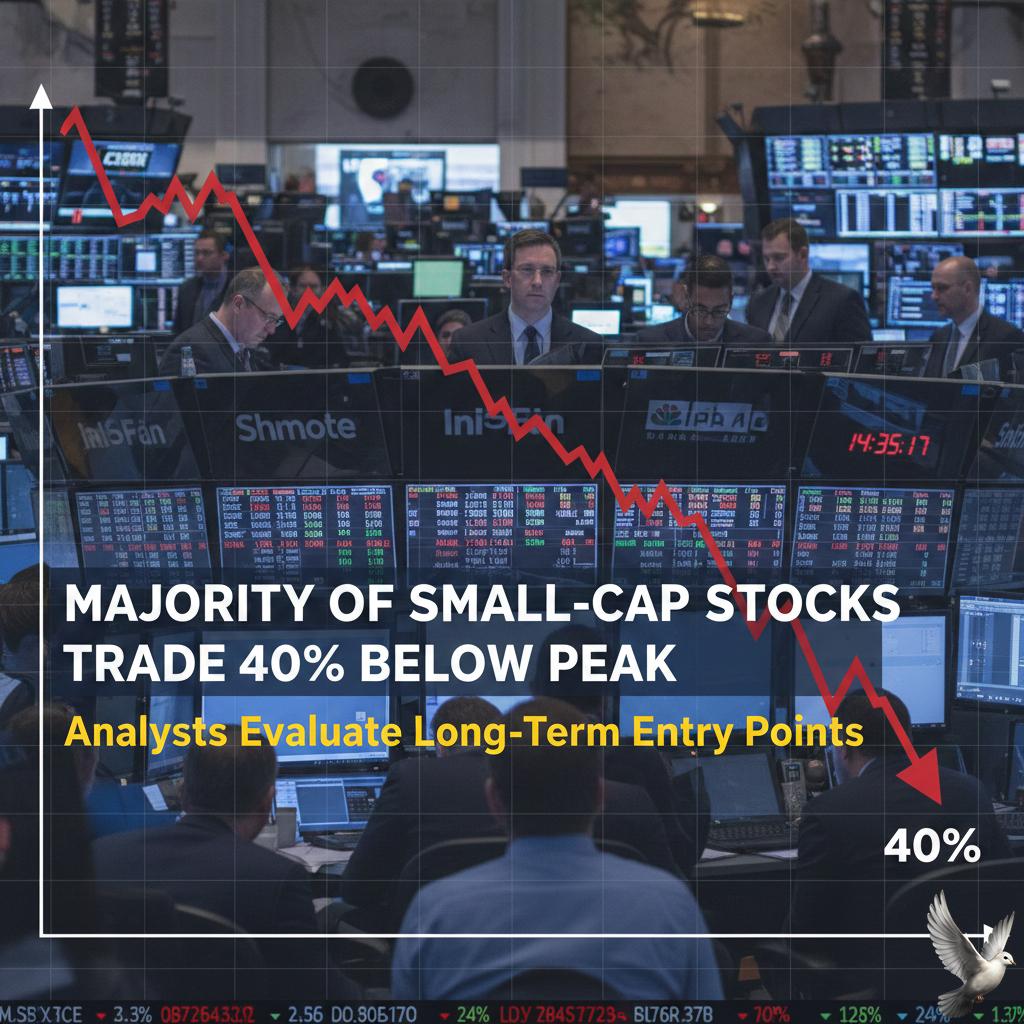
Majority of Small-cap Stocks Trade 40% Below Peak as Analysts Evaluate Long-Term Entry Points
Market Brief: India Smallcap Recovery The Indian smallcap segment is entering a pivotal recovery phase following a significant valuation reset. As of February 17, 2026, the **Nifty Smallcap 100** has demonstrated a sharp reversal, surging over **6%** in the first nine sessions of the month. This follows a challenging 2025 where the index declined by **7%**, its worst showing in three years. Valuation and Correction Data Current market analysis from Abakkus Mutual Fund and broader exchange data reveals that nearly **50%** of smallcap stocks are still trading more than **40%** below their previous peaks. The **BSE Smallcap Index** is currently positioned at **49,081**, maintaining a **3-year return of nearly 67%** despite recent volatility. While the segment faced deep risk aversion in late 2024 and throughout 2025, the current **Price-to-Earnings (P/E) ratio** for the **Nifty Smallcap 250** has cooled to approximately **26.3**. Approximately **36%** of the smallcap universe—representing a market capitalization of **₹16 lakh crore**—is now classified as fair or undervalued. Shifting Sentiment and Capital Flows A decisive shift in global trade sentiment, catalyzed by new trade agreements with the US and EU, has revived risk appetite. Foreign Institutional Investors (FIIs) have transitioned into net buyers in February 2026, easing the supply overhang that plagued the market last year. Institutional conviction remains high for the long term. Smallcap earnings growth for the upcoming cycle is projected at **22%**, significantly outperforming the **14-15%** expected for largecap peers. This earnings momentum is a critical driver for the "bottom-up" accumulation strategy currently favored by fund managers. Key Performance Trends * **Intraday Momentum:** High-conviction picks like Goodluck India surged over **7%** today, outperforming the Sensex significantly. * **Sectoral Strength:** Industrial engineering, capital goods, and chemicals are leading the recovery, supported by a renewed capital expenditure cycle. * **Market Breadth:** Recent sessions show a strong advance-decline ratio of over **3.0x**, indicating that gains are broad-based rather than limited to a few outliers. The prolonged correction has successfully bridged the gap between stock prices and business fundamentals. For investors, the current landscape offers a strategic window to accumulate quality assets at valuations that had become inaccessible during the speculative peaks of 2024.
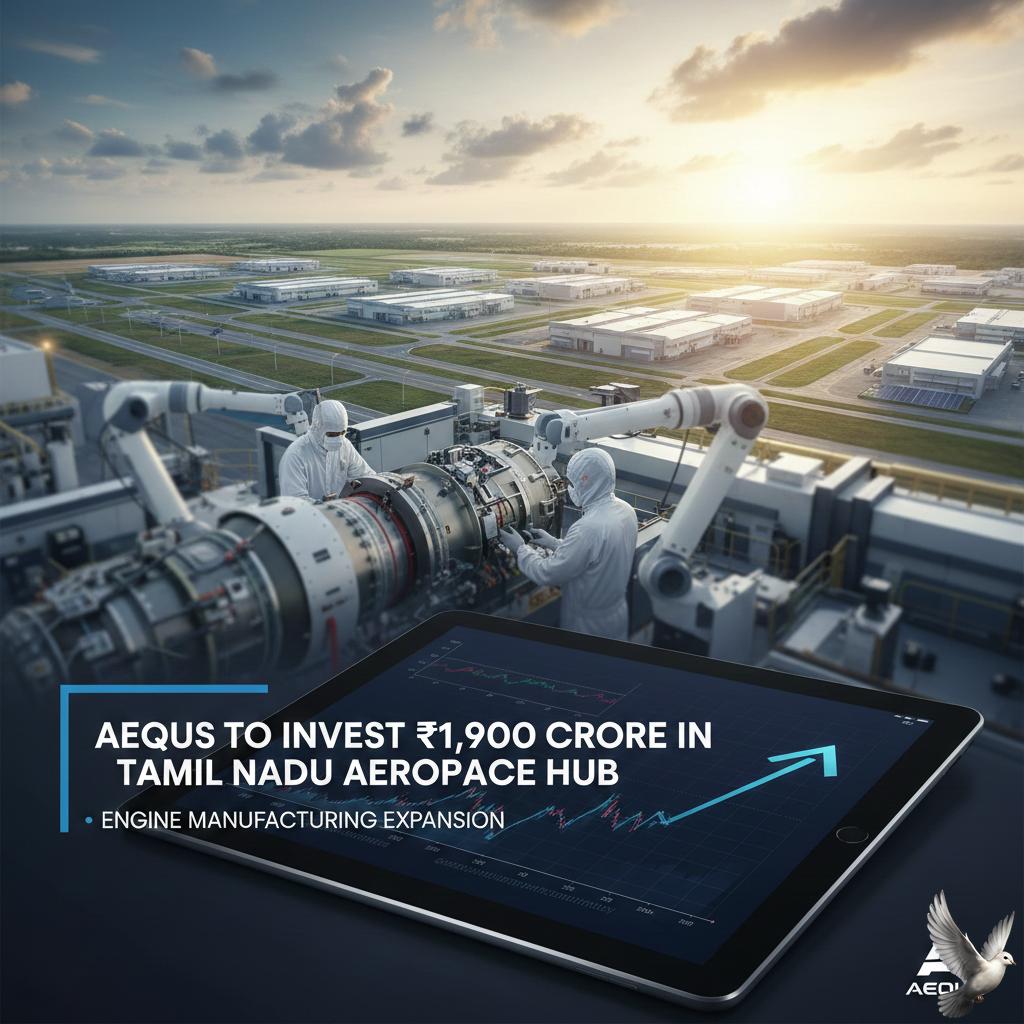
Aequs to Invest ₹1,900 Crore in Tamil Nadu Aerospace Hub for Engine Manufacturing Expansion
Aerospace powerhouse Aequs has officially formalized a landmark agreement with the Tamil Nadu government to establish a high-tech manufacturing cluster. This strategic move involves a total investment commitment of 4,000 crore INR, with Aequs leading 1,900 crore INR of the capital infusion over the next decade. The project is centered at the SIPCOT Shoolagiri industrial estate in Krishnagiri. It marks the launch of India’s first fully vertically integrated aerospace and defense cluster focused on aero-engines. This facility will localize advanced capabilities for producing engine components, gearbox systems, and landing gear—segments that typically command significantly higher profit margins. Market data as of February 2026 indicates that the Indian aerospace and defense sector is expanding at an annual rate of 10% to 15%. Aequs is positioning itself to capture this growth, reporting a 51% year-on-year revenue surge in its latest quarterly results. The firm currently maintains a robust aerospace order book valued at 814 million USD. The investment will be deployed in phases, starting with an initial 200–300 crore INR over the first three years. Construction is slated to begin within the next year, with the first commercial shipments of engine parts expected by the end of FY27 or early FY28. Global demand for aircraft engines remains high, with the market projected to reach 97.37 billion USD in 2026. However, global supply chains are currently facing a 30% shortfall in production targets. By establishing this domestic hub, Aequs aims to bridge this gap while creating 7,000 high-quality jobs in the region. The facility will span 250 acres and feature shared industrial infrastructure, including R&D centers and precision machining units. This ecosystem approach is designed to streamline exports, which already account for 90% of the company's revenue. Aequs is targeting a long-term EBITDA margin of 20%, supported by this shift into complex engine assemblies. The project also retains the flexibility to integrate Unmanned Aerial Vehicle (UAV) production, aligning with India’s broader "Make in India" defense modernization goals. [Aerospace Manufacturing Expansion](https://www.youtube.com/watch?v=tJOWbX3Vg8k) This video features an interview with the CEO of Aequs discussing the company's recent 20% growth and the strategic importance of expanding aerospace capacity in India. http://googleusercontent.com/youtube_content/0
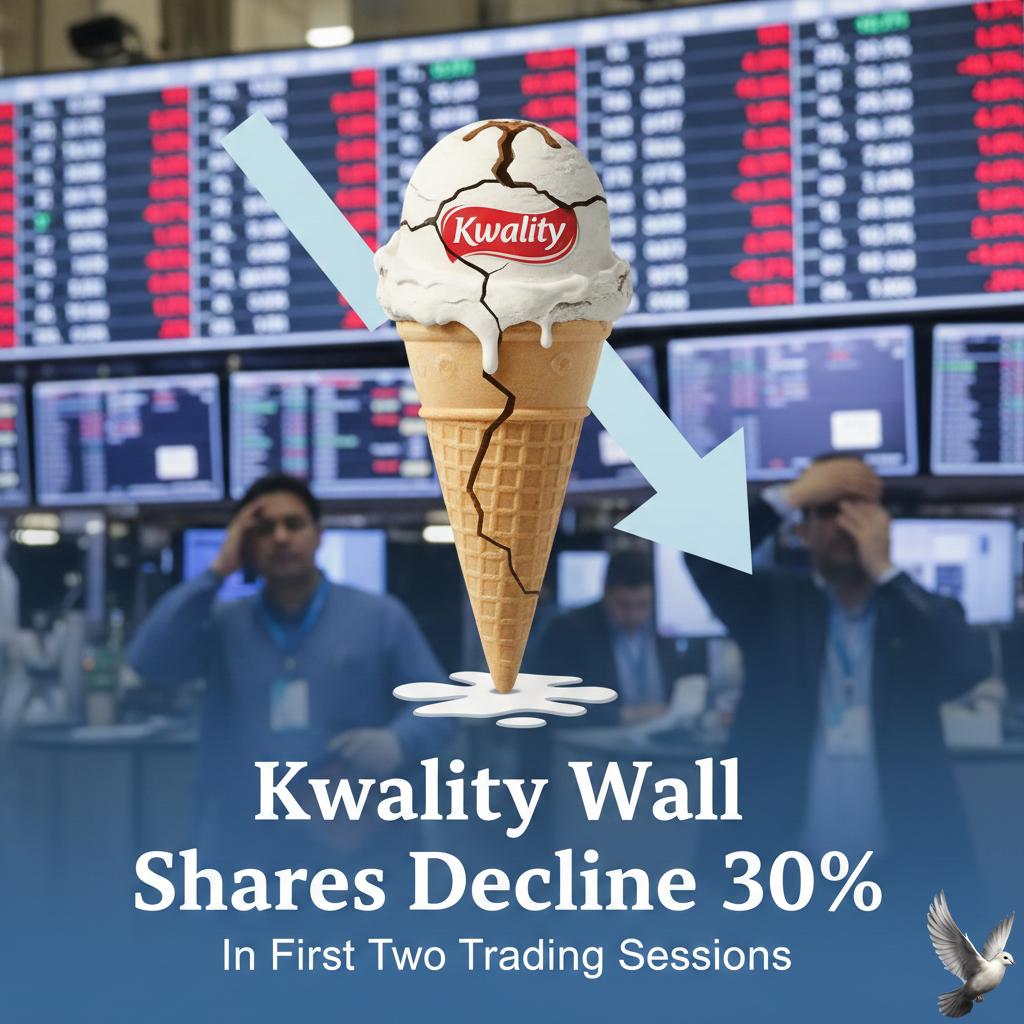
Kwality Wall Shares Decline 30% in First Two Trading Sessions
Kwality Wall’s India Market Brief **February 17, 2026** Kwality Wall’s (India) Limited (KWIL) faced intense selling pressure for a second consecutive session on Tuesday. The stock fell nearly **5%** today, extending a downward spiral that began with its lackluster market debut. Total losses since listing have now reached approximately **30%**. The pure-play ice cream entity, recently demerged from Hindustan Unilever (HUL), continues to search for a price floor. After listing on Monday at **₹29.80** on the NSE—a significant **25.87%** discount to its discovered price of **₹40.20**—the stock has struggled to maintain momentum despite briefly hitting an upper circuit on its first day. Share Price Performance As of Tuesday afternoon, the shares were trading near **₹28.06**, marking a new post-listing low. This sharp correction has brought the company’s total market capitalization to roughly **₹6,933 crore**, down from the **₹7,001 crore** seen at the opening bell yesterday. The sell-off persists despite a major institutional entry. Life Insurance Corporation of India (LIC) has acquired a **6.62%** stake in the demerged company, providing some fundamental backing. However, this has not been enough to offset broader market caution regarding the seasonal nature of the ice cream business and its standalone margin profile. Strategic Ownership and Open Offer A critical factor influencing current sentiment is the mandatory open offer triggered by a change in promoter control. The Magnum Ice Cream Company HoldCo 1 Netherlands B.V., a Dutch entity, has launched an offer to acquire an additional **26%** stake from public shareholders. The offer price is set at **₹21.33** per share, which is notably lower than current market levels. This price reflects a valuation based on a Share Purchase Agreement executed in June 2025, when the Dutch entity agreed to acquire a **61.90%** controlling interest from Unilever global entities. Structural Changes and Outlook The demerger, which became effective in December 2025, followed a **1:1** share entitlement ratio. For every share held in HUL on the record date, investors received one share of KWIL. While HUL shares remained stable near **₹2,310**, the market is still recalibrating the fair value of the independent ice cream arm. Investors are weighing the long-term benefits of a focused management team and recent GST reductions from **18%** to **5%** against the immediate challenges of high input costs and winter-season seasonality. The stock will remain in the trade-for-trade (T-Group) segment for the next eight sessions to curb excessive volatility.

European Equity Markets Flat Amid Geopolitical Uncertainty
European Market Intelligence: February 17, 2026 European equity markets maintained a cautious stance during Tuesday’s session, with the pan-European **Stoxx 600** edging up slightly by **0.1%** to **618.56 points**. The atmosphere remains one of watchful waiting as global participants bridge the gap between cooling inflation and significant geopolitical shifts. Trading volumes in Europe were relatively thin following the **Presidents' Day** holiday in the United States. While regional performance was mixed, the **FTSE 100** in London climbed **0.26%** to **10,473.69**, and the French **CAC 40** remained nearly flat with a **0.06%** gain. Conversely, Germany’s **DAX** faced pressure, slipping **0.4%** to **24,812.50**. Geopolitical De-escalation and Energy High-level bilateral talks in **Geneva** between the U.S. and Iran have taken center stage. Discussions involving U.S. envoy Steve Witkoff and Iranian Foreign Minister Abbas Araghchi are centered on nuclear stockpiles and potential sanctions relief. The "relatively positive" tone of these talks has provided a fragile floor for market sentiment. In the commodities space, **Brent crude** remains sensitive to these developments, following a volatile January where prices averaged near **$69.70 per barrel**. The "SaaSpocalypse" and AI Displacement Investors are aggressively reassessing traditional business models under the weight of artificial intelligence. A sharp downturn in the software-as-a-service (SaaS) sector—now dubbed the **"SaaSpocalypse"**—has triggered significant volatility. The French group **Dassault Systèmes** saw shares tumble roughly **10%** this week following concerns over AI monetization. Market participants are increasingly wary of "technological cannibalization," where new AI agents automate complex workflows, potentially rendering existing subscription-based software models obsolete. Corporate Resilience and Earnings Despite the tech-driven anxiety, the broader European earnings season has provided a necessary cushion. Data indicates that **60%** of European firms have exceeded profit expectations this quarter. Financials have been a primary support pillar, bolstered by massive capital returns. **ING** recently executed a **€1.1 billion** share buyback, while **NatWest** gained **4.7%** following its own **£750 million** repurchase program. Economic Indicators and Outlook The Eurozone economy is showing signs of localized strength. **Q4 2025 GDP** grew by **0.3%**, outperforming expectations and prompting an upgrade to the **2026 growth forecast** to **1.2%**. Inflation in the euro area has moderated to **1.7%** this month, falling below the central bank's target. This cooling trend, combined with a steady unemployment rate of **6.2%**, suggests a stabilizing macro environment even as specific sectors face structural disruption from emerging technologies.
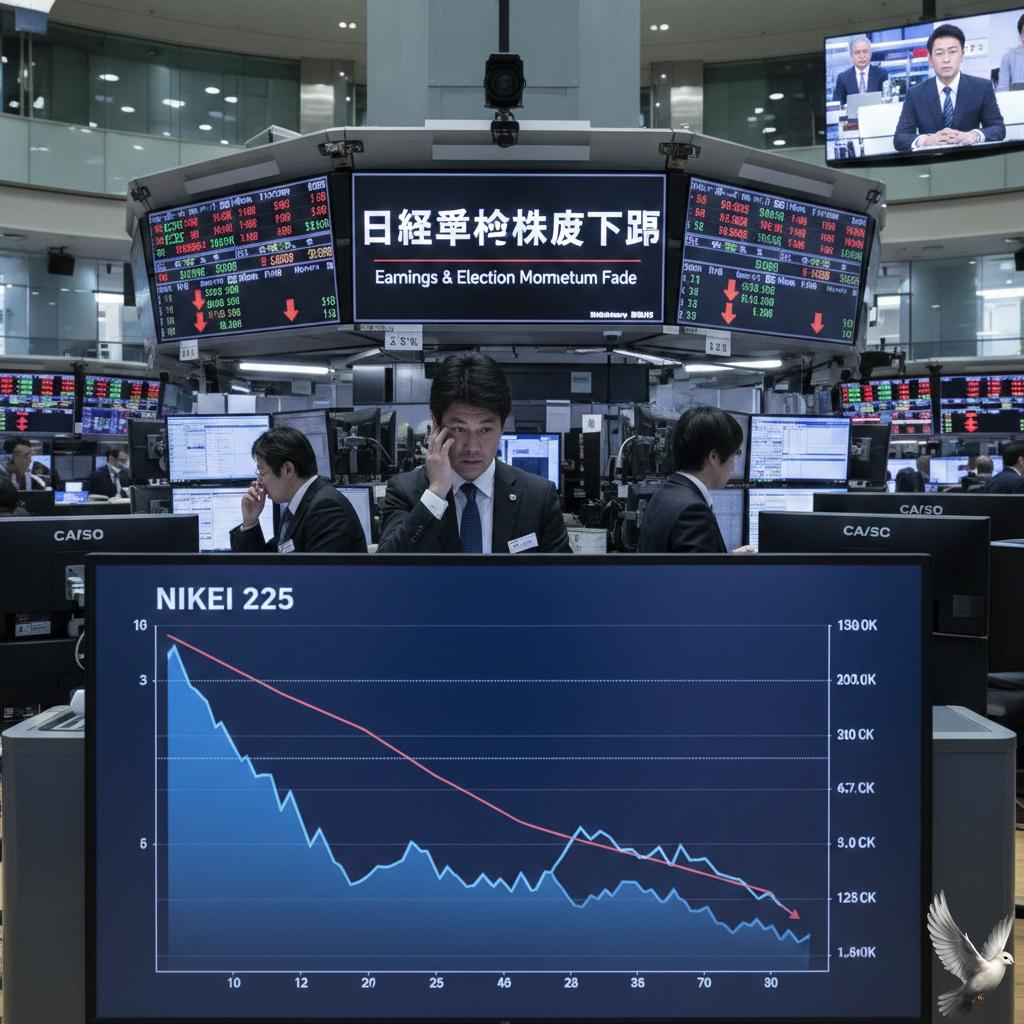
Nikkei Declines as Earnings and Election Momentum Fade
Japan's equity markets faced a challenging session on Tuesday, as the Nikkei 225 share average retreated for the fourth consecutive day. The index fell 0.42% to close at 56,566.49, marking a period of cooling momentum following the post-election rally that characterized the start of the month. The downward pressure was primarily driven by a lack of fresh trading catalysts and a general trend of profit-taking. Investors appear to be recalibrating their positions as the corporate earnings season draws to a close and the initial "euphoria" surrounding Prime Minister Sanae Takaichi’s victory begins to fade. Technology and defense sectors were the primary laggards during today's trading. SoftBank Group saw a significant decline of 5.1%, weighed down by its exposure to global tech volatility and investor skepticism regarding high-growth valuations. In the defense sector, Mitsubishi Heavy Industries and Kawasaki Heavy Industries dropped 2.8% and 4.4% respectively, reflecting a broader retreat from names that had previously benefited from geopolitical hedging. On the macroeconomic front, the Bank of Japan remains a central focus. Governor Kazuo Ueda indicated that the central bank will maintain its path of gradual policy normalization, with the short-term interest rate currently sitting around 0.5% to 0.75%. Market participants are closely monitoring the yen, which has stabilized near 153.17 per dollar, as policy divergence between Japan and other major economies continues to influence export-heavy sectors. While the market is currently in a corrective phase, some underlying fundamentals remain resilient. Japan’s nominal GDP recently surpassed the 600 trillion yen milestone for the first time, growing at 2.9% in the latest annual figures. Additionally, corporate profits across several industries continue to show long-term improvement, even if the immediate pace of gains has moderated. Investor sentiment is now shifting toward a more cautious "wait-and-see" approach. With the Nikkei down roughly 1.9% over the last four sessions, the market is searching for new support levels. High-profile individual stocks showed mixed results: Tokyo Electron gained 1.47% on selective chip-sector strength, while financial giants like Mizuho and Sumitomo Mitsui saw declines of over 1.8% as the rotation out of cyclical stocks persisted. The outlook remains tied to upcoming U.S. economic data and further clarity on domestic fiscal spending. For now, the transition from election-driven optimism to a fundamentals-based environment has introduced a period of heightened volatility for Tokyo traders.

Adani Group Stocks Gain After $100 Billion AI and Energy Investment Announcement
Adani Group AI & Green Energy Brief The Adani Group has confirmed a massive **$100 billion** investment strategy to develop renewable-powered, AI-ready data centers by **2035**. This commitment aims to establish a **5 GW** data center platform, moving beyond its current **2 GW** capacity. Market reaction has been notably positive. Shares of flagship **Adani Enterprises** rose **2.25%** today, February 17, 2026, reaching a price of **₹2,184.60**. The stock saw high intraday activity with a peak of **₹2,197.80**. **Adani Green Energy** also reflected gains, trading **1.8%** higher as the market priced in the long-term synergy between green power and compute. Ecosystem Impact and Partnerships This initiative is designed to catalyze an additional **$150 billion** in secondary investments. The group expects to foster a total **$250 billion** AI infrastructure ecosystem in India. Key components include: * **Google:** Collaboration on a gigawatt-scale AI campus in **Visakhapatnam** and a facility in **Noida**. * **Microsoft:** Established partnerships for hyperscale centers in **Hyderabad** and **Pune**. * **Flipkart:** Expansion of existing data center ties to support large-scale AI for e-commerce. Energy and Operational Scale The project leverages **Adani Green Energy’s** massive **30 GW** Khavda renewable project in Gujarat. Currently, over **10 GW** of this project is operational. An additional **$55 billion** is earmarked specifically for expanding renewable capacity and battery energy storage systems to ensure the data centers remain "green" around the clock. In the most recent financial reports, Adani Green Energy recorded a **37%** year-on-year growth in energy sales, reaching an operational capacity of **17.2 GW**. This provides a stable foundation for the high-intensity power requirements of AI workloads. National and Sector Outlook India’s total data center capacity is projected to double to **2 GW** by the end of **2026**. National IT spending is forecasted to hit **$176.3 billion** this year, with data center spending growing at a rate of **20.5%**. The Adani Group's plan directly aligns with the **PM Gati Shakti** program. By reserving GPU capacity for local startups and building sovereign cloud platforms, the group aims to secure India’s technological sovereignty in the global AI race.

InCred Equities Downgrades Hindalco and NALCO to Reduce Citing Three Key Factors
Market dynamics for India's leading aluminum producers shifted significantly this Tuesday, February 17, 2026, as shares of Hindalco Industries and National Aluminium Company (NALCO) faced selling pressure. The decline followed a strategic downgrade by InCred Equities, which moved both stocks to a "reduce" rating. Analysts point toward a potential 20% correction in aluminum prices over the coming year as macroeconomic support fades and global scrap supply improves. Hindalco Industries saw its stock price decline roughly 3% during the session. The downgrade stems from concerns over a massive capital expenditure program totaling 700 billion INR scheduled between FY26 and FY28. This aggressive expansion is expected to increase balance sheet leverage and push the net debt-to-EBITDA ratio above 2.0 by 2028. Additionally, Hindalco’s U.S. subsidiary, Novelis, is grappling with surging electricity costs driven by high energy demand from data centers, which continues to compress international margins. NALCO shares also dropped approximately 4%, with the brokerage setting a target price of 302 INR, suggesting a double-digit downside from recent peaks. While NALCO recently reported a record net profit of 2,131 crore INR for the December quarter, the outlook is clouded by a projected global surplus of aluminum. The company's 1 million tonne alumina refinery expansion is reaching completion just as alumina prices soften, potentially diminishing the returns on this new capacity. The broader Nifty Metal index slipped 2% as the rally in base metals appeared to peak. While LME aluminum prices have recently hovered near 3,037 USD per tonne, experts warn that these levels may be unsustainable. Increased scrap collection—now at levels significantly above historical averages—is expected to satisfy incremental demand, reducing the need for primary smelting and placing downward pressure on prices. For both companies, the combination of rising capital work-in-progress and cooling commodity prices presents a challenging environment for earnings growth. EBITDA for Hindalco is projected to fall to 260 billion INR by FY28, down from the 366 billion INR estimated for FY26. Investors are now closely monitoring how these industrial giants balance their long-term growth ambitions against a more volatile global pricing landscape.

Sumit Pokharna: Infosys-Anthropic Partnership Indicates AI Market Expansion Over Disruption
**MARKET BRIEF: INFOSYS & ANTHROPIC PARTNERSHIP** **Strategic Collaboration & Immediate Impact** Infosys has officially partnered with **Anthropic** to integrate advanced AI models, including **Claude 3**, into its **Topaz** platform. This move targets the deployment of "agentic AI"—autonomous systems capable of executing complex workflows in sectors like **telecom, finance, and manufacturing**. Markets reacted swiftly to the announcement on **February 17, 2026**, snapping a four-day losing streak for the IT giant. **Market Reaction & Key Figures** * **Infosys (INFY):** Surged approximately **3.2%** intraday, trading around **₹1,406** levels. * **Nifty IT Index:** Rebounded by **1.67%**, lifting broader sector sentiment after recent volatility. * **Volume:** Heavy trading activity reported in call options, signaling renewed bullish interest from institutional buyers. **Shift to Agentic AI** The collaboration moves beyond simple chatbots to **enterprise-grade automation**. The primary goal is accelerating software development and modernizing legacy networks. By embedding Anthropic’s models, Infosys aims to secure high-value contracts in regulated industries that demand precision and data security, addressing concerns that generative AI could erode traditional IT service revenues. **Valuation & Investor Outlook** Analysts advise caution despite the immediate rally. While the partnership validates Infosys’s AI strategy, current valuations of **20x P/E** already factor in significant disruption premiums. Experts suggest focusing on execution over headlines, noting that the tangible revenue impact of these AI integrations will materialize over the next **3 years**. **Sector Implications** This deal signals a pivotal shift for large and mid-cap IT firms. Companies like **HCLTech** and **Persistent Systems** also saw gains, indicating a sector-wide re-rating as investors hunt for undervalued players capable of monetizing AI agents. The consensus remains that while volatility persists, the dip offers accumulation zones for long-term value in digitized services.
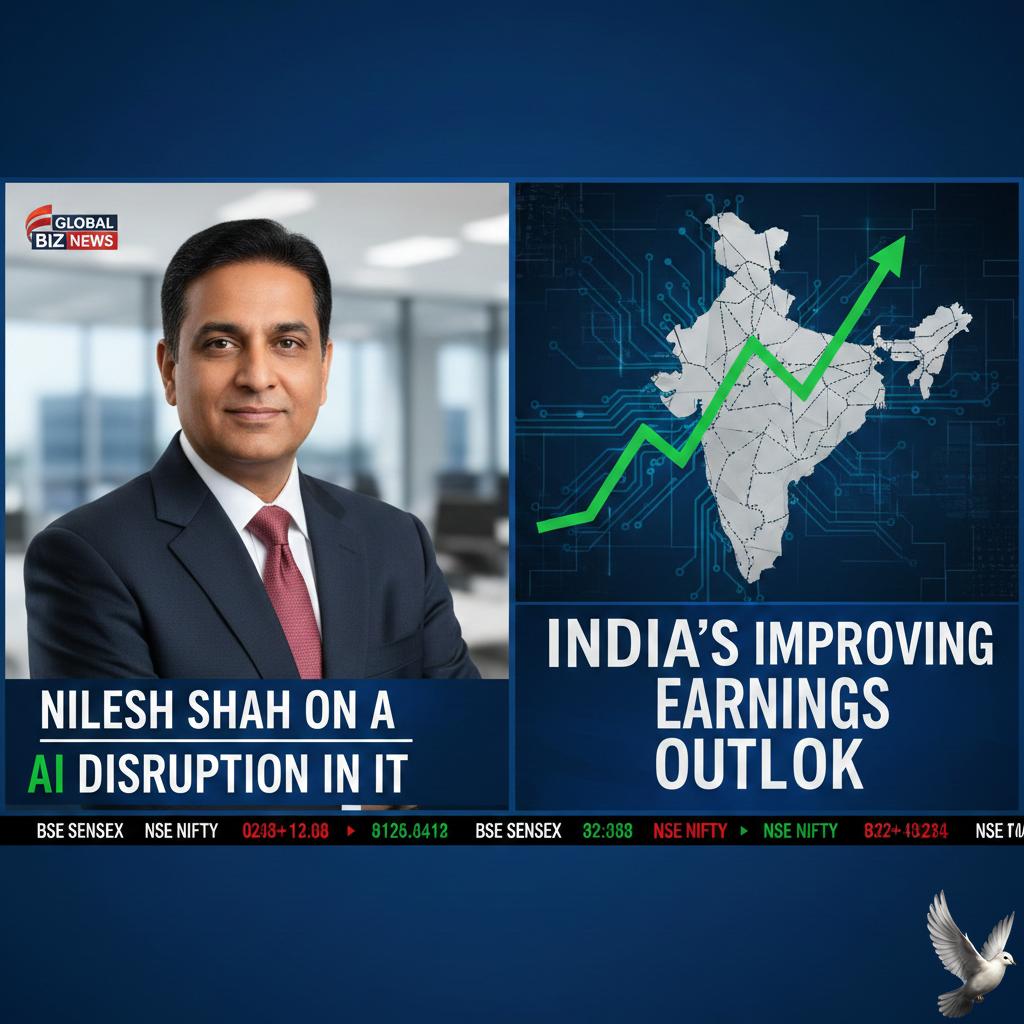
Nilesh Shah on AI Disruption in IT and India's Improving Earnings Outlook
**MARKET BRIEF: FEBRUARY 2026 OUTLOOK** **AI Disruption & IT Volatility** Nilesh Shah (Kotak AMC) maintains a cautious stance on the IT sector, viewing Indian firms primarily as technology "enablers" rather than creators. This distinction is critical as the market digests the recent **4-5% correction** in Nifty IT indices, driven by fears that advanced AI models (like the latest Claude updates) could disrupt traditional outsourcing revenues. Shah warns that while AI adoption is inevitable, the transition may pressure billable hours and employment in the near term, urging investors to look beyond the hype. **Valuation Check: Fair vs. Premium** The broader market reflects a mixed valuation landscape. With the Nifty 50 trading near **25,700 levels**, large-cap valuations have moderated to historical averages, offering a "fairly priced" entry point. However, Shah flags continued risks in the broader market, noting that small and mid-cap segments still trade at substantial premiums. He advises being neutral on mid-caps and underweight on small-caps until earnings catch up to prices. **Earnings & Economic Resilience** Despite short-term volatility, the structural story remains intact. Shah anticipates a rebound in corporate earnings, projecting a return to **double-digit growth** in FY27 after a period of single-digit stagnation. This optimism is anchored by India’s domestic consumption and government capex, even as global headwinds—such as US debt refinancing risks and China’s overcapacity—persist. India is expected to remain the fastest-growing major economy, though GDP growth will likely stabilize in the mid-single digits rather than hitting double digits immediately. **Strategic Approach** Given the heightened volatility and sector-specific churn, Shah advises retail investors to avoid direct stock picking unless they have deep expertise. The current environment favors a disciplined "Asset Allocation" strategy—balancing equities with fixed income and gold—managed by professional fund managers to navigate the rotation from overvalued sectors to emerging opportunities in banking, infrastructure, and consumer discretionaries. *** [Market Outlook for February 2026](https://www.youtube.com/watch?v=akn48UBqyDk) This video provides Nilesh Shah's comprehensive analysis of the February 2026 market landscape, detailing the specific global risks and domestic growth drivers influencing his current investment strategy. http://googleusercontent.com/youtube_content/0