Bullish News
Collection
Vijay Kedia’s Investment Strategy: Market Analysis, Patience, and Asset Selection
Market benchmarks started the week of **February 9, 2026**, on a strong note, fueled by a historic **India-US trade deal** and robust global cues. The **Nifty 50** opened at **25,888.70**, climbing **0.76%**, while the **BSE Sensex** rose to **84,022.17**, a gain of over **440 points**. Banking and financial services are leading the charge, with the **Bank Nifty** surging **1.14%** to surpass the **60,800** mark. This momentum follows the **RBI's** decision to hold the repo rate at **5.25%**, providing a stable backdrop for corporate earnings and credit growth. Veteran investor Vijay Kedia continues to advocate for a "buy right and sit tight" approach. His strategy centers on the **SMILE** framework: **S**mall in size, **M**edium in experience, **I**ntelligent in management, and **L**arge in aspiration, with an **E**xtra-large market potential. Kedia emphasizes that while traders must react to daily market noise, long-term investors should focus strictly on earnings power. He views investing as a marathon, requiring the patience to wait for a company to hit its specific inflection point before value is truly unlocked. His current portfolio, valued at approximately **₹1,348 crore**, reflects a strategic pivot toward India's green energy transition and digital infrastructure. New entries in his holdings include cybersecurity and technology firms, alongside established positions in engineering and specialty chemicals. **Atul Auto** remains a cornerstone of his portfolio, representing a **20.91%** stake valued at nearly **₹231 crore**. Other significant holdings include **Neuland Laboratories**, **Elecon Engineering**, and **Sudarshan Chemical**, which recently expanded its global footprint through major international acquisitions. Sector rotation is currently visible as investors shift toward "sunrise" industries. The **Budget 2026** initiatives have placed a heavy focus on semiconductors, data centers, and high-speed rail, sectors where Kedia seeks out under-the-radar companies before they reach mainstream valuations. The broader market sentiment remains risk-on, supported by a significant reversal in foreign institutional investor (FII) activity. FIIs have turned net buyers, injecting over **₹1,950 crore** in recent sessions, which has helped the **Sensex** maintain its position above the critical **83,500** level. Despite the optimism, volatility remains high following the budget session. While large-cap indices have stabilized, mid-cap and small-cap stocks are outperforming, rewarding disciplined investors who prioritize business fundamentals over short-term price fluctuations. The focus for the remainder of the quarter is on corporate earnings and the realization of infrastructure projects. Success in this environment relies on identifying companies with strong management integrity and the capacity to scale within India's expanding manufacturing and digital ecosystems.

India Housing Market Stabilizes Following Post-Pandemic Growth Surge
The Indian real estate sector has entered 2026 with a shift toward professional maturity and disciplined growth. Following a period of rapid post-pandemic acceleration, the market is now characterized by calibrated supply and a strong preference for premium, high-quality developments. In a significant move for the sector, the Reserve Bank of India (RBI) maintained the repo rate at 5.25% in its February 2026 meeting. This follows a cumulative reduction of 125 basis points throughout 2025, which has successfully brought average home loan rates down to approximately 8.10%. These stable interest rates have bolstered buyer confidence, particularly in the luxury and mid-income segments. Properties priced between ₹90 lakh and ₹1.5 crore now command nearly 48% of the transaction value in major cities, reflecting a significant rise in middle-class purchasing power and a demand for larger, amenity-rich homes. The commercial landscape is also undergoing a transformation. The India commercial real estate market is currently valued at approximately $53.53 billion and is projected to grow at a 16.8% CAGR through 2031. A landmark policy change by the RBI now allows banks to lend directly to Real Estate Investment Trusts (REITs). This is expected to lower borrowing costs for commercial developers and enhance dividends for retail investors, specifically benefiting office and logistics hubs in Bengaluru, Mumbai, and the National Capital Region (NCR). Godrej Properties exemplifies this operational strength, reporting its highest-ever Q3 and nine-month booking values for the fiscal year ending March 2026. The company achieved a 55% year-on-year surge in Q3 bookings, reaching ₹8,421 crore. With customer collections rising 40% to ₹4,282 crore in the same period, the firm is on track to surpass its annual sales target of ₹32,500 crore. This momentum is supported by a robust pipeline of new project launches valued at ₹40,000 crore, primarily focused on high-demand micro-markets like Worli in Mumbai and premium corridors in Delhi-NCR. While the residential market has seen a slight moderation in volume growth to roughly 3–7% annually, pricing remains firm. Average home prices are expected to rise by 3–5% in 2026, driven by elevated construction costs and the entry of more branded developers who prioritize timely delivery. Digital transformation and the "Housing for All" initiatives continue to bridge the gap in secondary markets, with Tier-2 and Tier-3 cities like Hyderabad and Pune emerging as high-growth corridors. The overall sector is projected to reach a market size of $1 trillion by 2030, contributing roughly 13% to the national GDP. [Godrej Properties: Record-Breaking Results](https://www.youtube.com/watch?v=BtMjgivgyYE) This video provides an expert breakdown of the recent earnings and growth projections for the Indian real estate market in 2026. http://googleusercontent.com/youtube_content/0

Boustead REIT Commences Premarketing for Singapore IPO
UI Boustead Real Estate Investment Trust is entering a pivotal phase as investor education officially commences today, February 9. This logistics and industrial-focused vehicle is gearing up for an initial public offering on the Singapore Exchange (SGX), targeting a potential listing as early as March 2026. The REIT is seeking to raise approximately **$700 million** to **$900 million**, a move that could mark one of the largest listings in the city-state in recent years. Citigroup is serving as a joint global coordinator for the offering, which arrives at a time when the Singapore IPO market is showing renewed momentum. Total share-sale proceeds in the city-state reached a six-year high of **$1.9 billion** in 2025, signaling a more constructive environment for new listings. The proposed initial portfolio is valued at approximately **$1.9 billion**. It consists of **23** high-quality assets across the Asia-Pacific region, including **21** properties in Singapore and **2** in Japan. Together, these assets span nearly **5.9 million** square feet of gross floor area. The Singapore segment accounts for roughly **70%** of the portfolio's total agreed value. Proceeds from the offering are earmarked for strategic growth. Key priorities include financing property acquisitions, covering transaction costs, and repaying existing loans to optimize the balance sheet. A portion will also be allocated to working capital to ensure operational flexibility. This IPO follows a major merger in 2025 between Boustead Projects’ real estate business and UI Holdings, a platform backed by Macquarie Asset Management. Post-listing, Boustead Singapore is expected to retain an ownership stake of up to **16.9%** in the new trust, maintaining exposure to the steady income generated by the industrial sector. The entry of UI Boustead REIT coincides with a broader recovery in the S-REIT market. Industrial REITs currently trade at a price-to-earnings ratio of approximately **22.8x**, while the sector as a whole trades at a price-to-book ratio near **0.99x**. Market conditions are improving as the Singapore Overnight Rate Average (SORA) drifts lower, reducing financing pressures. The logistics and high-specification industrial segment continues to show resilience. Modern warehouse space in Singapore saw occupancy rates rise from **92.1%** to **93.6%** in recent months. Firm demand from third-party logistics operators and semiconductor manufacturers remains a primary driver for rental growth and capital appreciation in the 2026 outlook.
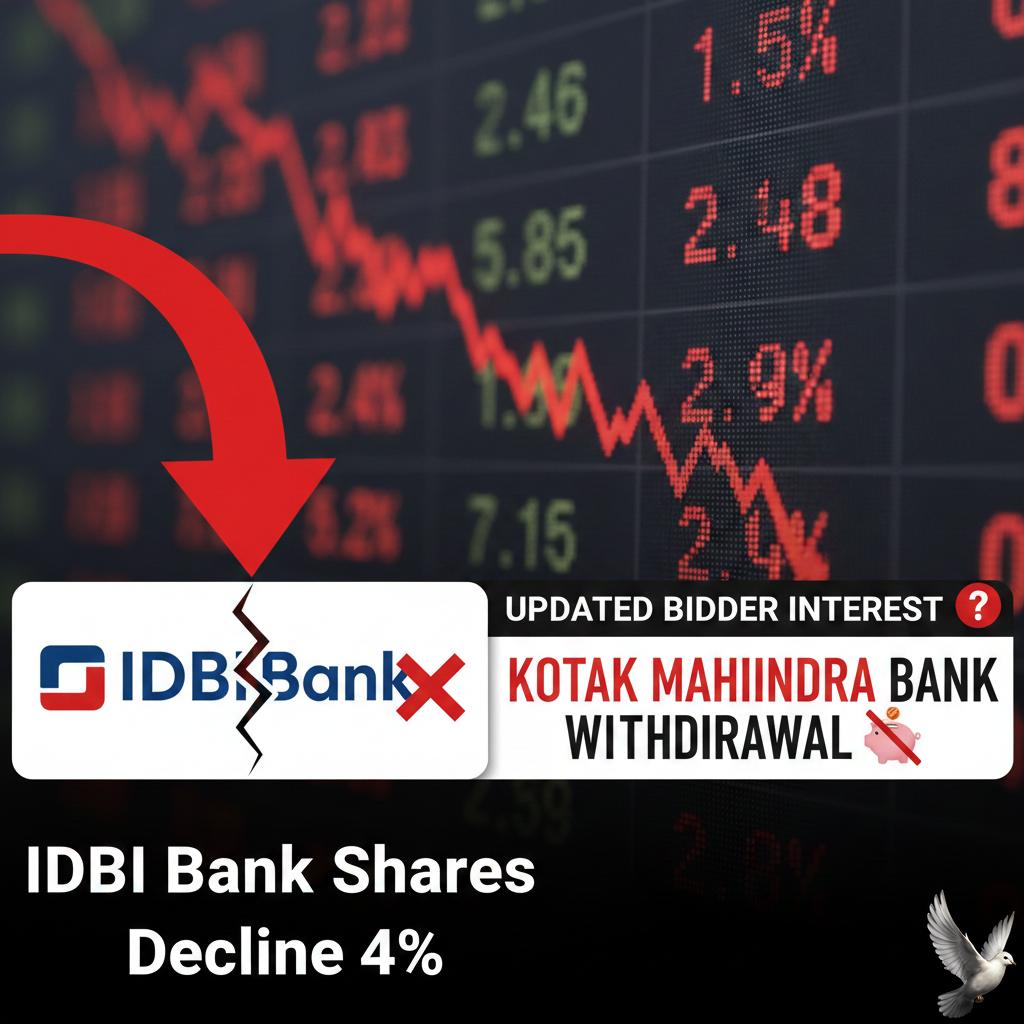
IDBI Bank Shares Decline 4% Amid Updated Bidder Interest and Kotak Mahindra Bank Withdrawal
IDBI Bank is at a critical juncture in its privatization journey as the government enters the final stages of a landmark stake sale. The Department of Investment and Public Asset Management (DIPAM) confirmed on February 6, 2026, that financial bids have been officially received. This marks the most significant milestone since the process began in 2022. The transaction involves the sale of a combined 60.72% stake held by the Government of India and the Life Insurance Corporation of India (LIC). At current market valuations, the deal is estimated to fetch approximately 33,000 crore to 36,000 crore for the exchequer. The bidding pool has narrowed to two primary contenders: Canada-based Fairfax Financial Holdings and Dubai’s Emirates NBD. While Kotak Mahindra Bank was previously considered a frontrunner, the lender recently clarified that it has not submitted a financial bid. Market reaction has been volatile. Following the bidding update, IDBI Bank shares experienced sharp fluctuations, closing recently at 106.86. The stock has seen a 33% increase over the past year, reflecting investor optimism despite the complexities of the sale. Financially, the lender reported steady performance for the quarter ending December 2025. Net profit stood at 1,935 crore, a marginal year-on-year increase. A standout highlight remains the bank’s asset quality improvement, with Gross Non-Performing Assets (NPA) dropping to 2.57% from 3.57% a year ago. The next immediate step involves the government fixing a "Reserve Price" based on independent valuations. Once this is established, the sealed financial bids will be opened. The successful bidder will gain majority control and the right to rename the institution. The government aims to finalize the selection by March 2026. However, the final handover will remain subject to "fit and proper" clearances from the Reserve Bank of India and approval from the Competition Commission of India. This sale is a cornerstone of the 80,000 crore disinvestment target set for the upcoming fiscal cycle.

Bitcoin Stabilizes Near $70,000 Following Recovery From Recent Support Levels
Market Brief: Crypto Volatility and Recovery Phase The digital asset market is navigating a high-stakes recovery period following a significant period of turbulence. After a volatile week that saw values plunge, Bitcoin has reclaimed the **$70,000** psychological threshold, currently trading near **$70,837**. This represents a **2.41%** gain over the last 24 hours, signaling a tentative stabilization after a sharp descent from 2025 highs. Deleveraging and Liquidations The recent price action was accelerated by a massive "long squeeze." Over the past several days, the market witnessed approximately **$2.6 billion** in leveraged positions being liquidated. The majority of these forced exits—roughly **87%**—were tied to bullish "long" bets. This mechanical selling created a cascade effect, dragging Bitcoin briefly toward the **$60,000** mark on February 6 before buyers stepped in to provide support. Global Market Impact The total cryptocurrency market capitalization currently sits at approximately **$2.37 trillion**, a notable decline from the **$3 trillion** mark observed at the start of the year. * **Bitcoin Dominance:** Remains high at **58.5%**, as capital flows out of riskier altcoins and back into the primary asset. * **Ethereum:** Showing relative resilience, trading near **$2,089** after a recent **10%** intraday rally. * **Altcoin Sector:** Performance remains mixed; while tokens like **XRP** and **Litecoin** saw gains of **14%** and **10%** respectively during the rebound, many mid-cap assets are still down over **30%** on the weekly timeframe. Macroeconomic and Institutional Drivers External pressures continue to weigh on investor sentiment. The nomination of a more hawkish leadership at the Federal Reserve has fueled expectations of tighter monetary policy and a shrinking balance sheet. Institutional activity reflects this caution. U.S. spot Bitcoin ETFs recorded net outflows of **$434 million** in a single day recently, with major funds like BlackRock’s IBIT seeing significant exits despite record-high trading volumes. Sentiment and Outlook The "Fear & Greed Index" has bottomed out at a reading of **9/100**, indicating "Extreme Fear." This level of market distress has historically coincided with local price floors, though analysts warn of continued sensitivity to traditional equity markets, particularly tech stocks. The focus now shifts to whether Bitcoin can consolidate above **$70,000** or if further de-risking in global financial markets will trigger another test of the **$66,000** support zone.
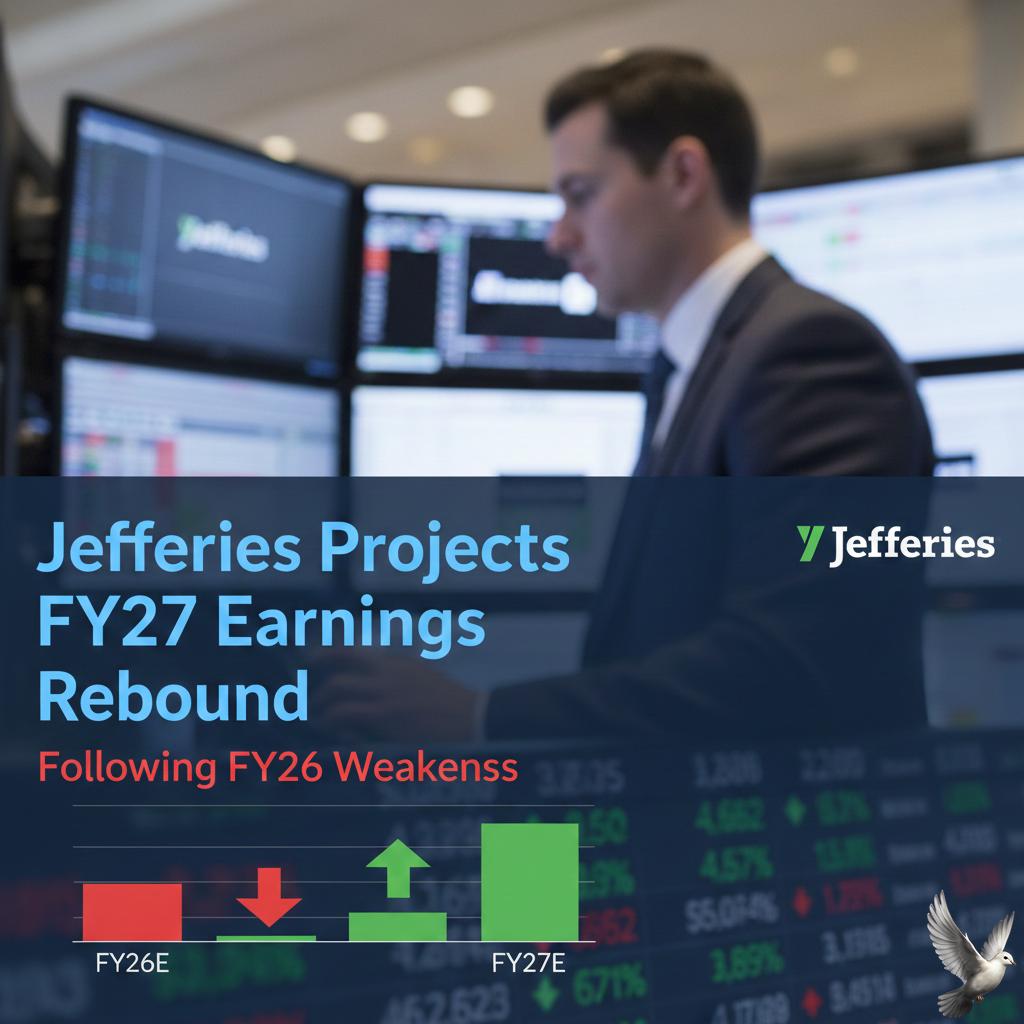
Jefferies Projects FY27 Earnings Rebound Following FY26 Weakness
Indian equity markets are navigating a phase of healthy consolidation as 2026 begins. Benchmarks have shown resilience with the Nifty 50 trading near **25,826** and the Sensex holding around **83,941**. While foreign portfolio investors have withdrawn approximately **$34 billion** over the last 16 months, domestic mutual fund inflows continue to provide a critical structural buffer for the market. Mahesh Nandurkar of Jefferies observes that the Union Budget has evolved into a secondary event for markets. The 2026 Budget focused on long-term infrastructure and tax simplification rather than immediate market-moving incentives. Public capital expenditure is projected to rise to **₹12.2 lakh crore** for the upcoming fiscal year, a significant increase from the previous **₹11.2 lakh crore**. This shift underscores a move toward fundamental growth rather than fiscal announcements. A major direct tax overhaul via the Income Tax Act of 2025 is set to take effect on April 1, 2026. While tax slabs remain largely unchanged—ranging from **0%** for income up to **₹4 lakh** to **30%** for income above **₹24 lakh**—the law has been condensed from over **700** sections to **536**. This simplification aims to reduce litigation and improve the ease of doing business across the corporate landscape. Earnings growth is the primary catalyst expected to drive future returns. After a relatively tepid period, corporate India is entering an 11-quarter high for revenue momentum, with growth forecasts reaching **14%** year-on-year. For the 2027 fiscal year, earnings are projected to accelerate into the **12% to 15%** range. Key sectors leading this rebound include Auto, with expected Ebitda growth exceeding **20%**, and Oil Marketing Companies, some of which are showing jumps as high as **130%**. The monetary environment is also stabilizing. The Reserve Bank of India has reduced repo rates by **125 basis points** over the current cycle, bringing the interest rate to approximately **5.25%**. With inflation cooling toward **1.33%**, there is increasing room for further policy easing. These lower borrowing costs are expected to support credit demand and improve the net interest margins for the banking sector. Diversification remains a central theme for the modern Indian investor. While domestic prospects are strong, the need for global exposure is critical to mitigate local volatility. Current market valuations have corrected to a forward price-to-earnings ratio of approximately **20x**, down from a peak of **25x**, making the entry point more compelling for long-term participants. Strategies are now shifting toward bottom-up stock selection. High-growth themes like Electronics Manufacturing Services and Quick Commerce are gaining weight in model portfolios. Meanwhile, sectors such as Metals and Cement are seeing renewed interest due to rising domestic demand and new trade agreements. This balanced approach between domestic consumption and global diversification is expected to define the investment landscape for the remainder of the year. [Mahesh Nandurkar Market Insights](https://www.youtube.com/watch?v=TRsxv6gSxnA) This video provides direct analysis from Jefferies on why specific sectors are currently favored and how the shift to a bottom-up market is impacting investor returns. http://googleusercontent.com/youtube_content/0
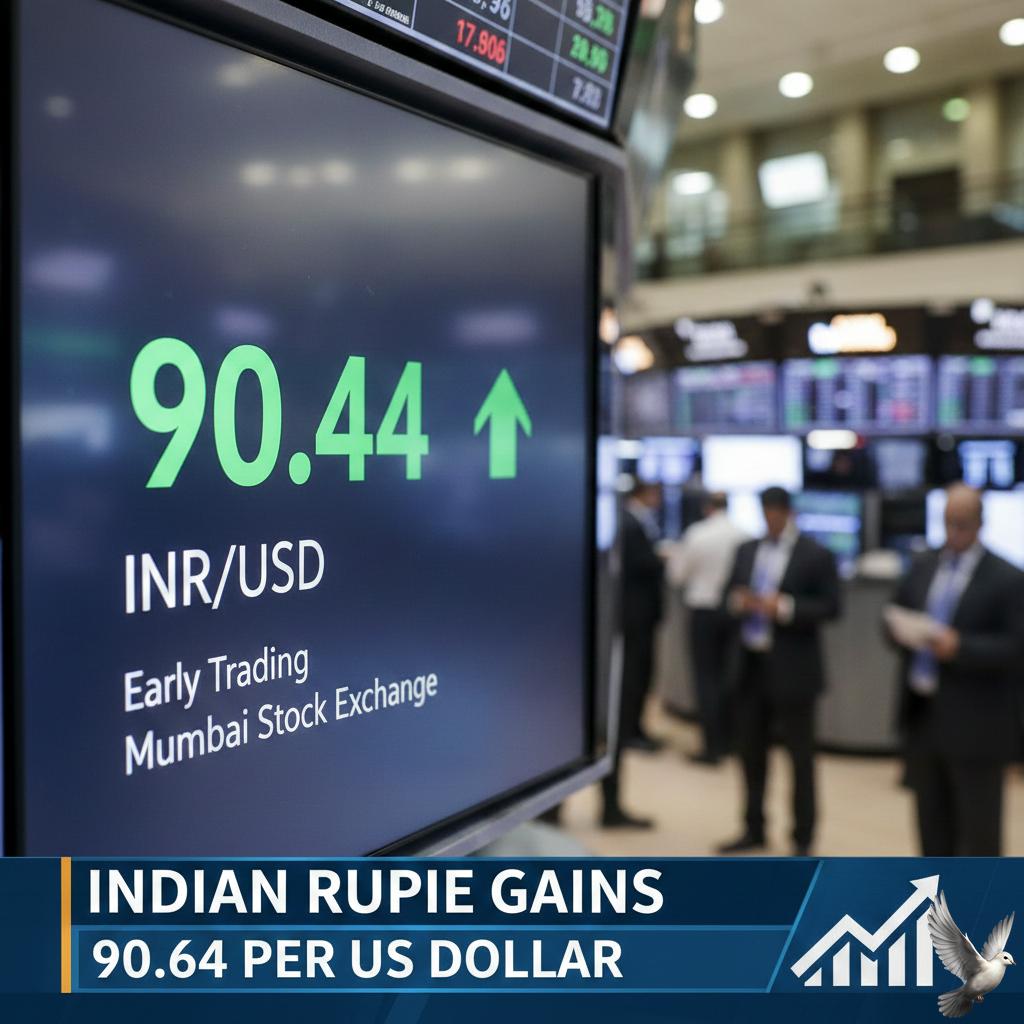
Indian Rupee appreciates to 90.44 per US Dollar in early trading
In a significant shift for global trade dynamics, the Indian rupee has strengthened against the US dollar today, February 9, 2026. The exchange rate is currently hovering near 90.41, reflecting a positive reaction to the landmark India-US Interim Trade Agreement announced over the weekend. The new trade framework has provided a major boost to market sentiment by drastically reducing the effective tariff burden on Indian exports. Following negotiations that began in early 2025, the US has cut the total effective tariff on Indian goods from approximately 50% down to 18%. This reduction includes the removal of a 25% punitive duty previously linked to energy procurement policies. Key sectors such as textiles, apparel, leather, footwear, and organic chemicals are expected to be the primary beneficiaries of this lower 18% rate. On the reciprocal side, India has agreed to eliminate or reduce tariffs on all US industrial goods and various agricultural products, including tree nuts, fresh fruits, and wine. However, sensitive domestic sectors like dairy and essential food grains remain protected under the current terms. The Indian equity markets have mirrored this optimism. The BSE Sensex rallied by over 500 points in early trade today, crossing the 84,000 mark, while the Nifty50 climbed above 25,800. Banking and export-oriented stocks are leading the gains, supported by the removal of trade uncertainties that had weighed on the economy for months. Strategic commitments under the pact are equally ambitious. India intends to purchase 500 billion dollars’ worth of US energy products, aircraft, and technology over the next five years. This aligns with the "Mission 500" initiative, which targets a total bilateral trade volume of 500 billion dollars by 2030. Beyond immediate tariff relief, the agreement facilitates deeper cooperation in high-tech manufacturing, specifically for graphics processing units (GPUs) and data center infrastructure. By aligning standards and addressing non-tariff barriers, both nations aim to build more resilient supply chains and enhance long-term economic security. This interim deal serves as a precursor to a comprehensive Bilateral Trade Agreement (BTA). As the framework transitions into a formal legal treaty expected by mid-March, investors are closely watching for sustained growth in bilateral trade, which reached 186 billion dollars in the 2024-25 fiscal year.

Fractal Analytics IPO: Subscription Data, GMP, and Analyst Perspectives
The initial public offering of **Fractal Analytics**, India’s first pure-play artificial intelligence firm to hit the mainboard, opened for subscription today, **February 9, 2026**. The company aims to raise **₹2,833.90 crore** through this issue, which remains open for bidding until **February 11, 2026**. The price band for the offer is fixed at **₹857 to ₹900** per equity share. At the upper end of this range, the company is valued at a market capitalization of approximately **₹15,474 crore**. The issue consists of a fresh equity issuance worth **₹1,023.50 crore** and an offer for sale (OFS) totaling **₹1,810.40 crore** from existing shareholders. Early participation on the first day showed a cautious start. In the opening hours, the total subscription stood at roughly **2%** to **3%**. Retail individual investors led the early activity with **11%** subscription in their category, while non-institutional investors (NIIs) stood at **2%**. Bids from qualified institutional buyers (QIBs) are expected to aggregate closer to the final day of the issue. Prior to the public opening, Fractal Analytics successfully secured **₹1,248.26 crore** from **52 anchor investors**. This group included high-profile global and domestic names such as Morgan Stanley, Goldman Sachs, SBI Mutual Fund, and LIC, indicating significant institutional interest despite the slow start in general bidding. Proceeds from the fresh issue are earmarked for several strategic initiatives. These include **₹264.9 crore** for debt repayment at its US subsidiary, as well as capital for R&D, sales and marketing under its Fractal Alpha division, and potential inorganic acquisitions to bolster its AI capabilities. The unofficial grey market reflects a measured outlook. Shares are currently trading at a premium (GMP) of approximately **₹13 to ₹35**, representing a modest gain of **1.5%** to **4%** over the issue price. Analysts suggest this reflects a "wait-and-watch" sentiment as the market evaluates the company's valuation against its specialized AI business model. Fractal's financial performance has shown a recent turnaround, with FY25 revenue reaching **₹2,765 crore**, a **26%** year-on-year increase. The company reported a profit after tax of **₹221 crore** for the same period, recovering from a loss in the previous fiscal year. Market experts generally view the stock as a long-term play on the enterprise AI theme. While the company lacks direct listed peers in India, its valuation is considered high compared to traditional IT services, placing the focus on its ability to scale high-margin AI products and platforms. The basis of allotment is expected to be finalized on **February 12**, with shares tentatively scheduled to list on the BSE and NSE on **February 16, 2026**. Minimum investment for retail participants starts at **₹14,400** for one lot of **16 shares**.
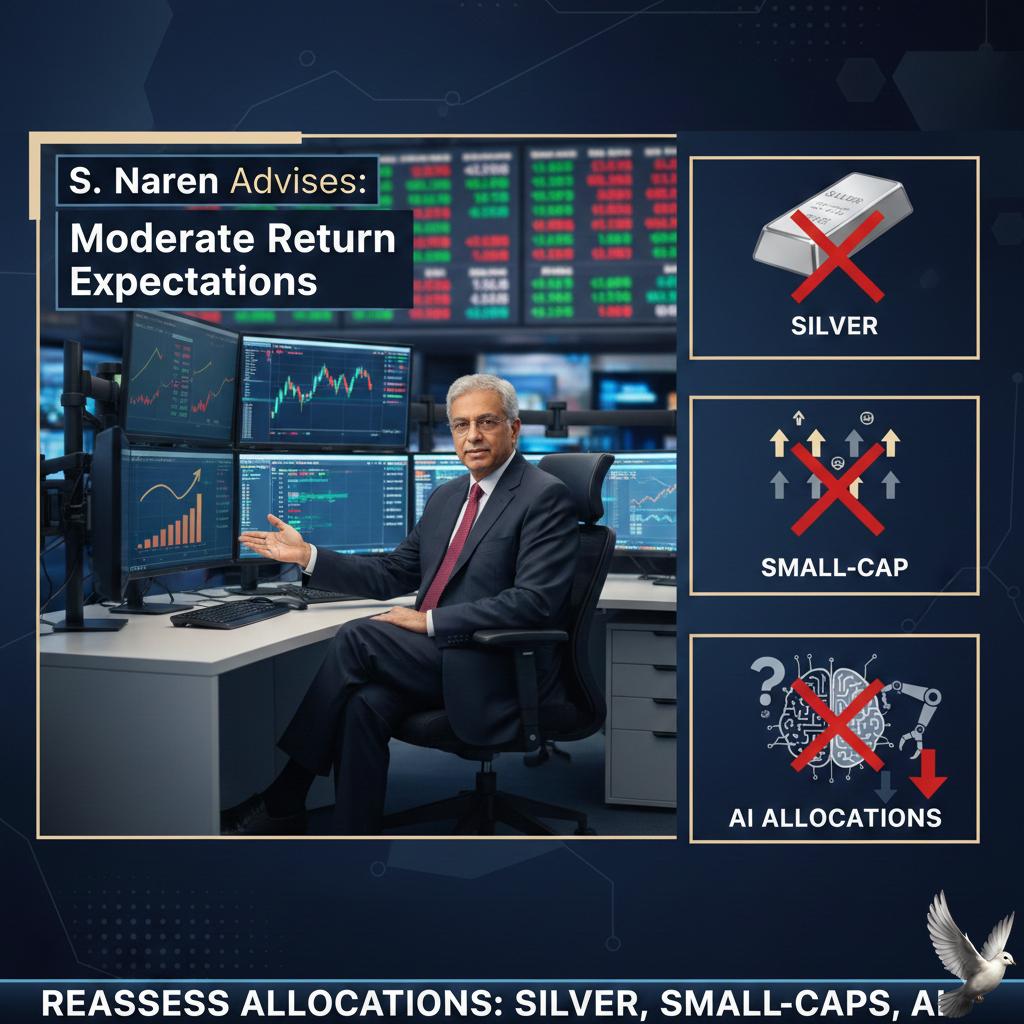
S Naren Advises Investors to Moderate Return Expectations and Reassess Silver, Small-Cap, and AI Allocations
The Indian investment landscape has entered a "boring cycle," a phase defined by market consolidation and the absence of rapid, vertical gains. After a period of high volatility, the Nifty 50 is currently stabilizing around the 25,693 level, while the Sensex maintains a range near 83,580. Market experts, including S Naren of ICICI Prudential AMC, suggest that while the long-term growth story remains intact, investors must now temper their expectations and prepare for moderate, steady returns rather than the explosive growth seen in previous years. Small-cap and mid-cap segments require particular caution. While the Nifty Smallcap 100 has shown resilience near 13,960, valuations in the broader market remain a concern. The recommendation for 2026 is to maintain current asset allocations but avoid aggressive new bets in overvalued pockets. Patience is the primary strategy for the current year as the market digests recent gains and aligns with macroeconomic fundamentals. Artificial Intelligence has emerged as a significant structural theme for the Indian economy. While global capital expenditure is currently concentrated in Western technology firms, India is positioning itself as a premier AI user. The domestic AI market is projected to reach approximately 7.8 billion USD, with a massive potential to add 1.7 trillion USD to the economy by 2035. Rather than competing in hardware manufacturing, India's strength lies in applying AI to services, healthcare, and agriculture to drive internal efficiency. Recent fiscal policy changes are also shaping investor behavior. The hike in the Securities Transaction Tax (STT) on Futures and Options—rising to 0.05% and 0.15% respectively—is viewed as a necessary step for long-term market health. This measure aims to curb excessive retail speculation in the derivatives segment, which has seen a surge in risky, short-term trading. By disincentivizing high-frequency speculation, the policy encourages a shift toward stable, long-term capital formation. In the commodities space, a clear divergence has appeared between gold and silver. Silver has experienced extreme price swings, recently trading near 2,85,000 INR per kg but showing signs of technical exhaustion. In contrast, gold remains the preferred stable hedge. Despite a correction from its January peak of 1,78,850 INR, gold prices are holding steady around 1,56,660 INR per 10 grams. Investors are advised to view gold as a safer store of value during this consolidation phase, while remaining wary of the high volatility inherent in silver. Overall, the 2026 outlook favors a balanced approach. With the RBI maintaining the repo rate at 5.25% and a neutral policy stance, the focus shifts to internal earnings growth and disciplined asset allocation. This "boring" phase is not a signal to exit, but a reminder to prioritize risk management over short-term momentum. [Indian Market Trends 2026](https://www.youtube.com/watch?v=la83cX31BBc) This video provides a detailed breakdown of how to navigate the 2026 market cycles and effectively manage asset allocation during periods of moderate returns. http://googleusercontent.com/youtube_content/0

Brokerages Raise SBI Target Price to Rs 1,300 Following Strong Q3 Results
State Bank of India (SBI) has delivered a landmark performance in its latest quarterly report, with standalone net profit surging 24% to reach an all-time high of 21,028 crore. The results significantly outperformed market expectations, primarily driven by a 2,200 crore special dividend from its asset management subsidiary and sustained improvement in asset quality. The market responded with high conviction, sending SBI shares up 7% to a new lifetime high of 1,136.85. This rally pushed the bank’s market capitalization beyond the 10 lakh crore milestone, solidifying its position as India’s second most valuable lender. Core banking metrics remain robust despite a tight liquidity environment. Net interest income grew 9% year-on-year to 45,190 crore, while domestic net interest margins held steady at 3.12%. Loan growth was reported at 15.6%, led by corporate and SME advances, while total deposits expanded by 9%. Asset quality continues to reach historic benchmarks. The gross non-performing asset (NPA) ratio improved to 2.07%, while the net NPA ratio remained lean at 0.53%. Credit costs stayed benign at 0.24%, reflecting the bank's disciplined underwriting and a healthy overall credit environment. Following the earnings beat, major brokerages including Jefferies and Motilal Oswal have aggressively raised their price targets to 1,300. Analysts cite strong return on equity, currently at 21.46%, and the hidden value of subsidiaries as key catalysts for a projected 14% further upside. Broader sector trends also provide a tailwind as the NIFTY PSU Bank index recently jumped 3.5%. With the Reserve Bank of India maintaining a repo rate of 5.25% and projecting a neutral stance, SBI appears well-positioned to maintain its growth trajectory through fiscal 2026. [SBI Q3 Earnings Analysis](https://www.youtube.com/watch?v=sF3FKpGsbBE) This video provides an expert breakdown of SBI's latest financial results and explains the factors driving the bank's record-breaking profit growth. http://googleusercontent.com/youtube_content/0

Bessent Notes Federal Reserve’s Gradual Approach to Reducing Bond Holdings
US Federal Reserve Market Brief February 9, 2026 The Federal Reserve is signaling a cautious approach to its massive balance sheet as leadership transitions unfold. Treasury Secretary Scott Bessent indicates that any significant reduction in the central bank’s asset holdings could be delayed by up to 12 months. This timeline remains in place even with the pending nomination of Kevin Warsh, a known critic of aggressive bond-buying programs, to succeed Jerome Powell in May 2026. Current data shows the Federal Reserve balance sheet stands at approximately 6.61 trillion dollars as of early February 2026. This reflects a steady decline from the 9 trillion dollar peak seen in 2022, though the pace of reduction has slowed significantly. The central bank recently concluded its formal balance sheet runoff on December 1, 2025, and has since moved into a reserve management phase to maintain market stability. Policymakers are operating under an "ample reserves" framework, which necessitates keeping a substantial level of assets to ensure the banking system has enough liquidity. Total reserve balances held by banks currently sit at approximately 2.93 trillion dollars. Maintaining this regime limits the Fed's ability to aggressively shrink its footprint without risking volatility in short-term funding markets. Market indicators show the 10-year Treasury yield holding steady around 4.23 percent. Meanwhile, short-term rates remain in focus, with the 3-month Treasury bill yielding 3.68 percent. Investors are currently pricing in a 65 to 75 percent likelihood of 2 to 3 interest rate cuts later this year, potentially bringing the benchmark rate down from its current 3.75 percent range to approximately 2.75 percent by year-end. The nomination of Kevin Warsh introduces a potential shift in strategy. While Warsh has historically advocated for a smaller Fed footprint to reduce market distortions, he is expected to prioritize financial stability during his initial months. Analysts suggest he may seek to rebalance the portfolio by increasing holdings of shorter-term Treasuries while allowing longer-dated bonds to roll off, effectively managing duration without causing a liquidity shock. Current economic indicators are being closely watched following recent government data delays. Market participants are focusing on upcoming employment and inflation reports to gauge the trajectory of the labor market. The Treasury General Account remains elevated at 909 billion dollars, further complicating the liquidity landscape as the Fed balances its role as a lender of last resort with its objective of normalizing the national balance sheet.

Dow Hits 50,000 as AI Growth and Interest Rate Speculation Drive Market Records
The Dow Jones Industrial Average has reached a historic milestone, closing above the 50,000 mark for the first time in history. On February 6, 2026, the blue-chip index surged 1,206.95 points, or 2.47%, to finish the session at 50,115.67. This breakthrough represents a major psychological victory for Wall Street, coming on the heels of a volatile week defined by a sharp rotation out of high-growth technology shares. While the Dow led the charge, the broader market mirrored the recovery. The S&P 500 climbed 2% to 6,932.30, marking its best single-day performance since mid-2024. The tech-heavy Nasdaq Composite rose 2.2% to 23,031.21, though it remained under pressure for the week due to concerns regarding artificial intelligence spending. Despite the daily gains, the Nasdaq ended the week down 1.8%, while the Dow snapped a three-week losing streak to end the period 2.5% higher. The rally was fueled by a broadening of market participation beyond the "Magnificent Seven" tech giants. Industrial and financial sectors provided the primary momentum. Caterpillar shares surged 7.1% to reach $726.20, contributing significantly to the Dow’s advance. Goldman Sachs also boosted the index with a 4.3% gain. Even within the tech sector, a 7.9% rebound in Nvidia shares helped stabilize sentiment after recent losses linked to memory market shortages and heavy capital expenditure forecasts. Economic indicators provided a supportive backdrop for the record-setting close. Preliminary data for February showed U.S. consumer sentiment reaching its highest level since August 2025, beating analyst expectations. This optimism persists despite a softening labor market, where job openings recently hit a five-year low of 6.54 million. Investors appear to be looking past immediate labor cooling, focusing instead on potential Federal Reserve rate cuts later in 2026 as inflation shows signs of stabilization near 2.7%. Market focus is now shifting toward a critical week of macroeconomic data. Upcoming releases include the Consumer Price Index (CPI) and retail sales figures, which will provide further clarity on the durability of consumer spending and the path of monetary policy. Additionally, the fourth-quarter earnings season continues with highly anticipated reports from Coca-Cola, Cisco, and McDonald’s. In the alternative asset space, Bitcoin regained the $70,000 threshold after dipping briefly to $60,000, signaling a return of risk appetite across the board. Commodity markets remained mixed, with gold futures trading near $4,970 an ounce and silver hovering around $86.75. WTI crude oil prices edged higher to approximately $64.50 a barrel as global growth forecasts receive modest upgrades. The Dow's ascent to 50,115.67 highlights a shift in investor preference toward cyclical and value-oriented stocks. As of early February 2026, the Dow is outperforming its peers with a year-to-date gain of 4.3%, compared to a 1.3% rise for the S&P 500 and a nearly 1% decline for the Nasdaq. This divergence underscores a "winner-takes-all" dynamic where fundamental strength in industrials and financials is currently offsetting the cooling enthusiasm for mega-cap software names.
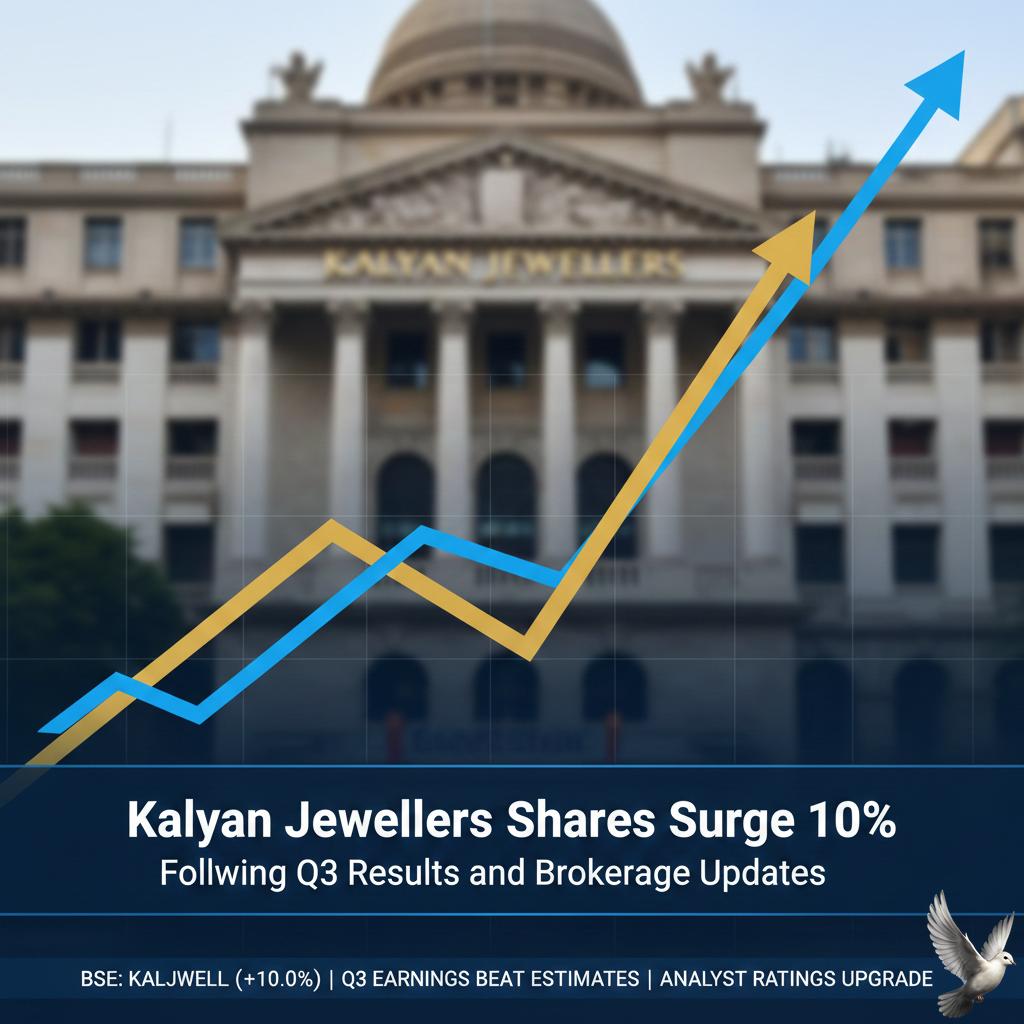
Kalyan Jewellers Shares Surge 10% Following Q3 Results and Brokerage Updates
Kalyan Jewellers India has delivered a record-breaking performance in the third quarter of the 2026 fiscal year. Consolidated net profit surged by an impressive 90.36%, reaching 416.29 crore. This marks a significant jump from the 218.68 crore reported during the same period in the previous year. The company's revenue from operations witnessed a 42.11% increase, climbing to 10,343.41 crore. Strong consumer demand during the festive and wedding seasons served as the primary driver for this growth. The India-specific operations led the charge with an 84% rise in standalone profit. A key operational metric, Same-Store Sales Growth (SSSG), stood at 27% for the Indian market and 24% for international regions. The company also expanded its footprint by adding 21 new showrooms, bringing its global total to 469 locations as of December 2025. Market analysts have reacted with strong "Buy" recommendations following these results. JM Financial has set a bullish price target of 750, suggesting a potential upside of approximately 80% from recent levels. Motilal Oswal has also raised its target to 600, citing improved profit margins and operational efficiencies. The stock recently hit its 10% upper circuit, reaching a price of 417.75. As of February 6, 2026, the shares were trading near 379.80 with a total market capitalization of approximately 39,220 crore. Despite some recent volatility in gold prices, the management remains optimistic about finishing the fiscal year on a strong note. Broader market trends indicate a shift toward organized retail and branded jewelry. The Indian jewelry market is projected to grow at a steady rate, reaching an estimated 31.14 billion dollars by the end of 2026. This growth is fueled by rising disposable income and a cultural emphasis on gold as a primary store of value. Operational efficiency has also improved, with EBITDA margins expanding to 7.3% from 5.9% a year ago. Procurement efficiencies and a better product mix, including a turnaround in the Candere lifestyle brand, have contributed to this margin expansion. The company continues to lean into its capital-light franchise model, which now accounts for over 50% of its domestic revenue. This strategy, combined with a focus on high-value and contemporary designs, positions the firm to capture a larger share of the evolving consumer market.

Wall Street Flat as Markets Weigh AI Sector Rotation Against Economic Data
Market Overview: AI Shakeout and Sector Rotation U.S. equity markets are navigating a period of intense volatility as of February 9, 2026. While the Dow Jones Industrial Average recently achieved a historic milestone by crossing the **50,000** mark, the broader market remains sensitive to a deep shakeout in artificial intelligence and software sectors. Investors are recalibrating expectations as the "AI euphoria" of previous years shifts toward a more critical assessment of business model disruption and capital expenditure. The tech-heavy Nasdaq has faced significant pressure, recording its fourth consecutive weekly decline last week with a **2%** year-to-date loss. In contrast, the S&P 500 maintains a slim **1%** gain for the year. The primary source of friction remains the software industry, where a "SaaSpocalypse" narrative has emerged. Valuation multiples for software firms have seen their sharpest compression since 2002, with the sector's forward price-to-earnings ratio dropping by more than **10 points** in recent months. Technical Performance and Tech Divergence Market leadership is becoming increasingly fragmented. While software-as-a-service (SaaS) providers struggle with concerns over AI-driven seat-count compression, semiconductor and infrastructure companies continue to see pockets of strength. Nvidia led a late-week rebound with an **8%** surge, supported by massive capital expenditure forecasts from "hyperscalers." Amazon recently projected **$200 billion** in capital spending for 2026—a **50%** year-over-year increase—while Alphabet and Meta indicated their infrastructure investments could double compared to last year. This aggressive spending is a double-edged sword: it sustains demand for chips and data centers but fuels investor anxiety regarding profit margins and the ultimate return on invested capital. Economic Indicators and Inflation Outlook Investors are bracing for a critical "double whammy" of economic data this week. Following recent government shutdowns that delayed official reporting, the market is awaiting January’s employment figures and Consumer Price Index (CPI) data. Current headline inflation stands at **2.7%**, down from earlier peaks but still above the Federal Reserve's **2%** target. Core inflation remains sticky at approximately **3%**, largely due to the pass-through effects of recent tariffs and high housing costs. While the labor market shows signs of softening—with the unemployment rate holding near **4.4%**—consumer spending has remained resilient. Real personal consumption expenditures rose at an estimated annual rate of **3.2%** in the final quarter of last year, providing a fundamental floor for "old-economy" sectors like industrials and consumer staples. Market Sentiments and Key Trends * **Sector Rotation:** Money is actively moving out of high-multiple tech and into undervalued segments. Energy, industrials, and financials have outperformed tech year-to-date as investors seek "quality value" over speculative growth. * **Oversold Software:** Approximately **73%** of software stocks are currently categorized as "oversold," the highest reading on record. Some analysts suggest this creates a "barbell" opportunity, pairing high-growth AI infrastructure with beaten-down software leaders like Salesforce and Adobe. * **IPO Pipeline:** Despite secondary market volatility, the IPO backlog for 2026 is robust. Over **800 unicorns** are preparing for public debuts, specifically in AI infrastructure and specialty risk sectors, driven by a need for liquidity and clearer paths to profitability. * **Crypto Correlation:** Bitcoin’s recent bounce back above **$70,000** has momentarily decoupled from tech's weakness, though highly leveraged crypto-equity correlations remain a risk factor for broader market stability.

Silver and Gold Prices Rise as Silver Rebounds to Rs 2.6 Lakh
Market dynamics for precious metals shifted sharply as of Monday, February 9, 2026. Following a period of extreme turbulence that saw record highs followed by a historic liquidation, gold and silver futures on the MCX have staged a significant recovery. Gold futures for April delivery climbed over 2% to reach 1,58,500 per 10 grams in early trading. This rebound comes after a 12% drop from the January peak of 1,78,850. In spot markets, 24-karat gold is holding firm at approximately 1,56,600 per 10 grams across major Indian metros. Silver has experienced even more dramatic price swings. MCX silver futures for March delivery surged by 10,000, or roughly 4%, to hit 2,59,887 per kilogram. This follows a brutal sell-off where the white metal plummeted 36% from its January high of 4,04,500. Spot silver prices are currently steady around 2,85,000 per kilogram nationwide. The recent volatility was triggered by a "perfect storm" of factors. The nomination of Kevin Warsh as Fed Chair fueled expectations of a hawkish interest rate path, strengthening the US dollar. Additionally, the Chicago Mercantile Exchange (CME) raised margin requirements for silver to 15% and gold to 8%, forcing highly leveraged traders to liquidate positions rapidly. Global sentiment is now finding a floor. A softening US economy and a weaker dollar index, currently near 97.80, are supporting bullion. Geopolitical tensions, particularly involving US-Iran negotiations and shifting fiscal policies following a landslide election victory for Japanese Prime Minister Sanae Takaichi, have reinforced gold's safe-haven appeal. Traders are now focused on a heavy week of US macroeconomic data. The January jobs report, delayed by a previous government shutdown, is due Wednesday, followed by crucial CPI inflation data on Friday. Analysts expect non-farm payrolls to rise by 70,000 and the unemployment rate to hold at 4.4%. Expert outlook remains cautiously positive for the long term. While near-term volatility is expected to persist, technical support for gold is pegged near 1,50,500 on the MCX, with resistance at 1,60,000. Silver shows support at 2,25,000, with resistance levels testing the 2,64,000 range. Physical demand, especially ahead of the Lunar New Year in mid-February, is expected to provide a further cushion against deep corrections.
Asian Equities Advance as Japanese Stocks Reach Record High
Asian markets surged to historic levels this Monday, ignited by a decisive political shift in Tokyo. Prime Minister Sanae Takaichi’s ruling coalition secured a two-thirds supermajority in the weekend’s parliamentary elections, providing a massive mandate for her "Sanaenomics" agenda. Investors have pivoted toward aggressive buying on expectations of bold fiscal stimulus, tax cuts, and enhanced public spending. The Nikkei 225 led the charge, skyrocketing as much as 5.7% to hit a fresh all-time high of 57,337.07. The broader Topix index also climbed significantly, jumping 3.4% to its own record peak. The regional rally was further supported by a strong recovery on Wall Street. Following a period of volatility, the Dow Jones Industrial Average crossed the 50,000 mark for the first time in history on Friday. This momentum crossed into Asia, where South Korea’s Kospi surged nearly 5% and Australian markets remained resilient despite local interest rate hikes to 3.85%. Chip stocks are back in the spotlight as the primary engine of growth. Sentiment in the semiconductor sector was bolstered by news that Samsung Electronics will begin mass production of next-generation HBM4 memory chips this month, sending its shares up over 5%. Global chip demand remains relentless, with the industry projected to reach 975 billion USD in sales for 2026. Despite the euphoria, the shift toward proactive fiscal policy is impacting currency and bond markets. The Japanese yen showed volatility, moving away from recent intervention zones, while the 10-year Japanese Government Bond (JGB) yield has trended higher, recently touching 2.25%. Markets are now bracing for a shift from cost-push to demand-pull inflation in Japan. Analysts anticipate the Bank of Japan may implement further rate hikes, potentially reaching 1.00% later this year, as the Takaichi administration prioritizes wage growth and industrial investment in strategic sectors like AI and defense. The current atmosphere is defined by a clear rotation into cyclical stocks and previously devalued sectors. With political ambiguity removed in Japan and a technical rebound in global tech, the short-term outlook remains firmly risk-on across the Asian landscape.

Sensex Rises 600 Points and Nifty Reaches 25,900 Amid Global Gains and India–US Trade Optimism
Market Brief: Indian Equities Surge on Global Optimism Indian benchmark indices opened with strong gains this Monday, February 9, 2026. The **Sensex surged 600 points** to reach **84,177**, while the **Nifty 50 climbed 200 points** to trade at **25,888**. Both indices marked an initial rise of **0.7%**, driven by a wave of positive global sentiment and historic trade developments. Investor confidence was significantly bolstered by the announcement of an interim **India-US trade deal framework**. Under this pact, the United States will reduce tariffs on key Indian exports—including textiles, apparel, leather, and footwear—to **18%**. In exchange, India has committed to trimming or eliminating duties on US industrial goods and various agricultural products. Global cues provided a supportive backdrop as major international indices rallied. In the US, the **Dow Jones surged 2.5%** to set a fresh historic high above **50,000**, while the **S&P 500 and Nasdaq gained 1.9% and 2.1%** respectively. Asian markets followed suit, with Japan’s **Nikkei 225 jumping over 4%** in early trade. Domestic sectoral performance was led by **PSU Banks**, with the sector seeing gains of up to **3.4%**. **State Bank of India (SBI)** was a standout performer, surging **6%** after reporting a record quarterly profit of **₹21,028 crore**. The **Metal sector** also tracked higher, rising by **1%** amid firm global commodity prices. In the currency market, the **Indian rupee** saw a slight dip of 2 paise, trading at **90.67 against the US dollar**. Meanwhile, crude oil prices remained a key monitorable for traders, hovering between **$68 and $70 per barrel** due to ongoing geopolitical tensions. Market participants are now focusing on a heavy line-up of corporate earnings scheduled for today. Major firms including **BSE Ltd, Zydus Lifesciences, and Aurobindo Pharma** are set to release their December quarter results, which could dictate the momentum for the remainder of the session.

PFC and REC Shares Trade in Focus Following Board Approval of Merger
Power Finance Corporation (PFC) and REC Limited have received in-principle board approval for a strategic merger. This follows a high-profile proposal in the Union Budget 2026-27 to restructure public sector NBFCs. The consolidation is designed to create a massive financing entity capable of driving India’s ambitious energy transition and infrastructure goals. The merged entity will maintain its status as a Government Company. This structural shift aims to optimize credit flow and improve operational efficiency across the power sector. Currently, the two companies manage a combined loan book exceeding 11.50 trillion. Financial highlights for the quarter ending December 2025 demonstrate robust growth. PFC reported a consolidated net profit of 8,212 crore, a 6% increase year-on-year. On a standalone basis, PFC’s profit rose 15% to 4,763 crore. Asset quality has seen a marked improvement, with PFC’s gross non-performing assets (NPA) dropping to 1.64% from 1.94% in the previous year. Lending activity remains focused on the future. PFC’s renewable energy portfolio has reached 81,031 crore, supporting approximately 60 gigawatts of green capacity. REC has similarly expanded its renewable book to nearly 58,000 crore. These figures align with India's goal of reaching 500 gigawatts of non-fossil fuel capacity by 2030. Shareholder returns have remained a key highlight. PFC recently declared a third interim dividend of 4 per share for the 2025-26 fiscal year. This brings the total dividend payout for the year to 11.35 per share. The stock has delivered staggering returns of 264% over the last three years, firmly placing it in the multibagger category. As of February 9, 2026, PFC shares are trading near 419 with a market capitalization of approximately 1.39 trillion. REC maintains a market cap of around 98,000 crore with a share price of 372. The market continues to watch for the detailed merger scheme, which will outline the final swap ratios and administrative integration. This restructuring marks a pivotal step in the "Viksit Bharat" vision. By scaling up, the new entity will have an increased risk appetite and greater capacity to fund mega-scale projects in energy storage, green hydrogen, and grid integration.

Post-Budget FII positioning and technical outlook for Nifty: Anand James
Equity markets are currently navigating a high-voltage phase as they digest the impact of the Union Budget 2026. While the immediate aftermath saw the Nifty 50 and Sensex plunge nearly 2% due to a sharp hike in Securities Transaction Tax (STT), a powerful rebound has since emerged. This recovery was fueled by a historic India-US trade deal, which saw US tariffs on Indian goods slashed from 50% to 18%, injecting a much-needed dose of optimism into the domestic landscape. Institutional flows are showing signs of a pivot. After massive net selling of over ₹43,000 crore in January, foreign institutional investors (FIIs) have transitioned to net buyers in recent sessions. Recent data shows FIIs injecting approximately ₹1,950 crore in a single day, while domestic institutional investors (DIIs) provide a steady cushion. The FII long-short ratio is being closely monitored as negative bets are gradually reduced, though the Put-Call Ratio (PCR) of 1.02 suggests a balanced but still cautious bias. The IT sector remains a significant point of concern and is currently the primary drag on the broader indices. The Nifty IT index recently emerged as the worst-performing sector, falling by nearly 7% in a single week. Heavyweights like TCS and Infosys have faced selling pressure due to global artificial intelligence shifts and growth apprehensions. Technical indicators signal that the sector has entered a consolidation phase, with analysts identifying "make or break" support levels that must hold to prevent further structural decline. Volatility, as measured by the India VIX, remains elevated near the 13–15 level, reflecting a fragile sentiment despite recent gains. The Nifty 50 is currently oscillating within a wide range, with immediate resistance established at 26,000 and critical support at 25,500. A sustained move above the 25,800 mark is required to confirm a positive trend and invite fresh momentum buying. Market participants are now shifting focus to a news-heavy week featuring retail inflation data and a flurry of Q3 earnings reports. While the India-US trade framework has bolstered export prospects, particularly for gems, jewelry, and auto components, the overall market remains event-driven. Investors are maintaining a "wait and watch" approach, prioritizing capital protection as the market attempts to find a stable floor post-budget.

IT Stocks Gain Traction Amid Recovery in US Tech Shares
The Indian IT sector is navigating a period of heightened volatility as of February 2026. After a turbulent start to the month, the Nifty IT index remains under significant pressure, recently recording a sharp weekly decline of 6.91%. This downturn was intensified by a major sell-off on February 4, where the index plunged 7.27% in a single session, marking one of its most volatile days in recent years. Market sentiment is currently caught between short-term technical shocks and long-term structural shifts. While a recent rebound in US technology shares has provided some relief to domestic software stocks, the recovery remains fragile. Frontline companies like Infosys and TCS saw intraday drops of up to 9% earlier this month, driven by global reassessments of business models in the face of rapid generative AI advancements. Key performance indicators for the sector are showing a mix of resilience and strain. For Q3 FY26, major firms reported constant currency growth of less than 5%, reflecting a cautious global spending environment. However, there are emerging silver lining trends. AI-led services are scaling rapidly, with firms like TCS and HCL Tech reporting AI revenue growth of nearly 20% on a quarter-on-quarter basis. Valuations for large-cap IT players have moderated, with Infosys trading at approximately 22 times earnings. Analysts are closely watching margin stability as currency benefits from a 2% rupee depreciation are being largely offset by wage hikes and one-time regulatory costs. Despite the current "rough ride" for AI-related stocks, the sector is projecting a recovery toward 7.7% growth for FY27. Investors are now shifting focus from broad-based rallies to stock-specific quality. Deal pipelines remain robust, with over 70% of new contracts now centered on AI and automation. While near-term uncertainty persists due to US policy shifts and AI disruption fears, the industry is transitioning toward an asset-led model that prioritizes productivity gains over traditional manpower-based services. [How Indian IT companies are using AI](https://www.youtube.com/watch?v=yzQ_5pcVxsw) This video provides an expert roundtable discussion on how major Indian IT firms are integrating AI into their business models to drive revenue growth despite current market challenges. http://googleusercontent.com/youtube_content/0