Bullish News
Collection
Government to Monetise CPSE Real Estate Assets via Dedicated REITs
**MARKET BRIEF: Government Launches CPSE REITs Push** **Date:** February 2, 2026 **Subject:** Union Budget 2026-27: Asset Monetization & CPSE Real Estate Strategy **The Core Proposal** In the Union Budget 2026-27 presented on Sunday, the government formally proposed the creation of dedicated **Real Estate Investment Trusts (REITs)** for Central Public Sector Enterprises (CPSEs). This marks a strategic pivot in the "Asset Recycling" drive. Instead of outright land sales—which often face litigation and valuation hurdles—the government aims to pool income-generating real estate assets of state-owned firms into publicly listed REITs. **Strategic Objectives** * **Unlock Idle Capital:** The primary goal is to monetize the massive land banks and commercial properties held by entities like BSNL, MTNL, Railways, and Defense PSUs. * **Fund Infrastructure:** Proceeds from these REITs will be "recycled" to fund the **₹12.2 lakh crore** capital expenditure (Capex) target set for FY27. * **Efficiency:** Transferring assets to a REIT structure ensures professional management and higher occupancy rates compared to passive government ownership. **The Execution Vehicle** The **National Land Monetization Corporation (NLMC)** acts as the specialized agency for this initiative. Recent tender activity indicates the NLMC has already initiated valuation processes for non-core assets of telecom majors (BSNL/MTNL). These "brownfield" assets—which have stable revenue potential—are the likely first candidates for these dedicated REIT listings. **Market Landscape & Investor Impact** The Indian REIT market is currently valued at over **₹2.3 lakh crore** with five listed entities (Embassy, Mindspace, Brookfield, Nexus Select, and Knowledge Realty). * **Retail Access:** This move allows retail investors to own a fractional share of prime government real estate, offering a new avenue for stable, dividend-based passive income. * **Market Depth:** The entry of large-cap CPSE REITs is expected to significantly deepen the Indian real estate capital markets, which are projected to reach a market capitalization of **$25 billion** by 2030. **Key Figures** * **₹12.2 Lakh Crore:** Infrastructure Capex target the government aims to support via asset recycling. * **5 Listed REITs:** The current market size, set to expand with public sector entries. * **₹47,000 Crore:** The combined disinvestment and asset monetization receipt target for FY26. **Outlook** The proposal signals a move from "selling family silver" to "leveraging balance sheets." Success will depend on the speed of title clearances and the ability of the NLMC to bundle fragmented land parcels into cohesive, investment-grade portfolios. The initial focus remains on commercial office spaces and surplus land in metro corridors.
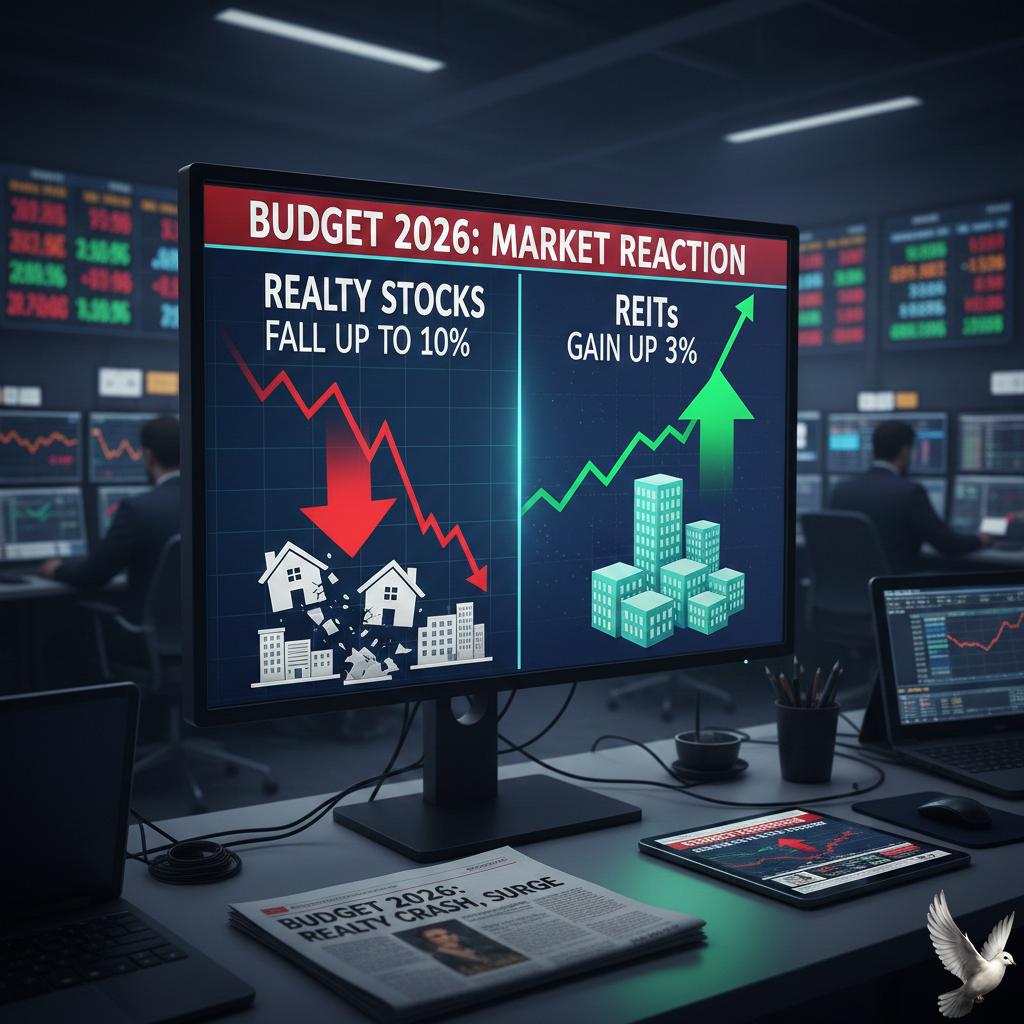
Budget 2026: Realty Stocks Fall Up to 10%, REITs Gain Up to 3%
**Realty Sector Update: Post-Budget Reaction** **Market Sentiment: Bearish** Real estate stocks faced heavy selling pressure on Monday, Feb 2, 2026, as the Union Budget 2026-27 fell short of industry expectations. The **Nifty Realty index** dropped nearly **2%**, weighed down by the absence of fresh incentives for affordable housing and a broader market sell-off triggered by the hike in Securities Transaction Tax (STT) on derivatives. **Key Losers** Developer stocks saw the steepest declines as hopes for GST rationalization and homebuyer tax relief evaporated. * **Macrotech Developers (Lodha)** plunged over **5%**. * **Godrej Properties** and **Sobha** registered losses exceeding **5%**. * **DLF** and **Oberoi Realty** also traded in the red, reflecting the damp sentiment across the residential segment. **REITs Outperform** In contrast to developers, Real Estate Investment Trusts (REITs) displayed relative resilience. The Finance Minister's announcement to establish **dedicated REITs** for monetizing assets of Central Public Sector Enterprises (CPSEs) was viewed as a structural positive. This move is expected to deepen the institutional market and unlock value in public infrastructure, supporting the long-term thesis for commercial assets despite the immediate gloom. ... [Budget 2026 market impact analysis](https://www.youtube.com/watch?v=Ussr9FZRVWg) This video offers a comprehensive breakdown of the Union Budget 2026 highlights and explains the sharp market reaction across key sectors, including real estate. http://googleusercontent.com/youtube_content/0
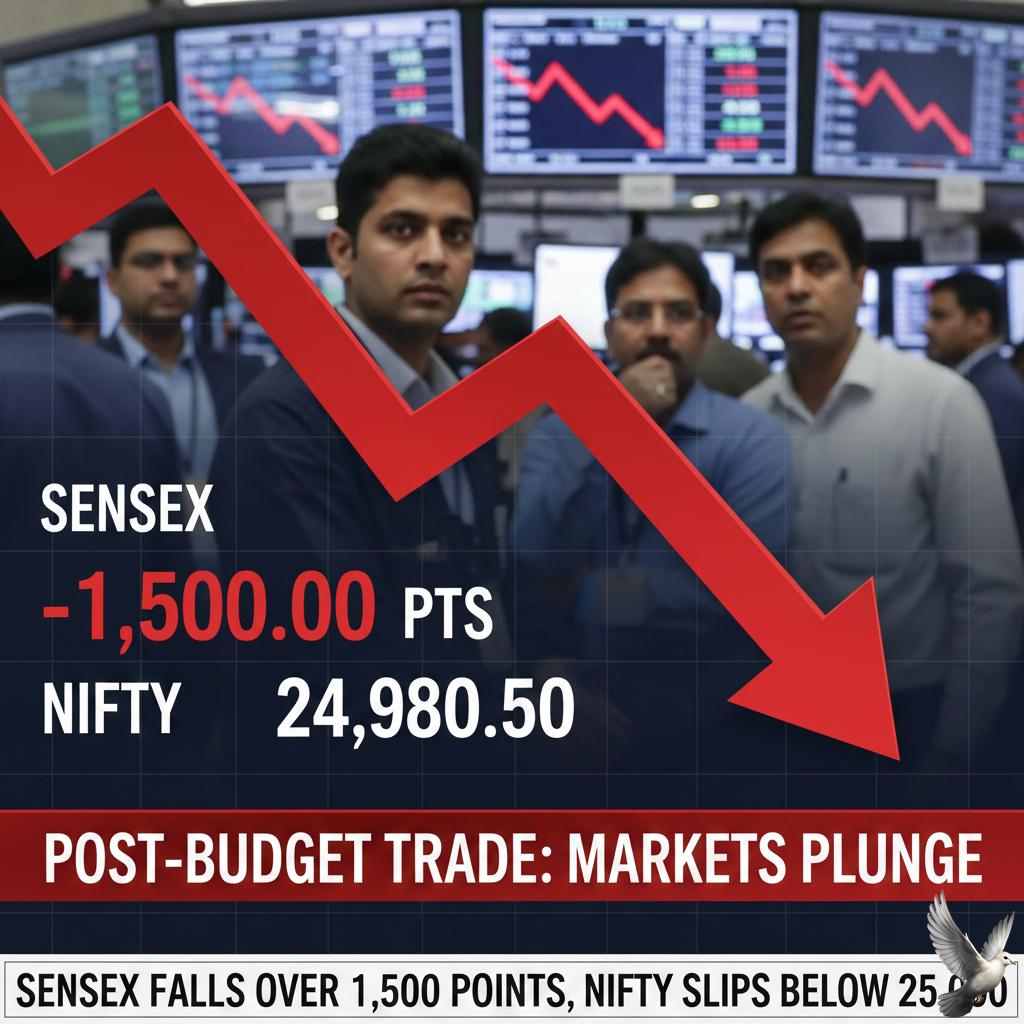
Sensex Falls Over 1,500 Points, Nifty Slips Below 25,000 in Post-Budget Trade
**MARKET BRIEF: Budget 2026 Triggers Sharp Correction** **Sunday Special Session Ends in Deep Red** Indian equity markets witnessed a severe downturn during Sunday’s special trading session following the Union Budget 2026 presentation. A steep hike in the Securities Transaction Tax (STT) on derivatives spooked sentiment, leading to a broad-based sell-off. **The Trigger: Massive STT Hike** Finance Minister Nirmala Sitharaman announced a crackdown on speculative trading with aggressive tax revisions: * **Futures:** STT raised to **0.05%** (from 0.02%) — a **150%** increase. * **Options:** STT on premiums raised to **0.15%** (from 0.1%) — a **50%** increase. * **Rationale:** The move aims to curb excessive retail participation in the F&O segment and "course correct" market stability. **Market Impact** Benchmark indices plunged to 2026 lows as traders priced in higher transaction costs and reduced liquidity. * **Sensex:** Crashed **1,547 points** (-1.88%) to close at **80,722**. * **Nifty 50:** Slumped **495 points** (-1.96%) to settle at **24,825**. * **Wealth Erosion:** Investors lost approximately **₹10 lakh crore** in market capitalization in a single session. **Sector Watch: Brokerages & Exchanges Hammered** Stocks directly linked to trading volumes faced the harshest selling pressure, fearing a decline in active trader participation. * **BSE Ltd:** Plummeted **~15%** intraday. * **MCX:** Tanked over **12%**. * **Angel One:** Dropped **~13%**, hitting lower circuits. * **Nifty PSU Bank:** The worst-performing sectoral index, shedding over **5.5%**. **Additional Pressure Points** * **Buyback Tax:** Buyback proceeds will now be taxed as capital gains for shareholders, removing a key tax-efficient reward route. * **FII Flows:** Foreign investors, already net sellers in January, are expected to remain cautious due to increased impact costs. **Outlook:** Markets are likely to remain volatile as high-frequency traders and arbitrageurs adjust their strategies to the new tax regime. The focus now shifts to whether the cash market can absorb the liquidity shock from the derivatives segment.
Budget 2026: FM Proposes FEMA Overhaul, Introduces Total Return Swaps for Corporate Bonds
**Union Budget 2026: Strategic Shift in Foreign Investment & Debt Markets** **FEMA Framework Modernization** Finance Minister Nirmala Sitharaman has unveiled a comprehensive review of the Foreign Exchange Management (Non-Debt Instruments) Rules under Union Budget 2026. This initiative aims to simplify cross-border capital flows and align regulations with India's evolving economic priorities. Key proposals to boost foreign participation include: * **Doubling Limits:** The investment cap for individual Non-Resident Indians (NRIs) under the Portfolio Investment Scheme (PIS) is proposed to increase from **5% to 10%**. * **Aggregate Ceiling:** The overall limit for NRI investments is set to rise significantly from **10% to 24%**. * **Insurance Sector:** A major push for long-term capital with a proposal to hike the FDI limit in the insurance sector to **100%**, up from the previous 74%. **Deepening the Corporate Bond Market** To enhance liquidity and price discovery in the debt market, the government has proposed the introduction of **Total Return Swaps (TRS)** on corporate bonds. This derivative instrument will allow investors to hedge risks and gain exposure to bond returns—both interest income and capital appreciation—without holding the underlying asset. Additional structural reforms include: * **Market-Making Framework:** A new mechanism involving access to funds and derivatives on corporate bond indices to support sustainable liquidity. * **Municipal Bond Incentives:** A fiscal incentive of **₹100 crore** for large cities issuing municipal bonds exceeding **₹1,000 crore**, aiming to reduce reliance on traditional bank financing. **Market Implications** These measures tackle long-standing structural frictions in India's debt market. By permitting TRS, the government is opening a new channel for foreign capital that was previously constrained by ownership restrictions or custody issues. Analysts project these moves will narrow the spread between corporate bond yields and government securities, fostering a more vibrant secondary market. Simultaneously, the easing of FEMA rules and PIS limits is expected to attract stable, long-term inflows from the global Indian diaspora, countering volatility in Foreign Portfolio Investor (FPI) flows. *** **Strategic Takeaway** The dual focus on regulatory simplification (FEMA) and product innovation (TRS) signals a transition from bank-led financing to market-based capital formation. Investors should monitor the upcoming detailed notifications from the RBI and SEBI for implementation timelines. ... [FM Sitharaman Proposes Review Of FEMA Rules](https://www.youtube.com/shorts/X-cjEFV4f6w) ... This video provides a concise summary of the Finance Minister's announcement regarding the proposed changes to FEMA rules and their intended impact on foreign investment. http://googleusercontent.com/youtube_content/0
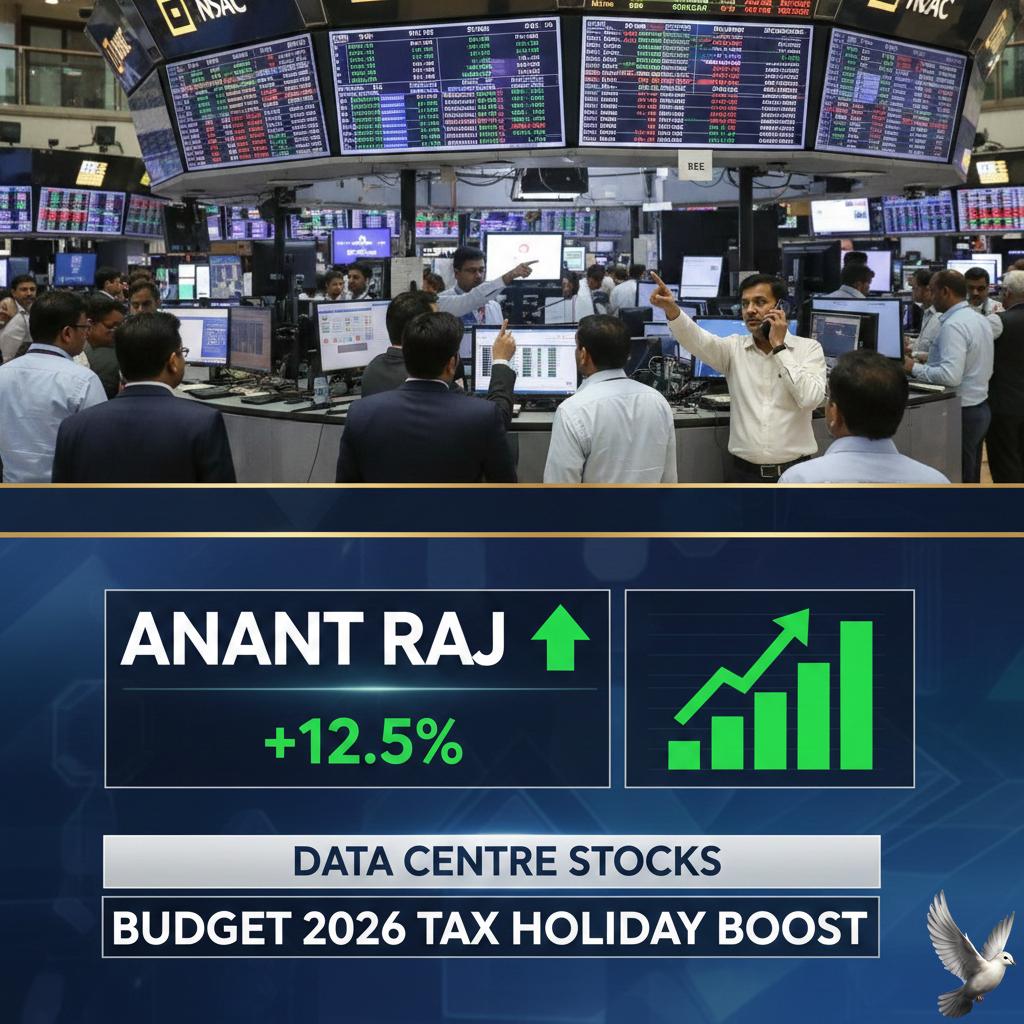
Anant Raj, Data Centre Stocks Gain on Budget 2026 Tax Holiday Announcement
**Market Brief: Data Centre Stocks Rally on 2047 Tax Holiday** **The Trigger** Indian data centre stocks witnessed a sharp rally following the Union Budget 2026 announcement. The Finance Minister proposed a **tax holiday until 2047** for foreign cloud companies operating from Indian data centres. This strategic move aims to position India as a global digital hub, incentivizing hyperscalers to establish long-term infrastructure in the country. **Key Beneficiaries & Price Action** The policy acted as a massive catalyst for mid-cap and niche infrastructure players: * **Anant Raj Limited:** Emerged as a top gainer, surging approximately **14%** to hit an intraday high of **₹576**. The market reacted positively to its aggressive expansion into data centre parks in North India. * **Techno Electric & Engineering:** The stock jumped over **8%**, trading above **₹1,030**. Investors are betting on increased orders for power infrastructure, a critical component for data centres. * **Netweb Technologies:** Gained **5-6%** to close near **₹3,305**. As a key supplier of high-performance computing servers, the company is expected to see a direct order book boost from incoming foreign investment. * **Orient Technologies:** Witnessed strong buying interest, climbing nearly **9%** initially before settling around **₹349**, driven by its IT infrastructure services portfolio. * **Cummins India:** Saw a modest rise of **1-2.5%**, reflecting steady demand for power backup solutions (gensets), which are essential for maintaining the mandated **99.99%** uptime in data centres. **The Outlier** **Adani Enterprises** traded against the sector trend, slipping marginally by **0.7%**. Despite its joint venture, AdaniConneX, the stock was weighed down by broader market pressure and specific tax hikes on derivatives (F&O) trading which impacted large-cap sentiment. **Policy Details** To qualify for the **21-year tax exemption**, foreign entities must serve Indian clients through a local reseller. Additionally, the government introduced a **15% safe harbour** on costs for related entities, reducing transfer pricing risks and improving ease of business for global tech giants.
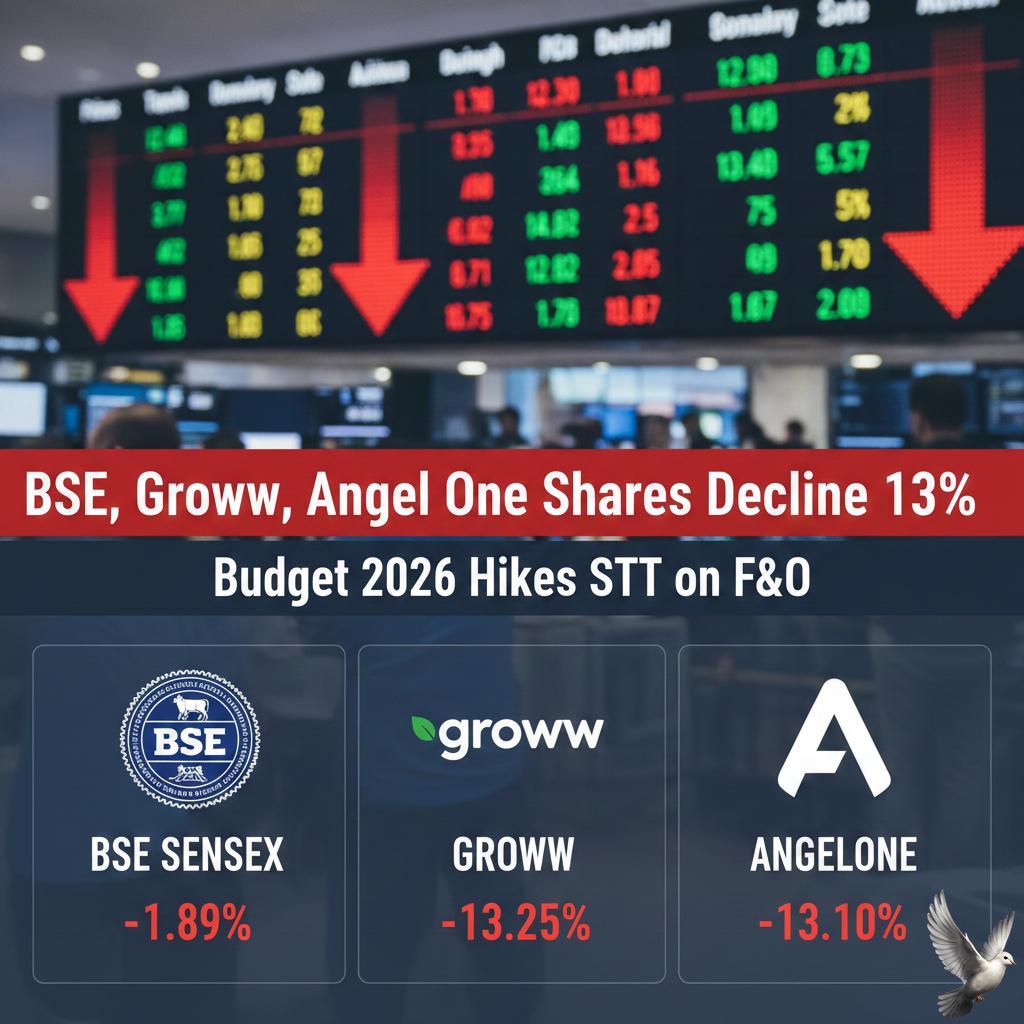
BSE, Groww, Angel One Shares Decline 13% as Budget 2026 Hikes STT on F&O
**Market Brief: Budget 2026 & Derivatives Taxation Update** **Sharp Hike in STT Proposed** Finance Minister Nirmala Sitharaman presented the Union Budget 2026-27 on **February 1, 2026**, announcing a significant increase in the Securities Transaction Tax (STT) on derivative segments. The move is explicitly aimed at curbing excessive speculative activity in the futures and options (F&O) markets. **Revised Rates** Effective **April 1, 2026**, the tax burden on traders will increase as follows: * **Futures:** STT raised to **0.05%** from the previous 0.02%. * **Options Premium:** Levy increased to **0.15%** from 0.10%. * **Options Exercise:** Tax hiked to **0.15%** from 0.125%. **Market Reaction: Indices Tumble** The announcement triggered an immediate sell-off in Indian equities. The benchmark **BSE Sensex** plunged approximately **1,547 points** (1.9%) to close at **80,723**, while the **Nifty 50** dropped nearly **495 points** to end the session at **24,825**, slipping below the psychological 25,000 mark. **Brokerage Stocks Hit Hard** Stocks directly linked to trading volumes faced severe pressure. Shares of exchange operators and brokerages like **BSE Ltd** and **Angel One** recorded intraday declines of up to **13.5%**, reflecting concerns over a potential dip in trading turnover due to higher transaction costs. **Strategic Implications** Analysts suggest the cumulative increase in transaction costs will disproportionately impact high-frequency traders (HFTs), hedgers, and arbitrageurs. While long-term investors remain largely unaffected, the elevated STT is expected to widen impact costs and potentially consolidate liquidity in the near term. **Government Rationale** The Finance Ministry cited the exponential growth in derivative volumes—now estimated at over **500 times the GDP**—as a systemic risk. The tax hike serves a dual purpose: generating additional revenue and dampening "purely speculative" participation in the derivatives segment.
India Raises Overseas Individual Equity Investment Limits Under PIS in Union Budget 2026
**Market Brief: Budget 2026 & The Strategic Pivot to Global Retail Capital** **February 1, 2026** **Market Snapshot** Indian equity markets entered the Budget session on a defensive note, with the **BSE Sensex** closing at **82,270** and the **Nifty 50** hovering around **24,825** in the final trading session of January. The cautious sentiment follows a volatile fiscal year where Foreign Portfolio Investors (FPIs) recorded a net outflow of approximately **$3.9 billion** by December 2025, driven largely by capital shifts toward AI-centric markets in the US and Taiwan. **Key Announcement: Direct Equity Access for Overseas Individuals** The Union Budget 2026 has introduced a structural overhaul to foreign investment norms, specifically targeting the global Indian diaspora and overseas individuals. Finance Minister Nirmala Sitharaman announced that **Persons Resident Outside India (PROIs)**—a category broader than just NRIs—will now be permitted to invest directly in listed Indian equities through the **Portfolio Investment Scheme (PIS)**. **Revised Investment Limits** To incentivize this participation, the individual investment cap for PROIs in a single listed company has been doubled. * **Individual Limit:** Increased from **5%** to **10%** of paid-up capital. * **Aggregate Limit:** Raised from **10%** to **24%** for all PROIs combined. **Strategic Implications** This policy shift aims to counterbalance the volatility of institutional FPI flows by tapping into "stickier" retail capital from abroad. By aligning PROI limits more closely with FPI structures, the government intends to deepen capital market participation and provide a buffer against global institutional sell-offs. The move also signals a transition from an approval-driven regime to a market-oriented framework for individual foreign investors. **The GIFT City Corridor** While the PIS route offers direct access to domestic exchanges, **GIFT City** continues to serve as a tax-efficient parallel gateway. Recent updates to the International Financial Services Centres Authority (IFSCA) regulations maintain attractive incentives, including zero capital gains tax on specified securities and tax-free dividend income for offshore investors. The dual-channel approach—enhanced PIS limits for direct entry and GIFT City for tax-optimized structures—creates a comprehensive ecosystem for channeling long-term foreign retail inflows into India’s growth story.

Travel Stocks Rally Up to 9% Following Budget 2026 Tourism Announcements
**Market Brief: Tourism Stocks Defy Budget Sell-Off** **Date:** February 1, 2026 **Event:** Union Budget 2026-27 Reaction **Snapshot** Tourism and hospitality stocks emerged as a rare bright spot today, surging against a broader market crash. While the Sensex plunged ~1,500 points following a hike in Securities Transaction Tax (STT) on F&O, travel counters rallied on sector-specific stimulants. **Key Drivers** * **TCS Rationalization:** A major boost for outbound travel—Tax Collected at Source (TCS) on overseas tour packages slashed to a uniform **2%** (down from higher slabs), aimed at lowering upfront costs for travelers. * **Medical & Skilling Push:** Announcement of **5 regional medical tourism hubs** and a new **National Institute of Hospitality** to bridge the skills gap. * **Infrastructure:** Development of an integrated **East Coast tourism corridor** and Buddhist circuits in the North East. **Sector Performance** * **Easy Trip Planners:** The day's standout gainer, surging **9–11%**. The stock reacted sharply to the TCS cut, which directly aids volume growth for international bookings. * **Lemon Tree Hotels:** Jumped **~6%**, outperforming peers as mid-segment demand remains robust. * **Premium Hospitality:** **Indian Hotels** (+1%), **EIH** (+2%), and **ITC Hotels** (+1%) held firm in green territory, supported by the long-term infrastructure narrative. * **Contrasting Moves:** **ITC Ltd** (parent entity) faced pressure, dropping **~3-4%** to 52-week lows due to a statutory hike in cigarette taxes and NCCD rates. **Thomas Cook** saw minor profit-booking (-2%) despite favorable policy. **Outlook** The Budget’s multi-pronged approach—combining immediate tax relief (TCS cut) with long-term capacity building (medical hubs, skilling)—signals sustained government support. While the broader market digests the STT shock, the hospitality sector appears positioned for a structural upcycle driven by domestic infrastructure and revived outbound demand.
Railway Stocks Gain Up to 3% on Budget 2026 Proposal for 7 High-Speed Corridors
**Market Brief: Railway Sector Surge | Budget 2026 Special Session** **Date:** Sunday, February 1, 2026 **Event:** Union Budget 2026-27 Announcement **The Headline** Railway stocks staged a sharp rally in today’s special Sunday trading session, driven by Finance Minister Nirmala Sitharaman’s aggressive infrastructure push in the Union Budget 2026-27. The sector reacted positively to the unveiling of **seven new high-speed rail corridors**, aimed at transforming inter-city connectivity across India. **Key Policy Triggers** The Finance Minister labeled the new routes as "Growth Connectors," targeting high-density economic zones. The announced corridors include: * **South India Loop:** Mumbai–Pune, Pune–Hyderabad, Hyderabad–Bengaluru, Hyderabad–Chennai, Chennai–Bengaluru. * **North-East Link:** Delhi–Varanasi and Varanasi–Siliguri. This massive capital expenditure plan (projected capex hike of ~15%) signals a shift from network expansion to high-speed modernization, directly benefiting rolling stock manufacturers and specialized EPC contractors. **Market Reaction & Top Movers** Investor sentiment turned bullish immediately following the speech, with key indices and individual stocks seeing significant volume. * **RailTel Corporation:** Top gainer, surging **4.48%** to **₹369.60**, fueled by expectations of signaling and telecom upgrades for the new high-speed tracks. * **Titagarh Rail Systems:** Climbed **3%** to **₹843**, cementing its position as a primary beneficiary for wagon and coach manufacturing orders. * **IRFC (Indian Railway Finance Corp):** Rallied over **3%** to **₹124**, reflecting confidence in the financing demand for these large-scale projects. * **RVNL (Rail Vikas Nigam Ltd):** Rose **2%** to touch a day’s high of **₹351**, driven by its strong order book potential in executing these new corridors. * **IRCON International:** Advanced **3%** to **₹168**. **Analyst Sentiment** The market views the "Growth Connector" initiative as a long-term revenue driver. Unlike previous budgets focused on track renewal, the 2026-27 focus on semi-high-speed and high-speed transit is expected to expand order books for technology and civil construction firms well into FY30. **Next Step for You:**
PFC, REC Shares Gain Up to 6% Following Budget 2026 Restructuring Announcement
**Market Brief: Power Sector Overhaul & Budget 2026 Impact** **Subject:** PFC & REC Restructuring Announced in Union Budget 2026 **Executive Summary** Finance Minister Nirmala Sitharaman delivered a pivotal announcement for the power financing sector during today’s Union Budget 2026 speech. The government plans to restructure state-run lenders **Power Finance Corp. (PFC)** and **REC Ltd.** to create a more robust public sector financial framework. This move, part of the broader *Viksit Bharat* initiative, aims to eliminate operational overlaps and enhance lending scale for India’s growing energy needs. **Key Announcements** * **Restructuring:** A strategic overhaul of PFC and REC to unify strengths and improve efficiency. PFC currently holds a **52.63%** majority stake in REC. * **Sector Review:** Formation of a high-level committee to conduct a comprehensive review of the financial sector, aligning it with future growth targets. * **Strategic Goal:** The initiative focuses on scaling up financing capabilities to support India’s infrastructure and renewable energy targets, specifically the **500 GW** non-fossil fuel goal by 2030. **Market Reaction: Immediate Surge** Investors responded positively to the potential synergy benefits, reversing the bearish trend seen throughout 2025. * **Power Finance Corp. (PFC):** Shares surged approximately **6%**, hitting an intraday high of **₹401.45**. * **REC Ltd.:** Stock gained over **4.3%**, reaching a high of **₹379.90**. * **Trend Reversal:** Both stocks had previously underperformed in 2025, declining between **20-30%**. The announcement has sparked fresh investor interest, positioning these PSUs as central pillars in the government's infrastructure push. **Sector Outlook** The restructuring comes at a critical time. India successfully met a peak power demand of **242.49 GW** in FY26, with energy shortages dropping to near zero. The consolidation of PFC and REC is expected to streamline lending for capital-heavy projects in green energy and transmission, ensuring faster disbursement and better asset quality. **Conclusion** The Budget 2026 proposal signals a definitive shift toward consolidation in the PSU financial space. While specific details on the merger mechanics or timeline are awaited, the market's initial verdict is bullish, anticipating reduced borrowing costs and a stronger balance sheet for the combined entity. *** *
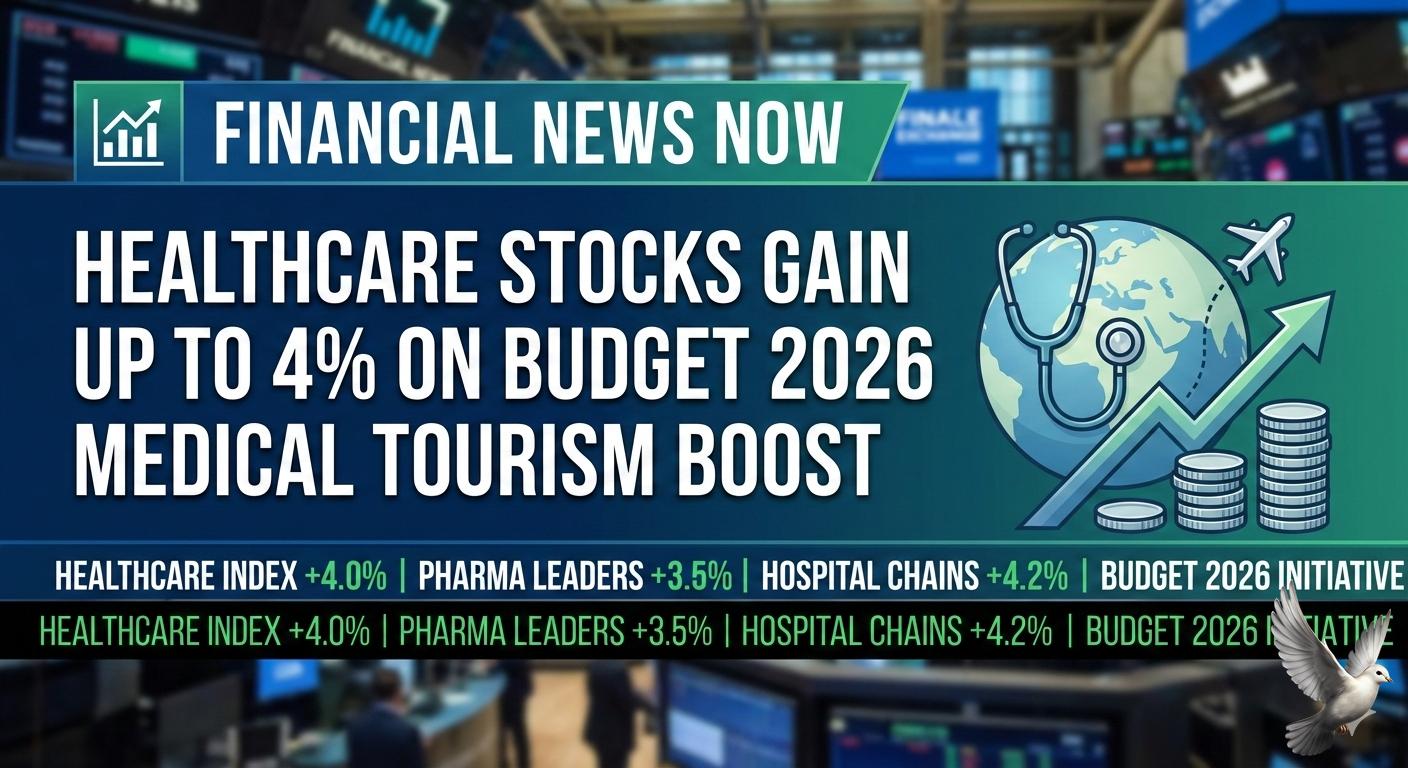
Healthcare Stocks Gain Up to 4% on Budget 2026 Medical Tourism Boost
**Market Brief: Healthcare Sector & Union Budget 2026** **Sector Sentiment: Bullish** Indian healthcare stocks witnessed a sharp upside momentum today following the Union Budget 2026-27 presentation. The headline announcement of a **Rs 10,000 crore** "Biopharma Shakti" initiative has catalyzed buying interest across large-cap and mid-cap pharma counters. **Key Budget Announcements** Finance Minister Nirmala Sitharaman unveiled a strategic roadmap to position India as a global healthcare destination. The central government will partner with states and the private sector to establish **five Regional Medical Hubs**. These integrated complexes are designed to streamline medical value tourism, offering end-to-end services for international patients. To support this infrastructure, the Centre targets training **1.5 lakh caregivers** and allied health professionals. This workforce expansion aims to bridge the domestic skill gap while meeting the rising demand for geriatric and specialized care services globally. **Biopharma Shakti Initiative** The most significant trigger for the sector is the **Rs 10,000 crore** outlay for the "Biopharma Shakti" scheme over the next five years. This capital is allocated to accelerate the domestic production of complex biologics and biosimilars, moving the industry up the value chain from traditional generics. The initiative includes upgrading seven existing National Institutes of Pharmaceutical Education and Research (NIPERs) and establishing **three new NIPERs** focused specifically on biopharma R&D. **Market Reaction & Trends** The Nifty Pharma index, which had been consolidating around the **21,500** level leading up to the budget, broke out on strong volume. Market participants are pricing in improved margins for companies with robust biosimilar pipelines, viewing the subsidy and infrastructure support as a direct earnings booster. Analysts project the Indian medical tourism market to surpass **$13 billion** by the end of 2026, driven by the new visa easing norms and the dedicated regional hubs. The focus on high-value "Heal in India" programs is expected to benefit hospital chains with significant metro presence. **Strategic Outlook** Investors are closely watching the implementation of the **1,000+ accredited clinical trial sites** network also proposed in the budget. This move is anticipated to slash drug approval timelines, potentially attracting higher foreign direct investment (FDI) into contract research organizations (CROs) and domestic drug makers. *

Budget 2026: EMS Stocks Gain Up to 7% Following ₹40,000 Crore Electronics Component Outlay
**Budget 2026: EMS Stocks Rally on ₹40,000 Cr Component Scheme Boost** **Sector Update** Electronics manufacturing services (EMS) stocks surged in Sunday’s special trading session following Finance Minister Nirmala Sitharaman’s Union Budget 2026-27 presentation. The government announced a near-doubling of the **Electronics Component Manufacturing Scheme (ECMS)** outlay to **₹40,000 crore**, up from the initial allocation of roughly ₹23,000 crore. **Market Reaction** Investors responded aggressively to the policy continuity and enhanced fiscal support. Key gainers included: * **Syrma SGS Technology:** +6.7% * **Dixon Technologies:** +5.4% * **Amber Enterprises:** +4.5% * **Kaynes Technology:** +3.6% * **PG Electroplast:** +2.6% **Scheme Performance & Expansion** The ECMS, originally notified in **April 2025**, has witnessed overwhelming industry participation. Government data indicates the scheme attracted investment proposals worth **₹1.15 lakh crore** by late 2025—nearly double the initial target. The expanded outlay aims to capitalize on this momentum, accelerating India’s shift from final assembly to higher-value component production. **Strategic Focus: ISM 2.0** Alongside the component push, the budget unveiled the **India Semiconductor Mission (ISM) 2.0**. This next phase focuses on the "upstream" ecosystem: developing semiconductor manufacturing equipment, specialized materials, and full-stack intellectual property (IP). The combined policy thrust reinforces the government's long-term roadmap to domesticate the supply chain and reduce import reliance. **Analyst View** Market participants view the increased allocation as a structural positive for EMS players backward integrating into components. The policy is expected to improve margins and deepen local value addition, benefiting companies like Dixon and Kaynes that have aggressively expanded their manufacturing footprint.

Infrastructure Stocks Rise as Budget Increases Capex Allocation to Rs 12 Lakh Crore
**Market Brief: Infrastructure Sector Surge Post-Budget 2026** **Union Budget 2026: Capex Hits ₹12.2 Lakh Crore** In a decisive move to sustain economic momentum, the Union Budget 2026-27 has hiked the capital expenditure outlay to **₹12.2 lakh crore** for FY27, marking a **~9% increase** over the previous year’s estimate. This record allocation reinforces the government’s decade-long push on core infrastructure, specifically targeting roads, railways, ports, and power transmission, creating immediate tailwinds for sector heavyweights. **L&T: Order Book at All-Time High** Larsen & Toubro (L&T) remains the prime beneficiary of the capex cycle. * **Record Order Book:** Consolidated order book stands at a massive **₹7.33 lakh crore** as of December 31, 2025, reflecting a **30% YoY growth**. * **Recent Wins:** The company secured **₹1.35 lakh crore** in new orders in Q3 FY26 alone, driven by renewable infrastructure, thermal power, and transmission projects. * **Revenue:** 9M FY26 consolidated revenue rose **12%** to ₹2.03 lakh crore, cementing its execution capability across domestic and international geographies. **Adani Ports: Volume Momentum Continues** Adani Ports and Special Economic Zone (APSEZ) data signals robust trade activity aligned with infrastructure expansion. * **Cargo Growth:** Handled **41.9 MMT** of cargo in December 2025, a **9% YoY increase**. * **YTD Performance:** Cumulative cargo handling for FY26 (Apr-Dec) reached **367.3 MMT** (+11% YoY). * **Container Segment:** Showed exceptional strength with **18% YoY volume growth**, outperforming broader market trends. **Mid-Cap Infra: Execution in Focus** * **IRB Infrastructure:** Reported strong asset monetization and traffic recovery. December 2025 toll revenue jumped **12% YoY** to **₹754 crore**, with key assets like the Mumbai-Pune Expressway delivering steady cash flows. * **KEC International:** The order inflow remains aggressive, with Year-to-Date (YTD) order intake crossing **₹18,000 crore**. Recent wins include a significant **₹1,150 crore** mandate in the Transmission & Distribution (T&D) space, supporting the national power grid upgrade narrative. **Sector Outlook** The increase in public spending to **₹12.2 lakh crore** provides long-term revenue visibility for construction and engineering firms. With L&T’s order backlog crossing historical milestones and port volumes rising, the sector is positioned for sustained earnings upgrades in FY27. Market sentiment indicates a continued re-rating for companies with strong execution records and low leverage.
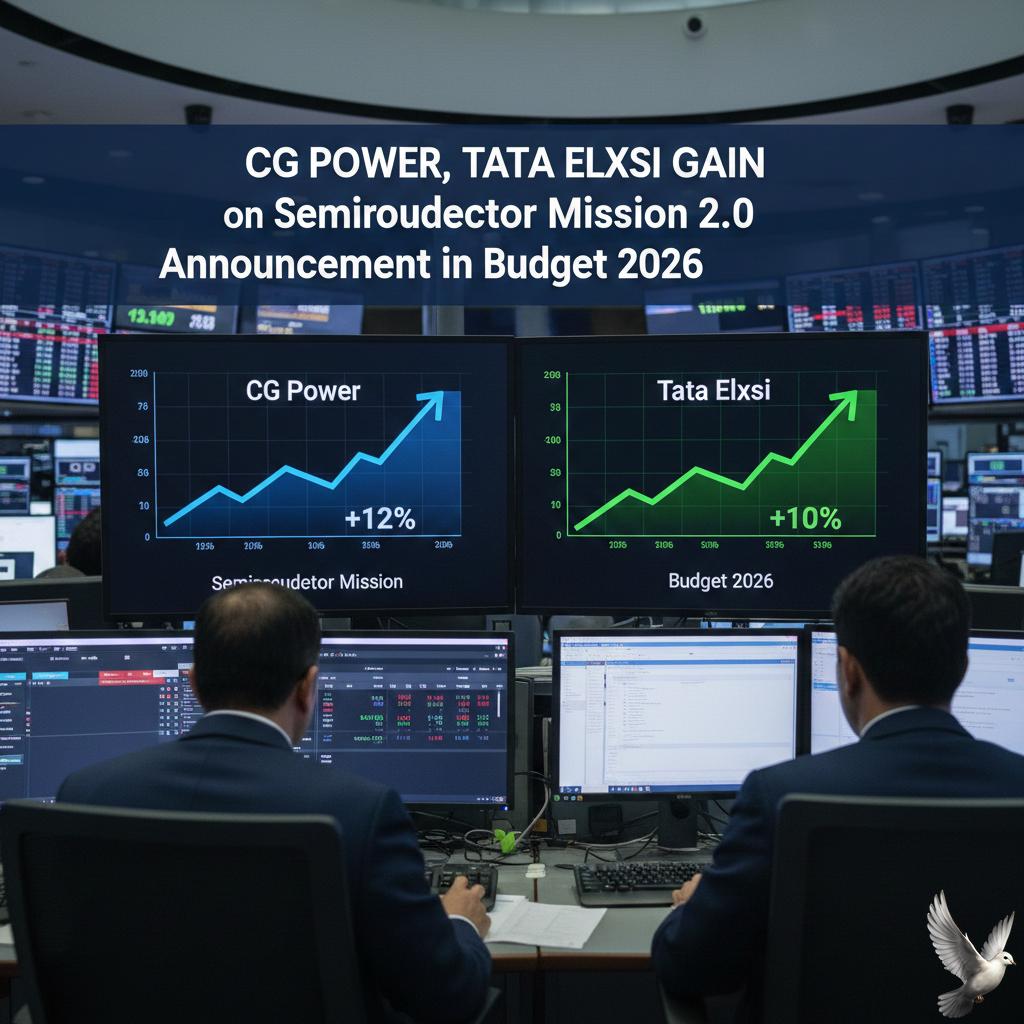
CG Power, Tata Elxsi Gain on Semiconductor Mission 2.0 Announcement in Budget 2026
**MARKET BRIEF: INDIA SEMICONDUCTOR MISSION (ISM) 2.0** **Policy Update: Launch of ISM 2.0** Finance Minister Nirmala Sitharaman formally unveiled **India Semiconductor Mission 2.0** during the Union Budget 2026-27 presentation today. While ISM 1.0 focused on establishing the initial fabrication units, the second phase pivots toward creating a comprehensive ecosystem. The new mission prioritizes three key pillars: manufacturing semiconductor equipment/materials, developing full-stack indigenous Intellectual Property (IP), and fortifying domestic supply chains. **Financial Allocations & Incentives** To support this expanded scope, the government has introduced specific funding streams: * **₹1,000 crore** allocated specifically for ISM 2.0 in FY27 to kickstart the new initiatives. * **₹40,000 crore** outlay aimed at the Electronics Components Manufacturing Scheme (ECMS), a significant increase to deepen the value chain beyond mere assembly. * **₹900 crore** earmarked for the modernization of the Semi-Conductor Laboratory (SCL) in Mohali, signaling a renewed focus on state-led R&D capabilities. **Market Data & Projections** The Indian semiconductor market is currently valued at approximately **$59.8 billion** (2025 estimates). Industry forecasts project the market to cross **$100 billion** by 2030, growing at a CAGR of roughly **12-13%**. This demand is driven heavily by the automotive, industrial automation, and consumer electronics sectors, which are increasingly localizing their supply chains. **Operational Momentum** Execution remains the central theme for 2026. Commercial chip production is on track to commence this year, validating the timelines set under ISM 1.0. Recent approvals include **four new projects** (SiCSem, CDIL, 3D Glass Solutions, and ASIP) with a combined outlay of **₹4,600 crore**, spreading the manufacturing footprint to states like Odisha and Punjab. Major private players like Tata Electronics and Micron continue to advance their respective facilities in Dholera and Sanand. **Strategic Shift** The launch of ISM 2.0 marks India's transition from an entrant to a serious contender in the global chip war. By targeting the "upstream" ecosystem—raw materials, specialty gases, and design IP—the policy aims to reduce dependency on foreign inputs for the fabs already under construction. The strategy is now clearly defined: move beyond back-end assembly (ATMP) and mature node fabrication into high-value design and equipment manufacturing.
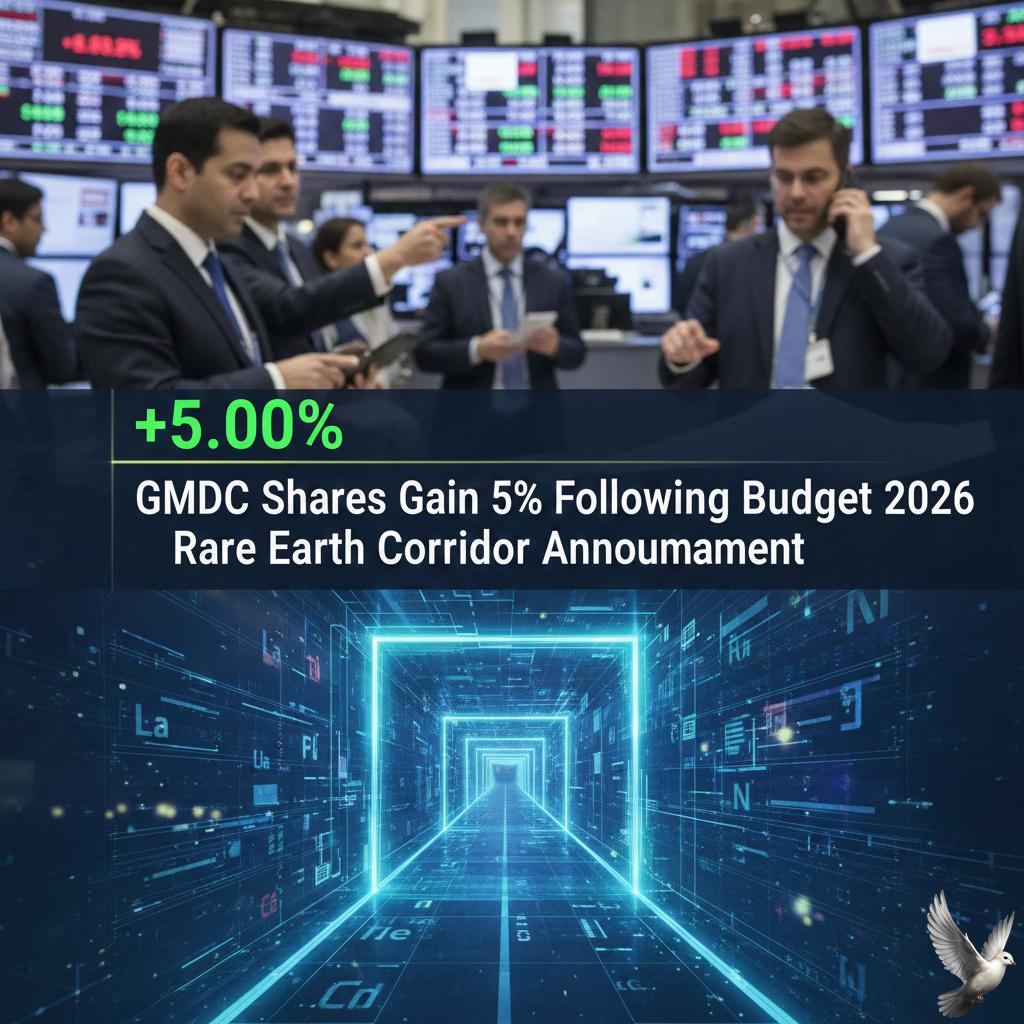
GMDC Shares Gain 5% Following Budget 2026 Rare Earth Corridor Announcement
**Market Brief: Budget 2026 Ignites Critical Minerals Sector** **Market Reaction & Price Action** Mining stocks defied a broader market sell-off today following Finance Minister Nirmala Sitharaman’s Union Budget 2026 announcement regarding dedicated **Rare Earth Corridors**. While benchmark indices (Nifty50 and Sensex) faced downward pressure due to hikes in the Securities Transaction Tax (STT), companies linked to the critical minerals value chain emerged as clear outperformers. **Gujarat Mineral Development Corporation (GMDC)** witnessed a sharp rally, surging **7%** intraday to hit a high of **₹618**. This movement was driven by high volumes, reflecting strong investor conviction in the company’s pivot toward rare earth exploration and processing. **NMDC Ltd**, traditionally known for iron ore, also saw buying interest, rising nearly **2%** as the market priced in the potential for diversification into strategic minerals. Additionally, **Orissa Minerals Development Company** mirrored GMDC’s optimism, locking in gains of approximately **7%** by the session's close. **Policy Catalyst: The Rare Earth Corridors** The primary trigger for this sector-specific rally was the proposal to establish dedicated corridors in four mineral-rich coastal states: **Odisha, Kerala, Tamil Nadu, and Andhra Pradesh**. These corridors are designed to create an integrated ecosystem—moving beyond simple extraction to include processing, refining, and the manufacturing of high-value end products. The government’s strategy focuses on exploiting the country’s vast monazite sand reserves found along these coastal belts, which are rich in rare earth elements (REEs). **Strategic Context & Supply Chain Security** This announcement is not an isolated measure but an extension of the government’s intensifying focus on critical mineral security. It builds directly on the **₹7,280 crore** scheme launched in **November 2025**, which was aimed at promoting the manufacturing of sintered rare earth permanent magnets. The strategic intent is twofold: 1. **Import Substitution:** India currently relies heavily on imports for refined rare earths, a market globally dominated by China. By localizing the value chain, the budget aims to insulate domestic industries from geopolitical supply shocks. 2. **Value Addition:** The shift from exporting raw ores to producing finished rare earth oxides and permanent magnets targets the high-margin segments of the global market. **Industry Implications** The establishment of these hubs is expected to have a multiplier effect on downstream industries. Rare earth permanent magnets are non-negotiable components for: * **Electric Vehicles (EVs):** Essential for high-efficiency traction motors. * **Renewable Energy:** Critical for wind turbine generators. * **Defense & Aerospace:** Used in guidance systems, radar, and advanced electronics. * **Consumer Electronics:** Vital for miniaturized components in smartphones and hard drives. **Outlook** For investors, the immediate re-rating of stocks like **GMDC** and **NMDC** signals a recognition of the structural tailwinds supporting the mining sector. The transition from policy announcement to execution—specifically the auctioning of blocks and the setup of processing facilities in the identified states—will be the key monitorable for the coming quarters. As the **6,000 metric tonnes per annum (MTPA)** target for permanent magnet capacity approaches realization, companies with access to feedstock in **Kerala, Odisha, and Tamil Nadu** are positioned to be primary beneficiaries of this localized supply chain push.
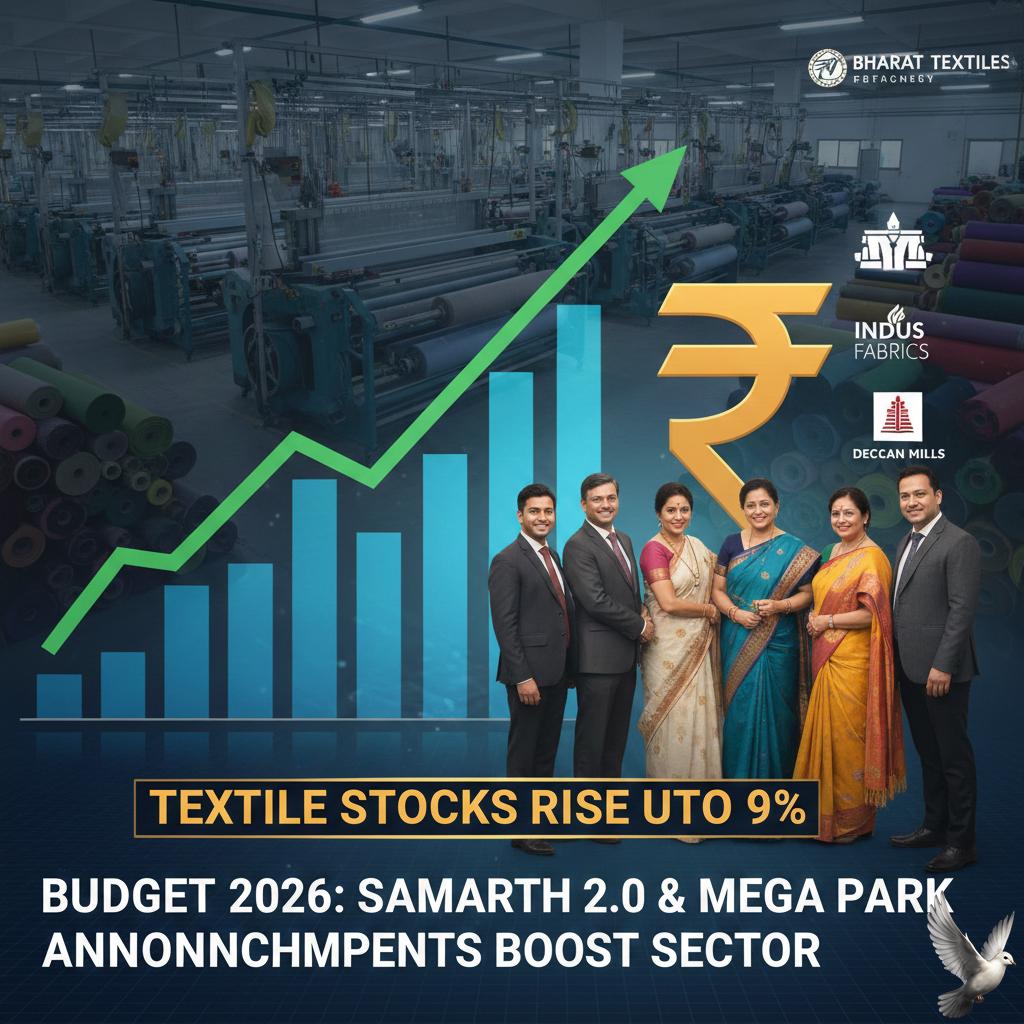
Textile Stocks Rise Up to 9% Following Budget 2026 Samarth 2.0 and Mega Park Announcements
**Market Brief: Textile Sector Rally – February 1, 2026** **Sector Overview** Indian textile stocks witnessed a sharp rally today following the Union Budget 2026 presentation, which unveiled a comprehensive roadmap for the sector. The market sentiment was further bolstered by the recently concluded India–EU Free Trade Agreement (FTA), creating a dual catalyst of domestic policy support and expanded export access. **Budget 2026 Catalysts** Finance Minister Nirmala Sitharaman’s announcement of **Samarth 2.0**—a modernized skilling initiative—and the establishment of **Mega Textile Parks** in "challenge mode" served as the primary triggers. The new budget focuses heavily on technical textiles, a high-margin segment, alongside the **Mahatma Gandhi Gram Swaraj Initiative**, which targets rural employment and branding for handloom clusters. **Stock Performance Snapshot** Investors reacted aggressively to the proposed infrastructure and skilling outlays. Leading the charge, **Arvind Ltd** and **Vardhman Textiles** surged up to **9%** intraday. Other key movers included: * **Raymond Ltd:** Gained nearly **8.2%** * **Trident Ltd:** Rose approximately **7%** * **KPR Mill:** Advanced by **6%** * **Welspun Living:** Climbed **4%** **Export & Trade Outlook** The rally also prices in the immediate benefits of the India–EU FTA, finalized late January 2026. The agreement eliminates import duties on Indian textiles (previously ranging from **8%** to **12%**), offering zero-duty access to the **$163 billion** European market. Analysts note that the combination of the **National Fibre Scheme** for raw material security and the removal of tariff barriers significantly enhances the export competitiveness of Indian manufacturers against regional rivals like Bangladesh and Vietnam. **Strategic Implications** The concurrent push for "farm-to-fashion" value chain integration and sustainability through the **Tex-Eco Initiative** signals a structural shift. The market is now positioning for long-term growth driven by capacity expansion in mega parks and improved margins from higher-value technical textile exports.

BSE Imposes 20% Circuit Limit on Gold and Silver ETFs
**URGENT MARKET BRIEF: BSE Imposes 20% Circuit Limit on Bullion ETFs** **Regulatory Intervention** In an immediate response to extreme volatility, the **BSE has imposed a 20% circuit limit** on Gold and Silver Exchange Traded Funds (ETFs). Effective immediately, ETF trades are anchored to the previous day’s Net Asset Value (**T-1 NAV**), restricting price movement within a **±20% band**. This measure aims to protect investors from "freak trades" and curb panic selling following a historic crash in bullion markets. **The Trigger: Bullion Bloodbath** The circuit filter follows an unprecedented selloff in precious metals today, **February 1, 2026**. * **Silver Crash:** MCX Silver futures plummeted nearly **17%**, marking one of the worst single-day falls in over a decade. Prices collapsed from record highs of **₹4.10 lakh** to test levels near **₹2.65 lakh – ₹2.75 lakh per kg**. * **Gold Decline:** Gold futures witnessed a sharp correction of approximately **6%**, dropping to the **₹1.43 lakh – ₹1.48 lakh** range per 10 grams, down significantly from recent peaks of **₹1.83 lakh**. **Key Drivers** The rout is primarily driven by macro-political shifts in the United States: 1. **Fed Chair Nomination:** Markets reacted sharply to President Donald Trump’s nomination of **Kevin Warsh** as the next Federal Reserve Chair. Warsh is viewed as an "inflation hawk," signaling potentially tighter monetary policy and a smaller Fed balance sheet. 2. **Dollar Strength:** The nomination triggered a massive rally in the **US Dollar Index**, which surged above **97**. A stronger dollar makes dollar-denominated commodities like gold and silver more expensive for foreign buyers, dampening global demand. 3. **Profit Booking:** Investors rushed to liquidate positions after January’s record-breaking rally, where Silver had gained **56%** and Gold **20%**. **Current Market Status (Snapshot)** * **Spot Gold:** Trading under **$5,350/oz** after breaching the $5,600 level earlier. * **Spot Silver:** Slipped below the critical **$100/oz** mark (trading near **$98**). * **MCX Sentiment:** Deeply bearish with multiple contracts hitting lower circuits. **Impact on ETF Investors** The 20% limit prevents ETFs from deviating wildly from their underlying asset value during this liquidity crunch. While the NAV (Net Asset Value) will eventually reflect the drop in underlying metal prices, the circuit filter ensures orderly trading and prevents intraday flash crashes from wiping out capital due to temporary liquidity gaps.
Budget 2026 May Halt FII Selling Pressure
**Market Brief: Union Budget 2026 & Strategic Outlook** **Market Status (Pre-Budget Close)** Indian equity benchmarks ended January on a cautious note, weighed down by persistent foreign outflows and global volatility. * **Sensex:** Closed at **82,270** (down 0.36%) * **Nifty 50:** Settled at **25,321** (down 0.39%) * **Trend:** January witnessed a sharp correction, with the Sensex posting its second consecutive monthly decline. **The Budget 2026 Imperative** With Finance Minister Nirmala Sitharaman presenting the Union Budget today (February 1, 2026), expectations are anchored on policy interventions to reverse the dampening sentiment. Market expert **Sudip Bandyopadhyay** emphasizes that the budget must directly address Foreign Portfolio Investor (FPI) concerns to stabilize equities. **Key Expert Expectations** * **LTCG Removal:** A potential rollback of the **Long-Term Capital Gains (LTCG)** tax is viewed as a "surprise announcement" that could immediately cheer markets and stem the tide of foreign selling. * **Divestment Clarity:** A concrete divestment roadmap with clear targets is essential to raise resources without straining the fiscal deficit. * **Fiscal Prudence:** Maintaining fiscal discipline remains critical for long-term investor confidence. **Foreign Flow Reality Check** The urgency for pro-FPI measures is driven by alarming data from January 2026: * **FPI Outflows:** Foreign investors pulled out over **₹35,900 crore** in January, the highest monthly exit since August 2025. * **Global Shift:** Capital is fleeing emerging markets for AI-centric opportunities in the US, Taiwan, and South Korea, compounding the pressure on the Indian Rupee. **Sector Watchlist** Despite broader weakness, specific sectors show resilience or high potential based on capex continuity expectations: 1. **Defence:** The standout performer. The Nifty Defence index gained nearly **7%** in the last month alone. Stocks like **MTAR Technologies** (+24%) and **Bharat Electronics** (+15%) have rallied significantly in anticipation of increased defense outlays. 2. **Banking & BFSI:** While these heavyweights faced recent profit-booking, experts see long-term value if the economy stabilizes. 3. **Infrastructure:** Core infrastructure segments remain a safe bet, banking on the government's continued aggressive capex push. **Outlook** The market's immediate direction hinges on today's announcements. A combination of tax relief for foreign investors and a credible growth roadmap could trigger the "positive momentum" experts are waiting for. Conversely, a lack of direct stimulus may prolong the consolidation phase.
Sunil Subramaniam Analyzes Budget 2026 Impact on Stock Market
**Market Brief: Budget Day Special** **Date:** February 1, 2026 **The Setup: Caution Precedes Catalyst** Indian equity markets enter Budget Day 2026 on a subdued note. Benchmark indices closed the week ending January 30 in the red, with the **Nifty 50** settling near **25,320** and the **Sensex** around **82,339**. The headline sentiment remains weak, dragged down by a **3% slide** in January—largely attributed to sustained Foreign Institutional Investor (FII) outflows and global volatility. **Expert View: The "Low Expectations" Opportunity** Market veteran Sunil Subramaniam identifies this bearish sentiment as a potential springboard. His thesis suggests that with pre-budget expectations reset to conservative levels, any concrete reform announcements could trigger a sharp relief rally. He emphasizes a singular focus for the Finance Minister: **"Reform, reform, and reform."** **Key Themes to Watch** Subramaniam outlines three specific policy levers that could reverse the foreign capital exodus and reignite momentum: * **AI Readiness:** A "mega AI plan" to position India not just as a back-office but as a core player in the global AI boom. This is viewed as critical to re-attracting FIIs who currently see India as a hedge against AI rather than a participant. * **Capex Financing:** A push for private capital expenditure, supported by expanding **Production Linked Incentive (PLI)** schemes. * **PSU Bank Support:** Leveraging Public Sector Banks to shoulder the long-term financing burden for infrastructure and industrial projects, thereby "crowding in" private investment. **Macro Backdrop** The recently tabled Economic Survey 2025-26 provides a stable runway, projecting real GDP growth of **6.8–7.2%** for FY27 and estimating **7.4%** for the current fiscal year (FY26). With inflation anchored and the "double engine" of consumption and investment firing, the macro fundamentals appear robust despite the shaky market technicals. **The Bottom Line** While the immediate trend is negative, the alignment of low market positioning with high macro growth potential creates an asymmetric risk-reward scenario. If the Budget delivers on the structural reforms—particularly in AI and manufacturing financing—the current dip could mark a decisive pivot point. [Sunil Subramaniam on Budget 2026 Expectations](https://www.youtube.com/watch?v=d7lspxAFdTw) This video is relevant as it features Sunil Subramaniam directly articulating his "reform-led optimism" thesis and specific sector expectations for Budget 2026, which form the core analysis of this brief. http://googleusercontent.com/youtube_content/0

India-EU FTA Impact on Export-Led and Capital-Intensive Sectors
**MARKET BRIEF: India-EU FTA Concluded — A New Trade Era Begins** **Historic Deal Signed** The long-anticipated India-EU Free Trade Agreement (FTA) was officially concluded on **January 27, 2026**, marking a definitive shift in global trade dynamics. Often termed the "mother of all deals," this pact connects two of the world's largest democracies, covering a combined market of over **2 billion** people. The agreement is set to reconfigure supply chains and diversify strategic dependencies, aiming to double bilateral trade by **2032**. **Trade Volume & Tariff Architecture** Bilateral merchandise trade currently stands at approximately **$136 billion** (FY 2024-25), with the EU remaining India’s largest trading partner in goods. Under the new framework, the EU has committed to eliminating tariffs on **99.5%** of incoming Indian goods. Conversely, India will remove or significantly reduce duties on over **90%** of EU exports. This massive liberalization is expected to save European exporters nearly **€4 billion** annually in duties. For India, the deal levels the playing field against competitors like Vietnam and Bangladesh, particularly in labor-intensive sectors that previously faced tariff disadvantages. **Sectoral Impact: Winners & Shifts** **Textiles, Leather & Footwear** These labor-intensive segments are the primary beneficiaries. With the elimination of duties ranging up to **17%**, Indian exporters gain immediate zero-duty access to the EU. This comes at a crucial time, offering a competitive edge in a market valued at over **$25 billion** for these specific commodities. **Engineering & Metals** Engineering exports, which constitute roughly **26%** of India's total merchandise basket, will see duties vanish on key items like industrial machinery and electrical equipment. However, the metals sector faces a mixed landscape. While steel gains a duty-free quota (approx. **1.6 million tonnes**), the lack of an exemption from the EU's Carbon Border Adjustment Mechanism (CBAM) introduces compliance costs. Financial levies under CBAM, effective from **2026**, remain a critical variable for carbon-intensive exports like steel and aluminum. **IT & Services** Services trade has already surged to nearly **€60 billion**. The FTA locks in privileged access for Indian service providers, specifically in financial and maritime sectors. The deal also facilitates easier movement for skilled professionals, bolstering India’s IT and business services dominance in Europe. **Capital Goods & Automotive** A major reconfiguration is underway in the automotive space. India has agreed to slash import duties on European luxury cars from a prohibitive **110%** to **10%** for a fixed quota of **250,000** vehicles annually. Over time, tariffs on auto components will drop to zero, integrating India into the global automotive value chain. Simultaneously, Indian manufacturers stand to gain from cheaper access to advanced European machinery. Duties on capital goods, previously as high as **44%**, are being phased out. This reduction effectively lowers the capital cost for Indian industries, fostering modernization and "Make in India" capabilities. **Strategic & Green Dimensions** Beyond tariffs, the pact emphasizes sustainability. The EU has committed **€500 million** to support India’s green transition and emissions reduction efforts. While the CBAM hurdle persists, a new climate action platform launching in **mid-2026** aims to align regulatory standards. **Market Outlook** This comprehensive agreement signals a move from transactional trade to deep strategic integration. For investors and businesses, the immediate focus shifts to complying with new rules of origin and leveraging the slashed duty structures. The deal not only secures markets but also positions India as a resilient alternative in the global supply chain matrix.