Bullish News
Collection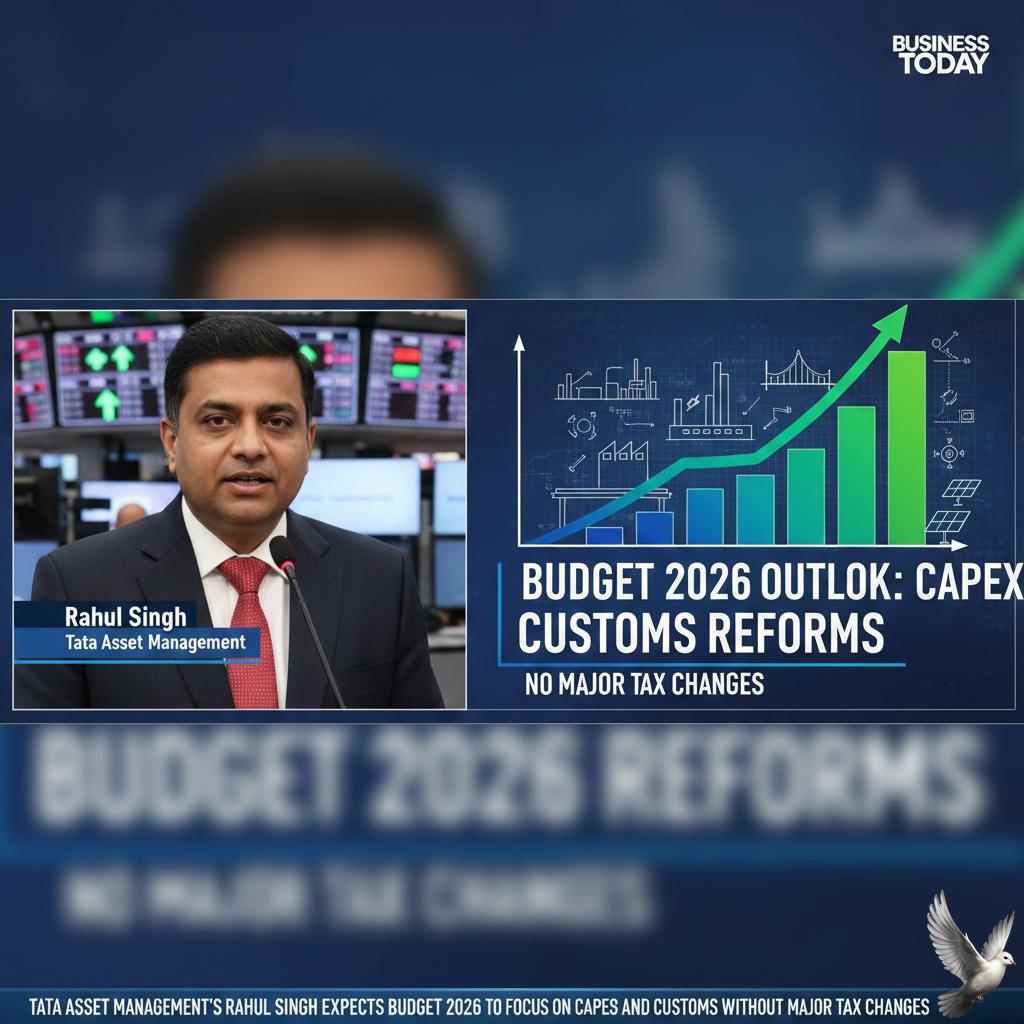
Tata Asset Management's Rahul Singh Expects Budget 2026 to Focus on Capex and Customs Reforms Without Major Tax Changes
**MARKET BRIEF: UNION BUDGET 2026 SPECIAL** **Market Status: Budget Day Focus** Global and domestic investors are tuned in for the Union Budget 2026-27 presentation today, Sunday, February 1. In a rare move, Indian stock exchanges are conducting a special trading session to react live to the Finance Minister's announcements. **Indices & Trends** Markets enter this session with caution following a volatile week. * **Nifty 50** closed Friday at **25,320** * **Sensex** settled at **82,270** Volatility remains elevated due to sustained foreign outflows and currency pressure, though domestic flows continue to provide support. **Policy Expectations: Capex Over Stimulus** Tata Asset Management CIO Rahul Singh projects a pragmatic budget with limited scope for aggressive fiscal stimulus. * **Key Focus:** Continued thrust on **Capital Expenditure (Capex)** and rationalisation of **customs duties**. * **Fiscal Path:** The government is expected to stick to fiscal consolidation, with the current year's (FY26) deficit on track to meet the **4.4%** target. * **Taxation:** Major changes to capital gains tax are considered unlikely, offering some relief to market sentiment. **Valuation Update** India's relative valuation has moderated, making it more appealing for emerging market allocators. * **Premium Decline:** The valuation premium over Emerging Markets (EM) has corrected to approx **50%**, down significantly from the **80–90%** highs seen in mid-2024. * **Flows:** This improved risk-reward ratio could attract fresh foreign inflows once global uncertainties stabilize. **Economic Outlook** The Economic Survey tabled earlier forecasts a robust growth trajectory, estimating real GDP growth between **6.8% and 7.2%** for FY27, underpinned by macroeconomic stability and investment-led demand. [Rahul Singh's 2026 Market Insights](https://www.youtube.com/watch?v=F6lT2Q0b9lo) This video is relevant as it features Rahul Singh directly explaining the structural factors and valuation shifts expected to drive the markets in 2026, expanding on the brief's summary. http://googleusercontent.com/youtube_content/0
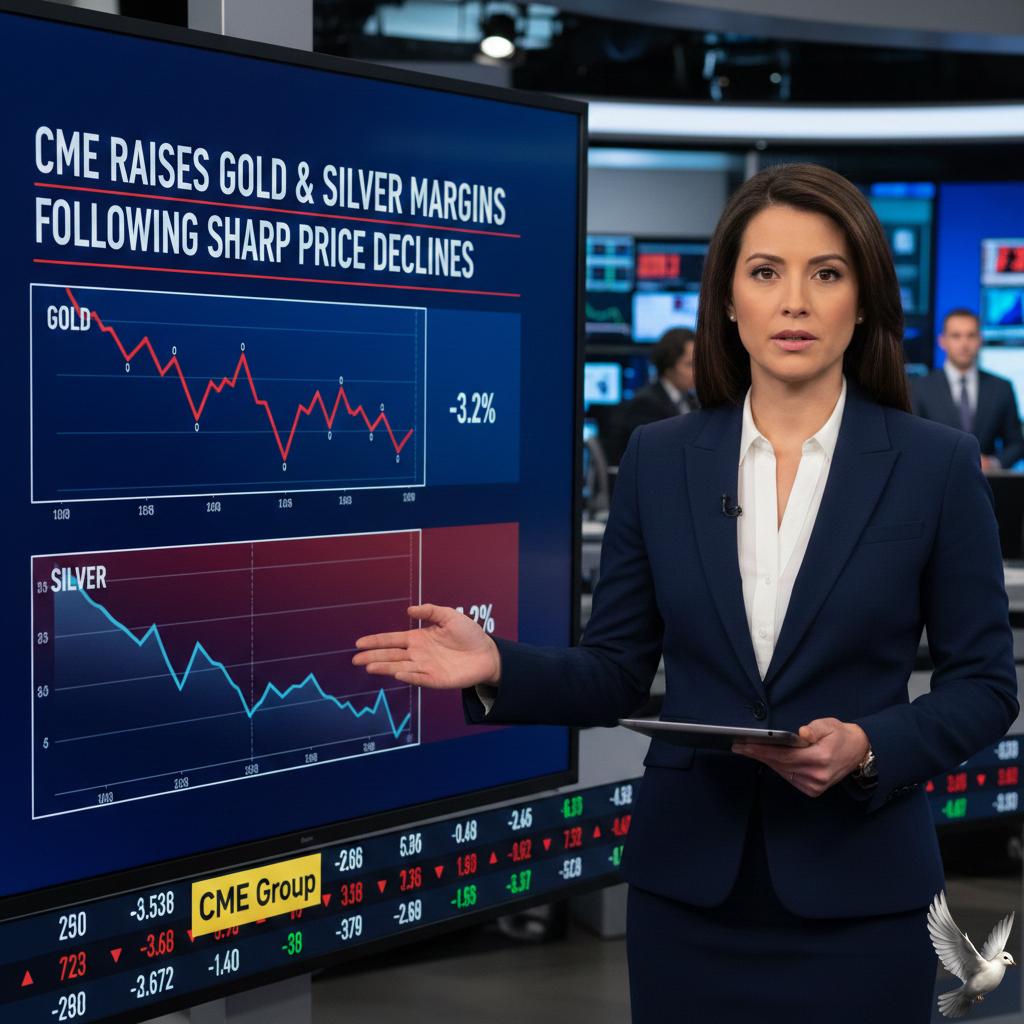
CME Raises Gold and Silver Margins Following Sharp Price Declines
**Market Brief: CME Margin Hikes Follow Historic Precious Metals Crash** **Executive Summary** CME Group has enacted significant margin requirement increases for gold and silver futures, effective **Monday, February 2, 2026**. This decisive action follows one of the most volatile trading sessions in decades, where precious metals suffered a massive liquidation event triggered by shifting U.S. monetary policy expectations. **Margin Requirement Changes** To safeguard market stability, CME Group has adjusted collateral mandates for COMEX futures: * **Silver Futures:** Maintenance margins for non-heightened risk profiles have jumped from **11% to 15%**. For heightened risk profiles, requirements surged to **16.5%**. * **Gold Futures:** Margins have increased from **6% to 8%** for standard accounts, with heightened risk requirements rising to **8.8%**. * **Broader Impact:** Similar hikes were applied to platinum and palladium, reflecting systemic volatility across the entire precious metals complex. **Market Context & Volatility Drivers** The margin adjustments are a direct response to the historic selloff witnessed on **Friday, January 30, 2026**. * **Silver Capitulation:** Silver futures crashed approximately **17% to 30%** in a single session (depending on the contract), plummeting from record highs near **$120 per ounce** down to the **$80–$95 range**. * **Gold Correction:** Gold prices erased recent gains, dropping roughly **8–9%** to test the **$4,900** level after peaking near **$5,600**. * **The Trigger:** The selloff was catalyzed by the nomination of **Kevin Warsh** as the next Federal Reserve Chair. Markets immediately priced in a more hawkish monetary stance, driving a sharp rebound in the U.S. Dollar and U.S. Treasury yields, forcing a rapid unwind of leveraged long positions. **Implications for Traders** * **Higher Costs:** The new percentage-based margin structure significantly raises the cost of holding positions, particularly for leveraged speculators. * **Liquidity Squeeze:** The increased capital requirements may force further liquidations from smaller accounts unable to meet the new collateral demands. * **Stabilisation:** While the move increases holding costs, it is designed to flush out excessive leverage and reduce systemic risk following the "euphoria-to-exhaustion" phase seen in late January.

Budget Implications for Durable Market Stability
**Market Brief: Union Budget 2026 Special Session** **Sunday Trading Alert** Budget 2026 arrives today, **Sunday, February 1**, amid a tense trading environment. Indian exchanges are open for a rare special session as the Finance Minister presents the Union Budget. Sentiment remains fragile following a bruising January, where the Nifty 50 surrendered **3.5%**, marking its second consecutive monthly decline. **Current Levels & Trends** Markets enter the session on a cautious note. The Nifty 50 last closed at **25,320** (down **0.39%**), while the Sensex sits at **82,270**. Volatility has cooled slightly—India VIX is near **13.63**—but participation is thin. Foreign Institutional Investors (FIIs) have sustained their selling pressure, weighing heavily on liquidity. **Geopolitical Headwinds & Trade Shifts** Global cues are dictating the mood. The return of aggressive US tariffs under President Trump has rattled export-oriented sectors, particularly IT and Metals. However, a structural floor is provided by the historic **EU-India Free Trade Agreement** signed on January 27, 2026, which is expected to counterbalance US protectionism in the long run. **Sector Watch: Defense & Infra** While fiscal space for major tax relief is tight, expectations are pinned on a **10–15%** hike in capital expenditure. Defense stocks like BEL and MTAR Technologies have rallied up to **24%** in anticipation. Infrastructure remains a key theme, alongside potential structural reforms in the power sector and IBC (Insolvency and Bankruptcy Code). Conversely, Metals and IT remain weak spots due to global bond yield spikes and tariff anxieties. **Outlook** Analysts widely expect a "non-event" budget focused on fiscal consolidation rather than populist fireworks. The Nifty is currently range-bound between **24,900 and 25,500**. Unless the Finance Minister delivers a significant surprise on capital gains tax or consumption boosts, the immediate market reaction is likely to remain muted and stock-specific. ... [Dr Shamika Ravi on geopolitical impact](https://www.youtube.com/watch?v=BQR2e0ceHC0) ... This video provides timely context on how domestic consumption and recent geopolitical shifts are insulating the Indian economy against global volatility. http://googleusercontent.com/youtube_content/0
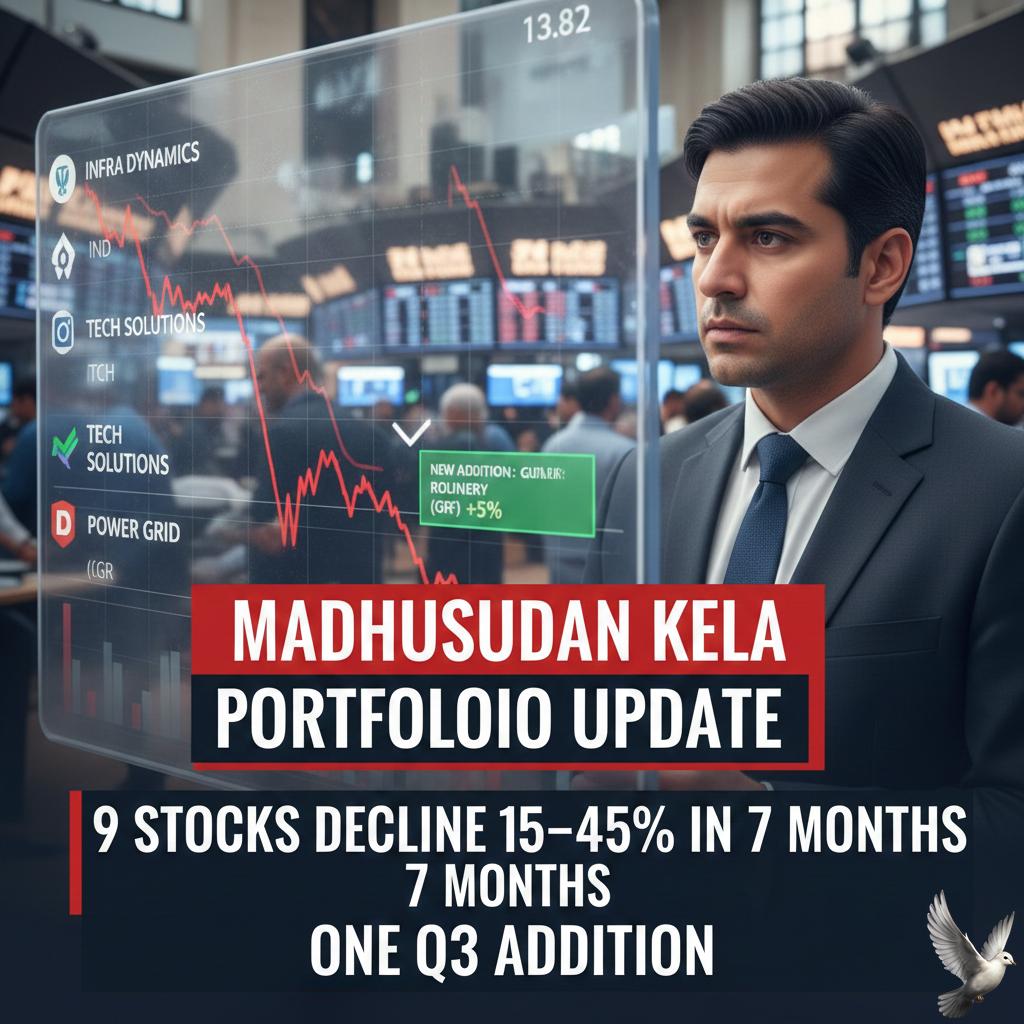
Madhusudan Kela Portfolio Update: 9 Stocks Decline 15–45% in 7 Months, One Q3 Addition
**Market Brief: Madhusudan Kela Portfolio Update (Jan 2026)** **Overview: Sharp Valuation Erosion** Renowned investor Madhusudan Kela’s public portfolio has witnessed a significant correction over the last seven months. Between July 2025 and late January 2026, the estimated value of his disclosed holdings fell from approximately **Rs 4,072 crore** to **Rs 2,219 crore**, marking a decline of nearly **45%**. This erosion was driven by deep cuts in nine key holdings, which corrected between **15%** and **45%** amidst broader market volatility. Despite the red ink, Kela executed a strategic entry during the December 2025 quarter (Q3 FY26), adding a financial services player to his roster. **The "Red" List: Major Drags on Performance** The volatility was most acute in small and mid-cap constituents of the portfolio. The flagship holding, **MKVentures Capital**, was the hardest hit, plummeting **44%** from Rs 1,739 to Rs 974. As of January 30, Kela held a **74.36%** stake in the company, valued at roughly **Rs 278 crore**. Other significant underperformers included: * **Indostar Capital Finance:** Crashed **42%** to Rs 207. * **Windsor Machines:** Corrected **34%** to Rs 261. * **Kopran:** Slid **32%** to Rs 128. * **Bombay Dyeing:** Dropped **31%** to Rs 115. The selling pressure extended to fintech and tech-enabled services. **Niyogin Fintech** lost **27%**, while **Repro India** and **Unicommerce eSolutions** shed **25%** and **17%** respectively. **SG Finserve** also faced headwinds, declining **18%** to Rs 334. **New Entry: Q3 FY26 Addition** Amidst the correction, Kela signaled conviction in the financial services sector. He acquired a **1.12%** stake in **Emkay Global Financial Services** during the October–December 2025 period. Unlike the broader portfolio trend, Emkay Global defied the negative sentiment, rising **11%** over the same seven-month period to trade around **Rs 250**. The stake is currently valued at approximately **Rs 7 crore**. **Bright Spots: Resilience in Volatility** Not all holdings faced downward pressure. Two stocks managed to post gains between July 2025 and January 2026: **Choice International** This stock remained a portfolio heavyweight. It gained **9%**, moving from Rs 701 to Rs 765. Kela’s **7.21%** stake here is substantial, valued at approximately **Rs 1,228 crore**—anchoring nearly half the portfolio's total current value. **Rashi Peripherals** The tech distributor climbed **17%**, advancing to **Rs 359**. The holding is valued at roughly **Rs 58 crore**. **Summary of Holdings (As of Jan 30, 2026)** The analysis covers 15 stocks where shareholding exceeds 1%. While 10 of these delivered negative returns in the monitored period, the concentration of value in Choice International provided a buffer against the steeper percentage drops seen in smaller allocations like MKVentures and Indostar.

Traders Pivot from Crypto to Metals as Digital Gold Thesis Weakens
Market Brief: The Crypto-Commodity Rotation (Early 2026) **The "Digital Gold" De-coupling** Bitcoin’s narrative as a safe-haven asset is fracturing. While the "debasement trade" accelerates in 2026, capital is bypassing crypto in favor of physical stores of value. Bitcoin (BTC) has struggled to reclaim the six-figure mark, slipping toward **$82,000–$90,000** amid renewed macro jitters. In stark contrast, Gold has shattered historical ceilings, breaking **$5,000/oz** for the first time, driven by central bank accumulation and retail pivoting. **Divergent Fund Flows** Institutional and retail signals are aligning against crypto dominance in the hedging sector: * **Precious Metals:** Global Gold ETFs recorded unprecedented inflows of **$89 billion** in 2025, with momentum carrying into Q1 2026. Silver funds are seeing a similar surge, driven by industrial demand and speculative positioning. * **Crypto Outflows:** Bitcoin spot ETFs, previously the darling of Wall Street, are facing headwinds. Recent data highlights weeks with net outflows exceeding **$400 million**, as traders unwind "risk-on" bets despite the looming halving cycles. **The Rise of On-Chain Commodities** A new structural trend is emerging within DeFi: crypto-native platforms are becoming venues for traditional commodity speculation. * **Hyperliquid & RWA Perps:** Decentralized exchanges are capitalizing on the rotation. Hyperliquid’s HIP-3 framework recently hit **~$790 million** in open interest, largely driven by tokenized silver and equity index trading rather than native crypto assets. * **Synthetic Hedging:** Traders are increasingly using platforms like **Ostium** and **TradeXYZ** to access silver and gold perpetuals directly from crypto wallets, bypassing the friction of traditional brokerage accounts. **Macro Outlook** The pivot reflects a flight to safety amid **dollar volatility** and tariff uncertainties. While Bitcoin correlates tightly with liquidity cycles and tech equities, precious metals are reasserting their "independence premium." As 2026 unfolds, the market is pricing in sustained fiscal instability, with gold—not digital assets—acting as the primary shield. *** For a deeper dive into the specific rotation from Bitcoin to Gold and the fading "digital gold" narrative, the following analysis is relevant: [Bitcoin Rally Fades as Global Risk-Off Grows](https://www.youtube.com/watch?v=_DILg6AklYs) This video provides a concise breakdown of the recent divergence between Bitcoin and Gold performance in early 2026, explaining the market mechanics behind the rotation. http://googleusercontent.com/youtube_content/0
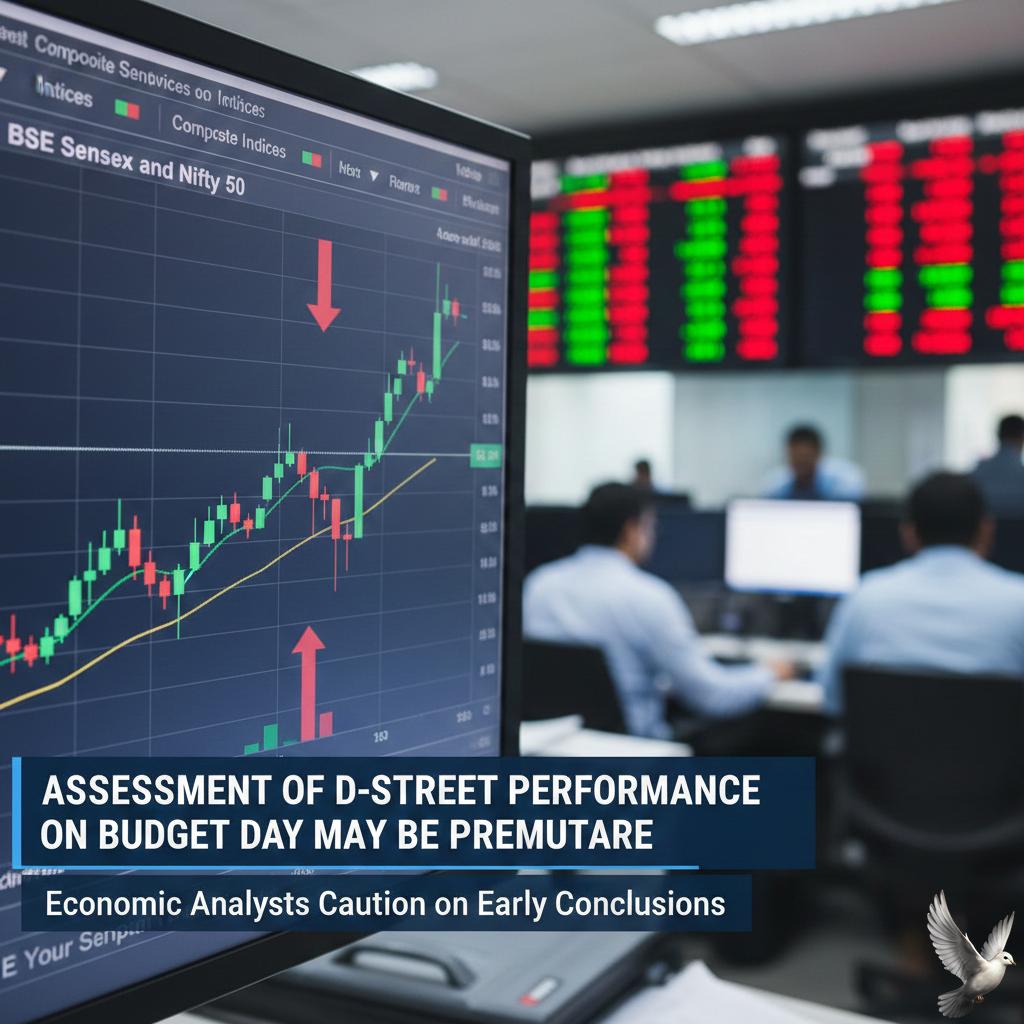
Assessment of D-Street Performance on Budget Day May Be Premature
**Market Brief: Pre-Budget 2026 Analysis & Historical Trends** **Current Market Status (Jan 31, 2026)** Indian benchmark indices closed the pre-budget week on a cautiously optimistic note. As of Friday, January 30, 2026, the **Nifty 50** reclaimed the **25,400** level, closing at **25,419** (up **0.30%**), while the **Sensex** settled at **82,566**. Volatility has been the dominant theme leading up to the Union Budget 2026-27. In the week preceding the event, markets witnessed consolidation, with the Nifty hovering near the **25,200** support zone before witnessing value buying in banking and metal stocks. **Budget Day: The "Non-Event" Trend** Historical data suggests that Budget Day itself is often less volatile than anticipated regarding directional closing. * **Subdued Movement:** Over the last decade, benchmark indices have moved less than **1%** on Budget Day in **70%** of instances. * **Sunday Session:** A unique feature of the 2026 Budget is the scheduled Sunday trading session, a rarity that may witness lower volumes but heightened sensitivity to policy announcements regarding capital gains or fiscal deficits. * **Recent History:** In the 2025 Budget session, the Nifty ended flat with a marginal decline of **0.11%**, reinforcing the trend of muted intraday closings despite high volatility during the speech. **Post-Budget: The Real Opportunity** The "smart money" typically moves after the dust settles. Data from the last **15 years** reveals a stark contrast between Budget Day stagnation and post-budget rallies. * **One Week Later:** The Nifty and Sensex have delivered positive returns in **12 out of the last 15** post-budget weeks, averaging gains of approximately **2%**. * **Trend Reversal:** Pre-budget corrections, like the minor consolidation seen in late January 2026, often set the stage for a relief rally once policy clarity emerges. **Medium-Term Outlook (3 Months)** Looking beyond the immediate reaction, the three-month post-budget window has historically favored bulls. * **General Uptrend:** Indices have trended upwards in this period for most years, barring the significant **2020 crash** (triggered by global pandemic factors). * **Broader Markets:** While the Nifty stabilizes, midcap and smallcap indices often display sharper swings, reacting more aggressively to specific sector allocations announced in the budget. **Summary** Investors are currently positioned for a "buy the news" scenario. While tomorrow's session may see knee-jerk reactions, historical probability heavily favors a directional uptrend in the **7 to 10 days** following the event. ***

Capital Market Expectations for a Favorable Budget Outcome
**MARKET BRIEF: PRE-BUDGET OUTLOOK (JAN 2026)** **Market Sentiment & Current Levels** Markets closed on a cautious note Friday, January 30, 2026, with the **Sensex** settling at **82,269** and the **Nifty50** at **25,320**. The pre-budget mood reflects a clear preference for efficiency over mere capital attraction, with investors locking in profits ahead of Sunday’s announcements. **Focus Area: Corporate Restructuring & Recovery** The demand for faster corporate restructuring is backed by improving metrics. The Insolvency and Bankruptcy Code (IBC) has seen recovery rates climb to **36.6%** in FY25 (up from 28.3% previously). Crucially, **57%** of closed cases now result in rescues rather than liquidations. However, with resolution timelines averaging over **600 days**—nearly double the statutory limit—the Budget is expected to introduce mechanisms to decongest the NCLT benches and enforce stricter timelines to unblock trapped capital. **Unlocking Household Gold** Mobilizing India's estimated **25,000 tonnes** of household gold remains a priority for market depth. With the government discontinuing medium and long-term gold deposits under the Gold Monetization Scheme (GMS) as of March 2025, the focus has shifted entirely to Short Term Gold Deposits (STGD). Markets expect new incentives or simplified purity verification processes to bring this idle asset—worth trillions in USD—into the formal financial system, reducing import dependence and boosting domestic liquidity. **Capital Gains: The Push for Simplicity** Investor confidence hinges on the simplification of capital gains taxation. With the current Long Term Capital Gains (LTCG) rate at **12.5%**, the street is pricing in two major reforms: 1. **Standardization:** A uniform **12-month** holding period for all financial assets (equity, debt, gold) to eliminate arbitrage. 2. **Relief:** Raising the LTCG exemption limit from the current **₹1.25 lakh** to **₹2 lakh**, encouraging wider retail participation. **Bottom Line** The 2026 Budget will earn its highest marks not by announcing new massive spending, but by removing friction. Streamlining the exit (IBC), monetizing the dormant (Gold), and simplifying the tax code (LTCG) will effectively increase the velocity of capital, driving the next phase of market formation.

9 Smallcap Stocks Rise for 5 Consecutive Sessions
**GLOBAL MARKET WRAP** **Equities: Tech Slide Weighs on Indices** Global markets faced headwinds as the trading week concluded, driven primarily by a sharp sell-off in major technology stocks. The **S&P 500** retreated **0.43%** to close at **6,939**, while the tech-heavy **Nasdaq Composite** dropped **0.94%** to **23,461**. The **Dow Jones Industrial Average** shed **0.36%**, closing at **48,892**. Software giant **Microsoft** proved to be the biggest drag, plunging **10%** after its quarterly cloud revenue growth failed to meet elevated investor expectations. This pulled down the broader software sector, with declines seen in peers like Salesforce and Adobe. In Europe, the **DAX** bucked the trend, gaining **0.94%**, while the **FTSE 100** touched a new record high above **12,250** earlier in the session. **Crypto: Bitcoin Stabilizes** The crypto market is consolidating after a volatile week. **Bitcoin** is trading near **$84,000**, recovering slightly from earlier lows as the market digests the nomination of **Kevin Warsh** as the next US Federal Reserve Chair. **Ethereum** remains under pressure, trading around **$2,687**. Altcoins showed mixed performance, with **Solana** and **BNB** seeing recoveries while **XRP** dipped marginally. **Commodities: Gold & Oil Rally** Precious metals continued their historic run, with **Gold** breaking above **$5,550** per ounce, driven by safe-haven demand and geopolitical tensions. **Silver** also saw significant strength, tracking gold’s ascent. Energy markets pushed higher, with **Brent Crude** topping **$70** per barrel and **WTI** rising to approximately **$66**. The rally is supported by escalating concerns over US-Iran relations, which have renewed fears of supply disruptions in the Middle East. **Key Drivers** * **Fed Nomination:** Markets are actively pricing in President Trump’s selection of Kevin Warsh to lead the Federal Reserve, a move sparking debate on future interest rate trajectories. * **Earnings Jitters:** The "Magnificent Seven" trade showed cracks, as Microsoft’s earnings miss highlighted the high stakes for AI-driven growth valuations. * **Geopolitics:** Heightened friction in the Middle East continues to put a floor under oil and gold prices.

Defence Sector Performance Since Last Budget and 2026 Outlook
**Defence Sector Market Brief** **Date:** January 31, 2026 **Market Overview** Defence stocks are demonstrating significant strength ahead of the Union Budget 2026. The **Nifty India Defence index** closed at **8,184.00**, posting a **1.43%** gain on January 30 and delivering an impressive **~8.8%** return over the past week. **Key Drivers** * **Budget Optimism:** Investors are pricing in a potential **15–20% increase** in capital outlay, with projections citing figures upwards of **₹1.85 lakh crore** for modernization. * **Strategic Focus:** Expectations are high for "capital-heavy" allocations targeting **R&D**, **UAVs/drones**, and indigenous combat systems under the "Make in India" initiative. * **Policy Buzz:** Speculation exists regarding a potential hike in the FDI cap for defence manufacturing from **49%** to **74%**, which would boost global capital inflow. **Stock Performance (Latest Close)** * **Garden Reach Shipbuilders:** **₹2,764** (+6.93%) — Strong naval order expectations. * **MTAR Technologies:** **₹2,931** (+6.91%) — Outperforming on high-tech manufacturing demand. * **Data Patterns:** **₹2,671** (+4.27%) — key beneficiary of electronic warfare spending. * **Cochin Shipyard:** **₹1,660** (+3.09%) — Gaining traction on ship repair and construction volume. * **Mazagon Dock:** **₹2,573** (+2.21%) — Steady accumulation ahead of submarine project announcements. * **BEL:** **₹449** (+1.01%) — Remains a core portfolio hold, up nearly **60%** since the last budget cycle. * **HAL:** **₹4,619** (+0.40%) — Consolidating recent gains with a robust order book for fighter jets and helicopters. **Outlook** The sector exhibits a clear "buy-the-rumour" momentum. While the broader market remains volatile, defence constituents are decoupling based on structural growth narratives. The focus on February 1 will be whether the Finance Minister's announcements match the aggressive capex growth already factored into these valuations. *** ... [Defence Stocks Rally Ahead Of Budget](https://www.youtube.com/watch?v=tyeYncilatA) ... This video provides a timely breakdown of the recent surge in defence stocks like BEL and Data Patterns, offering expert analysis on the specific pre-budget expectations driving this sector-wide rally. http://googleusercontent.com/youtube_content/0

NSE, BSE, MCX Trading Schedule for Sunday Union Budget 2026
**MARKET BRIEF: SUNDAY TRADING SESSION (FEB 1, 2026)** **Status: CONFIRMED OPEN** Indian equity benchmarks **NSE** and **BSE** will conduct a full live trading session this Sunday, February 1, aligning with the Union Budget 2026 presentation. This marks a rare weekend session—only the second Sunday budget trade in history—enabling real-time price discovery during the event. **Session Schedule** * **Pre-Open:** 09:00 AM – 09:08 AM * **Regular Trading:** 09:15 AM – 03:30 PM * **Budget Speech:** Starts at **11:00 AM** * **Commodities (MCX):** 09:00 AM – 05:00 PM **Market Pulse: Cautious Consolidation** Indices closed lower on Friday, January 30, as investors booked profits ahead of the fiscal announcements. * **Nifty 50:** Ended at **25,320** (down 0.39%) * **Sensex:** Settled at **82,270** (down 0.36%) * **Sentiment:** Muted. Traders have trimmed positions, anticipating heightened volatility during the Finance Minister's speech. **Key Outlook** Expect sharp intraday swings. Real-time reaction to fiscal announcements—specifically capex outlays and sector incentives—will likely drive instant market moves, removing the usual "Monday gap" risk. **Settlement Note** Sunday is a settlement holiday. Trades executed on Friday (Jan 30) or Sunday (Feb 1) will settle on the next working days. Intraday profits from Friday are not available for Sunday's session. ... [Stock Markets to Open on Sunday for Union Budget 2026 Live Trading](https://www.youtube.com/watch?v=mFwE7uzoZVY) ... This video is relevant as it officially confirms the rare Sunday trading schedule for the 2026 Union Budget and explains the rationale for keeping markets open. http://googleusercontent.com/youtube_content/0
Impact of Expected Non-Event Budget on Nifty Following January's 1,000-Point Decline
**Market Brief: Budget 2026 & Equity Outlook** **Current Market Status** Indian equity markets enter February on a cautious footing after a sharp correction. January 2026 marked the worst start to a calendar year since 2021, with benchmarks drifting lower by approximately **2.5% to 3%**. * **Nifty 50** recently hovered around the **25,400** level, struggling to reclaim the **25,600** resistance zone. * **Sensex** has faced similar pressure, trading near **82,100**. * **FII Activity** remains a concern, with sustained outflows weighing on sentiment. **Budget 2026 Expectations** Finance Minister Nirmala Sitharaman is set to present her ninth consecutive Union Budget on February 1, 2026. Analysts widely anticipate a "non-event" for equities, prioritizing stability over populist disruption. * **Fiscal Discipline:** The government is expected to stick to a consolidation path, capping the fiscal deficit target near **4.3%** of GDP for FY27. * **Taxation:** Speculation persists regarding minor relief for salaried taxpayers—possibly through a hike in the **Standard Deduction** to **₹1,00,000**—though drastic slab changes are unlikely following the 2025 revamp. * **Capex Push:** Continued emphasis on infrastructure spending is projected, though the pace of growth may moderate compared to previous years. **Economic Backdrop** The Economic Survey 2025-26, tabled on January 29, reaffirms India’s growth trajectory despite global headwinds. * **GDP Growth:** Projected at **6.8% – 7.2%** for FY27. * **Inflation:** Headline inflation has moderated significantly, averaging **1.7%** (April-Dec 2025), providing the RBI with policy maneuvering room. **Sector Watch** Traders are eyeing specific sectoral allocations rather than broad-market triggers: * **Infrastructure & Railways:** Likely to retain high budgetary support. * **Green Energy:** Policy continuity expected for solar and renewable capacity expansion. * **EV & Auto:** Potential tweaks to FAME subsidies or GST rationalization for components could drive stock-specific action. **Outlook** With the Nifty already down sharply in January, a "no-surprise" Budget may act as a stabilizing force. The market has likely priced in the lack of major stimulus. A neutral outcome could help arrest the recent volatility, allowing equities to consolidate in a range rather than triggering a fresh sell-off. Investors should watch for the **25,300** support level on the Nifty; holding this zone is crucial for a post-Budget recovery attempt. **Next Step:** I can provide a detailed breakdown of the specific tax expectation figures or a technical analysis summary for Nifty Bank levels if you need a deeper dive into those areas.
Dollar Advances as Warsh Named Next Fed Chair
**MARKET BRIEF: Dollar Rebounds on Warsh Nomination** **Friday, January 30, 2026** The U.S. dollar staged a significant recovery on Friday, snapping a losing streak that had pushed the currency to four-year lows. The Dollar Index (**DXY**) climbed approximately **0.7%** to trade near the **97.00** level, driven by President Trump’s official nomination of Kevin Warsh as the next Federal Reserve Chair. **Hawkish Pivot** Markets reacted positively to Warsh’s selection, viewing him as a "safe" but hawkish choice compared to other potential loyalist candidates. While the administration has pushed for lower interest rates, Warsh’s track record suggests a more disciplined approach to monetary policy. Analysts interpret his appointment as a signal that the Fed may prioritize balance sheet reduction and long-term stability over aggressive, immediate rate cuts. **Cross-Asset Reaction** The dollar’s resurgence triggered sharp moves across other asset classes: * **Gold & Silver:** Precious metals plummeted, with gold prices dropping nearly **3%** as the greenback strengthened and yields held firm. * **Treasuries:** The 10-year Treasury yield maintained recent increases, reflecting investor expectations that Warsh may tolerate higher long-term rates rather than suppressing them via bond purchases. * **Equities:** U.S. stocks, including the S&P 500, faced pressure as the "easy money" narrative was recalibrated. **Outlook** Warsh is expected to succeed Jerome Powell in May 2026. Investors are now adjusting positions for a "regime change" at the central bank—one expected to focus on productivity and deregulation rather than purely accommodative stimulus. The immediate focus shifts to the Senate confirmation process and Warsh’s upcoming comments on central bank independence.
European Shares End January Higher on Earnings
**European Markets: Weekly Wrap & Monthly Close** European equity markets finished **Friday** on a strong note, solidifying a positive start to the year. The benchmark **STOXX 600** gained **0.2%** on the day, securing a **2.4%** rise for the month of January. The **STOXX 50** added **0.5%**, while Spain's **IBEX 35** outperformed with a **1.66%** surge, driven largely by the banking sector. Investor sentiment was buoyed by **Eurozone GDP** data, which expanded by **0.3%** in Q4, exceeding forecasts and signaling economic resilience. **Fed Leadership Update** Markets reacted calmly but attentively to major news from the US. President Donald Trump announced the nomination of **Kevin Warsh** as the next Chairman of the Federal Reserve, effective upon the expiration of Jerome Powell’s term in May. Warsh, a former Fed Governor, is viewed as a knowledgeable figure with a mix of academic and real-world policy experience. **Corporate Movers** **Banks & Finance** Spanish lender **Caixabank** led the sector's gains, rising nearly **3.7%**. The bank reported a beat on fourth-quarter earnings with a net income of **€1.49 billion** and posted a record annual profit of **€5.9 billion**, supported by steady net interest income. **Consumer Goods & Retail** **Adidas** shares jumped approximately **5.8%** after releasing preliminary Q4 results. The sportswear giant reported an **11%** increase in currency-neutral revenue to **€6.08 billion** and announced a new share buyback program of up to **€1 billion**. **Swatch Group** also rallied, climbing over **6%**. Despite missing full-year profit expectations, the watchmaker issued an optimistic outlook for **2026**, citing recovering sales momentum in the second half of the year and strong growth in the Americas. **Laggards** Not all earnings reports were positive. Lighting specialist **Signify** slumped roughly **13%** after issuing a profit warning for the year ahead. Mining stocks also faced pressure, with **Anglo American** and **Glencore** slipping nearly **2.7%** as investors reassessed positions in industrial metals. *** ... [Adidas, Swatch, and Signify Stock Movers](https://www.youtube.com/watch?v=I5iSbISnrpI) ... This video provides a concise summary of the key stock movements mentioned in the brief, specifically focusing on the performance of Adidas, Swatch, and Signify. http://googleusercontent.com/youtube_content/0

Canara Bank to Raise Rs 4,000 Crore via Tier-2 Bonds
Canara Bank Targets ₹4,000 Cr Bond Issue to Fuel Growth **Capital Raise & Strategic Expansion** Canara Bank is set to raise **₹4,000 crore** via Tier-2 bonds by March 2026. This move is part of a broader **₹9,500 crore** fundraising plan approved by the board for the current fiscal year. The capital injection is critical to supporting the bank's revised credit growth target, which has been upgraded to **13.5%** (up from the earlier 10.5%) for FY26. **Q3 FY26 Performance Highlights** The fundraising aligns with strong financial momentum. For the quarter ending December 31, 2025, the bank reported a **25.6%** year-on-year jump in net profit to **₹5,155 crore**. * **Advances:** Global advances grew by over **13%**. * **Retail Growth:** Retail loans surged **31.37%**. * **Asset Quality:** Gross NPAs improved significantly to **2.94%**, with Net NPAs dropping to **0.70%**. **Market Position** The bank plans to reinvest retained profits alongside the bond issue to sustain expansion. Following the Q3 results and the fundraising announcement, the stock is trading in the **₹147–₹150** range on the NSE, reflecting investor confidence in the accelerated growth strategy. Management expects to maintain Net Interest Margins (NIM) around the **2.45–2.5%** level despite a competitive deposit environment.

SEBI Grants No-Objection for NSE IPO
**MARKET BRIEF: SEBI Clears NSE for Mega IPO** **The Headline** The Securities and Exchange Board of India (SEBI) has officially granted the **No-Objection Certificate (NOC)** for the National Stock Exchange (NSE) initial public offering. This pivotal regulatory clearance ends a **10-year wait** and paves the way for what is projected to be India’s largest-ever listing. **Market Reaction & Valuation** * **Unlisted Action:** NSE shares in the unlisted market are currently trading between **₹2,100 and ₹2,200**, reflecting a surge in investor sentiment immediately following the news. * **Valuation:** The exchange is eyeing a valuation of approximately **₹5 lakh crore ($60 billion)**, cementing its position as one of the world's most valuable bourses. * **Grey Market Trends:** Demand has spiked significantly, with premiums rising over **60%** in the last year alone as retail and HNI interest intensifies ahead of the DRHP filing. **Deal Structure & Timeline** * **Format:** The issue will be an **Offer for Sale (OFS)**. Existing heavyweights like LIC, SBI, and Stock Holding Corporation will offload stakes; no fresh capital will be raised by the exchange. * **Schedule:** The Draft Red Herring Prospectus (DRHP) is expected within **3-4 months**, with the final listing targeted for the **second half of 2026** (6-9 months timeline). **Financial Firepower** Investors are chasing robust fundamentals: * **FY25 Revenue:** **₹19,177 crore** (up 17% YoY). * **Net Profit:** **₹12,188 crore** (up 47% YoY). * **Margins:** Unmatched net profit margins exceeding **60%**, driven by a near-monopoly in the equity derivatives segment (approx. **99% market share**). **Key Drivers** The approval follows NSE’s resolution of legacy governance issues, including the co-location and dark fiber cases, through a settlement mechanism. With the regulatory "regulatory knot" untangled, the IPO is set to unlock massive value for shareholders who have been locked in for a decade.
Markets Adopt Caution Ahead of Budget with Potential for Near-Term Upside
**Market Brief: January 2026 Ends on a Volatile Note** Indian equity benchmarks concluded a turbulent month with a decisive downturn on Friday, January 30, 2026. The session marked the end of a challenging January, with the Nifty 50 and Sensex recording their second consecutive monthly decline. Investors adopted a risk-averse stance, opting to book profits and lighten positions ahead of the critical Union Budget presentation scheduled for February 1. **Friday Closing Snapshot** The headline indices faced sustained selling pressure throughout the day, erasing gains from earlier in the week. * **Nifty 50:** Closed at **25,320.65**, shedding **98.25** points or **0.39%**. * **Sensex:** Settled at **82,269.78**, down **296.60** points or **0.36%**. * **Bank Nifty:** Underperformed broader indices, slipping approximately **0.6%** to close near **59,600**. * **Wealth Erosion:** Approximately **₹4 lakh crore** of investor wealth was wiped out in early trade alone as market capitalization dipped to **₹455.73 lakh crore**. **Worst January Performance in a Decade** The data confirms a stark historical trend: January 2026 has registered a decline of **3.1%** for the Nifty 50, making it the sharpest January drop since **2016**. The Sensex mirrored this weakness with a **3.5%** monthly fall. This correction halts the aggressive momentum seen in late 2025, signaling a period of consolidation as the market digests elevated valuations and global macroeconomic headwinds. **Primary Drivers of Volatility** **1. Pre-Budget Anxiety:** The immediate trigger for the sell-off is the upcoming Union Budget. Historical patterns indicate that markets often trade in a narrow or negative range just before the budget as participants await clarity on fiscal deficit targets and capital expenditure allocations. The uncertainty regarding potential changes in taxation—specifically capital gains—has prompted many to move to the sidelines. **2. Relentless FII Outflows:** Foreign Institutional Investors (FIIs) have remained net sellers, withdrawing funds amidst rising US protectionism and shifting global interest rate expectations. While Domestic Institutional Investors (DIIs) have consistently absorbed this supply—buying over **₹2,600 crore** on Thursday alone—the persistent foreign selling continues to cap upside momentum. **3. Sector-Specific Weakness:** * **Metals:** The metal sector was the biggest drag, plunging **4.0%** on Friday. Heavyweights like **Tata Steel** dropped nearly **5%**, reversing gains from the previous sessions due to geopolitical risks and fluctuating commodity prices. * **IT & Banking:** Frontline IT stocks faced pressure from weak global cues, particularly the Nasdaq's recent volatility. Banking majors saw profit-booking after a brief rally earlier in the week. **Resilient Pockets: The Silver Lining** Despite the broad-based selling, defensive sectors provided a safety net. FMCG and select automotive stocks showed resilience, driven by expectations of rural recovery and consumption support in the budget. * **Mahindra & Mahindra** rose **1.4%**. * **ITC** gained **1.1%**, acting as a key defensive play. * **Nestle India** emerged as a top gainer, advancing **3.46%**. **Outlook: The Budget Pivot** The market's focus now shifts entirely to the Union Budget 2026. Analysts expect the government to prioritize a "Build India" narrative over populist measures, with a continued thrust on Capital Expenditure (Capex) in defense, railways, and infrastructure. A fiscally prudent budget that maintains the glide path for deficit reduction could serve as the catalyst for the anticipated recovery. While the short-term trend remains cautious, the structural support from DII flows suggests that the market is positioning for a post-event direction. The exchanges will hold a special live trading session on **Sunday, February 1, 2026**, directly tracking the budget announcements. Volatility is expected to remain high, but clarity on policy direction is likely to determine the trajectory for February.

Precious Metals Decline as Dollar Strengthens Amid Global Market Volatility
**Market Brief: Precious Metals Crash & Dollar Resurgence** **Friday, January 30, 2026** **Executive Summary** Precious metals witnessed a historic sell-off on Friday, erasing billions in market value as the **US Dollar** surged and volatility spiked. The crash halted a record-breaking January rally, driven by a hawkish shift in US monetary expectations and aggressive profit-taking. **Gold & Silver Capitulation** * **Gold:** Spot prices tumbled approximately **7%**, plummeting from a lifetime high above **$5,626** to trade near the **$5,080** level. In India, prices crashed by **₹14,000** per 10 grams. * **Silver:** The white metal faced a brutal correction, collapsing over **16%** in a single session. Comex futures dived from a peak of **$121** to stabilize around **$95–$100**, while domestic rates tanked by **₹20,000** per kg. **Key Drivers of the Crash** * **Fed Chair Nomination:** Markets reacted sharply to President Trump’s nomination of **Kevin Warsh** to replace Jerome Powell. Warsh’s historically hawkish stance signaled a potential pivot to tighter monetary policy, dampening hopes for aggressive rate cuts. * **Dollar Strength:** The **US Dollar Index (DXY)** rebounded strongly, rising **0.6%** to **0.8%**, effectively pressuring dollar-denominated commodities. * **Margin Hikes:** The CME Group raised margin requirements for gold (from **6%** to **8%**) and silver (from **11%** to **15%**), triggering forced liquidations among leveraged traders. **Technical Outlook** * **Profit Booking:** The sell-off represents a classic "euphoria-to-exhaustion" phase. Despite the drop, January remains a historic month, with Silver still logging gains of over **50%** prior to the correction. * **Carry Trade Liquidation:** Renewed unwinding of **Yen carry trades** contributed to the liquidity crunch, exacerbating the downward momentum across asset classes. **Next Week Watchlist** Traders will focus on the **US Producer Price Index (PPI)** and upcoming labor data to gauge if this correction signals a structural shift or a temporary pause in the bull market. **Global Snapshot** * **US 10-Year Yield:** Edged higher to **4.25%**. * **Bitcoin:** Slid below **$87,000** amidst the broader risk-off sentiment.

NSE MD Urges Entrepreneurs to Tap Indian Capital Markets
**Global Market Brief • Saturday, January 31, 2026** **🇺🇸 US Equities & Fed Leadership** Wall Street closed the week on a mixed note as investors weighed tech earnings against shifting political winds. The **Dow Jones** edged up **0.1%** to finish at **49,072**, while the **S&P 500** slipped roughly **0.1%** to **6,969**. The tech-heavy **Nasdaq** underperformed, dropping **0.7%** to **23,685**. This decline was driven largely by **Microsoft**, which slid nearly **10%** after issuing soft guidance for its cloud division. Conversely, **Apple** shares gained **0.7%** in extended trading after beating quarterly revenue estimates on strong iPhone demand. Market sentiment tightened on reports that President Trump is preparing to nominate former Fed Governor **Kevin Warsh** as the next Federal Reserve Chair. Viewed as a "hawkish insider," the news triggered a rally in the **US Dollar** and placed pressure on risk assets. **📉 Commodities Plunge** After hitting record highs earlier in the week, **Gold** experienced a sharp correction on Friday due to aggressive profit-taking and dollar strength. Prices tumbled significantly, testing the **$5,000/oz** psychological support level (down from a peak near **$5,600**). despite the drop, the metal remains on track for its strongest monthly gain since the 1980s. **Oil prices** retreated approximately **2%** as geopolitical risk premiums eased. Markets reacted to signals of potential diplomatic talks between the US and Iran, dampening immediate fears of supply disruptions. **₿ Crypto Volatility** Digital assets faced renewed selling pressure over the weekend. **Bitcoin** dipped below the **$83,000** mark, trading near **$82,950** as of Saturday afternoon. The pullback coincides with the stronger dollar and uncertainty regarding the incoming Fed leadership's policy stance. **🌏 Global Outlook** Asian markets ended the week mixed. Hong Kong's **Hang Seng** added **0.5%** on fresh policy support for property developers, while Japan's **Nikkei** remained flat. Attention now shifts to next week's manufacturing data and official confirmation of the US Federal Reserve nomination.

SEBI Opens One-Year Window for Transfer and Dematerialisation of Physical Securities
**SEBI Unlock for Physical Shares: New Window Opens Feb 5** **Market Alert | January 31, 2026** The Securities and Exchange Board of India (SEBI) has announced a major relief measure for investors holding legacy physical securities. A special one-year window will open from **February 5, 2026**, to **February 4, 2027**, allowing the transfer and dematerialization of shares that were previously stuck due to procedural or documentation hurdles. **Addressing Pre-2019 Deadlocks** This initiative targets investors who failed to transfer physical securities before the **April 1, 2019** mandate. The regulatory reprieve specifically covers cases where transfer requests were rejected, returned, or left pending due to deficiencies. Investors can now re-lodge these requests to regularize ownership. However, strict conditions apply: * Transfers will be credited **exclusively** to demat accounts. * These securities will face a mandatory **one-year lock-in** from the date of transfer registration. * During the lock-in, shares cannot be sold, pledged, or transferred. **Streamlining Demat Credits** In a parallel move to cut red tape, SEBI has scrapped the requirement for the "Letter of Confirmation" (LOC) for crediting shares. Effective **April 2, 2026**, Registrars and Transfer Agents (RTAs) will verify details and directly credit securities to the investor's demat account. This policy shift aims to reduce the settlement timeline from approximately **150 days** to just **30 days**, significantly improving liquidity and operational efficiency. **Market Impact** This dual announcement resolves long-standing grievances for thousands of shareholders holding "dead" assets while modernizing the backend infrastructure for security transfers. The move is expected to bring a substantial volume of dormant securities back into the active market system once the lock-in periods expire.
American Express Shares Dip Despite Strong 2026 Profit Outlook on Affluent Spending
**Market Brief: American Express Q4 2025 Earnings & 2026 Outlook** American Express (AXP) delivered a mixed earnings report on Friday, balancing a slight profit miss for the holiday quarter with a bullish forecast for 2026. While the company projects strong future growth driven by resilient wealthy consumers, immediate market reaction saw shares dip approximately **3%** to **3.7%** as investors weighed rising expenses against long-term guidance. **Earnings Snapshot** For the fourth quarter of 2025, American Express reported earnings per share (EPS) of **$3.53**, narrowly missing Wall Street's consensus estimate of **$3.56** to **$3.57**. The bottom line was pressured by a **10%** increase in expenses, totaling **$14.5 billion**, attributed to higher customer engagement costs and investments in premium card product refreshes. **Revenue Strength** Despite the earnings miss, the top line remained robust. Revenue for the quarter reached **$18.98 billion** to **$19.0 billion**, beating analyst expectations of **$18.92 billion**. This marks a **10%** year-over-year increase (FX-adjusted), contributing to a record full-year revenue of **$72.2 billion**. **2026 Guidance Beat** Looking ahead, the company issued an optimistic forecast that largely surpassed market expectations. American Express projects 2026 revenue growth of **9% to 10%** and full-year EPS in the range of **$17.30 to $17.90**. The midpoint of this guidance sits comfortably above many analyst projections, signaling confidence in the continued spending power of its premium user base. **Key Drivers & Dividends** Management underscored the resilience of its "young and affluent" customers, particularly Gen Z and Millennials, whose spending volumes continue to outpace other segments. To reward shareholders, the company announced a **16%** increase in its quarterly dividend, raising the payout to **$0.95** per share. **Credit & Risk** Provisions for credit losses rose to **$1.4 billion**, up from **$1.3 billion** a year ago, reflecting a normalization in net write-offs to **2.1%**. However, credit metrics remain strong relative to industry peers, supported by the premium nature of the AmEx customer base.