Bullish News
Collection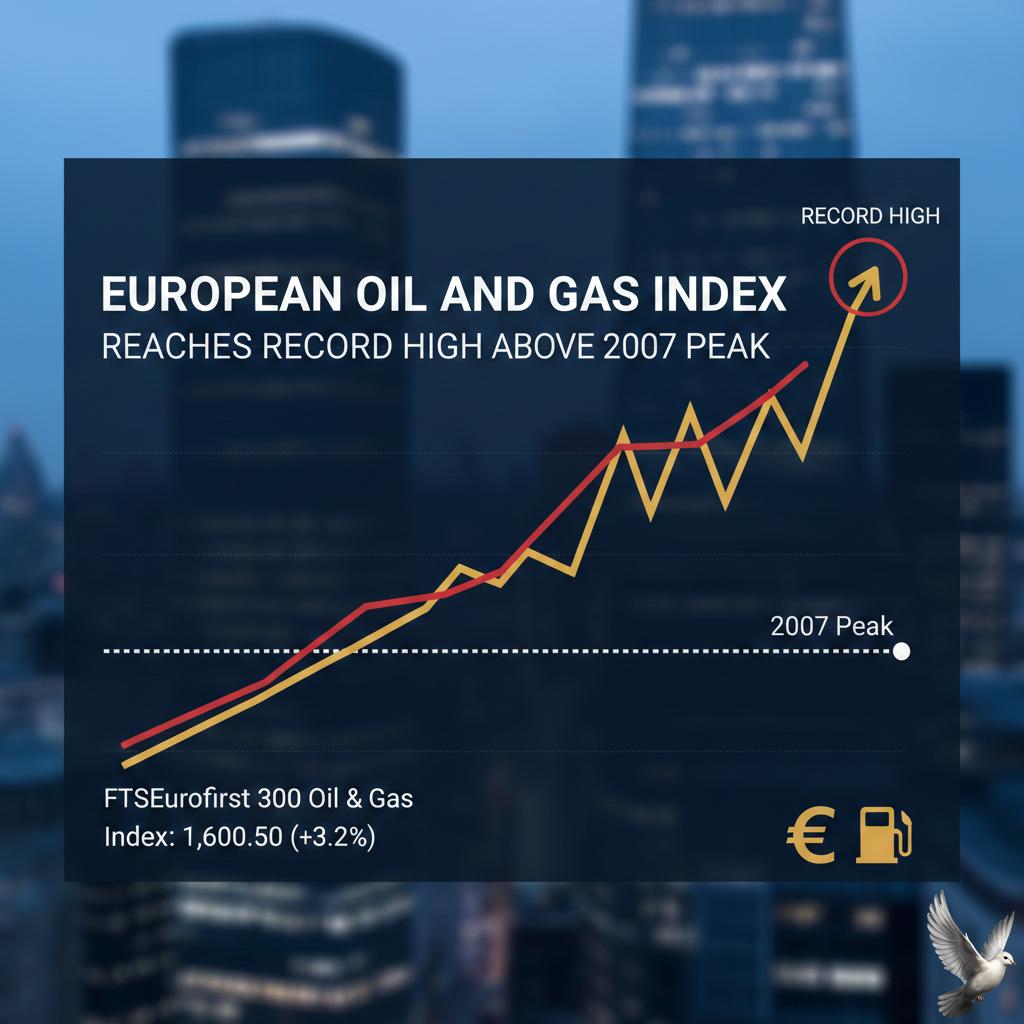
European Oil and Gas Index Reaches Record High Above 2007 Peak
**EUROPEAN ENERGY BRIEF** European oil and gas equities have reached a historic milestone. The STOXX Europe 600 Oil & Gas index recently hit a record high of **470.16**, officially eclipsing its previous peak set nearly two decades ago in 2007. **MARKET PERFORMANCE** The sector has shown remarkable strength with a **28.8%** increase over the past year. Short-term momentum remains aggressive, with the index gaining more than **12.4%** in the last month alone. Major players like Shell and BP continue to dominate the index weight, contributing to a total five-year return of approximately **89.6%**. **OIL PRICE DYNAMICS** This rally is closely tied to volatile crude markets. Brent crude is currently trading around **$71.28** per barrel, while West Texas Intermediate (WTI) holds at **$65.72**. Despite a slight daily softening of **0.6%**, prices remain elevated compared to late-2025 levels due to persistent geopolitical friction in the Middle East. **SUPPLY AND DEMAND OUTLOOK** Market analysts are watching a complex supply-demand tug-of-war. Global oil production is forecast to rise by **2.4 million** barrels per day in 2026, reaching a total of **108.6 million** barrels. However, demand growth is slowing to roughly **850,000** barrels per day as major economies transition toward electrification. **NATURAL GAS STABILITY** In the natural gas sector, European storage levels remain healthy at approximately **83%**. This buffer has helped stabilize TTF gas prices, which are expected to average **€30/MWh** through 2026. While household gas prices saw sharp year-on-year increases in 13 EU countries, industrial supply is beginning to ease as new LNG capacity from North America and Qatar enters the market. **STRATEGIC RESERVES** Emergency oil stocks in the EU currently sit at **108.6 million** tonnes. While this is an increase of **7.3%** from the 2022 lows, commercial stocks have tightened to **45.7 million** tonnes as of mid-2025. This lean inventory environment continues to provide a price floor for energy stocks despite broader economic uncertainties. **FUTURE PROJECTIONS** Investors are balancing record-breaking stock performance against a projected supply surplus for late 2026. While the "risk premium" from current geopolitical tensions keeps prices high today, financial institutions anticipate a gradual decline in Brent prices toward the **$50–$60** range by year-end as global inventories build by an average of **3.1 million** barrels per day.

Sebi Chairperson and Tuhin Kanta Pandey to Review PMS Framework and RBI Funding Regulations
Market Brief: Strategic Overhaul of India’s Portfolio Management Services The Securities and Exchange Board of India (SEBI) has initiated a comprehensive review of the regulatory framework governing Portfolio Management Services (PMS). Chairman Tuhin Kanta Pandey announced on February 23, 2026, that a formal consultation paper will be released by **June 2026**. This move targets a sector that has seen explosive growth. Excluding retirement funds, the PMS industry’s assets under management (AUM) surged from **₹5 lakh crore** in FY21 to nearly **₹10.50 lakh crore** as of January 31, 2026. This represents a compound annual growth rate (CAGR) of approximately **17%**. Strengthening Governance and Suitability The upcoming overhaul seeks to modernize the 2020 Portfolio Manager Regulations. SEBI's primary focus is shifting from simple rule-following to a culture of institutional discipline. Key pillars of the new framework include: * **Investor Suitability:** Ensuring high-stakes, concentrated portfolios are strictly aligned with an investor's risk profile rather than sold as generic products. * **Operational Scale:** As the number of registered portfolio managers grows to **501** (up from **361** in recent years), SEBI is mandating stronger internal controls and clear segregation across business units. * **Distribution Conduct:** New rules will target "mis-selling" by distributors to protect the current base of **2.15 lakh** clients, a number that has grown **50%** since 2022. Capital Market Funding and RBI Coordination SEBI is currently examining critical industry representations regarding the Reserve Bank of India’s (RBI) new capital market funding framework. The RBI's revised directions, effective **April 1, 2026**, mandate that bank credit to market intermediaries must be fully collateralized. Brokers have raised concerns over the proposed **100%** bank-guarantee collateral requirement for proprietary traders, up from the previous **50%**. While the RBI maintains these rules are necessary to prevent bank credit from fueling speculative proprietary trading, SEBI is reviewing the impact on market liquidity and intermediary costs. New Oversight for "To-Be-Listed" Securities In a significant expansion of its jurisdiction, SEBI is developing a mechanism to provide oversight for stocks in the "to-be-listed" phase. This initiative is designed to curb unregulated "grey market" activities that occur between the filing of an IPO and the actual listing. By leveraging exchange mechanisms, the regulator aims to bring transparency to this speculative window, ensuring that price discovery remains fair and retail investors are protected from off-market manipulation. Industry Trajectory The reforms arrive as India's managed funds industry—including PMS, Mutual Funds, and AIFs—is projected to grow **2.1x** to reach **₹455 lakh crore** by 2030. SEBI’s current efforts signal a shift toward a technology-driven, risk-based compliance regime intended to support this massive financialization of household savings.

Tourism Finance and Cummins India Analysis: Technical Outlook and Potential 16% Upside
Market Brief: Tuesday Buy Picks and Sector Outlook The Indian equity market continues to show resilience as the **Sensex** settled at **83,294.66** and the **Nifty 50** gained **142 points** to close at **25,713** on February 23, 2026. This positive momentum is providing a strong backdrop for high-conviction mid-cap and large-cap breakout stocks. Tourism Finance Corporation of India (TFCI) TFCI has achieved a significant milestone, hitting an all-time high of **Rs 78.90** during Monday's session. The stock surged by **6.54%**, significantly outperforming the broader market. Technical indicators show a clear breakout, with the share price trading comfortably above its 5-day, 50-day, and 200-day moving averages. Investment confidence is bolstered by the **Union Budget 2026-27**, which designated tourism as a key economic pillar. TFCI has delivered a staggering **156.23%** return over the past year. Current technical setups suggest a potential short-term upside of up to **16%**, with analysts eyeing a target price near **Rs 95**. Cummins India Cummins India is witnessing a powerful bullish trend, reaching a fresh 52-week high of **Rs 4,888**. The stock gained **2.19%** in a single session, supported by a massive **17.28%** surge in open interest in the derivatives segment. This indicates aggressive long positioning by institutional players. The company is a primary beneficiary of the **Rs 12.2 lakh crore** public capital expenditure outlay announced for the 2026-27 fiscal year. Its role in powering AI-driven data centers and infrastructure projects has driven a **70.49%** price appreciation over the last 12 months. Sector Dynamics and Trends The **Capital Goods** sector remains one of the top performers in 2026, with the BSE Capital Goods Index rebounding **3.5%** recently. While IT stocks face pressure, the focus has shifted to "physical infrastructure" plays. Tourism and hospitality are benefiting from the launch of the **National Destination Digital Knowledge Grid** and major upgrades to 15 heritage sites. These structural reforms are providing long-term tailwinds for finance companies specialized in these niche sectors. ----- Key Market Data (Feb 23, 2026) * **Nifty 50:** 25,713 (+0.55%) * **BSE Sensex:** 83,294.66 (+0.58%) * **TFCI 52-Week High:** Rs 78.90 * **Cummins India 52-Week High:** Rs 4,888 * **Total BSE Market Cap:** Rs 469 lakh crore Market breadth remains slightly negative despite the index gains, highlighting the importance of stock-specific selection in current conditions. [Cummins India Price Performance and Analysis](https://www.google.com/search?q=https://www.youtube.com/watch%3Fv%3D0I6lK-2KjX0) This video provides a deep dive into the technical breakout and fundamental drivers currently pushing Cummins India to record highs.

Nashik Municipal Corporation to Issue Green Bonds for Kumbh Mela Infrastructure Projects
The Nashik Municipal Corporation (NMC) has officially entered the public debt market with the launch of its maiden green bond issue. This landmark financial move is designed to fund critical infrastructure and environmental projects ahead of the 2027 Simhastha Kumbh Mela, a massive religious event expected to draw millions of pilgrims. The public issue follows a highly successful private placement in late 2025. During that phase, the NMC "Clean Godavari Bonds" were oversubscribed 3.95 times, demonstrating robust institutional appetite. As of February 23, 2026, the Nifty India Municipal Bond Index reflects a healthy average yield of 8.28%, signaling a stable and maturing environment for city-level debt instruments in India. **Key Issue Details** The new green bonds are structured as taxable, unsecured, and non-convertible debentures. They carry a face value of 1,000 INR per bond. The public subscription period is set to open on February 25, 2026, and will remain active until March 2, 2026. Investors are offered an attractive return of 8.05% per annum. To encourage retail participation, the minimum investment is set at 10,000 INR. This move allows local citizens to contribute directly to the city’s transformation while earning competitive fixed-income returns. **Strategic Project Allocation** The proceeds from this 200 crore INR issuance are earmarked for vital sustainability projects. A primary focus is the Mukane Water Supply Scheme, which includes the construction of a new 274 MLD water treatment plant at Vilholi. Funds will also support the development of a gravity-based transmission main to Gandhinagar, Sadhugram, and Nilgiri Baug. These projects are essential to ensure a reliable water supply for the surge in population during the Kumbh Mela and to provide long-term service continuity for the city's residents. **Market Context and Incentives** Nashik’s bond program is part of a larger trend in India’s municipal finance sector. The market is projected to reach annual issuances of 2,000 crore INR by the end of the 2026 fiscal year. Furthermore, recent guidelines by the RBI now allow municipal bonds to be used as collateral for repo transactions, significantly increasing their liquidity. The NMC is also leveraging central government support. By utilizing the bond market, the corporation qualifies for incentives under the AMRUT scheme and the Urban Challenge Fund. These subsidies can reach up to 76 crore INR per bond issue, effectively reducing the net interest burden on the municipality and making the borrowing highly cost-efficient. This issuance positions Nashik as a leader in innovative urban financing. By blending spiritual heritage with modern financial tools, the city is securing the capital needed for permanent infrastructure that will serve the community long after the 2027 festivities conclude.

Nexus Select Trust Acquires 50% Stake in Runwal Enterprises' Mumbai Mall Project for Rs 434 Crore
Nexus Select Trust has officially announced a strategic 50% equity stake acquisition in the upcoming Nexus Runwal Gardens Mall in Mumbai. The deal, valued at 434 crore, values the total enterprise at approximately 892 crore. This project marks the REIT’s first foray into under-construction development partnerships since its public listing. The new asset is located in Dombivli within the Mumbai Metropolitan Region. It features a gross leasable area of 7.3 lakh square feet and is situated at the gateway of a 250-acre township designed for 30,000 residential units. Infrastructure tailwinds for the site are strong, with the Manpada Metro station just 100 meters away and the Mumbai–Ahmedabad bullet train station within a 2-kilometer radius. **Financial Performance and Market Metrics** The trust recently reported a robust 15% year-on-year increase in Net Operating Income for Q3 FY26, reaching 450 crore. Tenant sales across its portfolio hit a record high of 4,100 crore during the same period, driven by a 16% growth in consumption. The trust maintains a high occupancy rate of 97% across its existing 19 malls. Nexus Select Trust has declared its highest-ever quarterly distribution of 2.367 per unit. The firm remains on track to meet its FY26 guidance, supported by a healthy balance sheet with a low 18% Loan-to-Value ratio. To fund ongoing expansion, the trust recently allotted 200 crore in commercial papers at a discount rate of 7.47%. **Mumbai Retail Landscape** The Mumbai retail market is currently experiencing a period of tightening supply and rising demand. Reports indicate that prime retail leasing in the city surged 82% year-on-year in 2025. This demand has pushed vacancy levels down to approximately 7.6% for quality malls, while rents have seen a steady 11% annual increase. Average monthly rents in Mumbai malls now range between 750 and 850 per square foot. The sector is increasingly shifting toward mixed-use developments that integrate residential and transit hubs. Nexus Select Trust’s entry into the Dombivli micro-market aligns with this trend, targeting high-density suburban catchments where no other Grade-A supply is currently planned. **Strategic Outlook** This acquisition is part of a broader vision to double the trust’s portfolio by 2030. Management has identified a pipeline of 11 additional assets for potential acquisition, with four currently under due diligence. The transition from pure-play operational assets to structured development projects signifies a more aggressive growth phase aimed at capturing long-term value in high-growth corridors.

PNGS Reva Diamond Jewellery to Invest Rs 287 Crore in 15 New Retail Stores Ahead of IPO
PNGS Reva Diamond Jewellery is set to enter the capital market this week with its maiden public issue, launching on Tuesday, February 24, 2026. The Pune-based diamond retailer aims to raise 380 crore INR through a fresh issue of equity shares. This move signals a major expansion phase for the brand, which operates under the flagship label "Reva." The company has earmarked 286.56 crore INR of the IPO proceeds specifically for the establishment of 15 new retail stores. These upcoming outlets will follow a company-owned and company-operated (COCO) model. Geographically, the expansion is focused on strengthening its existing stronghold, with approximately 60% of the new stores planned for Maharashtra. Currently, the jeweler maintains a network of 34 stores across 25 cities in Maharashtra, Gujarat, and Karnataka. In addition to store construction, the company has allocated 35.4 crore INR for marketing and promotional activities to support these new launches. The remaining funds are designated for general corporate purposes. This strategic investment comes as the Indian jewelry market continues its shift toward organized retail. The sector is currently valued at approximately 69.79 billion USD, with expectations to reach nearly 92 billion USD by 2032, maintaining a steady growth rate of 4% to 6% annually. The IPO price band is fixed between 367 INR and 386 INR per share. At the upper price limit, the company's market capitalization is estimated at roughly 1,224 crore INR. Financial performance leading into the issue shows a positive trajectory; revenue from operations grew to 258 crore INR in the 2024-25 fiscal year, up from 195.6 crore INR the year prior. Net profit also saw a significant jump, rising to 59.4 crore INR from 42.4 crore INR in the same period. The subscription window remains open until February 26, 2026. Allotment is expected to be finalized by February 27, with shares tentatively scheduled to list on the NSE and BSE on March 4, 2026. Promoters currently hold an 87.45% stake in the company, which is expected to dilute to approximately 60.31% following the public offering. The broader market context reveals a growing consumer preference for branded, certified jewelry and lightweight designs. While gold remains a cultural staple, diamond jewelry is gaining traction among urban consumers with rising disposable incomes. The organized segment is increasingly dominating as buyers seek transparency and quality assurance, a trend PNGS Reva Diamond Jewellery aims to capture through its expanded physical footprint. [PNGS Reva IPO analysis](https://www.google.com/search?q=https://www.youtube.com/watch%3Fv%3DTwz0TCAQUsE) This video provides a breakdown of the company's financials and expansion strategy to help you understand the upcoming public offer.
Seven Large-Cap Stocks Report Over 50% EBITDA Growth in Q3
The Indian corporate landscape witnessed a powerful surge in operating momentum during the third quarter of FY26. Several market heavyweights across the energy, finance, and consumer discretionary sectors reported EBITDA growth exceeding the **50%** mark. This performance reflects a broader trend of margin expansion and robust credit demand, despite fluctuations in global commodity prices and evolving domestic consumption patterns. Energy and Manufacturing Leaders Oil marketing giants **IOC** and **BPCL** emerged as standout performers. Their operational efficiency was bolstered by strategic inventory management and steady domestic fuel demand. Despite recent volatility in Brent crude, which climbed toward **$70.35** per barrel in February, these entities maintained strong refining margins throughout the December quarter. Manufacturing and industrial players like **CEAT** also mirrored this trend. The tire manufacturer reported a staggering **65.3%** jump in EBITDA, supported by easing raw material costs and a **26%** rise in revenue. Financial Services Momentum The financial sector remains a cornerstone of the current earnings cycle. **Muthoot Finance** reported a historic quarter with a **95%** surge in standalone profit, reaching **₹2,656 crore**. Its gold loan Assets Under Management (AUM) crossed **₹1.39 trillion**, growing **50%** year-on-year. This was largely driven by record gold prices, which hit milestones near **₹1.6 lakh** per 10 grams in early 2026. **Jio Financial Services** demonstrated aggressive scaling, with revenue more than doubling to **₹901 crore**. While its net profit saw a moderate decline due to expansion costs, its NBFC assets surged **4.5 times** year-on-year to **₹19,049 crore**. Consumer Discretionary and Retail **Titan** continues to benefit from the premiumization trend in the Indian market. Sustained wedding season demand and the rising value of bullion provided a tailwind for its jewelry segment. In the broader market, **Tata Motors** reported a **45%** jump in EBITDA for its commercial vehicle segment, maintaining double-digit margins for the tenth consecutive quarter. Market Outlook Nifty 50 EPS growth is projected to remain steady between **11%** and **13%** for the remainder of the fiscal year. While sectors like IT face range-bound movement due to cautious global spending, the manufacturing and financial services sectors are currently driving the majority of index earnings. The combination of sustained government capex and improving private capacity utilization suggests that these "50% club" performers are well-positioned to maintain their leadership through the final quarter of FY26.
George Soros on the Asymmetry of Risk and Reward in Market Returns
Market dynamics as of **February 23, 2026**, reflect a pivot toward risk management as investors navigate a complex mix of legal rulings and shifting economic data. U.S. markets are currently adjusting to a landmark Supreme Court decision that struck down broad executive-ordered tariffs. While the ruling initially sparked a relief rally, futures indicate a cautious start to the week. S&P 500 futures are down **0.50%**, while Nasdaq 100 futures have slipped **0.74%**, trading near **24,880**. This volatility highlights the delicate balance between sentiment and the reality of a cooling economy. U.S. business activity slowed to a **10-month low** in February. The Composite PMI dropped to **52.3**, down from **53.0** in January. Manufacturing and services are both showing signs of fatigue, with advanced **Q4 GDP** figures coming in at a modest **1.4%**. Despite the domestic slowdown, global performance remains divergent. Japan’s business expansion reached a **33-month high**, and the UK is seeing its fastest growth in nearly two years. These international shifts serve as a reminder that positive expectancy often requires looking beyond local volatility. In the commodities space, tensions in the Middle East have driven Brent crude to a six-month high, trading above **$82 per barrel**. Gold has also surged, recently crossing the **$5,000** mark as a hedge against persistent inflation and geopolitical angst. George Soros’ philosophy remains a grounded guide in this environment. The goal is not to predict every swing, but to ensure that asymmetric payoffs protect the portfolio. Current strategies at Soros Fund Management show a concentration in high-conviction tech names like Amazon, which holds a **6.3%** portfolio weight, alongside defensive puts on energy ETFs. Managing outcomes is the priority as the market awaits **Nvidia’s** upcoming earnings. With the S&P 500 trading at a forward P/E of **21.9**, the focus has shifted from simple growth to disciplined risk assessment. Success in 2026 is being defined by the ability to survive the downside while allowing winners to compound in a fragmented global landscape.

Indian Bond Yields Soften Amid Easing Geopolitical Tensions and Upcoming Debt Auctions
Indian government bonds registered moderate gains on Monday, February 23, 2026, as domestic yields softened amid stabilizing geopolitical conditions and strategic central bank interventions. The 10-year benchmark federal paper yield slipped to approximately **6.71%**, easing from a previous high of **6.73%**. The market sentiment has been bolstered by a pause in geopolitical volatility. Previous concerns regarding trade tariffs and international regional tensions have subsided, allowing for a relief rally across domestic fixed-income assets. This shift has prompted a more favorable environment for sovereign paper despite ongoing global economic shifts. The Reserve Bank of India has maintained a steady hand, keeping the repo rate unchanged at **5.25%** during its February policy meeting. The central bank continues to hold a neutral stance, emphasizing a balance between supporting resilient economic growth and managing inflation, which recently tracked at a benign **2.75%**. Supply-side pressures remain a critical factor for traders. A significant debt switch operation involving **₹25,000 crore** of government securities was scheduled for today. This move aims to convert short-term debt into longer-dated papers, effectively managing the government’s redemption profile for the upcoming fiscal years. Weekly issuance remains heavy, with state governments looking to raise nearly **INR 445 billion**. Simultaneously, the central government is proceeding with an auction of the 10-year benchmark bond totaling **INR 320 billion**. This steady flow of new paper has acted as a ceiling for price gains, keeping yields within a focused range of **6.65% to 6.78%**. Liquidity in the banking system is currently in a surplus of nearly **INR 3 trillion**, supported by the RBI’s proactive bond purchases and liquidity injection measures. These actions have been vital in absorbing supply pressures and mitigating the impact of tight funding conditions earlier in the month. Foreign institutional activity is being closely monitored as Indian bonds integrate further into global indices. The Indian Rupee has stabilized near the **90.71/$** level, providing a more predictable backdrop for international investors navigating the domestic debt market. Market participants expect yields to remain sensitive to global oil price movements and upcoming auction demand. While domestic macros remain strong, the persistent issuance overhang suggests that yields will likely drift sideways in the near term rather than experiencing a sharp downward breakout.
Indian Stock Market: Key Stocks in Focus on Monday
Market Overview Indian equity benchmarks surged on Monday, February 23, 2026, as domestic investors cheered a landmark U.S. Supreme Court ruling that struck down sweeping trade tariffs. The decision fueled a relief rally across Asian markets, providing a tailwind for Indian indices. The **BSE Sensex** climbed **480 points** to settle at **83,294.66**, while the **NSE Nifty 50** advanced **141.75 points** to close at **25,713**. Buying interest was concentrated in banking, power, and FMCG sectors, even as the IT index faced pressure from ongoing AI-driven disruption concerns. Banking Sector Turbulence Despite the broader rally, the banking sector witnessed significant localized volatility. **IDFC First Bank** shares plummeted **16.1%** to end at **70.08** following reports of a **590 crore** fraud at its Chandigarh branch. The fallout led to the suspension of four employees and the appointment of KPMG for a forensic audit. The situation worsened for the lender as the **Haryana Government** de-empanelled both **IDFC First Bank** and **AU Small Finance Bank** for state business. Consequently, **AU Small Finance Bank** shares dropped over **5%** to close at **976.40**, as investors reacted to the loss of government deposits and transactions. Corporate Restructuring and Defence **UPL Limited** saw a sharp sell-off, with its stock crashing **14.3%** to close at **645.05**. The decline followed the announcement of a complex group restructuring plan aimed at separating its Indian and overseas crop protection businesses. While the move targets transparency, analysts flagged concerns over unresolved debt levels. In the defence space, **Hindustan Aeronautics Limited (HAL)** experienced selling pressure, with shares falling **7.2%** to close at **4,025**. This move came despite recent strong quarterly earnings, as the stock faced profit-booking amid broader sectoral rotations. Strategic Gainers **Adani Ports** emerged as the top gainer on the Sensex, rising nearly **3%** to reach **1,549**. The stock saw a massive surge in derivatives open interest, jumping over **11%**, signaling high conviction among traders for further upside. The company is currently trading just **2%** below its 52-week high. In the small-cap segment, **Kitex Garments** outperformed the market significantly, surging nearly **10%** to hit an intraday high of **205.45**. The textile player saw robust buying momentum, reversing a four-day losing streak and outpacing the general garments sector by over **6%**.

Nithin Kamath Outlines Impact of Secondary Trading Costs on Brokerage Savings
Market performance in the final week of February 2026 reflects a growing focus on the structural costs of trading. While indices like the **SENSEX** trade near **82,815** and the **NIFTY 50** hovers around **25,571**, the actual net returns for retail investors are increasingly dictated by backend fees rather than just market movements. Depository Participant (DP) charges have emerged as a critical variable in this cost equation. These fees are triggered every time an investor sells shares from a demat account. Unlike brokerage fees, which are often marketed as "zero" or "flat," DP charges are frequently tucked away in the account ledger rather than the contract note. Cost Structures and Variations The financial impact depends heavily on whether a broker uses a flat fee or a percentage-based model. In the current market, major discount players typically charge a flat fee. For example, Zerodha applies a charge of **₹13.50** plus **18% GST** per transaction. Other platforms like Groww and IIFL range between **₹20.00** and **₹25.00** plus taxes. The risk for larger traders lies in percentage-based levies. Some firms charge a rate of **0.04%** on the sell value. On a transaction of **₹10,00,000**, this translates to a **₹400** DP fee. This is significantly higher than the flat rates used by competitors, effectively eroding the advantage of low-cost brokerage. Frequency and Cumulative Impact The method of application further differentiates the cost burden for active participants. While some brokers apply the fee once per stock per day, others levy it on every individual sell transaction. For instance, selling shares of a single company four times in one session could result in four separate charges under specific fee structures. Investors utilizing the Margin Trading Facility (MTF) face additional layers of complexity. While MTF interest rates are a primary focus, the associated pledge and unpledge fees—often ranging from **₹15** to **₹25** per scrip—can raise the breakeven point of a trade. Regulatory and Institutional Context These charges are a combination of fees from the depositories—**CDSL** or **NSDL**—and the facilitation fee added by the broker. As of February 2026, the base depository fee is generally between **₹3.50** and **₹5.50**. Brokers act as intermediaries, bearing the settlement risk and operational costs of share delivery. However, the rise in retail participation and leveraged products has magnified the visibility of these small, recurring costs. For the modern investor, the total cost of a trade is no longer just the headline brokerage. It is the sum of the transaction fee, the **18% GST**, and the specific DP tariff of the platform. Understanding these nuances is essential for protecting long-term portfolio returns in a volatile market environment.
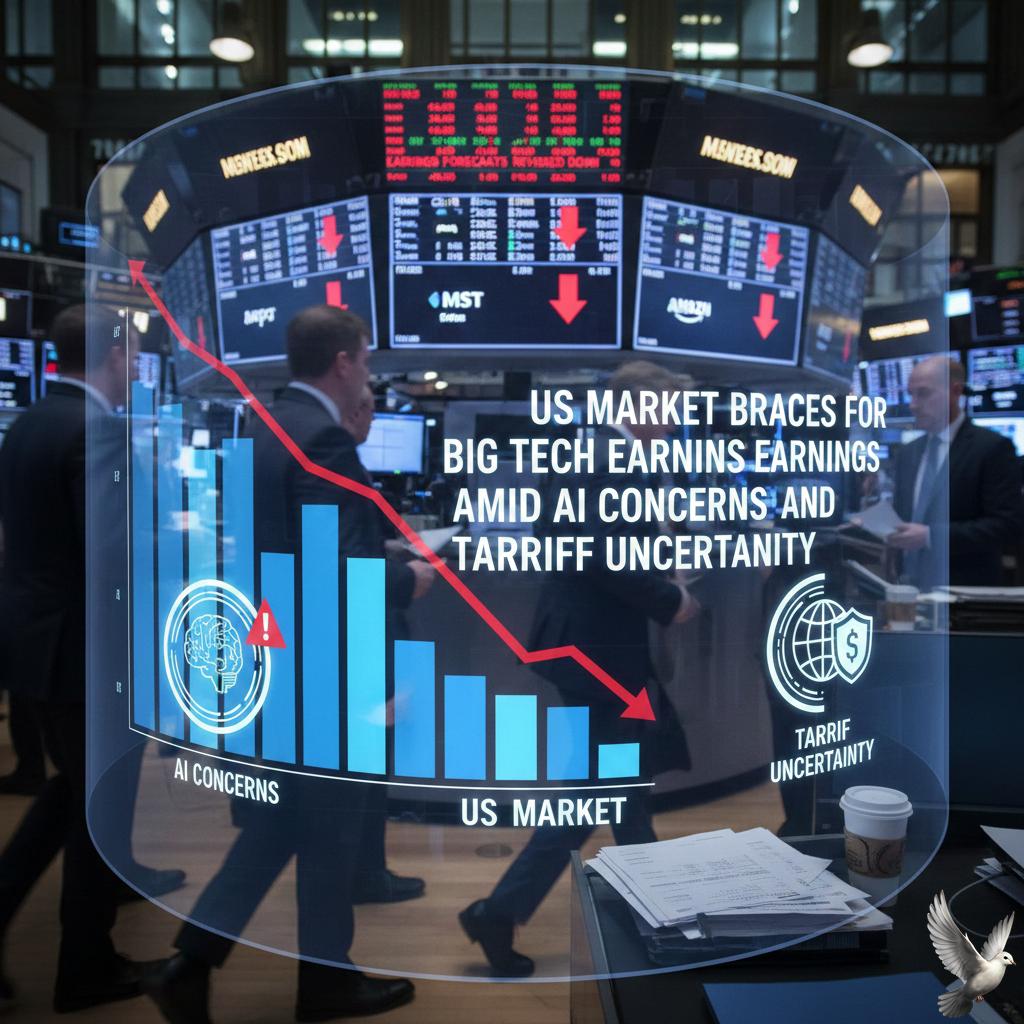
US Market Braces for Big Tech Earnings Amid AI Concerns and Tariff Uncertainty
Market Outlook: AI Resilience Amid Sector Rotation Global markets enter a defining week as tech heavyweights prepare to report, with the focus squarely on the sustainability of the AI investment cycle. While the **S&P 500** and **Dow Jones** maintain an upward bias, a significant internal rotation is underway. Investors are increasingly pivoting toward "real economy" sectors, with **Energy** and **Industrials** outperforming the broader market by a wide margin in early 2026. The Nvidia Benchmark Nvidia remains the primary barometer for the AI trade. The market anticipates its fourth-quarter fiscal 2026 results on **February 25**, with revenue expectations set at **$65.68 billion**. This follows a record-breaking third quarter where the company hit **$57 billion** in revenue, marking a **62%** year-on-year increase. Key metrics for investors: * **Earnings Per Share (EPS):** Consensus estimates sit at **$1.46**. * **Gross Margins:** Projected to climb toward **74.97%**. * **Data Center Revenue:** Expected to reach **$59.9 billion**, driven by the Blackwell chip ramp-up. Trade Policy and Global Shifts Recent shifts in U.S. trade policy are beginning to reshape capital flows. A landmark bilateral trade agreement between the U.S. and India, announced in early February, has reduced reciprocal tariffs on Indian exports from **25%** to **18%**. This "reset" is designed to stabilize trade relations but also introduces new purchase commitments for India in the energy and technology sectors. While policy clarity has improved, tech stocks remain sensitive to export control updates. Nvidia recently flagged a potential **$8 billion** revenue loss for the upcoming quarter due to tighter licensing requirements on high-end AI hardware shipments to specific regions. Indian IT Facing Structural Headwinds The Indian IT sector is navigating a period of intense volatility. While the **BSE Sensex** has shown modest gains of **0.4%** recently, major IT players like **Wipro** and **L&T Technology Services** have seen year-to-date declines between **22%** and **35%**. Traditional service models are under pressure as AI disrupts core functions like testing and coding. Analysts have downgraded several large-cap firms, forecasting a modest **6%** earnings growth through 2028. However, specific AI-centric companies are bucking the trend: * **Netweb Technologies** reported a **141%** year-on-year revenue surge. * **TCS** has secured an annualized AI service revenue of **$1.8 billion**. * India's total IT industry is still on track to reach **$350 billion** by the end of 2026. The Rise of "Real Economy" Stocks A distinct market rotation is favoring sectors that provide essential services and physical infrastructure. **Energy stocks** have surged more than **22%** since the start of the year, supported by rising oil prices and geopolitical tensions. **Industrials** are also leading, with companies like Caterpillar and GE Vernova benefiting from the massive data center buildout required to support global AI demand. This shift indicates that while the "AI trade" is narrowing, the infrastructure behind it remains a powerful growth engine for the broader economy.
HAL Shares Fall 5% Amid Conflicting Reports of Tejas Aircraft Incident
HAL Market Update: Resilience Amid Technical Scrutiny Hindustan Aeronautics Limited (HAL) shares experienced a volatile trading session on **February 23, 2026**, closing down approximately **4.23%** at **Rs 3,993.80**. During intraday trading, the stock touched a low of **Rs 3,975.80** as markets reacted to reports concerning the LCA Tejas fighter jet program. Clarification on Tejas Incident The company issued a formal regulatory filing to address media reports of an aircraft crash. HAL clarified that no crash occurred; instead, a "minor technical incident on ground" took place involving a Tejas jet overshooting a runway due to a suspected brake failure. While the pilot ejected safely as a precaution, the airframe sustained structural damage. HAL emphasized that the Tejas maintains one of the highest safety records globally among contemporary fighter aircraft. The incident is currently being analyzed in coordination with the Indian Air Force (IAF) to ensure a speedy resolution. Performance and Valuation Metrics Despite recent price pressure, HAL’s financial fundamentals remain robust. The company recently reported its **Q3 FY26** results, highlighting significant growth across key indicators: * **Net Profit:** **Rs 1,866.68 crore**, marking a **29.65%** year-on-year increase. * **Revenue:** **Rs 7,698.80 crore**, up **10.66%** from the previous year. * **Operating Margin:** Stable at **24.30%**, reflecting consistent operational efficiency. * **Order Book:** Currently valued at approximately **Rs 1,90,000 crore**, providing revenue visibility through **2032**. The stock is currently trading nearly **22%** below its 52-week high of **Rs 5,166.00**. Analysts note that at a price-to-earnings (P/E) ratio of roughly **30x**, HAL remains one of the more attractively valued entities within the Indian defense sector compared to peers. Sector Trends and Headwinds The broader defense sector has faced a "reset" following the **2026 Union Budget**, which allocated **Rs 7.85 lakh crore** to defense. While this represents a **15%** year-on-year increase, the market had priced in even more aggressive capital expenditure, leading to a period of profit-taking across the industry. Ongoing execution risks remain a point of focus for investors. Deliveries of the **Tejas Mk-1A** variant have faced delays, primarily due to global supply chain constraints regarding aero engines. However, new contracts—including **Rs 62,370 crore** for additional jets and **Rs 25,000 crore** for Su-30MKI engines—continue to bolster the long-term pipeline. Strategic shifts into civilian MRO (Maintenance, Repair, and Overhaul) and commercial space manufacturing are expected to diversify revenue streams, reducing the company's historical dependency on pure military procurement cycles.

Carlsberg Reportedly Initiates $700 Million IPO for Indian Subsidiary
Danish brewing giant Carlsberg A/S has officially signaled its intent to explore a public listing for its Indian operations. The group recently appointed Kotak Mahindra Capital, JPMorgan Chase, and Citigroup as lead advisors to manage the potential share sale. The IPO is expected to be a significant market event, with reports suggesting a capital raise of up to **$700 million**. Market analysts estimate the valuation of Carlsberg’s Indian unit at approximately **INR 30,000 crore to INR 35,000 crore** (roughly **$3.6 billion to $4.2 billion**). A draft red herring prospectus could be filed as early as May 2024. The offering is anticipated to consist primarily of a secondary share sale by the parent company. This move follows a broader trend of multinational corporations, such as Hyundai and LG, tapping into India’s deep domestic investor base to capture higher local valuations. India has been elevated to Carlsberg’s primary global growth engine, surpassing China in strategic importance. The company reported high single-digit volume growth in India for the fiscal year ending **2025**. This performance was bolstered by a strong shift toward premiumization, with the "Carlsberg Elephant" and "Tuborg Strong" brands maintaining dominant positions. The brewer currently holds a market share of approximately **17% to 21%**, securing its spot as the second-largest player in the country. To support this trajectory, the company recently committed to an investment of **INR 1,250 crore** over the next three years. This includes a recent **INR 100 crore** expansion of its Mysuru brewery to boost canning capacity. The broader Indian beer market, valued at **$9.09 billion** in 2025, is projected to grow at a compound annual rate of nearly **10%** through 2032. Growth is being driven by a massive demographic shift, with an estimated **13 million** adults reaching the legal drinking age every year. Regulatory tailwinds are also shaping the sector. The India-UK Free Trade Agreement is expected to halve import duties on luxury spirits, further accelerating the "premiumization" trend that benefits established international brands. Carlsberg's potential listing aims to unlock significant shareholder value while providing the financial flexibility needed to compete against rivals like United Breweries and AB InBev. With beer currently accounting for only a small fraction of India's total alcohol consumption compared to the regional average, the long-term runway for expansion remains exceptionally high.
Indian Rupee Appreciates 7 Paise to 90.87 per US Dollar
Market Brief: Rupee Rebounds Amid Global Shifts The Indian rupee appreciated by **7 paise** on Monday, February 23, 2026, to settle at **90.87** against the US dollar. This recovery follows a sharp **26-paise** drop in the previous session, where the local unit had touched **90.94**. Market sentiment was bolstered by a significant retreat in the US Dollar Index (**DXY**), which fell **0.32%** to **97.47**. The greenback faced pressure following a US Supreme Court ruling that struck down emergency tariff measures, easing immediate fears of aggressive trade barriers. Energy and Trade Dynamics Global crude oil prices provided much-needed relief to the rupee. Brent crude, the global benchmark, dropped **1.22%** to trade near **$70.89** per barrel. This decline is largely attributed to emerging prospects of a diplomatic breakthrough in US-Iran nuclear negotiations. Lower energy costs directly benefit India’s current account, reducing the demand for dollars by oil importers. Despite this, the market remained cautious as the US administration signaled potential alternative tariffs of **15%**, keeping trade-related uncertainties alive. Institutional and Reserve Data India’s external position remains shielded by record-high foreign exchange reserves. According to latest RBI data, reserves surged by **$8.663 billion** to reach an all-time peak of **$725.727 billion** for the week ended February 13. However, the rupee's gains were capped by persistent foreign fund outflows. Foreign Institutional Investors (**FIIs**) offloaded equities worth **₹934.61 crore** in recent sessions. This capital exit was partially offset by strong domestic equity performance, with the Sensex rising **479.95 points** to close at **83,294.66**. Monetary Outlook The Reserve Bank of India maintains a neutral stance, recently holding the repo rate at **5.25%**. With headline inflation projected at **3.2%** for the current quarter, the central bank has focused on stability amidst geopolitical friction. Forex traders expect the rupee to trade within a range of **90.60 to 91.00** in the near term. While the US Supreme Court verdict provided a tactical bounce, the underlying demand for dollars from importers and FIIs continues to provide a floor for the exchange rate.
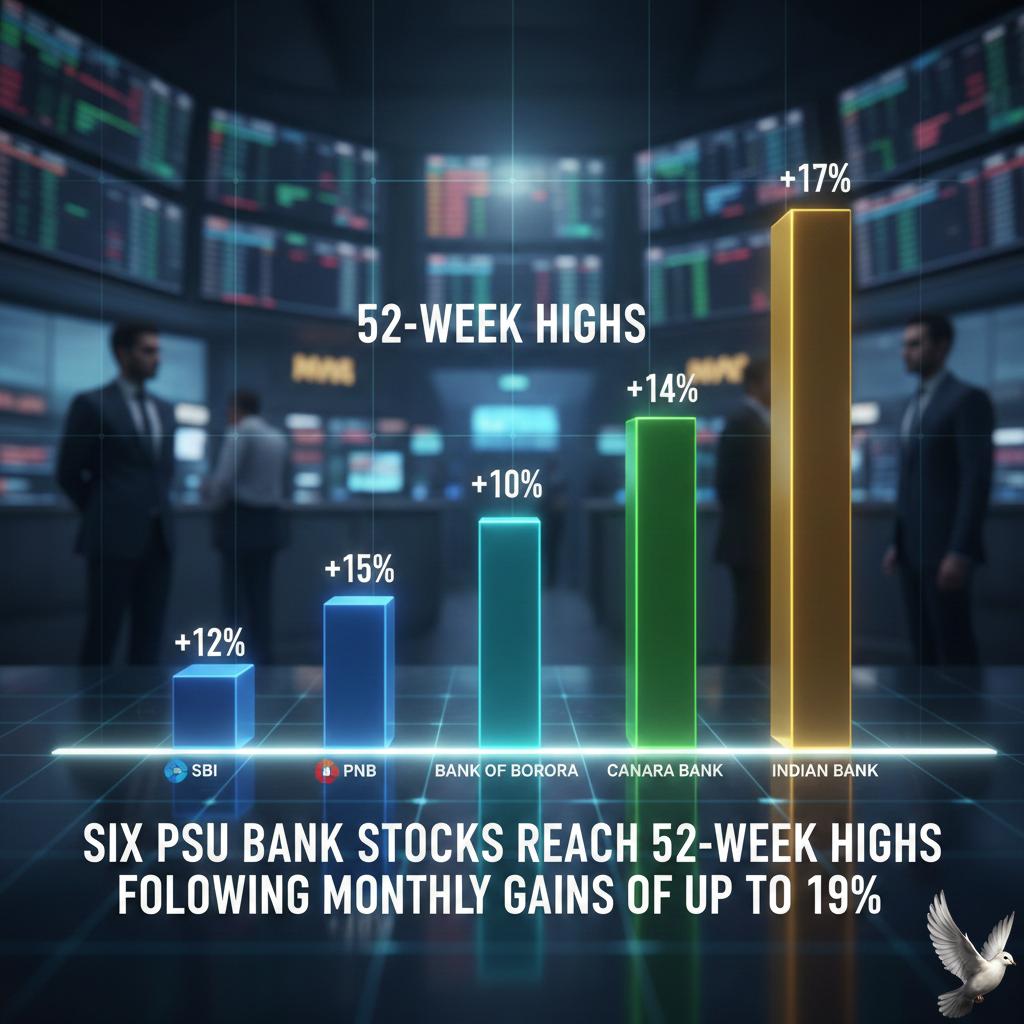
Six PSU Bank Stocks Reach 52-Week Highs Following Monthly Gains of Up to 19%
Market Outlook: February 23, 2026 Global financial markets are navigating a landscape defined by heightened geopolitical friction and shifting economic momentum. Risk aversion has intensified following the sudden implementation of a **15% global tariff** on U.S. imports. This policy shift, combined with escalating tensions between the U.S. and Iran, has led to increased volatility across major indices. Equities and Benchmarks U.S. equity futures retreated this morning as investors weighed the impact of trade uncertainty and potential military developments in the Middle East. This follows a volatile start to the month where the **S&P 500** recorded consecutive weekly losses. While the index saw a brief **0.69%** gain last Friday after legal challenges to emergency duties, the long-term outlook remains cautious. Technology stocks continue to face scrutiny. The **Nasdaq 100** has underperformed recently, dropping for five straight weeks as market leadership shifts toward more defensive, cyclical sectors. All eyes are now on upcoming earnings reports, particularly from the semiconductor industry, which are expected to serve as a bellwether for AI-related capital expenditure and broader sector health. In Europe and Asia, performance is mixed. European markets rose approximately **3.2%** in January, supported by better-than-expected economic data and approved national budgets. Conversely, Asian markets traded lower today, influenced by negative cues from Wall Street and the Lunar New Year holiday break. Commodities and Energy Geopolitical risk premiums have pushed energy prices to six-month highs. **Brent crude** futures reached **$71.99**, while **WTI crude** rose to **$67.05**. Supply concerns are growing due to naval drills in the Strait of Hormuz—a transit point for roughly **20%** of global oil—and ongoing disruptions in Russian refining infrastructure. Precious metals remain elevated as investors seek "safe haven" assets. **Gold** is trading near **$5,600** per ounce, reflecting a significant **19%** increase since the end of 2025. Silver has also experienced a sharp **9%** bounce recently, often seen as a precursor to broader moves in the metals complex. Inflation and Central Bank Policy U.S. inflation data remains a focal point for the Federal Reserve. The Consumer Price Index (**CPI**) rose **2.4%** over the last 12 months, with shelter costs and food prices acting as primary drivers. While energy costs fell **1.5%** in January, the Fed has paused its rate-cutting cycle, keeping the target range at **3.50%–3.75%**. Central banks in Japan and Australia are moving in the opposite direction, with both signaling potential rate hikes to combat persistent price pressures. In contrast, the European Central Bank maintains a more accommodative stance with its deposit rate at **2.0%**, as the region seeks to balance growth with easing inflation. Economic Indicators U.S. **GDP growth** slowed to an annualized rate of **1.4%** in the final quarter of 2025, significantly below previous estimates. Meanwhile, the manufacturing sector shows signs of resilience, with global output matching its highest levels since mid-2024. Investors are now focused on upcoming consumer confidence and producer price data to gauge the likelihood of a mid-year economic recovery.

Shree Ram Twistex IPO Opens with 0.82x Retail Subscription and GMP Monitoring
Shree Ram Twistex officially launched its **110.24 crore** Initial Public Offering today, February 23, 2026. The issue consists entirely of a fresh issuance of **1.06 crore** equity shares, with no offer-for-sale component. Small investors have taken the lead in early bidding. The retail portion saw a subscription of **82%** within the first few hours of the window opening. Overall, the total subscription stands at **9%** as institutional and non-institutional buyers typically pace their entries toward the final days. The price band for the issue is fixed between **95** and **104** per share. Investors are required to bid for a minimum lot of **144 shares**, which translates to an entry-level investment of **14,976** at the upper price cap. The grey market currently signals a premium of **5** per share. This indicates a potential listing price of **109**, reflecting a modest gain of approximately **4.81%** to **6%** over the issue price. The company intends to deploy the capital raised for strategic infrastructure and financial stability. Key allocations include **39 crore** for a 4.2 MW wind power plant and **7.85 crore** for a 6.1 MW solar power plant to reduce operational energy costs. Additionally, **44 crore** is earmarked for working capital and **14.89 crore** for debt repayment. Shree Ram Twistex operates a B2B model in the textile sector, manufacturing compact ring-spun and value-added yarns like Eli Twist and Lycra-blends. The company reported a total income of **256 crore** in FY25, with a net profit of **8 crore**, representing steady year-on-year growth. The subscription window remains open until February 25. Share allotment is expected to be finalized on February 26, followed by the initiation of refunds and credit to demat accounts by February 27. The stock is scheduled to debut on both the BSE and NSE on March 2, 2026. While the company shows strong earnings momentum, market analysts have noted that the current valuation of **29x–30x P/E** aligns closely with its growth potential, suggesting a fully priced entry for new investors.

SEBI Implementing Real-Time AI Monitoring for Financial Influencers and Insider Trading
SEBI Markets Brief: AI-Driven Oversight and Growth The Securities and Exchange Board of India (SEBI) is accelerating the deployment of **Artificial Intelligence** and **Machine Learning** to safeguard market integrity. SEBI Chairman Tuhin Kanta Pandey recently confirmed that the regulator is now using AI tools for real-time monitoring of misconduct, specifically targeting insider trading and the rise of unregistered investment advice. Market surveillance has moved into a proactive phase. The regulator is actively scanning social media and digital platforms to identify "finfluencers" and advisors who cross the line into illegal investment tips. New rules effective this month require social media platforms to label all **AI-generated content** with permanent metadata to prevent the spread of synthetic misinformation. Sector Performance and Growth The scale of India’s capital markets continues to expand, necessitating this technological shift. The Portfolio Management Services (PMS) industry has seen assets under management surge to **₹10.5 lakh crore** as of January 2026, a significant leap from **₹5 lakh crore** in 2021. The number of PMS clients has grown by nearly **50%** since 2022, reaching approximately **2.15 lakh** investors. This rapid expansion in high-stakes portfolio management has prompted SEBI to mandate stricter internal controls and digital-first transparency norms for firms managing concentrated wealth. Daily Market Snapshot: February 23, 2026 Domestic indices showed resilience during Monday’s session despite global volatility. The **Nifty 50** closed at **25,647.90**, marking a gain of **0.30%** or **76.65 points**. The index continues to reflect a strong long-term trajectory with a one-year return of **12.52%**. The **Nifty Financial Services** index outperformed the broader market, rising **0.91%** to reach **28,468.60**. Gains were led by major private lenders and insurance providers, with some stocks seeing price increases of over **2%**. Regulatory Enforcement and Compliance The regulator has tightened the noose on misleading financial promotions. Regulated entities, including brokers and mutual funds, are now strictly prohibited from associating with any unregistered financial influencers for marketing purposes. To further protect retail investors, SEBI has moved to ban the use of **live market data** for investor education. Educators are now permitted to use only historical data to ensure that "learning" sessions do not turn into real-time, unregulated trading signals. Current enforcement actions include high-value recovery proceedings and the attachment of bank accounts in suspected insider trading cases, signaling a zero-tolerance approach to market manipulation as India's market capitalization exceeds **₹470 trillion**.
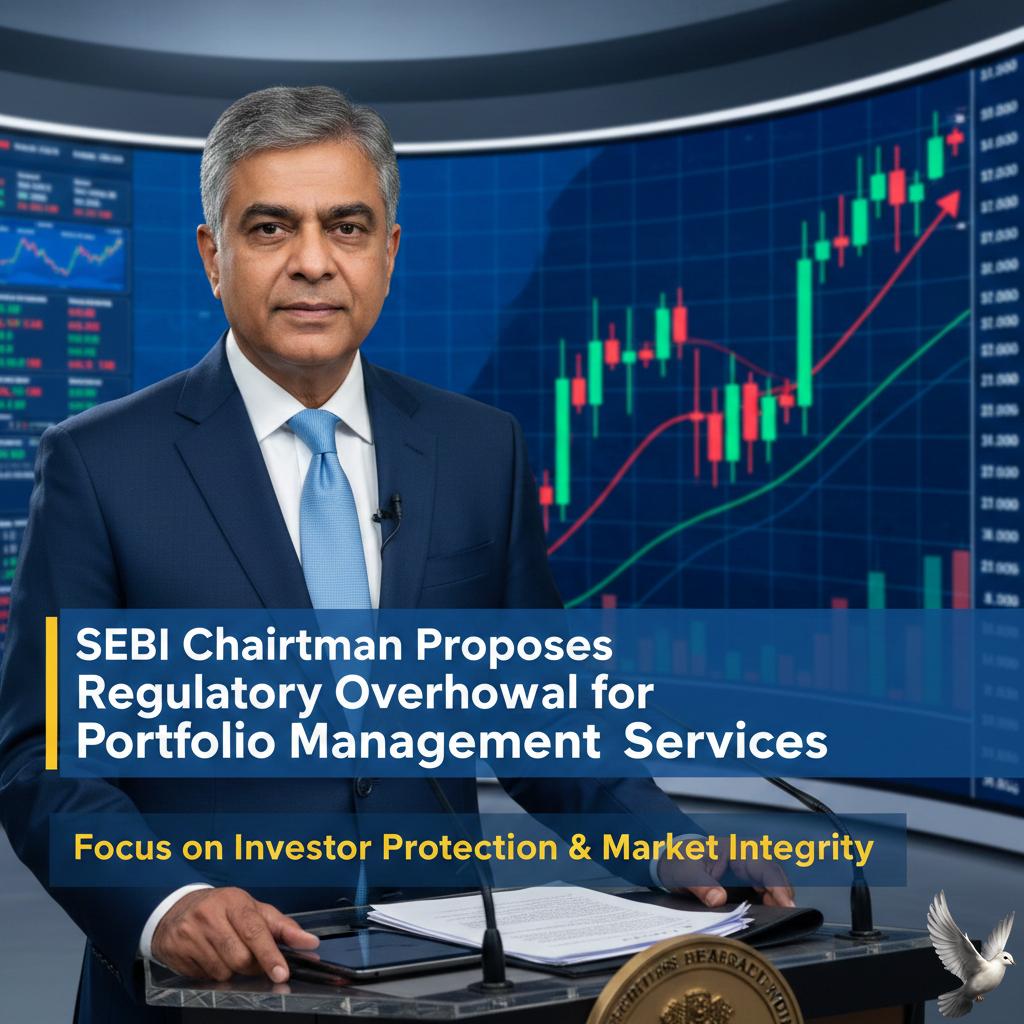
SEBI Chairman Proposes Regulatory Overhaul for Portfolio Management Services
The Securities and Exchange Board of India (SEBI) is executing a comprehensive overhaul of the Portfolio Managers Regulations to align the industry with rapid market shifts. As of late February 2026, SEBI Chairman Tuhin Kanta Pandey has confirmed that the regulator is targeting **June 2026** for a formal review, preceded by the release of a public consultation paper. The Portfolio Management Services (PMS) industry has reached a significant scale, with assets under management (AUM) nearly doubling over the last five years. Excluding EPFO and provident fund contributions, the sector’s AUM has surged from **₹5 lakh crore** in 2021 to approximately **₹10.50 lakh crore** as of January 31, 2026. This represents a compound annual growth rate (CAGR) of roughly **17%**. Investor participation is also at record levels. The total number of PMS clients has increased to about **2.15 lakh** as of early 2026. This growth is being driven by high-net-worth individuals (HNIs) seeking customized equity and debt strategies, often outperforming the Nifty benchmark by **5% to 10%** annually through high-conviction, focused stock selection. A central pillar of the new regulatory review is the strengthening of governance and investor protection. Recent guidelines already mandate a minimum investment ticket size of **₹50 lakh** and have raised the minimum net worth for providers to **₹5 crore**. These thresholds are designed to ensure only serious, well-capitalized players operate in the high-stakes PMS space. New transparency rules now require managers to report performance data net of all costs, fees, and taxes, moving away from the older practice of showing gross figures. Additionally, investment in the securities of "related parties" or associates is now capped at **30%** of a client's total portfolio, with prior explicit consent required to prevent conflicts of interest. The regulator is also prioritizing the "Ease of Doing Business." SEBI recently introduced streamlined processes for the transfer of a PMS business during mergers or acquisitions. Such transfers must now be completed within a maximum of **two months** following regulatory approval, ensuring continuity of service for investors during corporate restructurings. To maintain market integrity, the 2026 regulatory environment includes stricter oversight of non-discretionary portfolios and mandates that managers avoid below-investment-grade or unrated securities of related parties. These reforms transition the sector toward a preventive compliance model, shifting away from reactive enforcement. With India's real GDP estimated to grow at **7.4%** for the 2026 fiscal year, the PMS industry is expected to remain a critical engine for capital formation. The upcoming June review will likely address further digital integration and disclosure gaps to ensure the framework remains robust for an increasingly sophisticated investor base.

European Equities Slide Amid Uncertainty Over US Trade Policy
European markets are experiencing a volatile start to the week as investors process a dramatic shift in U.S. trade policy. After a brief period of relief, a fresh wave of uncertainty has hit global exchanges following President Donald Trump’s announcement of a new 15% global tariff rate. The pan-European STOXX 600 index slipped 0.3% to 628.62 points in early Monday trading. This pullback follows a record-high close last Friday, which was driven by a U.S. Supreme Court ruling that struck down previous trade measures. However, that optimism evaporated over the weekend as the White House moved to re-establish trade barriers using alternative legal authorities. Germany’s DAX has been the most affected major index, dropping 0.7% as industrial heavyweights face renewed pressure. The technology sector led the broader market decline with a 1.3% loss. Within the German market, automotive and manufacturing stocks saw immediate selling pressure: BMW shares fell 1.4%, Daimler Truck dropped 1.1%, and Airbus lost 1.0%. The sudden policy shift centers on Section 122 of the Trade Act of 1974. Initially, the administration proposed a 10% levy, which was quickly raised to 15% on Saturday. This new rate is the maximum allowed under the statute without congressional approval and is currently set for a 150-day duration. The European Commission has signaled it will not immediately adjust its own trade stances, leading to concerns about a prolonged standoff. Analysts note that previous "reciprocal" trade deals, including those negotiated with the EU and the UK, are now in a state of ambiguity. It remains unclear whether these specific agreements will be honored or if the 15% blanket tariff will supersede them. While most sectors remain in the red, some domestic-focused industries have shown resilience. European banks emerged as top gainers, and Italy’s Enel rose 3.4% following a positive update on its three-year capital expenditure plan. Conversely, individual corporate news added to the downward pressure in specific pockets, such as Johnson Matthey, which plunged 14% after a significant price cut on a business unit sale. In the currency and commodity markets, the euro climbed 0.3% against the dollar to 1.1818, while safe-haven assets gained favor. Gold prices jumped 0.6% to reach a three-week high of $5,135 per ounce as traders sought protection against the escalating trade friction. This environment marks a return to high-stakes "trade war" dynamics. Investors are now closely monitoring the February 24 implementation date for the new tariffs, as well as potential retaliatory measures from the European Union. [Trump's 15% Tariff announcement](https://www.youtube.com/watch?v=kuxT_nB5mcM) This video provides critical context on the initial market reaction and the geopolitical friction following the President's latest tariff threats. http://googleusercontent.com/youtube_content/0