Bullish News
Collection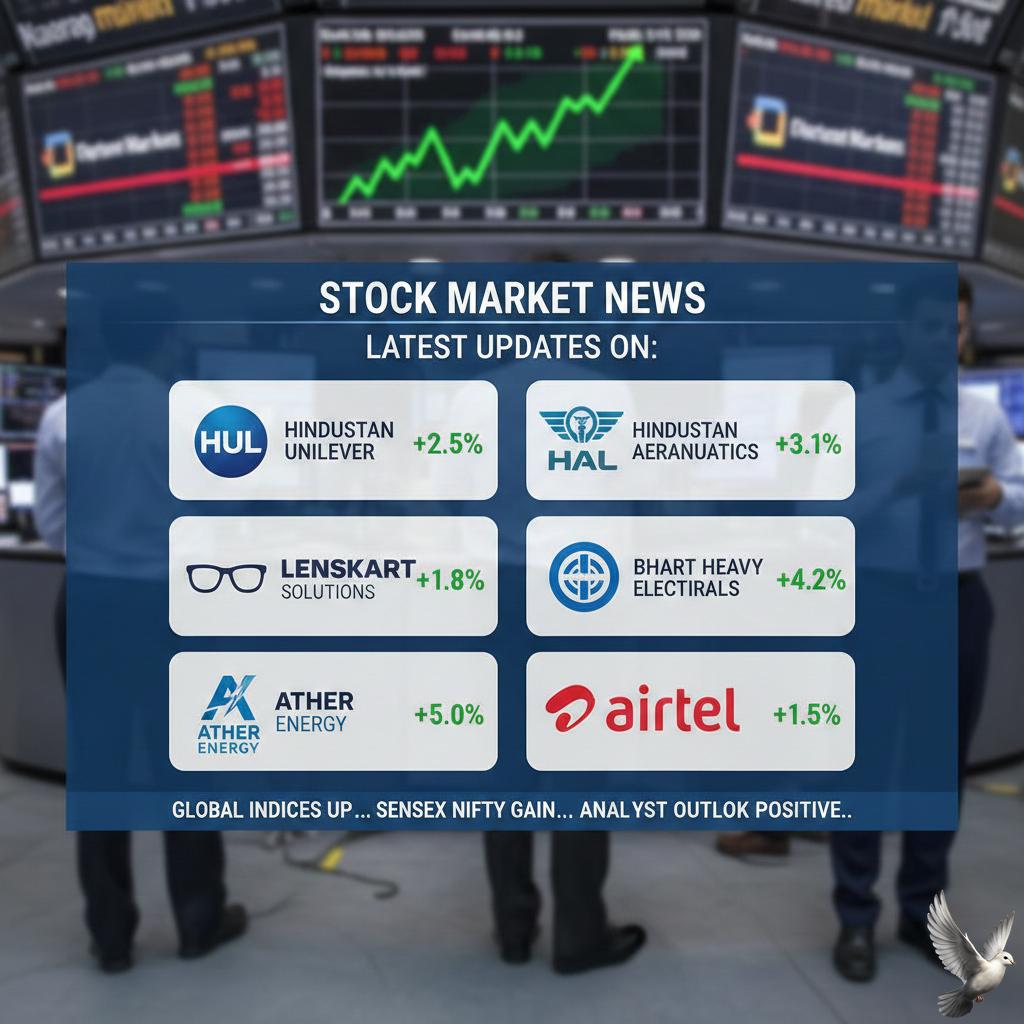
Stock Market News: Latest updates on HUL, HAL, Lenskart, BHEL, Ather Energy, and Bharti Airtel
Market Pulse: Mixed Sentiment Amid Earnings Surge The Indian equity benchmarks exhibited a steady yet cautious performance as of February 12, 2026. The Nifty 50 hovered near the psychologically significant **26,000** mark, closing at **25,953.85**, a marginal gain of **0.07%**. The BSE Sensex showed a slight cooling trend, ending at **84,233.64**, down **0.05%**. This flat movement reflects a period of consolidation following a recent three-day winning streak. Analysts note that while the pace has moderated, the underlying tone remains constructive, supported by robust domestic liquidity. Corporate Earnings Highlights The third-quarter results have created a sharp divide in sectoral performance. Financials and Automotives are leading the charge, while the IT sector faces notable headwinds. **Bharti Airtel** reported a significant surge in its consolidated net profit, which jumped **90%** year-on-year to reach **₹8,503 crore**. Revenue from operations climbed **19.6%** to **₹53,982 crore**, driven by a strong performance in India and Africa. The company's India ARPU (Average Revenue Per User) improved to **₹259**, up from **₹245** last year. **Eicher Motors** emerged as a top performer, with its stock surging over **6.4%** to **₹7,766.50**. The company posted its best-ever Q3 results, with profit after tax rising **21%** to **₹1,421 crore**. Divergent Trends in Consumer Goods The consumer electronics and retail sectors are witnessing contrasting fortunes. **Lenskart Solutions** delivered a record-breaking performance in its second earnings report since listing. The eyewear giant saw its net profit skyrocket nearly **70-fold** to **₹131.03 crore**. Total revenue surged **38%** to **₹2,308 crore**, supported by the addition of **195** new stores during the quarter. In contrast, **LG Electronics India** faced a significant setback. The company reported a **61.6%** drop in net profit, which fell to **₹89.7 crore**. Revenue also declined **6%** to **₹4,114 crore**, as the home appliance segment struggled with lower-than-expected demand following the festive season. Key Market Indicators The market's volatility remains under control, providing a stable environment for long-term investors. * **India VIX:** Dropped below **12**, indicating a cooling of investor anxiety. * **SBI:** Touched an all-time high after reporting a record profit of **₹21,028 crore**. * **IT Sector:** Remained the primary laggard, with **TCS** falling **2.5%** and **Infosys** down **1.8%** due to global tech concerns. The immediate support for the Nifty is placed at **25,800**, while a decisive move above **26,000** is expected to trigger further short-covering and upward momentum. This [Nifty 50 and Sensex market analysis](https://www.youtube.com/watch?v=akn48UBqyDk) provides a detailed breakdown of the current market trends and institutional flows shaping the Indian indices in early 2026. http://googleusercontent.com/youtube_content/0

Asian Stocks Rise While US Treasuries Decline Following Employment Data
Asian equity markets have surged to historic peaks, with the MSCI Asia Pacific Index reaching an all-time high this week. Regional performance continues to outpace US counterparts, driven by a combination of attractive relative valuations and a significant mandate for fiscal expansion in major economies. Japan has emerged as the primary catalyst for this regional breakout. The Nikkei 225 climbed 4.45% to reach 56,660 following a decisive election victory for Prime Minister Sanae Takaichi. This political mandate has heightened expectations for increased government spending in high-growth sectors, including semiconductors and defense. Technology shares in the region have seen gains of over 10% in specific sub-sectors, such as chip manufacturing equipment. Market sentiment across the continent remains buoyant despite cooling optimism in the West. South Korea’s Kospi jumped 4.2% to 5,305, while the Hang Seng Index in Hong Kong rose to 27,211. In mainland China, the Shanghai Composite advanced to 4,115. These gains reflect a broader rotation into growth-oriented Asian assets as investors capitalize on a significant valuation gap; Chinese equities currently trade at a forward P/E ratio of roughly 11.8x, compared to approximately 22x for the S&P 500. In the United States, recent economic data has shifted the interest rate outlook. Nonfarm payrolls surged by 130,000 in January, significantly exceeding the forecast of 70,000. This labor market resilience has caused the unemployment rate to dip to 4.3%, prompting traders to push back expectations for Federal Reserve rate cuts. Markets are now pricing the first potential reduction for July 2026, rather than earlier in the spring. The bond market has reacted sharply to these developments. The US 10-year Treasury yield rose to 4.21% following the jobs report, as hawkish rhetoric from Federal Reserve officials suggested policy must remain restrictive to combat sticky inflation. Current annual inflation stands at 2.7%, with core inflation holding at 2.6%. Global participants are now focused on upcoming Consumer Price Index data, which is expected to show a slight moderation to 2.4% or 2.5%. Commodity and currency markets are showing localized volatility. Crude oil prices have stabilized near $64.38 per barrel for WTI and $69.20 for Brent, influenced by geopolitical tensions. In the currency space, the Japanese Yen has strengthened toward 153.92 against the US Dollar, while the US Dollar Index remains firm near the 96.84 level. Strategic focus in Asia remains locked on the "AI cycle" and semiconductor innovation. Record capital expenditure from global tech giants—including a landmark $20 billion bond issuance by Alphabet—is providing a significant tailwind for Asian suppliers. As regional growth is projected to hold steady at 4.5%, the combination of corporate reforms and robust exports continues to solidify the region's position as the global leader in market performance for the first quarter of 2026.
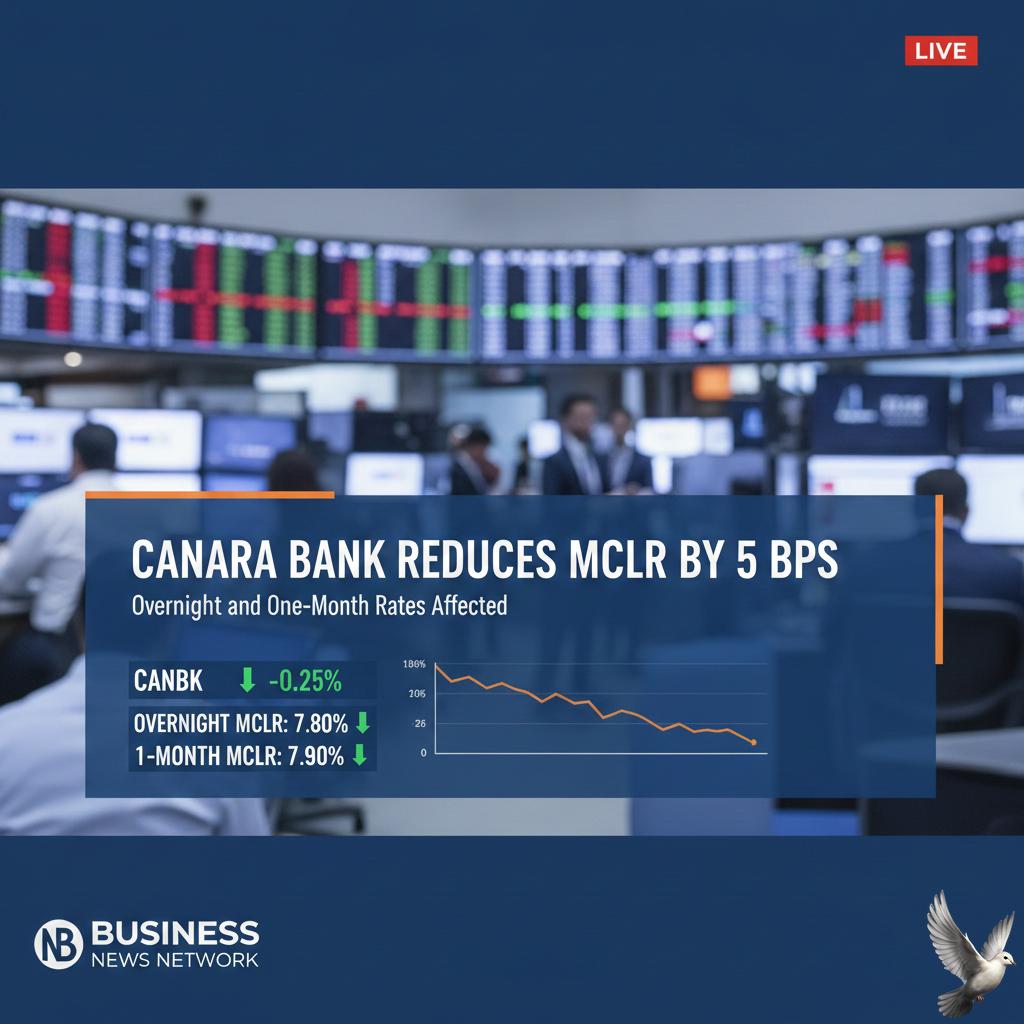
Canara Bank reduces overnight and one-month MCLR by 5 bps
Canara Bank has announced a reduction in its marginal cost of funds-based lending rates (MCLR) for select tenors, effective February 12, 2026. The bank lowered its overnight and one-month MCLR by 5 basis points. The revised overnight rate now stands at 7.85%, while the one-month rate has been adjusted to 7.90%. These changes aim to lower borrowing costs for retail and wholesale customers, supporting the Reserve Bank of India’s objective for transparent interest rate transmission. For longer tenures, the rates remain stable. The three-month MCLR is maintained at 8.15%, the six-month at 8.50%, and the one-year rate—to which many home and auto loans are linked—stays at 8.70%. The two-year and three-year rates are positioned at 8.85% and 8.90% respectively. This move comes as the Reserve Bank of India maintained the repo rate at 5.25% during its February 2026 meeting. The central bank has held a neutral stance, balancing a cumulative 125-basis-point reduction since early 2025 with a projected GDP growth of 7.4% for the current fiscal year. Canara Bank’s operational performance remains strong, reporting a 26% year-on-year growth in net profit to 5,155 crore for the December quarter. This growth was driven by improved asset quality, with the Gross NPA ratio falling to 2.08% from 3.34% a year ago. Global advances for the bank reached 11.92 lakh crore, marking a 13.59% increase. Retail lending, a key driver of credit demand, surged over 31% to 2.73 lakh crore, highlighting the bank's focus on the RAM (Retail, Agriculture, and MSME) sector. The broader banking sector shows resilience, with the Bank Nifty index opening at 60,805.20 in early February trade. Public sector banks collectively recorded a record profit of 52,603 crore in the third quarter, signaling high liquidity and healthy balance sheets across the industry. While the RBI keeps the headline repo rate steady, individual bank adjustments like those from Canara Bank reflect local liquidity conditions and competitive credit demand. Existing borrowers will see the impact of these cuts during their next scheduled loan reset dates.
Mixed Q3 Results: Consumer Sector Growth Countered by Labour Cost Margin Pressures
Indian Market Brief: Q3 FY26 Performance Indian corporate earnings for the December 2025 quarter (Q3 FY26) reflect a resilient economy, with the Nifty 50 closing the calendar year at **26,129**. National GDP growth remains robust at **8.2%**, recently propelling India past Japan to become the world's fourth-largest economy with a valuation of **$4.18 trillion**. Sectoral Performance and Trends Automobile sales have seen a structural shift, with rural demand surging **14.43%** in January 2026, significantly outstripping the **2.75%** growth in urban centers. Total passenger vehicle sales reached **513,475 units** during the month. The banking sector continues to act as an economic bellwether. PSU banks reported record annual profits of **₹1.78 lakh crore**, a **26%** year-on-year increase. Financial services are benefiting from a massive liquidity injection of **₹6.3 trillion** into the system, supporting steady credit growth. Cement manufacturers reported double-digit volume growth despite pricing pressures. Operating profits are projected to rise **12% to 18%** in FY26, supported by a **10%** increase in central infrastructure spending. Major players are planning a capital expenditure of **₹1,20,000 crore** through 2028 to expand capacity. The pharmaceutical and life sciences sectors showed steady gains, with firms like Zydus Lifesciences reporting revenue growth of **30%** in the December quarter. Policy and Profitability Impacts Profitability across various sectors, particularly IT and manufacturing, faced headwinds due to the implementation of the New Labour Codes on **November 21, 2025**. These codes mandate that basic pay must constitute at least **50%** of total compensation, leading to higher statutory payouts. For instance, TCS reported a one-time exceptional charge of **₹2,128 crore** related to these changes, contributing to a **14%** decline in quarterly profit. Macroeconomic Outlook Inflation remains well within the Reserve Bank of India’s target. The Consumer Price Index (CPI) stood at **1.33%** in December 2025, while Wholesale Price Index (WPI) inflation was recorded at **0.83%**. External trade prospects have improved following a landmark trade deal with the United States in February 2026. This agreement reduced reciprocal tariffs on Indian goods from **25%** to **18%** and secured zero-duty access for industrial exports valued at **$38 billion**. This is expected to provide an incremental boost of **0.2 percentage points** to annual GDP. Market sentiment is supported by a forecasted real consumption growth of **7.7%** for the coming year, driven by strong winter harvests and continued government welfare spending.
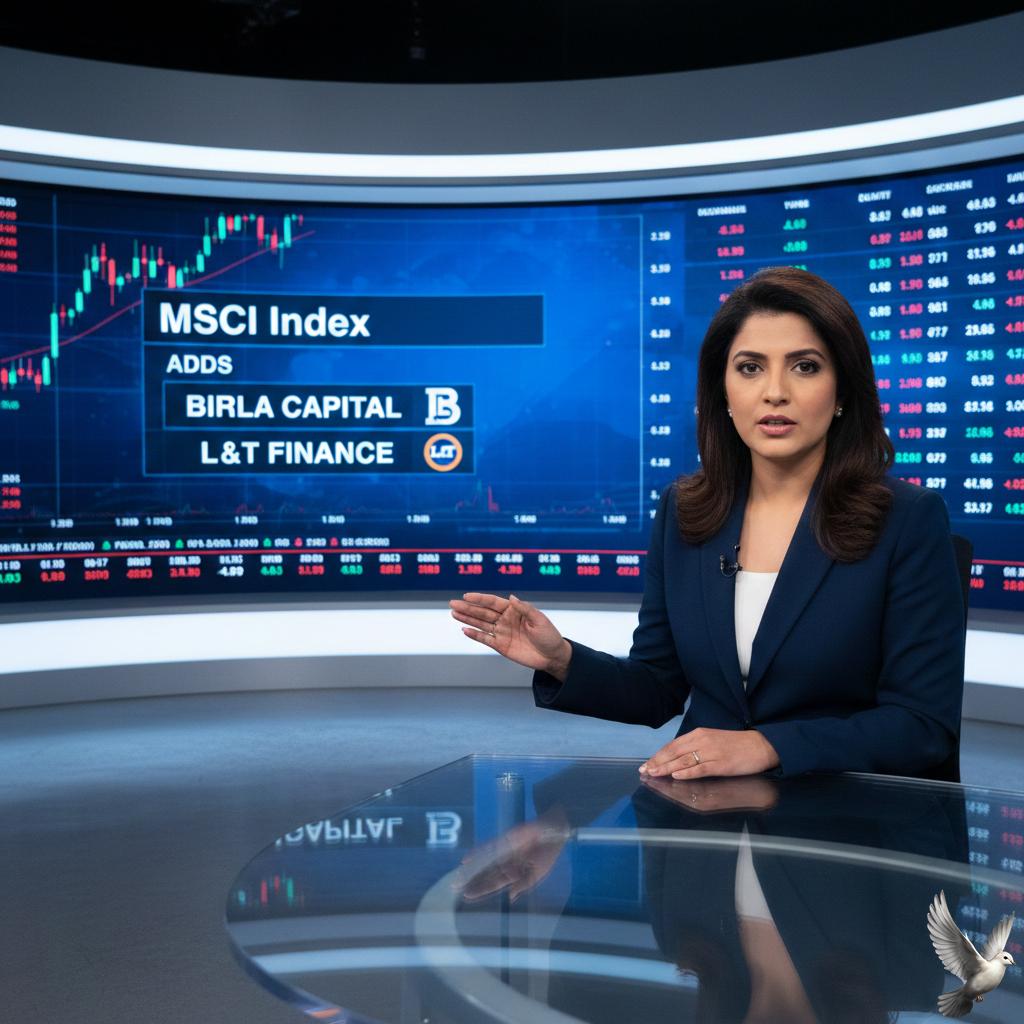
MSCI Index Adds Birla Capital and L&T Finance
MSCI India February 2026 Rebalancing Brief Global index provider MSCI has finalized its February 2026 review, triggering a significant reshuffle in Indian equity allocations. These changes, set to be implemented at the close of trading on **February 27, 2026**, reflect shifting investor sentiment and evolving market capitalizations across the financial and infrastructure sectors. Global Standard Index Shifts The MSCI Global Standard Index will see the addition of **Aditya Birla Capital** and **L&T Finance**, signaling a strong pivot toward diversified financial services. Consequently, the total number of Indian constituents in this flagship index will rise to **165**. **Aditya Birla Capital** is projected to attract passive inflows of approximately **$257 million**. **L&T Finance** follows closely with expected buying interest totaling **$238 million**. On the exclusion side, **Indian Railway Catering and Tourism Corporation (IRCTC)** has been removed from the Standard Index. Analysts estimate this exit will trigger passive outflows of roughly **$142 million**. Weightage and Float Adjustments Beyond new entries, **AU Small Finance Bank** will witness a significant weightage increase following a free-float shareholding reassessment. This adjustment is expected to drive an additional **$172 million** in foreign capital into the stock. Despite these individual constituent changes, India’s overall weight in the **MSCI Emerging Markets Index** remains stable at **14.1%**. Small Cap Index Rejig The **MSCI India Small Cap Index** is undergoing a more aggressive contraction. The number of represented companies will drop from **508 to 480** after this review. New additions to the Small Cap category include: * **Premier Energies** * **National Securities Depository (NSDL)** * **Emcure Pharmaceuticals** * **JSW Cement** * **Thyrocare Technologies** The segment saw **34 deletions**, including notable names such as **Gokaldas Exports**, **Sterlite Technologies**, and **KNR Constructions**. Because **L&T Finance** was promoted to the Global Standard Index, it has been simultaneously removed from the Small Cap Index, leading to a calculated shift in its specific fund flows. Market Impact and Flow Summary Total anticipated activity from this rebalancing suggests a net positive movement for the financial sector. * **Total Expected Inflows (Top 3):** **$667 million** * **Total Expected Outflows (IRCTC):** **$142 million** * **Effective Implementation Date:** **February 27, 2026** Investors should expect heightened volatility during the final minutes of the February 27 trading session as global ETFs and passive funds execute bulk orders to align with the new index structures.

NTPC Shares Rise 12% in Three Months Amid Thermal Expansion and Renewable Energy Growth
NTPC Market Brief: February 2026 NTPC shares are trading near **354.75**, maintaining a resilient position despite broader market volatility. The stock reached a high of **370.70** recently, reflecting sustained investor confidence. Current valuations show a Price-to-Earnings (P/E) ratio of **14.51**, with a dividend yield of **2.4%**. Operating efficiency remains high, with coal plant Load Factors (PLF) reaching **70.7%**, significantly outperforming the national average of **60.8%**. Total group installed capacity has now climbed to **88,276 MW**, following aggressive commissioning of new projects. Green Energy Expansion NTPC Green Energy Limited (NGEL) is the primary driver of current growth. The subsidiary recently operationalized **14.43 MW** at the Khavda Solar Project in Gujarat. This brings the total renewable capacity of the group to **8,827 MW**. The company is scaling up towards a massive **60 GW** renewable target by 2032. Recent project milestones include: * **125 MW** commissioned at the Bhadla Solar Project in Rajasthan. * **210 MW** operationalized at the Khavda-II facility. * New pilot projects for **Vanadium Redox Flow Batteries**, marking India's first MWh-scale long-duration storage system. Financial Performance Quarterly results for the period ending December 2025 show a Profit After Tax (PAT) growth of **5.85%**, reaching **4,987 crore**. Standalone income for the nine-month period stands at **1,12,569 crore**. Borrowing costs have seen a notable reduction, dropping to **6.05%** from **6.64%** year-over-year. This improved financial health supports a capital expenditure (Capex) of **33,500 crore** for the current fiscal year. Strategic Diversification NTPC is pivoting toward a multi-fuel future to ensure baseload stability. The company has entered non-disclosure agreements with global leaders like **Rosatom** and **EDF** to explore pressurized water reactor technologies. The group aims for **30 GW** of nuclear capacity by 2047. Additionally, the recent acquisition of the **Sinnar Thermal Power Plant** adds **1,350 MW** of thermal capacity, providing immediate grid support while green transitions mature. Sector Outlook India's peak power demand hit a record **245 GW** in January 2026. This rising demand, coupled with a **123%** year-on-year increase in national renewable additions, places NTPC at the center of the energy transition. Analysts maintain a positive outlook with price targets ranging up to **423**. The transition from a traditional utility to a diversified energy major continues to de-risk the company's long-term profile.

SEBI Chairperson Raises Concerns Regarding SME Listing Framework Misuse
**SME Market Oversight: Tighter Controls Amid Growth** The Indian SME IPO landscape is undergoing a significant regulatory overhaul. Sebi Chairperson Tuhin Kanta Pandey recently flagged serious concerns regarding the misuse of regulatory relaxations. Authorities have identified instances where funds were diverted to related parties or shell companies. To manipulate market sentiment, some entities also engaged in unfair trade practices. In response, the regulator is reviewing the Listing Obligations and Disclosure Requirements (LODR) to eliminate ambiguity and strengthen investor safeguards. **Surging Capital Inflows** Despite these governance challenges, the SME segment has shown immense scale. In the current financial year (FY26) through January 31, 2026, 232 SME IPOs have already raised ₹10,500 crore. This follows a strong FY25, where 241 issues garnered ₹9,800 crore. The combined market capitalization of the over 1,400 SMEs listed on the NSE Emerge and BSE SME platforms has reached approximately ₹4.1 trillion. This growth highlights the platform’s role as an "escalator" for small businesses, with over 350 companies successfully migrating to the main board. **New Listing Barriers and Standards** To filter out low-quality issuers, Sebi has introduced stricter entry barriers. Companies must now demonstrate a minimum operating profit (EBITDA) of ₹1 crore for at least two of the three preceding financial years. Further tightening measures include: - A 20% cap on the Offer-for-Sale (OFS) component of an IPO. - A 15% cap on funds used for General Corporate Purposes (GCP), or ₹10 crore, whichever is lower. - Absolute prohibition on using IPO proceeds to repay loans from promoters or related parties. **Transparency and Digital Reform** A new "one-stop" digital portal is being developed to simplify compliance and provide clearly mapped guidance for issuers. Additionally, Sebi plans to open local offices in state capitals to improve access for regional businesses. Disclosure requirements have also been sharpened. Issuers are now required to provide independent verification for financial projections and use geotagged, timestamped photographs for site visits. To curb short-term speculation, the minimum application size remains high, typically around ₹1 lakh to ₹2 lakh, focusing on serious retail and institutional participation. **Current Market Activity** The market remains highly active as of February 12, 2026. While the Nifty 50 recently tested the 25,900 level, the SME segment saw multiple listings this week. Biopol Chemicals and PAN HR Solutions are set to list on February 13, following subscription levels that saw Biopol oversubscribed by more than 20 times. Meanwhile, new issues like Marushika Technology have opened for bidding, maintaining the momentum of one of the busiest starts to a year in Indian market history.

Mixed Analyst Views on BHEL Retail OFS
The Bharat Heavy Electricals Limited (BHEL) stock has faced significant volatility following the government's announcement of an Offer for Sale (OFS) to divest a **5% stake**. The move, aimed at raising approximately **₹4,422 crore**, includes a **3% base offer** and a **2% green-shoe option**. Market reaction was immediate, with shares declining over **6%** on Wednesday, February 11, 2026, to an intraday low of **₹259.25**. The floor price for the OFS was set at **₹254**, representing an **8% discount** to the previous closing price of **₹276.05**. This pricing adjustment triggered a sharp correction as the market aligned with the offer terms. [Image of a thermal power plant turbine] Despite the short-term price pressure, BHEL’s operational fundamentals show a distinct upward trajectory. The company recently reported a robust **Q3 FY26** performance, with consolidated net profit jumping nearly threefold to **₹390.40 crore** from **₹134 crore** in the previous year. Revenue for the same period rose **16.4%** to reach **₹8,473 crore**, while EBITDA margins expanded from **4.2% to 6.4%**. The company's order book remains a primary pillar of strength, currently valued at over **₹2.22 lakh crore** as of late 2025. Recent wins, such as a **₹2,800 crore** syngas plant order from Bharat Coal Gasification and Chemicals Limited, provide revenue visibility for the next **3 to 4 years**. The power sector continues to dominate the portfolio, accounting for roughly **80%** of outstanding orders. Analysts remain divided on the immediate outlook. While the OFS is viewed as a necessary divestment rather than a structural rerating trigger, it increases the stock's free float and liquidity. Technical experts identify **₹254** as a critical support zone, while resistance is expected between **₹276 and ₹280**. Short-term traders are likely to face continued volatility during the share allotment phase. However, for investors with a medium to long-term horizon, the combination of improved execution, a record order pipeline, and a debt-free balance sheet offers a compelling recovery narrative. The focus now shifts to the company's ability to maintain margin stability and meet commissioning timelines for its supercritical thermal and nuclear projects.

SEBI Penalizes Zee Promoter ₹4 Lakh for Takeover Regulation Violations
In a recent adjudication order dated February 10, 2026, the Securities and Exchange Board of India (SEBI) imposed a penalty of ₹4 lakh on Cyquator Media Services, a key promoter entity of Zee Entertainment Enterprises (ZEEL). The regulator identified significant disclosure lapses concerning the creation and invocation of share pledges. The violations center on the failure to disclose an encumbrance of 60.5 lakh shares in December 2016. Additionally, SEBI flagged an incorrect disclosure regarding a share transfer that took place in 2019. These actions were found to be in violation of the Substantial Acquisition of Shares and Takeovers (SAST) Regulations, which mandate transparency to protect investor interests. Despite this regulatory setback, ZEEL has clarified that the fine has no quantifiable impact on its current financial or operational activities. The company's stock has shown notable resilience, closing at approximately ₹89.37 recently, marking a 3.97% gain. The stock has maintained a positive trajectory for five consecutive sessions, rebounding from a 52-week low of ₹78.40. The broader media and entertainment landscape in India is currently undergoing a massive transformation. The industry is projected to reach ₹4.3 lakh crore by 2026, growing at a steady annual rate of 8.8%. Digital transformation is the primary driver, with the OTT video market expected to expand at over 14% annually to reach ₹21,032 crore by the end of the year. Market sentiment remains a blend of optimism and caution. Following the mutual settlement and withdrawal of the high-profile $10 billion merger with Sony (Culver Max Entertainment), ZEEL is focusing on independent growth and portfolio monetization. Promoter shareholding currently stands at 3.99%, while public and institutional investors hold the remaining 96.01%. Corporate governance remains a focal point for the company. ZEEL recently defended itself against reports from proxy advisory firms, calling them misleading and emphasizing its commitment to transparency. While the company reported a consolidated net profit of ₹111.60 crore for the quarter ending December 2025—a slight dip from the previous year—its operational profit margins remain stable at around 12.74%. Technical indicators suggest a shift in momentum for the stock, with 20-day and 50-day moving crossovers appearing in early February 2026. Analysts from several major financial institutions maintain a "Buy" rating on the scrip, with price targets ranging significantly between ₹170 and ₹330, signaling long-term confidence in the brand's recovery and market position.
Foreign Portfolio Investors Reduce Holdings in Financial Services Sector
Foreign portfolio investors have pivoted from aggressive selling to selective accumulation in the first half of February 2026. After a volatile January that saw net equity outflows of ₹35,962 crore, overseas institutions have turned net buyers, infusing approximately ₹8,129 crore in the first week of February alone. The financial services sector, which bore the brunt of a ₹5,402 crore sell-off in late January, is showing signs of stabilization. Fresh data suggests a recovery in sentiment for large-cap banks and non-banking financial companies, with foreign investors returning to risk-on mode following a landmark Indo-US trade deal that reduced geopolitical uncertainty. Metals and mining remain the standout performer for global capital. The sector attracted over ₹8,837 crore in January and has maintained its momentum into February. The Nifty Metal index surged 2.51% over three recent sessions, reaching a high of 12,219.85 as investors move from precious metals into industrial metals like steel and aluminum. Healthcare and pharmaceuticals have transitioned from a defensive play to a target for strategic consolidation. Despite significant outflows of ₹5,560 crore in the latter half of January, the sector is seeing a resurgence in deal-making. Recent reports highlight over ₹10,000 crore in transaction value across hospitals and diagnostics, driven by double-digit growth in average revenue per occupied bed. The Indian rupee has played a critical role in this shift, strengthening from a low of 90.30 to approximately 90.50 against the US dollar. This currency stability, combined with a fiscal deficit target that met global expectations, has encouraged foreign institutions to re-enter the market after offloading ₹29,056 crore across various sectors last month. Domestic institutional investors continue to act as a vital cushion, having absorbed much of the January selling with a net buy of over ₹7,500 crore. While foreign investors remain cautious about premium valuations, their recent net buying of ₹3,697 crore in a single day this week signals a potential trend reversal. Key focus areas for the remainder of the month include export-oriented sectors and infrastructure-linked capital goods. These segments are expected to benefit from the new trade tariffs, which have dropped from 50% to 18% for several Indian exports, further aligning global portfolios with India’s long-term growth narrative.

Microfinance Market Stabilizes Amid Three-Year Low in Total Value
The Indian microfinance sector is navigating a period of intense structural recalibration, with recent data showing a sharp contraction in market size. As of early 2026, the industry's total portfolio outstanding has dropped to approximately **₹2.90 lakh crore**, representing a significant **22% year-on-year decline**. This trend reflects a broader move toward consolidation after years of rapid expansion. Market dynamics are being heavily influenced by large-scale reclassifications. Major banking players have transitioned significant portions of their micro-loan books into retail portfolios, while aggressive write-offs of bad loans have further reduced the headline figures. Asset quality remains a primary focus as the industry manages a stressed pool that surged to **15.3%** in the previous fiscal cycle. Delinquency metrics tell a dual story. While shorter-term stress (30–179 days past due) has shown gradual improvement, dropping to **5.3%**, long-term defaults in the 180+ days bucket have risen sharply to **14.9%**. This indicates a persistent struggle to recover older debts even as new business begins to normalize. Lending behavior is also shifting under strict new regulatory guardrails. The MicroFinance Institutions Network (MFIN) has implemented "Guardrails 2.0," which cap total borrower exposure at **₹2 lakh** and limit the number of lenders per individual to three. These measures have caused rejection rates to spike but are expected to improve the long-term health of new loan vintages. Geographically, the market remains concentrated, with the top 10 states holding the majority of the portfolio. Interestingly, while most regions saw a dip, certain Northeastern states have bucked the trend, showing growth in active loan accounts. The average ticket size for new loans has moved toward higher brackets, with exposures above **₹1 lakh** gaining traction as lenders prioritize existing, reliable customers. Technology is playing a critical role in the sector's recovery. With rural internet penetration now outpacing urban areas, institutions are leveraging UPI transaction data and digital footprints to model risk more accurately. The shift from traditional group-based lending to individual digital-first models is accelerating, supported by a reduction in the RBI's qualifying asset criteria from **75% to 60%**. Profitability is expected to remain under pressure in the near term due to elevated credit costs, projected between **4.0% and 4.2%** for the upcoming year. However, with capital adequacy ratios remaining robust at around **28%**, the sector is well-positioned to resume a steadier growth path of **10–15%** as the current cycle of write-offs concludes.
Canara Bank Opens Bidding for ₹577-Crore Supreme Housing Finance Loan Portfolio
Canara Bank has moved to offload a significant stressed asset, inviting bids for the sale of its ₹577.47 crore debt exposure in Supreme Housing and Hospitality Private Limited. The Bangalore-based lender has set a reserve price of ₹500 crore for the auction. This move comes as the bank actively cleans its balance sheet amid a broader national trend that has seen India’s non-performing loan (NPL) ratio drop to a decade low of 2.4%. The debt sale will be conducted via a Swiss challenge auction, a process designed to maximize recovery by allowing an initial bidder to match or exceed subsequent higher offers. Canara Bank has already set a tight timeline for the process: - February 21: Deadline for submission of initial bids. - February 25: Expected declaration of the anchor bidder. - March 13: Electronic auction scheduled to challenge the anchor bid. This aggressive recovery effort follows the collapse of a one-time settlement (OTS) offer previously proposed by the real estate firm. Supreme Housing had offered a settlement of ₹450 crore in July, leading to a temporary withdrawal of insolvency proceedings. However, the company failed to honor the commitment, prompting Canara Bank to file a fresh petition with the Mumbai NCLT to restart corporate insolvency resolution. This marks the third attempt to resolve the company’s debt through settlement or insolvency. The borrower, a Mumbai-based developer known for residential projects and the Supreme Business Park, has struggled with liquidity and legal challenges for several years. Canara Bank’s proactive stance is reflected in its recent financial performance. As of February 2026, the bank's stock has shown resilience, trading near the ₹145–₹147 range. The lender reported a net profit of ₹4,752 crore in a recent quarter, up 22% year-on-year, supported by robust credit growth of approximately 12% across the Indian banking sector. The auction serves as a critical test of investor appetite for real estate debt. By simultaneously pursuing a debt sale and a bankruptcy petition, the bank ensures it can exit the exposure regardless of the NCLT’s timeline. Market observers view this as part of a wider strategy by public sector banks to reduce legacy bad loans. With the RBI projecting bad loan rates to drop as low as 1.9% by 2027, the successful offloading of the Supreme Housing debt would further strengthen Canara Bank’s asset quality profile.

Patanjali Foods Q3 PAT Rises 60% YoY to Rs 594 Crore Amid Positive FY26 Outlook
Patanjali Foods has delivered a record-breaking performance for the third quarter ending December 2025, reaching its highest-ever quarterly revenue of 10,484 crore. This represents a robust 17% year-on-year growth, driven primarily by festive demand and a significant expansion in the FMCG segment. The company reported a consolidated net profit of 594 crore, marking a 60% surge compared to the previous year. This bottom-line growth was supported by a one-time tax credit of 317 crore. On a sequential basis, net profit rose by 15% from the September quarter. The FMCG division has emerged as the primary engine of growth, with sales jumping 39% to 3,248 crore. Key categories such as biscuits and ghee saw impressive revenue gains of 26% and 46% respectively. The FMCG segment now contributes over 28% of total revenue and a dominant 62% of the company's operating profit. In the edible oil segment, revenue reached 7,336 crore, reflecting a 9% annual increase. While sales volumes remain steady, the segment faced margin pressure due to volatile global palm oil prices and rising soybean oil imports. Branded oils continue to lead the portfolio, making up 75% of segment sales. Operational highlights include: - EBITDA for the quarter stood at 492 crore. - FMCG EBITDA margins remained healthy at 10.88%. - Oil palm plantation area expanded to 1.08 lakh hectares. - Export revenue reached 64.71 crore across 36 countries. The stock is currently trading near 521, with a market capitalization of approximately 56,833 crore. Despite recent short-term volatility following block deals involving 1.48% of company equity, analyst sentiment remains positive with a consensus "Buy" rating and an average price target of 685. Looking ahead, the company anticipates a strong finish to the 2026 fiscal year. Growth is expected to be fueled by GST reforms that improve pricing flexibility and a recovery in rural consumption. The strategic goal remains to balance the revenue mix to a 50:50 ratio between edible oils and FMCG products within the next three years.

Market Outlook: 10 Key Factors for Thursday’s Trading Action
Market Brief: Indian Benchmarks Hold Steady Amid Global Consolidation Indian equity markets demonstrated resilience in a range-bound session on **February 11, 2026**, as the Nifty 50 extended its winning streak for a fourth consecutive day. The index closed marginally higher at **25,953.85**, gaining **18.70 points**. In contrast, the Sensex saw minor profit-booking, settling at **84,233.64**, down **40.28 points**. The market breadth remained cautiously optimistic, supported by a decline in volatility with the India VIX hovering below **12**. Trading activity was defined by a tug-of-war between Foreign Institutional Investors (FIIs), who emerged as net buyers of **69.45 crore**, and Domestic Institutional Investors (DIIs), who supported the floor with net purchases of **1,174.21 crore**. Technical Floor and Resistance Analysts identify **26,000** as a critical psychological resistance for the Nifty. A decisive daily close above this level is expected to trigger a momentum breakout toward the **26,350** zone. On the downside, immediate support is established at **25,800**, with a stronger structural base positioned near **25,550**. The banking sector showed relative strength, with the Bank Nifty closing at **60,745.35**, up **0.20%**. State Bank of India (SBI) emerged as a major driver, surging **3.39%** to reach **1,182.90**, briefly making it India’s fourth-largest company by market capitalization. Sectoral Performance and Corporate Earnings The auto and healthcare sectors led the gains. Eicher Motors jumped **6.51%** following robust Q3 results, while Apollo Hospitals rose **3.99%**. Conversely, the IT sector faced pressure; heavyweights like TCS and Infosys declined by **2.51%** and **1.73%** respectively, as investors weighed global spending outlooks. * **Top Gainers:** SBI (**+3.39%**), Eicher Motors (**+6.51%**), Apollo Hospitals (**+3.99%**) * **Key Losers:** TCS (**-2.51%**), BHEL (**-6.00%**), HDFC Bank (**-0.57%**) Macroeconomic and Global Context Domestic sentiment remains underpinned by the recent India-US trade framework, which reduced reciprocal tariffs to **18%** on key goods. However, the market is bracing for the January inflation data scheduled for release on **February 12, 2026**. This data will be vital for the Reserve Bank of India’s next liquidity stance. Global cues provided a mixed backdrop. While US markets showed optimism over trade alignments, European indices like the DAX and CAC 40 traded with a slight downward bias. Commodities saw significant movement, with Silver prices surging **4.98%** to reach **2,64,500 per kg**, and Brent Crude stabilizing near **$70.32** per barrel. The current market structure suggests a "buy on dips" environment. As long as the Nifty defends the **25,800** mark, the primary trend remains constructive, with participants awaiting the next catalyst from the upcoming industrial production and inflation prints.

Morgan Stanley and Goldman Sachs Acquire Stake in Ather Energy via Block Deal as NIIF Offloads Rs 233 Crore Worth of Shares
Institutional Surge in Ather Energy Institutional interest in the electric vehicle sector reached a fever pitch on February 11, 2026, as global giants **Morgan Stanley** and **Goldman Sachs** spearheaded a massive block deal for **Ather Energy**. These firms, alongside **Société Générale** and the **Abu Dhabi Investment Authority (ADIA)**, collectively acquired a **1.92% stake** in the Bengaluru-based EV manufacturer. The transactions involved the purchase of over **73.33 lakh shares** at an average price of **₹710** per share. The total deal value reached approximately **₹520.66 crore**, signaling strong conviction from foreign portfolio investors in the company’s long-term trajectory. The shares were offloaded by the **National Investment and Infrastructure Fund (NIIF)**, which exited its entire holding through these open market transactions. This move follows a previous divestment by NIIF in November 2025, where it sold a **3% stake** for **₹541 crore**. Domestic Sentiment and Market Participation Local institutional support remained robust as several leading mutual funds absorbed the supply. Notable buyers included **ICICI Prudential Mutual Fund**, **Tata MF**, **Invesco MF**, and **Motilal Oswal MF**. **Aditya Birla Sun Life MF** and **WhiteOak Capital MF** also participated in the buying spree, further diversifying Ather’s institutional base. Domestic mutual funds now hold an estimated **18.04%** of the company, reflecting a strategic pivot toward high-growth green mobility assets. Despite the high-volume activity, the stock experienced a slight cooling, closing at **₹716.25**, down roughly **1.5%** in a single session. Financial Turnaround and Revenue Milestones Ather Energy’s market momentum is supported by record-breaking quarterly performance. For the third quarter ending December 31, 2025 (Q3 FY26), the company reported its highest-ever revenue of **₹995.7 crore**, a surge of **53%** year-on-year. A critical highlight was the narrowing of losses. Net loss for the quarter shrank to **₹85 crore**, down from **₹198 crore** in the same period last year. This **57% reduction** in losses is attributed to: * **Record Sales Volume:** 67,851 units sold in Q3, up **50%** YoY. * **Margin Expansion:** Adjusted Gross Margins surged **111%** to **₹251.3 crore**. * **Non-Vehicle Revenue:** Software subscriptions and charging services now contribute **14%** to the total top line. Stock Performance and Market Position Ather continues to be classified as a "multibagger" success story. Even with recent price consolidations, the stock remains up approximately **126%** over the past year. Since its IPO, it has maintained a dominant position, trading significantly above its listing price with a 52-week range of **₹288** to **₹790**. The company currently commands a national market share of **18.8%** in the electric two-wheeler segment. In January 2026, it climbed to the **third position** in retail rankings, surpassing several legacy competitors. With a market capitalization of roughly **₹27,800 crore**, Ather is transitioning from a high-burn startup to a scale-focused manufacturer. Analysts maintain a **Strong Buy** consensus, with 12-month price targets reaching as high as **₹1,000**, implying a potential upside of over **16%** from current levels.

US Stocks Trade Mixed Following Strong Jobs Report
U.S. equity markets reached historic milestones on Wednesday, February 11, 2026, as the **Dow Jones Industrial Average** surged to an all-time high of **50,393.70**. This **0.41%** gain was catalyzed by a resilient labor market report that defied broader expectations of a slowdown. The **S&P 500** followed suit, climbing **0.52%** to reach **6,977.65**, placing the index within striking distance of the psychological **7,000** level. While large-cap technology shares initially led the charge, the **Nasdaq Composite** saw a more tempered advance of **0.51%**, closing at **22,928.83** as rising bond yields pressured high-valuation growth stocks. Economic data fueled the rally, with the January non-farm payrolls report showing the addition of **130,000** jobs. This figure significantly outperformed economist forecasts, which had anticipated a modest gain of **70,000**. Consequently, the national unemployment rate improved, dipping to **4.3%** from the previous **4.4%**. Investors also processed substantial annual revisions to the prior year's data. Total job creation for 2025 was revised downward to **181,000**, a sharp drop from the initially reported **584,000**. While these figures indicate the weakest annual performance since 2020, the immediate strength in January’s hiring provided a much-needed buffer against recessionary fears. In the fixed-income market, Treasury yields moved sharply higher as traders recalibrated the timeline for monetary easing. The yield on the **10-year Treasury** note rose to **4.2%**, while the **2-year Treasury** yield—highly sensitive to Federal Reserve policy—surged to **3.51%**. Market sentiment has shifted regarding interest rate cuts. CME Group data now shows a **94%** probability that the Federal Reserve will maintain the current federal funds rate of **3.5% to 3.75%** at its upcoming meeting. Most analysts have pushed expectations for the first rate reduction to June 2026, coinciding with the transition to a new Federal Reserve Chair. Sector performance highlighted a rotation into cyclicals, with industrials and energy stocks leading the S&P 500. **Caterpillar** shares jumped **3.9%**, and **Exxon Mobil** rose **2.4%**, reflecting optimism about sustained economic activity. Conversely, the healthcare sector faced headwinds, notably with **Moderna** falling **10.5%** following regulatory setbacks. Attention now turns to Friday’s Consumer Price Index release. This inflation data will be critical in determining whether the Federal Reserve maintains its cautious "higher-for-longer" stance or finds room for a policy pivot later this year.

Craftsman Automation and Laurus Labs Projected for Up to 12% Growth
Market Brief: Nifty Consolidates as Sector Rotation Intensifies The Indian equity markets shifted into a consolidation phase on **February 11, 2026**, with benchmark indices showing a mixed performance. The **Nifty 50** managed to eke out a marginal gain of **19 points (0.07%)**, settling at **25,953.85**. Meanwhile, the **Sensex** experienced a slight dip, closing down **40 points (0.05%)** at **84,233.64**. This price action suggests a temporary pause as the market absorbs recent gains while holding firm above critical psychological levels. Technical Landscape and Key Levels The **26,000** mark has emerged as a formidable resistance zone for the Nifty, with aggressive call writing noted at this strike. Despite touching an intraday high of **26,009.40**, the index failed to sustain the breakout, leading to a late-session cooling. Support remains well-defined at **25,900**, with a deeper structural base forming near **25,800**. The **India VIX** declined by **1.05%** to **11.55**, indicating that market volatility is currently low and sentiment remains stable despite the range-bound movement. Sectoral Performance and Divergence A sharp divergence was visible across sectors. **Healthcare** and **Auto** indices were the primary drivers of momentum, rising **1.62%** and **1.30%** respectively. Conversely, the **IT sector** faced significant selling pressure, dragging the index down with a **1.76%** decline. **Eicher Motors** led the Nifty gainers with a robust **6.45%** surge, followed by **Apollo Hospitals** at **3.98%**. On the downside, **TCS** and **Infosys** were among the top laggards, falling nearly **2%** each. Stock Spotlights: Craftsman and Laurus **Craftsman Automation** demonstrated exceptional strength, hitting a new **52-week high of 8,107.20** with an intraday jump of **3.32%**. The stock is currently trading above all major moving averages, supported by a significant **102.02%** return over the past year. Analysts maintain a bullish outlook with an average target price near **8,310**. **Laurus Labs** also witnessed a strong recovery, surging **5.11%** to close near **1,014**. The stock outpaced the broader pharmaceutical sector by over **4%**, signaling a potential shift in momentum. Technical indicators show the stock is reclaiming short-term averages, though it faces immediate resistance at its **50-day moving average**. Institutional Activity Institutional flows continue to provide a floor for the market. On **February 11**, Foreign Institutional Investors (FIIs) were net buyers, injecting **943.80 crore** into the cash segment. Domestic Institutional Investors (DIIs) showed marginal profit-booking with a net sell of **125.40 crore**, but their month-to-date participation remains strongly positive. The broader market breadth remained cautious, with **1,950** advancers against **2,200** decliners, reinforcing the theme of selective stock picking over a generalized rally.

US Stocks Rise as January Job Growth Accelerates and Unemployment Rate Hits 4.3%
U.S. Labor Market Brief: January 2026 The U.S. labor market started the year with unexpected momentum, as nonfarm payrolls rose by **130,000** in January **2026**. This figure significantly outperformed market expectations of roughly **70,000** to **80,000** new jobs and marked the strongest monthly gain since late **2024**. The unemployment rate edged down to **4.3%** from **4.4%** in December. This decline signals a stabilizing trend following a sluggish **2025**, where job growth averaged only **15,000** per month. While the rate is higher than the **4.0%** seen a year ago, the recent dip suggests the "low-hire, low-fire" cycle may be shifting. Sector performance was mixed but led by high-demand industries. Healthcare added **82,000** positions, while social assistance grew by **42,000**. Construction also showed resilience with **33,000** new jobs. Conversely, the federal government saw a decline of **34,000** roles, and financial activities dropped by **22,000**. Wage growth remains a key factor for inflation monitoring. Average hourly earnings increased by **0.4%** for the month, reaching **$37.17**. On an annual basis, wages have climbed **3.7%**. This steady growth in earnings, combined with a labor force participation rate of **62.5%**, reflects a tight but functional labor environment. Benchmarking revisions released with this data provided a clearer picture of the past year. Historical figures were adjusted downward, revealing that job growth through March **2025** was nearly **900,000** lower than originally reported. These corrections highlight that the current **130,000** gain represents a genuine acceleration rather than a continuation of past trends. For the Federal Reserve, this data supports a cautious "holding pattern." With the economy expanding at a solid pace and the labor market finding its footing, policymakers have less immediate pressure to adjust interest rates. The current federal funds rate target range remains at **3.50%** to **3.75%** as officials wait for further proof that inflation is returning to its **2%** target. Underlying indicators suggest some remaining pressure. The number of long-term unemployed individuals held steady at **1.8 million**, and January saw the highest number of announced job cuts since **2009**, totaling over **108,000**. These figures provide a counterweight to the headline payroll growth, suggesting that while hiring has accelerated, corporate conservatism persists.
SEBI Mandates Commodity Exchanges Maintain Double Projected Peak Load Capacity
Market Brief: Sebi Overhauls Commodity IT Infrastructure The Securities and Exchange Board of India (Sebi) has enforced a rigorous new framework for commodity derivatives exchanges and clearing corporations as of February 2026. This mandate requires critical IT systems to maintain an installed capacity of at least 2 times the projected peak load. This regulatory shift aims to align the commodity segment with broader market standards, following data showing significant underutilization of previous infrastructure. Previously, exchanges were held to a 4-fold capacity buffer, while clearing corporations lacked specific performance benchmarks. Key Performance Thresholds The new rules introduce a 75% utilization trigger. If any system component exceeds this capacity level, institutions must take immediate corrective action, such as system fine-tuning or hardware augmentation. Capacity planning is now a forward-looking process. Projected peak loads must be calculated for a 60-day window based on the sustained peak load trends of the preceding 180 days. Institutions have three months to submit their board-approved monitoring policies to the regulator. Market Performance Update The directive comes amid high activity across major exchanges. On the Multi Commodity Exchange (MCX), Silver for March 2026 delivery recently traded at 2,57,938 per kg, marking a 3.64% increase. Gold for April 2026 delivery held at 1,58,436 per 10 grams. In the agricultural space, NCDEX has seen varied movement. Castor seed for February delivery settled near 6,450, while Turmeric and Jeera faced downward pressure, with Jeera dropping 2.23% to 23,525. Strategic Regulatory Context This infrastructure overhaul follows Sebi’s recent decision to halt the entry of NCDEX and MSE into the equity derivatives market. The regulator is prioritizing the stability of existing cash markets and the technological resilience of current commodity platforms before allowing further expansion. Macroeconomic indicators also play a role in this tightening of standards. The Reserve Bank of India recently held the repo rate at 5.25% while raising the FY26 GDP growth forecast to 7.4%. With inflation projected at 2.1%, the regulator is ensuring that market infrastructure is prepared for a high-growth, high-volume environment. Operational Requirements Institutions are now required to conduct comprehensive stress testing on a quarterly basis. These tests must compare system latency and throughput during peak scenarios against lean periods to ensure no service disruptions occur during extreme market volatility. Scalability is no longer optional. Both horizontal and vertical application designs must be periodically tested. This ensures that as participation from Foreign Institutional Investors (FIIs) increases—with recent net inflows reaching 686 crore—the digital backbone of the market remains stable.
Vivriti AIF Targets 25-30% CAGR Over Five Years
Private Credit Market Update: February 2026 The Indian private credit landscape has entered a high-growth phase, with total assets under management (AUM) reaching **$30 billion** as of early 2026. This surge is underpinned by a **53% year-on-year increase** in deal value during the most recent semiannual period, where total deployments touched **$9.0 billion**. Vivriti Asset Management (VAM) continues to capitalize on this momentum, reporting a robust **27% growth** in assets under management for the group. The firm has successfully scaled its portfolio to over **INR 13,000 crore**, supported by a track record of **INR 33,000 crore** in total investments since inception. Strategic Growth and Scaling Vivriti has outlined a target growth rate of **25% to 30%** annually over the next five years. To support this trajectory, the firm is preparing to launch a new diversified bond fund with a target of **INR 5,000 crore**, plus a greenshoe option of **INR 2,000 crore**. The mid-market segment remains the primary driver of this expansion. VAM has deployed capital across more than **116 companies** in sectors including logistics, infrastructure, and steel manufacturing. Average yields for investors in these private credit strategies remain attractive, typically ranging between **13% and 14%**. Market Dynamics and Trends The market is shifting toward more sophisticated structures as it matures. Key trends for 2026 include: * **Refinancing Demand:** A projected **$620 billion** in high-yield debt is set to mature globally through 2027, creating a significant "refinancing wall" that private credit is expected to bridge. * **Regional Expansion:** VAM is specifically targeting the eastern India market, where family offices and high-net-worth individuals currently contribute only **6%** to the national alternative debt pool. * **Investor Base:** Institutional appetite remains high, with over **80%** of private credit investors planning to maintain or increase their allocations throughout 2026. Regulatory and Operational Environment New regulatory frameworks are enhancing transparency across the Alternative Investment Fund (AIF) ecosystem. As of February 2026, India hosts **1,768 registered AIFs** with total commitments reaching **INR 13.49 trillion**. Recent SEBI mandates now require AIFs to disclose unit valuations through central depositories by May 2026. Additionally, the Reserve Bank of India has implemented new directions for regulated entities, limiting individual bank exposure to **10%** of an AIF’s total corpus. These measures are designed to curb systemic risk while allowing the private credit sector to function as a vital liquidity provider for mid-market enterprises.