Neutral News
Collection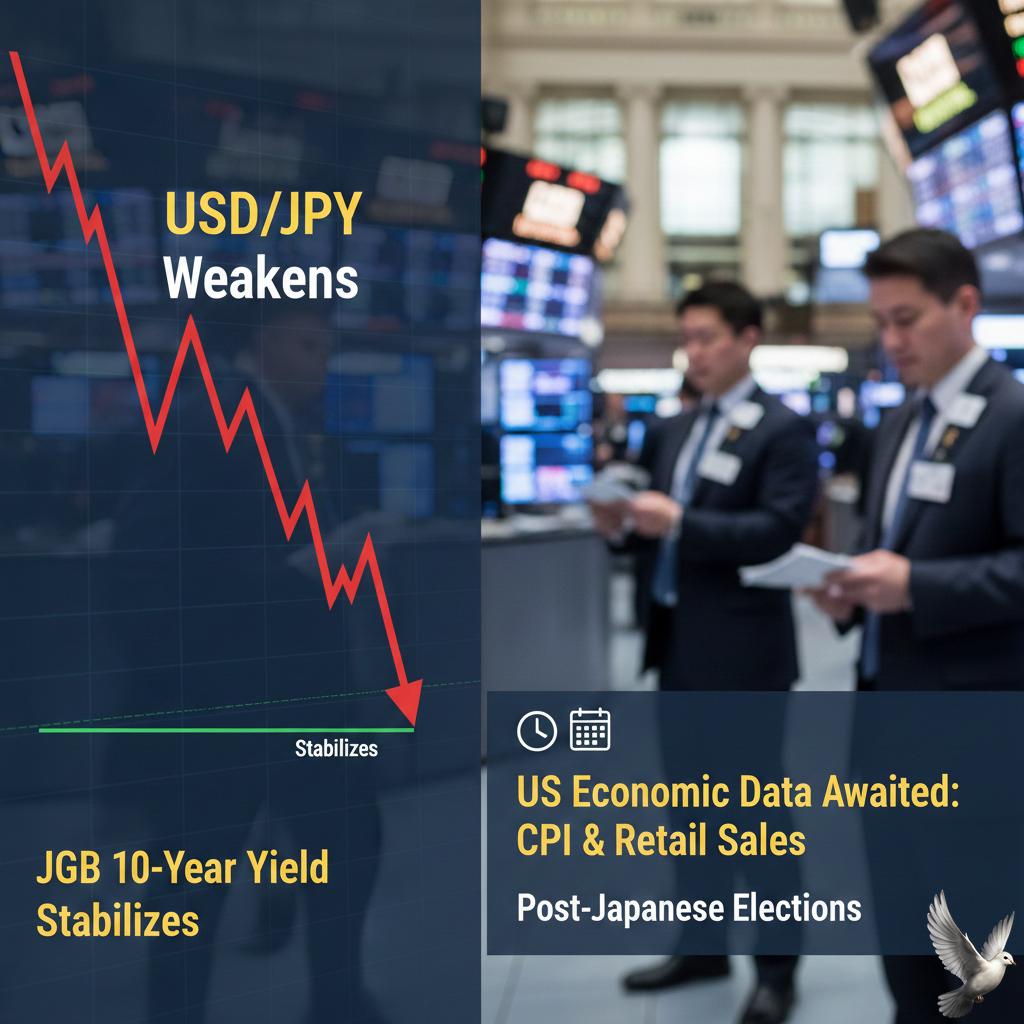
USD weakens and JPY stabilizes as markets await US economic data following Japanese elections
Market Brief: February 10, 2026 The U.S. dollar is trading with a downward bias as the market prepares for a significant influx of delayed economic data. The Dollar Index recently dipped 0.2% to 97.43, reflecting cautious sentiment ahead of high-stakes releases. Investors are focusing on the January Jobs Report and Consumer Price Index (CPI), both of which were rescheduled following a recent partial government shutdown. Expectations for the U.S. labor market remain modest, with nonfarm payrolls forecast to rise by 70,000. The unemployment rate is projected to hold steady at 4.4%, near a four-year high. Analysts note that hiring has slowed significantly compared to 2024, with the economy adding an average of only 50,000 jobs per month over the last year. Inflation data is anticipated to show a slight moderation. Forecasts suggest a month-on-month increase of 0.3% for January, while core inflation may accelerate to 0.3%. Household inflation expectations for the year ahead have declined slightly to 3.1%, providing a nuanced backdrop for the Federal Reserve's upcoming policy decisions. In Asia, the Japanese yen has strengthened following a decisive electoral victory for Prime Minister Sanae Takaichi. Her conservative Liberal Democratic Party secured a two-thirds majority in a snap lower house election. The yen rose 0.5% to 156.43 per dollar as markets reacted to the political stability and Takaichi’s mandate for a major fiscal spending agenda. Despite the political triumph, the yen faces pressure from Japan's high debt-to-GDP ratio and rising food prices. While the Nikkei 225 surged past 57,000 points for the first time, experts warn that balancing expansionary fiscal policy with currency stability remains a challenge. Speculation persists regarding potential official intervention if the yen approaches the 158 level again. The British pound remains steady at approximately 1.3615 against the dollar. Resilience in the currency persists despite significant political headwinds and a recent scandal involving the Prime Minister’s diplomatic appointments. Markets are closely watching for signs of a potential leadership change, which could trigger volatility in gilt yields and the pound's valuation. The Bank of England recently held interest rates at 3.75%, but the narrative is shifting toward potential easing. While futures markets previously priced in a single cut for April 2026, growing speculation now suggests the first reduction could arrive in March, with a second possible cut in June. Commodity markets have mirrored the dollar's weakness, with gold prices rebounding to approximately $5,000 per ounce. The yellow metal has gained 1.23% as investors seek safe havens amid the delayed U.S. data and geopolitical tensions. Silver has shown even higher volatility, recovering to above $80 per ounce after a sharp correction earlier in the month. The convergence of employment, inflation, and retail sales data this week is expected to generate sharp intraday reactions. Traders are particularly attentive to whether consumer spending remains resilient at 0.5% growth, as these figures will dictate the short-term trajectory for global currency pairs and bond yields.
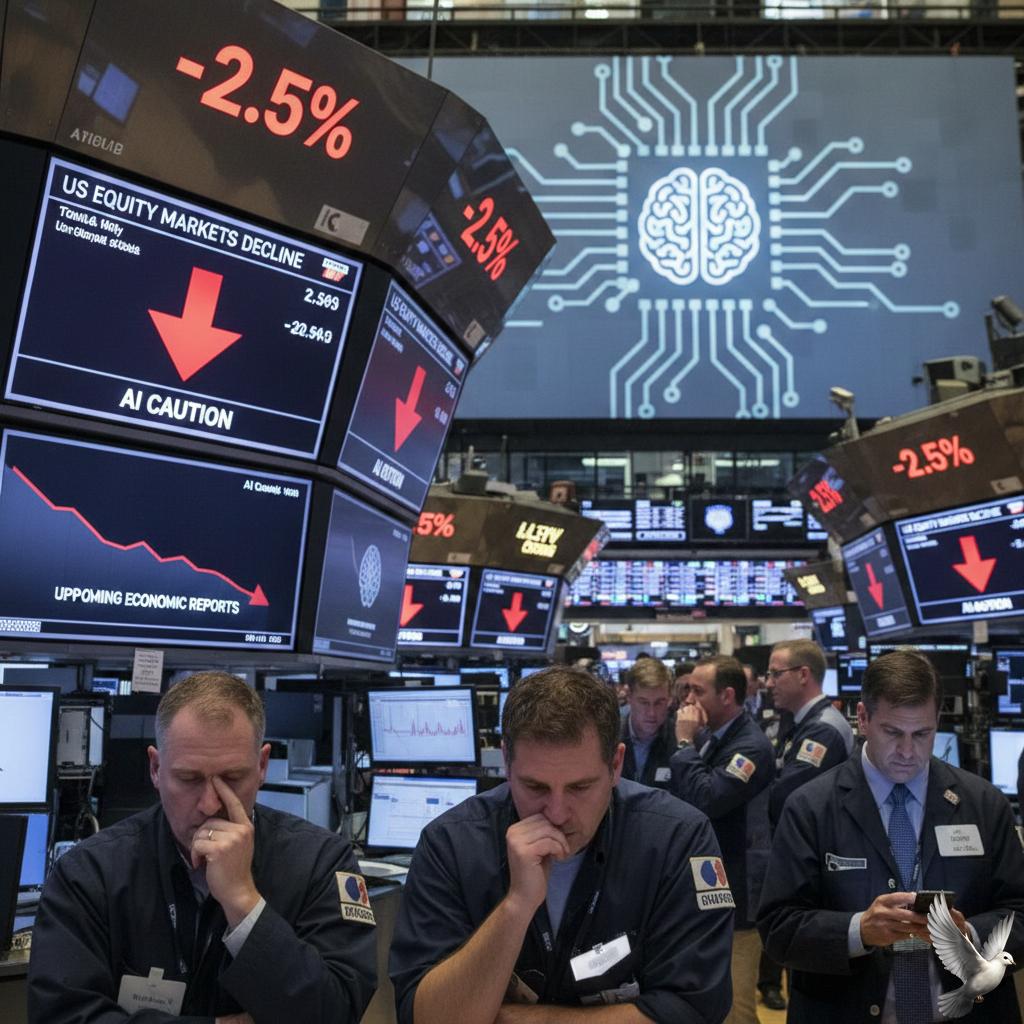
US Equity Markets Decline Amid AI Sector Caution and Upcoming Economic Reports
Wall Street is navigating a high-stakes opening this Monday, February 9, 2026, as the market digests a historic milestone alongside deepening anxiety over technological disruption. The Dow Jones Industrial Average is the focal point of global finance after a massive surge of 1,200 points on Friday. This rally pushed the index to its first-ever close above the 50,000 mark. Despite this record, futures for the major indexes are edging lower this morning, reflecting a cautious "wait-and-see" mood among institutional traders. The technology sector remains the primary source of volatility. Last week, software stocks experienced a significant 7.5% decline, driven by fears that new autonomous AI tools are beginning to displace traditional enterprise software models. Investors are closely tracking capital expenditure from the "Hyperscalers"—Amazon, Microsoft, Alphabet, and Meta. These companies are projected to spend a staggering $600 billion to $650 billion on AI infrastructure in 2026. This massive investment represents an 80% increase from 2025 levels, putting significant pressure on corporate free cash flow. Economic data releases scheduled for this week are expected to dictate the Federal Reserve's next moves. The market is awaiting the January Jobs Report and fresh Consumer Price Index (CPI) figures, which were previously delayed by government disruptions. The Federal Reserve currently maintains interest rates in the 3.50% to 3.75% range. While the central bank paused its cutting cycle in January, most analysts expect two additional 25-basis-point cuts later this year. Inflation indicators remain a concern. Core CPI was last recorded at 2.6%, still above the Fed’s 2.0% target. Traders are scanning this week’s data for any signs of "sticky" inflation that could force the Fed to keep rates higher for longer. Under the surface of the major indices, a significant sector rotation is underway. While tech struggles with a 18.6% year-to-date loss in the software sub-sector, energy stocks have gained traction, supported by a 12% rise in oil prices since the start of the year. The S&P 500 closed the previous week at 6,932.30, while the Nasdaq-100 is struggling to reclaim its 50-day moving average. Technical analysts are watching for a potential rebound in software, which has reached "oversold" levels not seen in nearly 15 years. In the digital asset space, Bitcoin has retreated below the $70,000 level, currently trading near $69,000. This downward trend follows the broader risk-off sentiment affecting high-growth assets. This week’s compressed economic calendar, featuring retail sales on Tuesday and employment data on Wednesday, is likely to trigger sharp intraday price swings as the market recalibrates its 2026 outlook.

Silver Declines 6%, Gold Falls 3% Below Rs 1.5 Lakh; Price Outlook Analyzed
Market Brief: Gold & Silver Volatility (February 5, 2026) **Futures Market: A Tale of Two Metals** Contrary to earlier trends of unified decline, the MCX trading session on Thursday, February 5, 2026, witnessed a dramatic decoupling between gold and silver. While **Silver futures** faced intense selling pressure, locking into a lower circuit at approximately **₹2,80,000 per kg**, **Gold futures** staged a significant recovery. Gold contracts defied the broader bearish sentiment seen earlier in the week, surging by roughly **₹5,500** to reclaim levels near **₹1,59,440 per 10 grams**. This rebound marks a sharp reversal from the sell-offs earlier in the week, driven by renewed buying interest and short-covering. **Geopolitical Developments: U.S.-Iran Talks** Market sentiment remains heavily influenced by geopolitical maneuvering. The United States and Iran are scheduled to hold high-stakes negotiations in **Oman** this Friday. These talks, relocated from Turkey, aim to address escalating tensions, specifically focusing on Iran's nuclear program. While the prospect of diplomacy typically dampens demand for safe-haven assets, the market response has been mixed. The sharp divergence in precious metals suggests that while silver traders are liquidating positions in anticipation of de-escalation or margin pressures, gold investors remain cautious, retaining the yellow metal as a hedge against potential diplomatic failure or persisting instability in the region. **The "Two-Tier" Silver Crisis** A critical anomaly has emerged in the silver market. A massive price gap of nearly **₹40,000 per kg** has opened between the futures (paper) market and the physical market. * **Futures Price:** ~₹2,80,000 per kg (MCX Lower Circuit) * **Physical Spot Price:** ~₹3,20,100 per kg This disconnect indicates a "loss of confidence" in paper derivatives, where speculative exits are driving prices down, while physical demand for the white metal remains robust, keeping spot prices significantly higher. **Spot Market Rates: Major Indian Cities** Physical gold rates have synchronized with the futures rally, seeing upward revisions across major hubs. Silver remains expensive in the retail market despite the futures crash. **Gold (24 Carat / 10 grams):** * **Mumbai, Kolkata, Bengaluru:** ₹1,59,440 – ₹1,60,350 * **Delhi:** ₹1,59,600 – ₹1,60,680 * **Chennai:** ₹1,62,250 (Continuing to command a premium) **Silver (1 kg):** * **National Average:** ₹3,20,100 * **Chennai:** ₹3,20,100+ (High demand sustaining premium rates) **Expert Outlook & Trading View** Analysts predict continued volatility leading into the weekend. The focus remains on two key triggers: 1. **The outcome of the Oman talks:** A positive breakthrough could cap gold's upside, while a stalemate may fuel further rallies. 2. **The Silver Spread:** The unsustainable gap between physical and futures silver prices is expected to force a correction, though it is unclear whether futures will rise to meet spot prices or spot prices will eventually succumb to the futures drag. Traders are advised to exercise extreme caution, particularly in silver, where liquidity issues at the lower circuit can trap positions. Gold remains supported above the **₹1,55,000** level, with resistance likely near the **₹1,62,000** mark.

India to Implement Cross-Border Crypto Data Exchange Starting April 2027
India’s regulatory landscape for digital assets is undergoing a significant transformation, moving from basic taxation toward aggressive global enforcement. The Indian government has confirmed that it will begin the international exchange of cryptocurrency transaction data starting April 1, 2027. This move aligns India with the OECD's Crypto-Asset Reporting Framework (CARF). Under this framework, India will automatically share and receive data with over 60 other jurisdictions to track offshore holdings and curb tax evasion. The Union Budget 2026 has introduced a strict two-tier penalty system to ensure domestic exchanges are ready for this global shift. Starting April 1, 2026, crypto exchanges and intermediaries face a daily penalty of ₹200 for failing to submit required transaction statements. Furthermore, a flat penalty of ₹50,000 will be applied for furnishing inaccurate data or failing to rectify errors. The government is also tightening the definition of Virtual Digital Assets (VDAs) to include decentralized finance (DeFi) protocols and specialized NFTs. The existing tax structure remains rigorous. Investors continue to pay a flat 30% tax on all crypto gains, plus a 4% cess. A 1% Tax Deducted at Source (TDS) remains active on all trades to maintain a clear audit trail. A critical update in the latest budget includes potential prosecution and jail terms of up to two years for entities that fail to deposit collected TDS exceeding ₹50 lakh. Market performance reflects this high-pressure environment. Bitcoin has recently experienced significant volatility, sliding from its October record highs above $126,000 to approximately $74,570 in early February 2026. This 10% year-to-date decline comes as traders navigate a "risk-off" sentiment across global markets, with significant capital shifts noted in precious metals and technology stocks. The Financial Intelligence Unit (FIU-IND) has further reinforced oversight by classifying all VDA service providers as reporting entities under anti-money laundering laws. The government has signaled that technical assistance will be provided to domestic exchanges to upgrade their reporting infrastructure before the 2027 international deadline. This cohesive strategy of heavy penalties and global data sharing aims to eliminate "invisible" trading and bring the crypto sector in line with traditional banking standards.
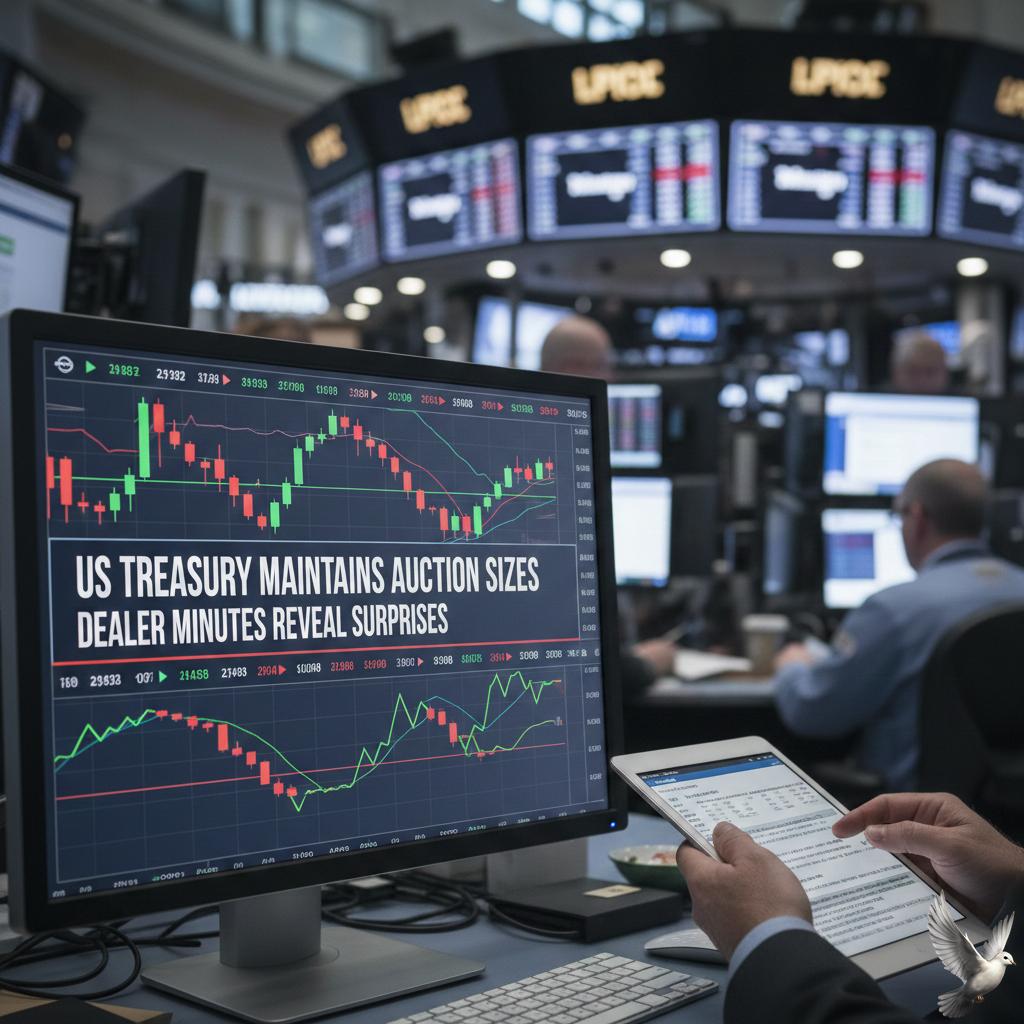
US Treasury Maintains Auction Sizes; Dealer Minutes Reveal Surprises
**Market Brief: Treasury Keeps Auctions Steady, But Deficit Fears Loom** **Core Update** The U.S. Treasury officially announced it will maintain current auction sizes for bonds and notes over the next several quarters, meeting broad market expectations. The Quarterly Refunding package totals **$125 billion**, split across **$58 billion** in 3-year notes, **$42 billion** in 10-year notes, and **$25 billion** in 30-year bonds. **The Surprise Factor** While the headline number was stable, the release of the Treasury Borrowing Advisory Committee (TBAC) minutes triggered immediate volatility. Primary dealers revealed a startling estimate of a **$1.1 trillion** funding shortfall for the 2027-2028 fiscal years. This projection significantly exceeds prior consensus and highlights growing structural deficit concerns. **Market Reaction** Yields reacted swiftly to the minutes. The benchmark **10-year Treasury yield** hovered near **4.28%**, while the yield curve steepened. The spread between 2-year and 10-year notes widened to approximately **70.8 basis points**, signaling that investors are demanding a higher premium for holding longer-term debt in anticipation of heavier supply ahead. **Outlook Shift** Sentiment has shifted regarding the timeline for future issuance. Investors who previously expected steady sizes for longer now anticipate auction increases could begin as early as **late 2026** or the start of **2027** to plug the projected funding gap. The focus remains on how the Treasury will navigate this potential supply wall without disrupting market liquidity.

SEBI Modifies Order-to-Trade Ratio Framework for Algorithmic Trading
**SEBI MARKET BRIEF | FEBRUARY 5, 2026** **Algorithmic Trading Framework Update** Effective **April 6, 2026**, the Securities and Exchange Board of India (SEBI) will enforce a refined **Order-to-Trade Ratio (OTR)** framework. The regulator has introduced critical exemptions to the penalty structure for high OTR, addressing long-standing concerns regarding liquidity and execution costs. **Key Exemptions & Thresholds** * **Equity Options:** Algorithmic orders placed within **±40%** of the Last Traded Price (LTP) or **±₹20** (whichever is higher) will be exempt from high-OTR penalties. * **General Orders:** Orders falling within **±0.75%** of the LTP in other segments remain exempted. * **Market Makers:** Algo orders placed by Designated Market Makers specifically for market-making activities are now **fully excluded** from OTR computation. These modifications, detailed in the circular dated **February 4, 2026**, aim to lower compliance burdens for liquidity providers while maintaining economic disincentives for excessive order flooding. **Regulatory Overhaul: 'Fit and Proper' Criteria** In a separate move to modernize compliance norms, SEBI has released a consultation paper proposing a comprehensive overhaul of the **'Fit and Proper Person'** rules for market intermediaries. The proposal seeks to reduce regulatory uncertainty and ensure procedural fairness. **Proposed Changes** * **Right to Hearing:** The regulator plans to codify the "right to a hearing" before declaring an entity or individual 'not fit and proper'. * **Disqualification Triggers:** Mere initiation of winding-up proceedings will no longer trigger automatic disqualification; only a **final winding-up order** will count. * **Ownership Rights:** Instead of mandatory divestment, persons in control declared 'not fit' may face restrictions on **voting rights** while retaining economic ownership to prevent irreversible financial loss during appeals. * **Application Freeze:** The cooling-off period for new registration applications following a Show Cause Notice (SCN) is proposed to be reduced from **1 year** to **6 months**. Public comments on these proposals are open until **February 25, 2026**. **Market Context** These regulatory adjustments arrive against a backdrop of heightened transaction costs. The Union Budget 2026 recently announced an increase in the Securities Transaction Tax (STT) on F&O trades—**0.05%** for futures and **0.15%** for options—effective **April 1, 2026**. Market participants view the OTR relaxations as a necessary counterbalance to these rising costs, ensuring that the structural framework for liquidity remains robust despite the higher tax regime.
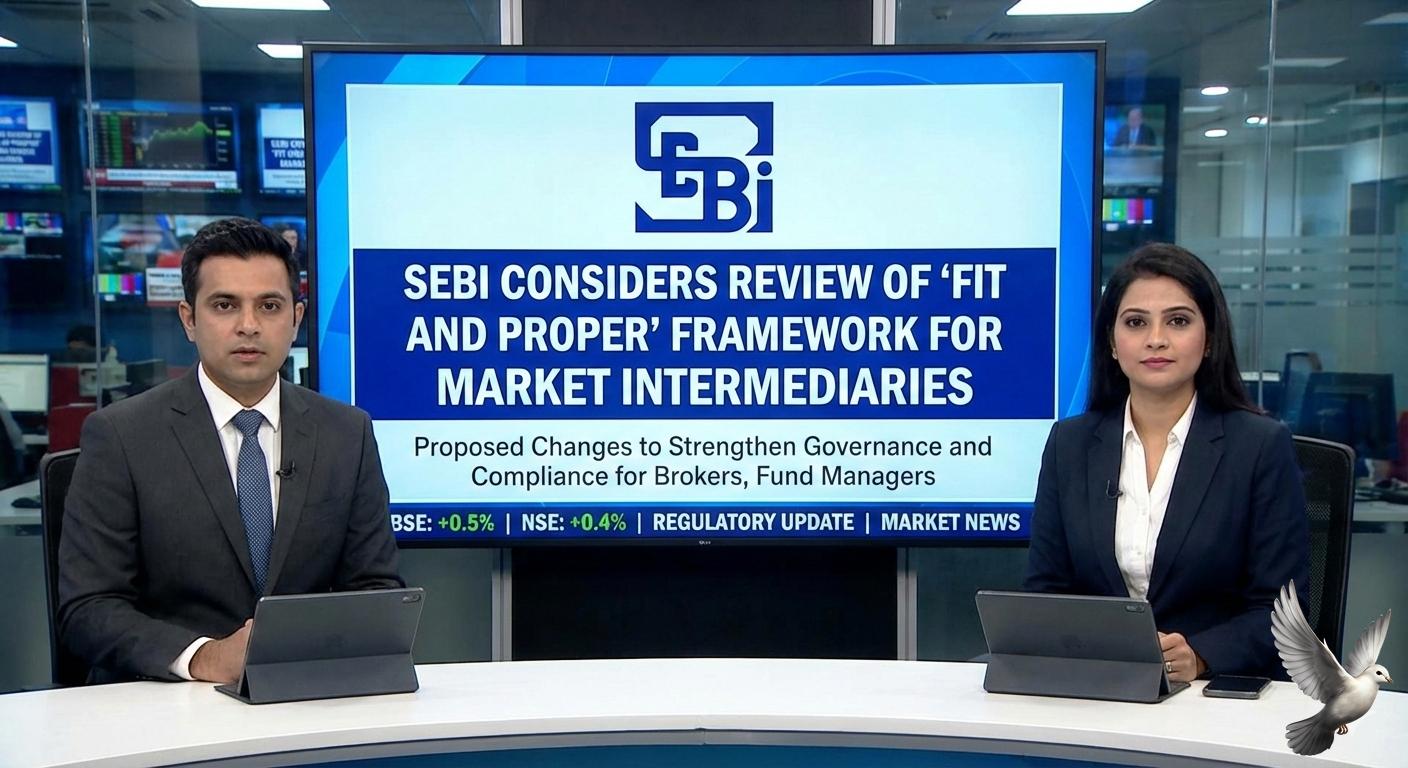
SEBI Considers Review of 'Fit and Proper' Framework for Market Intermediaries
SEBI Proposes Overhaul of 'Fit and Proper' Framework On **February 4, 2026**, the Securities and Exchange Board of India (SEBI) released a consultation paper proposing a significant revamp of the **‘fit and proper person’** criteria under Schedule II of the Intermediaries Regulations, 2008. The move aims to balance regulatory rigor with ease of doing business, reducing automatic disqualifications that penalize entities before wrongdoing is proven. Key Regulatory Shifts **Codified Right to Hearing** SEBI has proposed explicitly codifying the **right to a hearing** before any person or entity is declared "not fit and proper." While currently practiced, this amendment removes procedural ambiguity, ensuring natural justice is embedded in the regulations. **refined Disqualification Norms** The regulator suggests removing **"initiation of winding-up proceedings"** as an automatic disqualification trigger. Instead, only a **final winding-up order** will count. Additionally, automatic disqualification based merely on pending criminal complaints or charge sheets may be replaced with a **principle-based assessment** of integrity and reputation, though SEBI retains discretion for serious cases. Strategic Relief for Intermediaries **Voting Rights vs. Divestment** In a major relief for promoters and persons in control, SEBI proposes replacing the mandatory **divestment of shareholding** with a limitation on **voting rights**. * **Current Rule:** Forced sale of stake if declared unfit. * **Proposed Rule:** Retention of economic ownership; only voting rights are frozen. * **Benefit:** Prevents irreversible financial loss if the individual is later exonerated. **Group Entity Impact** Disqualification of associate or group entities will now impact an intermediary only if SEBI **formally declares** those specific entities as "not fit and proper," preventing contagion of ineligibility across corporate groups without due process. Operational Timelines & Efficiency * **Application Freeze Reduced:** The period during which a registration application remains pending after a Show Cause Notice (SCN) is proposed to be cut from **1 year** to **6 months**. * **KMP Replacement:** Intermediaries must replace disqualified Key Management Personnel (KMPs) within **30 days** of a regulatory order. * **No Default Ban:** The default **5-year** ineligibility period (applied when no specific timeframe is mentioned in an order) is proposed to be scrapped. Ineligibility will strictly follow the duration specified in the order. Market Context This proposal addresses long-standing industry concerns regarding "rule-based" triggers that cause reputational damage at preliminary legal stages. Public comments on the consultation paper are open until **February 25, 2026**.
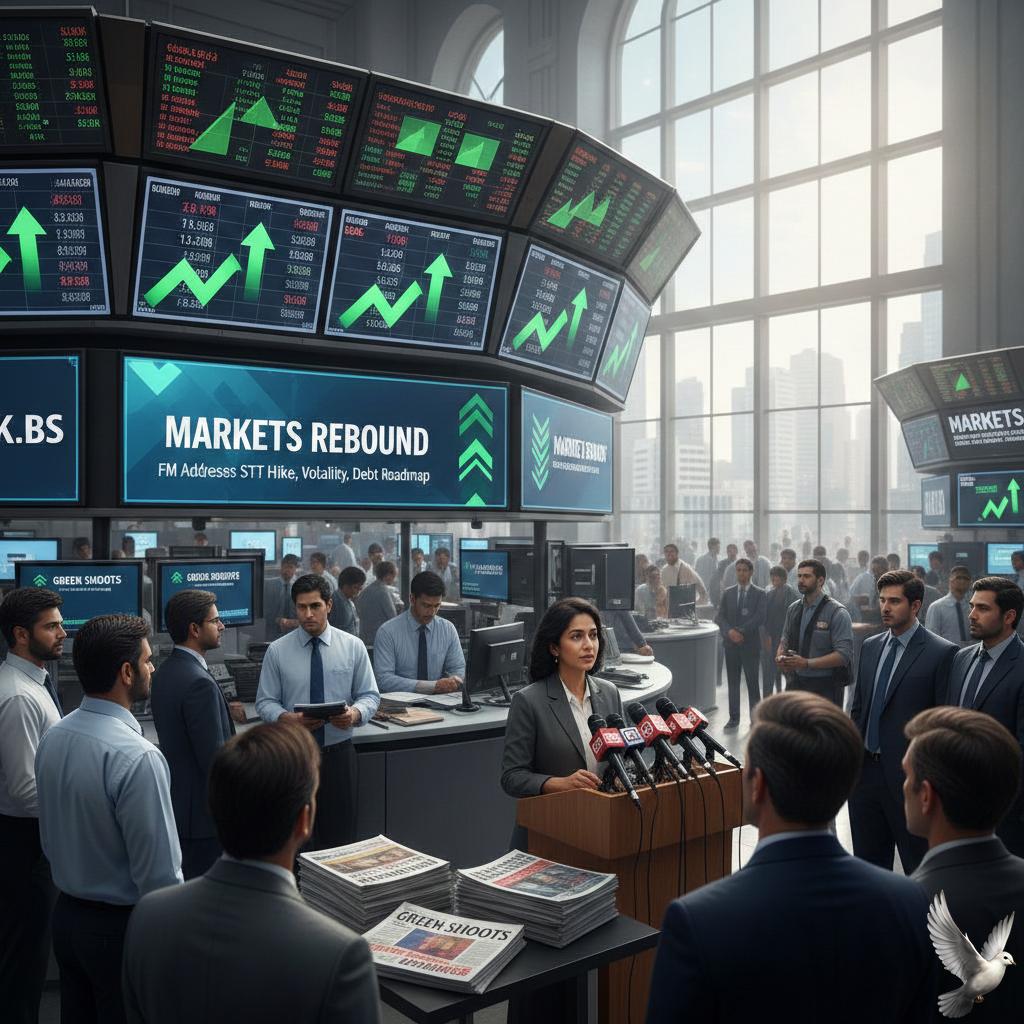
Markets Rebound as FM Addresses STT Hike, Volatility, and Debt Roadmap
**Market Brief: FM Defends Derivatives Tax Hike & Outlines Fiscal Path** **Finance Minister Nirmala Sitharaman** has strongly defended the hike in Securities Transaction Tax (STT) on Futures and Options (F&O), framing it as a necessary deterrent against excessive speculation rather than a revenue-generation tool. **F&O Hike & Retail Risks** Effective **October 1, 2024**, the government increased the STT on F&O trading to curb "satta" (speculative betting) and protect small investors. * **Futures:** STT raised to **0.05%** (from 0.02%). * **Options:** STT on premium raised to **0.15%** (from 0.1%). The move follows alarming data from **SEBI**, which revealed that **93% of individual traders** in the equity F&O segment incurred losses between FY22 and FY24. The FM highlighted that 9 out of 10 retail participants lose money, with average losses of **₹2 lakh** per trader, necessitating the hike to dampen retail frenzy. **Fiscal Consolidation Roadmap** The government reinforced its commitment to fiscal prudence, aiming to reduce the **Debt-to-GDP ratio to 50% by 2030-31**. * **Current status:** Central Government debt is estimated at **56.1%** of GDP for FY26. * **Deficit targets:** The fiscal deficit is projected to drop to **4.5%** or below by FY26, maintaining a glide path toward long-term stability. **Infrastructure & Political Economy** The budget prioritized capital expenditure in election-bound and strategic regions under the *Purvodaya* initiative: * **Bihar:** Allocated **₹26,000 crore** for road projects (including Patna-Purnea Expressway) and a new **2,400 MW** power plant at Pirpainti. * **Andhra Pradesh:** Secured **₹15,000 crore** in special financial support, with a commitment to complete the **Polavaram Irrigation Project** and develop industrial nodes at Kopparthy and Orvakal. **Rural & Social Spending** Countering criticism regarding social sector cuts, the FM emphasized increased allocations for health, education, and youth skilling. * **Rural Employment:** The allocation for **MGNREGA** stands at **₹86,000 crore**—matched to demand but scrutinized against the previous year’s higher actual expenditure of ₹1.05 lakh crore. * **Focus:** The strategy pivots toward "employability" via internship schemes and skilling 20 lakh youth, incorporating feedback from the demographic dividend.

UltraTech Cement Share Price and Market Update
**Global Market Brief: February 4, 2026** **Equities: Volatility & Divergence** Global markets are displaying sharp regional divergence today. Indian benchmarks are rallying on the heels of a new **India-US trade deal**, with the **Nifty 50** climbing **1.06%** to **25,088** and the **Sensex** gaining **2.54%** to reach **83,739**. Conversely, US and European sentiment is weighed down by a **tech sector rout**, driven by profit-booking and sliding IT stocks (down nearly **6%** in some indices). **Commodities: Gold Surge & Oil Stability** Safe-haven assets are seeing significant inflows amidst escalating **US-Iran geopolitical tensions**. * **Gold**: Futures continue a massive bullish run, trading near **$4,974**, reflecting sustained demand as a hedge against inflation and instability. * **Oil**: Energy markets remain relatively tempered compared to metals, with **WTI Crude** trading at **$63.87** and **Brent** at **$67.92**. **Crypto: Bearish Pressure** The cryptocurrency market is facing headwinds, with the total market cap shrinking. * **Bitcoin (BTC)**: Hovering around **$76,000**, down approximately **3.8%** amid liquidation pressures and lingering Fed uncertainty. * **Ethereum (ETH)**: Trading near **$2,250**, recording a **4%** decline. **Macro & Currency** * **Federal Reserve**: The Fed has held benchmark rates steady at **3.50%–3.75%**, with Chair Powell noting solid economic expansion despite "somewhat elevated" inflation. * **Currencies**: The **Indian Rupee (INR)** remains under pressure, trading near record lows around **91.98** against the dollar, prompting discussions on foreign investor sentiment. ----- [Markets Today: Nifty 50 & Sensex Live Updates](https://www.google.com/search?q=https://www.youtube.com/watch%3Fv%3DFjry2vWq_6c) This video provides real-time analysis of the current market rally in India, offering context on the Nifty and Sensex movements discussed in the brief.

BPCL Share Price: Returns Decline
**GLOBAL MARKET WRAP | FEBRUARY 04, 2026** **🇺🇸 US Markets: Tech Rout Weighs Heavy** Wall Street closed lower as a sharp sell-off in technology stocks dragged major indices down. Investors are reacting to mixed earnings and escalating geopolitical concerns. * **Nasdaq** led the decline, falling **1.43%** to **23,255.19**. * **S&P 500** dropped **0.84%** to close at **6,917.81**. * **Dow Jones** slipped **0.34%** (approx. **166 points**) to **49,240.99**. * **VIX** (Fear Index) spiked over **10%** to **18.00**, signaling increased market anxiety. **🇮🇳 Indian Markets: Trade Deal Euphoria** Domestic sentiment remains buoyant following the historic **India-US Trade Deal**, though momentum has cooled slightly after yesterday's massive surge. * **Sensex** and **Nifty 50** are trading with positive bias after the Sensex zoomed over **2,000 points** in the previous session. * **IT Stocks** are under pressure (down nearly **6%**), tracking the US tech slide. * **ITC** and **Gillette India** are in focus as they turn ex-dividend today. **🪙 Crypto: Flash Crash** Digital assets faced a "bloodbath" triggered by geopolitical tensions (US Navy intercepting an Iranian drone) and risk-off sentiment. * **Bitcoin (BTC)** plummeted to **$73,000**, wiping out recent recovery gains. * **Ethereum (ETH)** slid sharply, trading near **$2,220**. * Over **$2.5 billion** in long positions were liquidated in the last 24 hours. **🛢️ Commodities: Safe Haven Bid** Geopolitical friction is driving capital into defensive assets. * **Gold** prices rebounded, trading up **1.1%** to **1.8%** across global markets as investors seek safety. * **Crude Oil (WTI)** edged higher to **$62.82** (+1.09%) amid fears of supply disruption in the Middle East. **⚡ Key Developments** * **India-US Deal:** The new pact slashes tariffs to **18%** for select sectors, boosting Indian manufacturing and export-heavy indices. * **Geopolitics:** Tensions between the US and Iran have flared, adding a risk premium to oil and gold while dampening appetite for speculative assets like crypto and tech stocks.
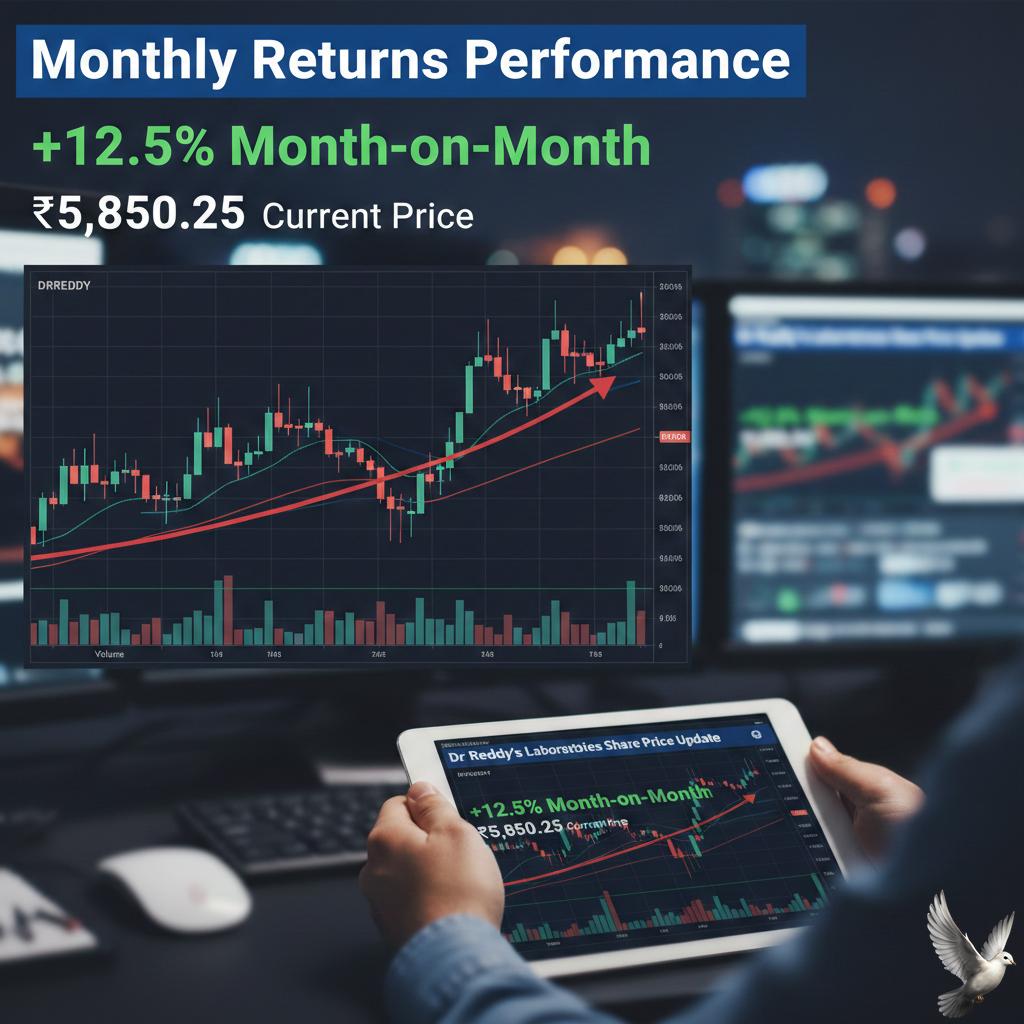
Dr Reddy's Laboratories Share Price Update: Monthly Returns Performance
**
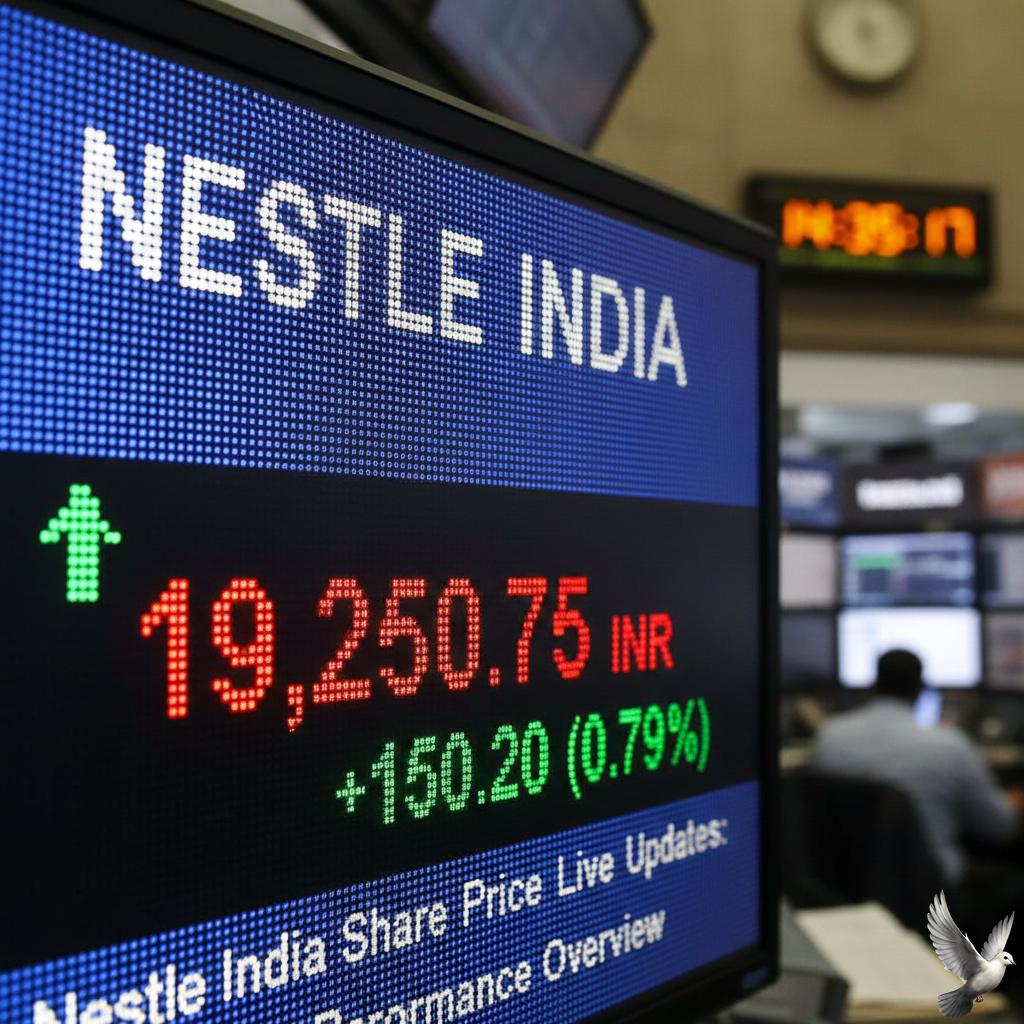
Nestle India Share Price Live Updates: Stock Performance Overview
**Global Market Brief | February 4, 2026** **Overview** Markets are digesting a mix of major geopolitical shifts and policy updates. The headline event is the newly announced **India-US trade deal**, which has injected optimism into specific sectors, though broader sentiment remains cautious due to hawkish Federal Reserve signals and rising Middle East tensions. **Equity Markets** Global equities are trading with a positive but guarded tone. The **Dow Jones** rallied **1.06%** to close at **49,433**, driven by trade deal optimism. However, the tech sector remains under pressure, weighing on the Nasdaq. In India, the **Nifty 50** is hovering near **25,727**, taking a breather after yesterday’s sharp **2,000-point** surge on the Sensex (which sits at **83,739**). Investors are reacting to the U.S. cutting tariffs on Indian goods to **18%**, a move that has specifically boosted textile and export-heavy stocks like **ITC** and **Gokaldas Exports**. **Commodities: Gold & Oil Rally** Safe-haven assets are seeing renewed demand following a drone incident involving US forces near Iran. * **Gold:** Prices have rebounded sharply. Global spot gold climbed **3.7%** to **$4,837/oz**. On the MCX, gold futures surged past **₹1,48,000 per 10g**, while Silver jumped **4%** to **₹2,54,000 per kg**. * **Crude Oil:** Brent Crude advanced to **$68 per barrel** and WTI to **$64**, supported by falling US inventories and geopolitical jitters in the Arabian Sea. **Crypto Markets: Severe Correction** Digital assets are decoupling from the broader market rally. **Bitcoin** has crashed below the psychological **$75,000** mark, trading around **$74,680**, its lowest level since April 2025. **Ethereum** also slipped below **$2,200**. The sell-off is largely attributed to risk-off sentiment following President Trump’s nomination of **Kevin Warsh** as Federal Reserve Chair. Warsh is perceived as a "hawk," fueling fears of tighter monetary policy and reduced liquidity for speculative assets. **Key Watchlist** * **Fed Policy:** Markets are pricing in a more aggressive stance on inflation under the potential new Fed leadership. * **Geopolitics:** The US-Iran situation is developing, keeping energy and bullion prices volatile. * **Corporate Moves:** **Adani Enterprises** has announced a partnership with Leonardo to enter helicopter manufacturing, drawing focus to the defense sector.
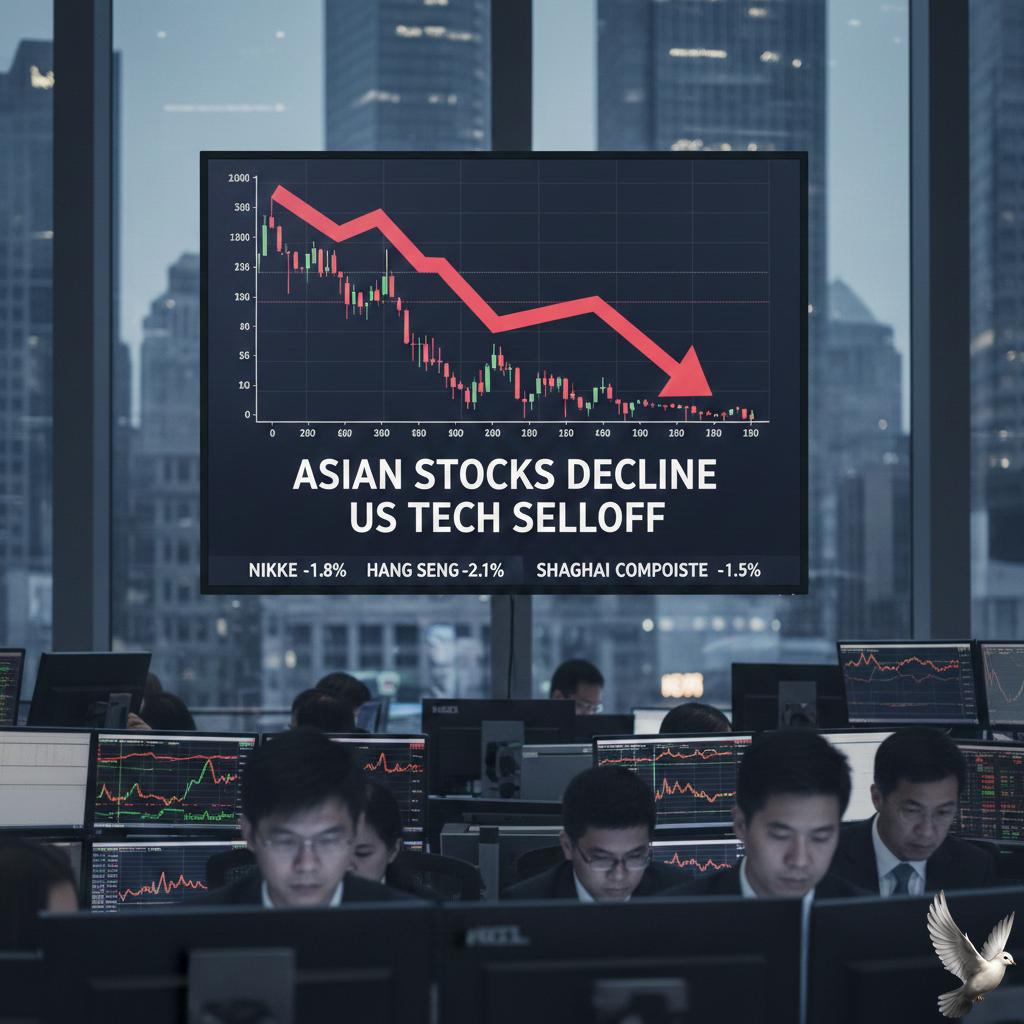
Asian Stocks Decline Following US Tech Selloff
**Global Market Snapshot: Tech Rout Triggers Defensive Rotation** **Asian Markets & US Lead** Asian equities faced downward pressure on Wednesday, reacting to a sharp reversal in US benchmarks where technology stocks led a broad decline. The **Nasdaq Composite** shed **1.4%**, while the **S&P 500** retreated **0.8%**. The **Dow Jones Industrial Average** briefly touched a new intraday record before reversing to close down **0.3%**, reflecting a clear shift in investor sentiment away from high-growth tech plays. **Tech Sector Volatility** The technology sector bore the brunt of the selloff as investors locked in profits from recent rallies. **Advanced Micro Devices (AMD)** tumbled approximately **5%** in after-hours trading. Despite beating revenue estimates, the chipmaker’s forward guidance failed to satisfy heightened investor expectations regarding AI-driven growth and supply chain specifics. This sentiment spread to other industry heavyweights, with **Nvidia** and **Microsoft** both sliding nearly **3%** during the regular session. **Sector Rotation: Retail & Logistics** Capital rotated visibly into economically sensitive and defensive sectors. **Walmart** surged roughly **3%**, reaching a historic milestone as its market capitalization crossed the **$1 trillion** mark for the first time. Logistics giant **FedEx** also outperformed, extending a record-breaking rally as investors sought stability in established industrial and retail names amidst the tech turbulence. **Oil & Geopolitics** Energy markets reacted swiftly to escalating tensions in the Middle East. Oil prices climbed, with **Brent crude** rising over **2.5%** to trade near **$68 per barrel**. The spike followed reports that a US Navy F-35C intercepted and destroyed an Iranian Shahed-139 drone approaching the **USS Abraham Lincoln** carrier strike group in the Arabian Sea. The incident, coupled with threats to commercial shipping near the Strait of Hormuz, has reintroduced a geopolitical risk premium to energy futures.

Gold Posts Largest Daily Gain Since 2008 Following Historic Crash
**Market Brief: Precious Metals Rebound (February 3, 2026)** **Gold and Silver Stage Massive Recovery** Gold and silver prices staged a sharp recovery on Tuesday, snapping a historic losing streak that erased trillions in market value late last week. Domestic futures on the MCX witnessed aggressive buying as short-covering and value hunting emerged following the panic sell-off. **Key Market Figures** * **Gold (MCX):** Surged significantly, reclaiming the **₹1,53,000** per 10g level, up from intraday lows. The metal has bounced back over 3–5% in a single session. * **Silver (MCX):** Witnessed extreme volatility, rallying approximately **13%** to trade near **₹2,67,000 per kg** after hitting a lower circuit near ₹2.45 lakh earlier. * **Global Spot:** Spot gold climbed back toward **$4,800–$4,900 per ounce**, while silver regained the **$80** mark. **Drivers of the Rebound** * **Technical Oversold Conditions:** After falling nearly 9–12% (Gold) and over 30% (Silver) in just three days, technical indicators signaled extreme oversold levels, triggering automatic buy orders and bargain hunting. * **Fed Policy Speculation:** Markets are recalibrating after the panic triggered by the nomination of **Kevin Warsh** as Federal Reserve Chair. While initially viewed as a hawkish signal that boosted the dollar, the selling pressure is now viewed by analysts as a "positioning reset" rather than a fundamental trend reversal. * **Short Covering:** Traders rushing to close bearish positions (short covering) accelerated the upside momentum, particularly in the silver market which had seen record margin-induced liquidation. **Market Sentiment & Outlook** Volatility remains the dominant theme. While today’s move offers relief, analysts caution that the rebound is currently a technical correction within a volatile structure. Market participants are closely watching upcoming US economic data and further clarity on the Federal Reserve's policy trajectory to determine if this floor will hold. The **Gold-Silver ratio** remains widened, reflecting silver's underperformance during the recent crash. **Summary:** A violent reset has occurred. Precious metals have defended critical support zones, but the market remains highly sensitive to US dollar movements and margin adjustments.

UPL Share Price Rises
*

NTPC Share Price Movement
**GLOBAL & INDIA MARKET BRIEF** **Date:** February 3, 2026 **Executive Summary** Global equities are witnessing a significant divergence from commodity markets today. While stock indices in India and Asia are surging to record highs driven by a landmark geopolitical shift, commodities—particularly precious metals and crude oil—are facing high volatility and downward pressure. **Equity Markets: Historic Rally** **India (Sensex & Nifty)** Indian benchmarks registered one of their strongest single-day performances in recent history today. * **Sensex:** Surged over **2,400 points** (+2.9%) to breach the **84,000** mark. * **Nifty 50:** Climbed nearly **740 points** to top **25,800**. * **Market Cap:** Investor wealth swelled by approximately **₹13 lakh crore** in early trading. * **Driver:** The rally is fueled almost exclusively by the newly announced India-US trade agreement, which alleviates long-standing tariff fears. **Global Indices** * **United States:** Wall Street closed sharply higher on Monday (Feb 2). The **Dow Jones** added **515 points** (+1.1%), while the **S&P 500** rose **0.5%**, nearing record highs. * **Asia:** Regional markets followed the positive lead. South Korea's **KOSPI** jumped nearly **7%**, and Japan's **Nikkei 225** rallied **3.9%**, buoyed by renewed tech optimism and easing trade tensions. **Key Event: India-US Trade Deal** The primary catalyst for today's market exuberance is the finalized trade pact between New Delhi and Washington. * **Tariff Reduction:** The US has slashed reciprocal tariffs on Indian goods from **25%–50%** down to **18%**. * **Energy Pivot:** As part of the deal, India has committed to halting Russian oil imports in favor of purchasing American energy and technology. * **Sector Impact:** Export-heavy sectors are the immediate beneficiaries. **Nifty IT**, **Pharma**, and **Textile** stocks saw gains between **3% and 20%** intraday. **Commodities: Volatility & Correction** Unlike equities, the commodity complex is under severe stress, driven by a "risk-on" shift in capital and strengthening US dollar sentiment. **Precious Metals (Crash & Rebound)** Gold and Silver are experiencing extreme volatility following a massive sell-off earlier in the week. * **Gold:** After plummeting **17%** from recent highs, prices are trading around **$4,700–$4,800/oz**. In India, 24K gold dropped sharply to approx. **₹1,51,750 per 10g**. * **Silver:** Witnessed a historic crash of nearly **30%** in previous sessions but showed a technical rebound of **5–7%** today. Domestic prices fell to **₹2,80,000/kg**. **Energy** * **Crude Oil:** Prices continue to slide amid oversupply concerns and the geopolitical realignment of energy trade. **Brent Crude** slipped below **$67/bbl**, while **WTI** is trading near **$62/bbl**. **Critical Watchlist** * **US Federal Reserve:** Markets remain sensitive to the nomination of **Kevin Warsh** as the next Fed Chair, which has triggered bond yield fluctuations. * **AI Sector:** Investors are closely monitoring capital expenditure concerns after volatility in **Nvidia** and **Oracle** stocks, despite the broader tech rally. * **Currency:** The US Dollar Index remains elevated, exerting pressure on emerging market currencies and commodities.

Gold Gains Over 3% Following Selloff
**Market Brief: Gold Stages Strong Rebound Amid Shutdown Concerns** **Tuesday, February 3, 2026** **Price Action & Rally** Gold prices surged on Tuesday, rallying nearly **4 percent** to trade around the **$4,855** per ounce level. This sharp rebound follows a volatile "two-day wipeout" that saw the metal dip to lows near **$4,660** earlier in the session. The recovery marks a significant turnaround after recent heavy selling pressure. **Key Drivers** Market sentiment is currently dominated by the ongoing **partial U.S. government shutdown**, which began on January 31 after Congress failed to pass a funding agreement. * **Political Gridlock:** Investors are closely watching Washington as the House returns to vote on a potential deal to end the standoff. * **Uncertainty:** The lack of immediate resolution has reignited demand for safe-haven assets, helping bullion recover lost ground. **Outlook** While trading volume remains sensitive to political headlines, the market is also positioning ahead of key labor data later this week. For now, the focus remains squarely on Capitol Hill and the immediate path to restoring government funding. **Summary** * **Current Price:** ~$4,855/oz (Spot) * **Day Change:** ~+4% * **Primary Catalyst:** U.S. Partial Government Shutdown

Utkarsh Small Finance Bank Reports Q3 Net Loss of Rs 375 Crore
**Market Brief: Utkarsh Small Finance Bank Q3 FY26 Performance** **Financial Headwinds Persist** Utkarsh Small Finance Bank continues to navigate a challenging restructuring phase, reporting a significant widening of its **net loss to ₹375 crore** for the third quarter ended December 31, 2025. This marks a sharp deterioration from the **₹168 crore loss** recorded in the corresponding quarter of the previous fiscal year. The bottom line remains under pressure due to elevated provisions and a contraction in the loan book. Sequentially, the loss increased from **₹349 crore** in Q2 FY26, signaling that the bank's transition away from high-risk segments is still weighing heavily on profitability. **Operational Metrics Turn Negative** In a stark reversal from the previous year, the bank posted an **operational loss of ₹44 crore**, contrasting sharply with an operational profit of **₹185 crore** in Q3 FY25. This operational drag is largely attributed to reduced interest income from a shrinking loan portfolio and sustained operating expenses. **Loan Book Contraction & Strategic Shift** The bank is aggressively pivoting its lending strategy, moving away from unsecured microfinance to secured asset classes. * **Total Gross Loan Portfolio** contracted by **3.9% YoY** to **₹18,306 crore**. * The high-risk **Joint Liability Group (JLG)** portfolio saw a massive reduction of **34.1%**, reflecting a deliberate clean-up of the microfinance book. * Conversely, the **Non-JLG (secured)** portfolio grew by a robust **27.6%**, creating a more stable, albeit currently smaller, asset base. **Asset Quality: A Glimmer of Improvement** Despite the heavy losses, asset quality metrics showed early signs of stabilization. * **Gross Non-Performing Assets (GNPA)** improved to **11%** in December 2025, down from the peak of **12.4%** seen in the September quarter. * While still elevated, this sequential dip suggests that the worst of the slippages from the legacy book may be plateauing as the bank accelerates write-offs and recoveries. **Deposit Franchise Remains Resilient** On the liability side, the bank continues to strengthen its funding profile. * **Total Deposits** grew **4.5% YoY** to **₹21,087 crore**. * **CASA (Current Account Savings Account)** deposits surged **16.1%**, improving the CASA ratio to **21.9%** (up from 19.7% a year ago). * **Retail Term Deposits** jumped **23.8%**, reducing reliance on volatile bulk deposits, which were cut by **35.6%**. **Stock Market Reaction** Investor sentiment remains cautious given the prolonged stress. The stock is currently trading around **₹13.60–₹13.75**, hovering near its 52-week lows and significantly below its IPO issue price of **₹25**. The market cap stands at approximately **₹2,400 crore**, reflecting the deep discount applied by the street as it awaits a clear turnaround in profitability. **Outlook** The Q3 numbers confirm that Utkarsh SFB is in the middle of a painful but necessary "kitchen-sinking" exercise. While the contraction in the loan book and operational losses are concerning, the shift toward secured lending and the sequential improvement in asset quality offer a roadmap for long-term stability once the legacy stress is fully absorbed. [Utkarsh Small Finance Bank Q3 loss widens to Rs 375 crore](https://www.google.com/search?q=https://www.youtube.com/watch%3Fv%3D3uXlK7w_t_s) This video provides a concise summary of the Q3 FY26 earnings report, highlighting the widening losses and key operational metrics discussed in the brief.
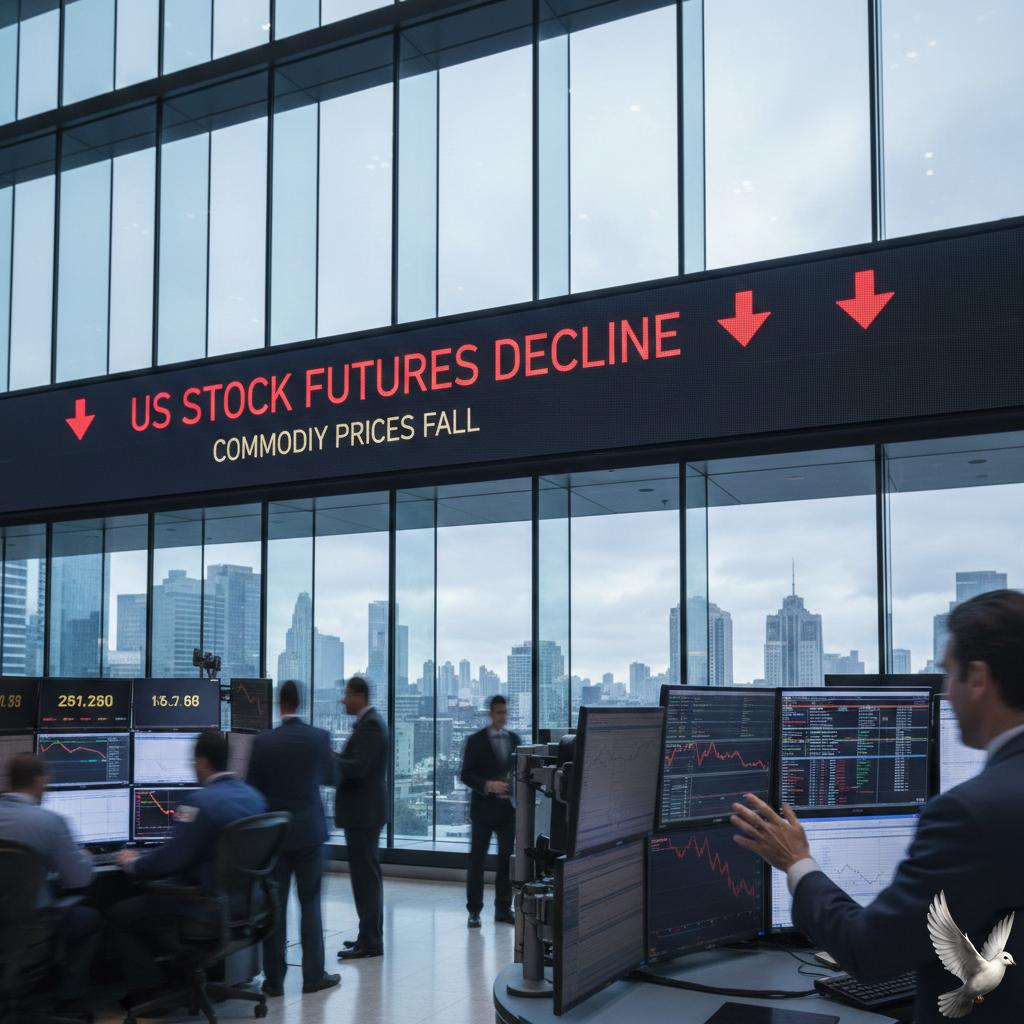
US Stock Futures Decline Amid Drop in Commodity Prices
**Market Brief: Monday, February 2, 2026** **Equities** U.S. stock index futures are under significant pressure this morning, continuing a volatile start to the week. **Nasdaq 100** futures are leading the decline, down approximately **1.5%**, while **S&P 500** futures have shed over **1.1%**. The Dow Jones Industrial Average futures are also lower by roughly **0.7%**. The bearish sentiment comes as investors brace for a high-stakes week of earnings from the "Magnificent 7" and other major players. Key reports due this week include **Alphabet**, **Amazon**, and **Advanced Micro Devices (AMD)**, alongside updates from consumer giants like **Walt Disney** and **PepsiCo**. **Commodities** Precious metals are experiencing a violent selloff, with prices posting their steepest single-day declines in years. **Gold** futures have plunged nearly **4%**, trading below **$4,700** per ounce. **Silver** has been hit even harder, crashing between **7%** and **14%** to trade in the **$73–$79** range. Market analysts attribute the crash to a sharp rebound in the U.S. dollar and the nomination of Kevin Warsh as the next Federal Reserve Chair, which has stoked fears of a more hawkish monetary policy stance. **Economic Calendar** Traders are preparing for a "bevvy" of labor market data that could dictate the Federal Reserve's next moves. The schedule includes **JOLTS** data on Tuesday, the **ADP** employment report on Wednesday, and the critical **Non-Farm Payrolls** report on Friday. Global central bank policy is also in focus, with rate decisions expected from the **European Central Bank (ECB)** and the **Bank of England** later this week.

Gold and Silver Consumption Trends in Key Markets Amid High Prices
Market Brief: Precious Metals (February 1, 2026) **Executive Summary** The precious metals complex is currently navigating extreme volatility. After hitting historic all-time highs in late January 2026, both gold and silver have experienced a sharp corrective selloff driven by aggressive profit-taking and a rebounding U.S. dollar. Despite this short-term pullback, the structural "supercycle" drivers—central bank accumulation, industrial deficits, and geopolitical hedging—remain firmly intact. **Price Action & Volatility** * **Gold:** After peaking near **$5,600/oz** (international) and **₹1.8 lakh/10g** (MCX), prices have corrected to approximately **$5,200–$5,300/oz** and **₹1.6 lakh/10g**. * **Silver:** The volatility is more pronounced. Following a surge to record highs of **$121/oz** (approx. **₹4.2 lakh/kg**), prices crashed over 15% in a single session to trade near **$110–$115/oz** (**₹3.3–3.4 lakh/kg**). * **Key Trigger:** The sudden dip is attributed to technical overbought conditions and anxiety surrounding U.S. monetary policy appointments, rather than a shift in fundamental demand. **Regional Demand Divergence** * **China:** Physical premiums remain elevated despite record prices. Retail investment is surging as a hedge against currency devaluation, while export controls on silver have tightened global supply chains. * **India:** High prices have dampened traditional jewelry consumption. However, investment demand has pivoted strongly toward **Digital Gold and ETFs**, with investors awaiting clarity on import duty structures from the Union Budget (February 1). * **Western Markets:** Institutional flows are increasing. Western investors are chasing the rally for portfolio diversification, fearing persistent inflation and sovereign debt risks. **Fundamental Drivers 2026** * **Industrial Hard Floor:** Silver’s downside is protected by a sixth consecutive year of structural deficit. Demand from solar photovoltaics (PV) and the booming AI hardware sector continues to outpace mine supply. * **Central Bank Floor:** Official sector buying remains a critical support level. Central banks, particularly in emerging markets, are projected to acquire nearly **800 tonnes** of gold this year to diversify reserves away from fiat currencies. **Outlook** While immediate price action suggests a period of consolidation and high variance, the macro backdrop for 2026 remains bullish. Tight physical availability, particularly for silver, combined with sustained global appetite, suggests the upward trend will resume once speculative froth clears.