Bullish News
Collection
STOXX 600 Reaches Record High Following U.S. Supreme Court Ruling on Tariffs
Europe’s STOXX 600 reached a record all-time high of 630.56 points on Friday, February 20, 2026. The index climbed 0.84% during the session, marking its fourth consecutive weekly gain. This rally pushed the year-to-date performance beyond 5%, significantly outperforming the U.S. S&P 500. The primary catalyst for the surge was a landmark 6-3 ruling by the U.S. Supreme Court. The court struck down President Trump’s sweeping global tariffs, declaring they lacked authorization under the International Emergency Economic Powers Act of 1977. Investors responded with relief as the decision eased trade uncertainty that had weighed on European exporters. Economic data from the Eurozone provided additional momentum. The Flash Composite PMI rose to 51.9 in February, signaling the 14th consecutive month of expansion. Most notably, the manufacturing sector returned to growth territory with a PMI of 50.8, up from 49.5 in January. This represents only the second time the sector has expanded in over three years. Luxury and automotive stocks led the gains following the tariff ruling. Shares of Porsche rose 2%, while BMW and Mercedes also saw significant increases as the threat of 15% export duties diminished. In the luxury space, Moncler surged 13.4% after reporting strong fourth-quarter sales figures. Banking and insurance sectors also performed strongly. The banking index rose over 2%, rebounding from previous volatility. Italy’s Unipol climbed 8.7% after announcing a 36.8% jump in full-year earnings. Analysts noted that resilient profitability and solid capital buffers are supporting a "risk-on" sentiment across the continent. Major regional benchmarks echoed the positive trend. Germany’s DAX gained 0.87% to reach 25,260.69, while France’s CAC 40 outperformed with a 1.39% increase to 8,515.49. The UK’s FTSE 100 also advanced 0.56% to close at 10,686.89. Despite the record highs, some strategists remain cautious. While the court ruling provides a $175 billion potential refund for importers, the Trump administration has signaled it may seek alternative legal avenues to maintain trade restrictions. Furthermore, the STOXX 600 is currently trading at approximately 16 times forward earnings, which is high compared to the 20-year average of 13.3. Inflation and monetary policy stay central to the outlook. The European Central Bank has held rates steady since June 2025, and current data suggests it may maintain this stance for the remainder of the year. While manufacturing shows signs of a turning point, the services sector continues to expand at a more moderate pace of 51.8.
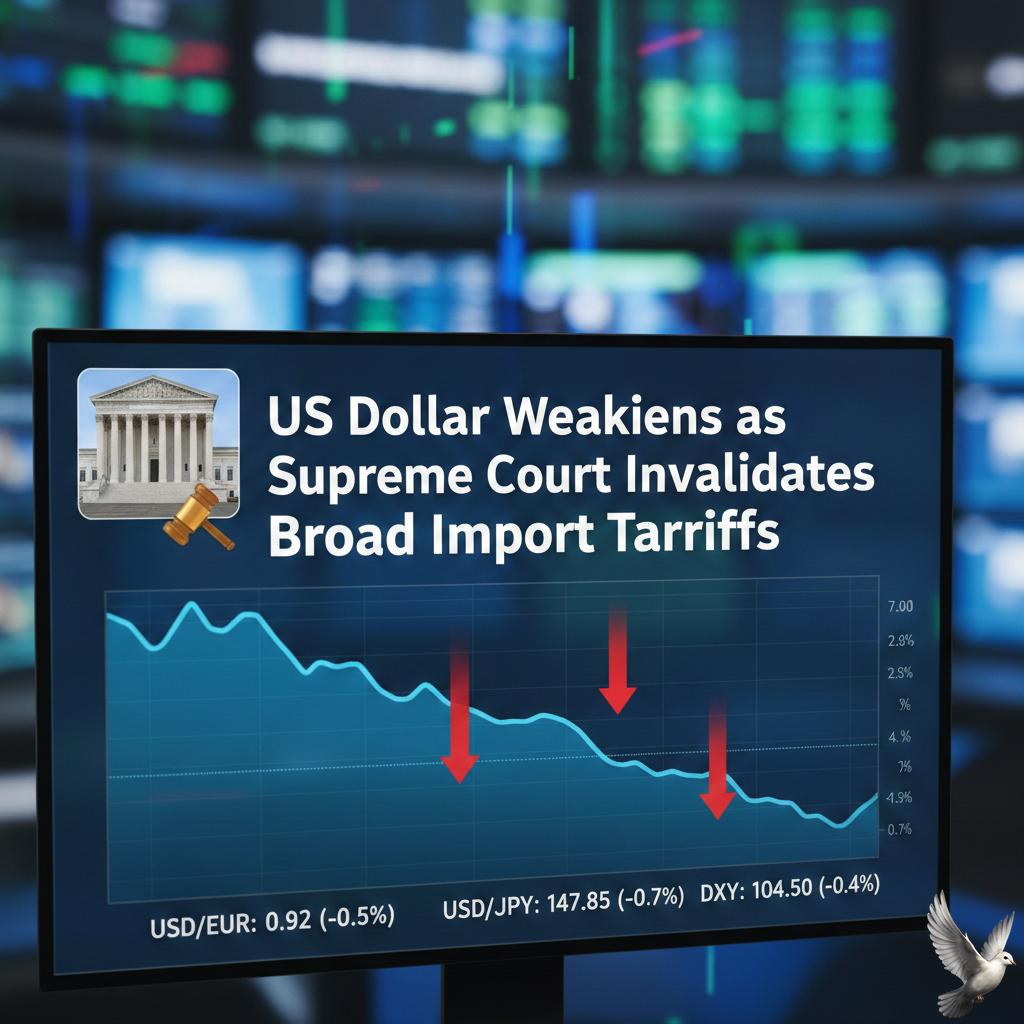
US Dollar Weakens as Supreme Court Invalidates Broad Import Tariffs
The US dollar faced downward pressure following a landmark Supreme Court ruling on Friday, February 20, 2026. The 6-3 decision invalidated the administration's use of emergency powers to impose broad global tariffs. This ruling has created immediate fiscal uncertainty, as the government now faces potential refund claims exceeding **$100 billion** for duties already collected. Economic data released alongside the legal verdict confirmed a significant cooling of the American economy. Real GDP grew at an annual rate of just **1.4%** in the fourth quarter of 2025. This figure represents a sharp deceleration from the **4.4%** growth seen in the third quarter and fell well below the market consensus of **3.0%**. The slowdown was driven by a contraction in government spending and a marked decline in exports. Inflation continues to present a complex challenge for policymakers. While the annual Consumer Price Index (CPI) slowed to **2.4%** in January, the core Personal Consumption Expenditures (PCE) price index—the Federal Reserve's preferred metric—rose by **2.7%** on a quarterly basis. Persistent price pressures in services and the delayed pass-through of previous trade costs suggest that inflation may remain above the **2.0%** target for longer than anticipated. The US Dollar Index (DXY) exhibited volatility, recently hovering near the **97.90** level. The currency weakened as investors weighed the GDP miss against the legal blow to trade policy. In contrast, the British Pound and Japanese Yen found room to maneuver. Sterling benefitted from the dollar’s soft patch, while the Yen saw renewed interest as a safe haven amid the shifting US trade landscape. Market expectations for Federal Reserve policy have turned cautious. Although the benchmark interest rate remains held at **3.50% to 3.75%**, the combination of sluggish growth and "sticky" core inflation has clouded the path for rate cuts. Recent FOMC minutes revealed that some officials are even considering the possibility of future rate hikes if inflation does not stabilize. Investors have scaled back bets on a March cut, with many now looking toward the second half of 2026 for a potential shift in policy. The invalidation of the International Emergency Economic Powers Act (IEEPA) as a tool for tariff imposition has added a layer of "dynamic uncertainty" to global trade. While the White House has already signaled a move toward a **10%** baseline duty under different legal authorities, the immediate loss of the broader tariff structure has removed a key pillar of support for the dollar's recent strength.

Market Implications of Presidential Tariff Policies
In a major legal shift on February 20, 2026, the U.S. Supreme Court struck down President Trump’s sweeping global tariff regime. In a 6-3 ruling, the Court determined that the executive branch overstepped its authority by using the International Emergency Economic Powers Act (IEEPA) to impose broad trade duties. Chief Justice John Roberts authored the majority opinion, clarifying that the power to levy taxes and tariffs is a constitutional authority belonging exclusively to Congress. The ruling effectively voids the "reciprocal" tariffs of 10% to 50% that had been applied to nearly all trading partners since early 2025. **Immediate Market Impact** The decision triggered an immediate reaction in financial markets. Major indices surged following the news: - The Dow Jones Industrial Average rose 0.3% to **49,521.49** - The S&P 500 gained 0.6% to reach **6,901.67** - The Nasdaq Composite jumped 1.0% to **22,914.91** Analysts view the ruling as a potential hedge against inflation, which had accelerated in early 2026. Prior to the verdict, the effective U.S. import tariff rate was projected to peak at **13%** to **14%**. The removal of these duties is expected to ease the core personal consumption expenditures index, which had seen a **0.5 percentage point** increase due to tariff costs. **Global Trade Dynamics** Before the ruling, global trade growth was projected to slow to just **0.6%** in 2026. The decision provides a reprieve for key exporters. Canada and Mexico, previously facing a **25%** duty, and India, which saw tariffs on its goods reduced to **18%** just weeks ago, are now assessing the legal path for duty refunds. The U.S. Census Bureau reported a trade deficit of **$70.3 billion** in December 2025, and while the ruling may not shrink this gap immediately, it removes the immediate threat of escalating costs for U.S. consumers who were absorbing nearly **77%** of tariff expenses. **Political and Legal Next Steps** The White House characterized the ruling as a "disgrace" and signaled the use of alternative trade laws, such as Section 301 of the Trade Act of 1974, to maintain trade pressure. However, these tools are more limited in scope and require specific investigations into unfair trade practices. The focus now shifts to the U.S. Customs and Border Protection and the Court of International Trade. Importers are bracing for a complex refund process, as the Supreme Court did not provide a specific mechanism for returning the billions of dollars already collected under the illegal mandates.

Gift Nifty Gains 400 Points Following US Supreme Court Ruling on Tariffs
A landmark ruling by the US Supreme Court has dismantled the broad-based global tariffs imposed by the Trump administration. In a 6-3 decision on February 20, 2026, the court ruled that the use of the International Emergency Economic Powers Act (IEEPA) to implement sweeping trade duties was unlawful. The court clarified that the power to levy taxes and tariffs during peacetime rests solely with Congress, not the executive branch. Global markets reacted immediately with a sharp relief rally. The Gift Nifty surged nearly 400 points from its daily lows, reclaiming levels above 25,700. This movement reflects a significant shift in investor sentiment as the legal basis for "Liberation Day" tariffs—which included a 10% baseline duty on all imports—effectively collapsed. For India, the ruling provides a critical competitive boost. Before this decision, Indian exporters were facing total tariffs as high as 50% in 2025. While recent bilateral negotiations had already seen the removal of a 25% penal tariff related to energy trade, an 18% reciprocal tariff was still pending on major sectors. The court's decision effectively voids these broad reciprocal duties, freeing approximately 55% of India's exports to the US from the 18% burden. The ruling creates a potential path for billions in tariff refunds. Estimates suggest the US government collected over $175 billion in revenue from these now-invalidated duties. While sector-specific tariffs under Section 232—covering steel and aluminum—remain in place, the broader removal of emergency duties eases pressure on Indian textiles, leather, and machinery. Market volatility has cooled as the "trade war" premium begins to dissipate. Investors are now pivoting toward the upcoming interim trade agreement, which may be renegotiated to reflect the new legal landscape. With the Gift Nifty signaling a strong positive opening for domestic indices, the focus shifts to how the administration will adapt to these strict constitutional limits on trade policy. This reset in trade dynamics arrives at a vital time for the Indian IT and pharmaceutical sectors, which have struggled with global policy uncertainty. By removing the threat of unilateral executive action, the ruling offers a more stable and predictable environment for international commerce and long-term capital flows.

Gold Prices Stabilize Following Supreme Court Ruling on U.S. Tariffs
Gold prices demonstrated resilience on Friday, February 20, 2026, as the market navigated a landmark legal decision and shifting economic fundamentals. The yellow metal pared earlier gains following a U.S. Supreme Court ruling that struck down President Donald Trump’s broad tariff plan, a move that momentarily eased trade-related anxieties. Despite this, the safe-haven asset found firm support in underwhelming economic data. Recent figures show U.S. GDP grew at an annual rate of 1.4% in the fourth quarter of 2025, a sharp deceleration from the 4.4% growth recorded in the third quarter. This cooling economy, coupled with ongoing geopolitical tensions, has kept investor interest high. **International Market Movements** On the COMEX, spot gold was trading near $5,017.60 per ounce, reflecting a daily increase of $20.20 or 0.40%. This follows a turbulent start to 2026 where the metal hit fresh record highs before a significant correction in late January. Currently, the market is in a consolidation phase, struggling to regain the peak levels seen earlier in the year. **Domestic Performance and Technicals** In the Indian market, gold futures rose by ₹1,315 to reach ₹1.56 lakh per 10 grams. The 24-carat gold rate in major cities like Delhi and Mumbai is currently valued at approximately ₹8,800 per gram. While prices have retreated roughly 25% from their all-time highs of ₹1.93 lakh, the technical structure remains a focal point for traders. Key technical levels to watch: - Immediate Resistance: ₹1,56,000 – ₹1,58,000 - Major Resistance: ₹1,60,000 - Immediate Support: ₹1,53,000 - Major Support: ₹1,50,500 **Economic and Policy Drivers** The Supreme Court’s 6-3 decision determined that the International Emergency Economic Powers Act (IEEPA) does not grant the executive branch the authority to impose broad tariffs without clear congressional approval. This ruling specifically invalidated duties ranging from 10% to 40% on trading partners including China, Mexico, Canada, and India. While the removal of these tariffs is expected to lower cost pressures and inflation expectations, the weakening GDP and high-impact macro events remain the primary catalysts for gold. Markets are also pricing in the likelihood of Federal Reserve interest rate cuts, as a softer economic outlook often enhances the appeal of non-yielding bullion. Volatility is expected to persist in the near term as investors await the Personal Consumption Expenditures (PCE) price index data. Expert sentiment suggests a "sell on rise" strategy for short-term traders, even as the long-term bull run for precious metals remains structurally intact.
US Stock Indexes Rise Following Supreme Court Ruling on Tariffs
Wall Street surged on Friday as investors reacted to a landmark Supreme Court decision. In a 6-3 ruling, the court struck down the sweeping "Liberation Day" tariffs imposed by the administration under the 1977 International Emergency Economic Powers Act. The decision invalidates broad import taxes that had been in place since February 2025. The ruling ignited a sharp market reversal. Earlier in the day, indexes had slumped following disappointing economic data showing fourth-quarter GDP growth at just 1.4%, well below the 2.5% forecast. However, the news from the high court provided immediate relief to thousands of companies that had challenged the legality of the levies. Market performance reflected a significant boost in investor confidence. The Dow Jones Industrial Average gained 130 points to close at 49,525.59. The S&P 500 rose 0.66% to reach 6,907.34, while the tech-heavy Nasdaq Composite led the rally with a 1.11% surge, finishing the day at 22,935.19. Retailers and technology firms with global supply chains saw some of the strongest gains. Many on Wall Street viewed the decision as a critical check on executive power, shifting the authority over trade and taxation back toward Congress. This shift is seen as a stabilizing force that reduces the risk of abrupt, unilateral economic actions. The financial implications of the ruling are massive. Analysts estimate that more than $175 billion in previously collected tariffs may now be subject to refunds. While the government has collected roughly $160 billion under this specific emergency law, the ruling could eventually trigger repayments that reach into the hundreds of billions. Volatility declined following the announcement. The VIX, often referred to as the market's "fear gauge," dropped 5% as the legal uncertainty surrounding global trade policy cleared. Major corporate gainers included Walmart, which rose 2.23% to $129.44, and Chevron, which climbed 1.78% to $187.15. Despite the positive market reaction, some trade measures remain. Industry-specific tariffs on steel, aluminum, and automobiles—implemented under separate national security laws—were not affected by this specific ruling. However, the invalidation of the broader global duties has effectively removed a major tax burden from the U.S. economy. International markets also tracked the gains on Wall Street. European and Asian indexes edged higher on hopes of a more predictable trade environment and a lower risk of retaliatory measures from key trading partners. The U.S. dollar weakened slightly as the shift in trade policy eased some inflationary concerns.

NSE to Launch 10-Gram Gold Futures on March 16 Following SEBI Approval
The National Stock Exchange is set to expand its commodity derivatives portfolio with the launch of Gold 10 grams futures starting March 16. This follows official approval from the Securities and Exchange Board of India (SEBI) and is designed to attract a broader base of retail investors who prefer smaller, more manageable contract sizes. The new contract features a monthly, delivery-based structure. To ensure market stability and risk management, the exchange has established defined price limits and margin requirements. Settlement for these contracts will be based in Ahmedabad, providing a standardized physical delivery mechanism for participants. This launch comes at a time of significant activity in the bullion market. Domestic gold prices in India have recently reached historic levels, with spot prices for 10 grams of 24-carat gold trending near 94,630 INR. This represents a substantial rise from 2024 levels, driven by global safe-haven demand and a weaker rupee. The broader market environment shows a clear shift in consumer behavior. While record-high prices have dampened traditional jewellery sales by an estimated 20% to 30%, investment demand has surged. Gold ETFs and digital gold products have seen record-breaking inflows, with ETF assets in India reaching historic peaks of over 116 billion INR in recent months. To further improve liquidity and reduce the cost of trading, both the MCX and NSE recently withdrew additional margins on gold and silver futures. Specifically, a 3% additional margin on gold was removed effective February 19, making it more capital-efficient for hedgers and speculators to enter the market. Analysts note that the combination of the new 10-gram contract and lowered margin requirements could significantly boost retail volumes. As international spot gold tests the 3,000 USD per ounce threshold, Indian investors are increasingly looking for transparent, exchange-traded instruments to hedge against inflation and currency volatility. The NSE’s entry into this segment provides a competitive alternative to existing commodity platforms. By focusing on a 10-gram denomination, the exchange is directly addressing the needs of smaller investors who find the traditional 1-kilogram contracts too capital-intensive. Market participants should watch for the official contract launch on March 16 to observe the initial liquidity and price discovery patterns. This move is expected to integrate the physical bullion market more closely with financial derivatives, offering a robust platform for both investment and delivery.
US Equities Decline Following Soft GDP and Elevated Inflation Data
US stock markets closed lower on Friday, February 20, 2026, as investors reacted to a landmark Supreme Court ruling and fresh economic data showing a significant cooling of the domestic economy. The S&P 500 fell 26.63 points, or 0.4%, to finish at 6,117.52. The Dow Jones Industrial Average dropped 450.94 points, a 1% decline, ending at 44,176.65. The Nasdaq Composite slipped 0.5% to close at 19,962.36, while the Russell 2000 index of smaller companies retreated 0.9%. Market sentiment was heavily influenced by the U.S. Supreme Court's 6-3 decision to strike down the broad global tariffs imposed under emergency powers. This ruling upends a central pillar of current trade policy, impacting over $133 billion in duties collected since late 2024. While the decision removes a layer of trade uncertainty, it creates a "legal mess" regarding potential refunds for billions of dollars already paid by importers. Economic growth slowed more than anticipated in the fourth quarter of 2025. Real GDP increased at an annual rate of 1.4%, a sharp deceleration from the 4.4% growth recorded in the third quarter. This slowdown was partially attributed to the record-breaking 43-day government shutdown that occurred late last year, which stripped approximately 1 percentage point from the final growth figure. Inflation remains a persistent concern for the Federal Reserve. The Personal Consumption Expenditures (PCE) price index—the Fed's preferred inflation gauge—rose to 2.9% in the fourth quarter, up from 2.8% in the previous period. Core inflation, which excludes volatile food and energy costs, stood at 2.7%, highlighting that price pressures are not receding as quickly as many had hoped. The labor market showed signs of softening as well. Nonfarm payrolls for January added only 143,000 jobs, falling short of the 175,000 expected by analysts. Despite the slower hiring pace, the unemployment rate ticked down slightly to 4.0%, while labor force participation rose to 62.6%. Sector performance was mixed amid the volatility. Consumer staples and real estate saw modest gains as investors sought defensive positions. However, retail stocks faced heavy pressure following a weak profit forecast from Walmart, which warned of slowing consumer demand. Tech giants, often referred to as the Magnificent Seven, continued to face selling pressure, marking a shift in market leadership toward broader index components. In the commodities and bond markets, the 10-year Treasury yield eased to 4.20% as recession fears resurfaced. Gold prices rose to $2,867.30 per ounce, reflecting a flight to safety. Conversely, crude oil prices fell to approximately $70.00 per barrel, recording the first monthly decline in several months due to concerns over weakening global demand.

Sebi Approves Four IPOs Including Integris Medtech, Alpine Texworld, and Anjali Labtech
The Securities and Exchange Board of India (SEBI) has cleared the path for four major initial public offerings, marking a significant milestone for Integris Medtech, Alpine Texworld, Anjali Labtech, and Appl Containers. These approvals come as the Indian primary market continues to show resilience, with benchmark indices like the Nifty 50 and Sensex maintaining a positive trajectory, currently hovering near 25,571 and 82,815 respectively. **Integris Medtech** The medical technology giant is moving forward with a substantial **₹925 crore** fresh issue alongside an offer for sale (OFS) of approximately **2.17 crore equity shares**. The Noida-based company, which holds a top 3 position in India’s drug-coated balloon market, intends to use the primary proceeds for debt repayment and general corporate expansion. This move follows a strong fiscal year, where the firm reported pro forma revenues exceeding **₹2,332 crore**. **Anjali Labtech** Surat-based Anjali Labtech is making waves in the high-tech sector with a planned issue estimated at **₹1,200 crore**. The company specializes in lab-grown diamonds, semiconductor materials, and advanced manufacturing systems. Its financial profile shows rapid scaling, with total income jumping over **110%** to reach **₹478 crore** in the latest fiscal period, while profits grew by **63%**. **Alpine Texworld** In the textile and renewable energy space, Alpine Texworld has secured approval for an IPO comprising a fresh issue of **1.50 crore shares**. The funds are earmarked for a new weaving unit in Ahmedabad and the repayment of **₹522 million** in existing debt. The company has diversified significantly, recently commissioning a **5.4 MW** solar project as part of its sustainability drive. **Appl Containers** Rounding out the list, Appl Containers has received the green light for its listing on the NSE and BSE. The company serves the critical global shipping and logistics sector, focusing on ISO container manufacturing. Its entry into the public market aligns with broader industrial growth as India's manufacturing sector remains a key driver of market sentiment. **Market Context** These upcoming listings enter a vibrant environment where IPO fundraising in 2025 reached nearly **₹1.75 lakh crore**. Despite global volatility and a weakening Rupee, which recently touched **90.99** against the US dollar, retail participation remains at an all-time high. Investors continue to favor sectors driven by local manufacturing and technological innovation, keeping the primary market pipeline robust for the first half of 2026. [Upcoming IPO opportunities 2026](https://www.youtube.com/watch?v=VjrV92p67u0) This video provides an expert outlook on the record-breaking momentum of the Indian IPO market and what investors should expect in the coming year. http://googleusercontent.com/youtube_content/0

**RBI Reports Trade Pacts Driving Foreign Inflows and Strengthening Indian Rupee**
India's financial landscape has seen a decisive turnaround as foreign portfolio investors return to domestic markets. After three consecutive months of heavy selling totaling over **62,000 crore** between November and January, Foreign Portfolio Investors (FPIs) turned net buyers in February 2026. Data as of February 20 shows a total net investment of **29,252 crore** for the month. This shift is largely attributed to the successful conclusion of a landmark Free Trade Agreement (FTA) with the European Union and the finalization of an interim trade deal with the United States. The Reserve Bank of India, in its February monthly bulletin, noted that these strategic trade deals have fundamentally improved investor sentiment. The India-EU FTA provides preferential access to **99.5%** of India's trade value, eliminating duties on labor-intensive sectors like textiles, leather, and gems. Simultaneously, the interim pact with the U.S. has reduced reciprocal tariffs from levels as high as **50%** down to a stabilized **18%**. This move alone provided an immediate relief of approximately **1.50** per dollar for the Indian Rupee, lifting it from record lows near **92.00**. The Indian Rupee has stabilized around the **90.80** mark against the U.S. Dollar. The currency's resilience is further supported by India's record foreign exchange reserves, which have climbed above **$723 billion**, providing the central bank with significant firepower to manage market volatility. Domestically, the Reserve Bank maintained the repo rate at **5.25%** during its February meeting. The decision to keep rates steady, combined with a fiscal deficit target of **4.3%** announced in the Union Budget, has reinforced India's image as a stable investment destination. Real GDP growth for the current fiscal year is now poised to reach **7.4%**, outperforming previous estimates. Analysts suggest the new trade framework could add another **20 to 50 basis points** to India's growth trajectory as businesses integrate more deeply into global supply chains. While challenges such as volatile global commodity prices and higher transaction taxes on derivatives remain, the twin trade agreements have effectively established a new floor for both the equity markets and the rupee. This structural shift marks a transition from defensive market consolidation to a phase of trade-led economic expansion.
Goldman Sachs: US Hedge Funds Impacted by AI Tech Selloff
Hedge fund stock pickers are navigating their most challenging stretch in years. Goldman Sachs Prime Services reports that fundamental equity long-short funds recently endured a three-week performance slump comparable to the volatility seen in early 2022. The primary driver of this downturn is a significant re-rating across the technology sector. Software-as-a-Service (SaaS) companies have been hit hardest as investors reassess the "AI displacement" risk. Benchmark indices like the iShares Expanded Tech-Software Sector ETF (IGV) recorded a sharp decline of nearly 25% during the peak of this rotation. Valuations in the software space had reached historical extremes before the selloff, sitting in the 10th decile of their price-to-forward earnings history. Recent market movements have since dragged these valuations down to the 8th decile. This correction was accelerated by new AI model releases that sparked fears of disruption for established software firms. Despite the turbulence in software, a clear divergence has emerged within the tech landscape. While software struggled, the iShares Semiconductor ETF (SOXX) remained resilient, posting gains of over 5% during the same period. This highlights a shift in capital away from application-level software and toward the hardware and infrastructure powering the AI era. Overall market concentration remains at historic highs. The "Magnificent 7" now represent over 35% of the S&P 500's total market capitalization. These seven firms saw earnings growth of approximately 30% in recent cycles, significantly outperforming the 6% growth seen in the remaining 493 companies. Macroeconomic headwinds are adding to the pressure on stock pickers. Recent data shows a cooling U.S. economy, with Q4 GDP growth slowing to 1.4%—the second-lowest quarterly print of the year. Inflation remains stubborn, with Core PCE reaching 3.0%, well above the Federal Reserve’s target. Hedge fund positioning reflects these shifts, with net exposure to software falling to five-year lows. Conversely, managers have ramped up allocations to semiconductors and healthcare, particularly biotech. While gross leverage across prime brokerage books has hit record highs, the "alpha generation" for stock-specific bets remains under intense pressure due to high factor volatility and rapid sector rotations. [Market Analysis: The Recent Tech Sell-Off](https://www.youtube.com/watch?v=ajtDPRsDVHM) This video provides professional insight into the specific factors driving the recent software stock downturn and how AI disruption is reshaping the technology sector. http://googleusercontent.com/youtube_content/0
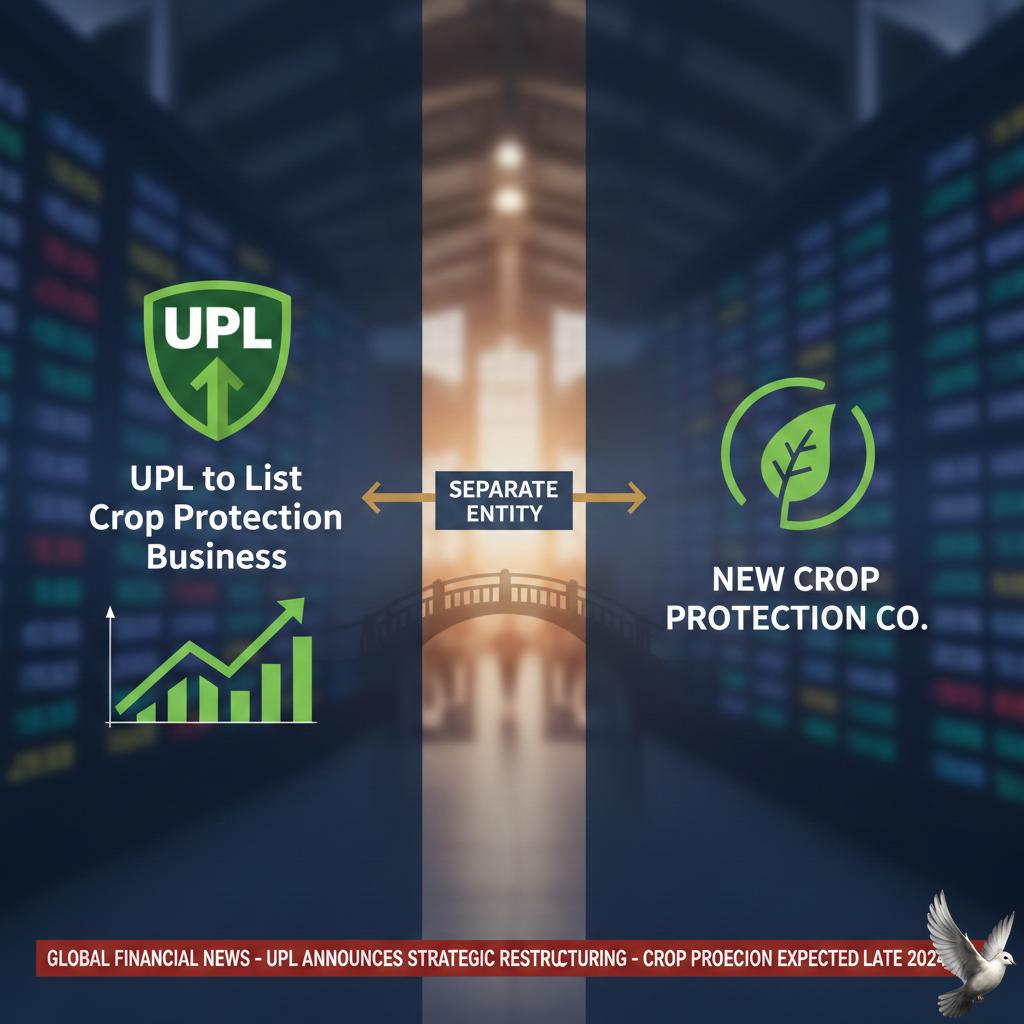
UPL to List Crop Protection Business as Separate Entity
UPL Strategic Reorganisation: Creation of Global Crop Protection Leader **UPL Limited** has officially approved a composite scheme of arrangement to bifurcate its operations into two distinct, publicly traded entities. This move aims to separate the diversified chemicals business from the core crop protection segment. The cornerstone of this plan is the creation of **UPL Global Sustainable Agri Solutions** (UPL Global). This new entity will consolidate the group’s India and international crop protection businesses into a single, pure-play platform. Market Position and Scale Upon completion, **UPL Global** is projected to become the world's **second-largest** listed pure-play crop protection company. The consolidation integrates research, manufacturing, and a massive global distribution network under a unified management structure. The global agrochemicals market is currently valued at approximately **$251.4 billion** for **2026**. Experts forecast a steady growth rate of **4.7% CAGR** through **2033**, driven by increasing food security needs and the rise of sustainable bio-solutions. Financial Performance and Valuation UPL recently reported a strong third quarter for **2026**, with revenue climbing **12%** to **₹12,269 crore**. Net profit witnessed a significant surge of **45%**, reaching **₹452 crore**. The company has aggressively reduced its financial leverage, cutting net debt by **₹2,553 crore** during the quarter. This deleveraging effort brings the total net debt down to **₹23,317 crore**, improving the group's credit profile and capital flexibility. Shareholder Structure and Timeline As of **February 20, 2026**, UPL shares closed at **₹751.50**. Under the proposed restructuring: * Promoters will hold **33.1%** in the existing UPL Limited. * Promoters will hold a higher **71.6%** stake in the new **UPL Global**. * Public shareholders will own **28.4%** of the new crop protection entity. Promoters have voluntarily committed to an **18-month** shareholding lock-in from the listing date to signal long-term confidence. The first phase of the merger is scheduled for **April 1, 2026**, with the entire process expected to conclude within **12 to 15 months**. Strategic Objectives The separation is designed to provide investors with a choice between a high-growth, focused crop protection platform and a diversified specialty chemicals business. This structure allows each entity to raise capital independently and optimize operations for their specific market dynamics. **UPL Global** will focus on high-demand segments such as herbicides and fungicides, which currently dominate nearly **40%** of the global market share.

Benjamin Franklin: "An investment in knowledge pays the best interest"
Market Brief: Strategic Knowledge as a Financial Lever Institutional and retail markets on February 20, 2026, demonstrate that technical knowledge is no longer just an advantage but a requirement for capital preservation. The Nifty 50 recently reclaimed the **25,500** level, closing at **25,571.25** after a session of high volatility. Similarly, the Sensex surged by **317 points** to end at **82,814.71**. These movements reflect a market where informed participants are capitalizing on sector-specific shifts, particularly in metals and PSU banks. Global Volatility and the Learning Curve Market uncertainty remains high due to geopolitical tensions and shifting economic data. U.S. markets opened lower following reports that fourth-quarter growth slowed, while inflation picked up. The Dow Jones Industrial Average dropped **169.22 points** to **49,225.94**, and the Nasdaq Composite fell **128.79 points** to **22,553.94**. Investors who commit to continuous learning are better positioned to interpret these diverging signals. For instance, while broad indices struggle, specific sectors like energy and commodities have seen spikes, with Crude Oil jumping **2.57%** to reach **$66.72**. The Compounding Value of Insight Data shows that disciplined, analytical decision-making yields significant returns. Firms that prioritize training and structured learning programs report a **218%** increase in revenue and **24%** higher profit margins compared to those that do not. In the stock market, this translates to the ability to identify "rounding base" formations in stocks like IndusInd Bank or volume-supported breakouts in firms like UPL. Without the wisdom to look past short-term noise, investors often miss these fundamental setups. Sector Performance and Economic Indicators * **Indian Market Cap**: Surged to **₹467 lakh crore**, increasing investor wealth by **₹2 lakh crore** in a single day. * **Sector Leaders**: Nifty Metals, FMCG, and PSU Banks led the gains, while IT remained the sole outlier in the red. * **Commodity Shift**: Gold reached **$5,012.30**, up **0.30%**, acting as a hedge against global uncertainty. Building Resilience Through Understanding The current landscape is defined by "circular and interconnected" ecosystems, particularly in the technology and AI space. Major players like Amazon and Microsoft are expected to increase infrastructure investment by **70%** in 2026. Navigating this requires more than just tracking prices; it requires understanding the underlying capital expenditure cycles. Investors who build this understanding gain the confidence to hold positions through **1,000-point** swings, turning market wisdom into the "best interest" for long-term wealth.

US Stocks Muted Ahead of Economic Data
Market Brief: U.S. Equities Rally on Supreme Court Ruling U.S. stocks staged a decisive recovery on Friday, February 20, 2026, as a landmark Supreme Court decision outweighed a cocktail of weak economic data and intensifying Middle East tensions. Market sentiment shifted sharply higher after the Supreme Court, in a **6-3 ruling**, struck down President Trump’s sweeping global tariffs. The court determined that the executive branch exceeded its authority under the 1977 International Emergency Economic Powers Act, ruling that the power to impose such taxes rests solely with Congress. Major Indices Performance The legal victory for import-dependent industries triggered a broad rally across the major averages: * **Nasdaq Composite**: Surged **1.11%** to **22,935.19**, led by heavyweights in the tech and e-commerce sectors. * **S&P 500**: Advanced **0.66%** to close at **6,907.34**. * **Dow Jones Industrial Average**: Rose **130.43 points** (or **0.26%**) to **49,525.59**, bouncing back from an earlier **200-point** deficit. Mixed Economic Signals Before the court's decision, futures were pressured by a "stagflationary" data mix. Fourth-quarter **GDP growth slowed to 1.4%**, significantly lower than the **4.4%** seen in the previous period and below analyst expectations of **2.5%**. Simultaneously, the Federal Reserve's preferred inflation metric, the Core PCE Price Index, rose **0.4% in December**. This pushed the annual inflation rate to **3.0%**, well above the central bank's **2.0% target**. This combination of cooling growth and sticky prices complicates the path for the Federal Open Market Committee, which currently maintains rates between **3.50% and 3.75%**. Geopolitical and Commodity Impacts Geopolitical risks remain a primary concern for energy markets. Tensions with Tehran reached a new peak as the U.S. began withdrawing fighter jets from NATO exercises to reposition them near the Middle East. President Trump indicated a decision on potential military action could come within the next **10 days** if a nuclear deal is not reached. In response to the friction, **Crude Oil** prices remained elevated, with Brent trading near **$71.18** per barrel. **Gold** prices showed high volatility, briefly touching records near **$5,075 per ounce** before stabilizing around **$5,041** as investors weighed the tariff ruling against global instability. Sector and Corporate Highlights The tech sector led the gains, with **Alphabet** rising nearly **4%** and **Amazon** climbing **2.8%**. However, the private credit market faced scrutiny after Blue Owl Capital halted redemptions on a key fund, causing its shares to tumble **5.9%** and dragging down peers like **Blackstone** and **Apollo**, which fell **5.3%** and **5.2%** respectively. While the Supreme Court ruling provides immediate relief, analysts note the administration may still pursue more targeted trade barriers through alternative legal authorities, potentially keeping long-term trade policy uncertainty on the horizon.
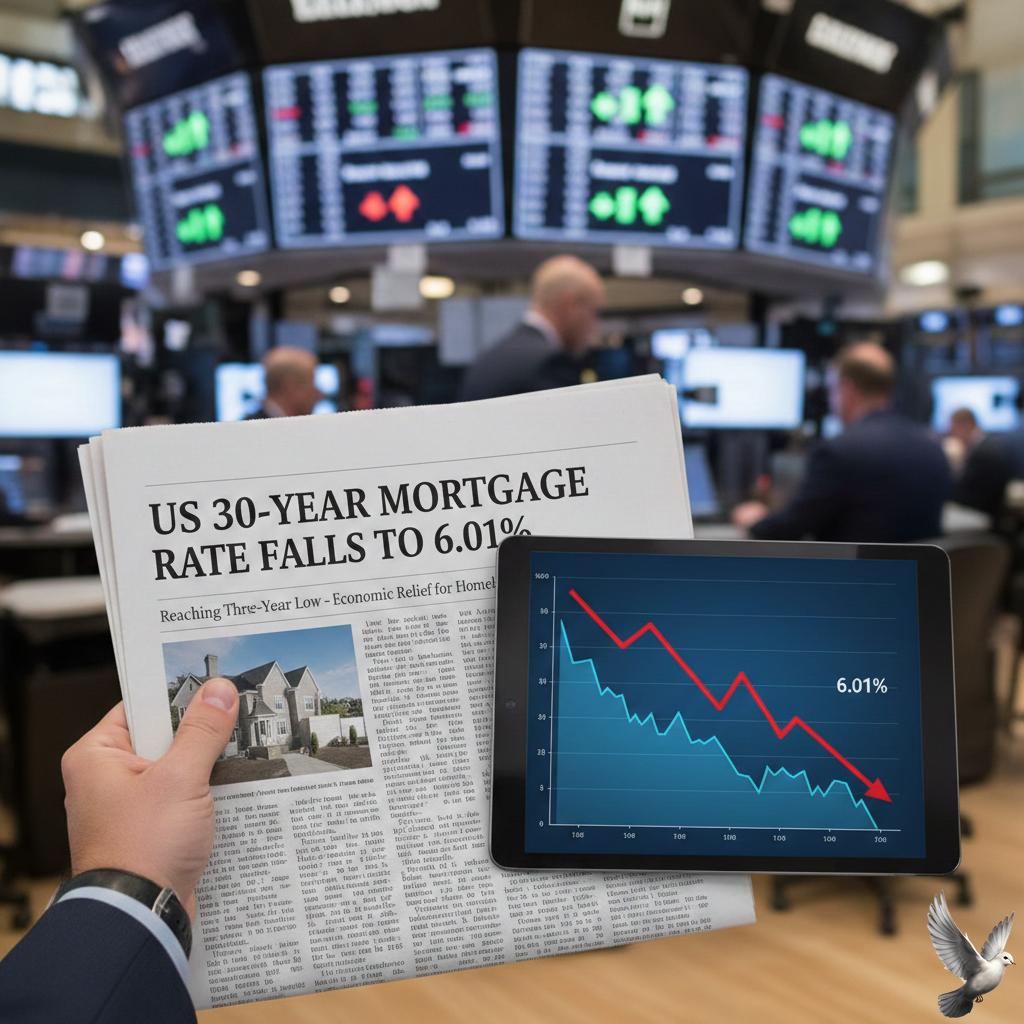
US 30-Year Mortgage Rate Falls to 6.01%, Reaching Three-Year Low
U.S. mortgage rates have hit a significant milestone this week, dropping to their lowest level in more than three years. The benchmark 30-year fixed-rate mortgage now averages 6.01%, down from 6.09% last week. This is a sharp decline from the 6.85% seen exactly one year ago and represents the most favorable borrowing environment for homebuyers since September 2022. The 15-year fixed-rate mortgage, a popular choice for those looking to refinance, also followed this downward trend. It currently averages 5.35%, sliding from 5.44% last week. For comparison, the 15-year rate stood at 6.04% this time last year. Despite these lower figures, the housing market continues to show signs of hesitation. Monthly home sales recently posted their largest drop in nearly four years, and the pace of sales is at its slowest in over two years. Economic data suggests that while rates are dipping, high overall costs for goods and services are keeping many prospective buyers on the sidelines. Refinancing activity, however, is providing a bright spot for the industry. Applications for refinance loans have more than doubled compared to February 2025, surging by 132%. Homeowners who secured loans during the high-rate peaks of 2023 and 2024 are moving quickly to lock in these newer, lower costs. Market analysts note that the 10-year Treasury yield, which heavily influences mortgage pricing, recently dipped to 4.08%. This movement is a response to cooling inflation and shifts in investor expectations regarding Federal Reserve policy. While the Fed has signaled caution, the general consensus suggests rates will stay in a narrow range between 6% and 6.5% for the remainder of the year. The spring homebuying season is approaching with a gradual increase in inventory. Total housing starts have reached a five-month high, and new listings are up 4.8% year-over-year. This building supply, combined with the current 6.01% rate, may provide the necessary psychological push for buyers to enter the market as the weather improves. Current market indicators show a shift toward a more buyer-friendly environment. Median listing prices have declined 2.9% year-over-year, and homes are staying on the market for an average of 71 days, roughly six days longer than last year. This trend is giving buyers more leverage in negotiations than they have had in several seasons.
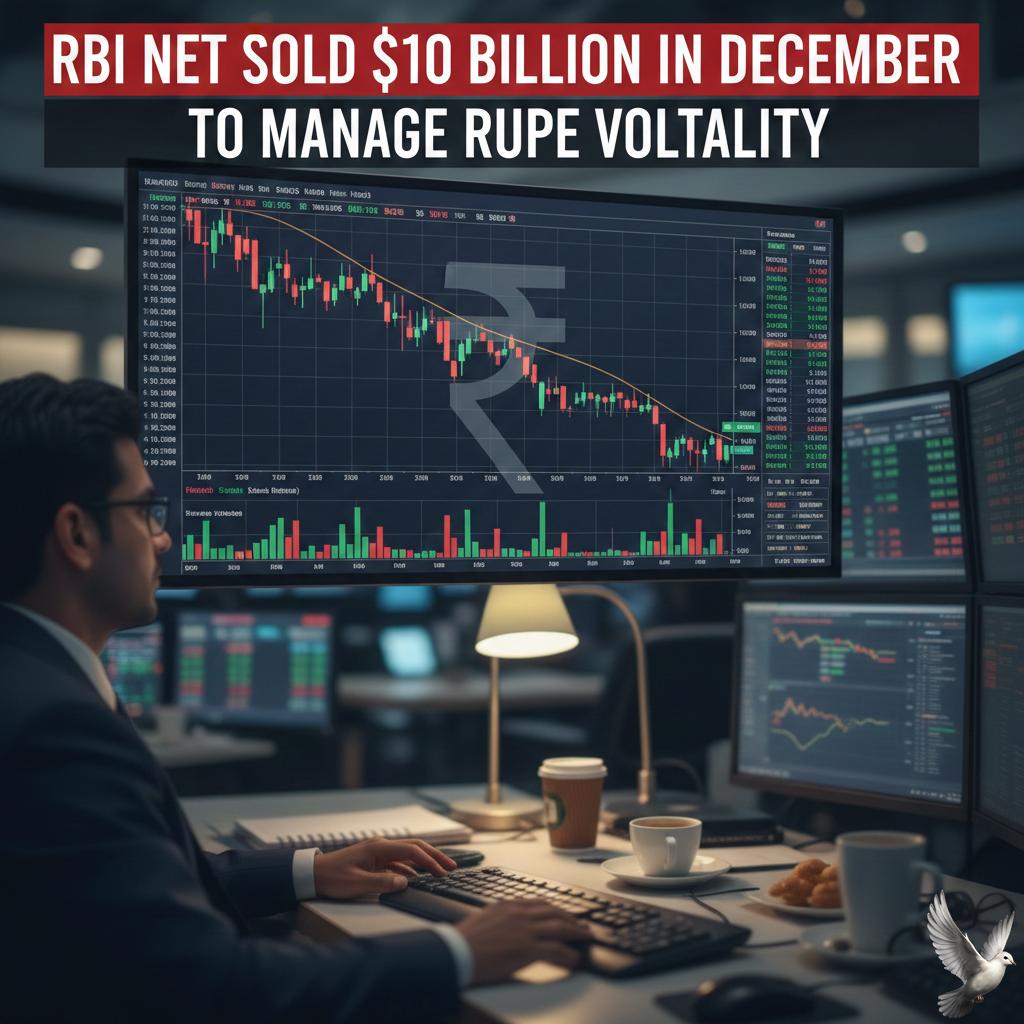
RBI Net Sold $10 Billion in December to Manage Rupee Volatility
RBI Market Intervention & Rupee Stability The Reserve Bank of India (RBI) continues its active role in the foreign exchange market to manage currency volatility. Recent data confirms a significant net sale of **$10.02 billion** in December. This intervention was driven by the central bank's goal to shield the rupee from extreme fluctuations after a period of high pressure. In December, the RBI total activity included **$18.33 billion** in purchases and **$28.35 billion** in sales. This followed a November period that also saw substantial net sales of **$9.7 billion**. These aggressive moves were designed to defend the currency as it touched record lows near **91.07** late last year. Record Reserves & Liquidity Management Despite heavy selling to support the currency, India’s total foreign exchange reserves have surged to an all-time high of **$725.73 billion** as of mid-February 2026. This reflects a weekly increase of **$8.66 billion**, supported by rising gold valuations and foreign currency assets. * **Gold Reserves:** Now valued at **$128.47 billion**. * **Foreign Currency Assets:** Increased to **$573.60 billion**. * **Import Cover:** Current reserves provide approximately **11 months** of protection. To counter the "rupee drain" caused by selling dollars, the RBI has deployed over **$2 billion** in FX swaps. These operations help replenish local liquidity without compromising the bank’s ability to defend the exchange rate. Current Rupee Performance The rupee has shown signs of stabilization following a preliminary U.S.-India trade deal in early February. After falling past the **91.00** mark in January, the currency rebounded to trade in the **90.60 to 90.99** range this month. Global factors remain a primary influence. While the dollar index has stayed strong at **97.14**, lower crude oil prices near **$68.33** per barrel have provided a much-needed cushion for the Indian economy. Economic Context The intervention comes as India maintains a robust growth outlook. Real GDP is projected to grow by **7.4%** in the current fiscal year. Fiscal discipline is also a priority, with the government targeting a deficit of **4.4%** for the upcoming cycle. Policymakers are now focused on converting this episodic strength into long-term stability. While record reserves offer a significant buffer, the market remains sensitive to foreign institutional outflows and global trade developments. This [analysis of the Indian Rupee's outlook](https://www.youtube.com/watch?v=f5zyOnpxABQ) provides a detailed breakdown of how global trade shifts and central bank policies are expected to shape the currency's path through 2026. http://googleusercontent.com/youtube_content/0

Novartis India and GMDC among 6 stocks in focus on Friday
Indian equity benchmarks staged a resilient recovery on February 20, 2026, as the **Sensex** climbed **316.57 points** (0.38%) to settle at **82,814.71**. The **Nifty 50** followed suit, advancing **116.90 points** (0.46%) to close at **25,571.25**. This rebound successfully recouped a portion of the steep losses witnessed in the previous session. Market sentiment was bolstered by India's formal entry into the **Pax Silica alliance**, a strategic U.S.-led coalition focused on securing critical mineral and AI supply chains. This development triggered significant buying interest in mining and metal stocks. Corporate Spotlight: Novartis India Shares of **Novartis India** dominated the session, surging **20%** to hit an intraday high of **₹996.50** before closing near the upper circuit. The rally was ignited by the announcement that its Swiss parent, **Novartis AG**, will sell its entire **70.68% stake** for approximately **₹1,446 crore**. The stake is being acquired by a consortium including **WaveRise Investments**, **ChrysCapital**, and **Two Infinity Partners**. This transaction has triggered a mandatory open offer for an additional **26%** of public shares at a price of **₹860.64 per share**. As part of the transition, the company will remove all "Novartis" branding within **120 days**. Resource Sector: GMDC Performance **Gujarat Mineral Development Corporation (GMDC)** saw its share price rise by **3.5%**, closing at **₹580.70**. Investors reacted positively to the Pax Silica news, which positions GMDC as a critical player in India's contribution of rare earths and strategic minerals to the global AI hardware market. The stock reached an intraday high of **₹585.75**, supported by heavy trading volumes exceeding **4 million shares**. The company’s valuation remains in focus as the market anticipates long-term gains from enhanced supply-chain security. Broader Market Trends The recovery was broad-based, with **13 of the 15** NSE sectoral indices ending in the green. **PSU Banks** and **Metals** led the charge, gaining **1.7%** and **1.2%** respectively. Large-cap heavyweights like **NTPC** (up 2.6%) and **Larsen & Toubro** (up 2.3%) provided the necessary weight to lift the indices. Conversely, the **IT sector** remained a laggard, dropping **1%** amid ongoing global caution. Major IT firms like **Infosys** and **Tech Mahindra** featured among the top losers. In the broader market, the **BSE MidCap** index gained **1.6%**, while the **SmallCap** index ended **2.5%** higher, reflecting a shift toward value buying in mid-tier stocks after recent corrections. Volatility remained elevated as the **India VIX** stayed sensitive to geopolitical developments between the U.S. and Iran. However, domestic institutional support and positive manufacturing data provided a necessary floor for the day's trade.
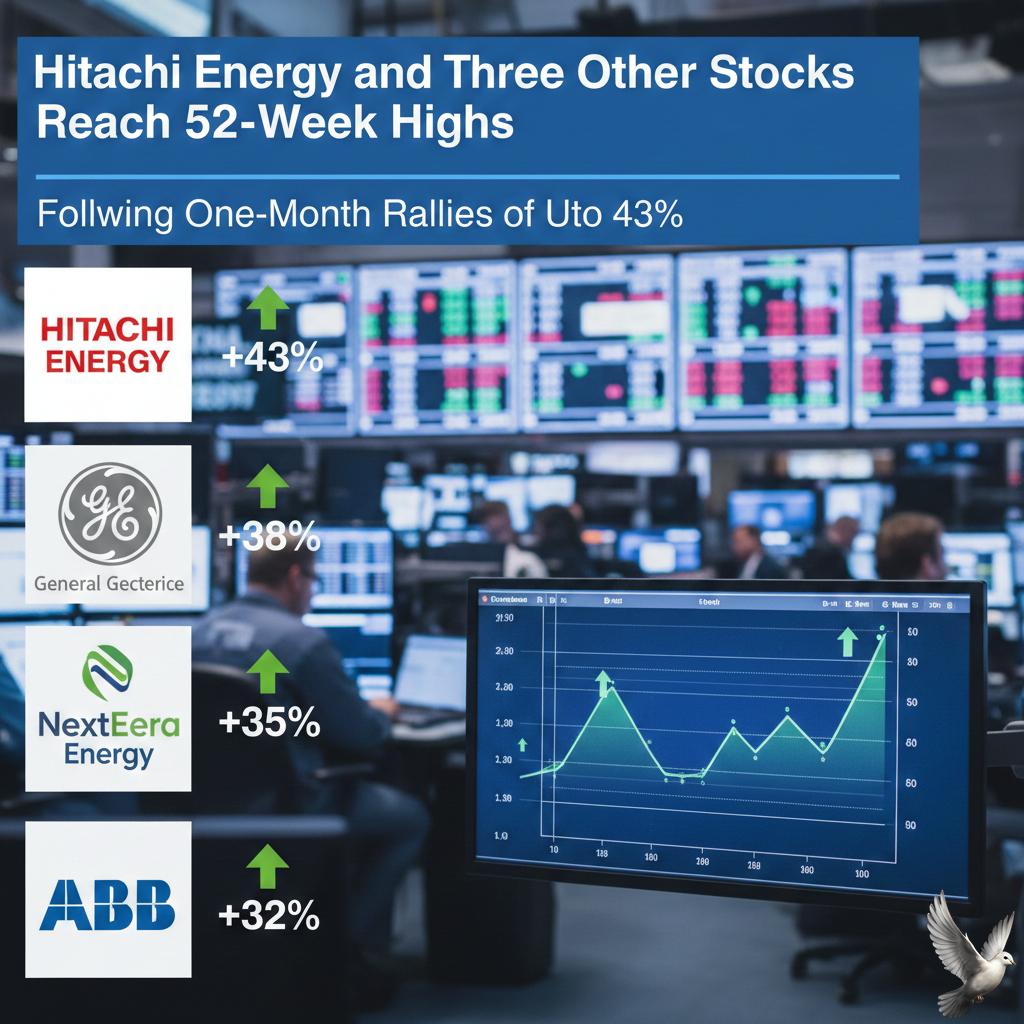
Hitachi Energy and Three Other Stocks Reach 52-Week Highs Following One-Month Rallies of Up to 43%
The global copper market in February 2026 is navigating a period of high volatility, characterized by a tug-of-war between record-high stockpiles and a long-term structural supply deficit. While prices reached historic peaks earlier this year, the market is currently seeing a tactical correction. Market Prices and Performance As of February 19, 2026, the **LME Copper Cash-Settlement price** stands at **$12,626 per tonne**. This follows a record-shattering surge in late January, when prices peaked above **$14,500**. The current levels reflect a **13% decline** from those highs, driven by a strengthening U.S. dollar and a temporary lull in activity during the Chinese Lunar New Year. Despite the recent dip, the broader trend for 2026 remains elevated compared to 2025 averages, which hovered around **$9,300 to $11,000**. Inventory and Supply Dynamics Global exchange inventories have hit a 20-year high, surpassing **1 million tonnes** for the first time in two decades. This build-up is largely concentrated in the U.S. and China. In the U.S., stocks have grown fivefold year-over-year to over **590,000 tonnes**, partly due to "Project Vault," a **$12 billion** strategic raw-material reserve program. Conversely, mine supply remains under extreme pressure. Production at major sites like Escondida and Collahuasi has seen year-over-year declines of **16.5%** and **12.1%** respectively, hampered by declining ore grades and water constraints. The International Copper Study Group forecasts a refined copper deficit of **150,000 tonnes** for the remainder of 2026. Demand Drivers and Trends The energy transition and digital infrastructure remain the primary engines for copper consumption. * **Grid Investment**: China’s State Grid has committed **4 trillion yuan** ($574 billion) for 2026–2030, a **40% increase** over previous plans. * **AI and Data Centers**: Advanced electrical architectures for AI hardware are significantly more copper-intensive than traditional computing facilities. * **Electric Vehicles**: Demand continues to scale as EVs require **3 to 4 times** more copper than internal combustion engines. Outlook and Key Events Market sentiment is currently split. Analysts expect prices to find strong support at the **$12,125** level, with potential peaks of **$13,000** in the second quarter of 2026 as Chinese buying resumes post-holiday. The industry is also bracing for significant regulatory shifts. A key watchpoint is the potential U.S. recommendation for a **25% tariff** on refined copper imports, expected by mid-2026. Upcoming industry gatherings, including the **PDAC** in Toronto (March 1–3) and the **SMM Copper Industry Conference** in China (April 8–10), will be critical for assessing how mining executives and smelters negotiate the increasingly difficult treatment and refining charges (TC/RCs) currently under pressure.

Milky Mist Plans 2026 IPO Amid Market Volatility
Market Brief: Milky Mist Strategic Expansion & IPO Outlook Indian dairy major Milky Mist is moving forward with its ₹2,035 crore initial public offering despite recent global market fluctuations. The company received regulatory approval in October 2025 and aims to complete the listing before its clearance expires in October 2026. This move comes as India solidifies its position as the world's largest milk producer, with national output reaching 247.87 million tonnes for the 2024-25 period. The IPO structure includes a fresh issue of ₹1,785 crore and an offer for sale of ₹250 crore. The company has dedicated ₹750 crore of the proceeds to debt repayment, addressing a debt-to-equity ratio that stood at 4.20 as of March 2025. Remaining funds are earmarked for expanding the Perundurai manufacturing facility and deploying 55,000 new cooling units to strengthen its cold-chain retail presence. Milky Mist reports a strong growth trajectory with a 29.8% revenue CAGR over the last three fiscal years. Revenue for FY25 reached ₹2,349.5 crore, up from ₹1,821.6 crore the previous year. Profitability has seen a significant surge, with net profit jumping 2.4 times to reach ₹46.1 crore in FY25. The company currently maintains an EBITDA margin of 13.2%, driven by a shift toward high-margin value-added products. Product performance highlights: - Paneer remains the flagship product, generating ₹694 crore in FY25 revenue. - Cheese and curd followed with contributions of ₹408 crore and ₹370 crore respectively. - Ice cream emerged as the fastest-growing segment, recording a 294% revenue increase. The brand holds a 17% market share in India's organized packaged paneer segment. While operations are heavily concentrated in South India—drawing 97% of raw milk from 67,615 farmers in Tamil Nadu, Karnataka, and Andhra Pradesh—the company is now targeting 49% to 55% growth in Western and Northern Indian markets. Future strategy focuses on premiumization and digital integration. Milky Mist expects quick-commerce and e-commerce platforms to contribute 15% of total revenue within three years. Additionally, the company is expanding its global footprint, with exports to 15 countries currently accounting for 4% of total sales. New high-protein offerings, including Greek yogurt and specialized cottage cheese, are being launched to capture the rising demand for health-focused nutrition in urban centers.

Shapoorji Pallonji Real Estate to Develop Residential Project in Thane
Shapoorji Pallonji Real Estate (SPRE) has expanded its luxury footprint in Thane with the launch of Oyster. This premium residential tower is a key component of the Northern Lights township, a sprawling 4.8-acre development situated on the high-demand Pokhran Road 2. Thane has emerged as a powerhouse in the Mumbai Metropolitan Region (MMR), with residential property prices surging 46% over the last three years. In early 2025, average residential values in the city reached 19,800 per square foot, a sharp rise from 13,550 in 2022. The Pokhran Road micro-market specifically commands a premium, with rates often touching 23,800 per square foot due to its superior social infrastructure and lush surroundings. Oyster offers a range of configurations including 1, 2, and 3 BHK apartments. Entry prices for 2 BHK units at Northern Lights currently start at approximately 1.42 crore, while larger 3 BHK residences can reach 3.05 crore. This pricing aligns with current market trends where demand for under-construction luxury homes is outpacing ready-to-move-in inventory. The project is strategically positioned to benefit from massive infrastructure upgrades scheduled for 2025 and 2026. The upcoming Metro Line 4, connecting Wadala to Kasarvadavali, and the proposed Thane-Borivali Twin Tunnel are expected to reduce travel times significantly. Experts forecast that proximity to these transit hubs could trigger a further 15% to 20% appreciation in property values by 2027. Lifestyle remains a core focus, with the development offering over 60 international-standard amenities. Residents have access to a clubhouse, electronic gaming rooms, yoga decks, and a terrace barbecue area. The location provides seamless connectivity to the Eastern Express Highway and is less than 15 minutes from Thane Railway Station and major medical hubs like Jupiter Hospital. This launch comes as the Shapoorji Pallonji Group strengthens its financial position. The real estate arm recently initiated plans for a massive 8,000 crore IPO to fuel future growth and unlock value across its 142 million square foot development pipeline. The group continues to maintain a strong presence across India’s primary markets, including Mumbai, Pune, and Bengaluru. Thane's transformation into a self-sustained urban center is further supported by the growth of IT parks and corporate campuses like the 3-million-square-foot TCS facility nearby. This commercial expansion is driving a robust "live-work-play" ecosystem, ensuring steady rental yields and long-term capital gains for investors in the region.